What’s on Your Bookshelf: March 18

This Friday, I’m joining Donna at Retirement Reflections and some of her blogging friends for their monthly What’s on your Bookshelf?

Even though I’ve read five books this month, I decided to focus on just two of them, both set in Maine but very different. That way, I could go into a little more detail about each book. For future What’s on Your Bookshelf?, I will probably continue to focus on two or three books.

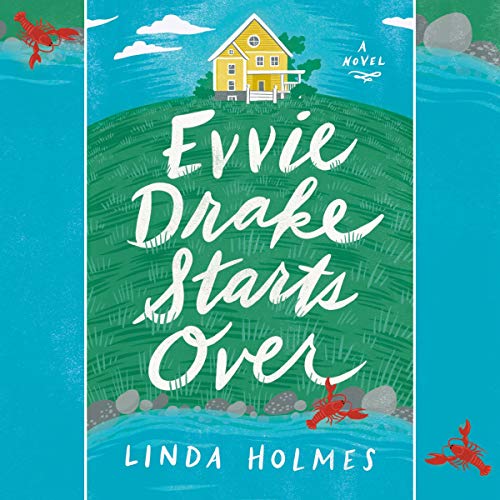
Evvie Drake Starts Over by Linda Holmes

Confession time: Romance novels aren’t my thing. I don’t mind reading books that include a romance, but I usually want some larger plot to bind it all together. However, Evvie Drake Starts Over is indeed a romance novel, with the central story being the relationship between Evvie, a young widow, and Dean, a baseball pitcher who can no longer pitch.

I decided to read this novel because I’m an admirer of Linda Holmes, one of the hosts of the excellent podcast Pop Culture Happy Hour. Despite not being a fan of romance books, I stayed up late to finish Evie Drake. Holmes makes us care about Evvie and her struggles with depression and anxiety as she deals with the her husband’s death and the memories of her unhappy marriage. Meanwhile, Dean is dealing with his own issues, and I cared about him, too. I wanted things to turn out well for Evvie and Dean. Do they? You’ll just have to read the book to find out.

One final note: This book is set in Calcasset, a fictitious Maine town. And—not to put too fine a point on it—Linda Holmes is “from away,” as we would say in Maine. Because of this there were a couple of missteps. Evvie calls her father Pop, and I’ve never heard any Mainer call his or her father Pop. Usually, it’s Dad. Also, I’ve never heard crickets sing in Maine in the spring. As far as I know, late summer is when they begin their sad, sweet songs. But these are small errors that most people wouldn’t catch, and overall Holmes did a fair job of portraying Maine, albeit from an outsider’s point of view.

We Were Not Spoiled: A Franco-American Memoir by Lucille Verreault Ledoux with Denis Ledoux

We Were Not Spoiled: A Franco-American Memoir is a quiet book about growing up in Maine from the 1920s, when Lucille Verreault Ledoux was born, to the 1950s, when she was a young adult with a family of her own. While nothing exciting happens—this is a chronicle of everyday life—I found it compelling nonetheless. Perhaps it’s because I’m Franco-American, too.

A quick note for readers unfamiliar with the Franco-American ethnic group. Between 1840 and 1930 nearly one million French Canadians came to the United States. The largest number of these  immigrants settled in New England. The immigrants worked in factories, in brickyards, in shipyards, and on farms. They formed French-speaking communities that were known as Little Canadas. Today in Maine, Franco-Americans comprise 25% of the state’s population.

In 1920, toward the end of the French Canadian migration, Ledoux’s parents settled in Lewiston, Maine’s Little Canada, where French was the common language. They were originally from Thetford Mines in Québec. Ledoux, born in Lewiston, was the eldest of twelve children. In We Were Not Spoiled, she describes how they were crammed into small apartments and homes where the children often slept three to a bed.

We Were Not Spoiled is not a nostalgic book about how magical life was in the old days. Instead, Ledoux writes frankly about the hard times she and her family endured and how poverty and class limited her opportunities. Her parents valued work over education, and Ledoux dropped out of school when she was sixteen, working at odd jobs to help support the family.

When Ledoux marries and begins her own family, she and her husband, Albert, who also dropped out of high school, vow to do everything they can to encourage their children to finish high school.

In addition to the hard times, Ledoux also writes about the good times—skating, playing with her friends, joining a Drill Team. She notes how despite the challenge of feeding fourteen people, nobody went hungry in her family. No small accomplishment when you have to feed that many people on a tight budget.

The book ends when Ledoux is thirty and is about to move out of Lewiston to nearby Lisbon Falls to begin a new life with her husband as a chicken farmer.

I was sorry to come to the end of this book, to not be able to read about Ledoux’s years in Lisbon Falls.

But then again, wanting to read more is the sign of a good book.



The Erstwhile Marches of Snow-Gauge Clif

Here we are in the middle of this long, long month, when most Mainers are heartily sick of March marching on. We had a nasty little storm on Saturday that prevented us from visiting our daughter and son-in-law. A March gift.

But, if you look at it the right way, we are making some kind of progress.

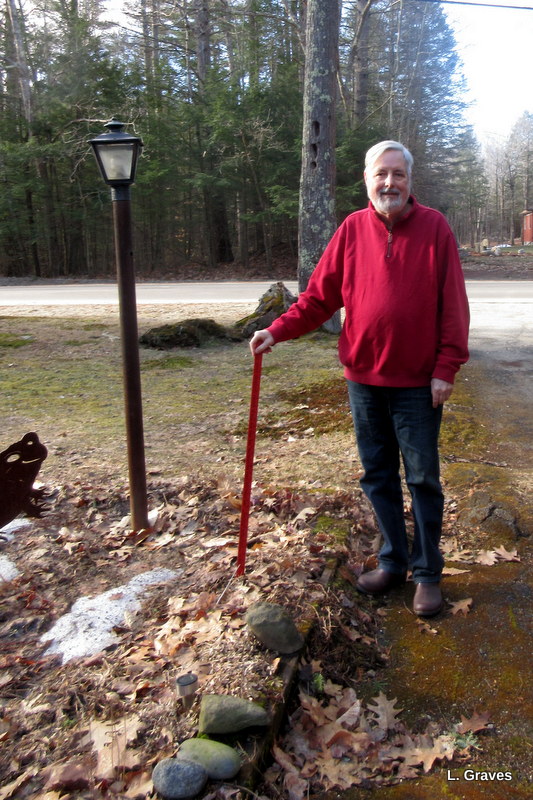
To illustrate this, I must start with the backyard rather than the front. Last week there were 15 inches of snow. This week, 7 inches at its deepest with the snow gone from the edges of the yard.

Now to the front yard, which still has 15 inches of snow, same as last week.

Why the difference? The pictures provide the clue. They were taken within five minutes of each other, and the contrast between the two couldn’t be greater. The backyard actually gets some sun. Hence the melting snow. The front yard? Not so much, and in the spring, I swear our front yard is the last place on our road to have the snow completely melt.

The pictures below are from erstwhile Marches. I thought readers might enjoy seeing how much snow we had in mid-March for the past four years. The last picture, taken in 2018, reflects the usual amount of snow we once had in central Maine in mid-March.

As the pictures indicate, the trend has definitely been for less snow and earlier springs. And Snow-Gauge Clif, with his trusty red yard stick, will continue to measure the melting snow to see if the trend continues.

March 15, 2021

March 13, 2020

March 15, 2019

March 19, 2018

Friday Favorites: Of Bluebirds & Bluegrass

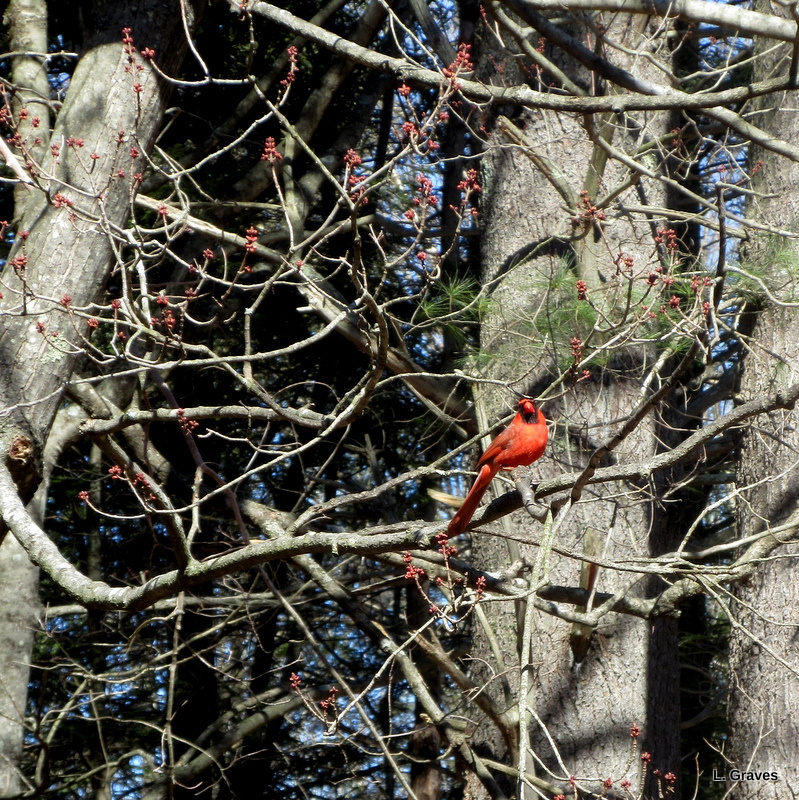
This week birds, birds, birds are making me oh so happy. A male cardinal sings his spring song in a bush right outside my window, and when I look out, I often catch a flash of red. I wish I could get a picture of Mr. Cardinal, but he’s very wary and flies away every time I go to the window for a closer look. Certainly can’t blame a bird for being wary.

Even more exciting are the bluebirds, which for the first time ever  have come into our yard. Generally, they like fields and open spaces and don’t usually hang around in the winter. However, for reasons known only to them, the bluebirds have decided to stay in Maine during the cold season. To my delight, they have discovered the feeders in our yard at the edge of the forest.

Our dining room has big windows that look out over the backyard, and from the dining room I have been able to get reasonably good pictures of the blue beauties. (I knew they would fly away if I went outside.) A male is on the left, and a female is on the right.

Unfortunately, they aren’t very nice to each other some of the time. In the picture below I caught the male giving the female a look that clearly says “back off.” (I guess we’re still a few months away from mating season when a male bluebird probably wouldn’t be so cavalier.) And although I didn’t get a picture of it, I saw the female bluebirds doing the same thing to the males. It’s a rough and tumble world out there for birds.

Nevertheless, after living here for thirty-eight years, I am thrilled to finally see these lovely bluebirds in my backyard.

*************************

Nifty Posts from a Few of the Lovely Blogs I follow

To carry on with the bird theme:

Julie of From My Window featured fabulous close-ups of a male cardinal. Oh, I am envious.

All the way from South Africa—courtesy of Anne of Something Over Tea—comes this photo of the dignified streaky-headed seedeater.

On Change is Hard, it’s bird central at Kensington.

Coincidentally, Tootlepedel’s recent post is called “Birds, Birds, Birds,” and it is chock-a-block full of those fluttering, flying beauties.

Bon Anniversaire (or Happy Birthday)!

From Touring My Backyard: Bon anniversaire to Ju-Lyn’s “Baker Fiend Younger Child.”

From Rabbit Patch Diary: Bon anniversaire to Michele’s mama.

*************************

Now to music, but from humans rather than birds.

Along with alternative rock, I really like bluegrass. While it has its roots in traditional Irish, Scottish, and English music, bluegrass has its own sound, and to me it sounds American—peppy yet at times melancholy. Sad even, reflecting the full range of human emotions.

I recently came across the Del McCoury Band on—where else?—NPR Music Tiny Desk. Utterly charming, Del McCoury is bound to make you smile, both with his music and storytelling.

The Return of Snow-Gauge Clif

March 1 might be meteorological Spring in the northern hemisphere, but in Maine true Spring doesn’t  come until April. And it isn’t until May that Spring, in a froth of blossoms, really kicks up her heels.

Unfortunately, March in Maine begins in snow and ends in mud. March always feels like a kind of purgatory, an in-between time that seems to last more than its thirty-one days.

However, there are some bright spots in this miserable month. One of them is the return of Snow-Gauge Clif, who, with his trusty yardstick—or snow gauge as readers have dubbed it—makes his appearance the first Monday of March. Then each Monday, until the snow has gone away, Clif is out in the yard, measuring the ebbing snow. (When you live in Maine, north of north, such activities are wicked exciting as we Mainers would say.)

So drum roll, please! Here is Snow-Gauge Clif’s first 2022 appearance.

In the front yard the snow depth is 14 inches.

In the backyard, where the snow depth is also 14 inches. As you can see, Clif takes this noble job very seriously.

How long will it take for the snow to leave our yard? We always hope it will be gone by April 22, our youngest daughter’s birthday as well as Earth Day. But we shall see.

Let the melting begin!


Friday Favorites: March 4

I’ve decided to bring back Friday Favorites, where I highlight some of the things that have made me happy during the week—music, TV shows, movies, podcasts, food, nature. On the third Friday of the month, I’ll feature books I’ve read and tie in with Donna at Retirement Reflections, who is one of the hosts of the monthly “What’s on Your Bookshelf?”

Each Friday, I’ll provide a short list of nifty blog posts from some of my lovely blogging friends. Let me tell you, it’s not easy to winnow the list down to a few choices. So many good posts from blogging friends near and far. But never fear! I will get to everyone eventually.

In the comments section, if you are so moved, feel free to let me know what has made you happy this week. It doesn’t have to be anything grand or exciting. I’m especially fond of simple pleasures, and I always enjoy getting suggestions of what to read, watch, or notice.

***************************

This week I watched—all right binged—the delightful sitcom Abbott Elementary, a mockumentary about a group of teachers and the challenges they face in an inner city school in Philadelphia. The humor is gentle rather than uproarious, and this a show with warmth and heart. The ensemble acting is fabulous, and each of the actors shines like a tiny jewel.  Abbot Elementary is an ABC show that’s also available on Hulu.

***************************

Nifty Posts from a Few of the Lovely Blogs I follow

The Sydney Opera House aglow with Ukraine’s colors. Birds, gardens, kangeroos. Gerrie, of Canberra’s Green Spaces, features them all in a recent post. As always, this Mainer is agog over the beauty of Australia.

On the blog Now I’m Sixty-Four, Platypus Man takes us on a tour of the Burghley Sculpture Garden. Oh, be still my trembling heart. I have always loved sculpture gardens but had never articulated why. Platypus Man hits it right on the piton—as we Franco-Americans would say. He writes “In galleries and museums sculpture is contained, hemmed in by walls and ceilings, often difficult to fully appreciate. In sculpture gardens and parks however, sculpture sits comfortably within a spacious, natural environment, with room to breathe. And the sculptures and the landscape in which they sit enhance one another: the gardens and parks frame the sculptures, while the sculptures become visual anchors within their surroundings.” Yes, Indeed!

On Going Batty in Wales, there’s a recent post about the kindness and generosity of a blogging friend from far away. This line really struck me: “I never thought that writing about my simple life in this rural backwater would result in my having wonderful friends all over the world.” Same, same, same. And what a delight!

***************************

This incredible performance of songs from the Broadway musical  Hadestown was recorded on NPR in the “Before Times,” as Stephen Thompson put it—just before Covid cracked down on the world. Wonderful, wonderful music, and the last chilling, thrilling song, “Why We Build the Wall” is especially relevant.


River of Change

Last Wednesday the weather was so warm for February in Maine that it broke records.

The driveway was filled with puddles and melting ice.

On that warm February day, Clif and I went on a rare outing where we got take-out from the Red Barn in Augusta, about ten miles from our town. Mostly we cook and eat at home, and our meals are vegetarian. However, while we will not eat mammals or birds, we do, from time to time, eat shrimp, clams, and scallops.

At the Red Barn, we ordered fries and the Barn’s delectable shrimp. Then we headed down the road to Hallowell, to the parking lot that overlooks the Kennebec River, which is neither wide nor mighty but is nonetheless dear to us.

As we ate, we watched the river. It was iced over, but because of recent rain and the warm weather, there was a skim of water on top. A strong wind blew the water this way and that, as though it were sand.

When we were done, we headed to another spot on the Kennebec, where there’s a turnout with a deck, and you can look down the river into Augusta, our state’s capital. In the distance, a little to the right, is the white dome of the capitol building.

The cropped picture reveals a small black smelt shack, also in the distance. If the thaw continues, the owner will have to remove it lest the shack be carried downriver.

On the deck are posters, in both French and English, that describe how important the Kennebec River was when goods were moved by boats and ships. Back in the day, rivers were superhighways. Because of  this, Hallowell was once a bustling community, and there are many fine old homes that are remnants of a more prosperous time.

But times change. Trains and trucks displaced river ships, cement displaced granite, and refrigerators displaced ice. The Kennebec is no longer a superhighway to and from the Atlantic Ocean. Deprived of a vital economy, Hallowell fell on hard times, and in the 1960s and 1970s, it was a dumpy, depressed place. The river, too, fell on hard times, becoming dark and dirty, polluted by the many factories lining the banks.

But all is not gloom and doom. Thanks to the Clean Water Act of 1972, wildlife now thrives on the river, and the Kennebec is a place of recreation and rejuvenation for humans. Artists and creative types, drawn by affordable homes, moved to Hallowell, and the once depressed town has become funky and vital.

The Kennebec River and Hallowell are object lessons in how change can be both good and bad. Sometimes change is out of our control, and we just have to cope with it as best we can.

But sometimes it’s not. And to borrow from the Serenity Prayer, it’s up to us to have the wisdom to know the difference.

*******************************************************

Nifty Posts from Some of the Lovely Blogs I Follow

Ju-Lyn, of Touring My Backyard, featured the fascinating bat flower.

Despite these turbulent times, small pleasures abound in this post from Thistles and Kiwis.

Tootlepedal’s blog always features fabulous photos, but in a recent post, with some help from his son-in-law, he outdid himself

In a timely post on Robby Robin’s Journey, Jane provides maps of Ukraine that really clarify the geography of the area.

Katie, of the Cozy Burrow, never fails to amaze with her beautiful creativity. Sew on, Katie!

On Retirement Reflections, Donna does her bit to spread peace with with three travelling copies of The Little Book of Inner Peace. What a wonderful idea!

*******************************************************

This is more than a little Christmasy, but I couldn’t resist sharing Aimee Mann’s cover of Joni Mitchell’s The River. The song is so lovely, and it fits beautifully with my own river post.


When World Events Dominate

Most of the time, the posts on this blog avoid the political, and world events are seldom mentioned. Instead, the focus is on life in the hinterlands of central Maine. I’m a homebody who seldom travels more than twenty miles from my town. I dwell in the particular, on the edge of a small forest where the wind moves through the tops of the pines and a snake sometimes suns itself on my patio and a bear once smashed flat our bird feeder.

However even in central Maine—far from the center of things—world events can dominate. With Russia invading Ukraine, now is such a time. If there is one thing the pandemic has taught me is that there is no “there.” What happens across the globe ripples outward, touching all countries, no matter how far apart they are. Once upon a time, what happened in a Neanderthal village might have stayed in a Neanderthal village. But those days are gone, and the United States is now inextricably linked to the rest of the world, from Africa to China to Russia to Europe. And as the twentieth century has illustrated, especially to Europe.

What will happen next with Russia, Ukraine, and the world? Naturally, no one can know. But Clif observed that while Afghanistan felt like Vietnam, Ukraine feels more like Poland. I hope this impression springs more from a sense of unease than from any kind of foresight. A world war with an authoritarian leader who has nuclear weapons is terrible to contemplate.

Amidst the gloom, there is a glimmer of hope. In the New York Times, I read, “Thousands of protesters took to the streets and squares of Russian cities on Thursday to protest President Vladimir Putin’s decision to invade Ukraine…Many Russians, like people across the world, were shocked to wake up and learn that Mr. Putin had ordered a full-scale assault against a country often referred to as a ‘brotherly nation.’ At the protests, many people said they felt depressed and broken by the news of Russian military action.”

But this is just a glimmer. Unfortunately, as we have seen in our own country, tribalism and nationalism are always lurking, and authoritarian leaders know how to whip up a frenzy for conflict and war.

Frank Bruni, also in the New York Times, gives this sobering assessment of Putin and Ukraine: “Embarrassment, vanity, viciousness: History never moves on or gets past these forces, which drove invasions and conquests in centuries past and will drive invasions and conquests in years to come. There should be no great shock about Russia’s audacious attack on Ukraine — only profound sadness and painstaking thought about what to do and what’s to come.”

When I shared Bruni’s quotation on Facebook, I got some pushback from a friend who wrote “As long as most people say war and destruction are inevitable, just part of life, it will be.”

I sympathize with that sentiment. How nice it would be to say war and destruction are not inevitable, and then have no more war.

If only it were that easy.

A blog about nature, home, books, movies, television, food, and rural life.