Category Archives: Food for Thought

Puppy Magic

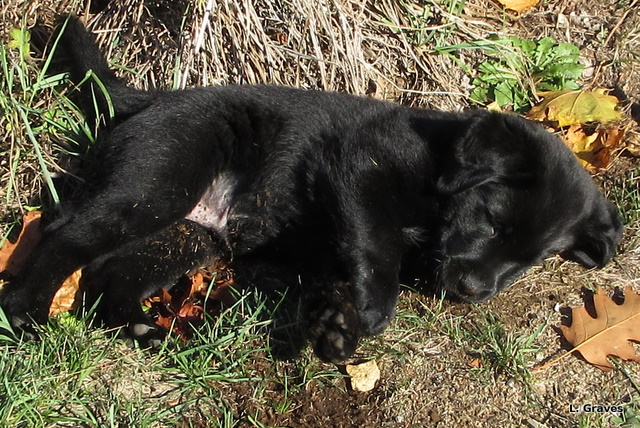
Two days ago, I went to visit Magic, the new puppy in the neighborhood. Although he has indeed grown in a week, he is still at that adorable, plump puppy stage. So cute, so sweet!

The day was sunny and warm, which meant we could go outside and watch him play in the backyard. It wasn’t easy to get a picture of romping Magic, but I snapped away and even got a few good ones.

img_5126

img_5144

img_5152

I have always loved babies of all sorts, but somehow as I get older, I find it especially heartening to see new life.  On the cycle goes—spring, summer, fall, winter, and back to spring. We are all a part of it, whatever stage we are in.


Octember

In Maine, it seems as though the climate has changed significantly.  Last month, we had what I called Saugust, which was so mild and hot that it seemed to be an extension of summer. A far cry from the crisp Septembers we had as little as ten years ago.

Saugust has been followed by what I have dubbed Octember, a month that has been so warm that records have been broken. Two days ago, the thermometer on the back of the house read 73 degrees in the shade, which meant it was nearly 80 in the sun. Clif and I are still having drinks on the patio in late afternoon. We watch the birds—nuthatches, chickadees, cardinals, woodpeckers, tufted titmice. We listen to the crickets, singing their song of fall. Clif and I concur—it is great to be on the patio so late in the season. But it is also strange, and it is past time for everyone to be taking climate change seriously.

We keep saying to each other, surely this is the last day we’ll be having drinks on the patio. And soon it will be. By the end of October, we’ll have to bring in the patio furniture. Traditionally, snow could come anytime in November. But this year, who knows?

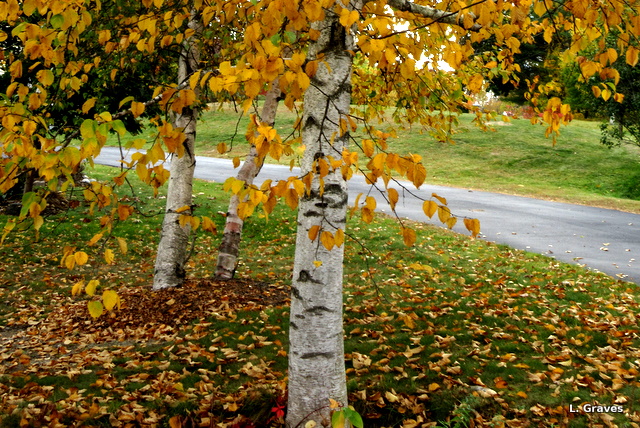
Despite the warm weather, the leaves continue to fall, coming down in a rain of gold, carpeting the yard and the road.

img_4939

Muted Beauty

The glory of autumn is starting to fade, as it does every year. Austere November is right around the corner, and the glorious maple trees have begun to shed their leaves in preparation. While I am a little sorry to see the passing of those bright red, yellow, and orange leaves, I also love the muted beauty of November—the browns and russets. After all the hectic color of October, I find November’s tones soothing.

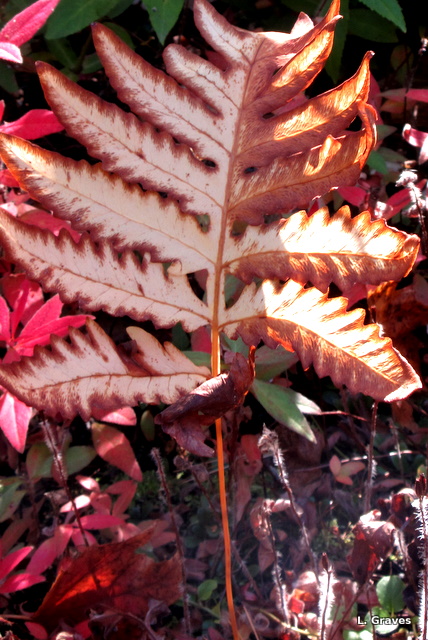
This picture of a once-green fern illustrates my point. It has faded to white and has brown outlines on the edges. The fern is a good reminder that beauty comes in many shapes and colors, from the first blush of spring to the deep green of summer to the mature beauty of autumn and finally to the sparkling cold of winter.

img_4895

Would I be pushing the point too much to apply this principle to people? No, I don’t think I would be pushing it too much, and so I will.

Happy Labor Day

In the United States, today is Labor Day, a holiday to celebrate workers, traditionally in jobs that require a fair amount of physical labor. Nowadays, Labor Day weekend is mostly a holiday that signifies the end of summer and the beginning of fall, a time for one last barbecue fling when the weather is still warm enough to enjoy being on the patio or deck. For Mainers, it is a bittersweet weekend, a reminder that  the long, cold dark of winter is just around the corner.

But back to Labor Day…  My ancestors farmed and worked in factories. They labored, using their hands and bodies. My ancestors certainly weren’t rich, yet I think it’s fair to write that they added a richness to this state and this country.

So here’s to all honest laborers,  past and present, who worked so hard, were not always paid fairly, and did not cheat anyone out of anything.

IMG_4546

Beautiful Diversity

Startrek

One of the things—along with the food and the art—that I love about New York City is the incredible diversity of people.  One time when I was visiting my daughter Dee, we were sitting at a café, and I was positively dazzled by the variety of passersby—short, tall, thin, fat, Asian, white, black, brown, men with women, women with women, men with men. There were no disapproving stares, and everyone looked as though they felt completely comfortable with themselves and with others.

“This is good,” I said to myself. “This is very good.”

I was reminded of this last week when I went to see the latest Star Trek movie. Along with the humorous bantering between Spock and Bones, the heroic deeds of Captain Kirk, and the many, many explosions, there was a scene at a space station that was an interstellar version of what I saw at that café in New York city. But along with the brown and black, there were red, green, blue, and other creatures that walked on two legs but did not resemble humans in any way. There they were, all together, serenely and joyfully going about their business, and it made me smile just to watch that scene.

Naturally, in the course of the story, the space station comes under grave danger. Readers, I am not going to give any spoilers, except to note that Kirk and company go to great lengths trying to save that station.

From its inception, Star Trek celebrated diversity, and the original show with Leonard Nimoy and William Shatner featured a cast that resembled a mini-United Nations. The main crew included a black woman, a Japanese man, a Russian man,  a Vulcan, and the inimitable Scotty. In the early 1960s, this inclusiveness was nothing short of astonishing.

And of course that was the whole point. Gene Roddenberry, the original show’s creator, felt very strongly that as a species, we needed to look beyond the surface to acknowledge the dignity and worth of every person. He was a man ahead of his time, showing us the direction in which we should be headed.

In the natural world, we celebrate diversity and curse those invasive species that can overcome the natural system. Having too much of one plant or animal is usually not a good thing. The same is true for monocropping, with the potato famine in Ireland being a horrible example of what can go wrong when too much reliance is put on one vegetable. Even genetically, diversity is a very good thing, and too much interbreeding, whether with dogs or with humans, leads to all sorts of problems.

So we have plenty of examples of the value of diversity, but we seem to have trouble applying this knowledge to the various types and colors of people who live on this planet.

Nature shows us the way. So does Star Trek and other science fiction stories. New York City does, too.  Slowly, many of us are absorbing these lessons. Unfortunately, others are not. But it is my hope that a time will come, sooner rather than later, when racial and cultural diversity is, well, normal, not at all unusual, simply the way things are.

Lesson Learned: A Splendid Fourth with Plenty of Food

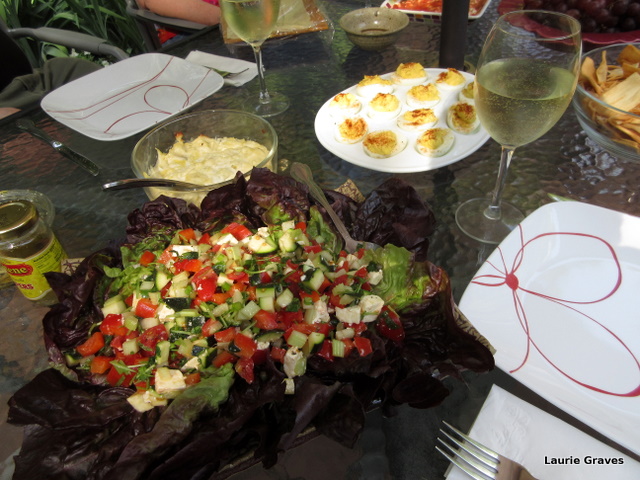
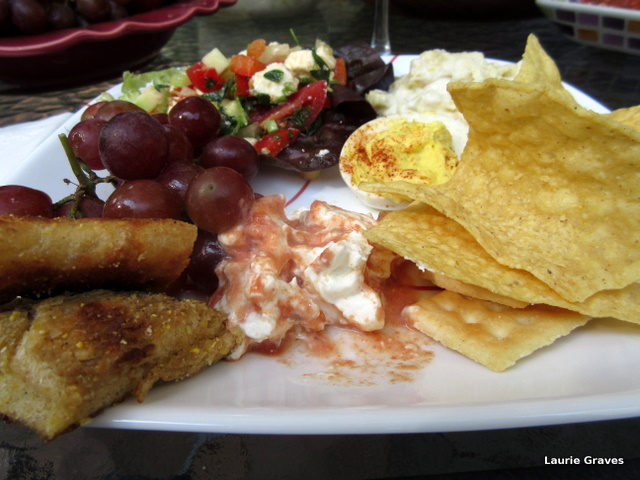
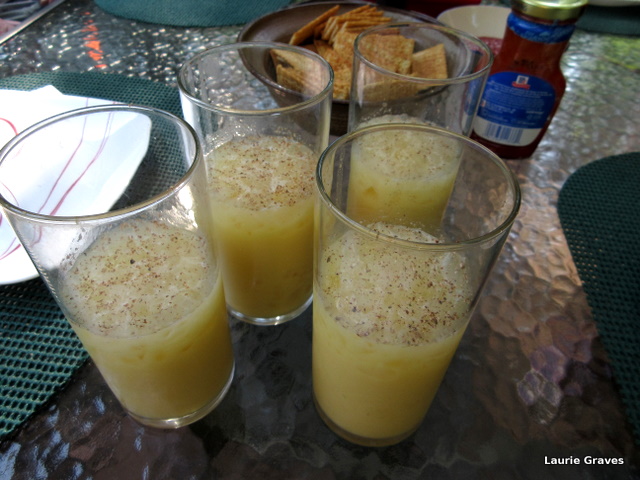
Yesterday, the weather was absolutely perfect for the Fourth, and the patio was a very fine place to be. We had a feast of appetizers, and the consensus was that this should be an ongoing plan for future Fourths.

IMG_3584

IMG_3594

IMG_3596

Simply put, in the past, there had been too much food. Like most Franco-Americans, I have a horror of hosting a gathering where there is not enough to eat. For me, ’tis the stuff of nightmares, akin to going out in public without any clothes on. So naturally I overcompensate, and usually there is so much food that I’m actually a little queasy long before we come to dessert.

If my knees hadn’t spoken up, so to speak, I might have conintued with my excessive ways for many more years. But after last year’s Fourth, when my knees protested mightily after going up and down the cellar stairs too many times, Clif came up with a solution, not only for the Fourth but for most of our other summer gatherings as well.

“Why not have drinks and appetizers so there is only one setting?” he said. “That’s what they used to do in the old days.”

It is true that the 1950s and 1960s were famous for their cocktail parties, where drinks and nibbles were served. Somehow, though, it seemed a little skimpy, but then I asked myself, How would I feel if I were invited to an appetizer and drinks party? Would I think it was skimpy? No, I would not. I would be absolutely delighted.

So the die was cast, and last summer we had several drinks and appetizer parties. Then an amazing thing happened—the appetizer theme crept forward to other events. Last Christmas, we had a houseful of dogs and cats, and not wanting to leave them for hours when we went to my brother and sister-in-law’s house, I suggested we come over for appetizers rather than for the usual big meal.

My sister-in-law’s response? “Sounds like a great idea!”

In truth, I had been worried that she’d be offended if we didn’t stay for a full dinner. Au contraire. The appetizer Christmas feast was such a hit that we all decided this should become an annual tradition.

But what really clinched it was when my friend Judy recently said to me, “Your appetizer parties have really inspired me. It’s such a great way to entertain without getting completely tired out.”

Indeed it is, and here we come to one of life’s lessons. (Drum roll, please.) As we age, we often can’t do as much as we could when we were younger. But that doesn’t mean we have to give up entirely. We can scale back and still have a good time. In fact, our friends, who are ageing right along with us, actually appreciate the scaling back, and they don’t find appetizer nights (or pizza nights) skimpy at all.

So lessen learned. Scaling back is not always a bad thing. In fact, it can be an extremely good thing, and in some cases, even better than the old way,

Onward and upward!


Feeling the Jitters

After hearing the results about the Brexit referendum, I’ve been feeling jittery. I hope all goes smoothly and that there are no major upheavals in Britain or Europe. Or the world. We live in a very unsettled time, and there are many reasons for this—overpopulation, climate job, mechanization, even container shipping, which has allowed the cheap transport of goods from far away where the labor is even cheaper.

In Maine, when I was a young girl, factories were booming, and many of my relatives were able to make a decent living working in those factories. Today, the factories are pretty much gone, and the state’s largest employer is Hannaford, a grocery store chain that has mostly part-time workers who are paid low wages and get no benefits. Indeed, nearly one-third of the people in Maine earn less than $12 an hour, with about 23 percent making under $10 hour. Try supporting a family on that. Even with both parents working, it’s a tight, tight squeeze. (Nationwide, the story isn’t much better, with Wal-Mart being the country’s largest employer.)

With “austerity” being so much in vogue in the developed world after the financial crash of 2008, I expect many people in other countries are also feeling this squeeze, and people who are squeezed do not make the best or the kindest decisions. Immigrants and the poor become  scapegoats, and before you know it, things get really ugly.

So it’s no wonder I get the jitters. The gardens help.

IMG_3451

So do friends—thanks, Judy and Paul, for coming over—and drinks on the patio.

IMG_3433

Onward we go, toward fall and our own elections, where the best we can do is vote for the lesser of two evils.

Thank goodness for the garden, the patio, friends, and, of course, drinks.

In Memoriam for Those in Orlando

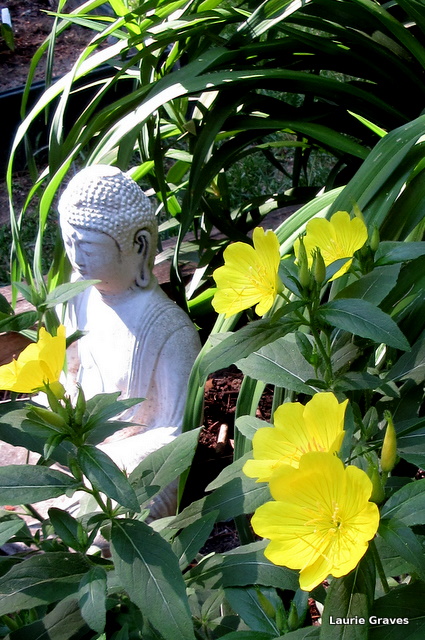
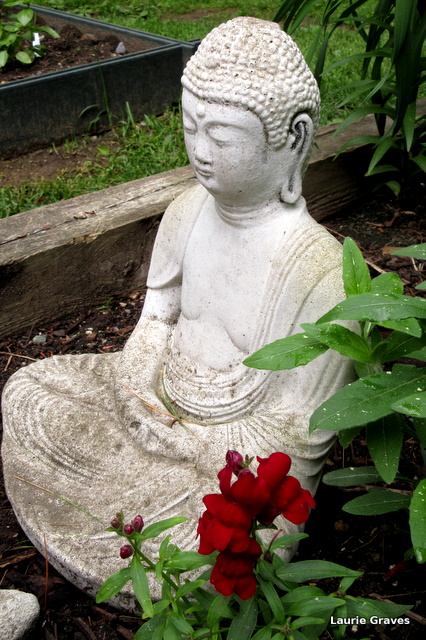
This post and this picture are dedicated not only to those in Orlando who were brutally murdered but also to those in this country and indeed in this world who also have been cut down by gun violence and explosions.

Orlando, Colorado, Connecticut, France, Belgium, England, Iraq, Africa, Mexico—on and on the list goes. When will it stop? And, if it does, will I live long enough to see it?

I am drawn to the tranquillity and peace of the Buddha, and I have a little statue of him in my backyard. I find it calming to gaze upon his serene countenance—so very similar to the Virgin Mary’s.

I wish I could bundle that peace and send it outward, so that it would radiate around the world and remind people that most differences don’t matter at all.

Not one bit.

IMG_3047


The Lesson of the Hawthorn Tree: There Is Always More to Notice

A friend of mine, who has beautiful gardens, has graciously allowed me to take pictures of her flowers whenever I want. As her home is on our bike route, I tuck my wee wonder of a camera in my bike pack and  stop quite frequently during spring and summer.

Over the years, I’ve taken many, many pictures of her flowers, so you’d think I’d know every inch of her yard, but you would be wrong. I found this out the other day when she gave me a call.

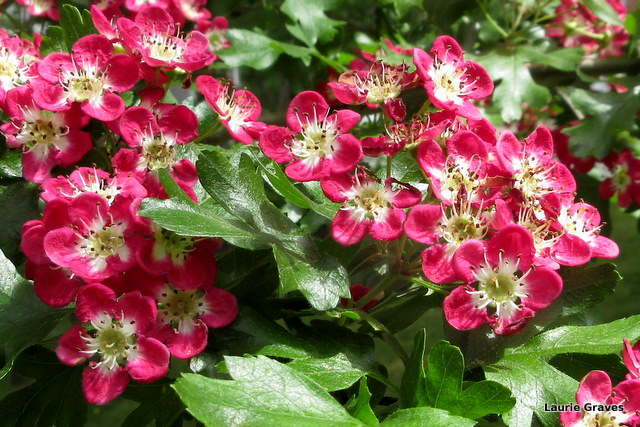
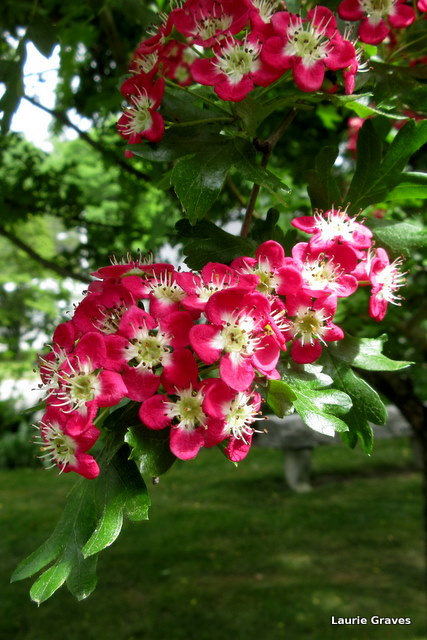
“I wondered if you had noticed our hawthorn tree,” my friend said. “It’s in bloom right now with the most beautiful red flowers.”

“No,” I replied. “I’ve never really noticed that tree.”

“It’s in the front yard just behind the garden,” she said. “Come on over and take a picture if you want.”

“Will do!” I said. “Thanks so much for calling.”

The next day just happened to be a perfect day for taking pictures of the flowers on the hawthorn tree. It was sunny, but not too sunny on the tree, and there was just enough light to illuminate the flowers but not too much to have them washed out.

“Funny how I never noticed this tree,” I said as I took pictures.

“Well, most of the year it’s just a tree with green leaves. But in the spring, it’s got those red flowers. And this year seems to be a particularly good year for the flowers.”

Indeed it is.

IMG_2847

IMG_2832

Now, I am a fool for flowers—in my own garden, in other people’s gardens, wild by the side of the road. It doesn’t matter. For environmental reasons, Clif and I stay pretty close to home, and although I never get tired of taking pictures of flowers, each year I can’t help but think that I’m not going to get anything new, that I’ve taken all there is to take in my little world. And each year I’m proven wrong. In a five-mile radius from my home, I always find something new to notice, some new beauty to photograph.

This just goes to show that even an observant person is not going to notice everything that grows around her. Each year will bring some new delight previously unexplored. This is not to slight old friends, such as my purple irises that are nearly in bloom. When those purple beauties open, I’ll be taking picture after picture, just as I do every year.

But it does suggest that we need to keep open eyes and an open mind about things that are near to us, to not take our immediate surrounds for granted. Because you never now what you might find—a flowering hawthorn tree, a bridal wreath in bloom by the lake, or some kind of neglected beauty.

All we have to do is look.

Memorial Day Weekend, 2016

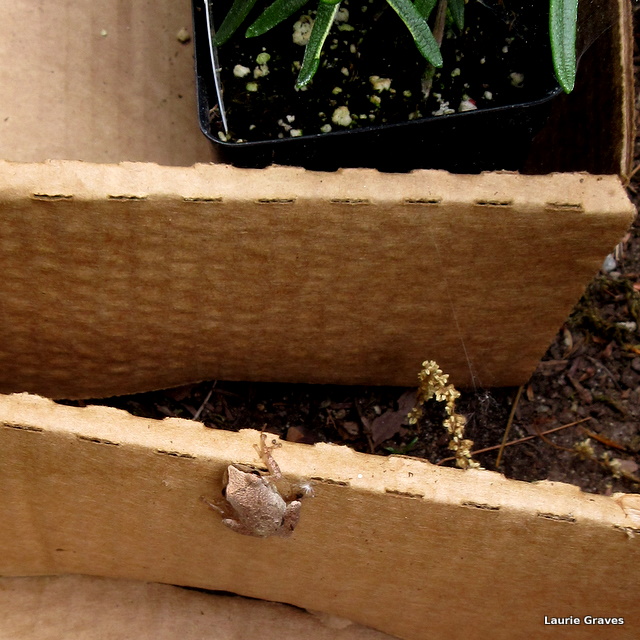
On Sunday, our friends Joel and Alice and Diane came over for a Memorial Day gathering that featured grilled bread, salads, and homemade strawberry ice cream with homemade shortbread. Accordingly, Saturday was a busy day of getting ready. However, I did find time to work a bit in the garden, and I came upon this tiny fellow—a spring peeper?  (Eliza, what do you think?)

IMG_2685

The little creature, about an inch long, bounced around as though it were on a spring, but I did manage to capture a picture.

Sunday was a little cloudy, but it didn’t rain, and it was warm enough to eat on the patio. We toasted loved ones who had passed as well as service men and woman who had sacrificed themselves for this country.

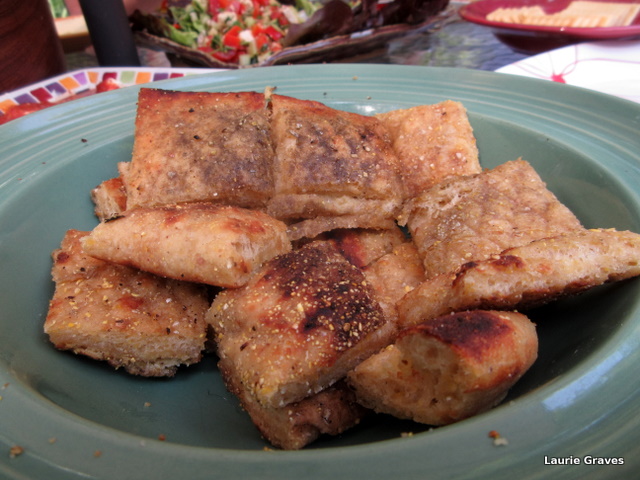
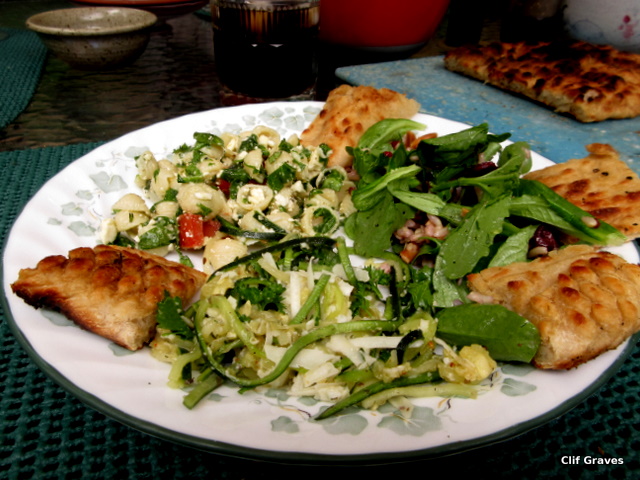
Clif’s legendary grilled bread was the centerpiece of the meal, and we had salads to go with the bread. I’m always afraid there won’t be enough to eat, but with the huge grilled bread, there was more than enough with the salads that Alice, Diane, and I made. (We, of course, had appetizers beforehand—chips and salsa and cheddar popcorn. ) We all decided that the bread and salad meal was a tradition we should continue. (Thanks, Alice, for providing the dough.)

I had enough presence of mind to snap a picture of the bread and salads, but not enough to get a picture of dessert.

IMG_2699

Among other things, we talked about politics—lots to discuss!—and, as is our way—we also talked about movies. Diane made an interesting point. She is mentoring a student at Bowdoin College, and this student and her friends hardly ever go to the movies. They do, however, watch movies. One of the students has a TV, and they regularly get together to have pizza and watch a movie.

Diane reflected as to how our generation was the movie generation. We grew up going to the movies, and it was the thing to do with family and friends. But now, with the changes in technology—the quality of the image on flat screens is pretty darned good—combined with the high price of movie tickets and popcorn, going to the movies is not the regular event it once was. Someday, perhaps, when we baby boomers are gone, the cinemas will close because of lack of business. (I recently read in the New Yorker that the average teenager goes to the movies six times a year, and this matches Diane’s experience with her college students.)

As someone who grew up going to the movies, I must admit that it’s a little sad to think of this. But times change, and with services such as Amazon Prime and Netflix, there are plenty of good shows and movies to watch at home.

And who knows? Perhaps somehow cinemas will manage to hold on.

Finally, today—Memorial Day—is the 105 anniversary of my grandmother’s birthday. How old that makes me feel! Josephine Lena Jacques was born in northern Maine, in North Caribou, in a farmhouse that I expect did not have electricity or running water.  French was her first language, although by the time I was born, she was fluent in English. Her mother and father were potato farmers, and they went to town in a horse and wagon. The changes my grandmother saw in her lifetime.

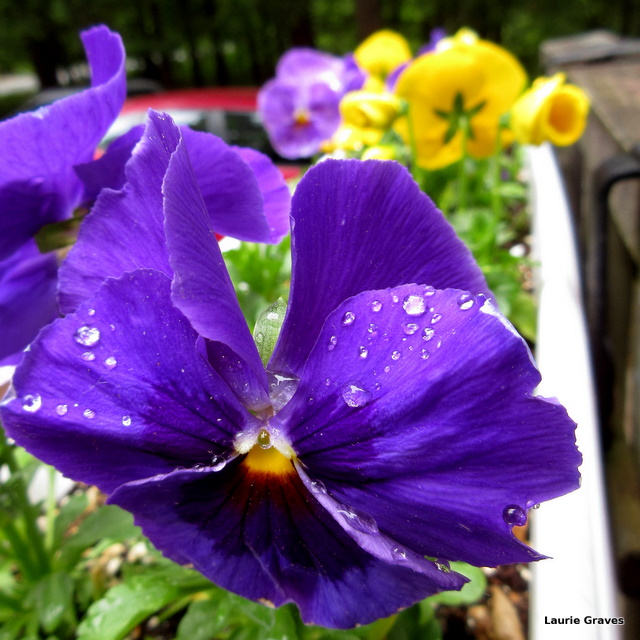
Happy birthday, Mémère. Here is a pansy, one of my favorite flowers, in your honor.

IMG_2705