To Railroad Square Cinema to See Kedi, a Lovely, Soulful Movie about Cats

Yesterday,  as part of our week-long celebration of our fortieth wedding anniversary, Clif and I went to Railroad Square Cinema to see Kedi, a Turkish documentary about the street cats of Istanbul. As the title of this post indicates, I absolutely loved the movie.

However, before I get into a brief description of Kedi, I do want to establish I am more of a dog person than a cat person. Not that I don’t like cats. I most certainly do. At present there are two resident felines at the little house in the big woods, and I am very fond of both of them. But for me, dogs rank number one. That’s just the way it is.

Nevertheless, Kedi struck me to the core with its soulfulness and beauty. And unlike many documentaries, it didn’t seem a minute too long. (My husband Clif felt otherwise, and I’m wondering if all the cute kitten videos I watch on YouTube has built up my cat-watching stamina.)

Here is a blurb from the movie’s website:  “Cats, all kinds of cats, roam the city, free, without a human master. Some fend for themselves…others are cared for by communities of people, pampered with the best cat food and given shelter for the cold months. Cats have been a part of the city for thousands of years, and so, everyone who grows up in Istanbul or lives in Istanbul has a story about a cat….Street cats are such a big part of the culture that when US president Barack Obama visited Istanbul, part of his tour included a stop at the Hagia Sophia to visit its famous cat. Cats are as integral to the identity of Istanbul as its monuments, the Bosporus, tea, raki and fish restaurants.”

Kedi, which means cat in Turkish, follows seven cats and the people with whom they have bonded, including an artist, a deli owner, and a depressed man who finds meaning by feeding some of the street cats. From these people, there are lovely ruminations about cats and what they bring to the city.  One woman notes that how we treat animals is a reflection of how we treat people in general. So true! The people, while taking care of the cats, admire their Independence and let them come and go as they please.

Another cat lover says, “Dogs think that people are God but cats don’t. Cats know that people act as middlemen to God’s will. They’re not ungrateful. They just know better.” (This, no doubt, will bring howls of objections from dog lovers.)

Then there are the cats themselves—Sari, Duman, Bengü, Aslan, Gamsiz, Psikopat, and Deniz. The cinematography is nothing short of amazing as the cameras catch what cats do: prowl, climb, jump, leap, stalk mice, lovingly tend their kittens, fight, and show deep affection toward the humans who love them.

Kedi is a more a meditation about the street cats of Istanbul than a traditional documentary with an arc. For me, it worked so well that not only would I like to see this movie again, but I would also like to own the movie on DVD.

And there are not many movies I feel this way about.


Of Chocolate Mousse and Cupcakes

Yesterday, the weather turned frigid again—7° Fahrenheit with a brisk wind. Oh my, it was brisk. And yet some people were waiting in line at Fielder’s Choice for ice cream. They were either really brave, awfully numb, or a combination of the two.

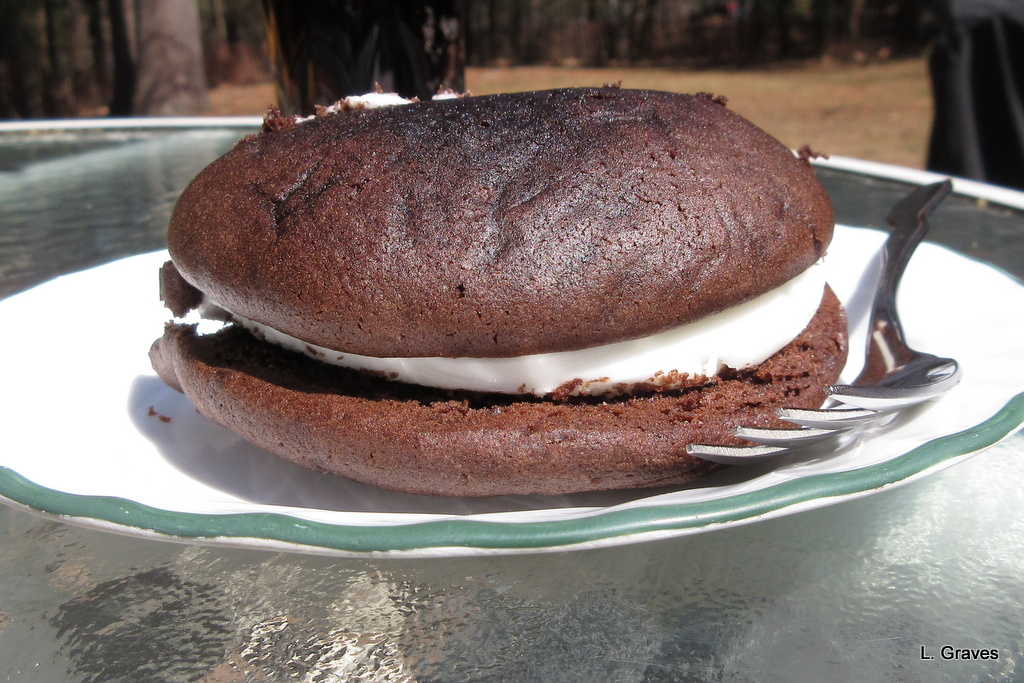
Not Clif and me. We had a gift certificate to Barnes & Noble, and we went to the cafe for tea, chocolate mousse, and a cupcake. Very tasty and ever so much better than waiting outside for ice cream in such cold weather.

We also bought a copy of The Atlantic, and we have decided to subscribe to this excellent magazine in honor of our fortieth wedding anniversary.

Since the last presidential election, Clif and I are committed to supporting the various media who believe that facts do matter. Yes, subscriptions cost money, but we consider this money well spent.

In the land of alternative facts, never have publications such as the New York Times, The New Yorker, or The Atlantic seemed so important.

Off to the Colby Museum of Art

Let’s just say that Clif and I are beginning to enjoy these anniversary outings very, very much. As a matter of fact, today I told Clif that I’ll be a little mopey when these celebratory excursions are over.

But never mind about that! We will enjoy these outings now and not think too far ahead. (A blizzard is predicted for next Tuesday. Oh, joy.)

Yesterday we went to the Colby College Art Museum for a noontime talk about the artist George Bellows (1882-1925) and the propaganda war-series lithographs he did for the United States during World War I. At Colby, some of these lithographs are featured in an exhibit called Graphic Matters: George Bellows and World War I. (To see a sample of Bellows’s work, click on the link.)

This is from the museum’s website: “His depictions of reported German atrocities on the Western front were used by media outlets and the federal government to stoke anti-German sentiment. Bellows’s ‘War Series’ highlights the complex and porous relationship between art and propaganda.”

The speakers, curators Justin McCann and Diana Tuite, concluded that Bellows’s images were overwrought and over the top. McCann and Tuite are not wrong. However, during the Q & A, I did note that after seeing the images from the current war in Syria, I would have to say that war itself is over the top. Maybe Bellows wasn’t wrong to portray war that way. The violence and destruction are so terrible that it’s a wonder that people ever recover.

Or maybe Bellows went too far with the propoganda. Anyway, not exactly the cheeriest of talks, but interesting nonetheless, and the small gallery was packed with seniors and students.

After the talk, we had lunch at the museum’s cafe, where we had some of the tastiest and most reasonably priced food we have ever eaten at a museum. When I asked the woman who served us where the food came from, I was not surprised to learn that most of it comes from Colby’s own kitchens. Long ago, I worked in the kitchen at one of the dorms, and the food was very good, made from scratch.

Clif and I shared a tasty homemade chicken soup and shrimp sushi rolls.

Naturally, we also had dessert, a brownie big enough for at least three people.

Refreshed, we went to another exhibition—No Limits: Zao Wou-Ki. This couldn’t have been more different from the Bellows exhibit.   Zao’s big, bold abstracts jumped with color. They reminded me of representations of the Big Bang, and they filled me with joy. Zao (1920-2013) was a Chinese-French artist. I’d never heard of him, and I was grateful to have the chance to see his work.

While I’m on the subject of gratitude…I am so grateful to have a college with such an excellent art museum within easy driving distance. This museum is free, as are the many lectures and talks that go with the exhibits.

I love nature, but I love art, in its various aspects, with equal intensity, and both are of vital importance to me. Clif is the same way. Perhaps that’s one of the reasons we’ve been married so long.

Whatever the case, we both feel fortunate to live in a rural area that has access to so much good art.

March Ice Cream

In the spirit of celebrating our anniversary early and often, Clif and I have decided to have a little staycation, of sorts, and do something special every day until our anniversary on March 19.

And what did we decide to do yesterday? Why go out to an ice-cream stand, of course, and have sundaes for lunch, even though the wind was whipping and the air was uncomfortably brisk.

We went to Fielder’s Choice in Manchester, which has very good ice cream, and we weren’t disappointed. My peanut butter ice cream was smooth and flavorful, and Clif’s butter finger ice cream had huge chunks of candy in it.

Still, only northerners would think it was a good idea to go get ice cream when it was bitter cold and then eat in the car.

The picture below pretty much says it all. (The white hills beyond the sundaes are indeed snowbanks, still piled high.)

Even after nearly forty years of marriage, we are still a silly couple. 😉


Let the Celebration Begin!

Next week, Clif and I will be celebrating a very special event—our fortieth wedding anniversary. Holy guacamole! That’s a lot of years to be married. As Clif and I are both fans of celebrating early and often, last night we decided to go to Margaritas in Augusta to start the festivities. We plan to have a week of fun but simple pleasures leading to our big day on Sunday, March 19.

The staff at Margaritas is so friendly and accommodating. One server, who saw us struggling to take a selfie, offered to take our photo. (For some reason, Clif kept taking the picture upside down, and he hadn’t even had one sip of his margarita.) So here we are, Ma and Pa, after nearly forty years of marriage.

We had tasty baby chicken chimichangas to go with our delicious margaritas. I could have one of those little chimis right now.

We also had a plate of nachos, but we were so busy sipping our drinks and eating that we forgot to take a picture of it.

However, not so with dessert, an ice-cream ball with a crispy coating and drizzled with honey and chocolate.

Readers, I will admit that dessert was a bridge too far, and after the meal we waddled to the car. When Clif and I got home, we collapsed on the couch to watch two episodes of The Last Kingdom.

However, what a splendid way to begin celebrating.

A Warm Review of Maya for a Brisk Day

Winter, it seems, has returned to Maine. For the past few days, the wind has been blowing hard, and the temperature, with the wind-chill factor, has been below zero. And that’s Fahrenheit, not centigrade.

When it is this cold, our wood furnace doesn’t really go through the night, and the house is pretty darned chilly when we get up in the morning—below 60°.

Another word we Mainers use to describe the cold is brisk, as in, it’s wicked brisk outside today.

And indeed it was brisk, brisk, brisk today, this Monday morning, when I made my tea and toast and headed to my office.

But something immediately warmed me up, and that was a review of Maya and the Book of Everything written by my blog friend Melissa, of The Aran Artisan. She is formerly a resident of Maine and now lives with her family on “Inis Mor, one of the Aran Islands in County Galway, located off the west coast of mainland Ireland.”

Melissa writes, “I was really looking forward to reading Maya and The Book of Everything by Laurie Graves in a way I hadn’t looked forward to reading a fiction book in a long time. Even though it’s a young adult fantasy novel and a gift to my 13-year-old daughter, something about the plot caught my attention. The cover art charmed me also and I ended up reading it before she did.

“The story begins in modern times America (coincidentally the same area where I grew up) and it centres around the young heroine Maya and the magical secret Book of Everything. In fulfilling her destiny to protect the book from an evil syndicate that would like to control and alter its purpose, she travels through time and space encountering dangerous situations and tough decisions at every turn. Many other compelling characters are superbly developed and contribute much to the plot which twists and weaves into such an intriguing storyline, I found it hard to put down. Talking books, a royal toad, a magic forest and Shakespearean references are just a few of the books creative highlights for me. The story grips you right out of the gate and continues straight through to the last page. In fact, the ending caught me by surprise as much as it did Maya and gave me the thought ‘this could easily be a movie’.”

Merci beaucoup, Melissa! What a great way to start the week.

maya-and-the-book-of-everything-web-medium

To UMO I Went, Where I Gave My Presentation, Threads of Realism in Fantasy

Yesterday, Clif and I went to the University of Maine at Orono, where I gave my presentation Threads of Realism in Fantasy to a class about Franco-Americans and Place.

We got up very early—before breakfast as my mother would have put it. Orono is ninety miles from where we live, and we had to be there by 9 a.m.

As I’ve written previously, public speaking is not my strong point. (Damn it, Jim, I’m a writer, not a speaker.) In the past, I’ve usually had a prepared piece, which I have then proceeded to read. This time, I had resolved not to do that. Even though I had copious notes for my presentation, I was determined to make eye contact with the audience—in this case, the students.

Clif, who is a good speaker, sat in the back of the class so that he could observe me, and he told me I did just fine. I did indeed make eye contact with the students. In fact, I expect the two students who were sitting right in front of me might have wished that I didn’t have my beaming eye on them quite so often.

There were only a few minor mishaps with the presentation—I lost control of my cursor a couple of times—but all in all it went well, and despite being nervous, I enjoyed myself.

When I was done, some of the students asked me questions about how I write. Do I have an outline? Do I write certain scenes, even if they are out of order, as they come to me? No and no. I have a general plot arc in my head, and then I start at the beginning and write straight through. If something I write in chapter twenty impacts chapter one, then I change it in chapter one.

The students seemed surprised that I wrote this way, and they asked the question again, in several different ways. Each time my answer was the same, but I did add that there is no one correct way to write a book—there are different approaches for different writers.

I was asked where they could buy the book, and I mentioned a local bookstore—Bull Moose—as well as on Amazon. One student, bless her, whipped out her smart phone and ordered the book then and there.

The student and I had a little conversation about YA fantasy, and she told me that many fantasy books written for adults just didn’t appeal to her.

“I know what you mean,” I said. “In fantasy stories for adults, there is often too much sex and too much violence. In YA and Middle Reader fantasy, this is kept to a minimum, and the story’s the thing.”

“Yes,” she said. “That’s right.”

After class, the professor, Susan Pinette, invited us to come back to the Franco-American Centre. She had made soup, and she offered to make salad as well.  Would we like to join her for lunch? Would we ever!

How lovely it was to sit around the big table at the Centre and eat delicious lentil, vegetable soup. Being Francos, Susan and I did a lot of chatting and laughing as well as eating. (Susan is the woman at the head of the table.)

img_6204

And then Clif took this picture of Susan and me.

img_6208

After tea and Susan’s delectable homemade molasses cookies, it was time to go home. It was such a good day, and I was sorry to leave.

But the end of April, there will be a Franco-American Artist gathering at the Centre, where I will probably give a much shortened version of my presentation.

I’m looking forward to going back to Orono.

Hi, Ho! It’s Off to UMO I Go!

My presentation—Threads of Realism in Fantasy—is done. Tomorrow Clif and I head bright and early to the University of Maine at Orono, where I will be giving it for the first time to Susan Pinette’s class on Franco-American Places.

The presentation is centered on my Franco-American heritage and how I wove into my novel real places such as Waterville’s South End. While the presentation is ideally suited for this class, it is also appropriate for a general audience, and I’m planning to present it to other libraries.

I must admit, I am a bit nervous. Public speaking is not my strong point, but I’ve worked hard on the presentation to make it visually interesting, and I’ve rehearsed it many times. In fact, I’ll be rehearsing it again today.

Something that counterbalances the nervousness is the discovery that I like talking about Maya and the Book of Everything, much the same way I enjoy talking about my children. In a way, I suppose the novel is a bit like a child. I certainly labored long and hard over it for many years.

Here is the opening slide for the presentation:

mayaprescoverWish me luck!

I’ll report back on Friday.


Ten a Day: A Winter Bean and Vegetable Soup

Lately, Clif and I have been talking about improving our diet. We are, ahem, at that age when the body needs all the help it can get. It’s not that we don’t eat well—we eat a fair amount of fruit and vegetables—but our diet is definitely heavy on the carb side. So, we decided to ramp up the vegetables and replace white bread and wraps with whole wheat.

On the weekend, we’ll allow our selves some treats. After all, this is a marathon, not a sprint.

How appropriate, then, to come across this in the Guardian: “Forget five a day, eat 10 portions of fruit and veg to cut risk of early death.” Basically, the gist of the piece is that we need to dismiss the advice to eat five servings of fruit and vegetables per day. Instead, we should be eating ten. Lest this sound too daunting, three tablespoons of peas count as one serving, as well as two spears of broccoli, and one half grapefruit. There is a chart in the piece outlining what ten a day would look like. (Oh, if only there were a similar requirement for chocolate!)

This advice is based on “[t]he analysis in the International Journal of Epidemiology [that] pooled the results from 95 different studies involving a total of approximately 2 million people.”

The studies indicate that eating “up to 800g of fruit and vegetables – equivalent to 10 portions and double the recommended amount in the UK – was associated with a 24% reduced risk of heart disease, a 33% reduced risk of stroke, a 28% reduced risk of cardiovascular disease, a 13% reduced risk of total cancer, and a 31% reduction in premature deaths.”

As always, further studies are needed to confirm the results, but how can you go wrong eating more fruit and veggies?

And, to round out the coincidences, a day or two before I read the article, I made a vegetable and bean soup that includes carrots, celery, cabbage, tomatoes, and black beans. I’m not sure if a big bowl would tick off five servings of veggies—beans count, too—but it must come pretty darned close.

This soup has other benefits as well. It is not expensive to make, even if you use organic ingredients, and everything can be tossed into a slow-cooker, where the soup will simmer away, filling the whole house with a delightful smell. Best of all, as my Yankee husband put it, the soup is pretty darned good.

A word of warning about the following recipe: As is my habit, I did not make this soup following a particular recipe. I just added ingredients as I saw fit. Soup is very forgiving this way. Therefore, much of what I’m suggesting will be guidelines. Feel free to experiment with the ingredients and the spices.

In the end, you will have wonderful, nutritious soup, and you will be well on your way to fulfilling your ten-a-day requirement of fruit and veggies.

img_6202

Bean and Vegetable Soup
Serves 8

Ingredients

  • Five or six cups of chopped vegetables. (I used cabbage, carrots, and celery.)
  • 2 (16 oz) cans of black beans, drained and rinsed
  • 1 onion, chopped
  • 3 cloves of garlic, minced
  • 1 (28 oz) can of fire roasted crushed tomatoes. (I used Muir Glen.)
  • 1 (1/2)  cans of water—using the can from the fire roasted tomatoes. Add more water if you want a thinner soup.
  • 1 pound of ground turkey
  • 1 tablespoon of chili powder
  • 1 teaspoon of cumin
  • 1/2 teaspoon oregano
  • 1/4 teaspoon of coriander
  • 1/4 teaspoon red pepper flakes
  • Salt to taste

Directions

  1. Cook and brown the ground turkey in a large skillet.
  2. Put the cooked turkey in a slow-cooker.
  3. Add the rest of the ingredients.
  4. Cook on low for nine or ten hours; high for five or six hours.
  5. Enjoy and feel virtuous.


A blog about nature, home, books, movies, television, food, and rural life.