Three Things Thursday: Hyacinths, Ginger Nuts, and Maine, At Last

A couple of the blogs I follow have a lovely tradition called “Three Things Thursday,” where the writers list three things each week they are particularly grateful for. I have decided to follow this practice.  Being grateful for the many blessings in life seems like a good thing to do during a time when there is much to be anxious about.

First, I am ever so grateful for my hyacinths: They are the first blooms in my garden, and this makes them most welcome. Planted over thirty years ago by mother-in-law, the hyacinths are not prolific, but they are faithful, coming up year after year. And, oh, how wonderful those flowers smell.

Second, ginger nuts: This one particularly tickles my fancy. I first came across ginger nuts in the beloved Miss Read series, books set in English villages in the 1950s and 1960s. The stories revolve around the eponymous Miss Read, a teacher in a small rural school. Ginger nuts, a biscuit— or a cookie, as we call them across the pond— are a treat often served with tea.

Now, I’m sure my English blogging friends are scratching their heads over my enthusiasm for what must be a common store-bought cookie in England. But I can’t help it. The name sounds so darned cute. And I couldn’t help but wonder, just what are ginger nuts anyway?

Imagine my thrill, then, when I actually came upon McVitie’s Ginger Nuts at a local store. Quick as can be, I grabbed them, and as soon as I got home, I opened the package and sampled a cookie—or rather, a biscuit. Actually, they turned out to be what I suspected—what we Americans call gingersnaps. But very tasty McVitie’s Ginger Nuts are, with a satisfying crunch and a little zing. As I nibbled my biscuit, I imagined I was in the English countryside, so lovely and green with its sheep and hedgerows and cottages.

Third, Maine, At Last—Lovin’ by MsMomA (aka Burndett Andres): I first met Burndett (Burni) Andres over ten years ago, when Clif and I were publishing Wolf Moon Journal, a small literary magazine. Burni submitted a piece—about Thoreau’s Maine journey, I think—and I was taken by her lively style and the wonderful narrative flow of her writing. When she started publishing an online newsletter, the Narraguagus News, I became a devoted reader. In the newsletter, Burni chronicles everyday life in Cherryfield, a small town in Down East Maine.

Over the years, Burni has published a series of books comprising pieces from her newsletter. She has called this series Maine, At Last, and I have had the good fortune of reading her latest book, Volume 10,  about everyday happenings in Cherryfield, Maine.

Maine, At Last—Lovin’ has the same lively style and wonderful narrative flow that I discovered in the first piece Burni sent me. In addition, there is a joy of life that ripples through the book. Here is what might be Burni’s coda: “Although I don’t feel called to do great things, I do feel called to do small things with great love and I like to think that comes through in my writing…” It most certainly does, and if the world followed Burni’s example, it would be a better place.

Finally, she writes movingly about her beloved partner Ralph and his struggles with Parkinson’s disease. Some of these descriptions actually brought tears to my eyes.

Hyacinths, ginger nuts, and a lively yet moving book. So much to be grateful for.

Maya and the Book of Everything at the Hartland Public Library

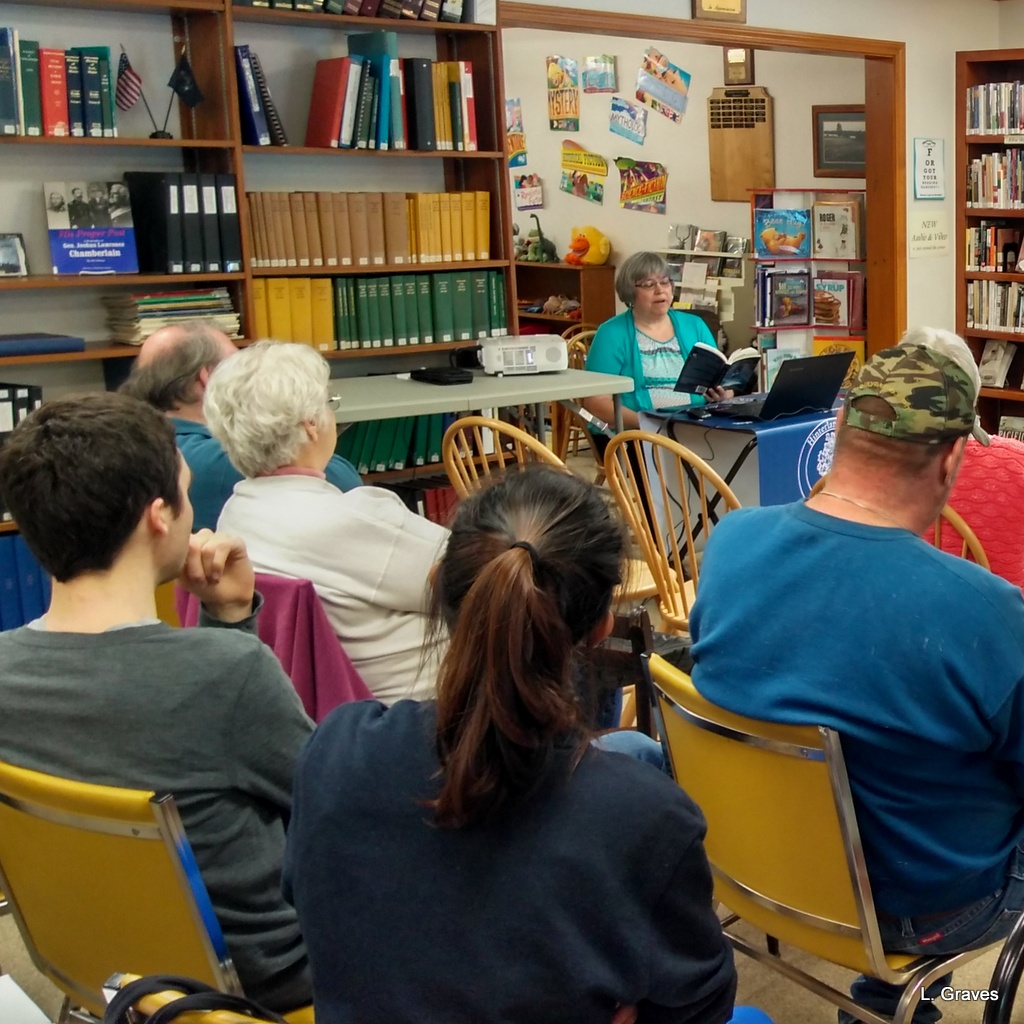
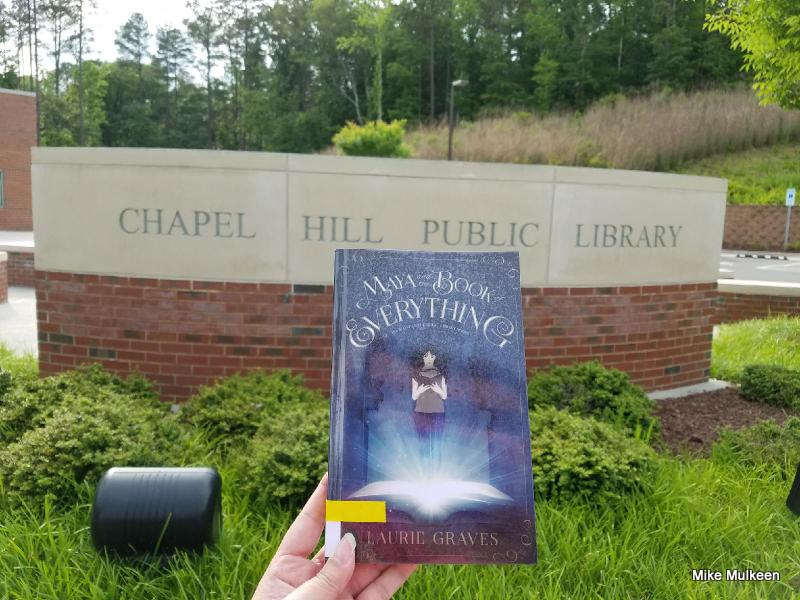
On Thursday, May 11 I’ll be going to the Hartland Public Library to give my presentation Threads of Realism in Fantasy: Maya, Maine, and the Franco-American Connection. It starts at 6 p.m., and I’m so looking forward to going to this library. After all, the Hartland Library is featured in Maya and the Book of Everything. So in a way, I’ll be going to one of my sources.

Please come if you can!

Three Things Thursday: My Clothesline, Emerging Ferns, My Backyard

A couple of the blogs I follow have a lovely tradition called “Three Things Thursday,” where the writers list three things each week they are particularly grateful for. For a while, I’ve been wanting to do this on my blog each Thursday, and now that glorious spring is here, it seemed like the perfect time to get started.

A quick aside: With all the busyness of life, with the worry and the various stresses—especially with the political situation—taking the time to be grateful for what I have seems almost like a form of prayer. Or a meditation, if you will. While I certainly don’t want to look away from all that is happening in the world, I do think that spreading a bit of gratitude, near and far, is a very good thing.

So here is what I’m grateful for this week:

First—My Clothesline: I know, I know. I go on like a silly person about hanging laundry outside. But I do so love it.  To me, laundry flapping on the line is a lovely sight. The sun and the wind are drying my clothes, with no gas or electricity required. Just a bit of energy on my part, which, for some reason, I never mind expending on this chore.  Then there is the smell when the laundry comes in—fresh, almost intoxicating, sheer bliss.

Second—The Emerging Ferns: That curl of green, the gradual unfurling. With ferns, there are no buds or blossoms, but what a sweet sight when each spring they push their way through the brown leaves.

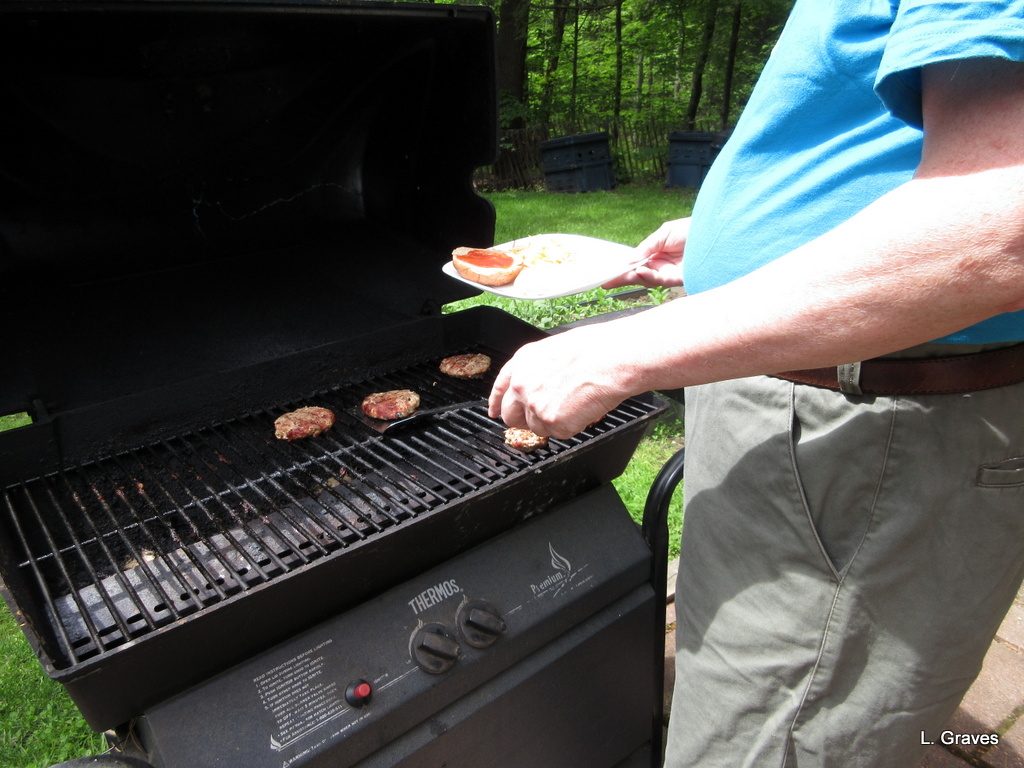
Third—My Backyard: Tucked in the woods, my backyard is a second living room when the weather is warm. Birds come to the feeders, and the yard is full of birdsong. Our patio is a place where Clif and I relax during the summer. Family and friends come over for Clif’s legendary grilled bread, and we eat, talk, and laugh. I’ll serve simple salads or grilled chicken to go with the bread. Homemade ice cream for dessert. Or we’ll just have appetizers and bread. Whatever. When we are on the patio, life is good.

And, as a bonus, for sheer geeky fun on this Thursday, May the Fourth be with you!

The Invisible Made Visible: A Gathering of Franco-American Writers, Artists, and Creatives

Last weekend, I went to the Franco-American Centre at the University of Maine at Orono, which hosted “its sixth annual gathering (or Rassemblement) of Franco-American writers, artists, and creatives. The annual event, organized by UMaine’s Franco American Programs, aims to create a culturally supportive space in which members of the Franco-American creative community can share their work.” (The quotation was taken from an invitation sent by the Centre’s director, Susan Pinette, and I used this because it states so well the raison d’être for the event.)

I’ve been going to Rassemblement from the beginning, and what a treat it is to spend time with so many creative Franco-Americans.

In the past on this blog, I’ve written a brief history of Franco-Americans in Maine and how they comprise about a third of the state’s population. (Most of our ancestors migrated from French Canada in the mid- to late 1800s.) Because of the history of discrimination and repression, many Maine Franco-Americans feel invisible, and I understand this is also true for Franco-Americans in other parts of New England.

When we come together for Rassemblement, we Franco-American creatives no longer feel invisible.  We read our poetry and fiction. We present our research projects. We perform our pieces, many of them centered on what it means to be Franco-American in all its various aspects. We listen attentively to each other, so grateful not to feel invisible anymore.

This year, there were a number of young Franco-American students who either read poetry or spoke about being Franco-American. What a treat to have them there! Most of the “regulars” who come to Rassemblement are what might be considered, ahem, mature. To have so many younger folks there was like having a fresh breeze blow through the event.

There were so many terrific presentations at Rassemblement, and I feel bad that I can’t describe them all. However even brief descriptions would make this post much too long.

Here are a few highlights from the Rassemblement:

Susan Pinette, the wonderful director, kicking off the event on Saturday morning.

The fabulous Susan Poulin, reading about her extraordinary aunt who was a nun.

Mitch Roberge, a UMO student, reading “Speak White,” a poem he wrote in French.

Steven Riel, a very fine poet, before his reading. Here’s an especially beautiful line from one of his poems: “Moonlight enters without knocking.”

And the talented Greg Chabot, performing one of his pieces about being Franco-American. Chabot maintains that “visibility comes from creation.”

I, of course, read from my novel Maya and the Book of Everything, and I was so proud to see it displayed on the table with other books and CDs.

And as a cherry on the sundae, I stayed at a nice little hotel down the road from the Franco-American Centre. By gum, it even had a room with a view.

A weekend with Franco-American creatives. A room with a view.

Who could ask for anything more?

Well, perhaps one not-so-little thing. I wish that you, readers, could have come to the event to hear all the talented Franco-American creatives present their work, to see the invisible made visible.

Utterly Delicious Best-Ever Bagels at Forage in Lewiston, Maine

For this post to make a lick of sense, you need to know a little about Lewiston, Maine, a city about a half-hour from where we live. Once upon a time, when the mills were booming and a decent living could be made, Lewiston was a thriving albeit small city that people actually wanted to visit. My mother and Clif’s mother both spoke about how going to Lewiston—from Skowhegan and Bangor, respectively—was a treat they looked forward to.

However, by the end of the last century, the booming days of the mills had come to an end, and Lewiston became a gritty, edgy place where people struggled to make ends meet. Gray and shabby and a little menacing, it was not picturesque. It was not cool. It was definitely not a place that tourists wanted to visit.

But Lewiston does have a few things in its favor. It is the home of the fine Bates College, which brings a little pizzazz to Lewiston, no matter how down and out the city might be. Lewiston is not far from snappy Brunswick or trendy Portland, but it is far enough away so that real estate hasn’t soared to the point where ordinary people can’t afford to buy a house. (Always a very bad sign, in my opinion, when house are out of reach for average folks. )

Slowly, businesses and good restaurants, lured by affordable real estate and a college community, have started coming to Lewiston. There seems to be a good change in the air, and Forage Market is a perfect example of this.

My friend Mary Jane alerted me to Forage Market. On Facebook she shared a piece from Saveur magazine describing how Forage’s sourdough bagels were baked in a wood-fired brick oven. The writer, Mathew Kronsberg, then went on to make this astonishing claim: “These were not just great bagels for Maine. They were great bagels for anywhere.”

On Facebook, I immediately wrote to Mary Jane, “We’ve got to go to Forge.”

“Ready when you are!” came her immediate reply.

So yesterday, on an April day with a lovely light rain, Mary Jane, Clif and I traveled to Lewiston to check out these great-for-anywhere bagels. Even on a Wednesday afternoon, Forage was packed with people of all ages. The tin ceilings, dark interior, and hip staff give the place a cool vibe that we all loved.

But how were the bagels? Readers, they deserved the high praise they got from Mathew Kronsberg. Simply put, I don’t remember having a better bagel anywhere, even in New York City. Heresy, I know. I got a sesame bagel, and it was loaded with those luscious seeds. Crispy on the outside, soft and springy on the inside, that bagel was oh-so delectable, and I could have one right now. Clif, with his poppy seed bagel, and Mary Jane, with her garlic bagel, concurred that these were terrific bagels.

My one regret is that because I had a bagel sandwich–smoked turkey, lettuce, tomato—I wasn’t able to appreciate the full deliciousness of my bagel. This means that I’ll have to go back soon, in midmorning, and have a bagel spread with butter and nothing else.

Mary Jane, are you up for another trip to Forage?

Scenes from the totally excellent Forage Market:

The funky interior
Honey and a glimpse of the hip staff
Clif and Mary Jane, ready for bagels!
Words to live by


And finally, those bagels!

What Can You Do Without?

Earth Day was on Saturday, but as I mentioned in my previous post, I make every effort to “honor Earth Day in my heart, and try to keep it all the year.”

By American standards, Clif and I live modest lives. We eat little meat, we only have one car,  and we put a lot of thought into our purchases. We don’t buy willy-nilly. (I also realize that we are blessed with many things—running water, electricity, toilets—that other people don’t have, and I am very, very grateful for these conveniences.)

However, as I discovered when reading a current piece by Melissa Breyer in TreeHugger, there is plenty more we could be doing to lead a more Earth-friendly life. The title of Breyer’s piece is “10 Things Not to Replace Once They’re Used Up or Broken.”

Here is the list:

  1. Microwave Oven
  2. Ziploc Bags
  3. Liquid Soap
  4. Keurig Coffee Maker
  5. Plastic Food Storage Containers
  6. Wet Wipes
  7. Non-Stick Pans
  8. Scented Cleaning Products or Air Fresheners
  9. Toxic Personal Care Products
  10. Disposable Plates, Cups, and Utensils

For some of these items, Clif and I pass with flying colors (Numbers 3, 4, 7, 8, 9, 10). Others, not so much. But it is all food for thought, so to speak, and throughout the year I will be considering the other items on the list, one at a time, so that it is less daunting to make the change. Baby steps. And I’m going to be honest about Number 1—I really like my microwave, and I use it for all sorts of things. Therefore that suggestion has a big “maybe” beside it on my own personal list.

A note about Number 10—Disposable Plates, Cups, and Utensils. Clif and I rarely eat out, and when we do, we usually go to restaurants that have reusable cutlery and plates. We always say no thank-you to straws, and we seldom order more than what we can eat in a setting. However, we have friends who love taking home leftovers from restaurants, and they bring their own reusable containers to eliminate waste.  What a great idea!

That particular tip wasn’t mentioned on Breyer’s list, but no list will be complete.

Also missing was the suggestion to give up a clothes dryer. When ours broke, several years ago, we decided not to fix it, to see if we could do without. As it turned out, we could do without just fine. There are only two of us, and from spring through fall, I hang laundry on the line outside. In the winter, I have racks in the basement, where everything, including sheets, goes to dry. Clif teases me about my Rube Goldberg arrangement of racks, but I suspect that he’s secretly impressed with the set-up.

When the girls were little, I’m not sure we could have managed without a clothes dryer. However, as now there are only two of us, we don’t miss the clothes dryer at all and have no plans to buy a new one.

How about you, readers? What have you given up? What could you give up?


A blog about nature, home, books, movies, television, food, and rural life.