A Day of Food, Rest, and Jane Austen

Last Saturday was a busy day filled with a movie—Rashomon—in Waterville; grocery shopping; and then a night out with friends at the fabulous Van der Brew in our very own town of Winthrop. (I wrote about Van der Brew a couple of weeks ago.)

On Sunday, it rained, which is most unwelcome in Maine in January. It could have been worse, of course. We could have gotten freezing rain. Nevertheless, what we expect this time of year is snow. However, with a fire in our wood furnace, Clif and I were snug and warm, and with no pressing engagements, we more or less took the day off.

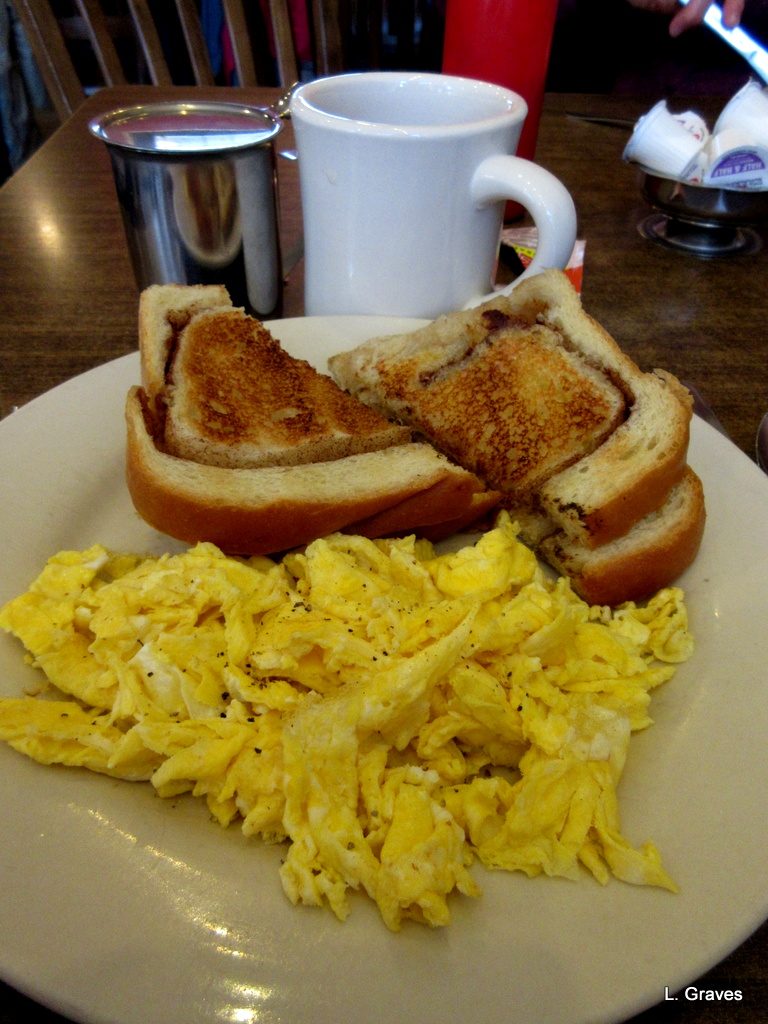
We started out with egg and toast as we watched the news.

After the news, we moved on to Sanditon, a BBC production of Jane Austen’s last unfinished novel. Through Maine Public Television, we were able to stream three episodes. Although Jane Austen had only written eleven chapters of Sanditon before she became too ill to continue, it was clear that her focus was centered on how commerce was changing England’s culture. Some of Sanditon feels contemporary as certain characters fret about what we would now call venture capital. In addition, there is a West Indian heiress—Miss Lambe—whose mother was a slave. These, apparently, are all elements in the book, and at first the show is relatively faithful to the story.

But then the writer, Andrew Davies, decided to tart things up for a modern audience and throw other elements into the mix. (I won’t give any spoilers in case some of you haven’t watched the show but are planning to later on.) By doing this, Davies has departed from the spirit of Jane Austen, and it feels disrespectful to me. Other choices are downright ludicrous. I do like the actors who play the main characters—Charlotte and Sydney—but I am not sure if this will be enough to keep me watching.

If any of you are following the series, please chime in and let me know what you think.

After watching Sanditon, we were in the mood for something sweet, and decided to make some chocolate-covered peanuts. Very tasty, if I do say so myself.

Now with all these treats, how could we end the day? Why, with veggie sausages and Clif’s homemade pancakes. To borrow from my Yankee husband: Pretty darned good.

After a busy week of working on various projects, it was good to take a whole day off to rest. In Maine, winter is the perfect time to do this. Once spring comes, we will busy working outside, but for now setting aside one day a week to relax feels very good indeed.



Green, Green with EV Envy

Just before Christmas, my friend Dawna called and asked, “Could I stop by for a little while? I have something to show  you.”

“Sure,” came my answer. “I’ll put the kettle on for tea when you get here.”

Dawna is a talented photographer and graphic artist who sells cards at various local shops and online through Etsy.  (Do check out her beautiful work if you get a chance.) I thought she was going to show Clif and me a new line of cards, which I always enjoy seeing.

Therefore, as soon as Dawna came into our dining room, I said, “Let me put the kettle on, and you can show me what you brought.”

“Well…” she said in a hesitating way as I trotted into the kitchen to put on the kettle.

When I went back into the dining room, Dawna was grinning. “I got a new car.”

I’m sure there was a click, click, click as I processed this information, looked out at the new snazzy blue car in my driveway, and understood exactly what she meant.

“Oh, my God!” I exclaimed. “You bought an electric car!”

“Yes, I did,” Dawna said, and if my knees weren’t so creaky, I would have jumped with joy.

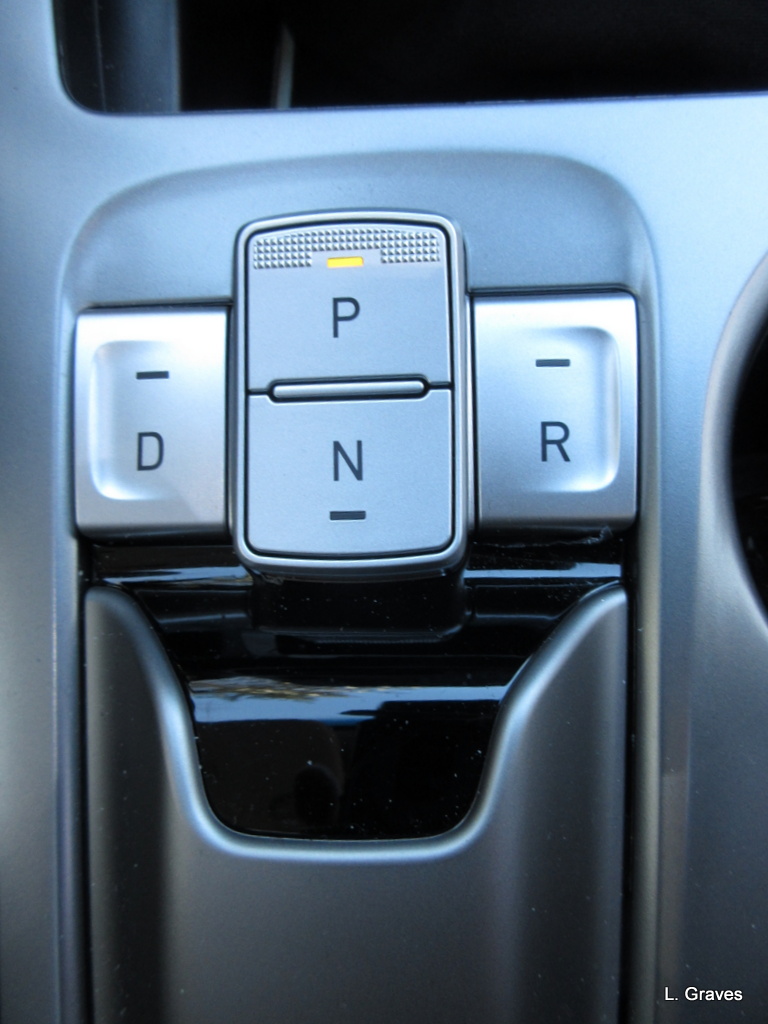
Here is a picture of her new EV beauty, a Hyundai Kona:

All thoughts of tea were forgotten as Clif and I went to admire the new car

“After Christmas, ” Dawna said, “I’ll take you for a ride.”

Dawna kept her promise, and last Friday she took us into Augusta, where we had brunch at Downtown Diner, which serves breakfast all day long.

As we ate, Dawna’s spoke about her decision to buy an electric car. Her previous car had become unreliable, and the time had come to replace it. She asked herself, why buy a polluting ICE (internal combustion engine) car? Dawna knew that the range of EVs had  improved, and when she did some research, she discovered that the Hyundai Kona got a peak mileage of 258 per charge. (Less, of course, when the weather is really cold.)

And that was that. Because there were so many rebates available, Dawna bought the car in December, not wanting to take the chance that the rebates wouldn’t be there in 2020. (Let’s face it: The current administration in DC is not exactly concerned about the environment.)

Here is what she got:

$2,500 from Efficiency Maine.

$500 from a Hyundai rebate.

$7,500 from a federal government rebate.

Her Hyundai EV Kona sold for $38,000, and the rebates brought the cost down to $28,000.

And how does Dawna like her new EV? Very well, indeed. As Clif and I noticed, the Kona is smooth and quiet and has great pick-up. Even on a cold Maine January day, Dawna can take the Kona to Portland, about a 120-mile-round trip, and still have 50 miles left on her battery. The Kona’s seats are heated, and Dawna and her husband, Jim, take advantage of this, which means they don’t have to use the car’s heater as much.

While most EVs come with a charging cord that can be plugged into a standard receptacle, charging this way is slow, and Jim has installed a charger that does the job much more quickly.

Southern Maine has a number of places to charge an EV,  but as you head north, their numbers dwindle. Dawna has decided to become an advocate for EVs, and she is writing a letter to encourage Governor Mills to support the installation of more charging stations.

Go, Dawna, go! And kudos to you for taking the leap into our electric future. I hope that someday soon Clif and I can follow your example, and I also hope many others will, too.


Impossible Blue

In central Maine, today is a perfect example of the exquisite beauty of winter’s light. On Saturday, we had seven more inches of snow, but on Sunday the weather cleared, and now the skies are an impossible blue. Only in January and February, with the cold weather, do we get this kind of piercing clarity.

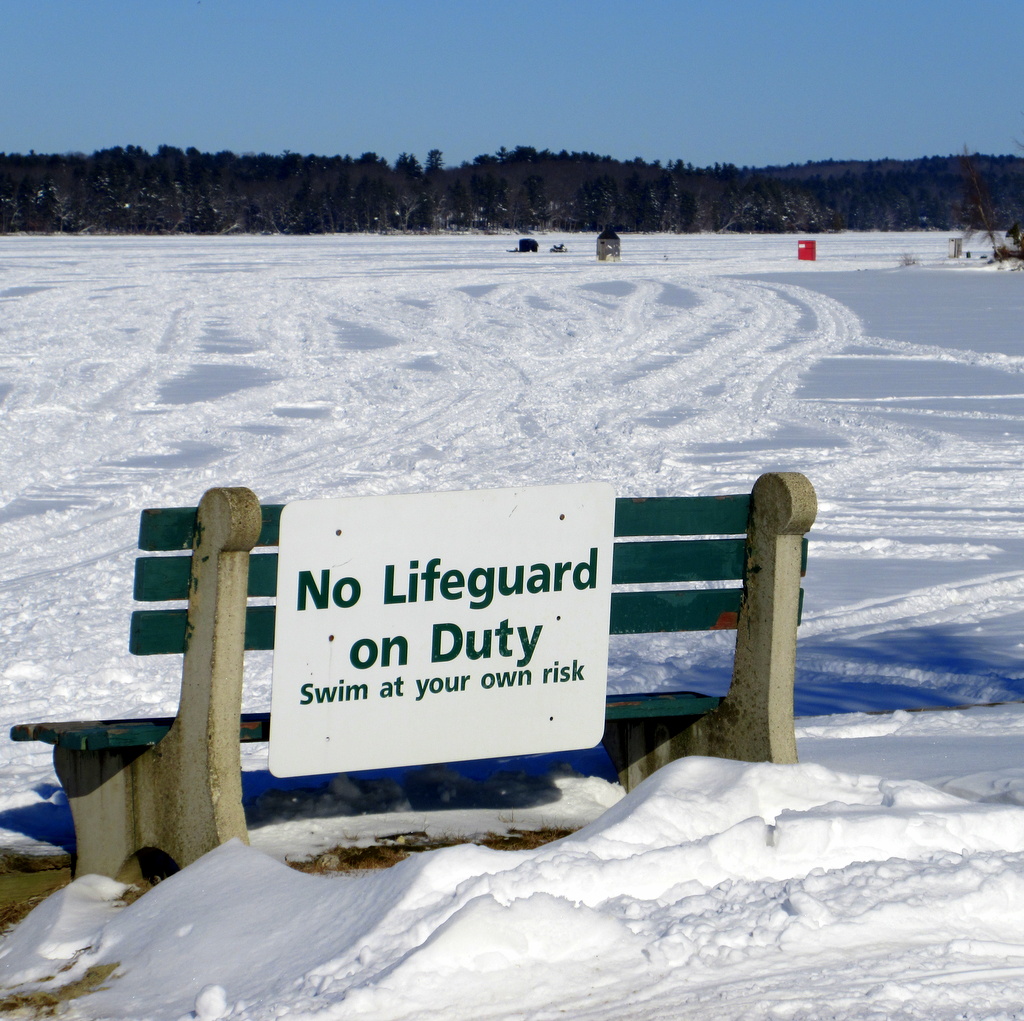
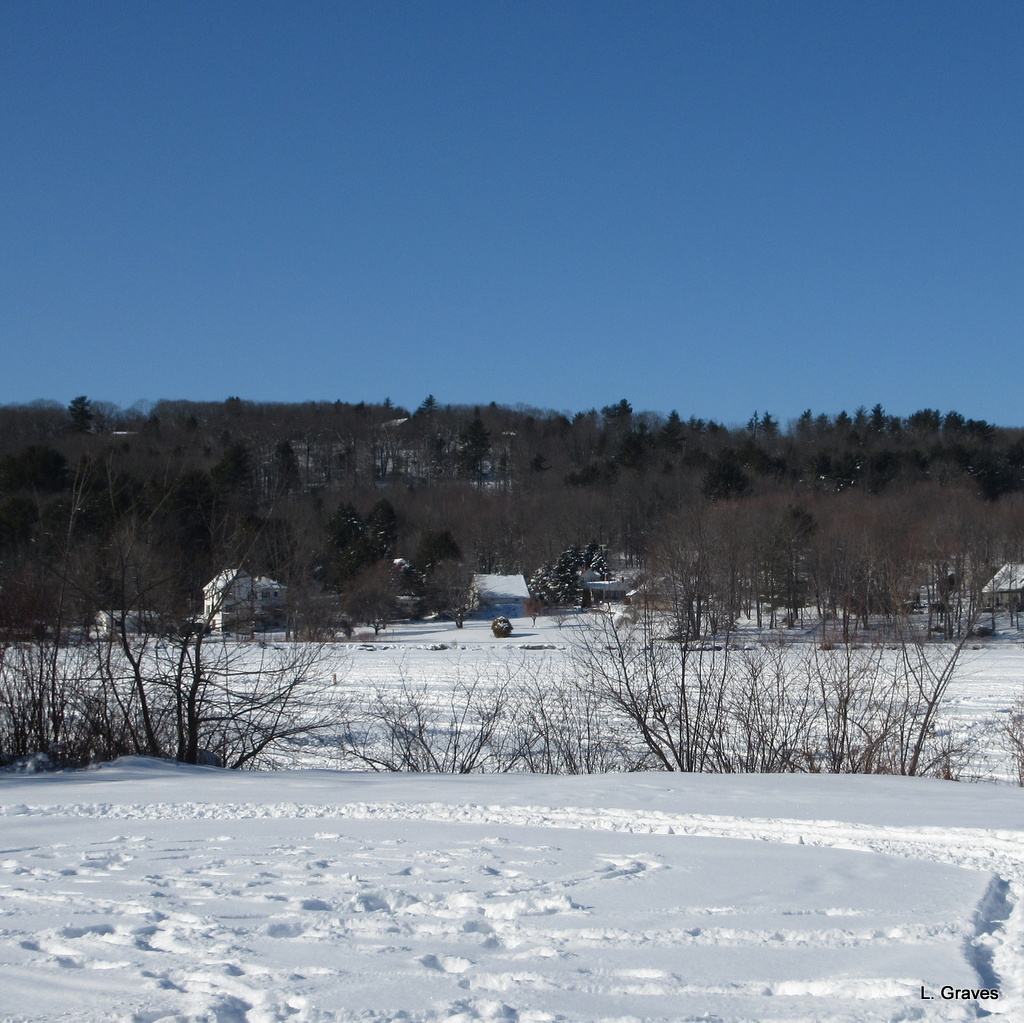
After going to a Martin Luther King Jr. breakfast at the local Catholic church, we stopped by the lake to take pictures of the sky and the snow and the trees. And, of course, the ice-fishing shacks.

Some people have their own kind of piercing clarity, and surely Martin Luther King Jr. was one such man.  It seems appropriate, then, to end with a few of his quotations:

There is some good in the worst of us and some evil in the best of us. When we discover this, we are less prone to hate our enemies.

And…

There comes a time when silence is betrayal.

Finally…

Freedom is never voluntarily given by the oppressor; it must be demanded by the oppressed.

Yes.


A Chocolate Box House?

Yesterday we had snow, and I am happy to report it was a Goldilocks’s storm where we got exactly the right amount—about six inches—and it wasn’t too wet or too heavy. No problem at all for Clif and Little Green, our trusty electric snow thrower.

Outside, it was a world of quiet and white with a touch of color here and there. Midwinter in Maine.

This morning when I got up, the sky had cleared and the temperature had dropped.

Out I went to take a picture of our snug, cozy home.

I hope I’m not being too presumptuous by borrowing a description from my friends across the pond to describe our home. That is, a chocolate box house.

More snow is predicted for Saturday, another seven inches or so. Again, just the right amount of snow.

Clif and Little Green will be ready. And who knows? Maybe snow-gauge Clif will soon make an appearance.


The Ice Storm Didn’t Cometh

Last weekend, an ice storm was predicted. There was even a weather advisory warning that we might get enough freezing rain to cause power outages.

Whenever there’s the threat of an ice storm, Clif and I think back to 1998 when there was a doozy of an ice storm that knocked out the power to half the state and felled trees with a sickening crack. We live in the woods, and during the worst of the storm, it sounded as though we were surrounded by gunfire as branches broke and fell to the ground.

We were without power for about eleven days, and what a miserable time we had. Every bit of water we used had to be hauled in, and the nights were long and chilly. (Fortunately we have a wood furnace, which meant we didn’t freeze.) It is a time we will never forget, and it certainly made us appreciate modern conveniences such as electricity.

Therefore, when we heard that there might be an ice storm, we sprang into action. Laundry done. Check. Extra bread for peanut butter sandwiches. Check. Plenty of wood in the basement for the furnace. Check. Extra water in big pots on the stove to go with the stored water in our cellar. Check. Check. Check.

We were ready. But to our delight and relief, the ice storm didn’t cometh. Instead, we got rain, which has made everything look miserable, but a dreary landscape is a vast improvement over a frozen, slippery one. And glory be, we didn’t have to worry about losing our power.

Instead of sharing pictures of what everything looks like now, I’ll share pictures I took midweek before the rain washed all the snow away. These were taken in town, about a mile from where we live, of Maranacook Lake.

I hope that we get a bit of snow and that Maine will look wintery again, the way it ought to in January. Not a blizzard mind  you. Instead, five or six inches. We always want things to be just right, don’t we? It seems that most of us are a bunch of Goldilocks yearning for that perfect porridge. All too often, we are disappointed. Still, we yearn, and in that yearning lies hope.

Our cats, I think, have found their perfect sweet spot in our living room. Rain or snow or freezing rain, it doesn’t matter.

May you find your perfect sweet spot this week and every week.

Brew Well. Do Good. Have Fun.

Last night, we went to Winthrop’s very own brewery, aptly called Van der Brew. It was trivia night, sponsored by Bailey Public Library and hosted by Nick Perry, Adult Services Librarian.

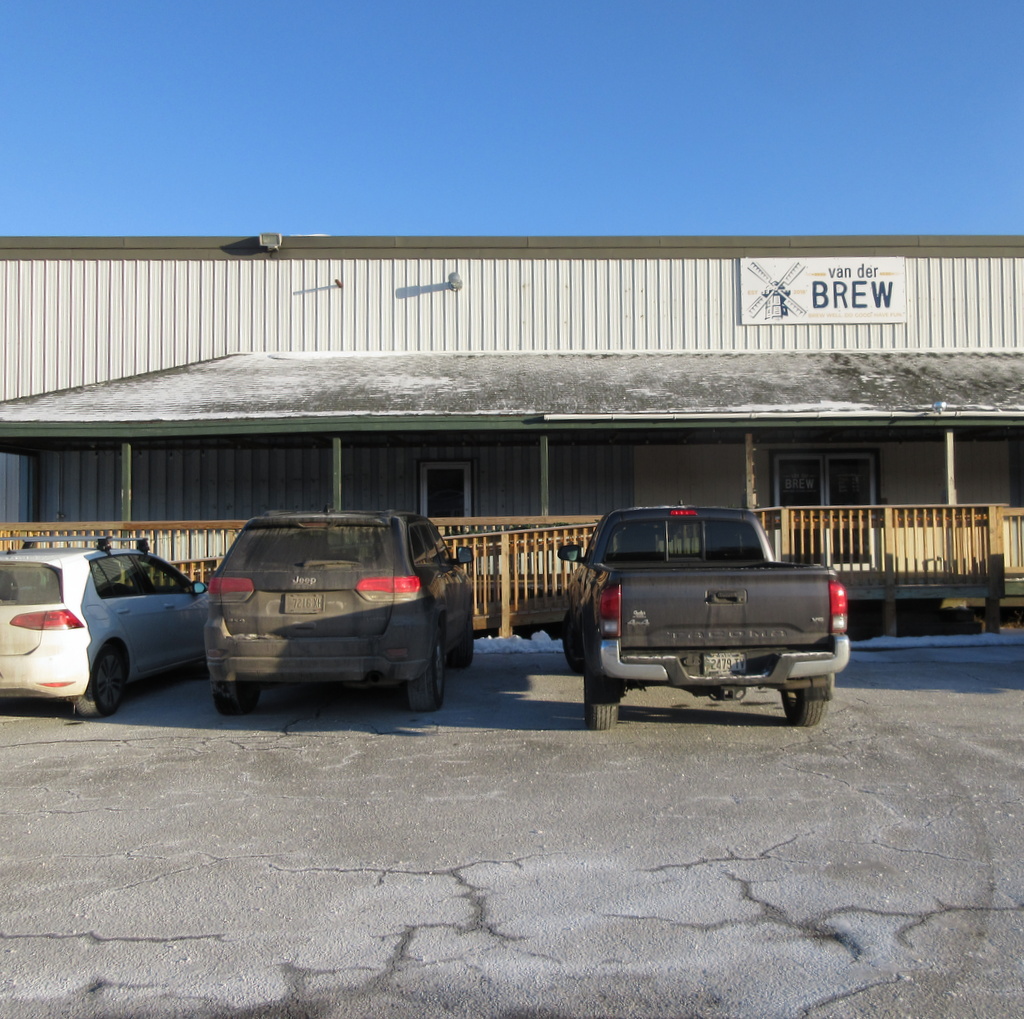
The modest exterior of Van der Brew, previously a Paris Farmers Union (a farm, home and garden center) belies the good vibe of this brewery.  

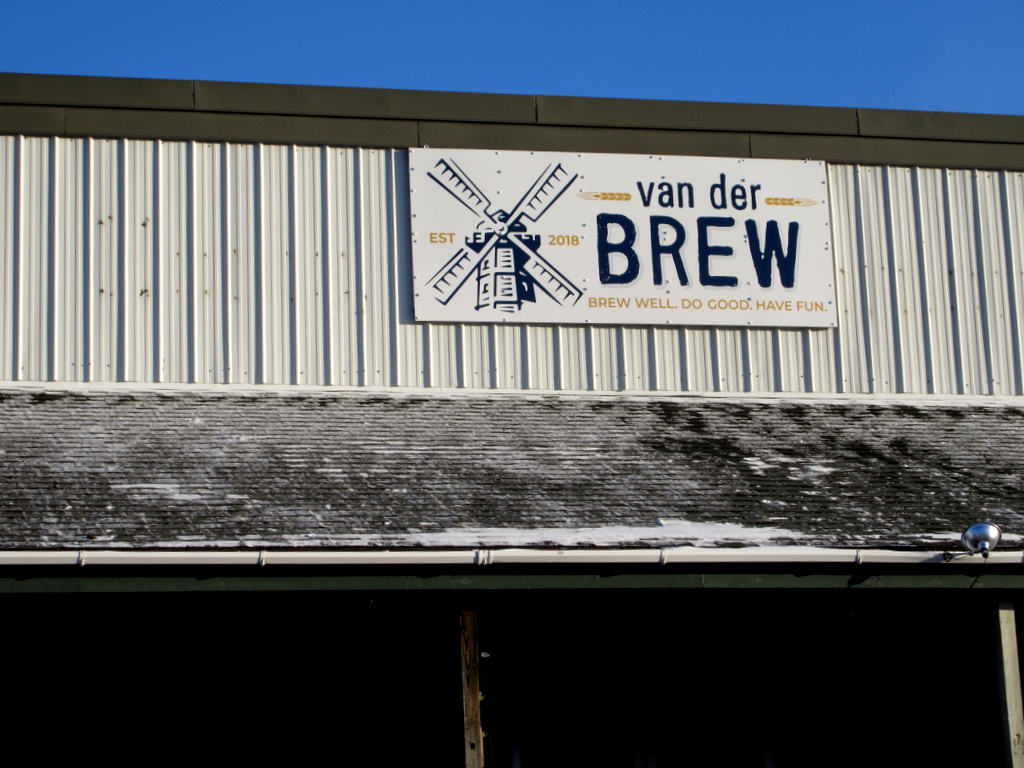
But the sign’s logo says it all: Brew Well. Do Good. Have Fun.

The spirit of this logo infuses the brewery. This is from Van der Brew’s website: “Making great beer isn’t just about the brews. It’s about building community, bringing people together and supporting local businesses and organizations that make our towns great places to live, work and play.”

Yes, yes, and yes, and Van der Brew is certainly making our community a better place.

Confession time: Not to put too fine a point on it, but I am not a beer enthusiast. Instead, I am more of a cocktail girl, and Van der Brew doesn’t serve cocktails or wine—only beer and soft drinks. But Clif is a beer drinker, and the atmosphere, which encourages all ages, is so much fun that a soft drink is just fine with me.

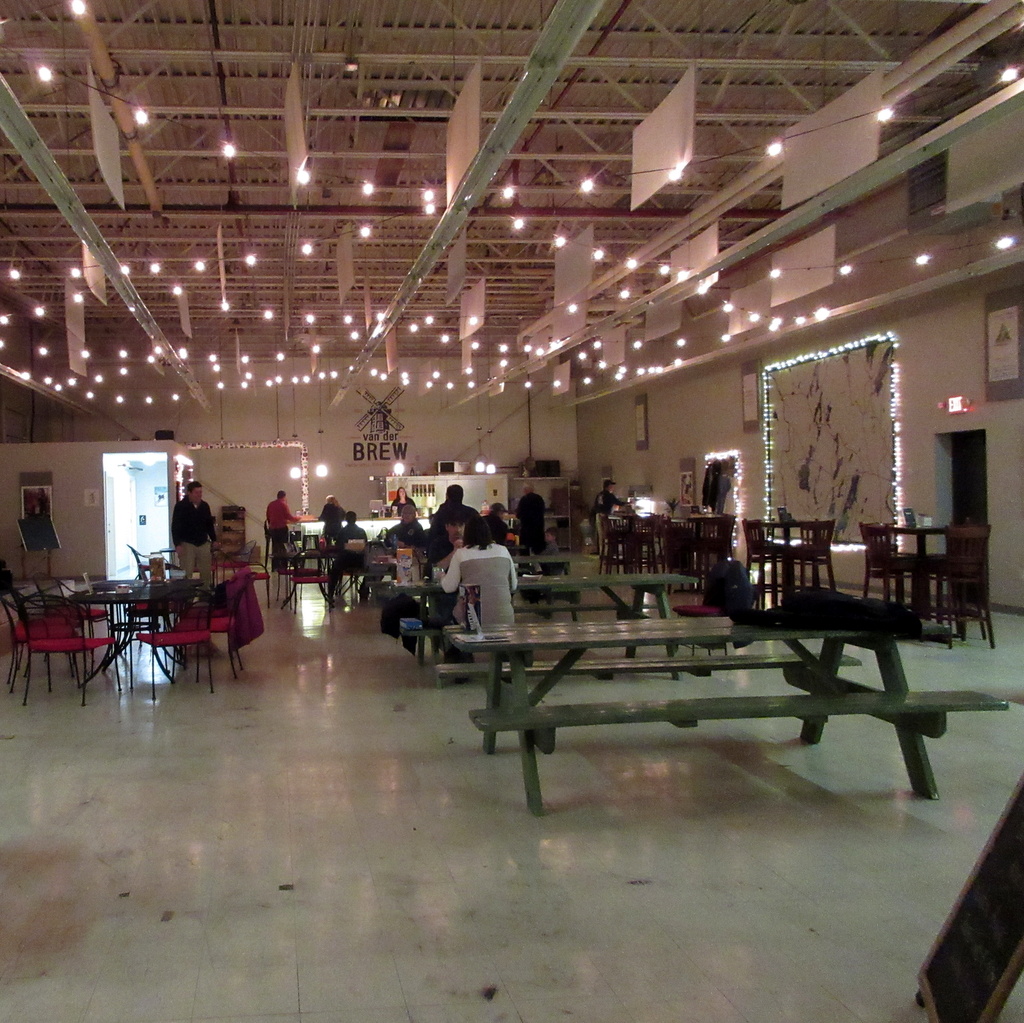
Yesterday we arrived early to get a good table and chairs for our trivia team, the Great Library, named after my very own series of YA fiction.  Here are pictures of the interior before the crowds arrived.

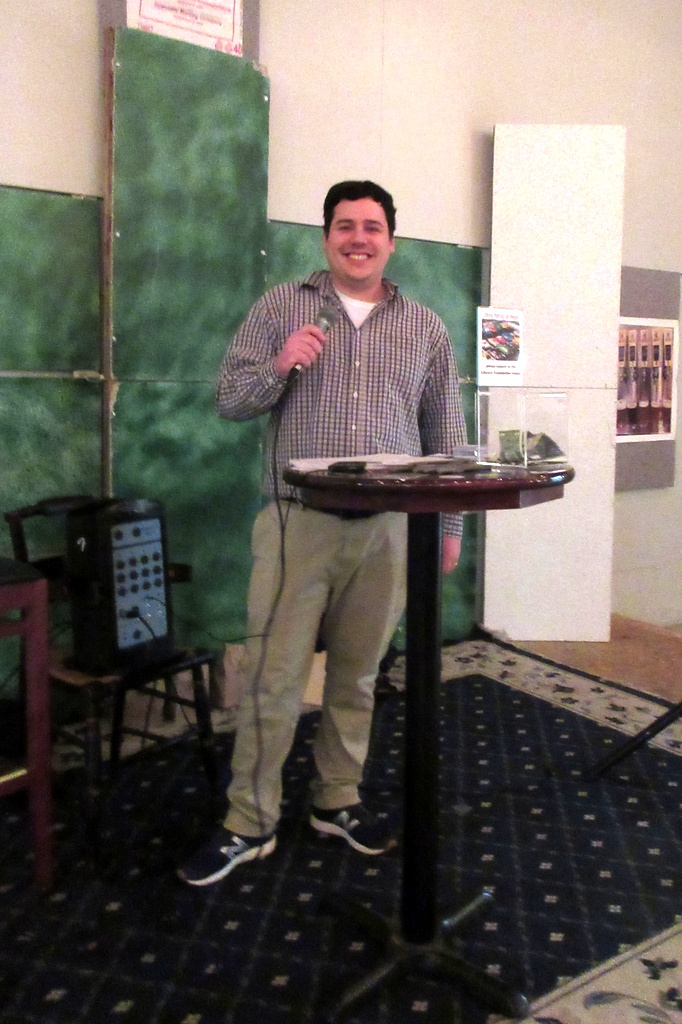
And here is a picture of our fearless trivia leader, Nick, who has been leading trivia nights at various places for ten years. Go, Nick!

By the time trivia night started, the place was packed, and there were around eighteen teams. Liz, one of our team members, told me that a couple months ago, on Van der Brew’s first trivia night, there were about six teams. Clearly, the word has spread about Nick’s trivia nights at the brewery.

Along with being a fun night, donations were also taken for the library for a much-needed proposed parking lot nearby. By the end of the night, the box on the stand was filled with donations.

Also, at various times the line for beer and soft drinks was long, which meant Van der Brew also had a good night.

So how did Team Great Library do? Well, I am sorry to report that we weren’t at the top. We bombed on questions regarding sports and geography, but we did pretty well with books and movies. Big surprise! We talked ourselves out of the right answers a couple of times, which was irritating. As a result, we came in ninth, smack dab in the middle.

But we had a lot of fun, and Clif and I will return on February 14 for the next trivia night.

Many thanks, Nick, and many thanks Van der Brew for this fun event that brings our community together.


Living in Place

For a New Year’s resolution, Clif and I have made a plan to use our car less and thus reduce our carbon emmissions. Our intention is to cut 1,000 miles from our yearly total, which was 7,800 last year.

Because we live in a rural community with no public transportation, a car is a necessity for us.  We must drive to the grocery store, and we must travel to sell books. Nevertheless there are plenty of ways to cut back, and one way is to become more involved with our town—Winthrop—which has a fantastic library and a new brewery, both of which sponsor many events each month. (This Friday night at the brewery is trivia night. Yes, we will be there.)

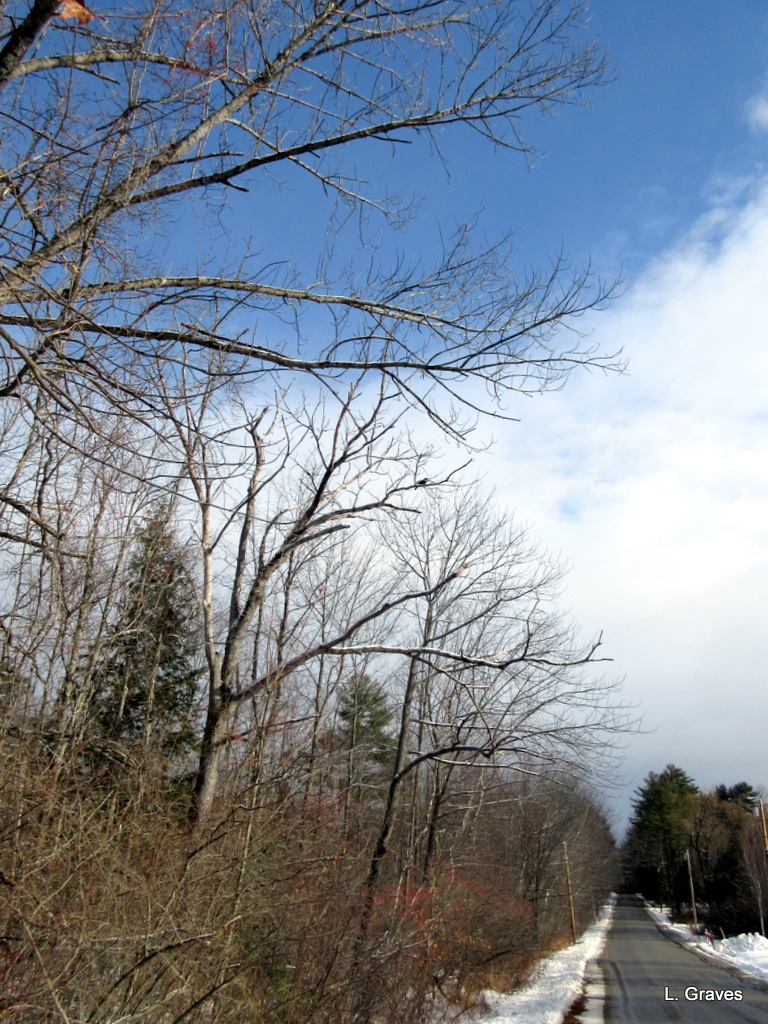
Another way is to go for walks and appreciate the natural beauty of the town itself, including our very own wooded road.

Whatever the season, there is something to notice. Sometimes the trees even look back.

As we walk, the crows are always watching. I was lucky to snap a picture of these two before they flew away.

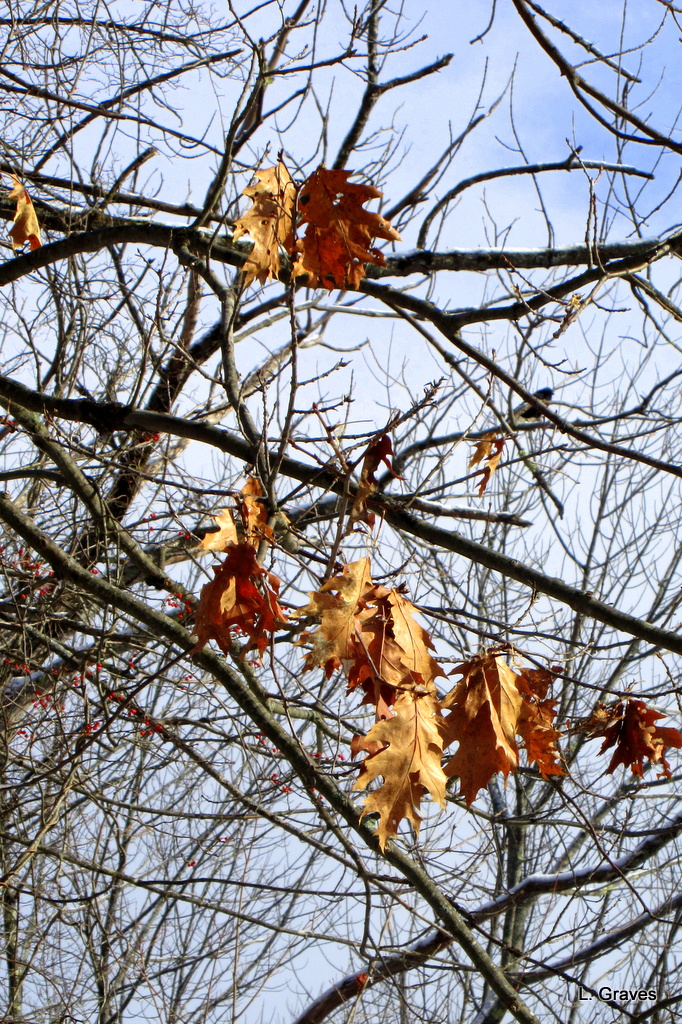
Then there are the brown leaves on the winter trees,

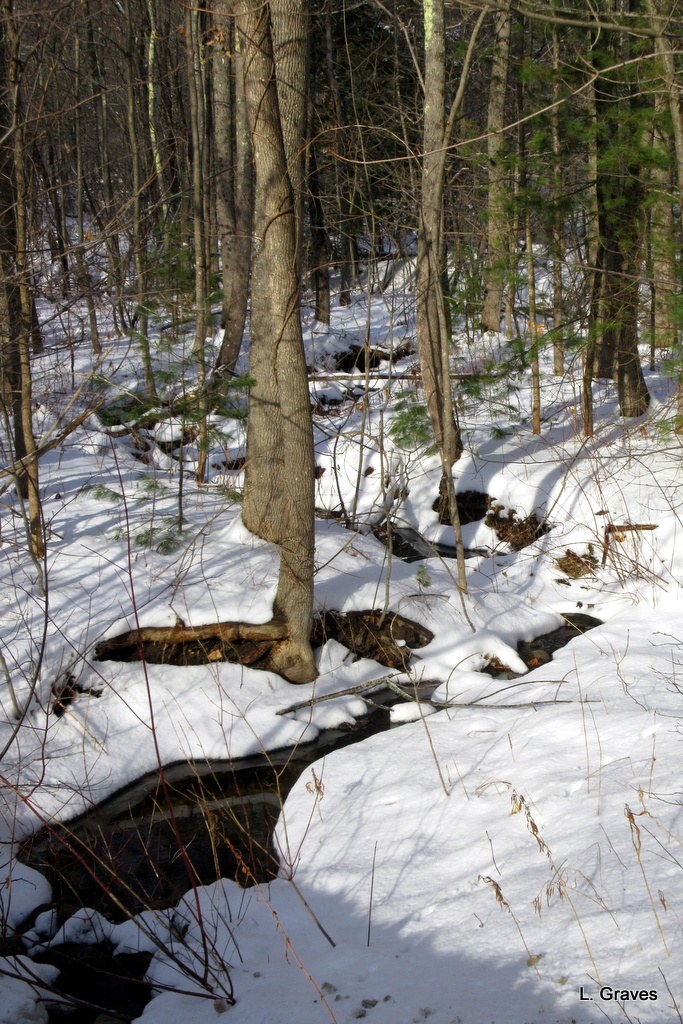
and the little stream that winds through the woods not far from where we live.

I call this kind of close attention “living in place,” and it seems to me that focusing on what is nearby is a kind of meditation, which, in turn, can lead to an abiding of love of where one lives—town, city, country, or suburb.

In this time of climate crisis, a love of place is of utmost importance. Because in the end, we pay attention to what we love. We nurture it. We take care of it. We don’t destroy it.

Viewed in this light, living in place might be the most important thing a person can do.

Cory Doctorow’s Hopeful Vision: Let’s Imagine Better Things

In my last post I promised I would write pieces about what is making me hopeful in a time that does not always seem hopeful. This does not mean turning away from the realities of the climate crisis or how too many people seem to be drawn to authoritarian leaders or how hard it is to reduce one’s carbon emissions. No. I will continue to gaze at the world in all its ugliness and imperfections, including my own. But I will make every effort not to be paralyzed by the difficulties of being part of a hopeful future.

The perfect place to start my hopeful postings is with the activist and science fiction author Cory Doctorow, who is perhaps best known for his novel  Little Brother. Recently for Canada’s Globe and Mail, Doctorow wrote an opinion piece entitled Science Fiction and the Unforeseeable Future: In the 2020s, let’s imagine better things.

On his website Doctorow posits that “science fiction can’t predict the future, but might inspire it” and “how the dystopian malaise of science fiction can be turned into an inspiring tale of ‘adversity met and overcome – hard work and commitment wrenching a limping victory from the jaws of defeat.'”

Here an excerpt from Science Fiction and the Unforeseeable Future: In the 2020s, let’s imagine better things:

Considered in the grand sweep of human achievements, resolving the climate crisis is a big job, but it’s not the biggest thing we’ve ever done. We have built great cities, international aviation systems, an internet that wires together the planet like a vast digital nervous system. We can do this.”

Then Doctorow goes on to imagine a Canadian Dream, which could be a dream for all of us:

Full employment is guaranteed to anyone who will work on the energy transition – building wind, tide and solar facilities; power storage systems; electrified transit systems; high-speed rail; and retrofits to existing housing stock for an order-of-magnitude increase in energy and thermal efficiency. All of these are entirely precedented – retrofitting the housing stock is not so different from the job we undertook to purge our homes of lead paint and asbestos, and the cause every bit as urgent.

Canada goes on a war footing: Full employment is guaranteed to anyone who will work on the energy transition – building wind, tide and solar facilities; power storage systems; electrified transit systems; high-speed rail; and retrofits to existing housing stock for an order-of-magnitude increase in energy and thermal efficiency. All of these are entirely precedented – retrofitting the housing stock is not so different from the job we undertook to purge our homes of lead paint and asbestos, and the cause every bit as urgent.

How will we pay for it? The same way we paid for the Second World War: spending the money into existence (much easier now that we can do so with a keyboard rather than a printing press), then running a massive campaign to sequester all that money in war bonds so it doesn’t cause inflation.

The justification for taking such extreme measures is obvious: a 1000 Year Reich is a horror too ghastly to countenance, but rendering our planet incapable of sustaining human life is even worse.

Doctorow makes a compelling argument for hope, and I would encourage readers to read the whole Globe and Mail piece, which can be accessed through the above link I have provided to Doctorow’s website.

A blog about nature, home, books, movies, television, food, and rural life.