Beautiful, Mercurial January: A Sapphire Sky, Liam through the Ice, and a Snowstorm

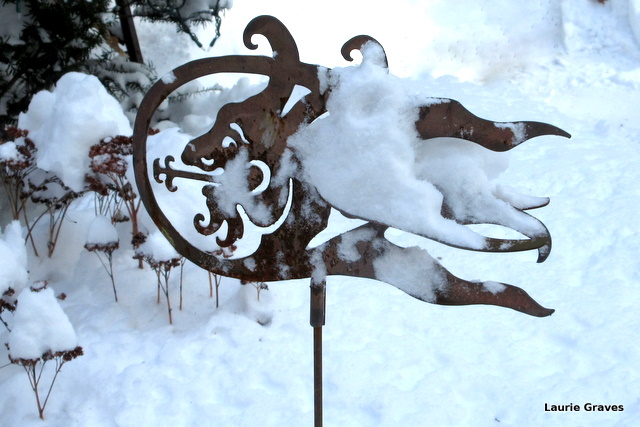
Gideon, little guardian of the yard, with a snow cap

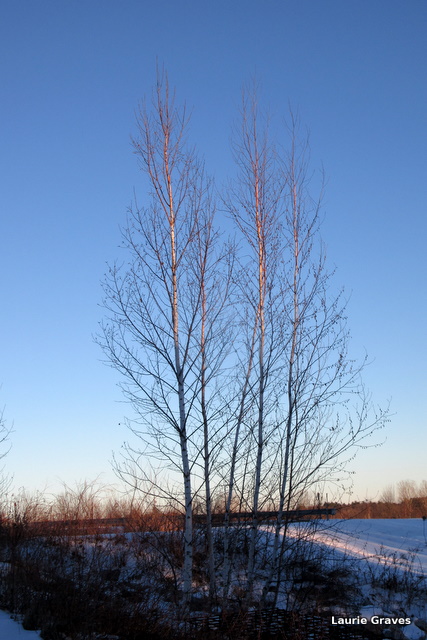
This year, January has been such a variable month. On Monday, when I went to a library meeting, I was dazzled by the night sky. It was just past dusk, shading into night with a sapphire blue horizon.  Into that beautiful blue came the rising moon, a glimmering sliver, a slice of brilliance.

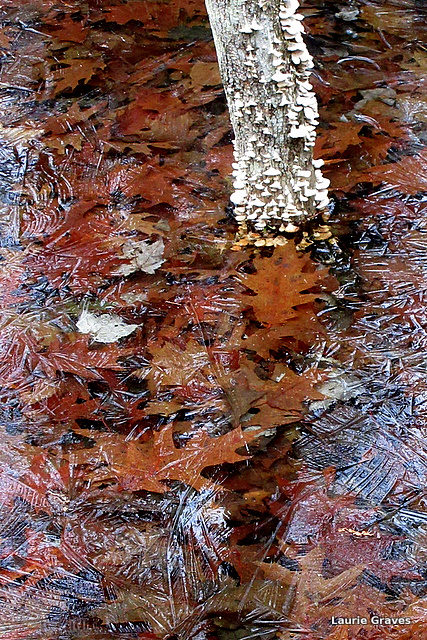
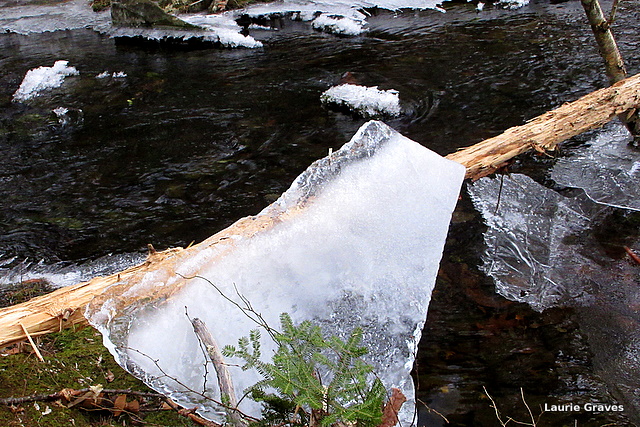
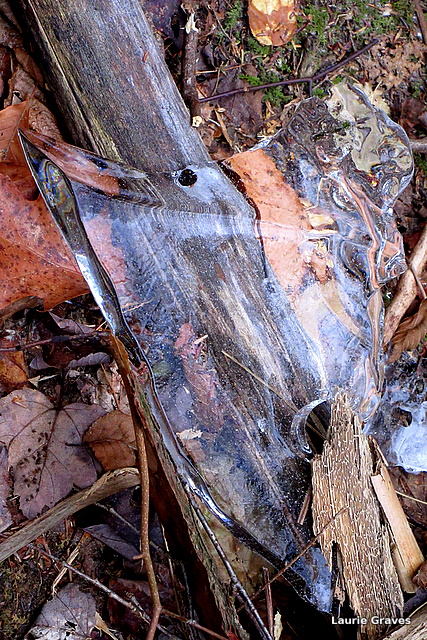
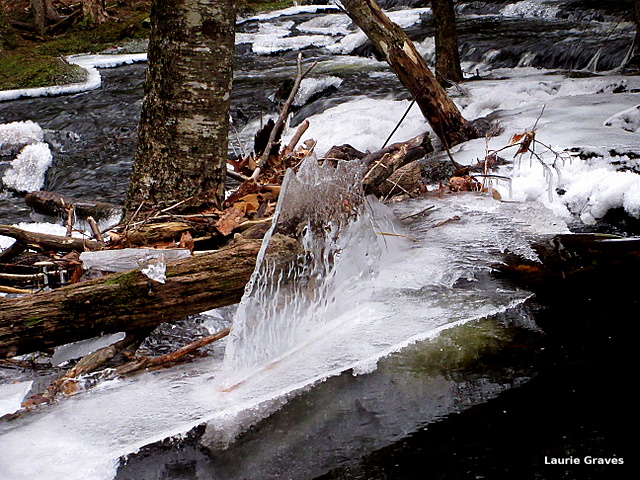
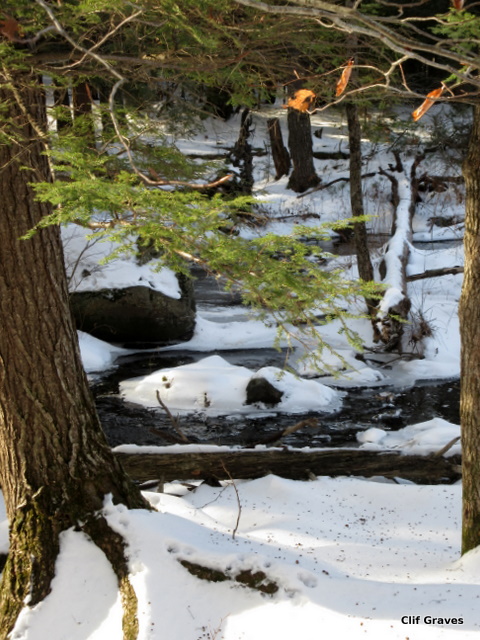
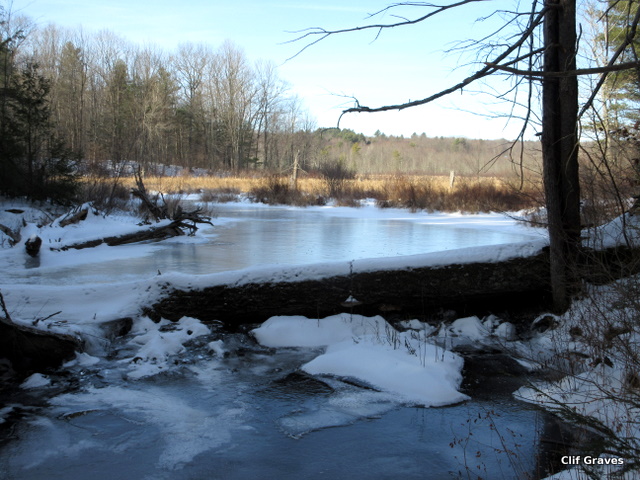
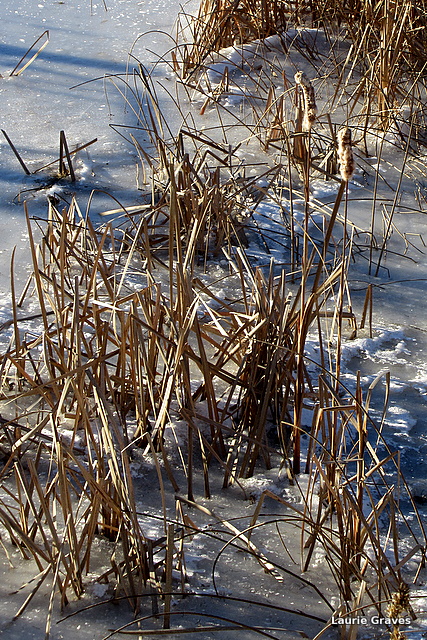
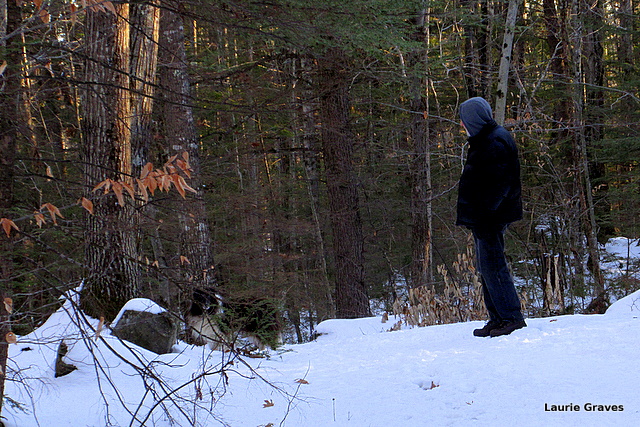
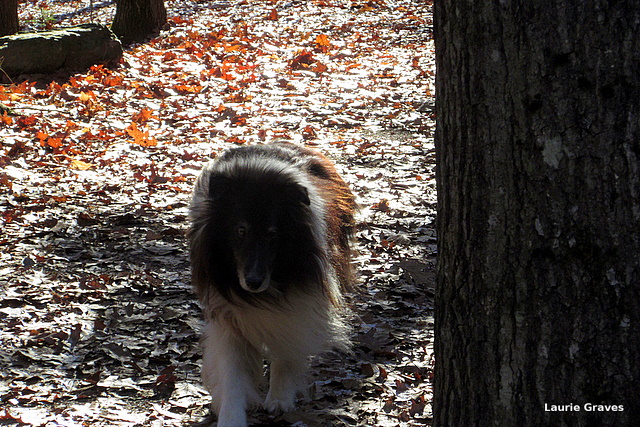
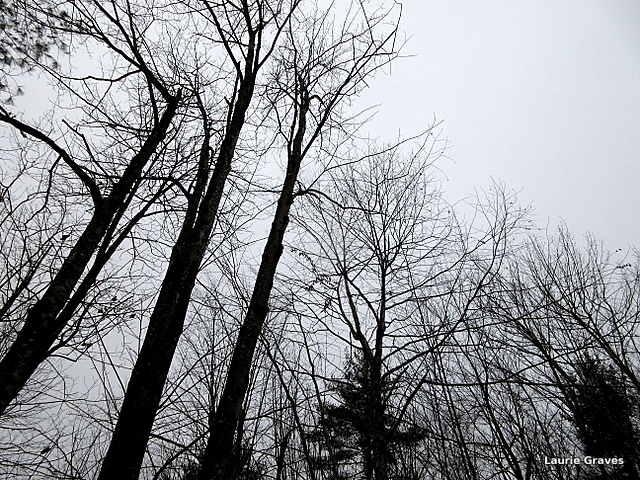
On Tuesday, knowing that a snowstorm was coming, Clif and I (and Liam!) took to the woods, where the ground was nearly bare. There were patches of ice on the trail, which meant we still had to walk carefully. To borrow from Paul Simon, the sky was a hazy shade of winter. When we got to the brook, we found that ice had been thrown this way and that, just perfect for taking photographs, some of which were featured in this week’s Wordless Wednesday.  While I was taking pictures by the brook, I heard a mighty crash.

“What’s that?” I asked, whirling around.

“Liam fell through the ice, but he’s all right,” Clif answered.

Already on the shore, Liam was shaking his back legs. This confirmed one of my worries about Liam and winter ice—his basic unawareness of thin ice. When we have walked by the Narrows, where the water is deep, I have watched him carefully, only letting him on the ice when it was completely frozen. With the brook, there are no worries. The water is shallow, and the current is gentle. Still, this was a reminder that my concern is genuine.

We came home and had fresh homemade bread and leftover red bean soup. While we ate, it snowed outside, and before I went to bed, I turned on the porch light. “A nice little snowstorm,” I thought, seeing several inches on the porch.

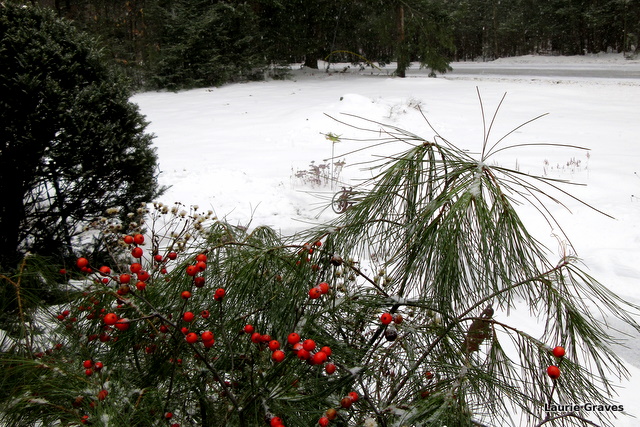
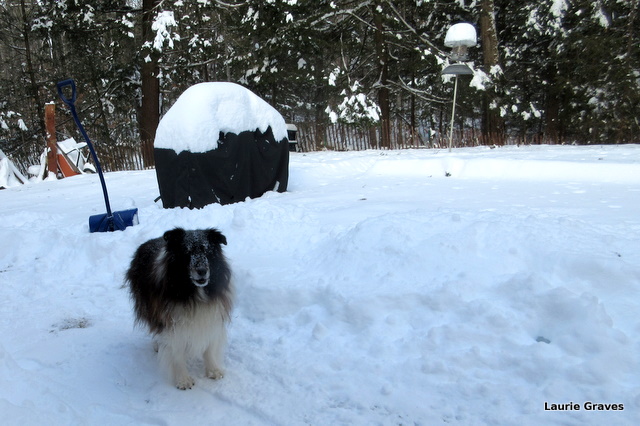
On Wednesday, we woke up to find that about six inches of perfect, light, fluffy snow had fallen. This, of course, meant clean-up, with Clif on Little Green, me with the shovel, and Liam to leap, bark, and supervise.

Clif with Little Green


Liam, Dog of the North, in the backyard

Somehow, January is never long for me. I don’t mind the cold, and I don’t mind the snow, as long as it’s not heavy, and we don’t get more than a foot with any one storm. I suppose it’s because I was born in central Maine, and I have lived here for most of my fifty-eight years. To me, snow and cold are a normal part of life.

Then there is the beautiful winter light, which my small camera cannot always capture. Brilliant during the day, deep and mysterious at nightfall, this light makes January a month to look forward to.
IMG_0409


Going to the Movies on a Sunday Morning to See Bounce: How the Ball Taught the World to Play

First, a little back story: For the past twelve years or so, Clif and I have been part of a committee that plans a winter film series at Railroad Square Cinema, a wonderful independent cinema about twenty-five miles from where we live. The film series—Cinema Explorations—comprises six films, begins the weekend after New Year’s, and runs every other Saturday and Sunday until March.

IMG_7882

This past weekend was the weekend after New Year’s, and Cinema Explorations started with a thoughtful yet snappy documentary called Bounce: How the Ball Taught the World to Play. As a bonus, David McLain, the cinematographer, lives in Maine, and he was able to come to the Sunday showing for a Q & A after the movie.

Bounce begins by illustrating how play is integral to many species, including dogs, cats, otters, chimps, tigers, and, of course, humans. While young ones are especially apt to play, even adults play, too, from time to time. This play might seem to be without purpose and a huge waste of energy, but Bounce maintains that play, even if it’s rough and tumble, enhances creativity and teaches necessary social skills.

Enter the ball. Round things are found in nature, often in the form of fruit but also with rocks. Our primate ancestors ate fruit, used rocks as tools, and most probably used them for play. The earliest depiction of a game using a created ball comes from the Egyptians, but the ball was developed independently around the world, and those clever Mesoamericans even figured out how to make them bounce.

Once a ball could bounce, it became ever so much more exciting and unpredictable. (So exciting that the Spaniards initially banned the Mesoamericans from playing with their demon-possessed bouncing balls.) The bouncing ball gave us soccer, rugby, and many other games that involve a ball.

Bounce takes us around the world to India, Africa, and the Orkney Islands, the latter of which has developed a game called Ba’, which is only played on Christmas and New Year’s Day and almost defies explanation. It involves a crushing mob and a ball and two sides—the uppies and the doonies, the farmers and the fishermen. This sequence in Bounce is jaw-dropping, illustrating how Ba’ is certainly not for the claustrophobic.

After the movie, David McLain, the cinematographer, told us a little about how the film was made and also answered questions. He said that the hardest part of the film was to shoot free-play sequences, that nowadays American children have very little opportunity for playing without adult supervision. For this he had to go to Africa and India. McLain also noted that one of the ironies of Bounce was that making it was so much work. “But we all need to play,” he concluded. “The play state is important.”

IMG_0318
David McLain, the talented cinematographer of “Bounce,” in the lobby at Railroad Square

Despite the hard work that went into making this movie, Bounce is playful, fun, and informative.  In addition, the music is terrific, and the cinematography is outstanding.  After seeing this movie, I will never look at balls and play the same way again. If Bounce comes to a cinema or festival near you, then go see it.


Success with Red Bean Soup

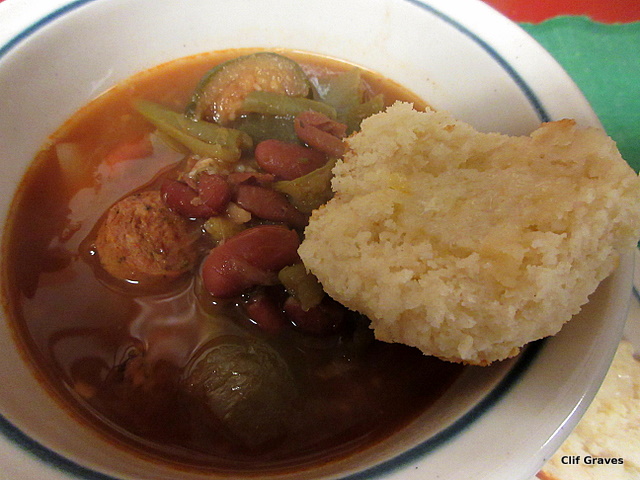
Yesterday, before doing errands, Clif and I chopped vegetables and chicken sausage and put them—along with chicken broth, water, tomato paste, and spices—in the slow-cooker. We added plenty of red beans. Finally, my not-so-secret ingredient, a little soy sauce.

Off we went to do errands, and when we came home—voilà!—the house was filled with the spicy smell of simmering soup.

Clif’s Yankee pronouncement? “Pretty darned good.”

IMG_0313

Making Red Bean Soup on a Snowy Day

This morning, when I looked out my window, I saw falling snow and a gray day.

IMG_0304
I couldn’t catch the falling snow, only the gray


A perfect day to make red bean soup, in honor not only of Esther and her mother but also in honor of soup month, which January apparently is. (In Maine, January is an appropriately frosty time to celebrate soup.)

IMG_0301-1

I found some beans from Maine, and I soaked them last night.This morning I simmered them, and soon into the slow-cooker the red beans will go along with green beans, summer squash, and green peppers. (Those last three had been frozen then thawed.) I will also add some chicken sausage.

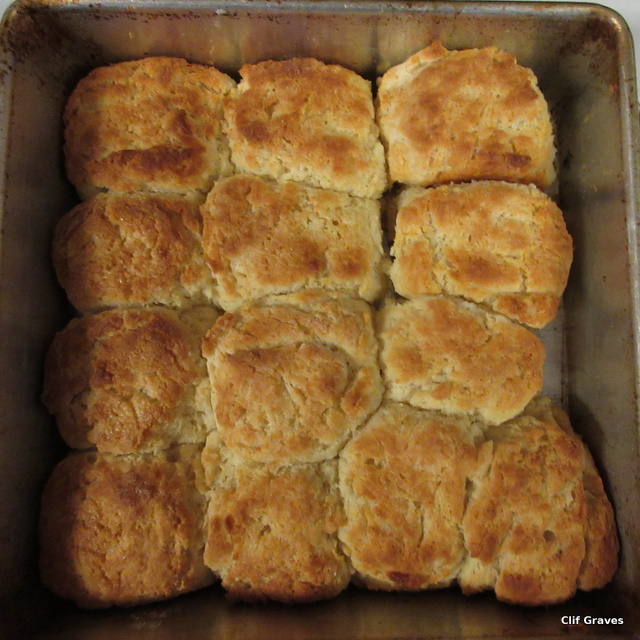
I’ll make biscuits, of course. After Esther’s story of walking home in the cold and the dark to red bean soup and biscuits, how could I leave out the biscuits?

I expect my soup will different from the one that Esther’s mother used to make, but no matter. It will be red bean soup. Served with biscuits.

Along Brook Trail: Keeping Track of the Ice

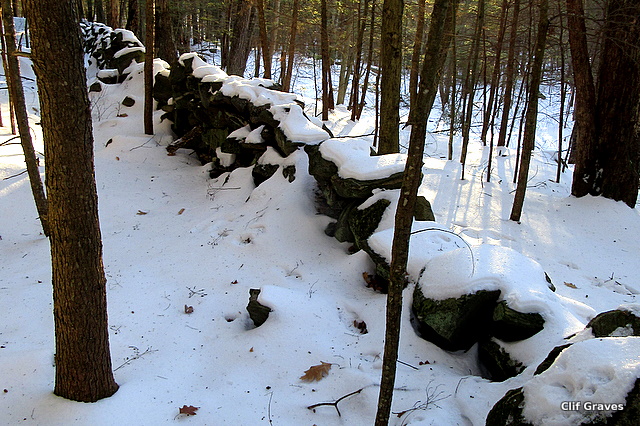
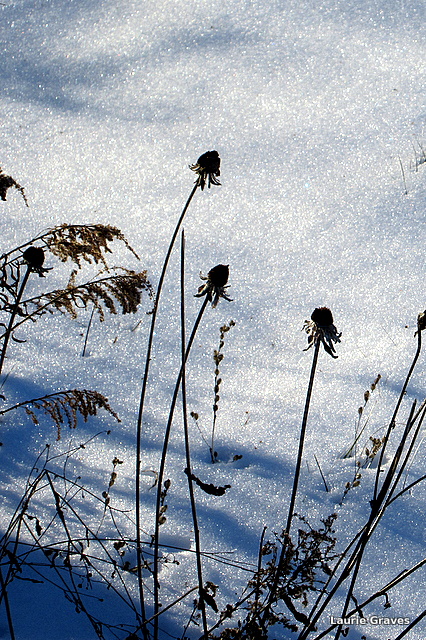
Yesterday, Clif, Liam, and I walked along Brook Trail in the woods behind the high school. Winter has finally come to Maine, and we have had snow—not so much that we can’t walk in the woods, but enough to make the ground white with blue shadows.

In the winter, the woods are so quiet.  Gone are the summer songs of the birds, that exuberant  burst of life. Instead, there is the crunching of our feet as we walk on the snow. A squirrel scolds us as she rushes up a tree. In the distance, we can hear a woodpecker rat-a-tat-tatting on a tree and the answering rat-a-tat-tat of another woodpecker.

I love the woods in winter, the solemn stillness, the muted colors. On the trail we take, there is a side path that leads to Brook Trail, and here the quiet of winter is interrupted by running water that now has a skim of ice.

The other day, we met an acquaintance on the trail, and she said, “I come here as often as I can. I love to keep track of the progress of the ice on the brook.”

We do, too. I wonder if the brook will run all winter. Or, will we get a good cold snap where the brook freezes entirely? Clif and I will be going back today to check on the ice, and we’ll continue do so as long as the snow isn’t too deep.

Here are some pictures from yesterday’s walk.

IMG_0238

IMG_0253

IMG_0250

IMG_0244

IMG_0258

Red Beans and Biscuits after a Cold Walk in the Dark

IMG_0006Yesterday, I went to visit Esther, who was a dear friend of my mother’s and has become my friend, too. Esther grew up in rural Maine—in Vassalboro—in the 1940s, and I love listening to the stories she tells of her childhood. Esther is only twenty years older than I am, but it almost seems as though she were born in a far-gone era, where life was contradictorily simpler and harder.

Esther made lunch for me, and as we ate her delicious beef stew, she told me that as a young girl she often walked home in the cold and the dark to her mother’s red bean stew and biscuits.

“Back then, no one took me anywhere or picked me up. If I wanted to go to a girl scout meeting in the village, I had to walk home afterward. Getting to the meeting after school wasn’t too bad, but coming home, it was a long, dark walk.” (Esther lived on a country road about two miles from East Vassalboro Village.)

I thought about how children were certainly hardier and more self-sufficient in those days, but I just nodded and helped myself to seconds of the beef stew. (As friends and family know, I am, ahem, a good eater.)

“Mom would have red bean stew and biscuits ready for me, and they tasted so good after that long walk.”

“I bet,” I replied, savoring Esther’s beef stew—the potatoes, turnips, and beef so tender it practically melted in my mouth. I also remembered hearing about how Esther’s mother, who worked in the factory in North Vassalboro, did her own walking in the dark and cold.

Esther is writing a memoir for her family—I hope I get a copy, too—and we talked about some of the vignettes that would be included in her book. “I’m writing about some of the unsung heroes in Vassalboro. My school bus driver, for example. One day after school, I went home with a friend, who lived on Cross Hill Road, and there was a bad snowstorm.”

“There’s quite a hill on that road,” I said. “I’ve gotten stuck on it once or twice.”

“That road was so bad that the bus driver decided he just couldn’t make it up that big hill. So the he stopped the bus in a safe place, let us out, and walked all the kids to their homes.”

“He felt responsible for the safety of the children on his bus,” I said.

“Yes,” Esther replied.

As I finished my soup, I thought about this bus driver, a man clearly concerned about the welfare of the children more than he was about his own comfort. He could have let the children walk home on their own. I doubt any of the parents would have given it much thought. As Esther’s story about the girl scout meetings indicates, children walked a lot back then, and in all kinds of weather. But the bus driver didn’t want the children to walk on their own in a snowstorm.

Generally, when we think of heroes, we think of some grand, brave act such as jumping into an icy river to save a drowning child. But Esther is right to honor the unsung heroes in her town, the men and women who thought of others, who in many small ways made life better for the people in Vassalboro.

In a life that is hard or hectic or filled with other kinds of stress, it is not always easy to give, to be decent. But give we should, despite the effort because as Esther’s story illustrates, this generosity ripples out through the years, well past the time when it was given.


The Frosty Days of January: A Perfect Time for Afternoon Tea with Friends

This morning, when Clif took Liam for a walk, it was, to borrow from Dick Proenneke, dead calm and zero degrees. As this was Fahrenheit, not Celsius, the walk was a little brisk. But this temperature is far more typical of January in Maine than the freakishly warm weather we had in December. (On Christmas day, it was 61 degrees, and records were broken.)

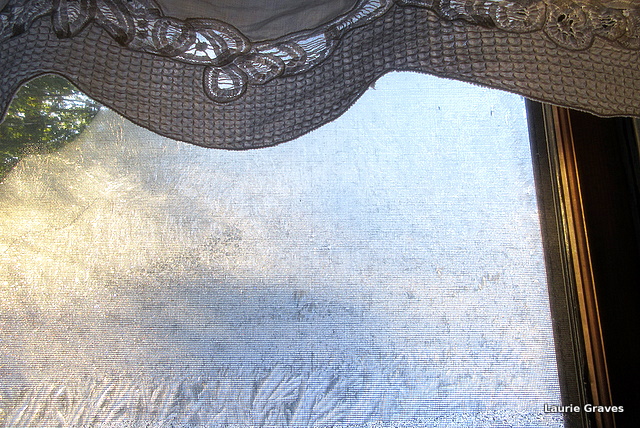
Accordingly, this morning the view out the window by my desk was a little frosty.

One frosty window
One frosty window


Later today, when it’s a little warmer, we hope to go for a walk in the woods. Cold, snowy woods provide many opportunities for photographs (as well as nippy fingers). We will be sure to bundle up in our heaviest jackets and gloves. Liam, on the other hand, is always bundled up, and as I’ve mentioned before, he is a dog who loves the snow.

Liam, all bundled up, on a previous frosty walk


This cold weather is perfect for one of my favorite things—afternoon tea (or coffee) with friends. Over the holidays, we had afternoon tea with two different sets of friends, and each time, on the way home, I reflected on how much I enjoy these get togethers, and, in truth, I like hosting them as much as I enjoy being hosted.

Now, let me hasten to add that it is lovely to be invited to someone’s home for lunch or dinner, and I accept such invitations with what might called an unseemingly haste . In turn, it is very satisfying to cook a meal for friends and family.

However, nothing can beat an afternoon tea for its casual yet friendly atmosphere. Getting ready is a snap. Muffins or a quick bread are easily made ahead of time, and tea and coffee are simple to prepare. Then, after the guests have arrived, we can sit around the table and enjoy the conversation, which usually ranges from books to movies to politics. All is relaxed. There is no more fussing to do.

Clean-up, too, is easy, which means that from beginning to end, afternoon tea is a complete pleasure.

When I was growing up, there wasn’t a week that went by when friends or family didn’t stop by for a visit with my mother and father. Most of the time, it was for coffee—in rural Maine, tea hadn’t really caught on then—and some kind of dessert, usually homemade as my mother was a fabulous baker. We lived in an old farmhouse, and everyone settled around the kitchen table. Both my parents were great talkers—they were Franco-American, after all—and the kitchen was loud with laughter and conversation.

This January, February, and March I am hoping to regularly get together with friends for afternoon tea—once a week, if I can manage it, but at least every other week.

Such a simple, frugal pleasure to look forward to.
IMG_0182


Blasting through the Holidays with Moving and Movies

I love Christmas and New Year’s Eve, but as I’ve gotten older, I must admit I find them a tad hectic. And this year was especially hectic. First, Clif and I got nasty coughing colds that were mostly gone by Christmas but like unwanted guests stayed far longer than they should have. (It has taken me four weeks to completely recover.)

Then, on the Monday after Christmas, Shannon and Mike packed a U-Haul and headed to North Carolina, where Shannon will start a new job. We went to South Portland to help them clean and pack, and we bid them a sad farewell. (They made it safe and sound to North Carolina and have moved into their new town house. Movie buffs that they are, they even found the energy to go to a film—the excellent Big Short, a must-see movie.)

IMG_0144
Farewell, Shannon and Mike

Dee stayed with us until after New Year’s Eve, and as we are, in fact, a family of movie buffs, we watched plenty of movies, at home and at the cinema.  We saw the new Star Wars movie, which I liked but did not love. For me, it was far too derivative of the original—A New Hope—but it was still worth seeing, especially on the big screen.

Also of note was the movie Concussion, starring Will Smith, who plays Dr. Bennet Omalu, the real-life pathologist who made the connection between football players’ repeated concussions and the resultant brain damage. A sobering story where those in power yet again tried to deny the truth and intimidate those who uncovered the evidence. After seeing this movie, it’s hard not to argue that the game should be played very differently.

As good as Concussion was, the best movie was The Big Short, based on the book of the same name by Michael Lewis. In the New York Times, A. O. Scott gives this movie a critics’ pick and begins his review with this description, which is too good not to share: “A true crime story and a madcap comedy, a heist movie and a scalding polemic, The Big Short will affirm your deepest cynicism about Wall Street while simultaneously restoring your faith in Hollywood.”

The Big Short is a movie about the housing bubble and its subsequent collapse.  Some in the industry saw what was coming and decided to try to make money on the housing collapse, and the movie follows three groups of these people. The film is snappy, fast-paced, and satirical while at the same time informative and moving. I think it’s fair to state that not many films about the financial collapse manage to combine all those qualities. In addition, there are devices such as a narrator speaking  directly to the camera and celebrities, as themselves, explaining various terms, including subprime mortgages and CDOs. These devices could have fallen flat, but in The Big Short they work with hilarious effect.

As I noted above, The Big Short is a must-see movie. The Great Recession was a world-wide event, where many, many people suffered devastating losses. It could have been worse, of course, but in the U.S.  the American taxpayers bailed out the greedy financial institutions that wreaked such havoc and harm. Do I resent them? You bet I do, and you should, too.

Those of us in the United States need to be mindful about how politicians feel about regulations and banks that are “too big to fail.” The Great Recession wasn’t an act of nature. It was an act of men and women, which means it was not inevitable.

But enough wagging the finger. Onward to winter and the New Year.

IMG_0159


A blog about nature, home, books, movies, television, food, and rural life.