


February is back, and how glad I am to see it. Yesterday, we got four inches of light, fluffy snow that will be easy to clear. Readers will be happy to know that Clif and I came home from doing errands just as the first snowflakes started falling. While leftover soup heated, we put away our groceries and other sundry items. Then, as we ate our soup—spicy squash with chicken sausage—we watched the snow come down, down, down. So lovely to watch when you’re snug at home with a bowl of hot soup to eat.
As I have indicated in previous posts, I really like winter—December, January, and February. I was born in central Maine, in September, which means my earliest memories involve snow and cold. I can remember having my picture taken on the mailbox of our new house, the first for my parents, who came from poor families and were rightly proud of their little home. I must have been two or three, and I am bundled in a winter coat, mittens, and a brown fuzzy hat. I remember squinting because the sun was in my eyes, but I don’t remember feeling cold.
In fact, as a child, I do not ever remember feeling cold. My mother, who was very attentive, made sure I was warmly dressed, and out I went to play. I skated, I went sliding, I dug snow caves, and I had snowball fights with other children in the neighborhood. No doubt I came in with red cheeks, but I was never uncomfortable.
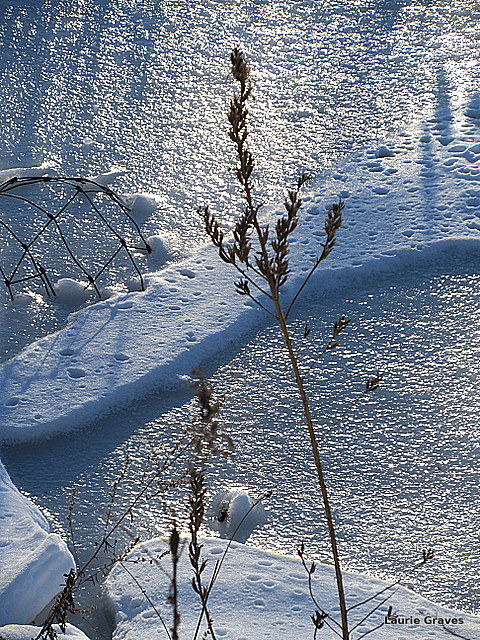
Even now, I do not mind the cold, and because of this, I love and appreciate the look of winter. This morning, after the little storm, our yard was filled with blue shadows and glittering snow.
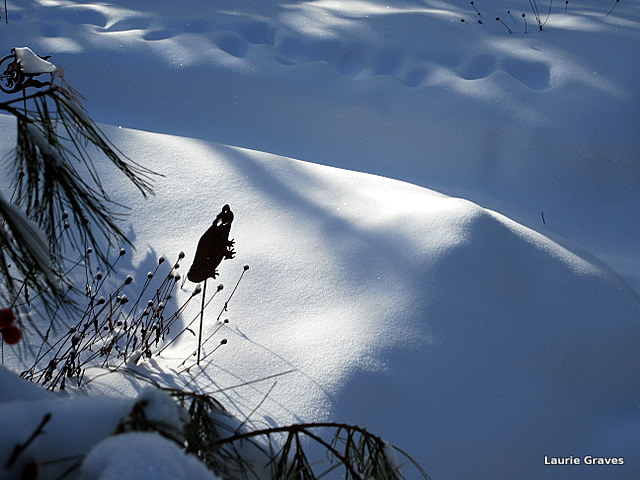
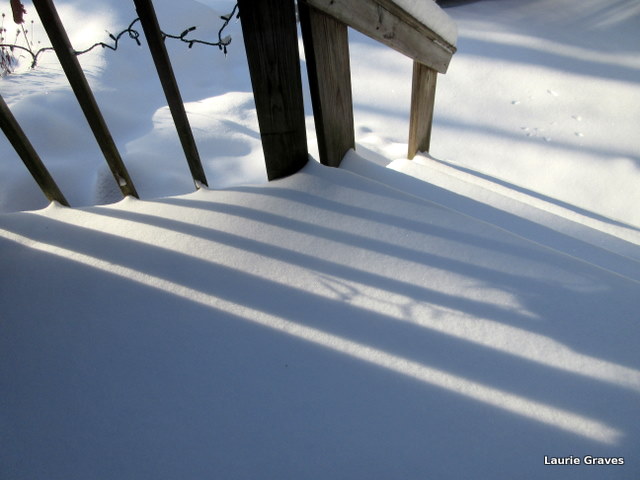
Even our porch had blue-slanted shadows across it.
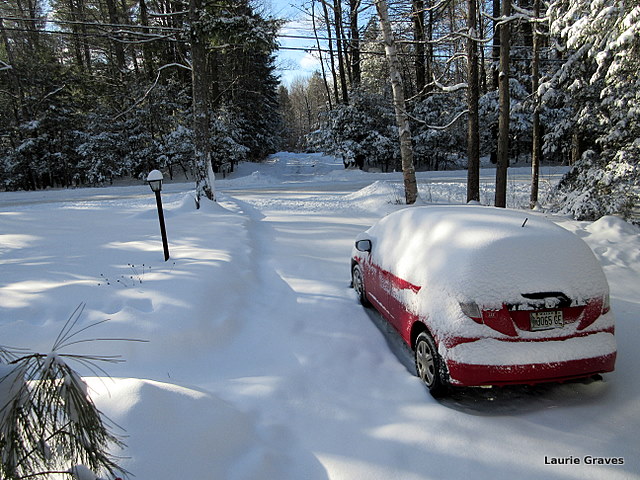
And, as Clif put it, the car looked like a marshmallow puff.
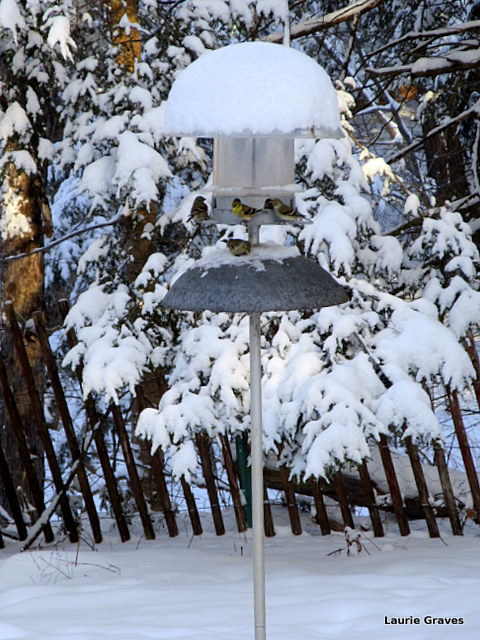
In the backyard, goldfinches crowded the feeder, and they twittered as they ate.
The clothesline will not be used for another few months, not until April, when I will happily begin hanging out quilts and blankets and the rest of our laundry.
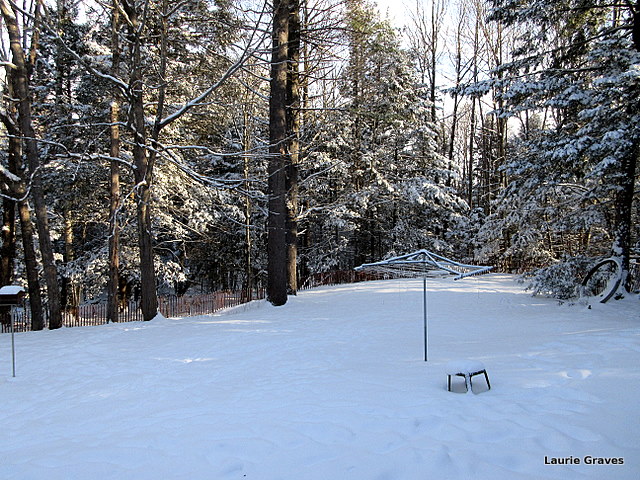
Until then, I will enjoy the beauty of winter, the cold and the quiet and the blue shadows.
Today is a day of errands. Clif and I will soon be heading to the big city—Augusta, population 19,000. It’s supposed to snow later this afternoon, and the older we get, the less we like driving on snowy roads. So there is not much time to write this morning.
I do, however, want to share these three pictures I took yesterday. Looking at them made me smile. Our Liam loves the snow and the woods. Truly, he a dog of the north.
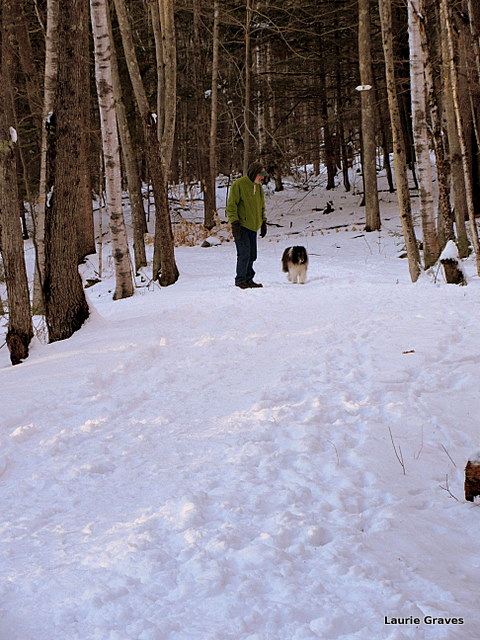
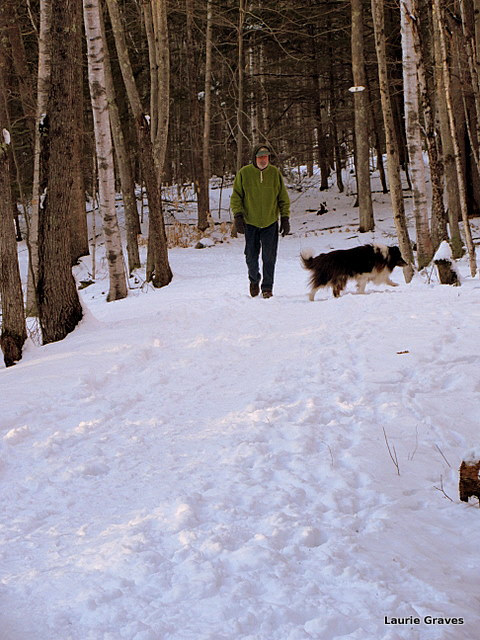

Yesterday, the day was so drippy, the road so wet, and the snow so hard packed and dirty that Clif remarked, “Are we going to have two months of March?”


This statement made me catch my breath. For a Mainer, there could be no greater horror than having two months of March, the dreariest, longest, most miserable month of the year. It is the month where we become restless and cranky, and even those of us who love Maine desperately wish we were some place else, where spring was showing its pretty face, where flowers and leaves were beginning to bud, where the air was soft and warm. (Who, oh who, decided that town meeting should be in March? The sour mood makes Mainers quarrelsome, and the meeting stretches for hours and hours.)
Instead, we have our March, a month of endurance. Gone are the brilliant days of January and February, punctuated by soft snow. (All right. I will admit that last year there was a little too much snowy punctuation, an exclamation mark rather than a comma or a period.) In March, the snow melts in fits and starts, and this melting brings something all Mainers have come to dread—mud.
I’m not talking about a bit of mud that clings to the bottom of shoes and can be stamped off when it’s dry. I’m talking about mud so thick that a small boy could get stuck and need some help getting out.
Indeed, such a thing happened one March. I was walking the dog, and I noticed a small boy—Joseph—struggling in the mud in his driveway. One of his boots was stuck solid and would not budge, no matter how hard he pulled his leg.
Naturally, the dog and I went over to help. By then Joseph had yanked his foot out of the boot, and his little stockinged foot gingerly touched the cold ground.
I tugged on the boot with one hand—the other was holding the dog—but the boot remained stuck.
“Could you hold the dog?” I asked. Joseph looked doubtfully at me and the dog. He was, after all, just a little boy.
“I need both hands,” I said, and Joseph nodded, taking the leash. Liam loves children, and he stayed perfectly still as Joseph held him.
With both hands, I gripped the little boot and pulled and pulled. With a loud glucking sound, the mud released the boot, and I triumphantly handed it to Joseph, who in turn gave me the leash and put on his errant boot.
“There!” I said, but I could not resist adding in my best adult voice, “Don’t play in the mud.”
But Joseph didn’t hear the admonishment. He was running toward the house, away from the sucking mud that had taken over his driveway.
And who could blame him? It had been a close call with the battle of the boot and the mud.
So it is no surprise that Clif’s gloomy remark about two Marches filled both of us with dread.
However, overnight, the snow came, and this morning, when I woke up and looked out the window, February was back. How glad I was to see it.

And with any luck, the March-like weather will stay away for a month or so. One Maine March is definitely enough.


Yesterday, after posting a piece about our Sunday brunch, I had a request for the chili-egg recipe and another request for how to make home fries. Well, ask, and you shall receive.
The chili eggs are very rich with cheese and butter, and I only make them for our special brunches. Guests are usually wild about them, and it was Beth, I think, who described them as an omelet in a casserole dish. This recipe is easy to make up ahead of time, and as the chile eggs take forty-five minutes to bake, you can do other things while they are cooking. Best of all, if there are leftovers, they reheat beautifully.
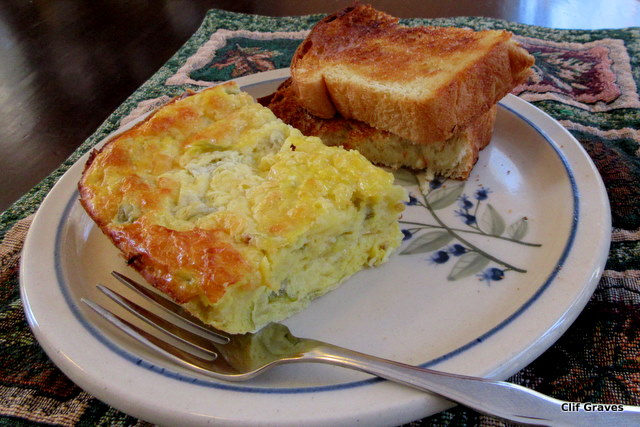
Chili Eggs
Adapted from Jill Lectka’s recipe
Ingredients
Directions
Now onto the home fries. I don’t really have a recipe for them, only some tips.
And there you go—chili eggs and home fries. If you wanted to keep your brunch simple. then muffins (or toast) would be the perfect accompaniment. And maybe some apple sauce or fresh fruit in season.
Bon appétit!
 Yesterday, our friends Dawna and Jim and Beth and John came over for brunch, one of our favorite meals to host. Neither Clif nor I are morning people, so inviting people over for an early breakfast is not, ahem, our thing. But brunch can be started late morning, even noon, if you feel like it, and we love all the brunchy food—pancakes, waffles, home fries, egg dishes. We just don’t want to prepare them first thing.
Clif and I are not what you would call organized (unfortunately!) but when it comes to brunch, we have things under control. I started a day or two ahead by making a blueberry sauce and a chunky apple sauce. By Sunday, the potatoes for the home fries were cooked and cooled in a bowl in the refrigerator. (I’ve learned that cool potatoes make the best home fries.)
The day of the brunch, I put together the chili eggs, a baked dish with plenty of cheese and, of course, green chilis. I am also Captain Home Fries, and for this brunch I had three frying pans going—five pounds of potatoes—while the chili eggs baked. Truly, I felt like a maestro as I presided over the sizzling home fries.
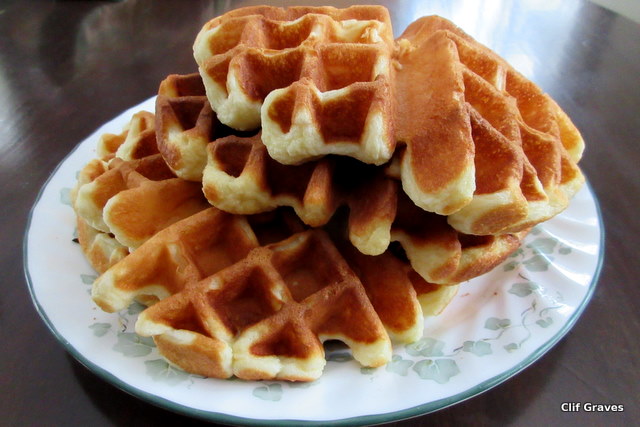
Clif whipped up his delectable waffles, and we gathered around the dining room table as he made fresh hot waffles, one at time. He passed the plate around, and sections were taken. At first the dish came back empty, but as Clif continued making waffles, we could no longer keep up with waffle consumption, and the pile grew.
The cherry on the sundae was Beth’s blueberry cake, so moist, so light, so good. After a meal like that, stretching on for hours, Clif and I didn’t eat much of anything else for the rest of the day.
The talk around the table ranged from politics—the Iowa primaries are coming right up—to books, to movies, and, of course, to food. I mentioned that with Shannon and Mike moving to the South, one of the things I really missed were the simple celebrations—birthdays, anniversaries, Mother’s Day—that we shared. I told of the fish tacos we made for Shannon’s birthday last year and of the chocolate cupcakes with peppermint whipped cream that Shannon always made me for Mother’s Day.
Dawna said, “I know what you mean. We do the same thing in our family, but somehow Jim’s birthday is always the favorite with our granddaughters. They love to come over and help me make cupcakes for him and then frost them.”
Such a sweet story in so many ways—the love the granddaughters feel for their grandfather, the helping with the cupcakes, and the pleasure they take in celebrating Jim’s birthday. The granddaughters are young, and it says a lot that Jim’s birthday, rather than their own birthdays, is the favourite celebration.
I have no doubt that when those girls grow up, they will continue the tradition of food and merriment in celebration of birthdays and other special events.
For me, the rural life in Maine is never boring. From season to season, there is such variability—cold, snow, rain, flowers, green grass, leaves, blazing colors, austere brown, and then back to snow. Even within the same season, from day to day, there is change.
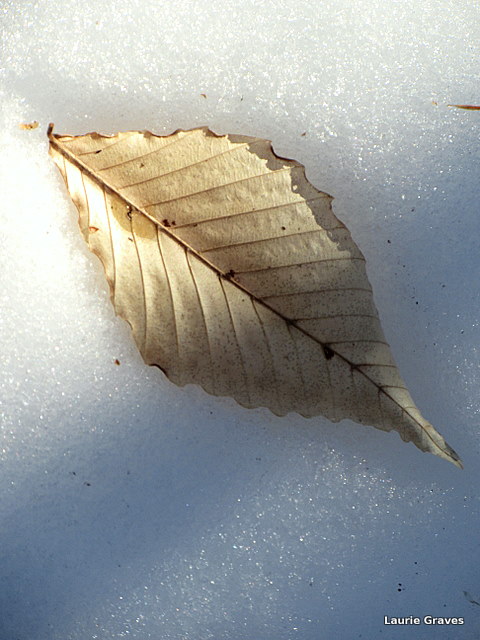
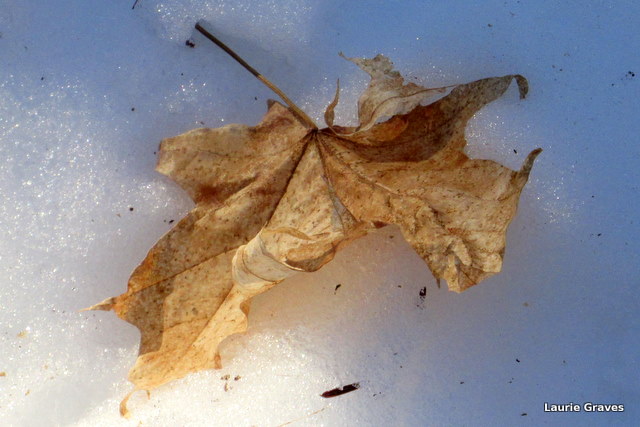
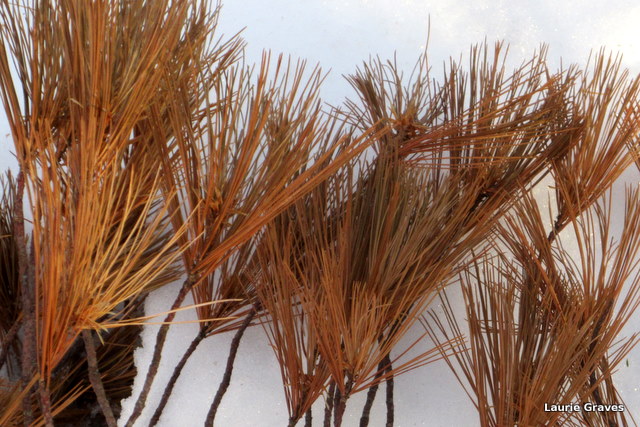
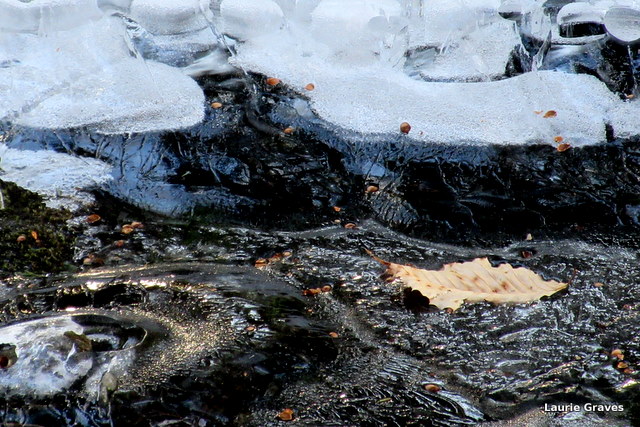
In the winter snow falls and then it melts. Leaves and spills are scattered everywhere, only to be covered up again by snow. The ice on the brook advances and recedes. Always something new to look at and admire. Always something to photograph.
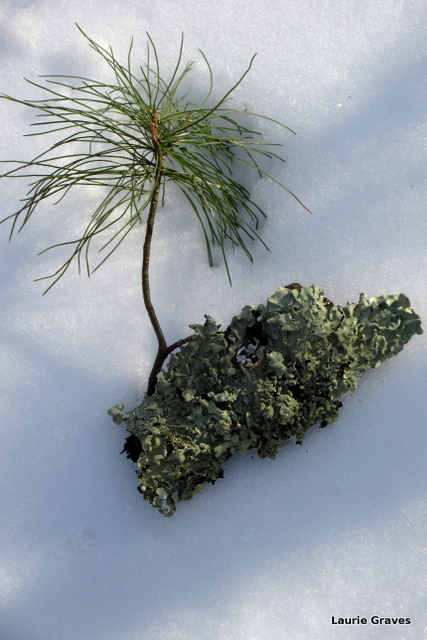
Here are some pictures from a recent walk in the woods.



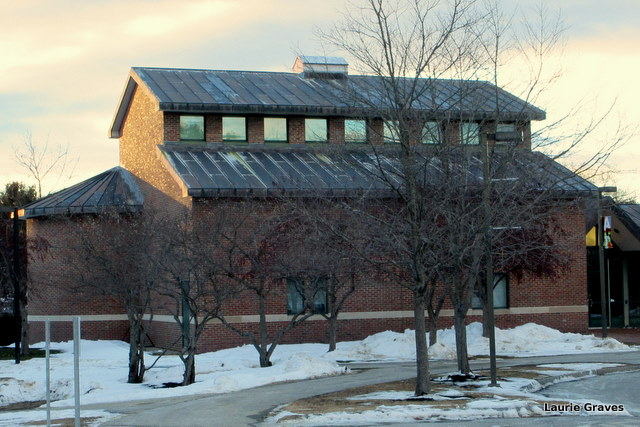
Yesterday, Clif and I went to to the Museum of Art at Bates College. Of the three colleges, Colby, Bates, and Bowdoin—all of which have fine art museums—Bates’s is the smallest. Nevertheless, as The View Out His Window (and in his mind’s eye): Photographs by Jeffery Becton illustrates, small doesn’t mean second rate. Far from it. (If time allows, do clink on the link to take a look at some of the work in this terrific exhibit.)
The moment I walked into the gallery and saw the photographs, I got that particular feeling—a sort of current—that comes from seeing very good art. Becton’s photographs are large, and they feature surreal montages of old houses, old doors, peeling paint, still lifes, and decay. Water figures prominently in all the photographs as it comes into a room or laps at the edges or is just plain there. The palate is muted, almost soothing, yet there is also a certain sadness in most of the photos. If Andrew Wyeth had had a more vivid imagination, this is how he might have painted.
From one of the wall signs, I learned that “[t]o create the works…[Becton] photographed, painted, layered, fused and altered digital imagery from myriad sources and constructed the pictures…”
The woman at the desk told me that she’d like to step into one of the photographs. My response: “Only if there was a quick way out.” All that water coming into the rooms has a, well, unsettling effect.
Indeed, on the wall, is a quotation by Jeffrey Becton: “We love, need, and fear water and for good reason. I try to tease out the resonances and amplify them because life is difficult and unfair and the passing of time is mysterious.”
The exhibit runs until March 26, and Clif and I plan to go back for a second look. Bates College is only thirty minutes or so from where we live, and for us it is an easy trip. Readers, if you like art and live within driving distance, then I urge you to go see this exhibit. Admission is free, and on Monday and Wednesday the museum is open until 7:30.
After the exhibit, we went to one of our favorite restaurants, Fuel, which specializes in simple French cooking, “country French food with no attitude.” The food and flavors at Fuel have a subtlety missing from most restaurants in Maine, even the good ones. Fuel also makes delicious cocktails, which I cannot resist.
The restaurant has a comfortable bar, and we chose to sit there and order from the bar menu. (We have a gift certificate, and we decided it would go further at the bar.)
First I started with a cocktail, a cosmopolitan. As Clif was driving, he had a beer.

I had lobster pasta and cheese, a lovely blend of cheeses and lobster—I found three whole claws in my dish.

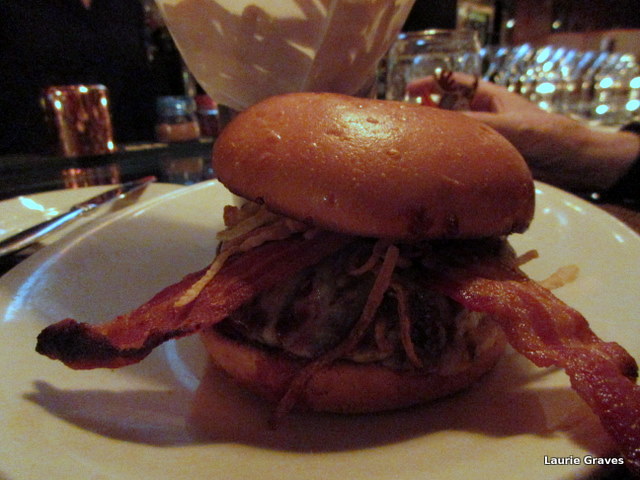
As we never eat beef at home, Clif ordered a burger and fries, a treat for him because he has it so infrequently.
Was there room for dessert? You bet there was. We ordered profiteroles—a fancy word for cream puffs—filled with vanilla ice cream and drizzled with chocolate sauce.
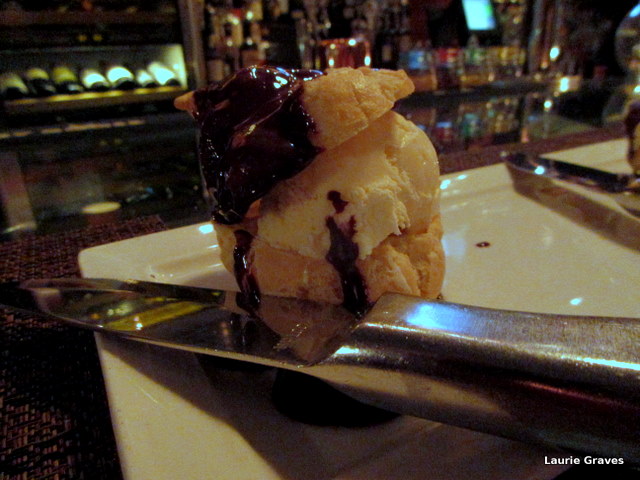
A sweet ending to a fine day.
 Notes From the Hinterland