

All posts by Laurie Graves
Heat and Time
Hot, hot. Too hot. It has been 90 in the shade and oh so humid. Time seems to have stretched to the point where it’s hardly moving.
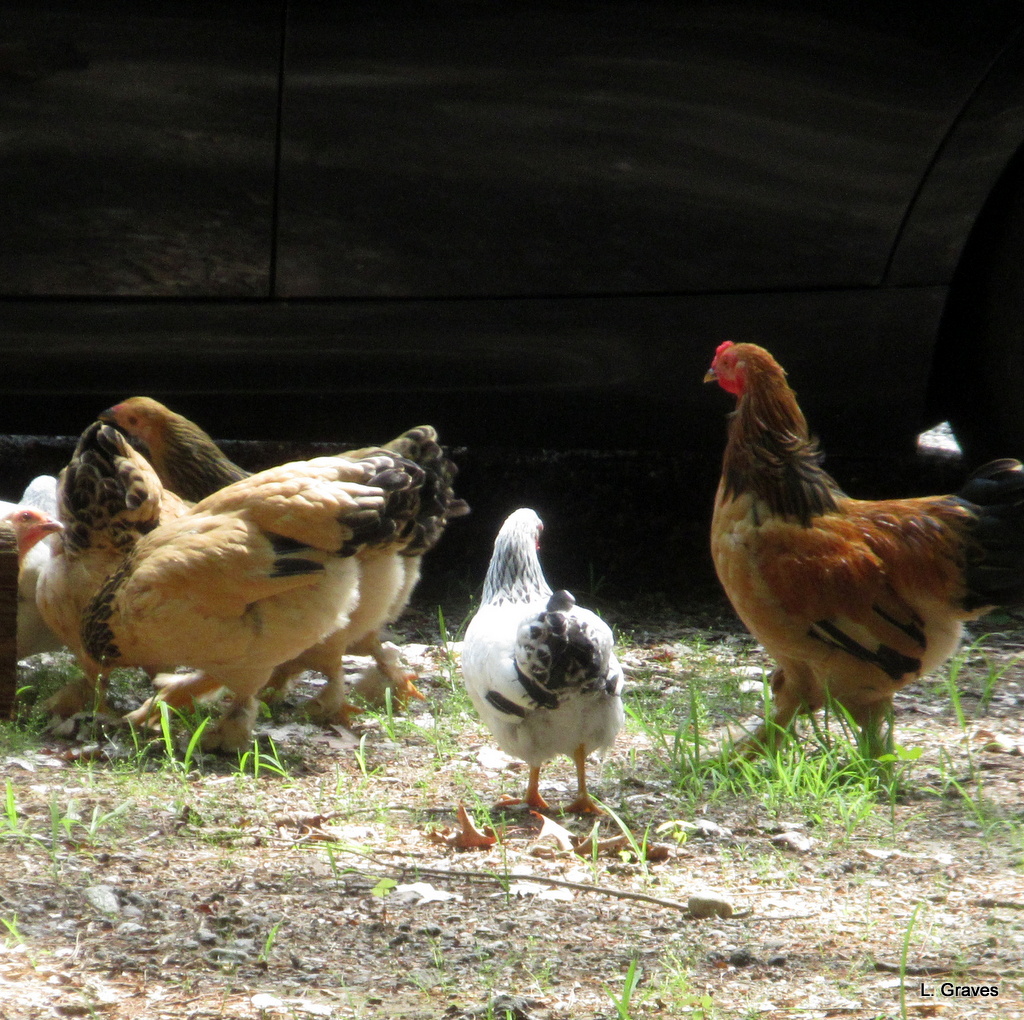
Next door, the dog has stopped barking, and the little boy no longer runs and yells as he plays. But earlier in the week, the chickens scratched and pecked in the yard.
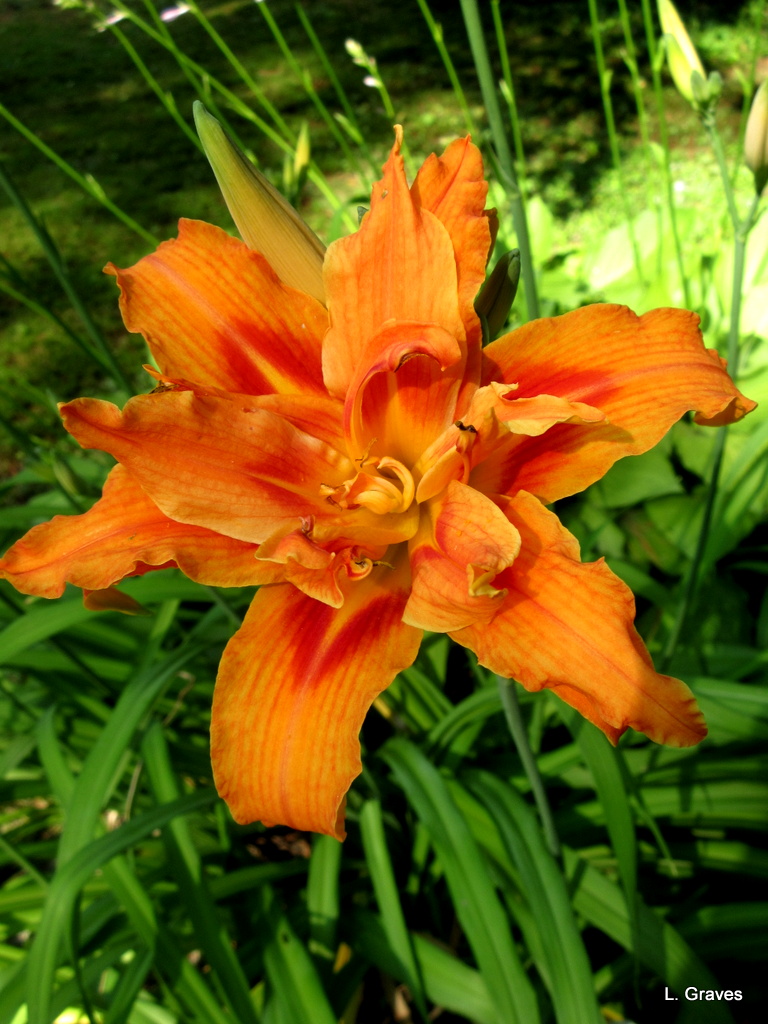
Not wilting, not drooping, the lilies bloom bravely in the heat.

And the hostas look cool and collected as always.

The sun leaves our backyard around 3:30. Fortunately, it doesn’t take long for the patio to cool down and for the black and white cat to take her place.

We both drowse as the heat presses against us and a few mosquitoes whine around our head. Sometimes she looks up. Sometimes I look over at her.
Right now, winter seems like a distant country, a dim memory of white and cold and time spent inside.
Beyond Burgers
The heat and high humidity have returned, and like an unwelcome guest they don’t show any signs of leaving soon. Clif and I push on without an air conditioner. At what point, I wonder, will one seem like a necessity?
As it is, we’re both in a twiz. Yes, I made that word up as a stand-in for feeling muddled because it’s too darned hot. Not a good feeling as Clif and I both work from home and like to keep the house and yard in some semblance of order.
But enough of that. On to the real subject of the piece, which is our foray into Beyond Burgers, produced by the company Beyond Meat. Before I get started, I want to assure readers that we are getting absolutely nothing from the company, not even a coupon for our next visit to the grocery store. Beyond Meat has no knowledge of this blog, and the views I will express are certainly my own.
A bit of a backstory for new readers: For several years, Clif and I have been inching toward vegetarianism. First we gave up pork and beef. (We never ate lamb or goat.) Next came chicken. Initially, we stopped eating meat and chicken for environmental reasons, but as new studies indicate how animals have an emotional life, we also became concerned about the ethics. (We still eat eggs and dairy, but that will be a subject for another post.)
Now that we are no longer eating animal flesh of any sort, do we miss it? We do. I won’t deny it. Clif is a sausage hound, and chicken salad is one of my favorites. While beans and pasta are tasty, sometimes we just want the chew and taste of meat. After all, we’ve eaten meat since we were young.
Fortunately, this is an excellent time to be a vegetarian. More and more companies are developing products that have some resemblance to the taste and texture of meat. These products are getting better all the time and have a much smaller carbon footprint than meat does.
We have a mid-sized grocery store near our house, and not long ago they started carrying Beyond Burgers. The Beyond Meat website describes these burgers as “[t]he world’s first plant-based burger that looks, cooks, and satisfies like beef without GMOs, soy, or gluten.”
Clif and I wondered if this description was simply hype. Or, did the Beyond Burgers actually taste like meat? We resolved to find out, and last week we bought some Beyond Burgers.



Clif decided to grill them as that is how we like burgers best.

So far, so good. They look actually burgers, don’t you think?
Now, onto the bun, with pickles and other condiments.

But how did they taste? if Clif and I had been given these burgers without any explanation at somebody’s cookout, I doubt we would have known they were veggie patties. The burgers had a moist, smoky, downright beefy taste with even a light pink tinge in the middle.
In short, they were excellent, and I could have one right now. (Clif and I are thinking of getting some for our supper.)
The only downside is that Beyond Burgers are expensive—$6 for two patties. Still, $6 for two people is cheaper than eating out, and we feel it is not extravagant to have these burgers once a week (or so) during the summer.
So tell me, blogging friends, have you had Beyond Burgers? And, if you have, what did you think of them?
Next on the docket will be faux chicken strips to make salad or stir fries. I will be sure to keep you all posted.
High Summer in Maine
After a spell of three brutally hot and humid days, the weather took a turn for the better, and the past week has been glorious, almost like an old-fashioned Maine summer. The days have been warm, in the high 70s with low humidity. The nights have gone down to 60, chilly enough for a blanket at night. Although I love the change of seasons, I could take a few more months with weather just like this.
Even the mosquitoes have backed off, and while they are not gone, their numbers are greatly reduced. This means, of course, that every night this week has been a patio night. At the end of the day, Clif and I have a cocktail outside, and we sit and watch the birds and the flowers and the woods. We listen to music. We talk. Most of the day, we work separately in our offices, and these evenings on the patio are a special way to come together and to discuss what’s on our minds. (Unfortunately, the political situation is often on our minds, but we do talk about more pleasant things.)
Flowers in my garden continue to bloom. This daylily is one of my favorites, a mouthwatering red.

Now that hostas dominate the front yard, I have come to appreciate not only their foliage but also their modest blooms.

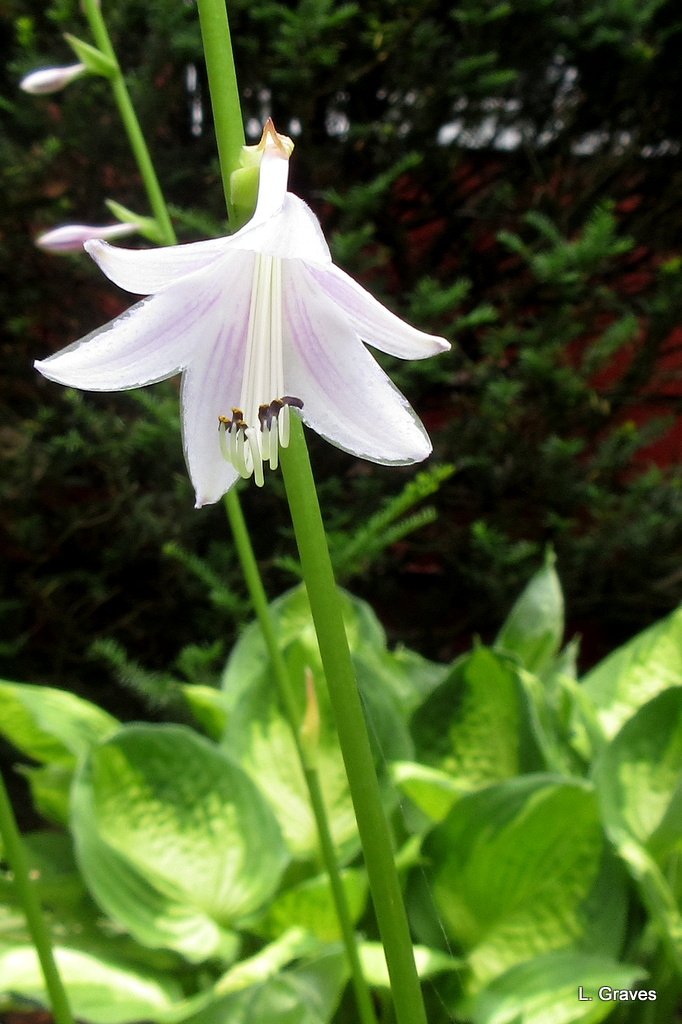

For reasons I don’t understand, the slugs and snails have not yet chewed the hosta leaves into a lacy mess. While there are a few holes here and there, for the most part the leaves look pretty good. I’m not sure why this is so, and we still have the month of August for the slugs and snails to do their worst. Anyway, I’m certainly not complaining. Merely making an observation.
I know that in parts of the country and the world, the heat has been intense, and I hope cooler weather is coming to those who are suffering from extreme temperatures. More hot and humid weather is predicted this weekend for Maine, too.
In the meantime, I will revel in this delightful weather that was once a given for a Maine summer and why tourists flocked here for their vacations.
Pink Living with Red

MIFF Warriors
What a week it was at the Maine International Film Festival, also known as MIFF! (I wrote about MIFF in my last post.) Every year we have a fabulous time watching movies, many of them foreign, that will most likely never come to a theater near us. We eat out. We have drinks. We meet with friends.

But this year was even more extraordinary because of a fourteen-hour Argentine film called La Flor. No, I did not make a typo when I wrote “fourteen-hour.” According to Wikipedia, La Flor has “a length of 868 minutes including intermissions.” Even by MIFF standards—past festivals have included long films—La Flor is unique both in its scope and length.
Did we sit for a fourteen-hour stretch to watch La Flor? We did not. The movie was shown in four parts, one per day. Here is a short description from Wikipedia: “La Flor is broken into six separate episodes, connected only by an on-screen appearance by Llinás [the director] explaining the film’s structure. The first four episodes have the beginning of a story but finish in medias res. The fifth episode is the only one to proceed from start to end, and the last episode has just the conclusion of a story. ” Four actresses—Elisa Carricajo, Valeria Correa, Pilar Gamboa, and Laura Paredes—star in different roles in five of the episodes.
Clif, Dee, and I quite sensibly decided to start with the first part of La Flor and then go from there. We were immediately taken by the energy of the stories—the first a grade B movie about an extremely scary mummy and the second a tale about two musicians who were once a couple but have separated and try to come together to record a song. Without the outstanding acting of the four actresses listed in the paragraph above, none of the episodes would have worked. These talented actresses held La Flor together.
By the time we were done with the La Flor, Clif, Dee, and I felt like MIFF warriors, and the small band of moviegoers who made it to the end felt the same way. I nearly proclaimed, “We few, we happy few, we band of moviegoers.” We all agreed that we deserved purple heart badges.
You might be tempted to scoff at us. After all, how hard can it be to sit and watch movies? If we’re talking about, say, Spider Man or Toy Story or some romantic comedy, it’s not that hard. (But fun!) However, when you’re watching a movie of La Flor‘s length and reading subtitles the whole time, it is an intense albeit rewarding experience.
The same could be said for most of the movies at MIFF, and we saw others besides La Flor. Few of them are fluff, many of them are foreign, and after a while, fatigue sets in. I heard one moviegoer exclaim, “I ache all over.” With my creaky knees, I could certainly sympathize.
Still, we wouldn’t miss this film festival for anything. Although Clif and I are tired, and it will take us a few days to recover, we also feel letdown that the festival is over and that Dee is back in New York.
But there is work aplenty. My third unfinished book—Out of Time—beckons. So onward, ho.
Hats off to MIFF!
In central Maine, mid-July chiefly means one thing—The Maine International Film Festival (MIFF), held in Waterville, the fair city where I was born. (We now live about twenty-five miles away.) For ten days, the little city of Waterville—population about 16,000—hosts this wonderful event that features 100 movies in ten days. In addition, directors, writers, actors, and even cinematographers come and talk about their movies. The streets are thrumming with moviegoers, and the local businesses are thrilled to have the extra customers. Because while coastal Maine draws in the tourists, central Maine does not, and MIFF is a boon for the area.
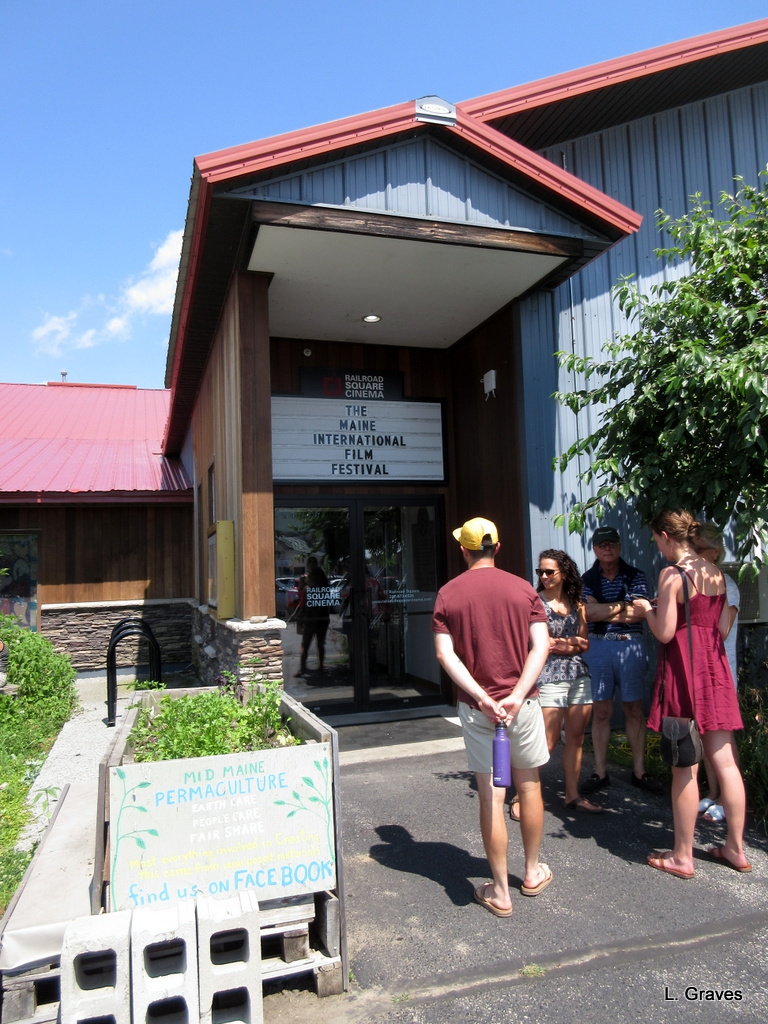
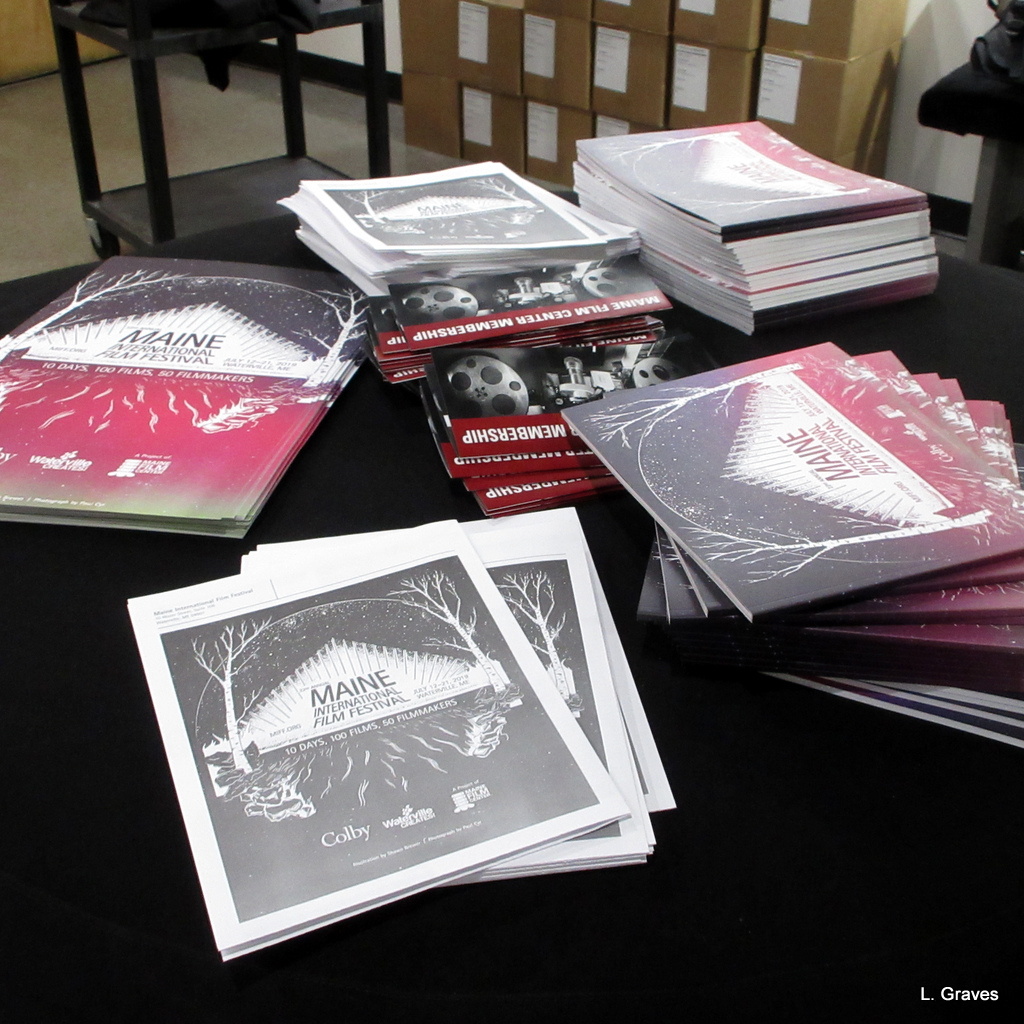
Yesterday afternoon, Clif and I headed to Railroad Square Cinema, one of MIFF’s venues, to buy our tickets and pick up booklets to help guide us through the selection of movies.
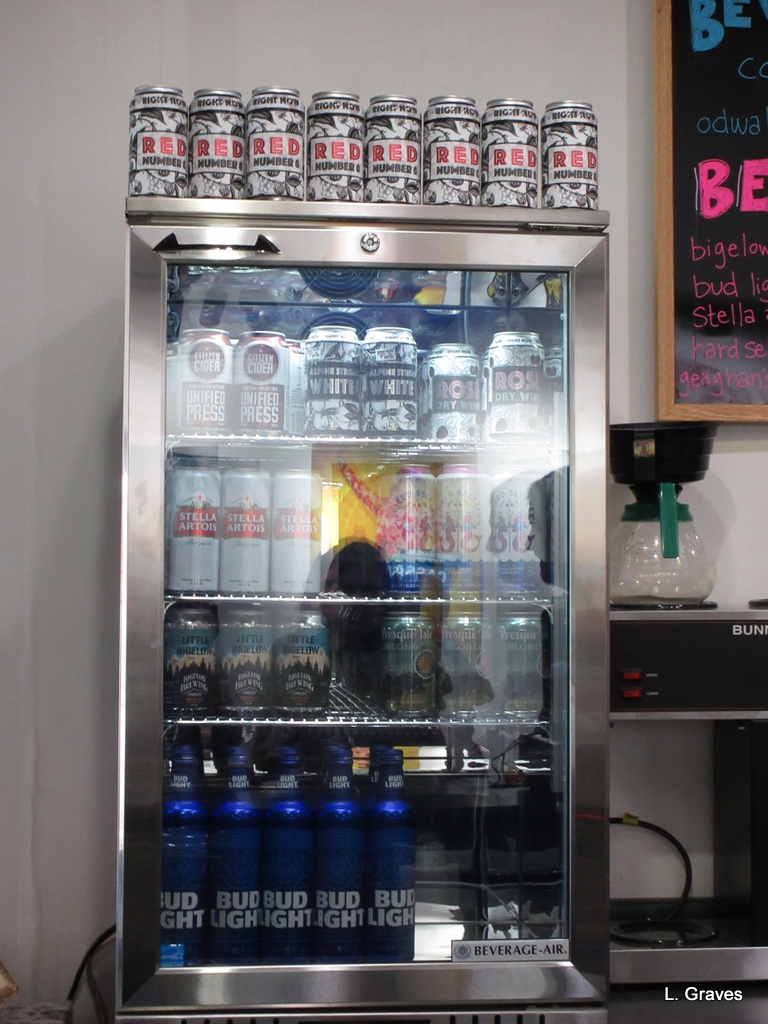
Railroad Square has now gotten modern and offers beer and wine to moviegoers as well as the traditional popcorn and candy.
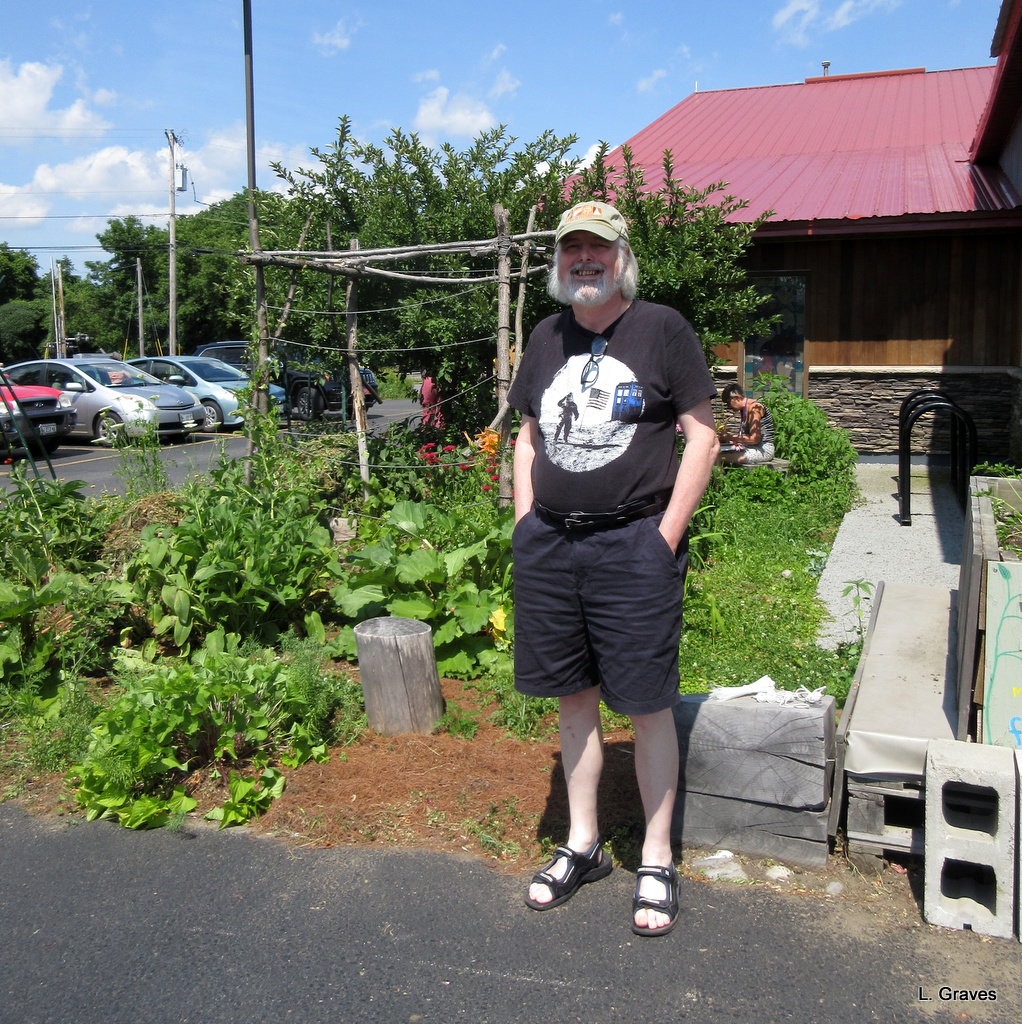
Clif posed in front of the MIFF backdrop.

Our friends Alice and Joel also posed, all kitted out for MIFF.

After business was taken care of, it was on to Mainely Brews for drinks and dinner. We were joined by other friends, and a jolly time was had by all.

Then, off to the first movie—Blow the Man Down––a snappy little thriller centered around women and filmed in Maine.
Tonight we will be picking up our daughter Dee in Portland, and tomorrow, the real move fun will begin.
In between, we will eat pizza, talk to friends, go to happy hours, and generally have a terrific time. There probably won’t be much time for blogging.
As always, I am amazed that a small rural area can host such a vibrant festival.
Hats off to MIFF!

Alas, Poor Cabbage
On Wednesday, Clif and I set up our canopy and book display at the Gardiner Farmers Market, held at the lovely, expansive common on the hill above downtown. The Gardiner Common—or Green, as it is often called in New England—is a wonderful place for children. The Common is large enough so that parents do not have to worry about children running into the road. There are swings and slides, and on hot days, a fountain to play in.
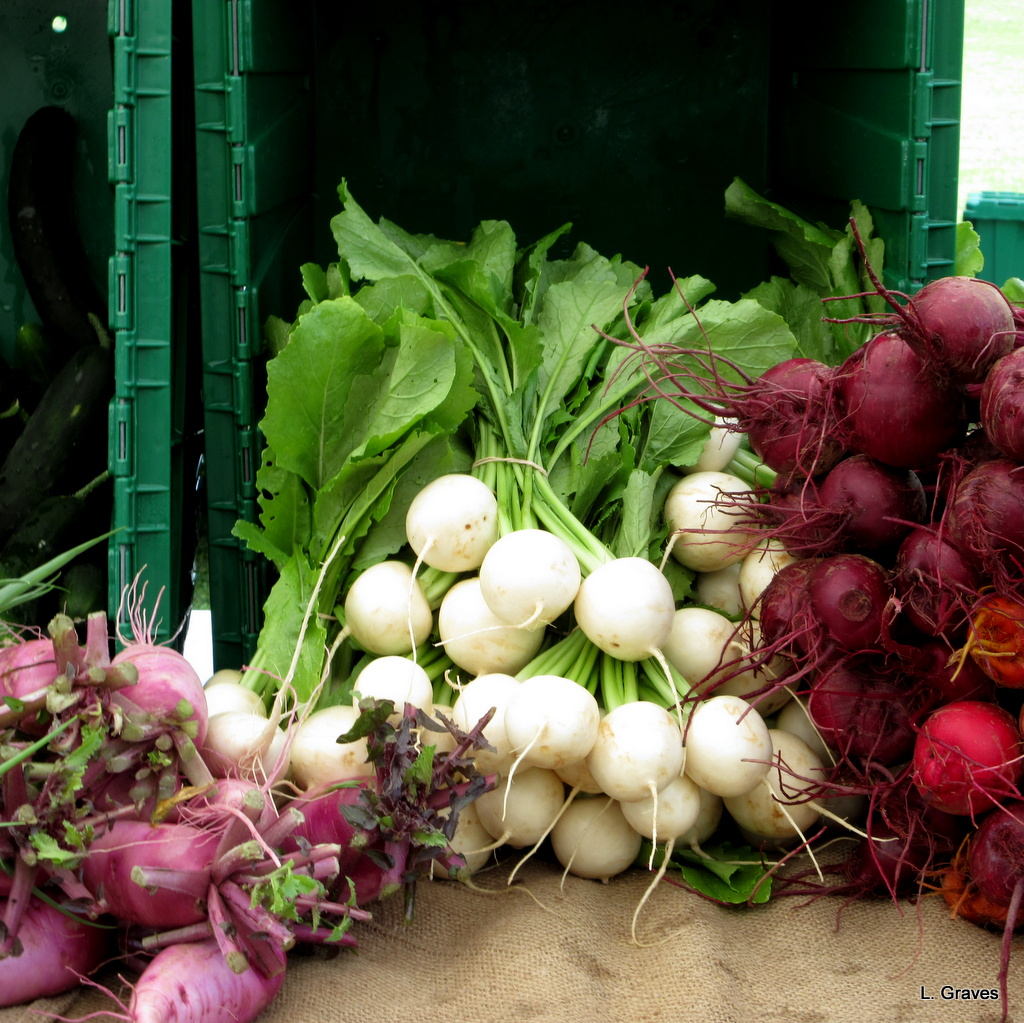
We were next to a vendor—Mike from Andrews Farm—with the most gorgeous array of veggies.
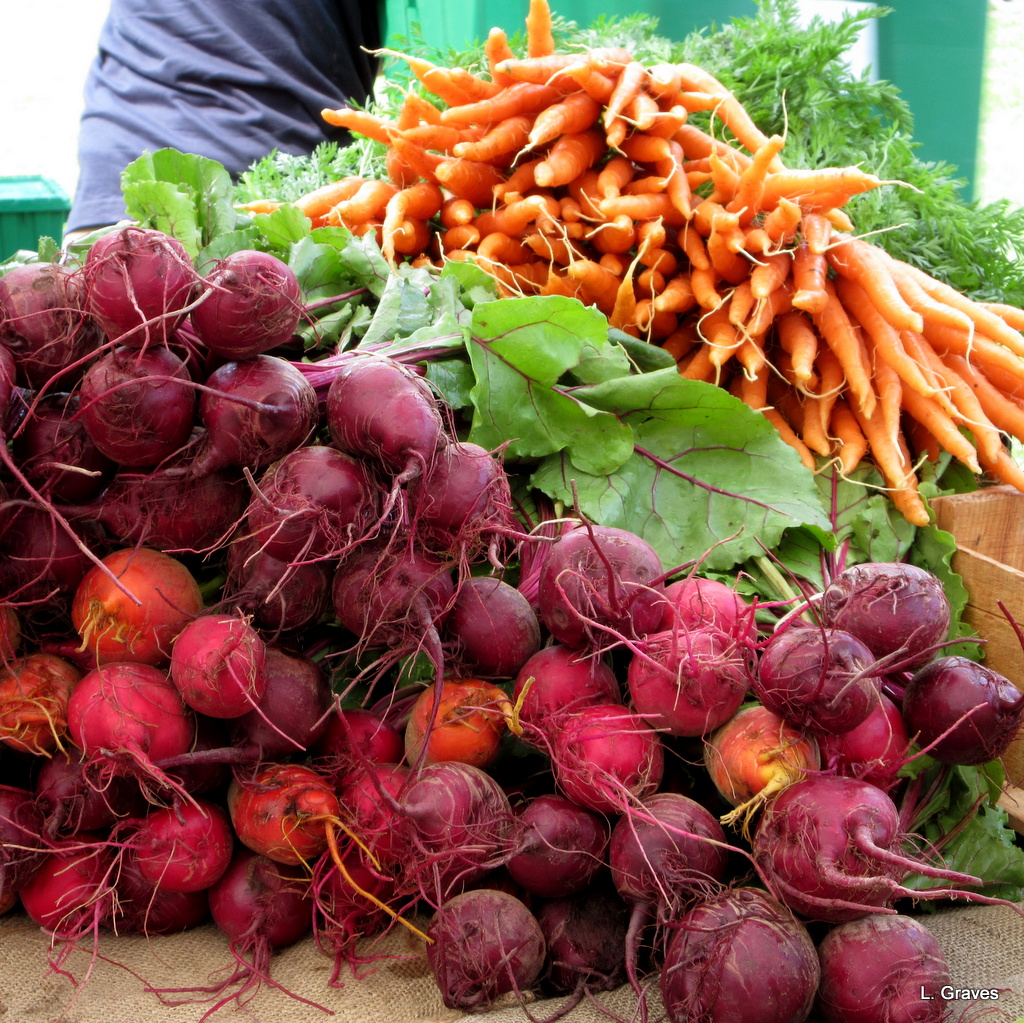
Here is a picture of Clif staring pensively at one of our purchases.
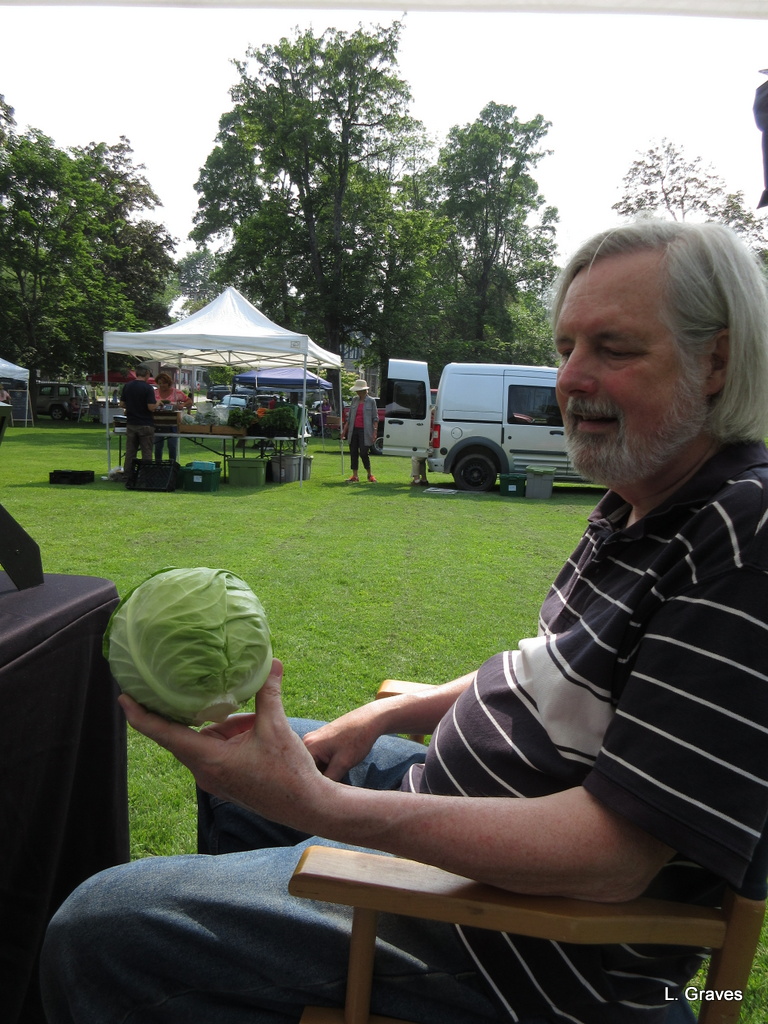
All in all, it was a relaxing day. There were no mosquitoes—praise be!—and the day was fine, warm but not too hot. We sold some books and prints. We listened to children play. We watched people walk their dogs. We bought a cabbage and some sugar snap peas, both of which we used in a stir-fry last night. Utterly delicious.
We have reserved another date in August to return to this farmers market, and we are looking forward to going back to the beautiful Gardiner Common.
Little Buddy by the Fountain

Farewell, High Heat and Humidity!
Over the Fourth of July weekend, the heat and high humidity cracked down on us, and we had four fairly miserable days. But then on Saturday night came a booming thunderstorm that knocked out the power in some towns—not ours, thank goodness—and also knocked out the heat.
Now the weather is delightful. Yesterday was warm and sunny but not too hot, and the night was so cool that we had to close the windows when we went to bed. Blankets were in order, and I was actually chilly when I woke up.
Today promises to run the same course. In my memories, this is how Maine summers once were all the way through September, with maybe a few hot, humid days at the end of July.
How long this delightful weather will last I do not know. But I’ll take it, and tonight will definitely be a patio night.
My gardens are July gardens, where there is actually a bit of color—primarily yellow—tucked in among the green. Here is a view of the front yard.

Several readers asked if I have astilbe in my gardens. Yes, I do, in the few patches of moist shade that I have in my beds. Astilbe is such a delicate, ethereal flower, one of my favorites.

Hostas are not known for their beautiful blooms, but this one might be the exception to that rule.

Here’s another shot of the ferns, hostas, and a daisy. Just because.

Finally, out back to the patio, where the evening primroses—or sundrops, if you will—are in glorious bloom by the fountain.

Ah, Summer! Such a beautiful season even when it’s too hot.
 Notes From the Hinterland