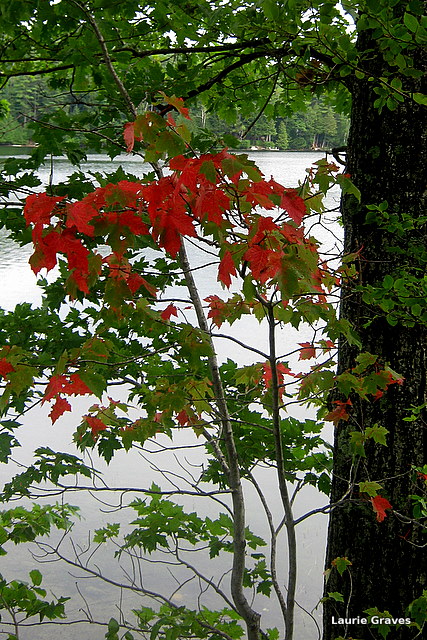
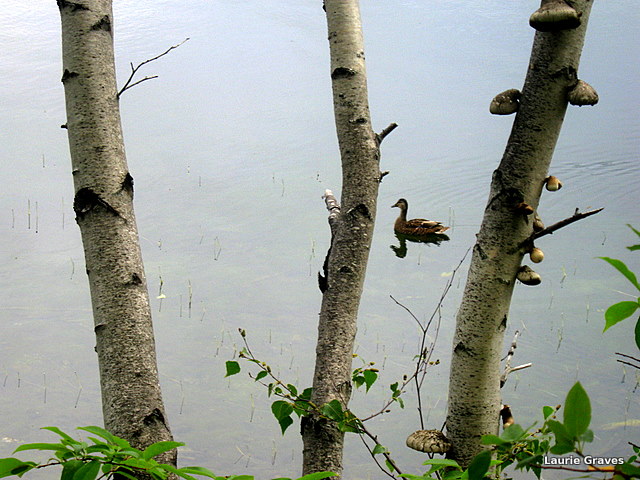
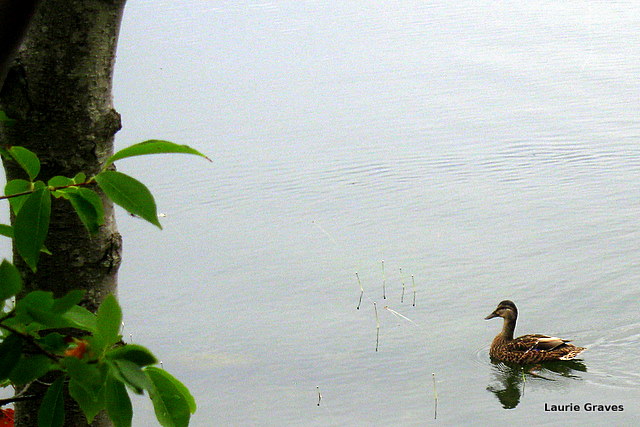


All right. Even for someone like me, who loves summer, this high heat and humidity has gone on a little too long. I am ready for cooler weather.
In fact, this is starting to look pretty good.
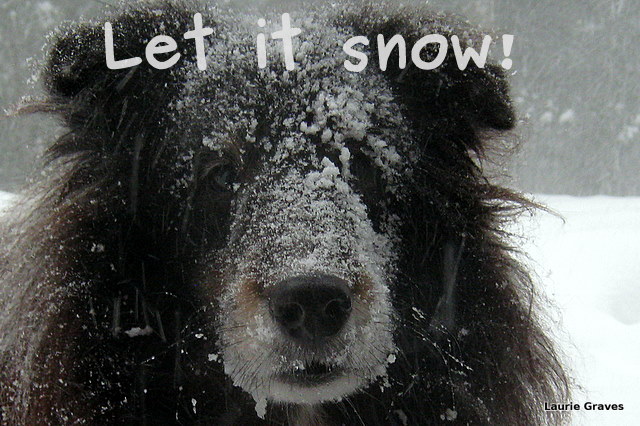
The picture, of course, was taken last winter when Liam looked a little frosty. And while I don’t really want it to snow—not yet—I have been thinking ahead to Christmas and to cards, which I love to send.
This will be our Christmas card for 2015, and I have found it very soothing to look at it during this extreme heat and humidity.
The card is a good reminder that the seasons change in Maine, that it won’t always be this hot, and that instead of melting down at around 2:00 every afternoon, soon enough I’ll be putting wood on the fire.
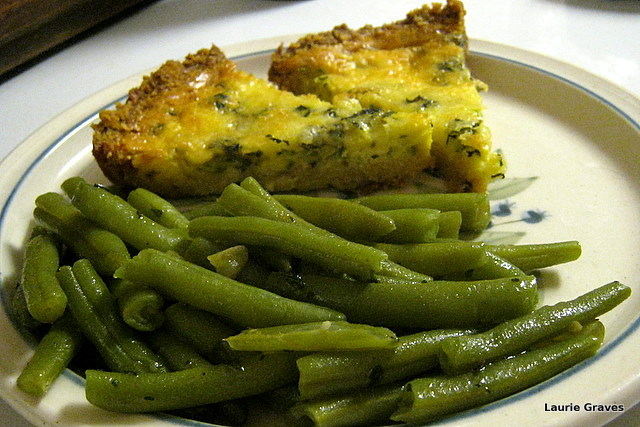
Well, maybe not everything, but brown butter is a culinary delight that is right up there with chocolate, fresh corn on the cob, and garden tomatoes. It is that good, and if you haven’t tried it, then get out a little saucepan and brown some butter.
It’s not hard. On medium heat, melt a couple of tablespoons of butter, but when the butter is melted, don’t remove the pan from the heat. Instead leave the pan on for about five minutes, until the butter becomes, well, brown. You will have to watch it because while you want brown butter, you don’t want burned butter. So leave the pan on the burner until the melted butter takes on a nice brown color.
Now, what to do? You could add some chopped sage, which becomes crispy nuggets of deliciousness in the brown butter. Then, you could drizzle the brown butter and sage over green beans, the way I did on Farmer Kev’s beans pictured above.
You could drizzle the brown butter and sage over pasta with sautéed summer squash and zucchini. Sweet red peppers would make a good addition to the squash and zucchini, but for this dish, I would stay away from green peppers. Too sharp.
You could drizzle the brown butter and sage over cooked carrots. Boil or steam the carrots until tender, drain, and add the butter.
What about new red potatoes? Remember the title of this post. Of course brown butter is delicious on potatoes.
Winter squash and delicata squash also shine with a drizzle of brown butter, with or without sage.
Even though we hardly eat it anymore, I’m even going to sneak in a suggestion for fish, any white fish, but especially haddock. Bake the fish at 350° for fifteen or twenty minutes, until it is flaky. Remove the fish from the oven and drizzle the brown butter—without sage this time—over the fish. Close your eyes as you eat the fish. You will wonder, is this fish or lobster? I don’t know why brown butter on haddock tastes like lobster. But it does.
So as August wends its way to September, as the green beans continue to flourish, as the carrots grow bigger, and as the squash and peppers ripen, treat yourself to some fresh vegetables with brown butter.
Once you do, you’ll be plotting ways to use brown butter on other things, sweet as well as savory. As I mentioned in the opening paragraph, brown butter is that good.

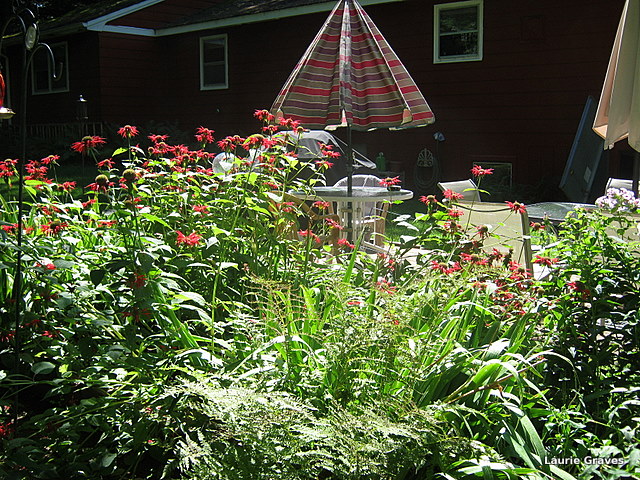
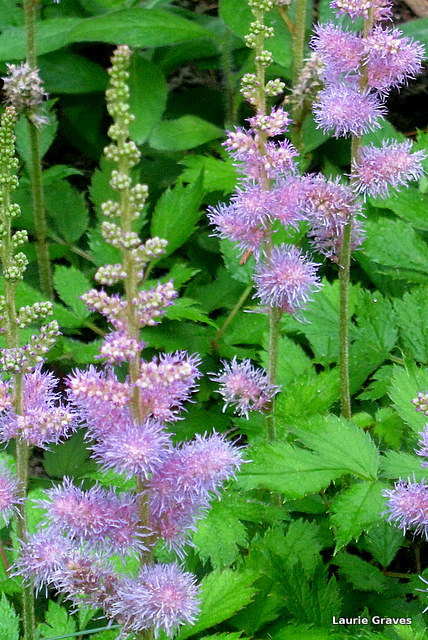
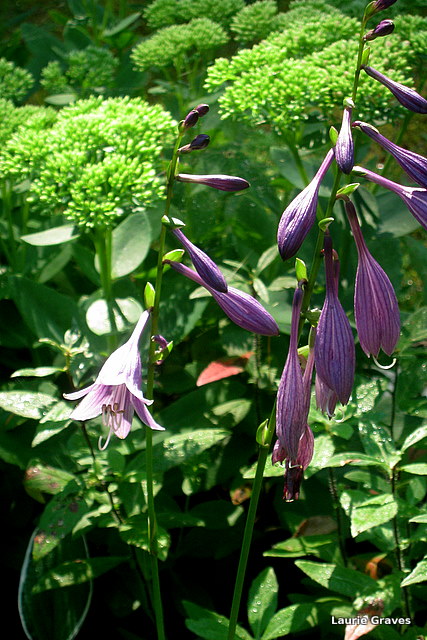
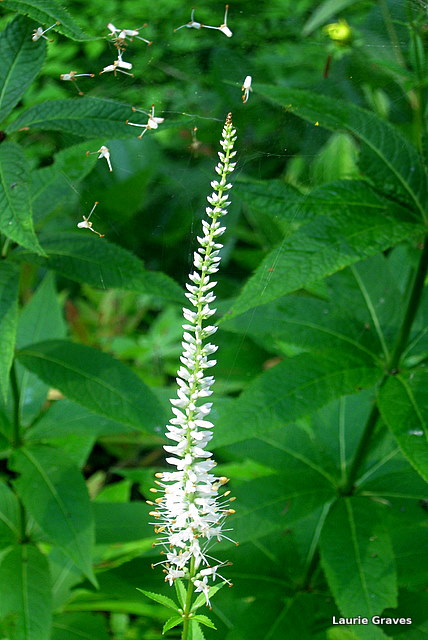
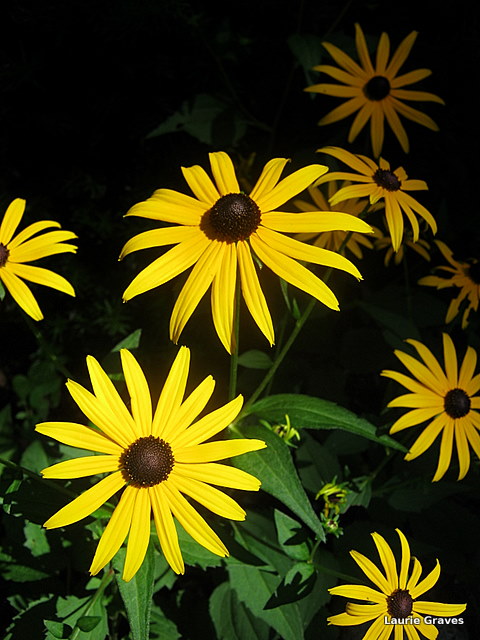

When you work at home, you have to establish some kind of routine. If you don’t, then it is easy to fritter away the time so that the hours pass, and the laundry is not done, the bread is not made, the blog post is not written, and the pictures are not taken. My usual routine is to write and work on photography in the morning and focus on household chores in the afternoon.
But today is very hot, very humid, and I decided to flip things so that I would be active during the coolest part of the day and at my desk in the afternoon. My little schedule has been turned upside down, and it feels odd. Nevertheless, I did everything I wanted to do, just not in the usual order. When it’s 90º in the shade—and the relative humidity nearly that high—it’s important to plan activities, especially when you don’t have air conditioning.
So far, this August has felt like July. In fact, for the past five years or so August in Maine has felt more like July. Time was when August was hot and dry during the day and cool at night. The lawns stopped growing, and those who mowed them to an inch of their lives had a brown stubble rather than a green carpet. Not anymore. In central Maine, everyone’s lawn looks as lush in August as it did in June, and I can count the times on one hand when I’ve had to water the potted plants outside. I was not surprised to read in the Boston Globe that rainfall in northern New England has increased by ten percent in recent years.
Despite the heat and the rain, I am counting my blessings. A friend who recently moved to Portland, Oregon, wrote, “The heat this summer out here has been stunning, way, way out of the normal, like exponentially…. I heard that some of the big CA redwoods are showing signs of stress. I don’t even want to HEAR this. Some are 3,000 years old. Scientists are in the groves now doing some testing, also flying over to see which ones are looking stressed. We have so many fires in OR and WA now that I don’t remember the number. Not near us and not on the northern coastal area. But not far inland. Eastern OR is desert and scrub country, ranches and grasslands and some ranches are burned.”
Dare we call this climate change? Yes, I think we should. Those of us who have lived in Maine a long time have seen many changes, some of which, like the cardinals, actually seem pretty good. Other things— such as ticks and lily beetles—not so much. The heat and the rain lure these creatures farther north.
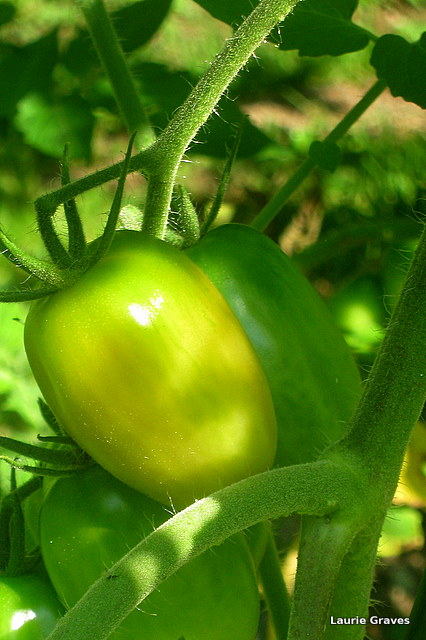
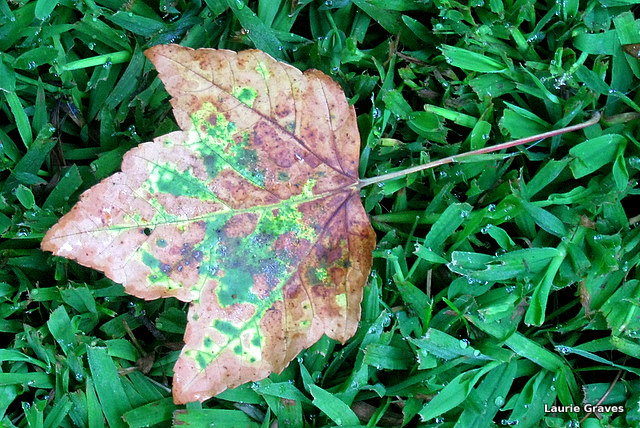
But climate change or not, the gardens at the little house in the big woods have that ragged look they always get at the end of summer. Still, there are interesting things to photograph.
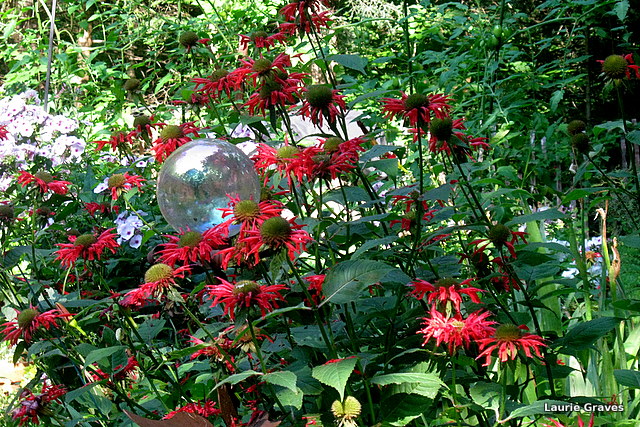
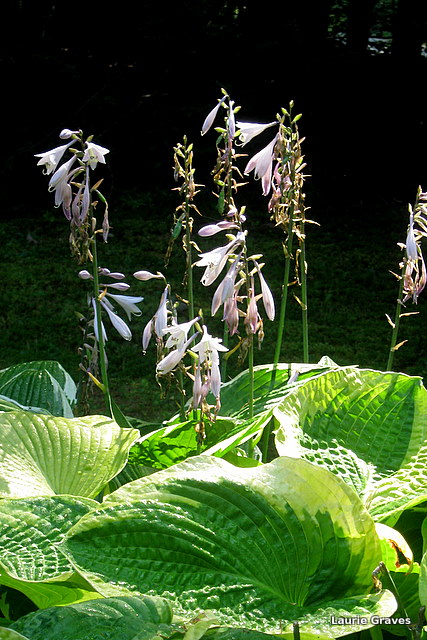


Will tomorrow be another topsy-turvy day? That all depends on the heat.
On Friday, we had six cords of wood delivered to the little house in the big woods. We have a wood furnace in our basement—or down cellar, as we Mainers say—and this is our primary source of heat in the winter. (We also have electric and propane, so we are covered.)
We like to refer to the wood as “nature’s gym,” as Clif and I must stack the six cords before the snow comes. All right. In fact it is Clif who mostly stacks it. But I will help, too.
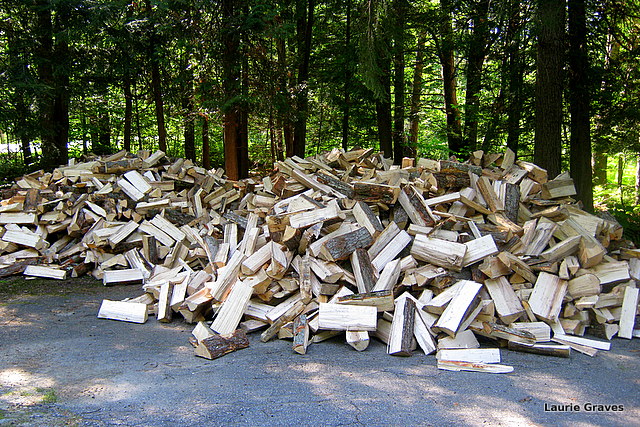
And elderly man drove the truck with the wood. Just how elderly he was I didn’t know until I started talking to him about hauling wood.
“I’ve been working in the woods since I was eleven,” he said. “Back then we used horses to get the wood out.”
“Horses?” I asked.
The man nodded. “I’m eighty years old. That’s how we did it back then.”
“You’re eighty? No way, ” I replied, and I was being completely truthful. The man looked to be in his late sixties or early seventies. It seems that nature’s gym has worked for him.
The man smiled. “I am eighty.”
“When are you planning on retiring?” I asked. Clf will be retiring the end of September, and it was on my mind.
He answered, “To me retiring means sitting around waiting to die. I’m not going to retire.”
“Well,” I said, “if I’m lucky enough to live to eighty, I hope I look as good as you do.”
“I have had a few things tinkered with—bypass, stent, and knees.”
Still, here he was, delivering our wood and not planning on retiring. Our talk then turned to where to put six cords in the relatively narrow space between our driveway and the woods. We certainly didn’t want it on the other side of the driveway, on the flower beds.
“If some of the wood goes in the driveway, then that’s all right,” I said.
“I’ll see what I can do,” the man replied.
And he did very well indeed. He delivered three loads—two cords each—and most of it was piled off the driveway. On the last delivery, I looked out the window and saw him scrambling over the wood he had previously delivered. He was trying to figure out how to dump the last load without getting too much in the driveway.
I hurried outside. “It’s all right. It’s all right. Don’t worry about the driveway.”
He smiled sheepishly. “Not quite as agile as I used to be.”
Just as he finished with the wood—some had to go in the driveway, but we still have room for the car—I took the first batch of gingersnaps out of the oven. I had time to put a couple on a paper plate and bring them out to him before he left. After all that work, it seemed to me that an eighty-year-old man deserved a couple of cookies.
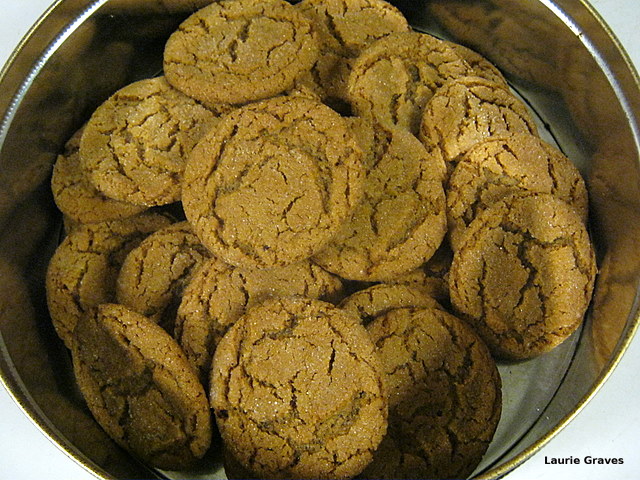
“You’re leading me astray,” he said, but without a moment’s hesitation, he took the cookies.
After the man left, I thought about what he had said about retiring. For someone whose life has revolved around physical activity—he’s worked in the woods for a very long time—I can see how retirement would be a torment rather than a blessing. I hope when it is his time to go, that he does so quickly, maybe by the woodpile as he’s gathering wood. (My friend Tom Sturtevant died that way.)
It would be a fitting end for an active man.
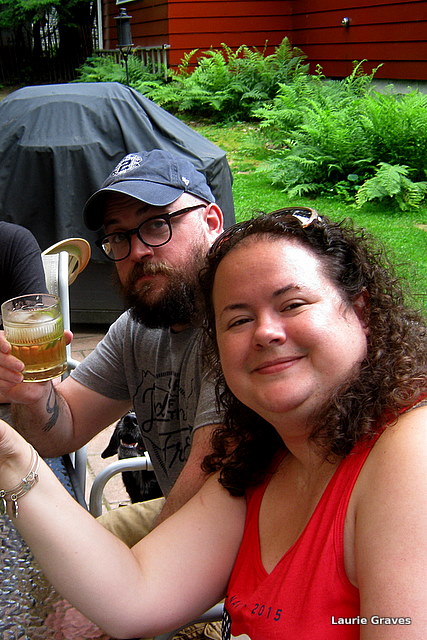 First and foremost, a very happy fifth wedding anniversary to my daughter Shannon and to my son-in-law Mike. It hardly needs to be said that they are my favorite couple, but sometimes it is good to state what is so obvious. They will be coming over on Sunday for a special meal, and we are even going to grill steak for them, a rare treat as we seldom eat beef. We’ll also have grilled bread, Farmer Kev’s red potatoes, Stevenson’s corn on the cob, and cake, of course. An August meal. And such a lovely month in which to be married.
****************************************************************************
I am reading Glady’s Taber’s Stillmeadow Seasons, published in 1950. For years, Taber lived in Stillmeadow, a 1690 farmhouse in Connecticut. Gladys Taber wrote many nonfiction books that followed the seasons at Stillmeadow, and her writing revolved around nature, home, food, dogs, and family. Sometimes she would add a dash of social commentary, mostly progressive: “There are many things we cannot do—we cannot make all people rich, or intelligent, or noble—but all people should be fed.” Is it any wonder that she is one of my favorite writers?
Here is a link to the Gladys Taber entry in Wikipedia, and it provides a bibliography of her work.
In the summer, I usually read on the patio when I have my afternoon tea, and that is where, appropriately enough, I am reading Stillmeadow Seasons. As always, my reading is interrupted by all that is going on. I watch mourning doves patrol the lawn until Liam chases them, and they fly away. I watch the trees, in summer deep green, move as the wind blows. Above them, is a bit of bright blue sky.

The grasshoppers seem to know it’s August and have begun their buzzing song. I have come to associate this sound with August, and I look forward to hearing it every year. At night, the crickets, with their high, sweet song, take over. I have heard some acorns drop—not many—just enough to remind me that fall is around the corner.
Along with the falling acorns, there are other reminders that fall is coming—the gardens are starting to look a little ragged, but along the edge of the woods, the jewelweed twinkles like tiny lanterns. Jewellweed can be fairly invasive, and I have to pull it back to give the other woodland plants some space. But what a welcome glow it is in August.

Then there was this: The other day, in Rite Aid, I was looking for Hershey bars to tuck away for s’mores for when Dee comes to visit in a couple of weeks. A woman, who was also eyeing the candy, said to me, “They’ve got Thanksgiving decorations out.”
“Get out of here,” I replied.
“Look up,” she said.
Sure enough, along the top shelf above the candy, was a row of ceramic pumpkins, scarecrows, and other fall decorations.
“I don’t know about you,” I said. “But I’m not thinking about Thanksgiving yet. No way.”
She laughed. “Me, neither.”
No, no, and no. We still have half a month of beautiful August to enjoy, and after that, September, which in recent years is nearly as nice as August.
Autumn and Thanksgiving will come soon enough. No need to rush them.
 Once a month, Clif and I host a movie night at our house. We are movie buffs, and we have three friends who are just as keen on movies as we are. It’s a great inexpensive way to get together to watch and discuss a film, and we all take turns picking out the movies.
Last Saturday was movie night, and we had a summer potluck dinner to go with it. Alice brought a package of homemade sourdough, which Clif grilled, and she also brought carrot cake. Diane brought a salad, and except for the eggs, everything came from her garden. As for me, I made a quiche with Farmer Kev’s zucchini and garlic. The basil came from my own little garden.
I got the idea for this quiche after I made Mediterranean eggs—scrambled eggs with zucchini, basil, and garlic topped with cheddar cheese. I wondered, would this taste good as a quiche with a cracker crust, similar to the one I made with summer greens? Why, yes it would. In fact, this has become my favorite quiche, and I plan to make it regularly while I have plenty of fresh basil. As far as I’m concerned, basil, garlic, and olive oil are the holy trinity of the food world, and when you add eggs, cheese, and zucchini, well, you have something that’s pretty darned good, to borrow from Clif. And it reheats beautifully. What more can you ask for?
Onion lovers might want to add or substitute onion. However, as indicated above, garlic and basil really are a team that’s hard to beat. But as you like it.
For the movie, we watched The Big Chill, a 1983 movie with an incredible cast that includes Kevin Kline, Glenn Close, and Jeff Goldblum. In brief, seven college friends reunite after the suicide of a mutual friend. The college friends are now in their thirties, and their youthful idealism has fizzed away. Not surprisingly, most of the characters are disappointed with the directions their lives have taken—one has become a star in a cheesy detective series; another a journalist for People Magazine; and another longs for a baby. I would have to say this is a movie about regrets, large and small, and after thirty years The Big Chill stills feels fresh and relevant.
Many adults, I suspect, no longer burn with youthful idealism, and many more are perhaps not where they thought they would be twenty (or more) years down the line. Most people deal with the loss as best they can, and some even go on to lead very creative lives, just not in the way they had planned. Others are swamped by regret and the disappointment it brings.
Friends, a good movie, and good food all add up to quite a Saturday night with not a single regret.
Zucchini, Garlic, and Basil Quiche
Ingredients
For the cracker-crumb crust
For the quiche
Directions



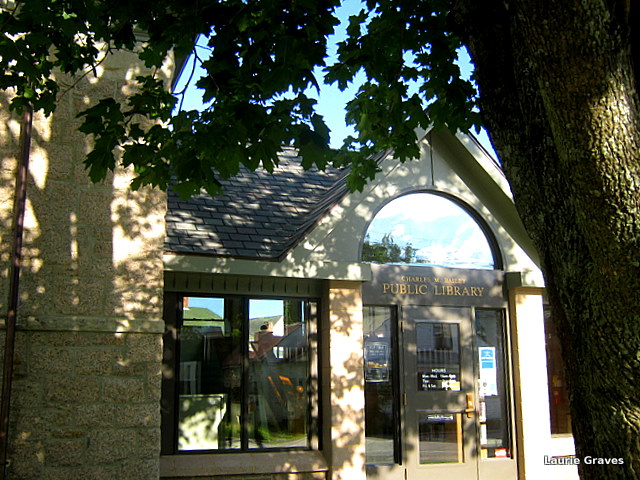 Yesterday, I went to Bailey Public Library. As I returned the movie The Big Chill, I talked a bit about it with Shane, the adult services librarian, who counts The Big Chill as a favorite. Such a good movie, we both agreed, that still feels fresh even though it was made over thirty years ago.
After talking with Shane, I spoke with Richard, the library director who also happens to be a talented artist. We talked about the graphic art that he does—you can see his art here at his site The Beginning Place. I, too, am interested in doing my own graphic art, and Richard very generously explained some of the techniques he uses. I will start out slowly, as I always do, and I know Richard will be available when—not if—I have questions.
When I came out of Richards office, Kat, the newest librarian, saw me, smiled, and said, “Hello, friend!” Then we proceeded to talk about the various shows we like—Supernatural, Doctor Who—and how movies made from books are so often disappointing.
These interactions were definitely a bright spot in my day, and I am sure that the many patrons who come to the library have similar experiences. Bailey Library is such a warm, friendly place, and with the expansion, it is also physically comfortable. We now have a cozy but bright reading corner and two long wooden tables for the computers.
How do you put on price on such interactions? You really can’t, even though the staff at Bailey Library makes the town a better place. To borrow from the credit card ads, it’s priceless.
And yet, on a practical level, a price can be put on the many services a library provides. I follow a blog called Northern Cheapskate, written by Christina Brown, and she recently posted a piece called How Much Money Do You Save at the Library? In the piece, she includes a link to ilovelibraries.org, which provides “a library savings calculator based on one the Massachusetts Library Association developed to demonstrate the value of public libraries.”
The library calculator couldn’t be easier to use. All you have to do is estimate the number of books, movies, and other materials you borrow annually from your library. Programs, which are usually free, are also included.
Clif and I are what you might call heavy library uses. I estimated that we borrow, on average, seventy books a year, many of them through interlibrary loan, and one hundred DVDs. We also attend many of the programs. The value of the library use for Clif and me comes to $2,215, which is $1,107 apiece.
Let’s do a little mind game and calculate what the amount would be if all 6,000 residents of Winthrop used the library as much as Clif and I do. Drum roll, please. It comes to $6,645,000. For a maceroni-and-cheese town like Winthrop, that’s a lot of money.
Now I realize that not all 6,000 residents of Winthrop use the library the way Clif and I do. Some don’t use it at all. However, the case could be made that families with children might use it even more than we do. So let’s slice that number in half, which would take into account the people who use it less or not at all as well as the regular users of the library. We still get a total of $3,322, 250, which, when you consider that the town gives the library less than $300,000 for its yearly operating budget, is a darned good return on tax money spent.
What is your library worth to you? What is the value of your library use?
 Notes From the Hinterland