All posts by Laurie Graves

I write about nature, food, the environment, home, family, community, and people.

Along Brook Trail: Keeping Track of the Ice

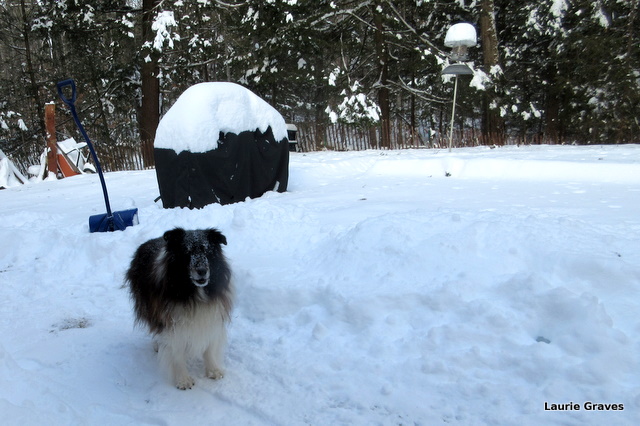
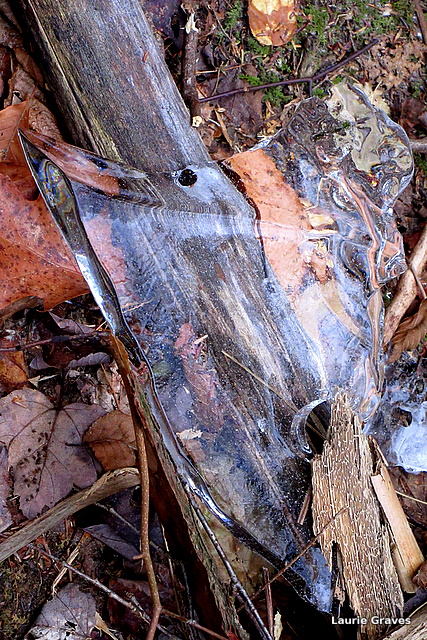
Yesterday, Clif, Liam, and I walked along Brook Trail in the woods behind the high school. Winter has finally come to Maine, and we have had snow—not so much that we can’t walk in the woods, but enough to make the ground white with blue shadows.

In the winter, the woods are so quiet.  Gone are the summer songs of the birds, that exuberant  burst of life. Instead, there is the crunching of our feet as we walk on the snow. A squirrel scolds us as she rushes up a tree. In the distance, we can hear a woodpecker rat-a-tat-tatting on a tree and the answering rat-a-tat-tat of another woodpecker.

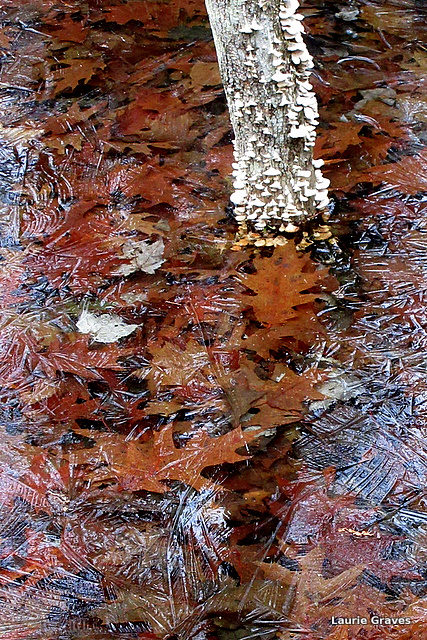
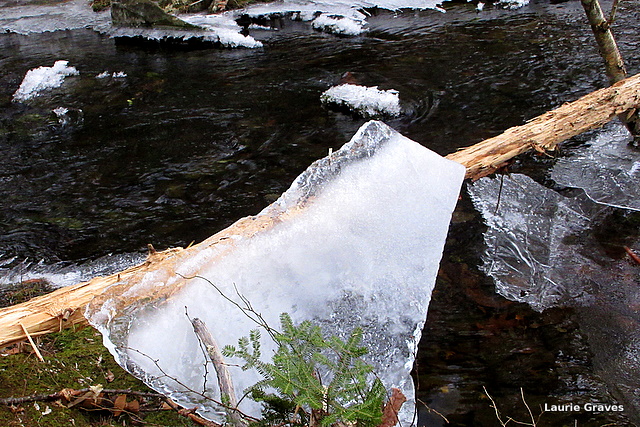
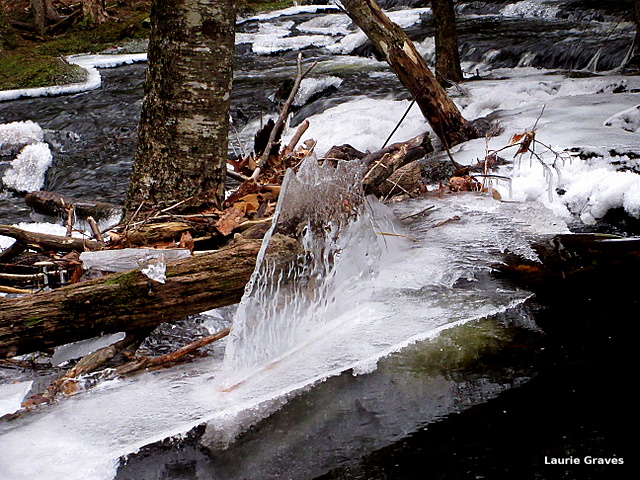
I love the woods in winter, the solemn stillness, the muted colors. On the trail we take, there is a side path that leads to Brook Trail, and here the quiet of winter is interrupted by running water that now has a skim of ice.

The other day, we met an acquaintance on the trail, and she said, “I come here as often as I can. I love to keep track of the progress of the ice on the brook.”

We do, too. I wonder if the brook will run all winter. Or, will we get a good cold snap where the brook freezes entirely? Clif and I will be going back today to check on the ice, and we’ll continue do so as long as the snow isn’t too deep.

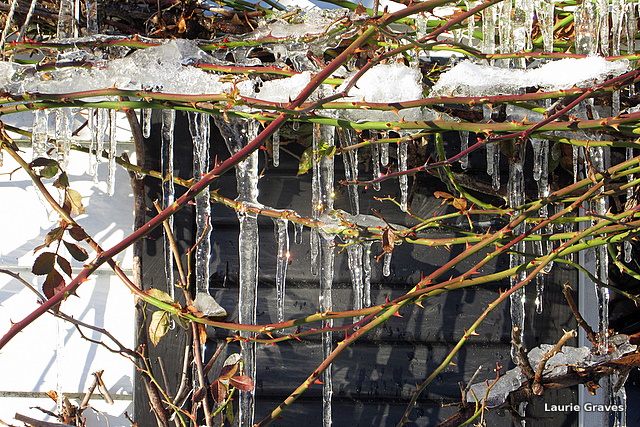
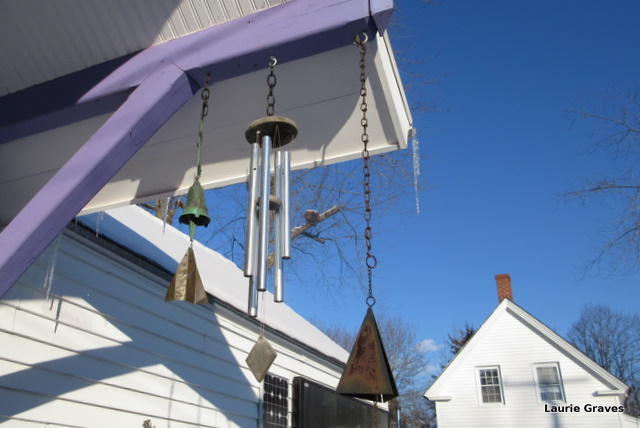
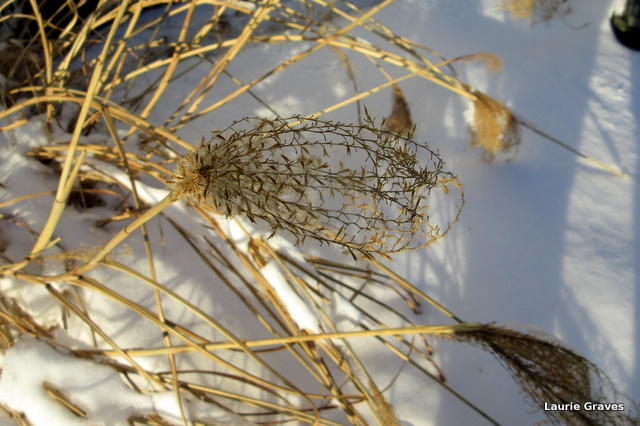
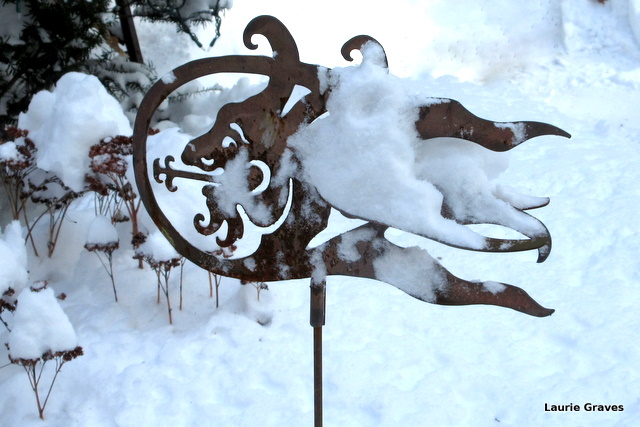
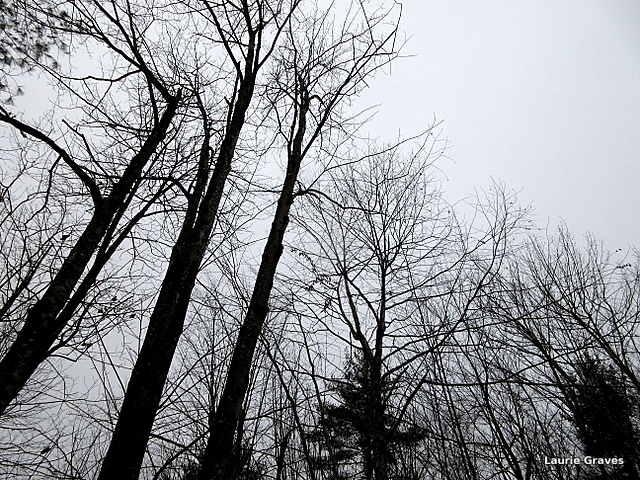
Here are some pictures from yesterday’s walk.

IMG_0238

IMG_0253

IMG_0250

IMG_0244

IMG_0258

Red Beans and Biscuits after a Cold Walk in the Dark

IMG_0006Yesterday, I went to visit Esther, who was a dear friend of my mother’s and has become my friend, too. Esther grew up in rural Maine—in Vassalboro—in the 1940s, and I love listening to the stories she tells of her childhood. Esther is only twenty years older than I am, but it almost seems as though she were born in a far-gone era, where life was contradictorily simpler and harder.

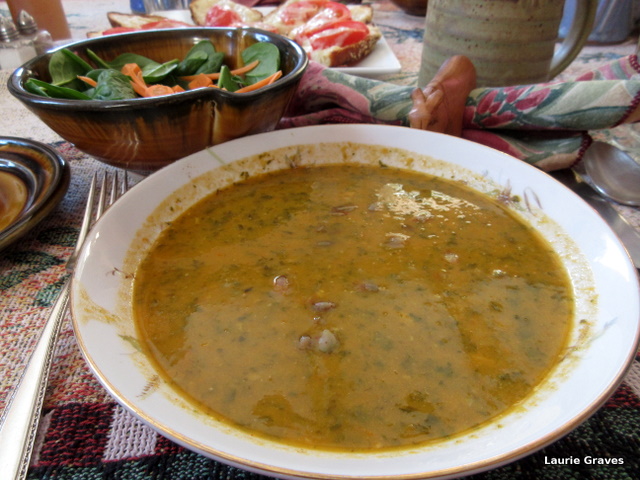
Esther made lunch for me, and as we ate her delicious beef stew, she told me that as a young girl she often walked home in the cold and the dark to her mother’s red bean stew and biscuits.

“Back then, no one took me anywhere or picked me up. If I wanted to go to a girl scout meeting in the village, I had to walk home afterward. Getting to the meeting after school wasn’t too bad, but coming home, it was a long, dark walk.” (Esther lived on a country road about two miles from East Vassalboro Village.)

I thought about how children were certainly hardier and more self-sufficient in those days, but I just nodded and helped myself to seconds of the beef stew. (As friends and family know, I am, ahem, a good eater.)

“Mom would have red bean stew and biscuits ready for me, and they tasted so good after that long walk.”

“I bet,” I replied, savoring Esther’s beef stew—the potatoes, turnips, and beef so tender it practically melted in my mouth. I also remembered hearing about how Esther’s mother, who worked in the factory in North Vassalboro, did her own walking in the dark and cold.

Esther is writing a memoir for her family—I hope I get a copy, too—and we talked about some of the vignettes that would be included in her book. “I’m writing about some of the unsung heroes in Vassalboro. My school bus driver, for example. One day after school, I went home with a friend, who lived on Cross Hill Road, and there was a bad snowstorm.”

“There’s quite a hill on that road,” I said. “I’ve gotten stuck on it once or twice.”

“That road was so bad that the bus driver decided he just couldn’t make it up that big hill. So the he stopped the bus in a safe place, let us out, and walked all the kids to their homes.”

“He felt responsible for the safety of the children on his bus,” I said.

“Yes,” Esther replied.

As I finished my soup, I thought about this bus driver, a man clearly concerned about the welfare of the children more than he was about his own comfort. He could have let the children walk home on their own. I doubt any of the parents would have given it much thought. As Esther’s story about the girl scout meetings indicates, children walked a lot back then, and in all kinds of weather. But the bus driver didn’t want the children to walk on their own in a snowstorm.

Generally, when we think of heroes, we think of some grand, brave act such as jumping into an icy river to save a drowning child. But Esther is right to honor the unsung heroes in her town, the men and women who thought of others, who in many small ways made life better for the people in Vassalboro.

In a life that is hard or hectic or filled with other kinds of stress, it is not always easy to give, to be decent. But give we should, despite the effort because as Esther’s story illustrates, this generosity ripples out through the years, well past the time when it was given.


The Frosty Days of January: A Perfect Time for Afternoon Tea with Friends

This morning, when Clif took Liam for a walk, it was, to borrow from Dick Proenneke, dead calm and zero degrees. As this was Fahrenheit, not Celsius, the walk was a little brisk. But this temperature is far more typical of January in Maine than the freakishly warm weather we had in December. (On Christmas day, it was 61 degrees, and records were broken.)

Accordingly, this morning the view out the window by my desk was a little frosty.

One frosty window
One frosty window


Later today, when it’s a little warmer, we hope to go for a walk in the woods. Cold, snowy woods provide many opportunities for photographs (as well as nippy fingers). We will be sure to bundle up in our heaviest jackets and gloves. Liam, on the other hand, is always bundled up, and as I’ve mentioned before, he is a dog who loves the snow.

Liam, all bundled up, on a previous frosty walk


This cold weather is perfect for one of my favorite things—afternoon tea (or coffee) with friends. Over the holidays, we had afternoon tea with two different sets of friends, and each time, on the way home, I reflected on how much I enjoy these get togethers, and, in truth, I like hosting them as much as I enjoy being hosted.

Now, let me hasten to add that it is lovely to be invited to someone’s home for lunch or dinner, and I accept such invitations with what might called an unseemingly haste . In turn, it is very satisfying to cook a meal for friends and family.

However, nothing can beat an afternoon tea for its casual yet friendly atmosphere. Getting ready is a snap. Muffins or a quick bread are easily made ahead of time, and tea and coffee are simple to prepare. Then, after the guests have arrived, we can sit around the table and enjoy the conversation, which usually ranges from books to movies to politics. All is relaxed. There is no more fussing to do.

Clean-up, too, is easy, which means that from beginning to end, afternoon tea is a complete pleasure.

When I was growing up, there wasn’t a week that went by when friends or family didn’t stop by for a visit with my mother and father. Most of the time, it was for coffee—in rural Maine, tea hadn’t really caught on then—and some kind of dessert, usually homemade as my mother was a fabulous baker. We lived in an old farmhouse, and everyone settled around the kitchen table. Both my parents were great talkers—they were Franco-American, after all—and the kitchen was loud with laughter and conversation.

This January, February, and March I am hoping to regularly get together with friends for afternoon tea—once a week, if I can manage it, but at least every other week.

Such a simple, frugal pleasure to look forward to.

IMG_0182


Blasting through the Holidays with Moving and Movies

I love Christmas and New Year’s Eve, but as I’ve gotten older, I must admit I find them a tad hectic. And this year was especially hectic. First, Clif and I got nasty coughing colds that were mostly gone by Christmas but like unwanted guests stayed far longer than they should have. (It has taken me four weeks to completely recover.)

Then, on the Monday after Christmas, Shannon and Mike packed a U-Haul and headed to North Carolina, where Shannon will start a new job. We went to South Portland to help them clean and pack, and we bid them a sad farewell. (They made it safe and sound to North Carolina and have moved into their new town house. Movie buffs that they are, they even found the energy to go to a film—the excellent Big Short, a must-see movie.)

IMG_0144
Farewell, Shannon and Mike

Dee stayed with us until after New Year’s Eve, and as we are, in fact, a family of movie buffs, we watched plenty of movies, at home and at the cinema.  We saw the new Star Wars movie, which I liked but did not love. For me, it was far too derivative of the original—A New Hope—but it was still worth seeing, especially on the big screen.

Also of note was the movie Concussion, starring Will Smith, who plays Dr. Bennet Omalu, the real-life pathologist who made the connection between football players’ repeated concussions and the resultant brain damage. A sobering story where those in power yet again tried to deny the truth and intimidate those who uncovered the evidence. After seeing this movie, it’s hard not to argue that the game should be played very differently.

As good as Concussion was, the best movie was The Big Short, based on the book of the same name by Michael Lewis. In the New York Times, A. O. Scott gives this movie a critics’ pick and begins his review with this description, which is too good not to share: “A true crime story and a madcap comedy, a heist movie and a scalding polemic, The Big Short will affirm your deepest cynicism about Wall Street while simultaneously restoring your faith in Hollywood.”

The Big Short is a movie about the housing bubble and its subsequent collapse.  Some in the industry saw what was coming and decided to try to make money on the housing collapse, and the movie follows three groups of these people. The film is snappy, fast-paced, and satirical while at the same time informative and moving. I think it’s fair to state that not many films about the financial collapse manage to combine all those qualities. In addition, there are devices such as a narrator speaking  directly to the camera and celebrities, as themselves, explaining various terms, including subprime mortgages and CDOs. These devices could have fallen flat, but in The Big Short they work with hilarious effect.

As I noted above, The Big Short is a must-see movie. The Great Recession was a world-wide event, where many, many people suffered devastating losses. It could have been worse, of course, but in the U.S.  the American taxpayers bailed out the greedy financial institutions that wreaked such havoc and harm. Do I resent them? You bet I do, and you should, too.

Those of us in the United States need to be mindful about how politicians feel about regulations and banks that are “too big to fail.” The Great Recession wasn’t an act of nature. It was an act of men and women, which means it was not inevitable.

But enough wagging the finger. Onward to winter and the New Year.

IMG_0159


On Vacation Until the New Year

How warm it has been in central Maine! No snow, plenty of rain, and not surprisingly, the lawns are still green. (Clif jokes that he’s going to have to haul out the lawn mower.) But the days are short, and the nights are long so it must be December. Clif, Liam, and I have resigned ourselves to being inside far more than we like, and we console ourselves—at least Clif and I do—by calling this time of year “cozy.”

The leafy trees are mostly bare, but a few stubborn oak leaves cling to the branches, and I love the way they look against the blue sky.

IMG_0104

We are one week away from Christmas—my favorite holiday—and there are so many things to do that I hardly know where to begin. Cooking and cleaning are the prime activities to get everything ready for the big day. This Sunday afternoon will be devoted to wrapping presents. Our Christmas is modest but merry, and we take great pleasure in what we give and receive. We like to stretch Christmas morning as long as possible, with each person opening one present at a time while the rest of the family watches.

In addition to all the holiday folderol, Shannon and Mike will be moving the week after Christmas, and we will be helping them.

Therefore, I’ll be taking a two-week vacation from the blog. I’ll still be checking my email so that I can keep up with the goings-on of my blog friends. I want to note that this past year, when I have made so many new blog friends, has been a delight. It’s wonderful to read about the happenings of folks far and near—in England, Ireland, Australia, Virginia, Ohio, Alberta, Massachusetts, New Hampshire, New Jersey, Illinois, and Maine, of course. I feel as though I am part of a warm and creative virtual community, a wonderful addition to the community where I actually live.

So happy holidays to you all! I’ll be back in 2016. And may the force be with you.Christmas

After the Lashing Rain

IMG_0091-1Yesterday, we had a lashing rain and discovered there was a leak around the chimney. As soon as it dries, Clif, like Santa, will be up on the rooftop, but instead of coming down the chimney, Clif will be patching the leak. (And a good thing, too, because the chimney leads directly to the wood furnace that heats our home.)

But we in central Maine should be grateful. In northern Maine, instead of a lashing rain, they had a wintry mix, a term that chills the heart of any Mainer, as freezing rain is usually part of that mix. However, I haven’t heard of any widespread power outages, so the wintry mix couldn’t have been too bad.

Quiet has returned to the little house in the big woods. Yesterday, Somara and Holly went back home with Shannon. (How thrilled they were to see her!) My cold, finally, is going away. (I’ve had ten not-so-merry days of coughing myself silly.)

Time to roll up the sleeves and start with the Christmas cooking. The new convection oven works like a champ, and I’m ready to make peppermint-frosted shortbread and thumbprint cookies. Homemade ice cream pie. Peanut butter balls and chocolate-covered pretzels. Many of these goodies will be going out to the various elves who make our lives better.

Ho, ho, ho!


Dogs of Our Lives

This weekend Shannon and Mike went to North Carolina to look for a place to live—they’re moving the end of December, and how we’ll miss them! Therefore, Clif and I took care of Shannon and Mike’s dogs, Holly and Somara, while they were away.

Each day, into the woods we went so the dogs could sniff and run and play. How lucky for us to have such beautiful trails so close by. And, I must admit, even though it is freakishly warm for December in Maine—in the fifties, no less—I was grateful to have bare trails for our doggy romps.

Somara running lickety-split


Clif and the gang
Clif and the gang


Waiting at attention for treats


More lickety-split
More lickety-split


Shannon and Mike aren’t the only ones we’ll miss. We’ll miss those dogs, too.

Christmas with Miss Read

During this busy time of year, especially when I have a cold—as I do now—I inevitably turn to Miss Read (aka Dora Saint) for some peace, common sense, and just plain fun. I am lucky enough to own Miss Read’s Christmas: Village Christmas and The Christmas Mouse, and how nice it is to just take it from the bookshelf.

What do I like so much about Miss Read? First, there are her depictions of nature. This description of rain is from the first two paragraphs in The Christmas Mouse: “The rain began at noon. At first it fell lightly, making little noise. Only the darkening of the thatched roofs, and the sheen on the damp flagstones made people aware of the rain. It was dismissed as ‘only a mizzle’….But by two o’clock…[t]he wind had swung round to the northwest, and the drizzle had turned to a downpour. It hissed among the dripping trees, pattered upon the cabbages in cottage gardens and drummed the bare soil with pock marks.”

When I read that description, I could feel, hear, and see the rain. Such lovely, evocative writing.

Then, there is what the The New Yorker called Miss Read’s “beery sense of humor.” In The Christmas Mouse, the story revolves around three generations—Mrs. Berry, the grandmother; Mary, her widowed daughter; and Frances and Jane, Mary’s two young daughters. It is Christmas Eve, and the children are beside themselves with excitement. (Thank goodness that never changes!) Frances and Jane have just bounded from their bath into their mother’s bedroom.

“‘The water’s all gone. Frances pushed out the plug—‘

‘I never then!’

‘Yes, you did! You know you did! Mum, she wriggled it out with her bottom—”

They began to giggle, eying each other.

‘Let’s go down and frighten [Gran], all bare,” cried Jane.

‘Don’t you dare now!’ said their mother, her voice sharpened by the thought of the [girls’] slippers being wrapped below.”

Finally, there is Miss Read’s great respect for work and home. Here she describes Mrs. Berry and her husband: “Amelia and Stanley were true homemakers….She could make frocks for the children, curtains, and rag rugs as competently as she could make a cottage pie or a round of shortbread….Stanley saw to it that any stonework or woodwork was in good repair. They shared the gardening, and it was Mrs. Berry’s pride that they never needed to buy a vegetable.”

In Maine, I’ve known many a Franco-American and many a Yankee who would fit the description of Amelia and Stanley.  And I still do.

Perhaps that’s why Miss Read never grows stale for me. Her observations about human nature, work and home, and the natural world continue to ring as true now, in 2015, as they did when she wrote in the 1960s and 1970s,

IMG_0013