In Transition

Yesterday, Clif and I went to the Winthrop Center Friends Church to see In Transition 2.0, a movie about Transition, a movement celebrating community and the environment. It also re-imagines a different economy, based on supporting local stores, farmers, and artisans. Transition began in the United Kingdom, and some of you have perhaps heard of Rob Hopkins, one of the founders of Transition. (Transition Network.org provides a more detailed account of the movement and its various aspects.)

Released in 2012, In Transition 2.0 follows the usual rah-rah trajectory common to upbeat documentaries about the environment and social change. The gist of the movement is explained, and then big and small examples of action from around the world are featured—community gardens (relatively easy); a group that focuses on personal action (again, relatively easy); local currency (a little harder but manageable); and starting a small power company that is based on renewable energy (very hard).

I’m aware that the above paragraph makes me sound like a cynic when it comes to movements such as Transition, but nothing could be further from the truth. As a Mainer, I am very much aware of the problems addressed by Transition, especially climate change and the decline of small communities. I’ve already written about the weird winter we’ve been having and how this seems to be the new normal. Climate change is here, no two ways about it.

However, I haven’t written about how Winthrop, the small town where we live, has gone from having a vibrant downtown with clothing stores, a craft store, a five and dime store, and a little grocery store to having a few sandwich shops, some thrift shops, and not much else.  It’s been sad to witness this decline. There are many reasons for this, including the closing of major businesses and poor leadership. I could go into great detail about this, but I’ll stop here.

Therefore, my sympathies are with Transition, but having once been a part of a failed Green Committee, I am also aware of how difficult it is for people to come together to make a change.  And, to be fair to In Transition 2.0, the movie does acknowledge that groups do fail and even highlights one that has.

After the movie, the handful of us that came discussed what we had seen.  Maggie Edmondson, the Friends pastor, did a fine job of leading the discussion. However, because most everyone came from a different community, there was really no possibility of starting anything in Winthrop.

And yet. The movie and the discussion made me think more about what I can do to live a greener life, about how I should use less of everything, throw away less, buy more local food, and drive less. (This is very difficult in central Maine as there is not much in the way of public transportation). In fact, I grapple with these issues on a daily basis, and seeing this film has made me resolve to do better, do more.

The title of the movie, In Transition, aptly catches what we are experiencing regularly in this country and, I think, around the world. Fires and mud on the West Coast. Dreadful hurricanes in the South. Twelve inches of snow and frozen alligators in North Carolina. Flash floods in Maine in January.

We are, indeed, in transition. Now it’s up to us to decide what to do about it.

The Kennebec River in Augusta, Maine, on January 22, 2018. More rain, more ice dams are predicted tonight and tomorrow, and these, in turn, could lead to more flooding. Good times.


Five for Friday: Frozen River, Thawed River

Let me come right to the point. This has been one of the weirdest winters that I can remember, and as I turned sixty in September, I can remember quite a few of them. At the end of December and creeping into January, the temperature dipped to twenty below zero, and barely budged above zero all day. Mainers are used to cold spells in the winter, but never for that long, usually only for a few days rather than for two weeks.

Then, in mid-January, the temperature spiked to nearly fifty degrees, and we had lashing rain, the kind we usually see in summer or fall but never in the winter.

As the saying goes, it’s an ill wind that blows no good, and the rain and warm weather did remove all the snow and ice from our roof. We were grateful for this as too much ice on a roof inevitable leads to leaks.

However, on the bad side of the ledger, the rain and the spike in temperature caused rivers to thaw and flood. In central Maine, where I live, the closest river is the Kennebec, and it’s about ten miles from us, flowing through the nearby cities of Augusta and Hallowell and the small town of Farmingdale.  The Kennebec is a storied river that played a role in the Revolutionary War and was a major waterway before the advent of automobiles.

In the spring, in March and early April, the Kennebec occasionally floods the many cities and towns that grew up along the river.  Not unusual at all, and it’s something the river towns and cities are prepared for. However, because of the sudden, extreme thaw this January, the Kennebec did something that no one expected would happen in deep winter. The river flooded, and it flooded fast, within a span of minutes.  As Jason Pafundi from the Kennebec Journal wrote, “Sometime early Sunday morning [January 14], ice accumulated near Farmingdale and created a dam in the river. In the course of a few minutes the water rose about 8 feet in downtown Hallowell and Augusta.”

Businesses were flooded, and residents who parked in lots by the river lost their cars. On Tuesday (January 16) Clif and I had errands to do in Augusta, and we decided to drive into Hallowell to see what the Kennebec looked like. The flooded cars had all been removed, but there were ice chunks aplenty, something we don’t normally see this time of year.

This is a rather long preamble for my Five for Friday. For readers who live in a warmer climate, none of the pictures would make any sense without an introduction.

As this post indicates, there should be no doubt that climate change is real, and it is here. The flooding river in January is but one change this aging Mainer has seen in her lifetime.

Here is a sign at a turnout between Hallowell and Farmingdale. The Kennebec River is the waterway that starts on the right about halfway down the sign and heads directly to the ocean at the bottom. To get a better view, click on the picture.

This is an upriver view of the river heading toward Augusta, the state’s capital city. If you look closely, you can see the white dome of the state house complex. It’s center left along the skyline.

A smelt shack, carried by the ice from the edge of the river to the middle. Unlike those who ice fish on lakes, people who ice fish on the Kennebec set up their shacks on the edge of the river, where the ice is thickest and therefore usually safe.

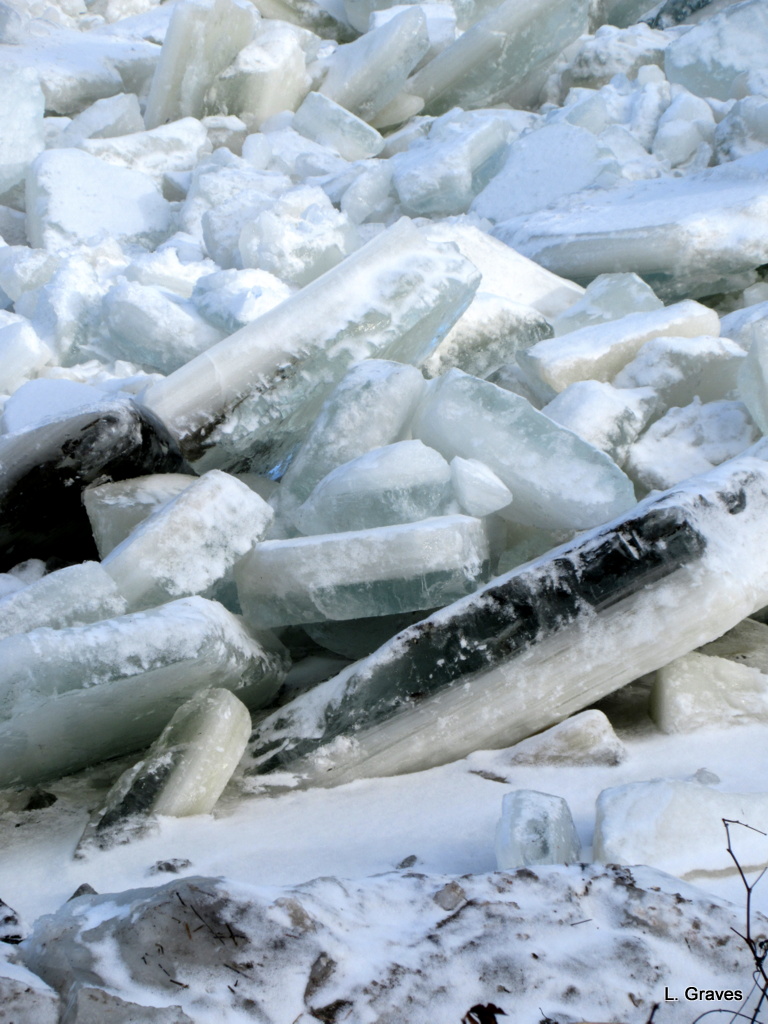
A close up of ice chunks.

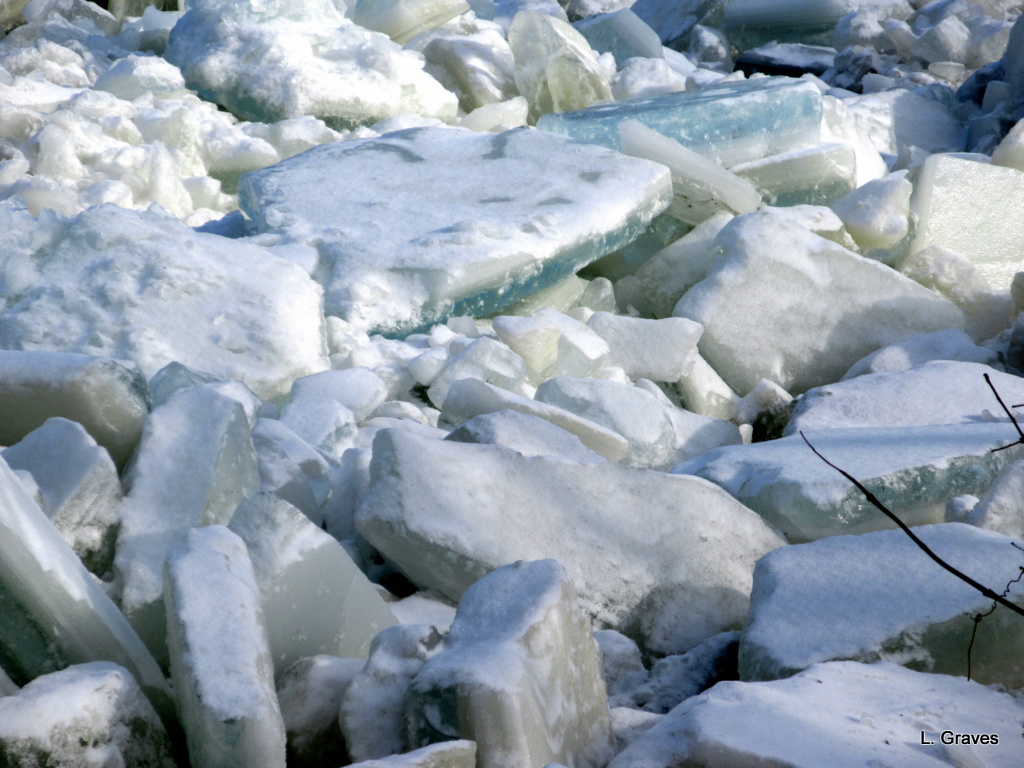
More ice chunks. With their Arctic look, I find them fascinating.


Back to a Winter Wonderland

Yesterday, we got about four inches of snow, enough to cover the hard, dirty mess left behind by the lashing rain we had last weekend. The rain and the warm weather have played havoc with the rivers in Maine, and tomorrow’s post will feature the Kennebec River, which runs about ten miles from where we live.

But for now, I want to bask in the beauty of a new snowfall, where everything looks so dazzling and clean. I also want to add that for Mainers, four inches of snow is just the merest dusting. School is not canceled, state work goes on as usual, and last night in Winthrop, nine hardy readers ventured to the library’s book group to discuss The Sandcastle Girls by Chris Bohjalian. Yes, the roads were a little greasy, as we Mainers put it, but we all took our time getting to the library and then driving home again. We had a lively discussion, as always, and it was well worth the trip.

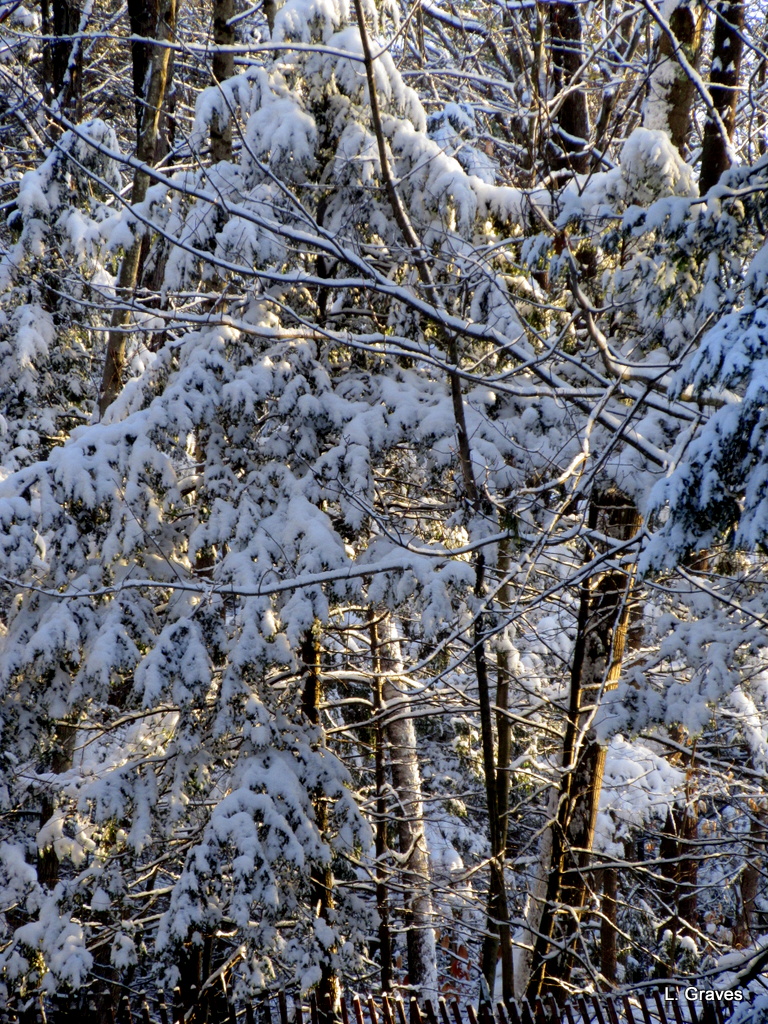
Here are some pictures of our snowy backyard and road.

Winter, winter!

Liam Update

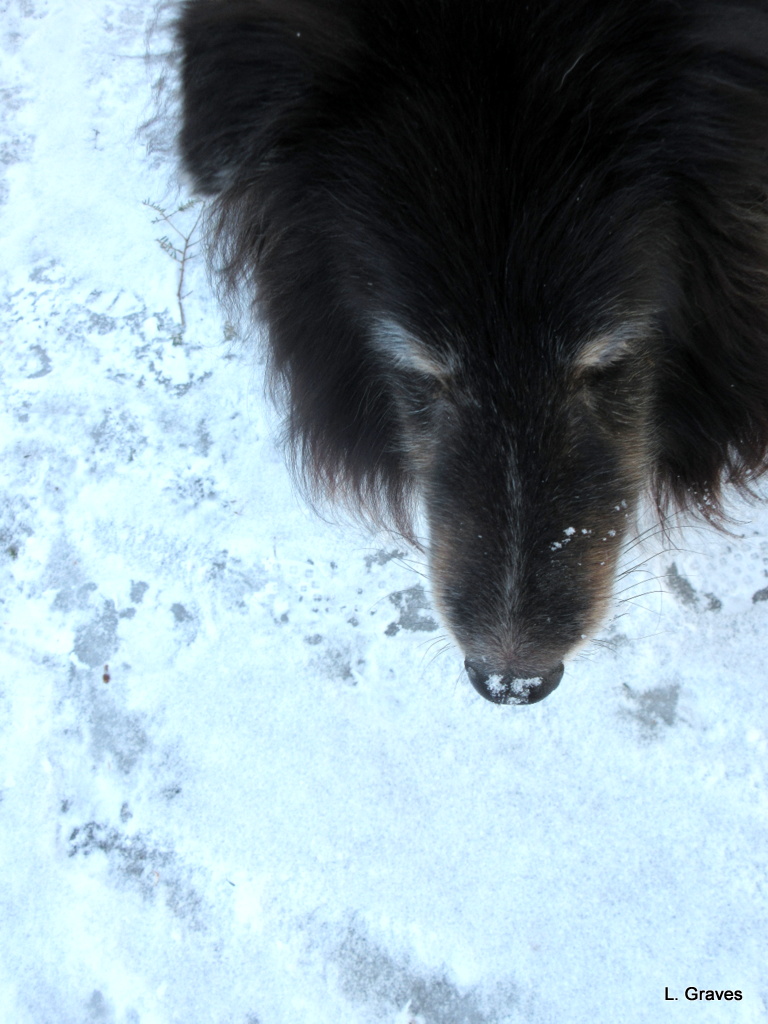
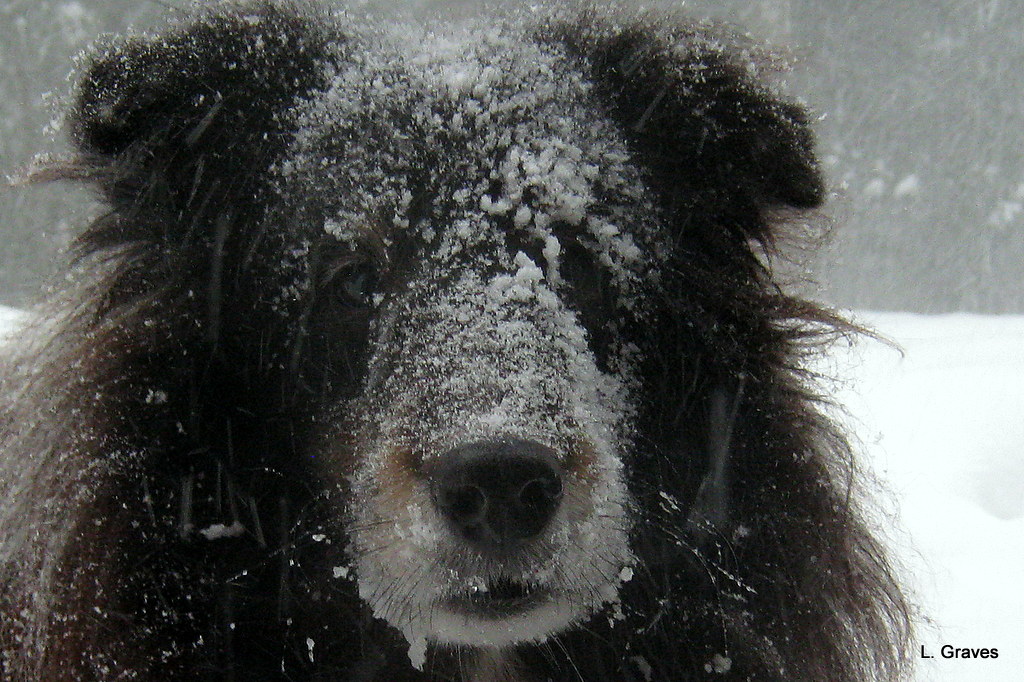
Yesterday, readers expressed concern about Liam’s swollen nose, which probably happened when he ran into a fallen branch in the backyard. Today, he is looking much, much better. Here’s a shot of his handsome face, and the nose is hardly swollen at all.

However, on his nose, there are a few specks of snow, and they are there because Liam likes to do this:

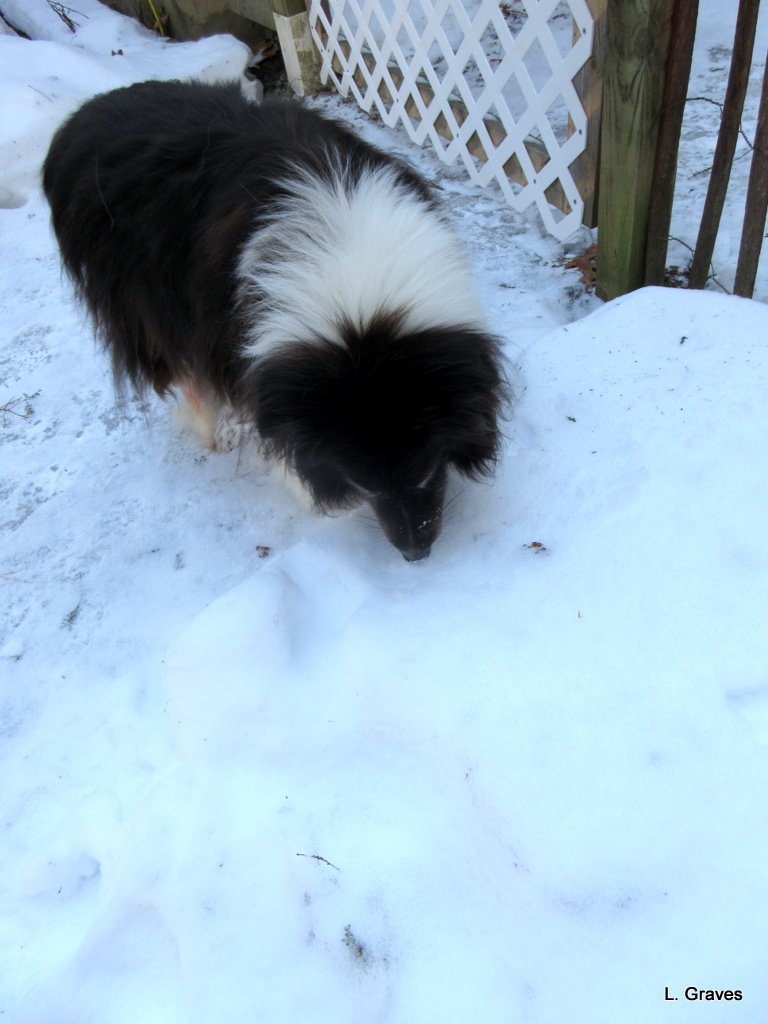
Liam has always been a dog who has loved the snow, and blindness has not diminished his enthusiasm for crunching on snow when it is crusty or sticking his head in the snow when it is fluffy.

After all, he is Liam, Dog of the North.

(This picture was taken several years ago, and long-time readers will recognize it. An oldie but goodie, just like our dog buddy. )

Liam is Thirteen

Today is Liam’s birthday, and as the title of this post indicates, he is thirteen years old. I still remember what a little Tasmanian devil Liam was when he was a puppy, and Liam remained energetic in his senior years until he went blind.

Poor dog buddy! His blindness has really slowed him down, and the other day, he banged his beautiful long nose on something—we don’t know what—and now his nose is horribly swollen on one side. Fortunately, his appetite is still good, and his bruised nose hasn’t interfered with his eating.

During a recent storm, some large branches had fallen in our backyard next to the bird feeders. They made excellent perches for the birds, and so we left them there. Liam had his paths for doing his business, and none of the branches were in his paths. However, the rains that came on Saturday did two things—it reduced the amount of snow we had, and it made the remaining snow so hard that Liam can now leave the paths and wander at will in the backyard.

Clif and I wondered, did Liam run into one of those branches and hurt his nose? We have no way of knowing, but we decided not to take any chances. Yesterday, we cleared out all those branches—some of them were quite large—and threw them over the fence into the woods. The birds no longer have perches directly by the feeders, but as we have so many trees in our backyard, it really doesn’t matter. There are plenty of other branches for the birds, and they are still coming in great numbers to the bird feeders and suet.

Swollen nose aside, Liam is holding his own. We have adjusted the way we do things. His blindness has affected his whole system, and Liam is now on a special diet that includes vitamins. No more walks off the leash, and his walks are much shorter.  We don’t like to leave him for more than five hours even though he has never messed in the house while we were gone. No overnight guests who are not family as Liam sometimes barks in the middle of the night to go outside.

However, as we recently told our friends Beth and John, we love our dog buddy so much that we never resent the extra care involved as Liam has aged and gone blind. For the  most part, unless he bumps into something, Liam is comfortable, and his appetite is good.

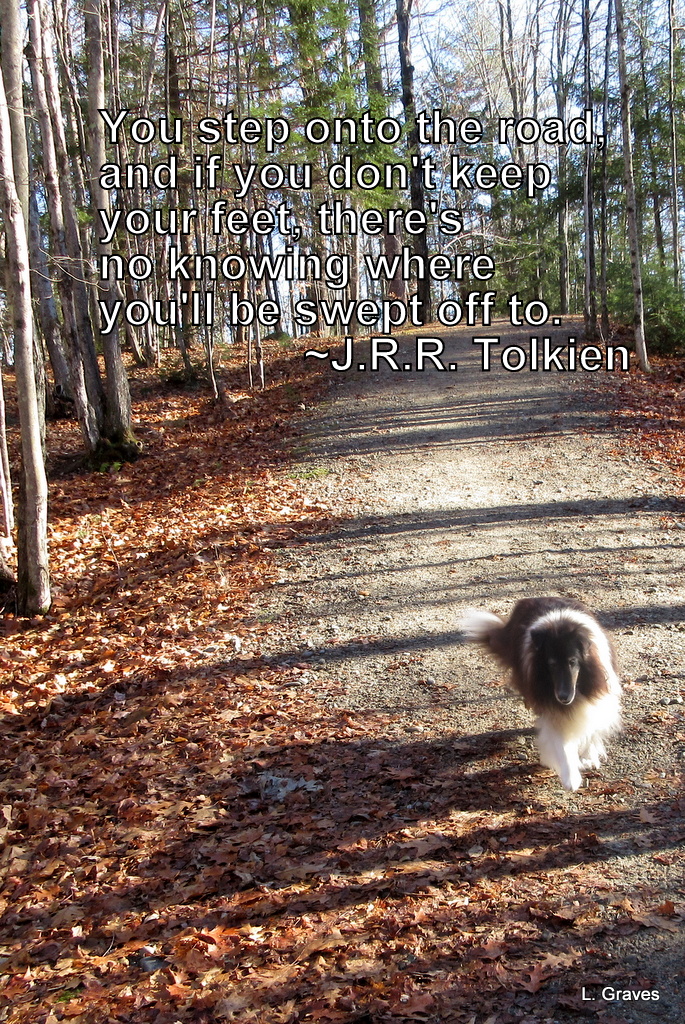
In honor of Liam’s birthday, here is a picture, complete with a Tolkien quotation,  of Liam when he could still see. The photo, used as a card, was taken on the trails behind the town’s high school, one of Liam’s favorite places before he went blind.

So happy birthday to one of the best and sweetest dogs in Winthrop.


Five for Friday: By the Lake in January

When it comes to the weather, this has been an up and down kind of month. January started out with below zero temperatures, mellowed into nice winter weather, and has now spiked above 40°F. Rain is in the forecast for today, and there’s a foggy mist over snow that has become hard and dirty. Readers, it looks like March out there, and the horror of this is almost too much to bear. As if this weren’t enough, tomorrow the temperature is supposed to take another nose dive, with freezing rain, severe cold, and slippery roads. Even by Maine standards, this is extreme weather.

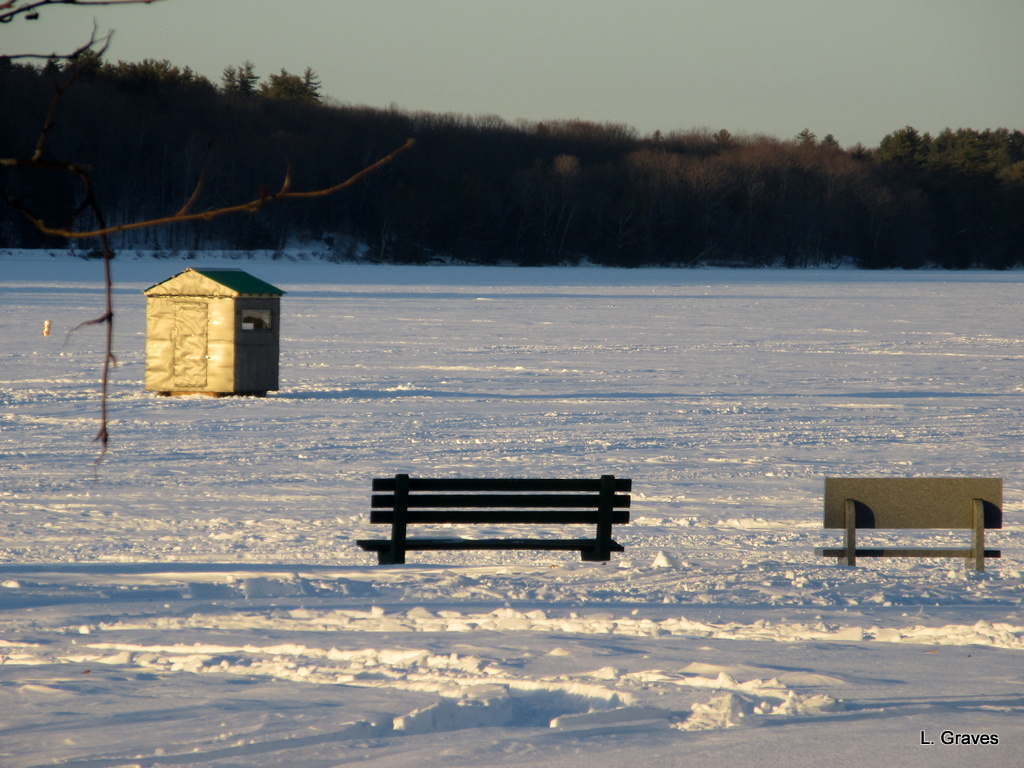
However, on Wednesday, it was a fine winter’s day, and at dusk, at the golden hour, we went to Norcross Point, a little park in town by Maranacook Lake. In spring, summer, and fall, we park the car there and use the park as a starting point for our bike rides. We always see people launching boats as well as using the many benches and tables to relax and have picnics. Not this time of year.

But with a glowing cerulean sky and an expanse of snow, the park and lake are beautiful and welcoming to snowmobilers and those who like ice fishing.

This picture shows the expanse of snow and sky, and the lake is so covered with snow that you can’t tell where the land ends and the water begins.

Empty benches overlook an ice-fishing shack.

A view of that same shack through the gazebo.

Nobody grilling on a snowy day.

A bare tree against a deep blue sky. One of my favorite subjects.

Here’s hoping that there will be more snow, no more freezing rain, and no more March weather until March.

Celebrating Esther’s 80th Birthday

Yesterday, I took my friend Esther out to lunch to celebrate her eightieth birthday, which, in fact, was the end of November.  However, between the holidays and bad weather, there really wasn’t a good time for me to take her out before Christmas, and we settled on January.

“After all,” Esther said. “I’ll still be eighty.”

Indeed she would. For recent readers who might not be familiar with Esther, here is a brief history of how we became friends. I met Esther through my mother. They both lived in Vassalboro, a small town in central Maine, about eight miles from Waterville and twenty-five miles away from where I live. As Esther put it, “Your mother was the best friend I ever had, and that kind of friendship doesn’t come along very often.” No, it doesn’t.

I often got together with my mother and Esther for lunch, tea, and other events, and over the years, she became my friend, too. When my mother died ten years ago, I continued my friendship with Esther. Not only do I enjoy Esther’s lively company, but she also provides a connection to my mother, and this means a lot to me.

As if all this weren’t enough, Esther is also a treasure trove of stories about rural life in Maine in the 1940s and 1950s, a time that seems nearly as remote and as different as the pioneer days. Esther was born in Vassalboro, and her family was very poor. But because they lived in the country, they were able to grow a lot of their own food.

“We hardly went to the grocery store,” Esther said. “Going to Waterville was a big occasion. For meat, we mostly ate deer, and when my father got one, we all gathered around the piano, sang songs, and celebrated. But I hated having to help cut up the deer. The flesh still smelled so alive, and it reminded me that the animal had been living not long ago.”

I nodded sympathetically, marveling at her country grit. I tried to picture myself butchering a deer when I was a young girl, and here my imagination failed me. I know I couldn’t have done it.

Esther said, “My father might have killed deer, but when he was haying, he always went in a big circle around nesting birds. He didn’t hunt for fun. He hunted for food.”

Again, I nodded. Hunting for food I understand but killing for fun, I do not.

“We ate some of the meat fresh,” Esther continued. “But my mother canned a lot of it for the winter.”

As Esther spoke, I thought about my own mother, of how she, too, grew up in poverty. My mother lived with her single mother and her grandmother. But they didn’t live in the country where they could grow much of their own food. Instead, they lived in a tiny apartment in Skowhegan, a small mill town up the Kennebec River from Waterville. But it seems my great-grandmother was a resourceful cook, and my mother often marveled at how even when there cupboards were bare, my great-grandmother always managed to put something together for supper.

“The good old days, ” I said to Esther.

Esther is one of those people who really does have a twinkle in her eye, and she responded, “When I wasn’t good and I wasn’t old.”

We both laughed.

Here’s a picture I took of Esther yesterday at Joseph’s Fireside Steakhouse in Waterville.

Happy birthday, Esther! May you have many more.

Five for Friday: Power Regained and More Snowy Pictures

Our power is back, and it was only out for two hours. To say we were thrilled doesn’t begin to describe how we felt when after only a short while, the power whirred back into our house. Is there any sound sweeter than the refrigerator coming back to life? Not after a power outage, there isn’t.

In fact, Clif and I are well prepared for power outages, even though we hate them. We have plenty of wood for the furnace, stored water in buckets, canned food, oil for the lamps, and good flashlights.  And most important, peanut butter.

We did much of the clean-up yesterday, but there is more to do. At the end of the driveway, we have a wall o’snow left by the road plow. It’s too much for Little Green, and I have to chunk the snow first to make it manageable for the snow thrower and, of course, Clif.  Nature’s gym.

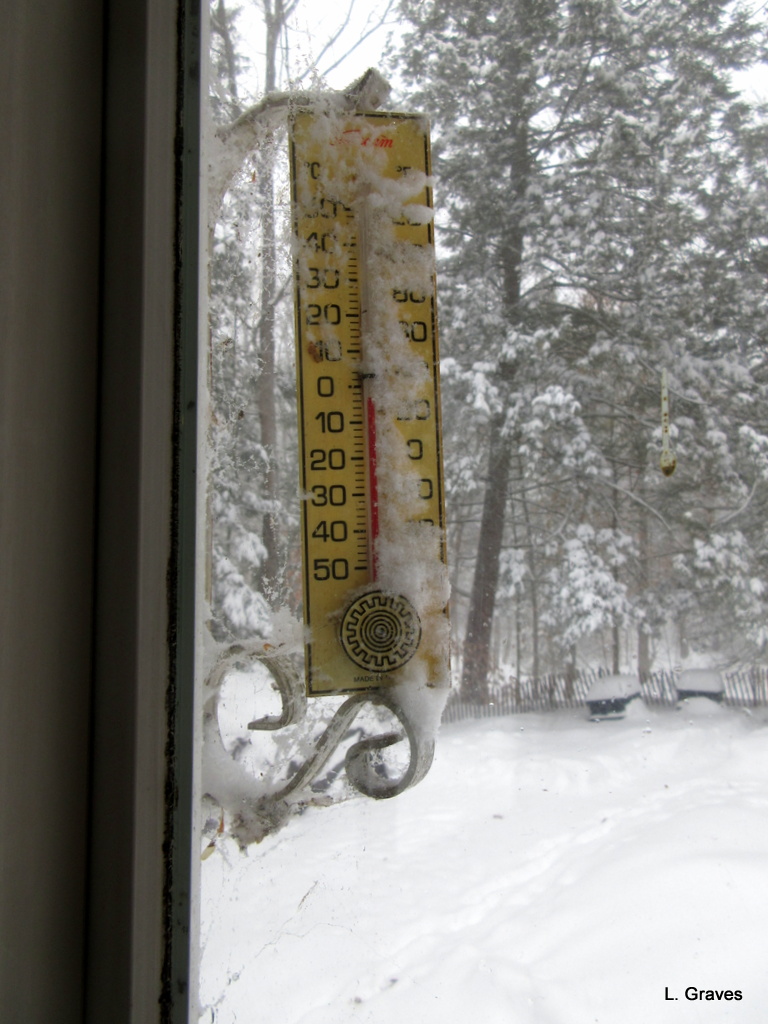
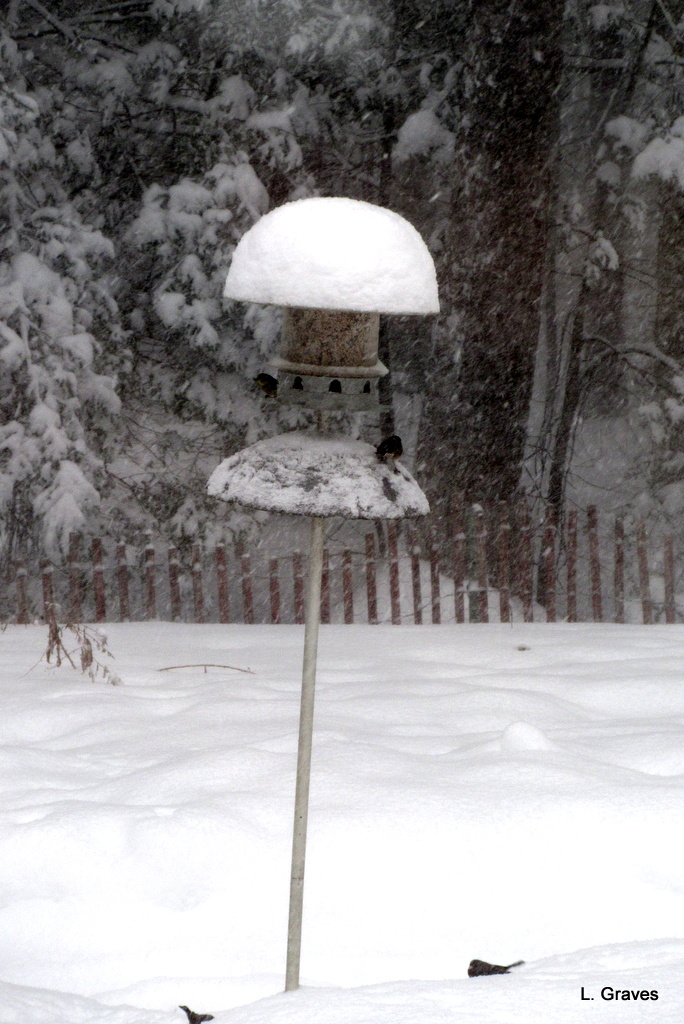
Here are some pictures of the blizzard, as it was happening and afterward.

Yesterday, it wasn’t too cold, but it sure was snowy.

Blizzard or not, the birds must eat.

The entrance at night.

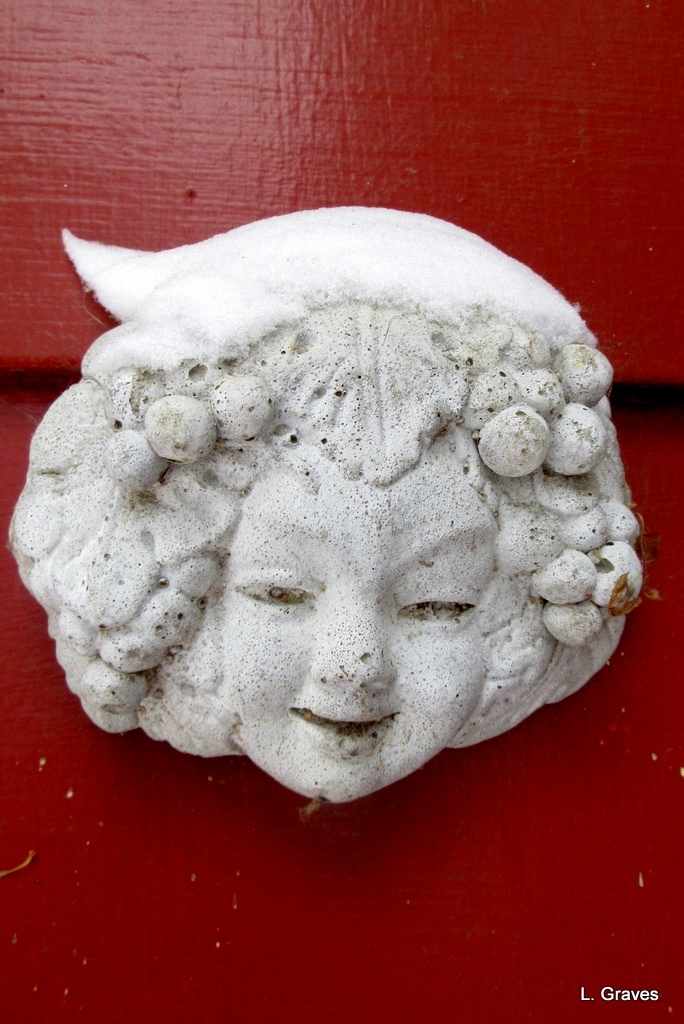
A little guardian by the door.

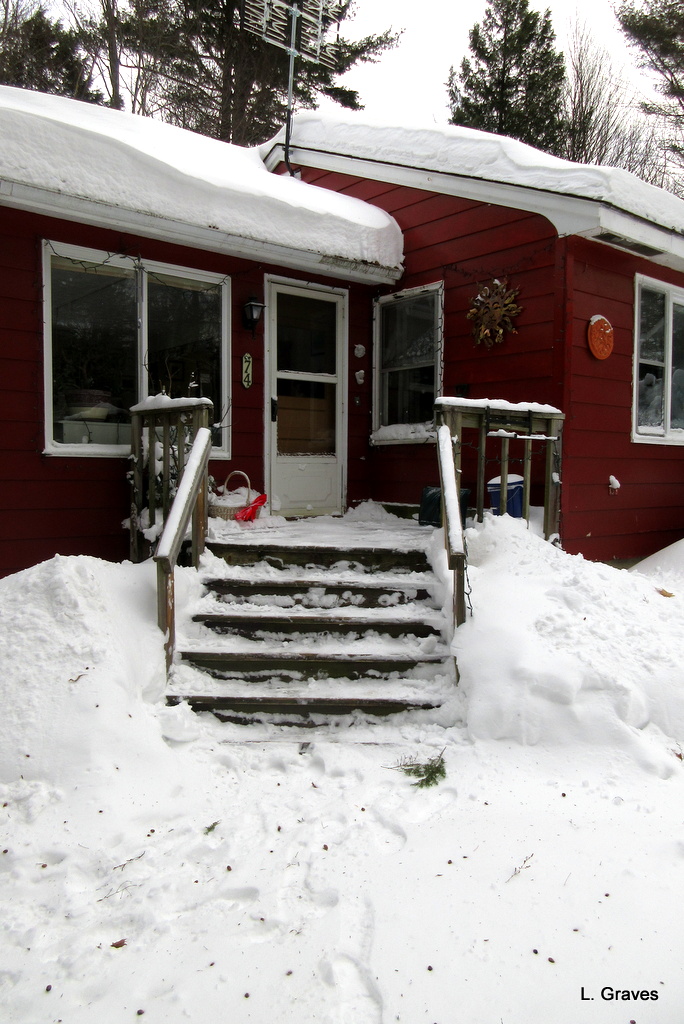
The front entrance by day. We are certainly tucked in the snow now.


A blog about nature, home, books, movies, television, food, and rural life.