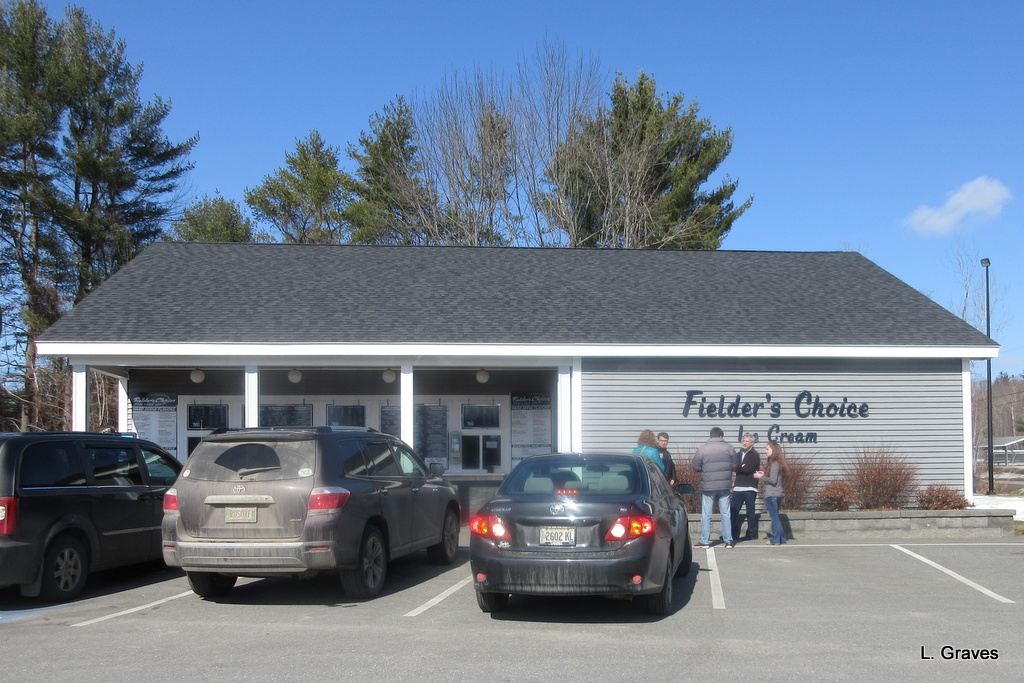
Yesterday, March came in like the gentlest of lambs, with sunshine, blue skies, and warm temperatures. This was perfect weather for an outing we had planned with our friends Claire and Mary Jane. Fielder’s Choice, which serves delicious ice cream at great prices, opened for the season, and we wanted to be among the first to christen—with ice cream—the arrival of almost spring. As you can see from the picture below, we weren’t the only ones there. Mainers are wild about ice cream, and we will head to an ice cream stand even if there is still snow on the ground.
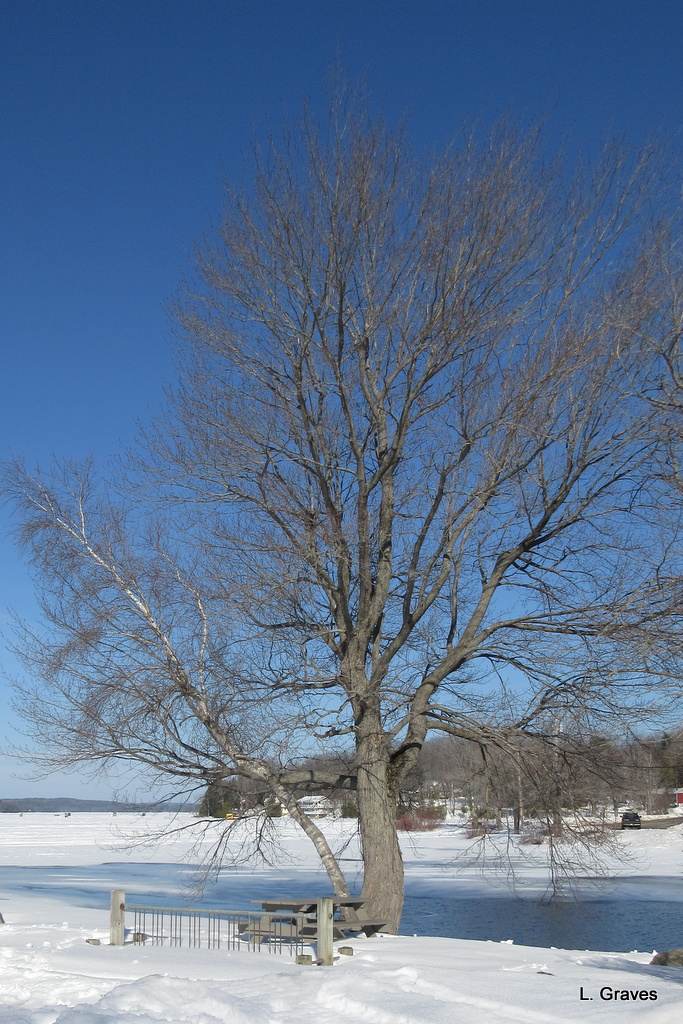
And yesterday, there was still snow on the ground. Note the folded up picnic tables resting against the tree.

Since it was opening day, we all decided to go for broke and get sundaes and parfaits.
Here is Clif with his sundae.

Mary Jane with hers.

And last, but certainly not least, Claire with her parfait.

In the warm sun, we stood and ate our ice cream. (Warm for us, after a cold winter, is 50°F.) I had a hot fudge sundae with peanut butter ice cream. How good it tasted. I gulped down the ice cream the way someone dying of thirst would gulp down water. I felt a little foolish for being such a glutton, but then Mary Jane said, “I don’t know why I ate my sundae so fast.” Clif also finished his lickety-split. Claire might have done the same, except she met an old friend she hadn’t seen in years, and while we gobbled our treats, Claire chatted with her friend.
After ice cream, there was tea around the dining room table at our house. We talked about family. We talked about movies. We talked about books.
And speaking of books…Claire, a very fine poet, has just had a book of her poetry published. We finished tea with Clif reading aloud one of the poems from her new book.
Monday’s piece for the blog will feature Claire, her new book, and a poem she has graciously allowed me to post.
In the meantime, even if the weather is bad—which it certainly is today on the East Coast—eat ice cream.