Category Archives: People

Love of England: The Road to Little Dribbling

The roadAbout thirty years ago, my mother and I went to England to visit friends from Maine who had moved to North Yorkshire. Their cottage was just outside Whitby, tucked among rolling hills and a vista so broad that it seemed you could see halfway across the country. For me, it was love at first sight, and as our friends very kindly drove us from beautiful spot to beautiful spot, I knew I had found my heart’s home. This was only emphasized by the flowers—even the smallest yard had pots of spilling color—the wonderful tea, and the large number of dogs who were out and about with their people. Finally, England is the home of Shakespeare, Jane Austen, and J.R.R. Tolkien, three very different but nonetheless brilliant writers. How could I not fall in love?

For a variety of reasons, it is highly unlikely that I will ever return to England. But I can visit via books (and blogs!), and it was with great pleasure that I read Bill Bryson’s The Road to Little Dribbling. Bryson is perhaps best known for A Walk in the Woods, which was recently made into a movie starring Robert Redford and Nick Nolte. In the movie, the terrific Emma Thompson played Bryson’s wife, and in real life, Bryson’s wife is indeed English. Because of this, the lucky fellow is actually allowed to live in England—yes, I am envious—and The Road to Little Dribbling is an account of his traveling from one end of Britain to the other, from Bognor Regis in the south to Cape Wrath in the north. He dubs this route the Bryson Line.

But as to be expected from this lively, discursive writer, Bryson does not exactly follow this straight line. Instead, he zigs and zags his way through Britain, going to Wales, Cornwall, the Lake Distract, North Yorkshire,  Hampshire, and many other places, touching bases with the Bryson Line from time to time. Along the way, he visits museums, walks in the countryside, and drinks a fair amount of beer. Ever curious, Bryson writes about the history of the many places he visits. Then, of course, there is his famous snarkiness—his acerbic observations and crotchets—amusing but fortunately kept in check. For this reader, a little snarkiness goes a long way.

While not without its criticisms—no place, of course, is perfect—The Road to Little Dribbling is in essence a love letter to England, and for Bryson, as for me, the countryside is his greatest love. At the end of the book he writes that he loves England for many reasons, but chiefly because of “the beauty of the countryside. Goodness me, what an achievement….there isn’t a landscape in the world that is more artfully worked, more lovely to behold, more comfortable to be in than the countryside of Great Britain. It is the world’s largest park, its most perfect accidental garden. I think it may be the British nation’s most glorious achievement.”

So well put and so true. I have decided that The Road to Little Dribbling is a book for the home library—I borrowed it from our town’s library—and I will be putting it on my wish list.
Piper Is Two: A Trip to the Belgrade Public Library

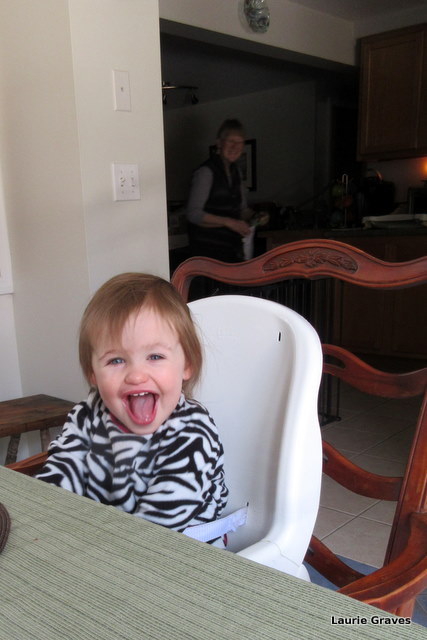
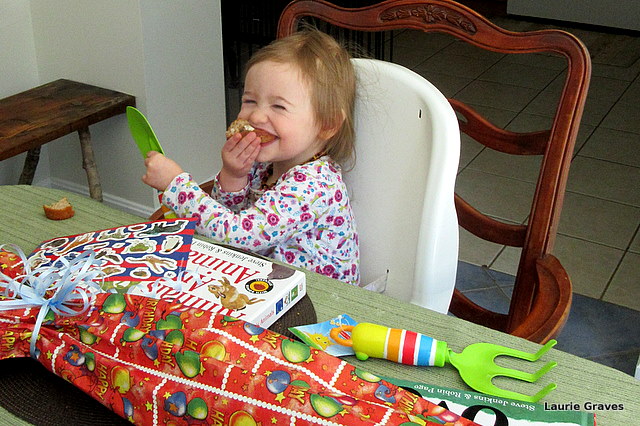
Yesterday, I visited with my friend Beth and her granddaughter, Piper. As it happens, it was the exact day of Piper’s second birthday, and we had muffins to celebrate. I gave Piper some books about animals, and Beth gave her some garden tools. Start ’em young!

IMG_1127

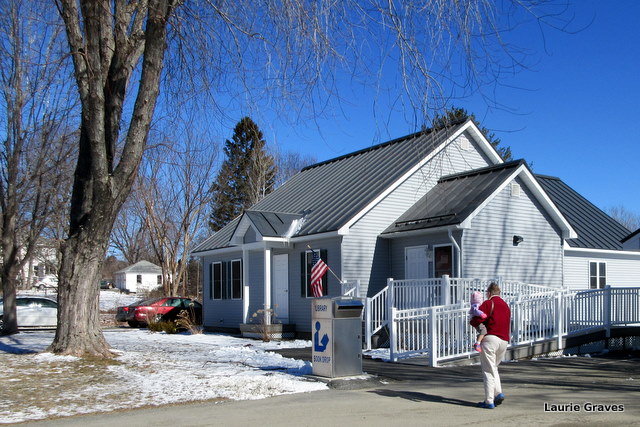
After that, it was on to the Belgrade Public Library for story time.

IMG_1130

I love libraries big and small, and this particular library might be little, but how sunny and open and inviting it is. The staff is warm and welcoming, and I immediately started “talking libraries” with the director, Janet Patterson. I told her I was one of the trustees for the Winthrop Public Library, and we were both in complete agreement that libraries provided essential serves, “food for the soul” for their communities.

This, of course, led me to think about libraries and their budgets. Unfortunately, when times are hard and the state doesn’t honor its obligations for town revenue sharing, libraries are sometimes seen as optional, a frivolous service.

Nothing could be further from the truth. For many people, and I include myself in this group, libraries are a lifeline, a way to stay open to the world of ideas and stories, even when times are hard.  In fact, especially during these times. Unfortunately, libraries frequently have to fight for every penny they receive, and although their budgets are relatively small, they are often the first to receive cuts.

But on such a sunny day, with a Dr. Seuss story to honor the anniversary of his birthday—March 2—and a craft project that involved making a giant hat, it was impossible to brood about stingy budgets for libraries.

Happy birthday Miss Piper and happy birthday Dr. Seuss!

IMG_1136


Lunch with Piper and Beth

Yesterday, I was invited to have lunch with my friend Beth and her granddaughter Piper, who soon will be two.

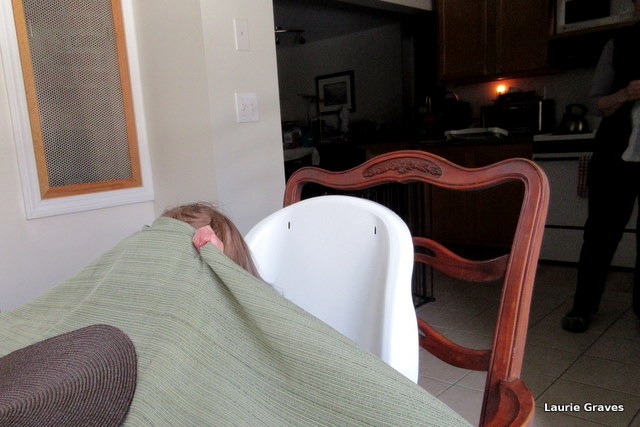
Before lunch we played a game of peekaboo.

IMG_1062

IMG_1063

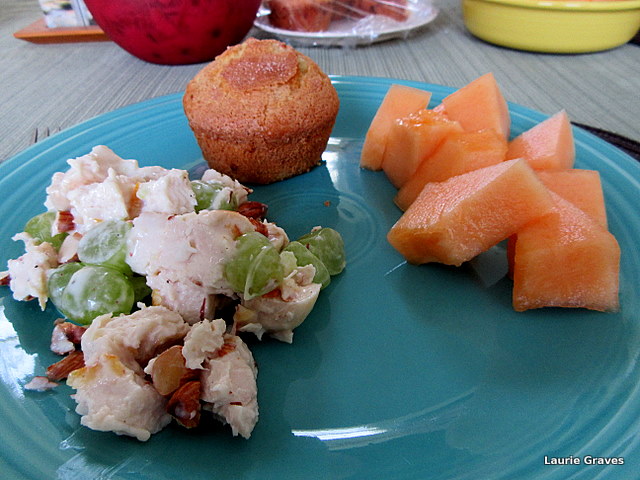
Then came a wonderful lunch of chicken salad with grapes, almonds, and a bit of marmalade with the mayonnaise; raspberry muffins; and cantaloup.  For dessert, hermit cookies. Let’s just say my reputation as A Good Eater remains untarnished.

IMG_1065

After lunch, we had tea and chatted while Piper played, involving us from time to time in say, ball or change the baby doll’s diaper.

All too soon, it was time to leave so that Piper could have stories and a nap.

Before I left, I said, “When the weather is good, come join Liam and me for a walk on the trails behind the Winthrop high school.”

“Piper has a jogging stroller,” Beth said. “And we’ve gone on the trails in Vaughn woods.”

“Then trails at the high school shouldn’t give you any problem,” I said.

Piper blew me a kiss, and I blew one back. As I drove home, I thought about what I would have for Beth and Piper after the walk. A light lunch, perhaps, and some little toy—toy farm animals or dinosaurs for Piper to play with.

I’ll be on the lookout.

Waffle Sunday and a Sweet Story

IMG_0721Yesterday, our friends Dawna and Jim and Beth and John came over for brunch, one of our favorite meals to host. Neither Clif nor I are morning people, so inviting people over for an early breakfast is not, ahem, our thing. But brunch can be started late morning, even noon, if you feel like it, and we love all the brunchy food—pancakes, waffles, home fries, egg dishes. We just don’t want to prepare them first thing.

Clif and I are not what you would call organized (unfortunately!) but when it comes to brunch, we have things under control. I started a day or two ahead by making a blueberry sauce and a chunky apple sauce. By Sunday, the potatoes for the home fries were cooked and cooled in a bowl in the refrigerator. (I’ve learned that cool potatoes make the best home fries.)

The day of the brunch, I put together the chili eggs, a baked dish with plenty of cheese and, of course, green chilis. I am also Captain Home Fries, and for this brunch I had three frying pans going—five pounds of potatoes—while the chili eggs baked. Truly, I felt like a maestro as I presided over the sizzling home fries.

Clif whipped up his delectable waffles, and we gathered around the dining room table as he made fresh hot waffles, one at time. He passed the plate around, and sections were taken. At first the dish came back empty, but as Clif continued making waffles, we could no longer keep up with waffle consumption, and the pile grew.

The cherry on the sundae was Beth’s blueberry cake, so moist, so light, so good. After a meal like that, stretching on for hours, Clif and I didn’t eat much of anything else for the rest of the day.

The talk around the table ranged from politics—the Iowa primaries are coming right up—to books, to movies, and, of course, to food. I mentioned that with Shannon and Mike moving to the South, one of the things I really missed were the simple celebrations—birthdays, anniversaries, Mother’s Day—that we shared. I told of the fish tacos we made for Shannon’s birthday last year and of the chocolate cupcakes with peppermint whipped cream that Shannon always made me for Mother’s Day.

Dawna said, “I know what you mean. We do the same thing in our family, but somehow Jim’s birthday is always the favorite with our granddaughters. They love to come over and help me make cupcakes for him and then frost them.”

Such a sweet story in so many ways—the love the granddaughters feel for their grandfather, the helping with the cupcakes, and the pleasure they take in celebrating Jim’s birthday. The granddaughters are young, and it says a lot that Jim’s birthday, rather than their own birthdays, is the favourite celebration.

I have no doubt that when those girls grow up, they will continue the tradition of food and merriment in celebration of birthdays and other special events.


Movie Night: Black Narcissus (Based on the Novel by Rumer Godden)

About a year ago, Clif and I decided we would host a movie night at the little house in the big woods. We have three friends—Diane, Joel, and Alice—who love movies as much as we do, and Clif and I thought it would be fun to get together to watch a movie and then discuss it afterwards.

Over the course of the year we have fine-tuned the event. We start at about 5:30, we provide pizza and soft drinks, and our guests bring salad and dessert. Clif has a very good hand with pizza dough—he knows just how to stretch it—and we are able to buy a good frozen dough from a Maine company, Portland Pie Co. (The dough is available in our local supermarket.) I make a quick sauce using Muir Glen’s crushed tomatoes with basil, garlic, and a little dried oregano. Clif likes to use a mixture of cheeses—mozzarella, cheddar, and Monetary Jack.

We have two large pizza pans, one of which is cast iron, a present from my brother and his wife. And miracle of miracles, our blast-furnace oven does a great job with pizza. We bake the two pizzas for twenty minutes or so and voilà! Pizza for five or six, at a fraction of the cost of take-out.

IMG_0524

We take turns choosing the movie, and last night was Joel’s turn. From his own film collection, Joel brought several to pick from, and we quickly settled on Black Narcissus, a 1947 film, staring Deborah Kerr and Jean Simmons and based on the book by the late great English writer, Rumer Godden.

Black Nar

Black Narcissus is the story of a small group of Anglican nuns, led by Sister Clodagh (Deborah Kerr), who travel to a remote former palace in the Himalayas to open a convent. At the new convent, the nuns plan to teach the local girls, open a health clinic, and grow much of their own food. But high on the mountain, the air is thin and the wind always blows. The local British agent, the charismatic Mr. Dean, warns them not to stay, feeling that the mountain will be too much for them.

Naturally the nuns stay, and naturally Mr. Dean is right. It isn’t long before the mountain and the people who live there exert an unhinging force on the various nuns, in particular Sister Ruth, played with an over-the-top relish by Kathleen Byron. A chaste love triangle forms between Sister Clodagh, Mr. Dean, and Sister Ruth, resulting in tragedy.

First, the good. Black Narcissus is extremely strong on the visuals—on the cinematography and on the sets where most of the movie was filmed. The colors, the framing, the vividness of place—even though it was mostly a set—is nothing short of astonishing. The cinematographer, Jack Cardiff, won an Academy Award for Best Cinematography, and he certainly deserved it. Visually, the movie is a work of art.

Unfortunately, the move was weak with character development, relying too much on bug-eyed melodrama and crashing music. Apparently, this sort of melodrama was big in England in 1947, but it marred the story written by an author who excelled at character development.

Nevertheless, Black Narcissus is a movie worth seeing, if only for the beauty of the filming. Diane was right in suggesting this was really a group film, best seen with others so that we could all react to the various over-the-top scenes.

Next month is Alice’s turn to pick, and we will be heading back to India with Monsoon Wedding. I’m looking forward to it.

Apple Crisp and Stories

IMG_0513

On Sunday, our friends Cheryl and Denny and Judy and Paul came over for homemade apple crisp and talk. As I’ve noted in a previous post, I really love hosting afternoon get-togethers with friends. We have a good-size dining room with an old Victorian table—the original chairs, long gone, were filled with straw—that can easily be expanded to accommodate eight to ten people. However, for me, six is the perfect number for good conversation.

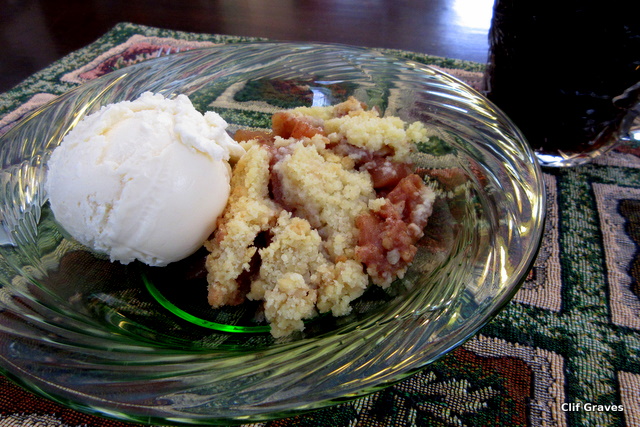
Apple crisp must surely be one of the best desserts to serve at a gathering. It can be made ahead of time, tucked in the refrigerator, and baked forty-five minutes or so before guests arrive. Old apples, a little wrinkled, taste perfectly good, and my blast-furnace oven does a fine bubbling job of baking the crisp. The recipe I use comes from a Craig Claiborne New York Times Cookbook, and I just follow his instructions. If I had made enough  modifications to call the recipe mine, then I would happily share it. But I haven’t.

Then there is the smell of apples, cinnamon, and cloves as they blend and bake. It wafts from the kitchen and drifts to the dining room, and I expect this smell stimulates the appetite. (Let’s just say that it’s a good thing I made plenty for seconds.) So you have warm spiced apples and a crunchy, buttery topping. Perfect, right? Almost. It needs a scoop of vanilla ice cream to slowly melt into the warm mixture. Whipped cream is all right, but to my way of thinking, ice cream is the jewel in the crown, so to speak.

As we sat around the dining room table, we talked about many things, but one topic in particular stuck with me because I’ve been thinking about it lately—the importance of stories and how we all have them.

Judy told of how one day, when her mother was young—this would have been in the 1930s—she came home to find her mother (Judy’s grandmother) sobbing as she did the ironing.

“What’s wrong, what’s wrong?” Judy’s mother asked.

As Judy’s grandmother ironed, she listened to the radio, to an afternoon soap opera, and something sad had happened to one of the characters. Hence the tears.

After hearing this story, I replied, “I think the story gene runs strong in humans. Whatever the medium, we will always have stories. I’m sure of it.”

Everyone nodded, and Cheryl recounted how one Christmas her book group listened to a recording of A Child’s Christmas in Wales read by the great man himself, Dylan Thomas. All the lights were turned off except for the ones on the Christmas tree, and by the sparkling lights they listened to this fine writer read his own words.

“Sounds wonderful,” I said, thinking that I might like to do this next year, but with just Clif and me. (My book group meets at the library, and somehow, it just wouldn’t be the same to do it there.)

“It was,” Cheryl said, smiling as she remembered.

Warm apple crisp, friends around the table, shared stories. Another finest kind of way to spend a winter’s afternoon.


Lunch at Diane’s

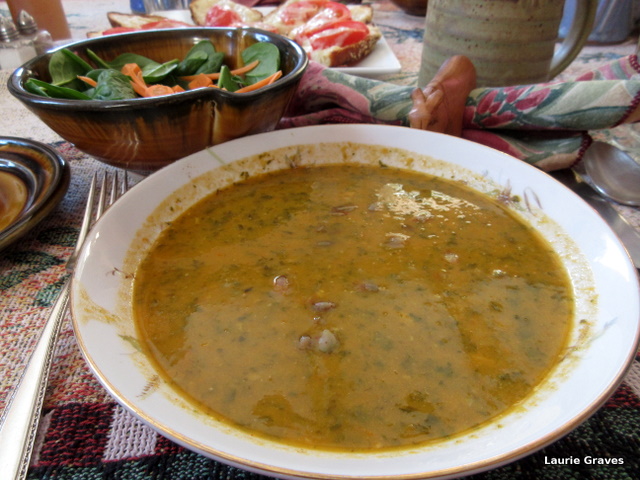
Yesterday, we went to our friend Diane’s house for lunch. Clif had agreed to help set up Netflix on her computer and television. In return, she made lunch for us—spicy vegetable soup, cheese and tomato melts, salad, and chocolate gelato for dessert. I think we got the better end of the deal.

IMG_0439

While we were eating, Diane told us the story of her German grandmother, who came to the U.S. when she was eleven, all by herself on a boat across the Atlantic. She landed at Ellis Island and made her way through the immigration process, with no adult to help. Once this task was finished, it was on to Chicago, again by herself, to stay with relatives. She was widowed twice, supported herself and her children by being a seamstress, and lived into her nineties. A  hardy woman with a very, very strong personality.

Also, it’s interesting to think of this story in terms of immigration. Diane’s grandmother left Germany because she (or her family) felt there were better opportunities for her in the United States. (I can’t help but wonder how much a child of eleven would really want to leave home. She was the eldest in a big family.) Nowadays, Germany is seen as the land of opportunity for so many.  It’s funny how things change.

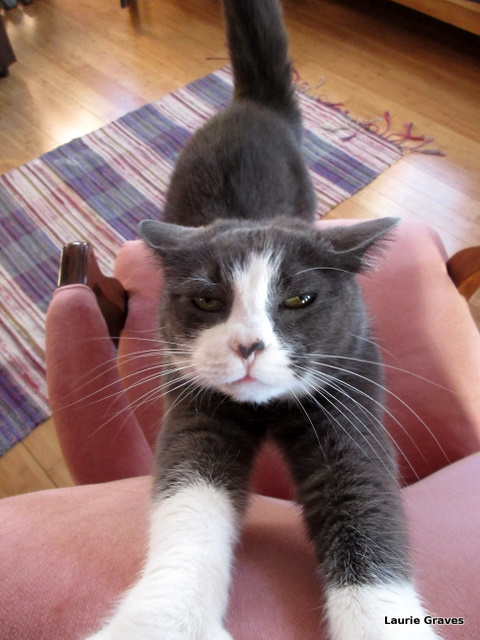
After lunch, Clif helped Diane install Netflix streaming, while I took pictures. First, of Casey, Diane’s cat.

Enough with pictures, already!
Enough with the pictures, already!


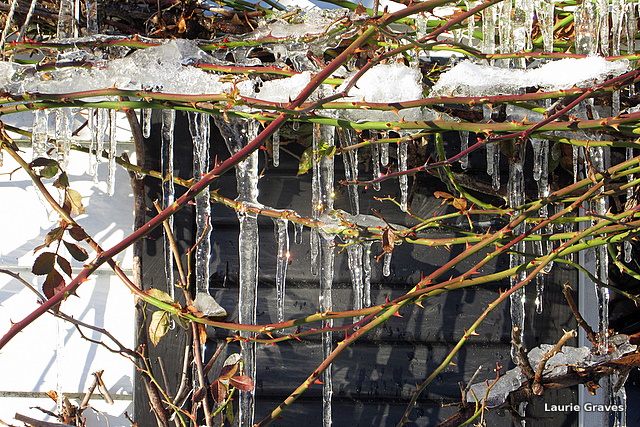
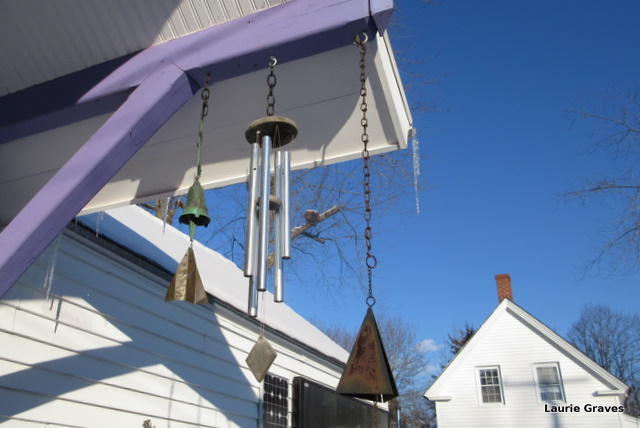
And then outside for some winter pictures.

Icicles on roses
Icicles on roses


Wind chimes against blue


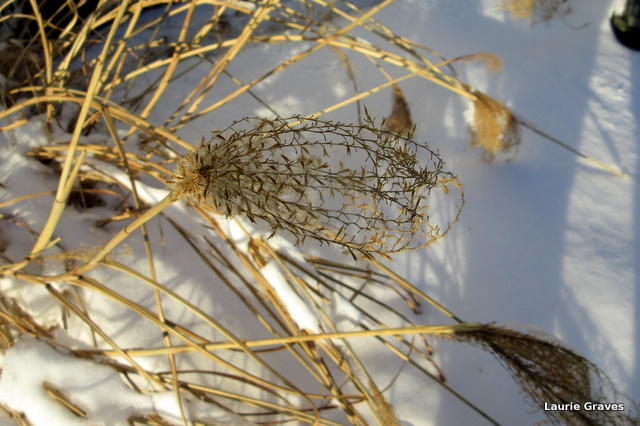
Pampa grass against the snow


After Netflix was installed and pictures were taken, there was more tea. And more talk, of course. We stayed until dusk, when the sky was dark but not black, and a waxing crescent moon shone in the night sky.

Red Beans and Biscuits after a Cold Walk in the Dark

IMG_0006Yesterday, I went to visit Esther, who was a dear friend of my mother’s and has become my friend, too. Esther grew up in rural Maine—in Vassalboro—in the 1940s, and I love listening to the stories she tells of her childhood. Esther is only twenty years older than I am, but it almost seems as though she were born in a far-gone era, where life was contradictorily simpler and harder.

Esther made lunch for me, and as we ate her delicious beef stew, she told me that as a young girl she often walked home in the cold and the dark to her mother’s red bean stew and biscuits.

“Back then, no one took me anywhere or picked me up. If I wanted to go to a girl scout meeting in the village, I had to walk home afterward. Getting to the meeting after school wasn’t too bad, but coming home, it was a long, dark walk.” (Esther lived on a country road about two miles from East Vassalboro Village.)

I thought about how children were certainly hardier and more self-sufficient in those days, but I just nodded and helped myself to seconds of the beef stew. (As friends and family know, I am, ahem, a good eater.)

“Mom would have red bean stew and biscuits ready for me, and they tasted so good after that long walk.”

“I bet,” I replied, savoring Esther’s beef stew—the potatoes, turnips, and beef so tender it practically melted in my mouth. I also remembered hearing about how Esther’s mother, who worked in the factory in North Vassalboro, did her own walking in the dark and cold.

Esther is writing a memoir for her family—I hope I get a copy, too—and we talked about some of the vignettes that would be included in her book. “I’m writing about some of the unsung heroes in Vassalboro. My school bus driver, for example. One day after school, I went home with a friend, who lived on Cross Hill Road, and there was a bad snowstorm.”

“There’s quite a hill on that road,” I said. “I’ve gotten stuck on it once or twice.”

“That road was so bad that the bus driver decided he just couldn’t make it up that big hill. So the he stopped the bus in a safe place, let us out, and walked all the kids to their homes.”

“He felt responsible for the safety of the children on his bus,” I said.

“Yes,” Esther replied.

As I finished my soup, I thought about this bus driver, a man clearly concerned about the welfare of the children more than he was about his own comfort. He could have let the children walk home on their own. I doubt any of the parents would have given it much thought. As Esther’s story about the girl scout meetings indicates, children walked a lot back then, and in all kinds of weather. But the bus driver didn’t want the children to walk on their own in a snowstorm.

Generally, when we think of heroes, we think of some grand, brave act such as jumping into an icy river to save a drowning child. But Esther is right to honor the unsung heroes in her town, the men and women who thought of others, who in many small ways made life better for the people in Vassalboro.

In a life that is hard or hectic or filled with other kinds of stress, it is not always easy to give, to be decent. But give we should, despite the effort because as Esther’s story illustrates, this generosity ripples out through the years, well past the time when it was given.


Blasting through the Holidays with Moving and Movies

I love Christmas and New Year’s Eve, but as I’ve gotten older, I must admit I find them a tad hectic. And this year was especially hectic. First, Clif and I got nasty coughing colds that were mostly gone by Christmas but like unwanted guests stayed far longer than they should have. (It has taken me four weeks to completely recover.)

Then, on the Monday after Christmas, Shannon and Mike packed a U-Haul and headed to North Carolina, where Shannon will start a new job. We went to South Portland to help them clean and pack, and we bid them a sad farewell. (They made it safe and sound to North Carolina and have moved into their new town house. Movie buffs that they are, they even found the energy to go to a film—the excellent Big Short, a must-see movie.)

IMG_0144
Farewell, Shannon and Mike

Dee stayed with us until after New Year’s Eve, and as we are, in fact, a family of movie buffs, we watched plenty of movies, at home and at the cinema.  We saw the new Star Wars movie, which I liked but did not love. For me, it was far too derivative of the original—A New Hope—but it was still worth seeing, especially on the big screen.

Also of note was the movie Concussion, starring Will Smith, who plays Dr. Bennet Omalu, the real-life pathologist who made the connection between football players’ repeated concussions and the resultant brain damage. A sobering story where those in power yet again tried to deny the truth and intimidate those who uncovered the evidence. After seeing this movie, it’s hard not to argue that the game should be played very differently.

As good as Concussion was, the best movie was The Big Short, based on the book of the same name by Michael Lewis. In the New York Times, A. O. Scott gives this movie a critics’ pick and begins his review with this description, which is too good not to share: “A true crime story and a madcap comedy, a heist movie and a scalding polemic, The Big Short will affirm your deepest cynicism about Wall Street while simultaneously restoring your faith in Hollywood.”

The Big Short is a movie about the housing bubble and its subsequent collapse.  Some in the industry saw what was coming and decided to try to make money on the housing collapse, and the movie follows three groups of these people. The film is snappy, fast-paced, and satirical while at the same time informative and moving. I think it’s fair to state that not many films about the financial collapse manage to combine all those qualities. In addition, there are devices such as a narrator speaking  directly to the camera and celebrities, as themselves, explaining various terms, including subprime mortgages and CDOs. These devices could have fallen flat, but in The Big Short they work with hilarious effect.

As I noted above, The Big Short is a must-see movie. The Great Recession was a world-wide event, where many, many people suffered devastating losses. It could have been worse, of course, but in the U.S.  the American taxpayers bailed out the greedy financial institutions that wreaked such havoc and harm. Do I resent them? You bet I do, and you should, too.

Those of us in the United States need to be mindful about how politicians feel about regulations and banks that are “too big to fail.” The Great Recession wasn’t an act of nature. It was an act of men and women, which means it was not inevitable.

But enough wagging the finger. Onward to winter and the New Year.

IMG_0159


Wish Boxes, Friends, and Joni Mitchell

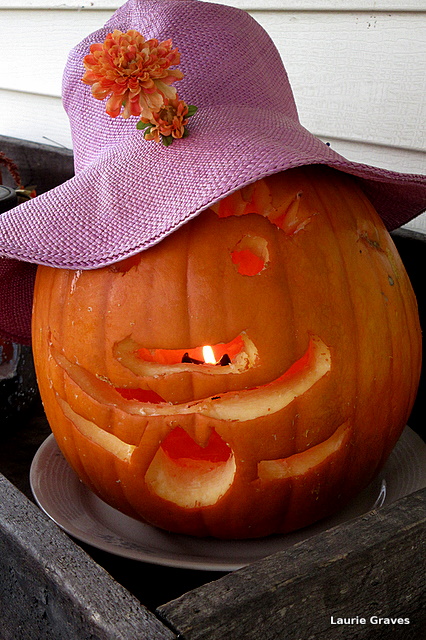
The little greeter at Beth's house
The jolly greeter at Beth’s house

On Sunday, I traveled  north to visit my friend Beth. Along with two other friends, I was invited for lunch and to work on a craft project—wish boxes. This was a gathering I had looked forward to all week long, and even though I didn’t know the two other women, I was certain that friends of Beth would soon be friends of mine.

How right I was. Within minutes we were all chatting like old friends, and the comment was made, “We are now new best friends.”

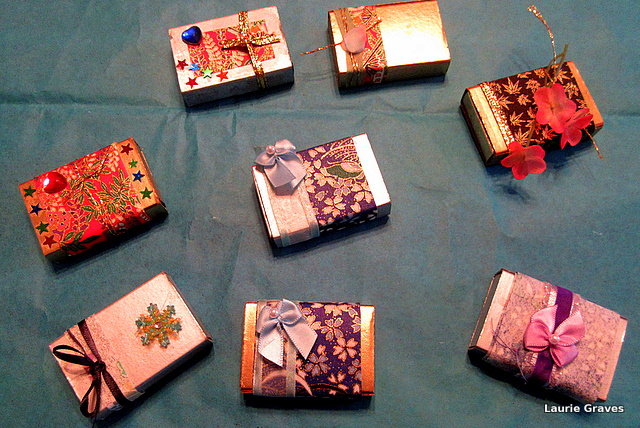
After talking for a bit, we settled around Beth’s dining room table to make wish boxes. Beth had sprayed matchboxes silver and gold. She also provided pretty paper, ribbons, glitter, stars, hearts, little flowers, and various other little decorations for our wish boxes. The chatting ebbed as we focused on making our wish boxes.

When we were done, we put them together for a group picture.

IMG_0309

We were all pleased with our small creations, and I’ll be thinking of what little messages to put in my two boxes—the ones with hearts and stars in the upper left corner.

After we cleared up the craft materials, we had a lovely lunch that Beth had made for us—squash soup; zucchini bread; a carrot, coconut, and cashew salad; and various spreads. I brought an apple crisp, which we popped in the oven just before we sat down to eat our lunch.

John, Beth’s husband joined us, and there was more talk. When five kindred spirits get together, the conversation just flows.

The day had started rainy and gray, but as I headed home, the weather began to clear. The clouds skudded across the sky to reveal a deep blue. I listened to Joni Mitchell’s Court and Spark and was transported to my senior year in high school when I was in the throes of unrequited love. So much time has passed—over forty years—that the pain has been replaced by a pleasant melancholy as I remembered the longing.

The teenage years are such a tumultuous time. Every emotion is felt so deeply, so intensely. Then there is the awkwardness.  I remember saying what I shouldn’t have and not saying what I should have.  Literature, writing, and love swirled through me in a rough mix, and I am now old enough to look back with sympathy on the foolish girl I was. (The line from an R.E.M. song comes to mind: “I’ve said too much. I haven’t said enough.”)

All in all, Sunday was a special kind of day. Old friends, new friends, good food, good talk, a craft project, and a trip back in time on the way home as I listened to Joni Mitchell.

Who could ask for anything more?

IMG_0288
A bird in Beth’s garden