Category Archives: People

The First Day of Summer, 2016

Yesterday was the first day of summer, that loveliest, bittersweet time of year when the day is as long as it ever will be. Yesterday’s first day of summer was hot and fine, and the evening cooled nicely—all in all a grand way to start the season. To cap off this day of days, there was also a full moon, the strawberry moon, and in Maine, appropriately enough, the strawberries are just beginning to ripen.

To celebrate, Clif and I went for a twilight bike ride. (In fact, Clif and I don’t really need much of an excuse to go on a bike ride, but when there’s a special occasion during the summer, we often go on a celebratory ride.)  We’ve been riding regularly for a few weeks, but after a long, inactive winter, the riding has been slow going. (Last year, for various reasons, we hardly biked at all.)

However, last night, as we zipped along, I felt the possibility of becoming the strong rider I was a few years ago, when I could ride for fifteen or twenty miles and still feel like going on another bike ride the next day. Clif and I have talked about going on some long bike rides this summer, and by gum I think it’s going to happen. How good this feels!

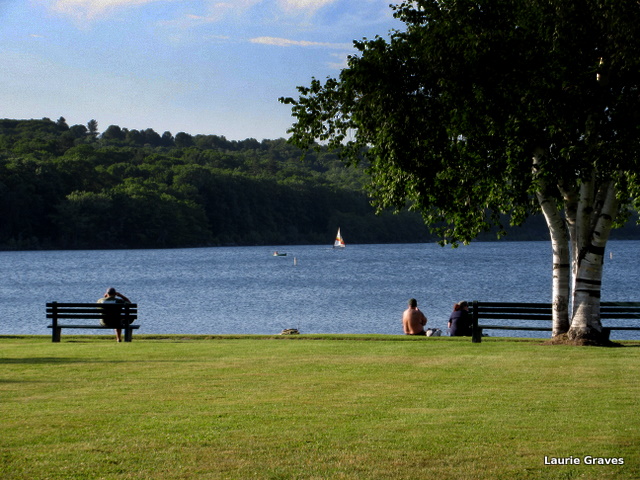
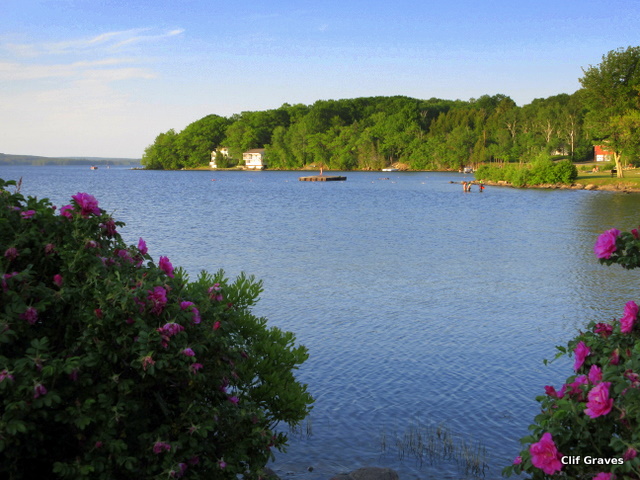
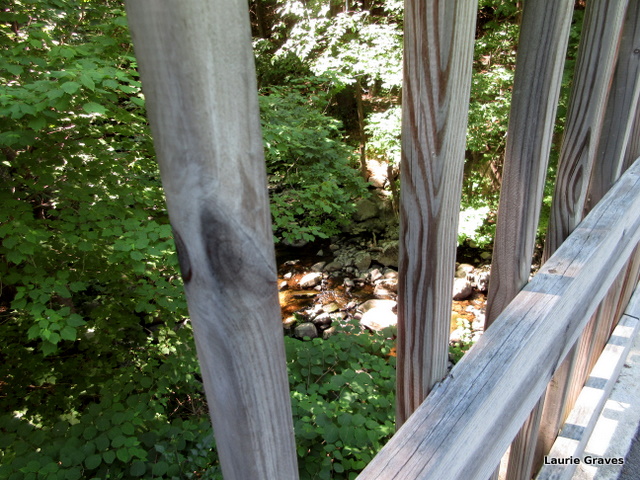
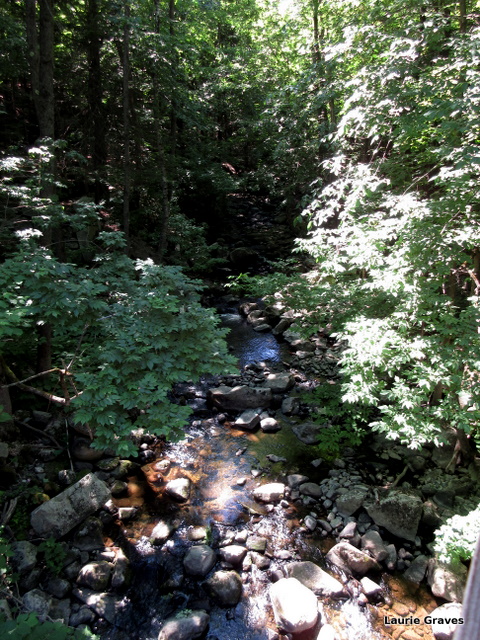
I brought my little camera, of course, and Clif and I took some pictures of Norcross Point.
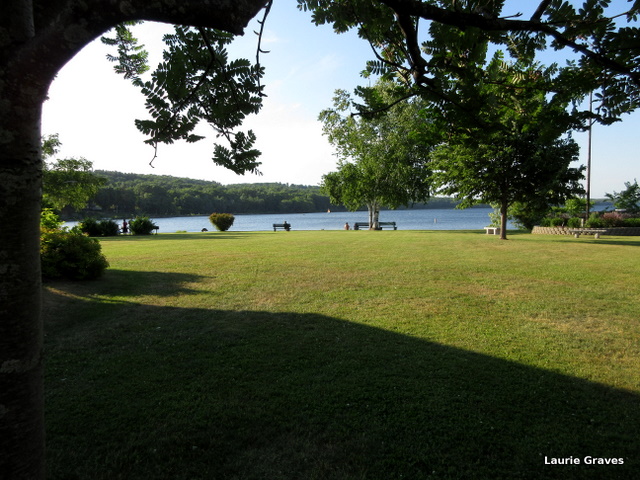
IMG_3318

IMG_3321

IMG_3328

IMG_3342

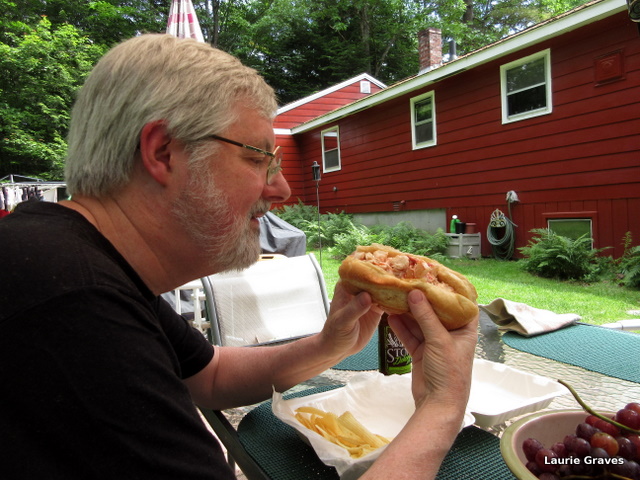
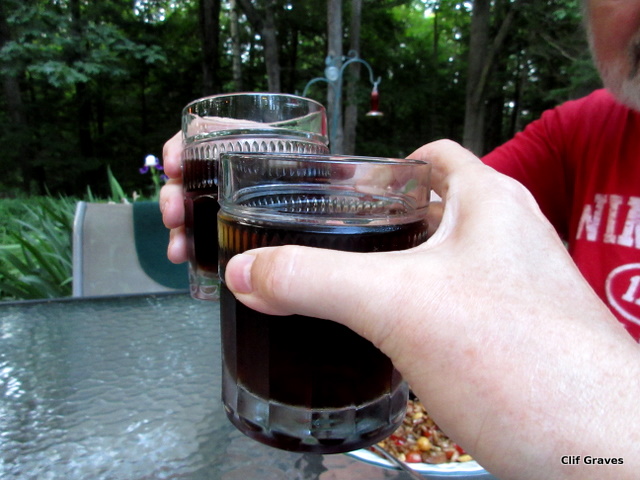
When we got home, there was still plenty of daylight left so that we could have supper on the patio.

We duly and joyfully toasted the beginning of summer, and we are looking forward to many more bike rides before the cold weather keeps us inside. (Unfortunately, because we live in the woods and the sky was a little cloudy, we didn’t see the rising full moon.)
IMG_3343

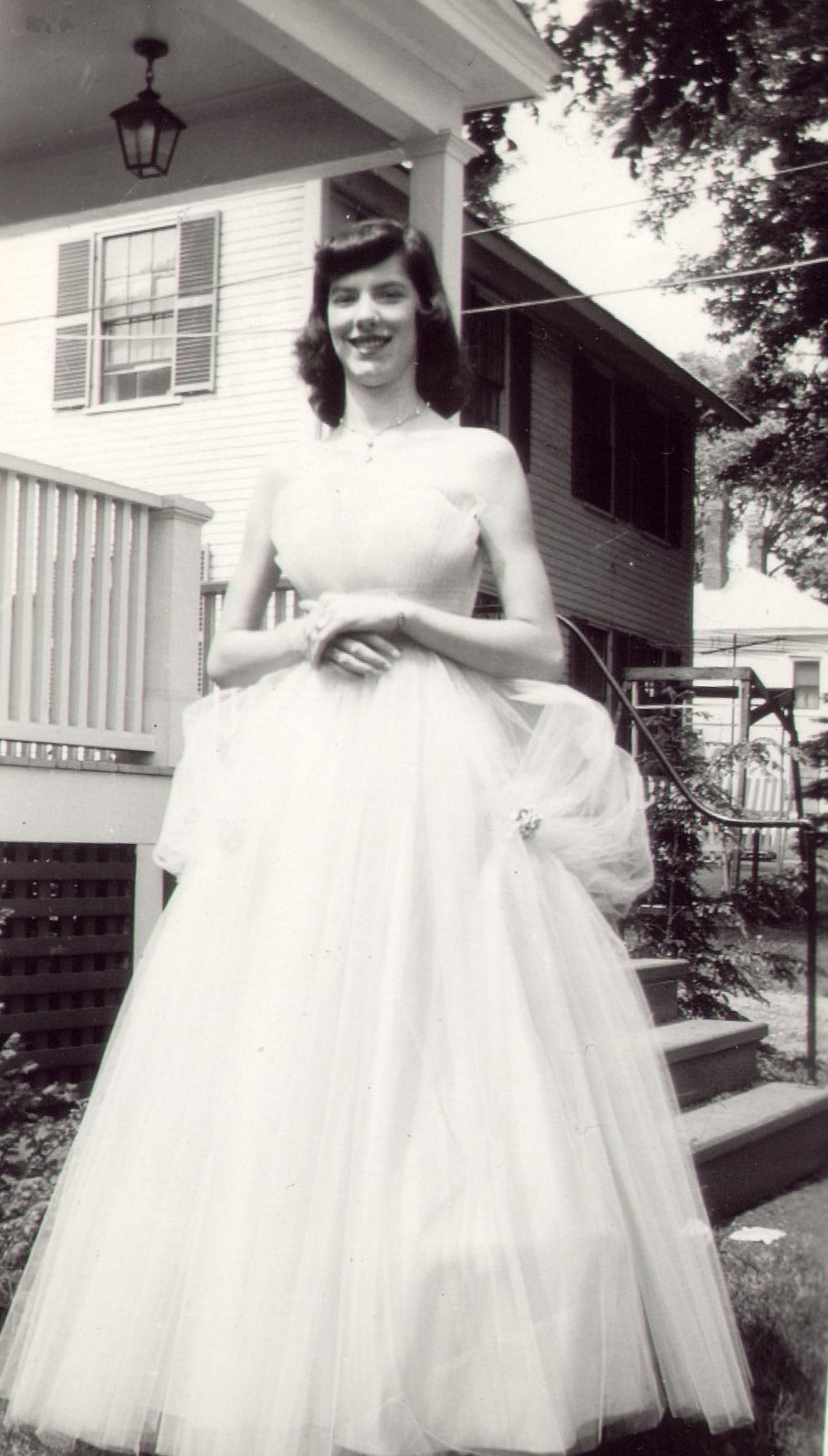
Finally, today is the anniversary of my mother’s birthday. Mom died eight years ago, and this would have been her eightieth birthday. I am so sorry that she did not live to celebrate this milestone birthday, and it makes me a little teary eyed to think of her.

In honor of my mother’s birthday, I am posting this prom picture where she looks like the Queen of June.

Happy birthday, Mom. Wish you hadn’t passed so soon.
1-RochellePromA

Rochelle June Dansereau, June 21, 1936–May 28, 2008
The Best Lobster Rolls, Ever: Father’s Day Part II

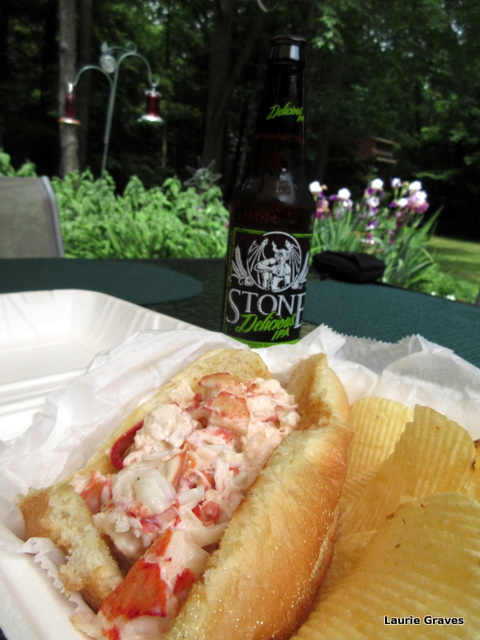
Yesterday—thanks to Shannon and Mike—Clif and I had a glorious meal of lobster rolls from the Lighthouse Wine & Seafood Market in Manchester, Maine.  (You might call this delicious treat Father’s Day, Part II, with me benefiting as much as Clif.) We both decided those lobster rolls were the best we’d ever had—chunks of sweet Maine lobster held together with just a hint of mayonnaise and absolutely nothing else.

IMG_3259

IMG_3262

Some foodies, usually from away, will proclaim that traditional lobster rolls are too plain and should be jazzed up with, say, chives or chopped lettuce or chopped peppers. Simply put, they are wrong. Maine lobster is as close to perfection as food can get, and lobster rolls need only bread, lobster, and a bit of mayo. Case closed.

The rolls were so large and delicious that when we finished eating, Clif took a nap on the living room couch, and I did what I love to do most in the summer—sit on the patio, read, smell the flowers, watch and listen to the creatures who come to the backyard, hear the wind move through the trees, and take pictures.

A perfectly delightful way to spend an afternoon, and what with all the yard work and other chores I’ve had, yesterday was the first time since last summer that I was really able to sit on the patio and watch and listen. To borrow from Mozart, a more delightful way to spend the afternoon I cannot imagine. It never, ever gets old.

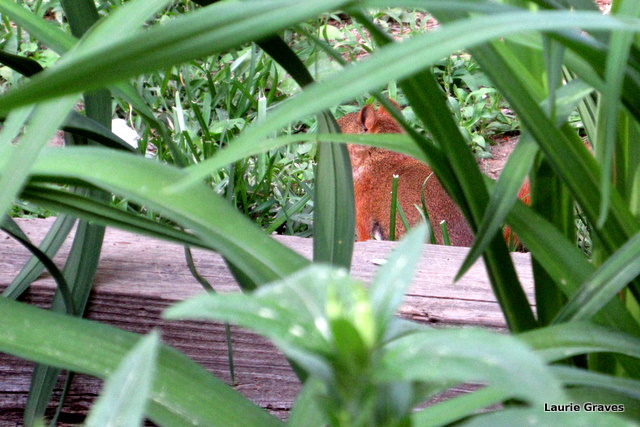
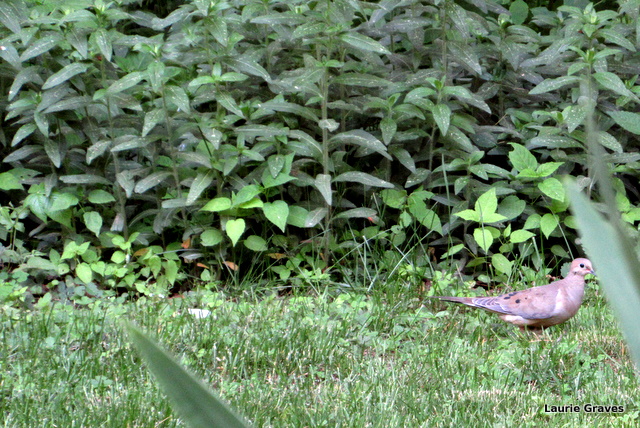
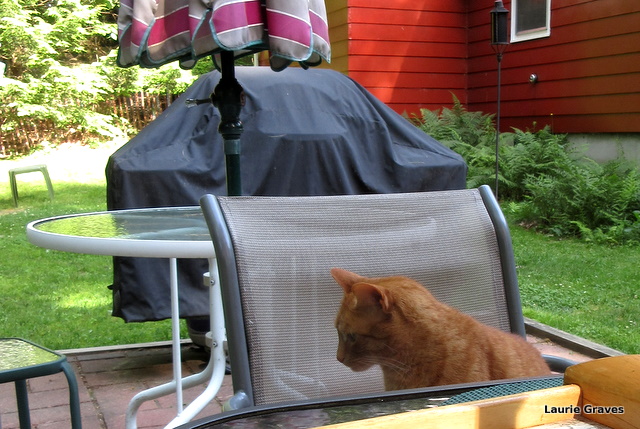
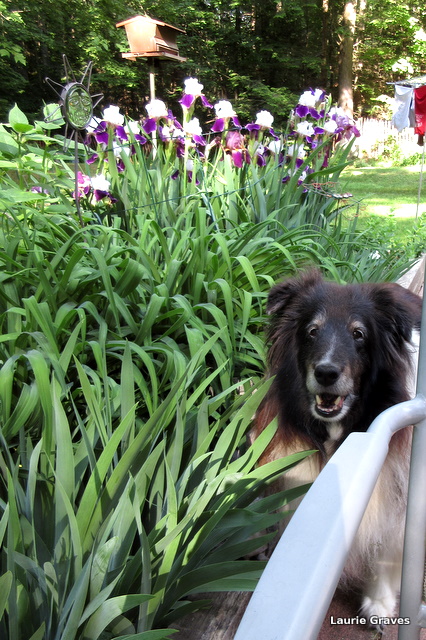
Here are some of the creatures I saw yesterday in my backyard.

IMG_3280

IMG_3289

IMG_3290

IMG_3292

IMG_3296

What a weekend! All would have been perfect if on Saturday night, Sherlock hadn’t dropped a live mouse on the floor in the living room as we were watching Game of Thrones. The mouse ran under the couch, and then to parts unknown. However, on Sunday morning, the cats were crouched by one of hutches in the dining room, and we left the dining room door open for most  of the day. I can only hope that the mouse found its way outside, and as we haven’t seen any more crouching cats looking under furniture, I feel fairly optimistic.

Once again, I was reminded that perfection is only for the gods, not for humans, and into every life comes the equivalent of little mice running about the house. So while we can eat lobster rolls, let us eat lobster rolls.


A Ducky Father’s Day Celebration by the River

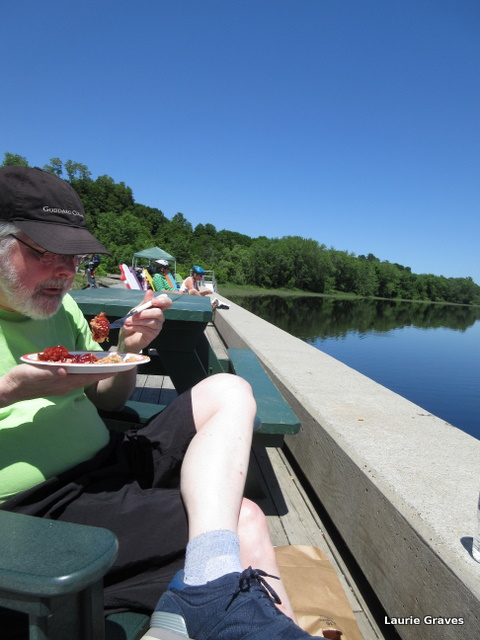
Yesterday, we decided to celebrate Father’s Day early by having lunch by the Kennebec River and then by going for a bike ride on the rail trail that runs from Augusta to Gardiner. (We would start in Hallowell.)

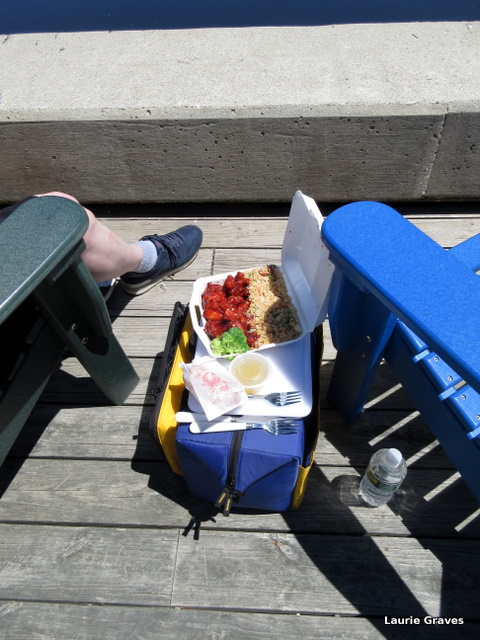
Accordingly, we ordered take-away from Lucky Gardens, our favorite Chinese restaurant, and headed to the pier in Hallowell where we could enjoy our lunch.

IMG_3186

IMG_3189

IMG_3192

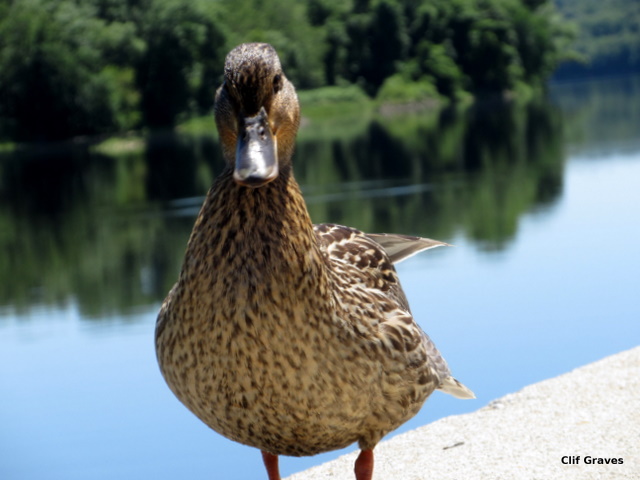
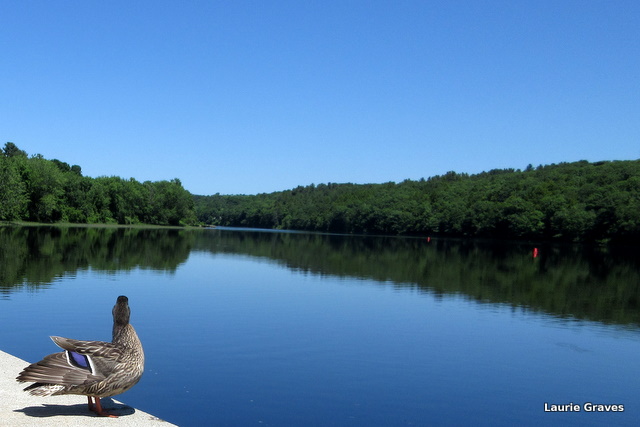
As we were eating, we were joined by a female mallard duck, and the pleading look in her eyes reminded us of our dog Liam.

IMG_3225-1

Did we share our fortune cookie with her? Of course we did! And I must say that seagulls could learn a few things about manners from this little duck, who was present but was neither aggressive nor obnoxious. No doubt she is used to getting handouts, and it would take someone made of very stern stuff to refuse this little beauty.

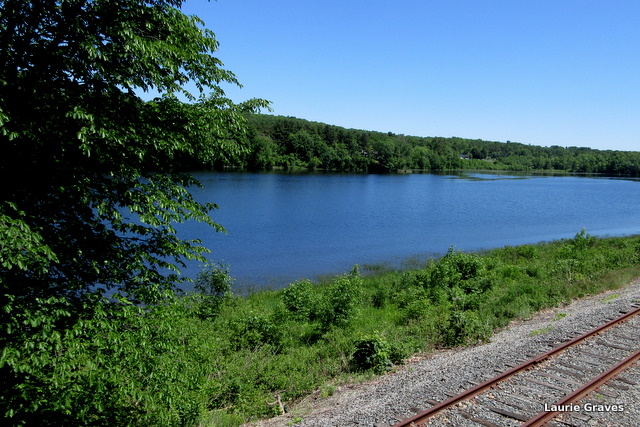
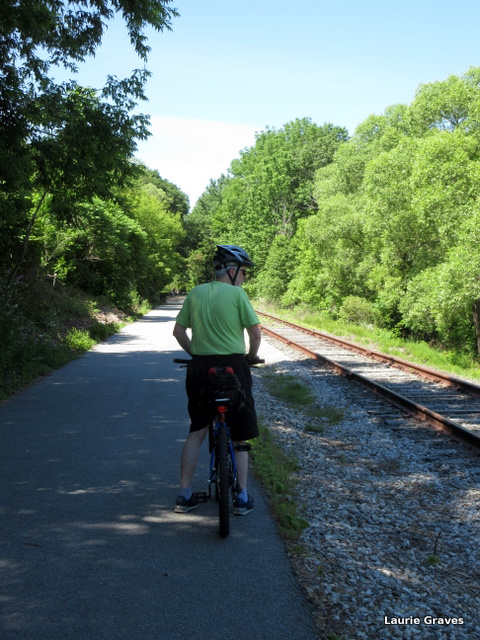
After lunch, it was on to the rail trail, where we went to Gardiner and then back again to Hallowell. It was a round trip of about ten miles.

IMG_3239

IMG_3243

IMG_3244

IMG_3251

All in all, a very good ducky kind of a day.

IMG_3202

I See Beauty, But Clif Sees the Back-End of a Turkey

It’s funny how two people can look at the same thing and come up with two different reactions. When I look at this picture, this flower, this iris, I see Beauty.

IMG_2992

Clif, on the other hand, sees “the back-end of a turkey.”  Oh, how this stabs my heart. I love irises, and if I had a yard with more sun and better soil, I would have clumps and clumps of them. As it is, I have to be content with a few patches, some of which thrive better than others. In short, irises are my darlings, and nobody likes to hear someone make fun of his or her darlings. Especially when that someone just happens to be a spouse of nearly forty years.

Ah, well. Such are the turbulences that roil the little house in the big woods. Fortunately, they soon pass, and when they do, I am able to laugh at Clif’s foolishness, and mine, too, of course.

Here are some more pictures of what’s going on in the yard at the little house in the big woods. And as far as I can see, there is no back-end of a turkey.

IMG_2993

IMG_2947-1

IMG_2926

IMG_2974

IMG_2921

Riding on the First Tarred Road: A Persistency Worthy of a Better Cause

Here is another Esther story, this time about roads in Maine in the 1940s.

While we were talking about school, Esther mentioned, “In the spring our road was so muddy that the bus would get stuck, and we had to walk to the corner where the road was better and wait for the bus.”

Esther still lives on that once and muddy road, but now it is tarred. Then she said something that really surprised me.

“I remember the first time we drove on a tarred road. I was three and it was a defining experience for me. The road was so black and smooth.”

The first time driving on a tarred road! When the heck were roads tarred in Maine, anyway? Hoping to find out, I poked around the Internet. While I didn’t find any definitive answers, I did glean some bits of information. The following is from the Maine Department of Transportation History: “In the earliest days of the SHC [State Highway Commission] there were about 25,000 miles of public roads and streets in Maine – all but a few thousand miles plain dirt. ” (The State Highway Commission was founded in 1913.) But “the period following World War II marked almost a new era in Highway Commission activities.” Roads were repaired and upgraded and no doubt tarred.

Esther was born in 1937, and some roads in Maine must have been tarred, but not where she lived. Her first experience of a tarred road would have been in 1940, well before the boom in road repair and construction.

But in my research, what especially tickled me was coming across A History of Maine Roads 1600-1970, again by the Maine Department of Transportation.  The following is from “A guide to cycling in Maine published in 1891 under the auspices of the Maine Division of the League of American Wheelman.”

“The bicyclist will find Maine roads made of sand, rock, and clay (that becomes glue when it rains) and roads that seem to select all the hills, and climb over them with a persistency worthy of a better cause. Once in awhile in his journey through the state the wheelman will find a bit of good riding, a smooth surface, an easy grade beneath overhanging trees with perhaps a rushing river to keep him cheerful company. Then he will wonder why it cannot always be thus, and what the reason is for our poor highways.”

Blue Beauty, from a past summer


What, indeed? Not enough money, not enough organization, not enough planning.

Clif and I have ridden our bikes over many bumpy roads, but never any that have become “glue when it rains” and we have never—all right, seldom—thought that our persistence was worthy of a better cause.

How soon the past slips away from us, and the present becomes a sort of fixed reality, one that we take for granted.  I am so grateful to have Esther to tell me how different her girlhood was in the 1940s than mine was in the 1970s. While we don’t want to become nostalgic about the past, I firmly believe it is good to know about it.

The past provides the underpinnings of our present, which in turn affects our future, and in that sense, the past lives on.

Our own tarred, country road


School Talk with Esther: Of School Buses and Blackboards

bus 2B


Yesterday when I met Esther for lunch, I started out with good intentions.  My notebook was in my pocketbook, and my aim was to just chat with Esther about this and that. But when Esther started talking about her school days in rural Maine in the 1940s, I grabbed my bag and fumbled for my notebook and pen. Esther is a treasure trove of stories, and how silly of me to forget that I am her Boswell.

We had been talking about the delightful documentary On the Way to School, available through Netflix. The movie follows children in various countries—including  India and Kenya—as they make their long trek to school, which takes the children hours. Jackson, from Kenya, was particularly proud he had been chosen to raise the school’s flag, and he and his sister hurried to school so that he would be there in time for the opening ceremony.

on-the-way-to-school_80031302
Jackson and his sister

Esther said, “It was the same way for us with washing the chalk boards at the end of the day. It was quite an honor to be chosen, and we all wanted to do it.” I could picture children wriggling in their seats, waiting to be picked for this special task.

Esther continued, “But then one year, the teachers decided to make washing the chalkboard a punishment, and suddenly, nobody wanted to do it anymore.”

“Interesting psychology,” I said, thinking about how this might be applied to other aspects of our society. “When washing the chalkboard was an honor, the children wanted to do it. As soon as it became a punishment, they didn’t.”

Esther shrugged philosophically. “Well, the teachers had to come up with something, I suppose, when they weren’t allowed to hit the children anymore.”

“And children are impudent,” I put in, knowing I wouldn’t last one hour in a classroom. “How big were the classrooms?”

“There were about twenty-five pupils per class, but there were only three teachers, and one was also the principal, so the classes were mixed grades. The teacher would spend time with one group, give them their lessons and move on the next group. It worked out very well.”

“It must have been hard on the teachers.”

“It didn’t seem to be,” Esther replied. “The classes always ran smoothly.”

“How many buses ran for so few children?”

“Three, but only one real school bus. The other two were panelled trucks with benches along each side. You didn’t get to choose who you were going to sit by, and some of the children didn’t smell that good.” I made a face. “Oh, they couldn’t help it,” she added quickly. “Most of them didn’t have running water, and they had outhouses.”

“What about you?”

“We didn’t have running water or a bathroom either. But we had a pump, and that made things easier. ”

We then moved on to the topic of unpaved roads, but that will be a post for another day. Oh, the things I learn when I get together with Esther.

Note: Neither of the buses shown are exactly as Esther described, but they are so funky and charming that I had to include them in this post.

bus1B


First Grilled Bread of the Season

Last Saturday, our friends Beth and John and their cute little dog Bernie came over for lunch. The day was splendid, but unfortunately, the blackflies were out in force, and I had to wear a cap sprayed with insect repellent. There is something in my body chemistry that calls to those biting  blighters. Clif wore a cap, too, but fortunately, the blackflies left Beth and John alone.

Never mind! We spent most of the afternoon outside on the patio. Beth and John brought cheese and crackers, salad, and for dessert, cream-cheese toffee bars. As if that weren’t enough, they also brought a bouquet of flowers. Wow! Such generous guests.

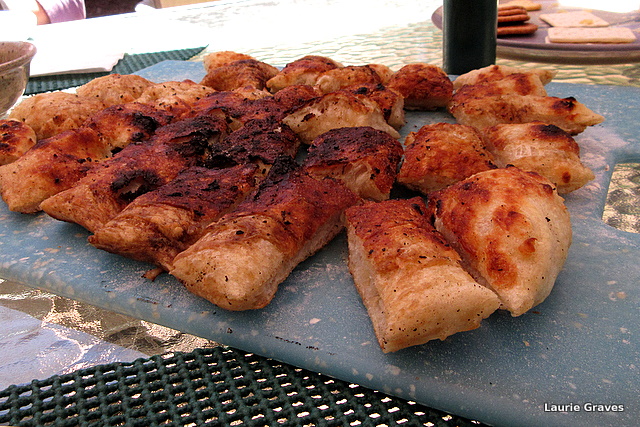
Clif made his legendary grilled bread, the first of the season, and we ate every bit of it. I also made a potato salad, again, the first of the season, and Clif grilled some chicken. By the end, we were completely stuffed.

IMG_2175

IMG_2167

But not too stuffed to talk about books, politics, and poverty. Clif and I are watching, for the first time, the excellent HBO series The Wire, and while at first glance, rural Maine seems very different from the ghettos of Baltimore, there are indeed similarities. This is especially true for Beth and John, who live in a small town that is afflicted by extreme poverty, lack of hope, and drug addiction, just as parts of Baltimore are.

“The worst is the lack of hope,” John said. “Young people in my town have nothing to look forward to. Most everything has closed, from the factories to the businesses around town.”

“Do old timers remember a better time, when the factories were booming?” I asked.

“Oh, yeah,” John said. “The town was very different then.”

I could write a whole post about the two Maines, the prosperous coastal communities and the impoverished inland towns where factories once thrived. I could write about how Maine, like too many other states, let communities sink, and as a result, caused an exodus of young people. (Maine has one of the oldest populations in the nation.) And maybe someday I will write about these things because Maine’s tale is the tale of this country, which, in turn, is driving the tone and the rhetoric of this political season.

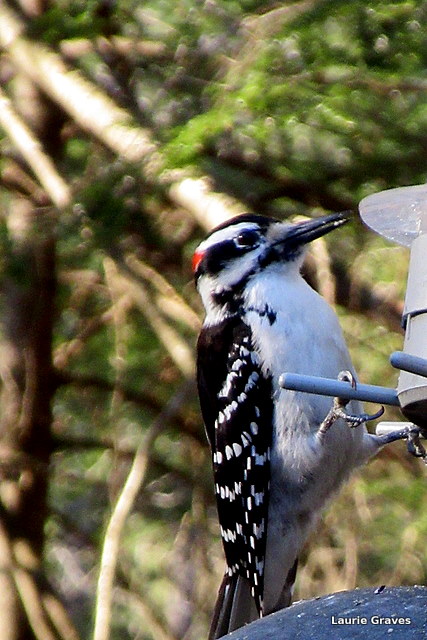
As we talked and ate, the birds came to the feeders, and Beth took some pictures. Both Liam and Bernie begged for bits of chicken, and I slid them a few pieces. Moving away from the issues of poverty, we talked about cameras and funny Maine sayings. John, who grew up not far from the coast, had a wealth of mermaid sayings, none of which I had ever heard. Then there is my fishy favorite: “Numb as a hake.”

“Why are hakes considered numb?” John asked.

None of us knew, and the two dogs didn’t care. They just wanted more chicken to come their way, although no doubt, they would have nibbled on hake, however numb it was.


Earth Day 2016: Time is Getting Short

Today is Earth Day, a special day not only for Earth but also for our family. April 22 is the birthday of our youngest daughter, Shannon. Happy birthday, Earth Day girl!

April 22 is also the anniversary of our friends Mary Jane and Vilis. It is my understanding—correct me if I’m wrong, Mary Jane—that they were married on the very first Earth Day in 1970. Happy anniversary to you, Mary Jane and Vilis!

IMG_1984
A birthday and anniversary flower


Here’s a brief history of Earth Day, taken from the history. com website: “Earth Day was the brainchild of Senator Gaylord Nelson of Wisconsin, a staunch environmentalist who hoped to provide unity to the grassroots environmental movement and increase ecological awareness. ‘The objective was to get a nationwide demonstration of concern for the environment so large that it would shake the political establishment out of its lethargy,’ Senator Nelson said, ‘and, finally, force this issue permanently onto the national political agenda.’ Earth Day indeed increased environmental awareness in America, and in July of that year the Environmental Protection Agency was established by special executive order to regulate and enforce national pollution legislation.”

Since Senator Nelson started Earth Day, there have been big improvements with cleaning up the environment, and I have seen them in central Maine, where I have lived most of my fifty-eight years. I grew up in Waterville, by the Kennebec River, and it was so dank and dirty that no one wanted to even dip his or her big toe in it. I suppose there must have been some hardy wildlife living in and by the river, but to my young eyes the Kennebec River in Waterville seemed to be an empty, foaming mass.

And now oh now there are eagles and ospery and ducks and other birds that live by the river. In Augusta, just down from Waterville, there are sturgeons, ancient-looking fish that appear to have time traveled from the Triassic. People go kayaking on the river, and they even dare to go fishing. In Hallowell, there’s a broad pier by the river and plenty of brightly colored chairs where people can relax and enjoy the water on a fine day.

IMG_1971
Last summer in Hallowell by the Kennebec River


But the dark shadow on the horizon, of course, is climate change, which has turned out to be a huge challenge for humans. Recently, on the radio, I heard an environmentalist say that when it comes to climate change, it is five minutes to midnight. And so it is. Every year Earth gets warmer, bringing us, among other things, droughts, floods, intense storms, dying coral reefs, and rising sea levels.

We are all in this together, and I hope we can all learn to work together to end our dependency on fossil fuels, to lower our carbon output, to stop the world from becoming even warmer.

That is the Earth Day message for now and probably for a very long time to come. And it is one we must carry with us throughout the year.

IMG_1993

The Power of Kind Words: You’re Cured

Yesterday, I went for my annual physical at Winthrop Family Medicine, which is conveniently located right here in town at a health center in an old converted factory. Although I dislike going to the doctors as much the next person, I am very grateful to have this health center in Winthrop, where the staff is friendly and efficient and the services range from lab work to imaging, including walk-in mammograms. Winthrop, population 6,000, is one lucky little town. (When my husband broke his arm, he was in and out of the health center in an hour, and that included getting a cast. )

Dr. Gasper, my doctor, went over my blood work with me, and for someone who is, ahem, carrying a little more weight than she should, I am in amazingly good health. I suppose it must be partially genetic and also partly because that even though I eat more than I should—I am a good eater, after all—I do eat well, with plenty of fruit and vegetables in my daily diet, very little red meat, and a fair amount of olive oil.

Then we moved on to a topic that has dominated my life for the past six years—breast cancer. In the summer of 2010, I was diagnosed with this disease. Fortunately, the cancer was slowing growing and lazy, both very good qualities when they’re applied to cancer. I had a lumpectomy and radiation. Chemotherapy was not needed.

Dr. Gasper, that rare doctor who actually has a calming effect on people, looked at me and smiled. “You are considered cured,” he said.

Cured! What a wonderful word.

Now, Dr. Gaspar wasn’t telling me anything I didn’t know. At the Cancer Center in Augusta, after five years, I was given the option of  going to my primary care physician for yearly check-ups, and that’s exactly what I decided to do.  I will not miss those trips to the Cancer Center, and going to my regular doctor makes me feel like a regular person, which, after breast cancer, is a wonderful way to feel.

But to hear my doctor say those words—“You’re cured”—well, it was as though he had given me a gold star.

After I left, feeling oh-so-happy, I reflected on the power of words and their ability to either bolster us or drag us down. Kind words, even if they are true and self-evident, can ripple forward for years, leaving a good impression in our memories.  They can steer us in the right direction and help us to think better of ourselves.

Going forward, I will be more  mindful of what I say. Are my words kind or unkind? Do they help or hurt? Even if they are true, do they need to be said?

A final lesson for me: No matter how old we are, we can always learn to become more mindful. And more kind.


Lunch with Esther at Barnes and Noble: A Complete Person

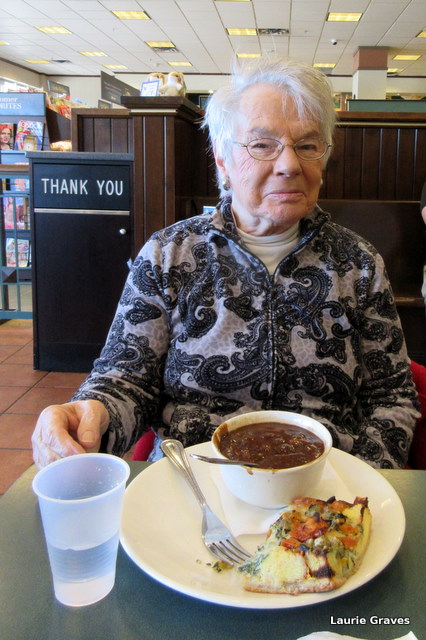
Last week I had lunch with my friend Esther at the local Barnes and Noble in Augusta. I must admit, the food wasn’t too bad. I had a cup of black bean soup that actually had a bit of a zing as well as a tasty tomato  and mozzarella sandwich, all for under $10. A real bargain for lunch nowadays.


My friend Esther
My friend Esther


As I have mentioned in previous posts, Esther was my mother’s friend—my mother died eight years ago—and she is my friend now. I love hearing her stories about growing up in rural Maine in the 1940s and 50s. On this blog, I share her stories with such frequency that I have decided I am, in effect, Esther’s Boswell. (One of these days, I’ll actually have to read The Life of Samuel Johnson.)

I have found that stories can’t be hurried. Nothing puts a damper on the conversation quicker than “All right. Tell me some stories of times gone by.” No, the stories must come naturally in the flow of our talk. First we might discuss the weather, a most important subject in Maine. Next, we’ll inquire about each other’s families and catch up on the news. Esther, with six children, has such a big family that this can take a while. From there, we often move to politics, and we are usually in complete agreement.

Then, then, come the old stories, the meat of the conversation. Last week, after we had finished with the weather, family, and politics, Esther said, “My father had a saying that not everyone understands.”

“Oh? What was that?”

“I didn’t make a new dollar for an old one,” came the the answer.

I wasn’t sure I entirely understood the meaning.

“My father was a farmer, and he was referring to when his crops failed. There was no return on his investment. Some years were like that, and they were hard.”

I nodded. “I know what you mean. During the Great Depression, my great-grandparents lost their potato farm in Aroostook County. They owned hundreds of acres and had to go live in a small apartment in Skowhegan.” (Skowhegan, in central Maine, was once a prosperous mill town.)

Esther said, “Fortunately, my father never lost his farm.”

From there we moved on to Nancy Bown, a friend of Esther’s who was from Wales.

Esther said, “When the war started in Britain, Nancy left her post as a scullery maid and joined the armed forces. She helped plot the course of incoming aircraft from Germany so that alarms could be raised in cities and towns.”

“That was quite a responsibility,” I said.

“Life and death,” Esther replied. “After the war, she came with her husband to central Maine. She was the first war bride in Waterville.”

As it so happened,  years ago, I had met Nancy, and I remember her friendly, buoyant  personality. I mentioned this to Esther.

“Oh, yes. Nancy was a complete person,” Esther said.

“A complete person?”

“A whole person. Nancy had a strong personality. Nobody could shove her around. But she was not domineering, and she knew how to have fun. At Grange meetings, she used to sing songs in Welsh. We loved listening to her.”

I could picture Nancy, with her ready laugh, singing for the folks in the Grange in East Vassalboro. In my mind’s eye, I could see the Grange members, mostly Yankees but with at least one Franco-American thrown in—my mother—listening to Nancy’s songs, sung in a language they did not understand but was, nonetheless, very beautiful.