All right, folks. The furious digging is done. (How I love digging. I swear I must be part terrier, except that I dig for plants, not rats.) All the bare spots in my garden—and there were many—have been mostly filled by—you guessed it!—hostas. Fortunately for my budget, which is as big as a minute, I already had quite a few hostas in various spots in my gardens. Those hostas have been there for a while and were ripe for dividing. With spade in hand, I went to work.
Now, as I’ve previously written, my preference would be to have gardens with glorious bursts of flowers from May through September. And when my blogging friends feature their bright, beautiful gardens, I am filled with conflicting emotions—admiration, awe, and envy. But we live in the woods, and while there are many pleasures to be gained from this, riotous blooms aren’t one of them.
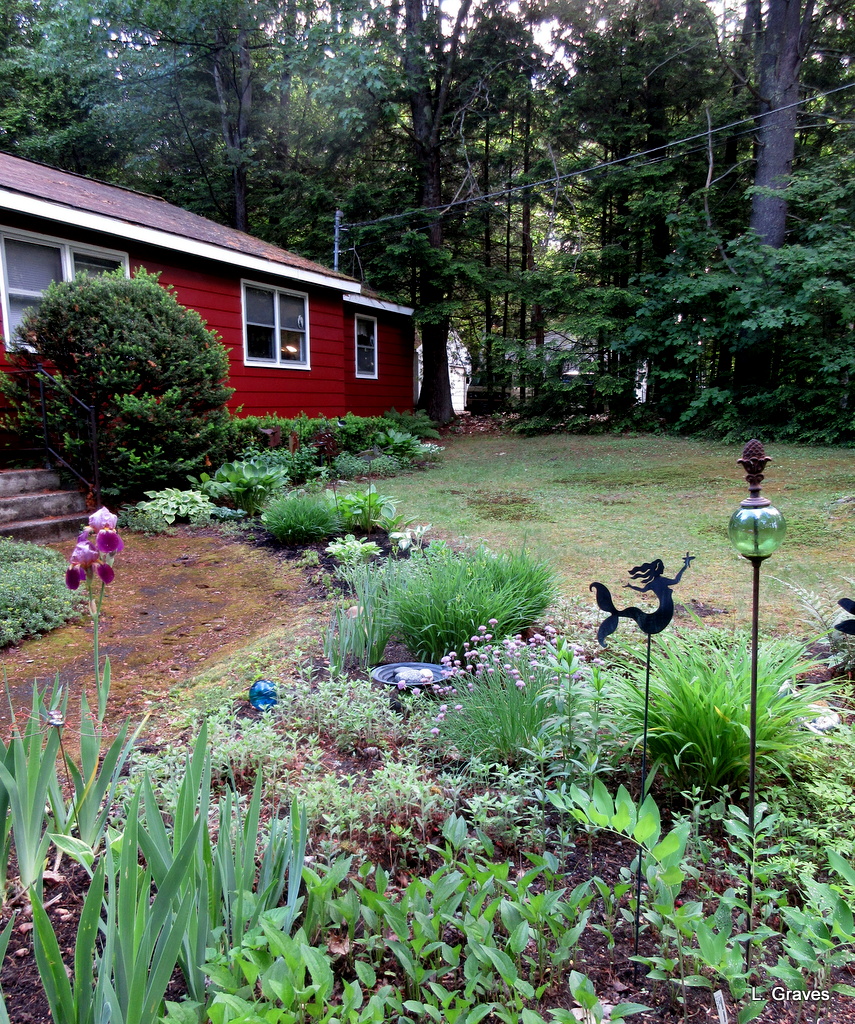
So onward, ho with hostas. Here is a picture of the front yard. I have a hard time getting pictures that reflect the simplicity and tranquility of my hosta-filled gardens. (When life gives you shade…) However, this picture does capture a little of this feeling.

Here is another look.
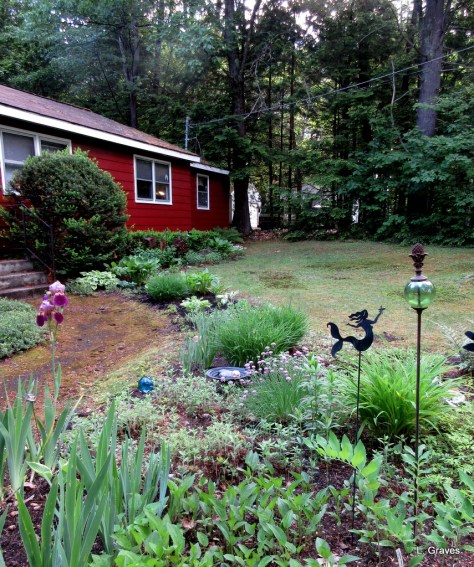
Confession time. Perhaps I might be exaggerating a teeny-weensy bit when I write that my gardens are all hostas, all the time. Observant readers will note that there are a few other plants tucked here and there among the hostas.
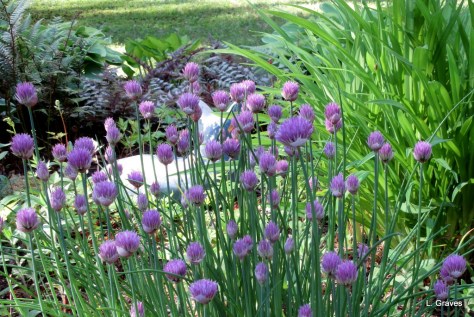
There are chives, which seem to thrive wherever they are planted. (There must be a lesson in this.)
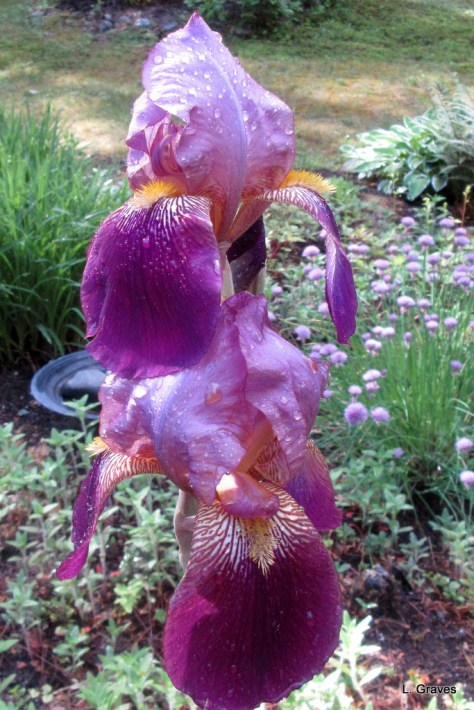
And my beloved irises, which tolerate some shade.
Later in the season there will be evening primroses, some lilies, and black-eyed Susans.
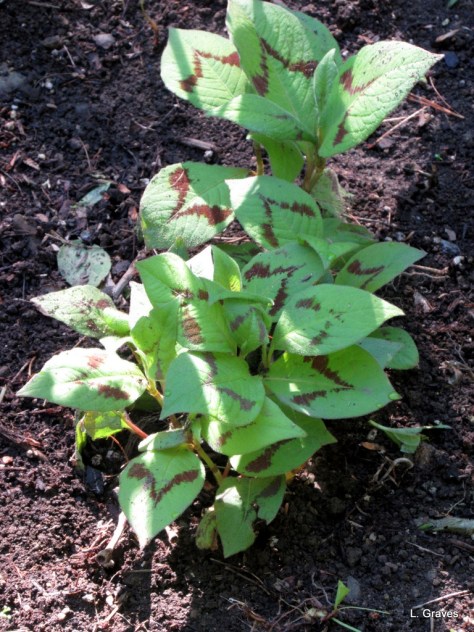
Recently, a friend gave me a plant—tough as nails, she assured me—that does well in shade. It’s called Persian shield, and it’s noted for its foliage. I planted it less than a week ago, and so far, so good. May this plant thrive in my shady garden and bring a little splash of color to it.
But back to hostas. Although they do well in dry shade, they are magnets for slugs and snails. By summer’s end, the slugs and snails chew the hostas leaves into green lace, which sounds prettier than it actual is. The hostas always come back in the spring, so no permanent damage is done, but by the end of the season, they look pretty sad.
Recently, I heard that a way to deter snails and slugs is to mix one part of ammonia to five or six parts water and spray the hosta leaves. Somehow, I am leery about doing this. Ammonia doesn’t seem like anything I want to be using in my gardens. But I must admit that I am tempted.
Blogging friends, what do you think of this method of controlling snails and slugs? Am I right to be leery, or is it a safe method?
Don’t be shy. Tell me what you think.
















 Notes From the Hinterland