I know. This is supposed to be wordless Wednesday, but when I downloaded my pictures this morning and came across this picture, I just had to share it on a second post. (I usually limit myself to one post a day. After all.)
I finally got a crisp picture of both the bee and the bee balm. No easy task when your camera is a little point and shoot and the subject refuses to pose. This is definitely a case where where persistence paid off.
Yesterday, it was so hot and humid that I barely had the energy to move from my desk to the kitchen to make a vinaigrette for our supper salad much less dust the bedroom. But I did indeed accomplish both tasks. My reward? A lemon popsicle and time on the patio—where it was a little cooler—reading Village School by Miss Read, aka Dora Saint. (Read was a family name.)
Each year, as an end-of-summer treat, I reread the Chronicles of Fairacre, an “omnibus edition, comprising Village School, Village Diary, and Storm in the Village.” Even though I look calm, I am a jittery person, and Miss Read has a way of calming my jitters. All three novels follow the main character, also named Miss Read, who teaches in a village school in the Cotswolds. The books are not great literature—does all literature have to be great to be appreciated?—but Miss Read’s love of the natural world, her shrewd yet sympathetic take on human nature, and her humor never fail to delight me. Dora Saint has won praise from both the New Yorker and the New York Times, and with them I shall let the matter of her reputation rest.
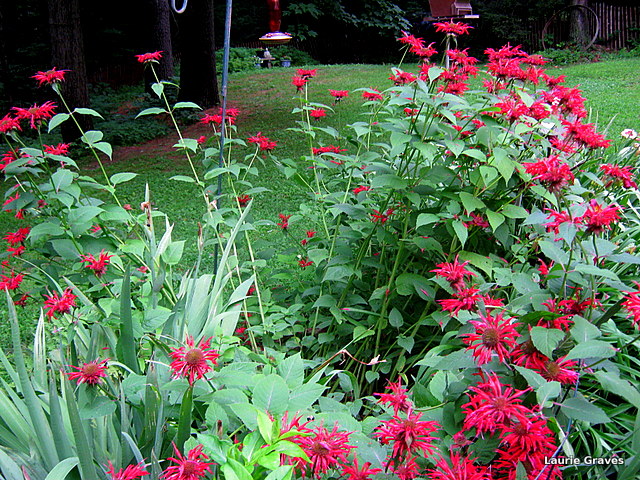
Next to the patio, the bee balm has been knocked akimbo by the driving rains we have had each afternoon this week. Last Saturday, when our friends Paul and Judy came over for cocktails, the bee balm stood tall and proud. Now it looks as though a large, heavy ball landed in the middle of the patch. Such is the force of the rain. But the bees don’t care—straight or akimbo, the bee balm is irresistible to them.
The bee balm, knocked by the rain
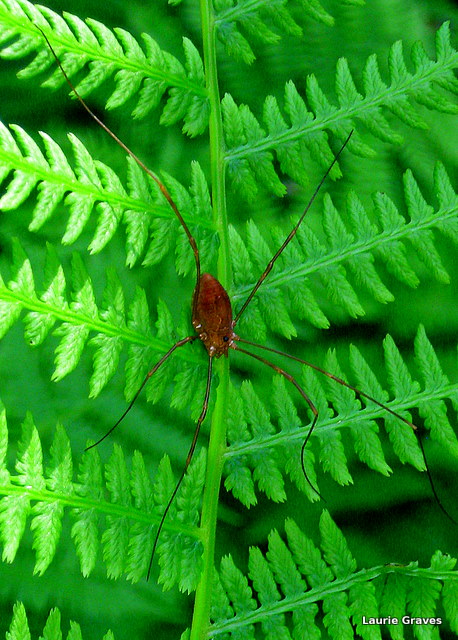
While I read, I took many breaks to watch the goings-on in the yard. Next to me, a daddy longlegs skittered along the phlox, still in bud. Birds called as they flew from the trees to the feeders, and occasionally, a large dragonfly would zip by.
Last night, the weather broke, and today is fine and hot with a bright blue sky. A good drying day, as my mother would have said, and I have two loads of laundry ready to be hung on the line.
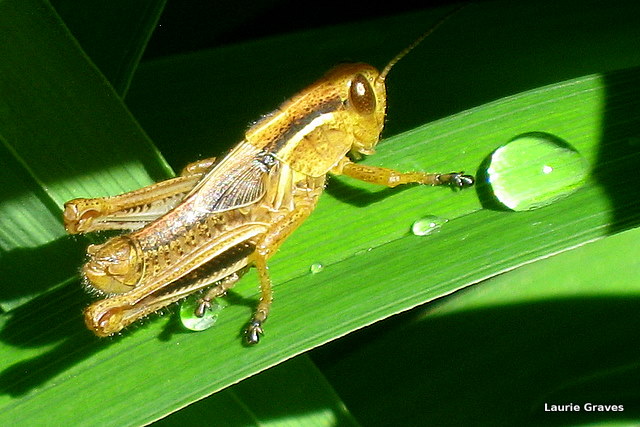
With this last day of July, which will have a second full moon this month—a blue moon—we are officially two-thirds of the way through summer in Maine. I love August and the hot, dry weather it often brings along with the loud buzzing of grasshoppers. I love the black-eyed Susans, the Queen Anne’s lace, and the golden rod in the fields. But August is also a sweet, sad month, the last month with nights warm enough to sit without a jacket on the patio.
To borrow from my friend Burni, who squeezes more joy out of an ordinary day than most people manage in a whole month, I will squeeze every bit of delight out of the golden month of August.
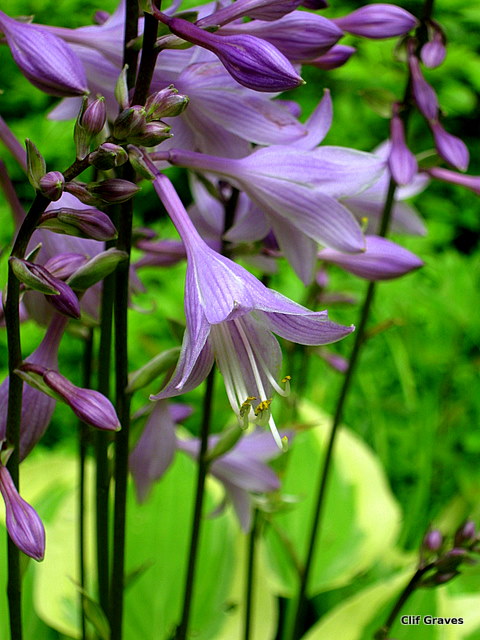
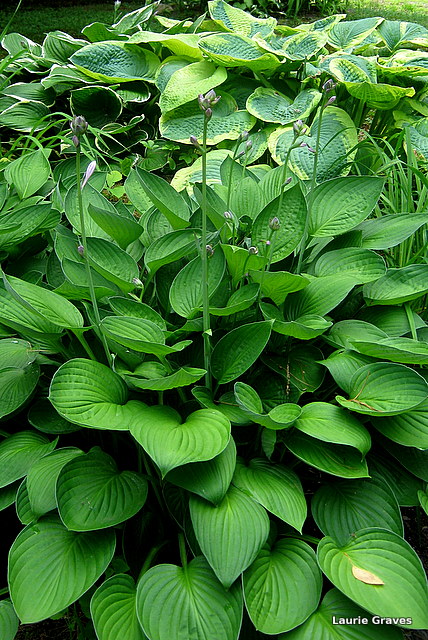
“Hostas can be difficult to work into a garden because they have a tendency toward pride, a self-assertion that can be offensive….they seem so much more physical than other plants, muscular: the heavy-weight champions of the garden.”
—Stanley Kunitz, The Wild Braid
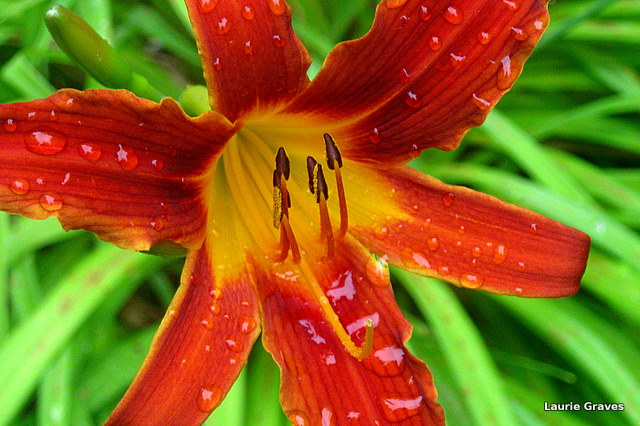
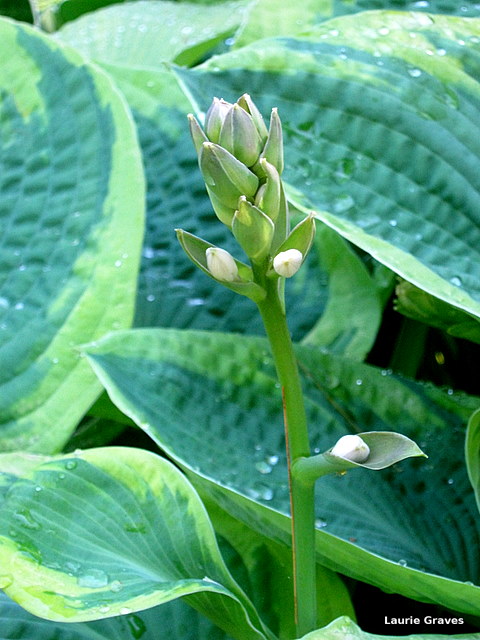
I know what Stanley Kunitz means. I have a patch of hostas that have gotten so out of hand that it looks like Jurassic Park in the front yard. The hostas are elbowing the daylilies, which aren’t exactly slouches, and I have to pull back the hostas from time to time to give the daylilies some breathing room. I should divide the hostas, but I’m not sure where I’d put the divided plants, and I’d hate to just throw them out. Kunitz decided not to plant anything else with his hostas. That way, they could muscle each other. A smart decision, I think.
When I’m sitting on the patio, I always sit closest to the bee balm, right now in glorious bloom. Bees are indeed buzzing among the flowers, and I try to take a picture of them with my little point-and-shoot camera. I am not very successful. They’re not called busy bees for nothing. Bumble, bumble, yellow and black. They seem so slow yet they never really rest. (That might be a description of me as well.)
Not too bad but not really in focus
Hummingbirds are also drawn to the bright red flowers, and it’s even harder to get a picture of them. I’m not sure why I keep trying. I know the limitations of my camera, wee wonder that it is. But when those tiny will o’ the wisps are thrumming almost within arm’s length of me, somehow I can’t resist. A couple of times, a hummingbird has stopped in mid-flight to consider me, but only for a few seconds. Not long enough for me to get a good picture.
Fortunately for me, the flowers and plants stay in one place unless there is a brisk wind.
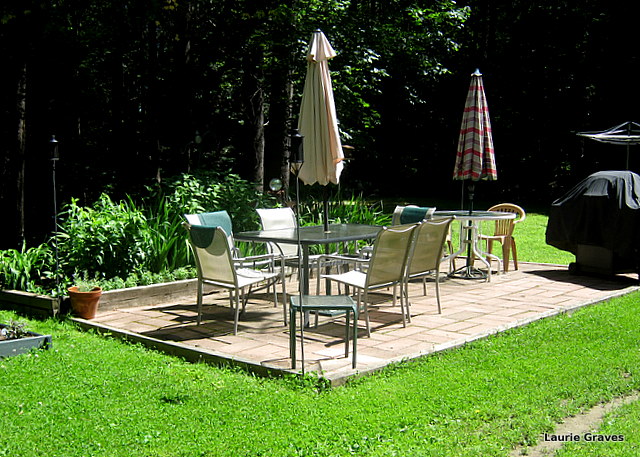
Right now, my backyard garden is in peak bloom, and we had friends over for cocktails on Saturday. The weather was good enough for us to spend the entire time on the patio, where they could admire the flowers. Clif made his legendary grilled bread, and I made Maine mules.
On Sunday, we had cocktails on the patio with Jim, an acquaintance who lives nearby. He’s a regular reader of this blog, and for quite a while, we’ve been wanting to have him over for drinks and a chat.
We talked about many things, but I had to laugh when he noted that on my blog, I can get so much material from a walk down the road to the Narrows. This was an interesting coincidence because lately I have been reflecting on my little territory, and how I map it with observation, words, and pictures.
But first things first: I am an extreme homebody. For me, home is best. When the weather is warm, my backyard is one of my favorite places to be. Even though we only own an acre of land, our home abuts a watershed for the Upper Narrows Pond, and this watershed comprises 2, 729 acres, or 4.26 miles. This land is protected, closed for development, which means nobody can build on it. While we do have neighbors, we are essentially surrounded by woods. (I don’t call this place the little house in the big woods for nothing.)
The front yard, surrounded by trees
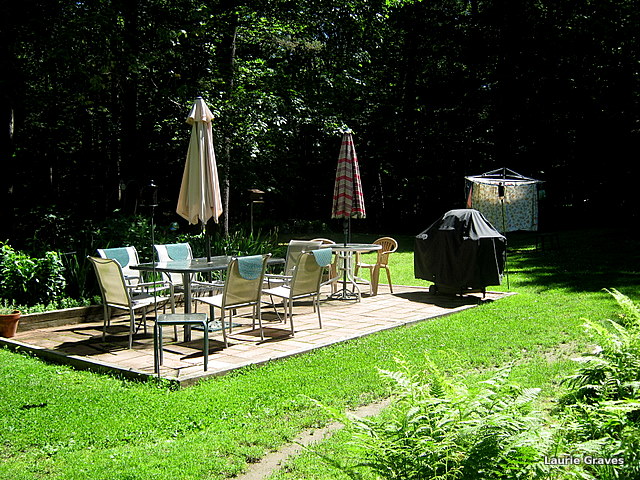
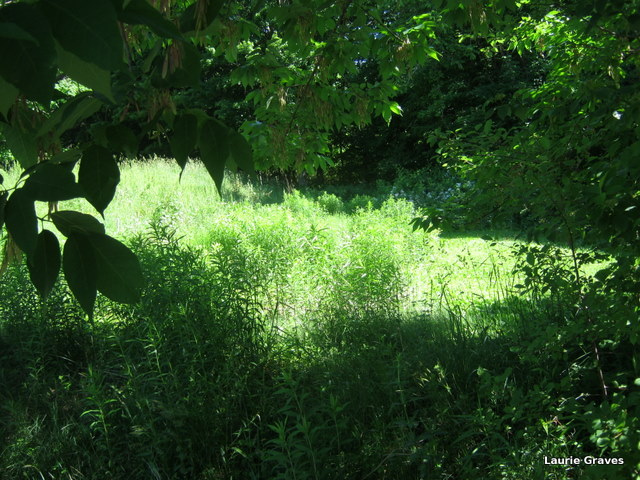
The backyard, even more surrounded
So my prime territory is my own yard, an acre that seems much larger because of the watershed. Almost every day, with camera in hand, I patrol the yard. No matter the season, something is always going on, and it never gets old for me. From the budding trees to the blooming flowers to the falling leaves to the snow—and sometimes we are positively buried in it—it is a cycle that fascinates and delights me.
Flowers, flowers, flowers
Then there is the Narrows Pond Road. From my driveway, if I turn left, I will walk to the Upper and Lower Narrows, two bodies of water large enough to be considered lakes and lovely any time of year. The walk to the Narrows is a wooded walk, and through the trees I can see remnants of old stonewalls, a reminder that once upon a time, this land had been cleared of trees and was open farmland.
The road to the Narrows
If I turn right, I walk up to the fork, and there are still plenty of trees, but farther up the land is more open, with fields, houses, and a few apple trees leftover from when there were orchards on this road. There’s also a little swamp, quite near our house, and in the spring the peepers’ song is loud and beautiful.
The road to the fork. The swamp is just beyond the clump of trees on the left.
From the Narrows to the fork it is about one-half mile, and this, combined with my acre yard, is my usual territory. Four days a week, I am home without a car, so it’s a good thing I am fascinated and absorbed by the plants, the birds, the insects, the water, the fields, the sky, and the weather. I feel as though I could live here for a hundred years and never really know this acre, this half mile of road.
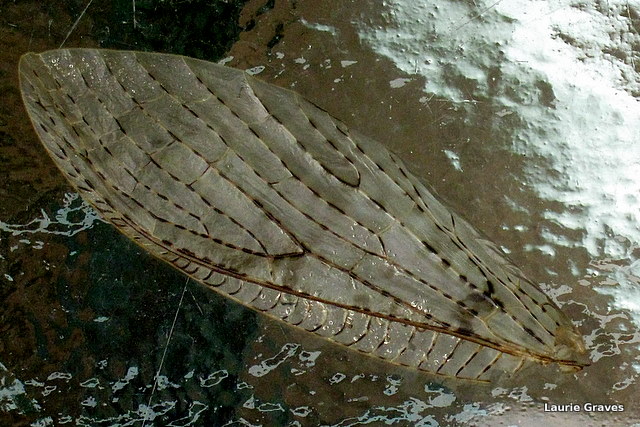
A wing found in the backyard
Sometimes, of course, I venture farther. Once or twice a week I go to the library in town, about a mile away. My husband and I go on five-mile bike rides. We go to potluck dinners, usually in town. Occasionally, we visit a friend in Brunswick or our daughter and son-in-law in Portland. Once in a while, we even visit our daughter in New York.
But mostly I stay home.
Always, it seems, qualifications are necessary, and so I will qualify. There is value in seeing and photographing areas far from home. The road calls to many people, and traveling can be broadening. As my mother might have said, it changes the mind. (French was her first language, and this is a literal translation from a French phase. I expect it really means that travel broadens the mind.)
But I also think there is value in charting your own little territory, observing what happens in your yard, on your road, in your town. It seems to me that through this close mapping, a deep love can develop for the place that you live, whether it’s town, city, or country.
When you come to love a place and become intimate with it, then the chances are high that you will work to take care of it, to preserve it. Or, as in the case of Winthrop’s expanded library, even work to improve it.
So far, in Maine, this summer has been nearly perfect. Warm and hot during the day, cool at night, and just enough rain for the plants and flowers to flourish. Oh, I could take nine months of this. I know. I live in Maine, where it is downright cold much of the year. Perhaps that’s why summer here is so sweet?
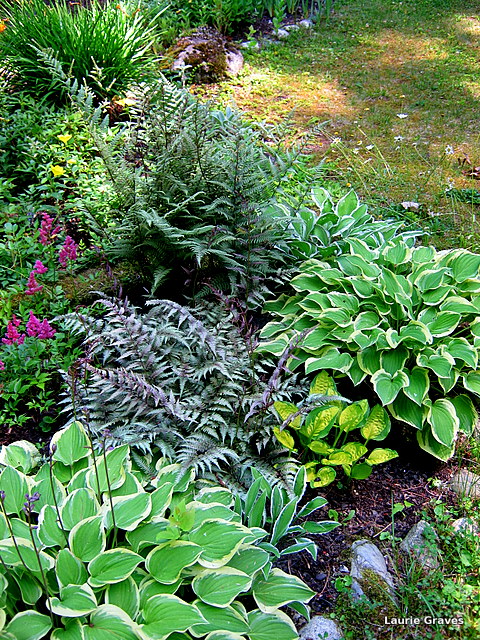
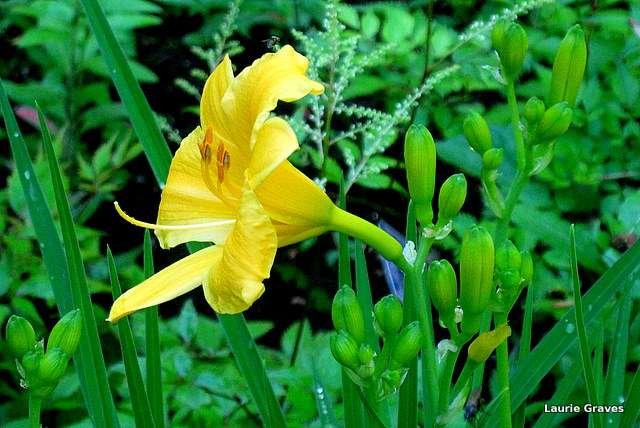
My front gardens, with their profusion of evening primroses, come into their own the end of June and the beginning of July, when everything is an exuberant burst of yellow. However, all good things must come to an end, and so it is with the evening primroses, which are nearly done blooming. There are other flowers to look forward to—black eyed Susans and daylilies—and the hostas and ferns hold everything together, but for the front yard, the peak is over.
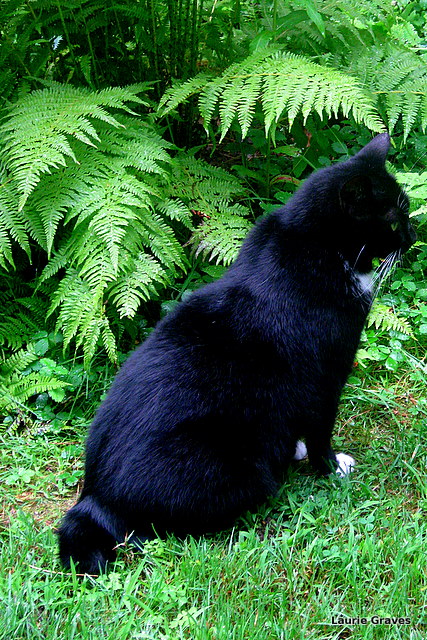
It is now up to the hostas and ferns to hold everything together.
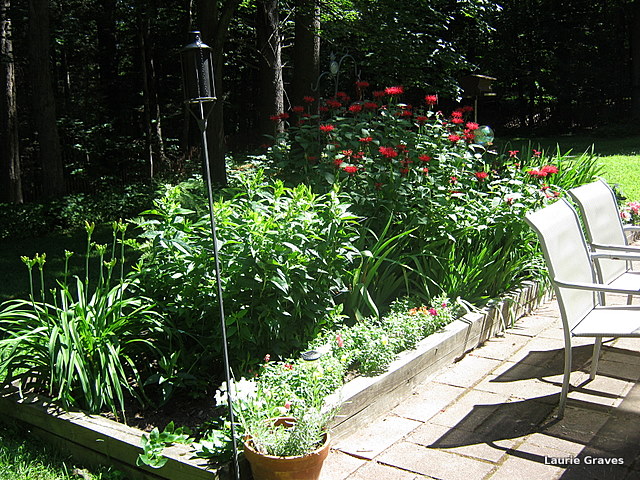
On the other hand, the back garden is just coming into its own. The Bee balm is in glorious red bloom—I can’t stop taking pictures of it—and soon there will be a profusion of especially lovely daylilies to join them. There will, of course, be more pictures.
The backyard coming into bloom.
I like to joke—well, maybe it’s not such a joke—that I have the worst yard in Winthrop in which to garden. There is shade galore, and much of it—especially in the front yard—is dry. Thirty years ago, we bought this house for other reasons—the price, the woods, the roominess despite its small size. It was our first house, and I hadn’t yet been bitten by the gardening bug.
However, after a couple of years here, I was bitten. Hard. I was young, I was strong, and I began digging like a fool. I planted willy-nilly, with little regard for the conditions. Let’s just say that there was plenty of heartbreak and loss. What I wanted was a blooming cottage-style garden. My yard had other ideas, and I wasted a lot of time, energy, and money before I came to my senses. In retrospect, I realize that I should have put raised beds in the front, which would have helped with the dry shade.
But, as the saying goes, we grow too soon old and too late wise. The gardens are dug, and I don’t have the energy or the resources to replace them with raised beds.
I have finally followed the advice of a friend who is an accomplished gardener. “For God’s sake, Laurie, plant some hostas.” This I have done. They are thriving in the dry shade, and they look cool and elegant until the slugs munch them to ribbons. I’ve also planted ferns, which are lovely. But, oh, my heart aches for hollyhocks and roses.
In the backyard, I am happy to report that I learned from my mistakes in the front yard, and the large garden along the patio is indeed a raised bed. There are only six hours of sun in that garden, but I can grow irises, bee balm, and daylilies. Phlox does well, too.
This might sound a little woo-woo—to borrow from my friend Susan Poulin—but the garden has taught me lessons. That is, conditions are not always ideal. We might want hollyhocks and roses, but instead we get evening primroses and hostas. Yet, in what we get, there can be creativity, value, and even beauty.
More photos from my mid-July garden.
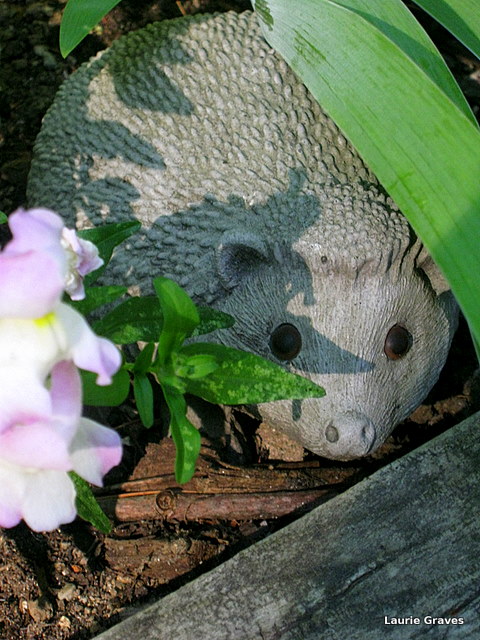
A winged visitorAnother little guardian of the garden.Oh, bee balm!Black and white against green.
All in all, it has been a very good June. In Maine, June is typically rainy. Way back in the old days, I remember my father complaining about rotting beans in his garden—sometimes he would have to replant—and my friend’s father wondering anxiously if the weather would hold for haying.
A couple of years ago, it rained for twenty straight days. The slugs and snails blissfully chewed their way through my gardens, and I participated in what can only be called slug and snail genocide. (A jar of soapy water filled with the little slimers is truly a disgusting sight.) But finally I gave up. There were just too many of them, and by July many of my plants were in ribbons.
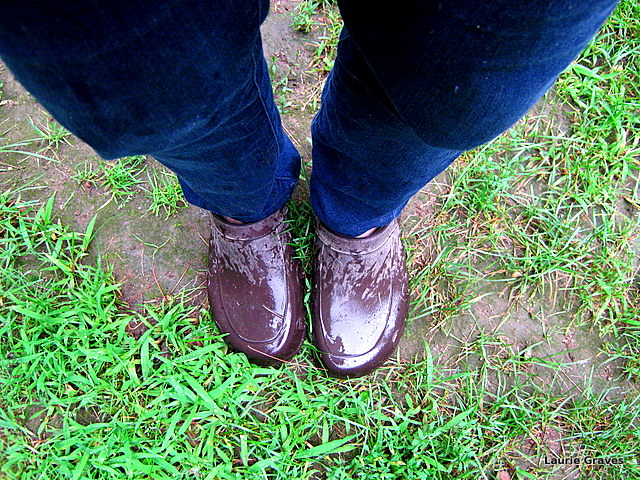
In disgust, I took this picture of my own wet feet, which looked this way too often two Junes ago.
From two Junes ago
But this year, June has given us a break. Yes, it has rained, and this is good. We need rain. But we have also had a number of sunny days, and at the little house in the big woods, everything green is flourishing—the herbs in my small garden, my potted plants, the flowers. There have been slugs and snails, but so far their numbers are few, and the hostas, for the most part, remain unscathed.
Our green room the end of June
The other day, as I was at the kitchen sink, I looked out the window and saw two downy woodpeckers, about the same size. However, one was feeding the other, a parent with a fledgling. Soon the parent will no longer be feeding “Junior,” but as my husband noted, Junior now knows where the feeder is. I will be sure to keep it full.
The lightening bugs have made their luminous appearance, and at night, as Clif and I sit in the living room, we see them on the screens on the windows. A little blinking glow in the dark night.
As lovely as the backyard looks, it is not always a peaceable kingdom. Female hummingbirds fight fiercely for control of the feeder, filled with a sugar and water mixture. (Jodie Richelle recently wrote about this on her blog.) It seems to me that they spend as much time fighting as they do feeding. Yesterday, my husband and I watched in fascination as over and over, the hummingbirds dived bombed each other. It didn’t look as though any blood was spilled, but it must be exhausting to fight like that.
“If only they would cooperate,” I said sadly. “There’s enough for all of them.”
“It’s not their nature,” Clif replied.
I guess it’s not. Unlike, say, crows, hummingbirds have evolved to be highly competitive, and I suppose it has served them well. But still.
July is just around the corner. Two more sweet months of summer. I try to enjoy each day to its fullest, to spend as much time outside as I can, to take pictures of the burst of flowers, the insects, and the rush of green.
For Clif and me, one of the great pleasures of summer is riding our bikes around Winthrop. We feel extremely fortunate to live in such a beautiful town of lakes, fields, and forests. When we leave our driveway, no matter which way we turn, we have a choice of scenic rides.
Usually we begin riding our bikes in May, perhaps even late April if the weather is warm enough. However this year, because of library brouhaha and gardening, we have gotten a late start and have just begun riding our bikes. But better late than never, and eight slow miles will eventually lead to ten, fourteen, perhaps even twenty miles covered in less time. (I do want to add that speed is never our goal. Clif and I are what might be called steady riders rather than speedy ones.)
One of the reasons that Clif and I like biking so much is that we are very concerned about our carbon footprint. When we bike, the only carbon emissions come from us, a big improvement over our belching car. In the summer, especially, we try to reserve Sunday for a carless day, and we take to our bikes for an outing. We can even stop at a convenience store along the way to pick up the Sunday paper, which is then tucked into my trusty bike bag.
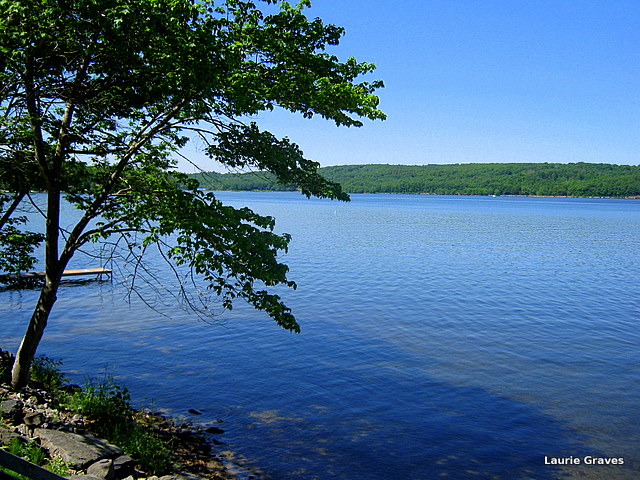
This Sunday, Clif and I went for a bike ride along shimmering Maranacook Lake. Aside from the beauty, we like this ride for a number of reasons—the road is relatively flat, there are lots of other bikers and walkers, and the traffic is slow.
On this ride, there is even a sign to encourage car and truck drivers to watch out for bikers and walkers.
There is Maranacook Lake, gleaming beside us as we ride.
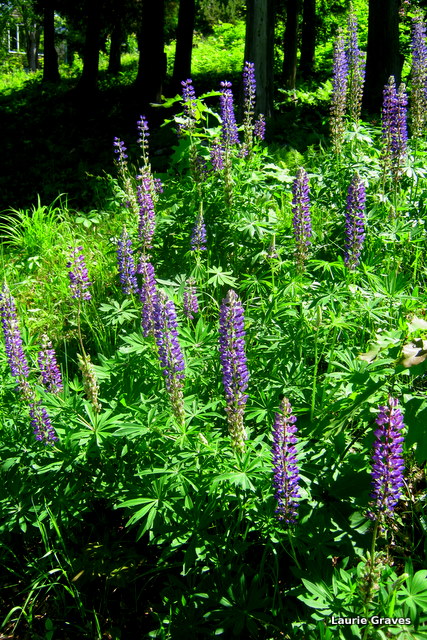
This time of year the lupines are in bloom. Such a cheery burst of purple.
In Maine, the gardens aren’t in full bloom yet, but Joan’s peonies have started to blossom, and although they are not my favorite flower, I couldn’t resist taking a picture of one of them. (Yes, yes, I will admit it. They are lovely. I don’t know why I’m such a grump about peonies.)
Whatever the season, there is always something to notice on this bike ride. My friend Cheryl has observed that a person riding a bike can achieve a perfect speed—faster than walking but slower than a car. On a bike, a rider can cover quite a few miles while still observing the land, the sky, the water, people, and animals.
Even though we are late this year, Clif and I still have many months ahead of us for biking. Let the season commence.
I know this might count as bragging, but right now the air at the little house in the big woods is so impossibly sweet that I can’t imagine how it could be sweeter anywhere else. How to describe this smell? Green? Woodland? Nature? Life itself?
If I could bottle this smell and sell it, then I would be a very rich woman indeed. People would clamor for it. I know they would. But unfortunately—or perhaps fortunately—this smell cannot be reproduced, not even by the cleverest chemist. This means that only a very small group of people, family and friends, have the privilege of enjoying this green, woodland smell at the little house in the big woods.
This morning, after hanging laundry, I took photos as I do nearly every day. It has become my practice, and through this practice I hope to become a better photographer.
The sweet smell of summer was all around me as I took pictures of flowers, the woods, and insects. The smell enveloped me until I felt as though it were holding me in its hand, and it seemed to encourage me to look closer and closer at what I was photographing.
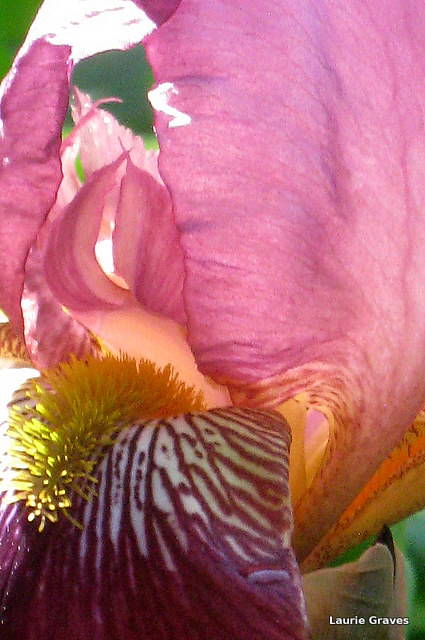
From a distance, gardens and flowers, plants, and even insects can be beautiful, but close up they are strikingly interesting. How often do we slow down for a closer look? Not often enough, I think. Most of the time we are rushing through life, trying to get various chores done.
Photography is a good reminder to slow down, slow down and take a closer look. When the slowing down is combined with the sweet smell of summer, well, you have a combination that cannot be beat.
A blog about nature, home, books, movies, television, food, and rural life.

















 Notes From the Hinterland