
Let me come right to the point. This has been one of the weirdest winters that I can remember, and as I turned sixty in September, I can remember quite a few of them. At the end of December and creeping into January, the temperature dipped to twenty below zero, and barely budged above zero all day. Mainers are used to cold spells in the winter, but never for that long, usually only for a few days rather than for two weeks.
Then, in mid-January, the temperature spiked to nearly fifty degrees, and we had lashing rain, the kind we usually see in summer or fall but never in the winter.
As the saying goes, it’s an ill wind that blows no good, and the rain and warm weather did remove all the snow and ice from our roof. We were grateful for this as too much ice on a roof inevitable leads to leaks.
However, on the bad side of the ledger, the rain and the spike in temperature caused rivers to thaw and flood. In central Maine, where I live, the closest river is the Kennebec, and it’s about ten miles from us, flowing through the nearby cities of Augusta and Hallowell and the small town of Farmingdale. The Kennebec is a storied river that played a role in the Revolutionary War and was a major waterway before the advent of automobiles.
In the spring, in March and early April, the Kennebec occasionally floods the many cities and towns that grew up along the river. Not unusual at all, and it’s something the river towns and cities are prepared for. However, because of the sudden, extreme thaw this January, the Kennebec did something that no one expected would happen in deep winter. The river flooded, and it flooded fast, within a span of minutes. As Jason Pafundi from the Kennebec Journal wrote, “Sometime early Sunday morning [January 14], ice accumulated near Farmingdale and created a dam in the river. In the course of a few minutes the water rose about 8 feet in downtown Hallowell and Augusta.”
Businesses were flooded, and residents who parked in lots by the river lost their cars. On Tuesday (January 16) Clif and I had errands to do in Augusta, and we decided to drive into Hallowell to see what the Kennebec looked like. The flooded cars had all been removed, but there were ice chunks aplenty, something we don’t normally see this time of year.
This is a rather long preamble for my Five for Friday. For readers who live in a warmer climate, none of the pictures would make any sense without an introduction.
As this post indicates, there should be no doubt that climate change is real, and it is here. The flooding river in January is but one change this aging Mainer has seen in her lifetime.
Here is a sign at a turnout between Hallowell and Farmingdale. The Kennebec River is the waterway that starts on the right about halfway down the sign and heads directly to the ocean at the bottom. To get a better view, click on the picture.

This is an upriver view of the river heading toward Augusta, the state’s capital city. If you look closely, you can see the white dome of the state house complex. It’s center left along the skyline.

A smelt shack, carried by the ice from the edge of the river to the middle. Unlike those who ice fish on lakes, people who ice fish on the Kennebec set up their shacks on the edge of the river, where the ice is thickest and therefore usually safe.

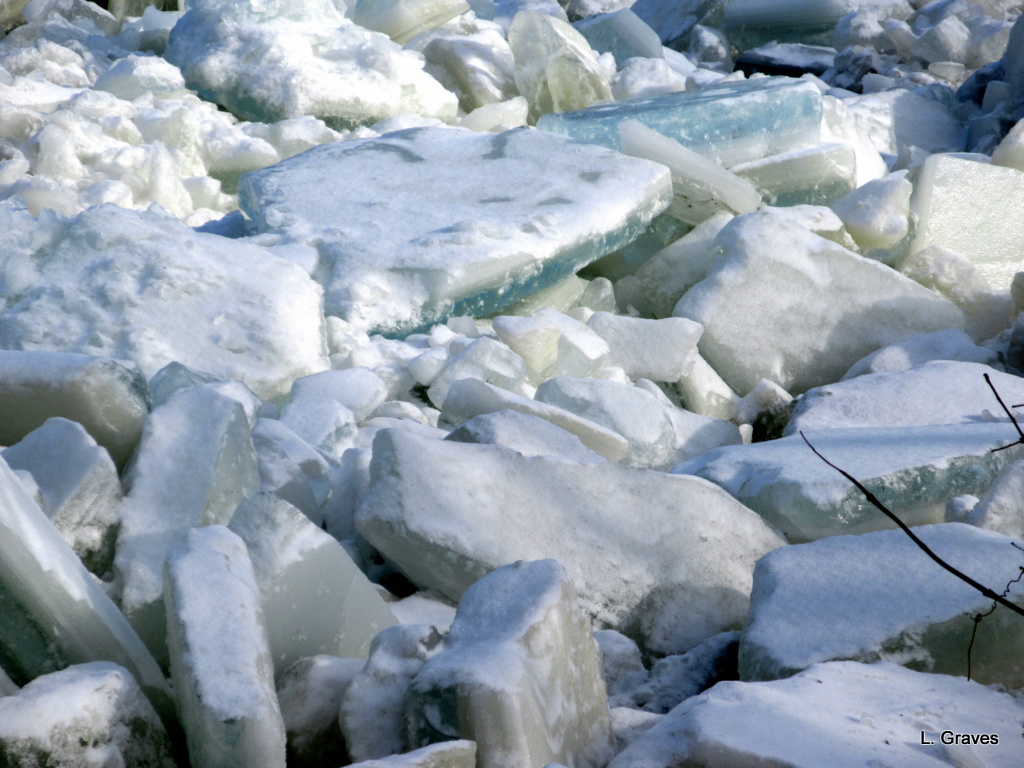
A close up of ice chunks.
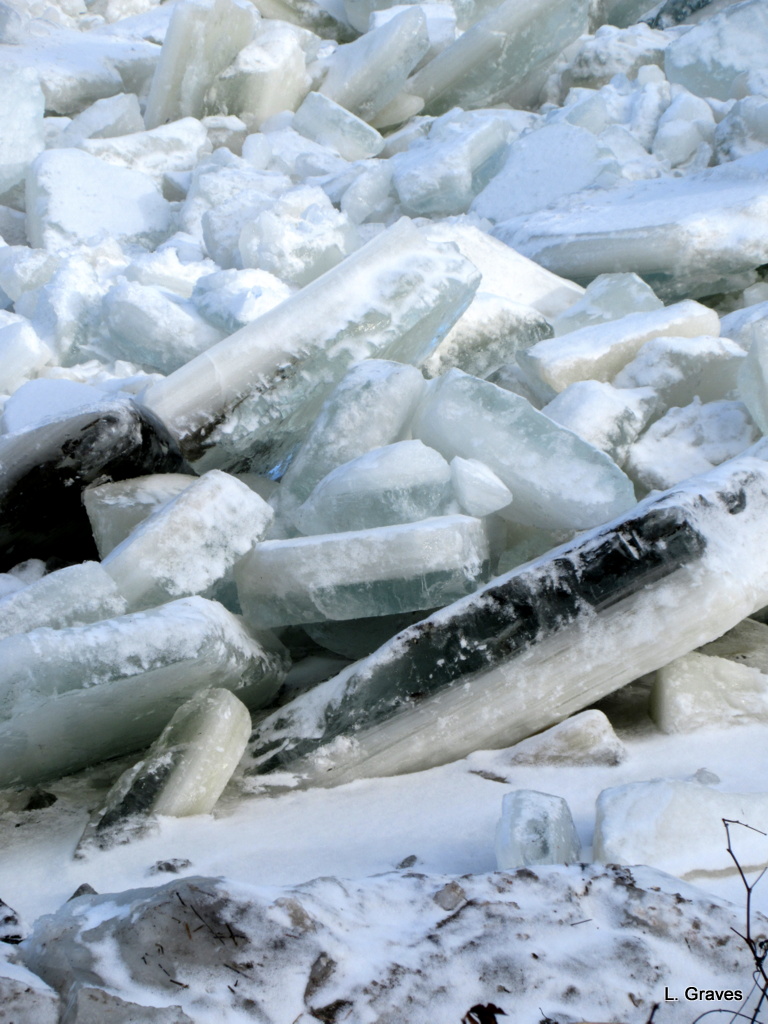
More ice chunks. With their Arctic look, I find them fascinating.












 Notes From the Hinterland