Category Archives: Movies

Movie Night: Black Narcissus (Based on the Novel by Rumer Godden)

About a year ago, Clif and I decided we would host a movie night at the little house in the big woods. We have three friends—Diane, Joel, and Alice—who love movies as much as we do, and Clif and I thought it would be fun to get together to watch a movie and then discuss it afterwards.

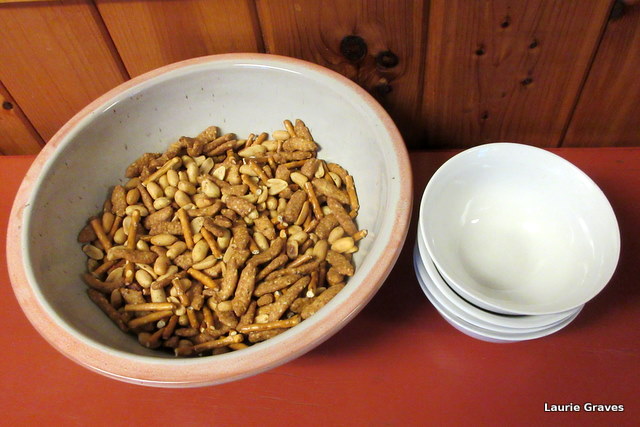
Over the course of the year we have fine-tuned the event. We start at about 5:30, we provide pizza and soft drinks, and our guests bring salad and dessert. Clif has a very good hand with pizza dough—he knows just how to stretch it—and we are able to buy a good frozen dough from a Maine company, Portland Pie Co. (The dough is available in our local supermarket.) I make a quick sauce using Muir Glen’s crushed tomatoes with basil, garlic, and a little dried oregano. Clif likes to use a mixture of cheeses—mozzarella, cheddar, and Monetary Jack.

We have two large pizza pans, one of which is cast iron, a present from my brother and his wife. And miracle of miracles, our blast-furnace oven does a great job with pizza. We bake the two pizzas for twenty minutes or so and voilà! Pizza for five or six, at a fraction of the cost of take-out.

IMG_0524

We take turns choosing the movie, and last night was Joel’s turn. From his own film collection, Joel brought several to pick from, and we quickly settled on Black Narcissus, a 1947 film, staring Deborah Kerr and Jean Simmons and based on the book by the late great English writer, Rumer Godden.

Black Nar

Black Narcissus is the story of a small group of Anglican nuns, led by Sister Clodagh (Deborah Kerr), who travel to a remote former palace in the Himalayas to open a convent. At the new convent, the nuns plan to teach the local girls, open a health clinic, and grow much of their own food. But high on the mountain, the air is thin and the wind always blows. The local British agent, the charismatic Mr. Dean, warns them not to stay, feeling that the mountain will be too much for them.

Naturally the nuns stay, and naturally Mr. Dean is right. It isn’t long before the mountain and the people who live there exert an unhinging force on the various nuns, in particular Sister Ruth, played with an over-the-top relish by Kathleen Byron. A chaste love triangle forms between Sister Clodagh, Mr. Dean, and Sister Ruth, resulting in tragedy.

First, the good. Black Narcissus is extremely strong on the visuals—on the cinematography and on the sets where most of the movie was filmed. The colors, the framing, the vividness of place—even though it was mostly a set—is nothing short of astonishing. The cinematographer, Jack Cardiff, won an Academy Award for Best Cinematography, and he certainly deserved it. Visually, the movie is a work of art.

Unfortunately, the move was weak with character development, relying too much on bug-eyed melodrama and crashing music. Apparently, this sort of melodrama was big in England in 1947, but it marred the story written by an author who excelled at character development.

Nevertheless, Black Narcissus is a movie worth seeing, if only for the beauty of the filming. Diane was right in suggesting this was really a group film, best seen with others so that we could all react to the various over-the-top scenes.

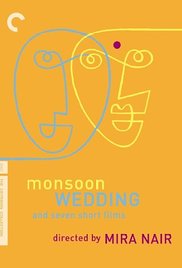
Next month is Alice’s turn to pick, and we will be heading back to India with Monsoon Wedding. I’m looking forward to it.

Going to the Movies on a Sunday Morning to See Bounce: How the Ball Taught the World to Play

First, a little back story: For the past twelve years or so, Clif and I have been part of a committee that plans a winter film series at Railroad Square Cinema, a wonderful independent cinema about twenty-five miles from where we live. The film series—Cinema Explorations—comprises six films, begins the weekend after New Year’s, and runs every other Saturday and Sunday until March.

IMG_7882

This past weekend was the weekend after New Year’s, and Cinema Explorations started with a thoughtful yet snappy documentary called Bounce: How the Ball Taught the World to Play. As a bonus, David McLain, the cinematographer, lives in Maine, and he was able to come to the Sunday showing for a Q & A after the movie.

Bounce begins by illustrating how play is integral to many species, including dogs, cats, otters, chimps, tigers, and, of course, humans. While young ones are especially apt to play, even adults play, too, from time to time. This play might seem to be without purpose and a huge waste of energy, but Bounce maintains that play, even if it’s rough and tumble, enhances creativity and teaches necessary social skills.

Enter the ball. Round things are found in nature, often in the form of fruit but also with rocks. Our primate ancestors ate fruit, used rocks as tools, and most probably used them for play. The earliest depiction of a game using a created ball comes from the Egyptians, but the ball was developed independently around the world, and those clever Mesoamericans even figured out how to make them bounce.

Once a ball could bounce, it became ever so much more exciting and unpredictable. (So exciting that the Spaniards initially banned the Mesoamericans from playing with their demon-possessed bouncing balls.) The bouncing ball gave us soccer, rugby, and many other games that involve a ball.

Bounce takes us around the world to India, Africa, and the Orkney Islands, the latter of which has developed a game called Ba’, which is only played on Christmas and New Year’s Day and almost defies explanation. It involves a crushing mob and a ball and two sides—the uppies and the doonies, the farmers and the fishermen. This sequence in Bounce is jaw-dropping, illustrating how Ba’ is certainly not for the claustrophobic.

After the movie, David McLain, the cinematographer, told us a little about how the film was made and also answered questions. He said that the hardest part of the film was to shoot free-play sequences, that nowadays American children have very little opportunity for playing without adult supervision. For this he had to go to Africa and India. McLain also noted that one of the ironies of Bounce was that making it was so much work. “But we all need to play,” he concluded. “The play state is important.”

IMG_0318
David McLain, the talented cinematographer of “Bounce,” in the lobby at Railroad Square

Despite the hard work that went into making this movie, Bounce is playful, fun, and informative.  In addition, the music is terrific, and the cinematography is outstanding.  After seeing this movie, I will never look at balls and play the same way again. If Bounce comes to a cinema or festival near you, then go see it.


Blasting through the Holidays with Moving and Movies

I love Christmas and New Year’s Eve, but as I’ve gotten older, I must admit I find them a tad hectic. And this year was especially hectic. First, Clif and I got nasty coughing colds that were mostly gone by Christmas but like unwanted guests stayed far longer than they should have. (It has taken me four weeks to completely recover.)

Then, on the Monday after Christmas, Shannon and Mike packed a U-Haul and headed to North Carolina, where Shannon will start a new job. We went to South Portland to help them clean and pack, and we bid them a sad farewell. (They made it safe and sound to North Carolina and have moved into their new town house. Movie buffs that they are, they even found the energy to go to a film—the excellent Big Short, a must-see movie.)

IMG_0144
Farewell, Shannon and Mike

Dee stayed with us until after New Year’s Eve, and as we are, in fact, a family of movie buffs, we watched plenty of movies, at home and at the cinema.  We saw the new Star Wars movie, which I liked but did not love. For me, it was far too derivative of the original—A New Hope—but it was still worth seeing, especially on the big screen.

Also of note was the movie Concussion, starring Will Smith, who plays Dr. Bennet Omalu, the real-life pathologist who made the connection between football players’ repeated concussions and the resultant brain damage. A sobering story where those in power yet again tried to deny the truth and intimidate those who uncovered the evidence. After seeing this movie, it’s hard not to argue that the game should be played very differently.

As good as Concussion was, the best movie was The Big Short, based on the book of the same name by Michael Lewis. In the New York Times, A. O. Scott gives this movie a critics’ pick and begins his review with this description, which is too good not to share: “A true crime story and a madcap comedy, a heist movie and a scalding polemic, The Big Short will affirm your deepest cynicism about Wall Street while simultaneously restoring your faith in Hollywood.”

The Big Short is a movie about the housing bubble and its subsequent collapse.  Some in the industry saw what was coming and decided to try to make money on the housing collapse, and the movie follows three groups of these people. The film is snappy, fast-paced, and satirical while at the same time informative and moving. I think it’s fair to state that not many films about the financial collapse manage to combine all those qualities. In addition, there are devices such as a narrator speaking  directly to the camera and celebrities, as themselves, explaining various terms, including subprime mortgages and CDOs. These devices could have fallen flat, but in The Big Short they work with hilarious effect.

As I noted above, The Big Short is a must-see movie. The Great Recession was a world-wide event, where many, many people suffered devastating losses. It could have been worse, of course, but in the U.S.  the American taxpayers bailed out the greedy financial institutions that wreaked such havoc and harm. Do I resent them? You bet I do, and you should, too.

Those of us in the United States need to be mindful about how politicians feel about regulations and banks that are “too big to fail.” The Great Recession wasn’t an act of nature. It was an act of men and women, which means it was not inevitable.

But enough wagging the finger. Onward to winter and the New Year.

IMG_0159


Of Birthdays and Star Wars

Today is my daughter Dee’s birthday. Happy birthday, Dee! (How good we could celebrate it with her when she came for a visit a couple of weeks ago.)

With a new Star Wars movie due this December, it somehow seems appropriate to reminisce about the original Star Wars movie. Thirty-eight years ago, Dee attended that first Star Wars movie when it came to the Bangor area in either July or August—here my memory fails me—and I was either seven or eight months pregnant with her.

th

Readers, I have a confession to make. I was not eager to see Star Wars. I was hot, cranky, large, and uncomfortable. There would be a long line, I knew, and I did not want to stand in it. But Clif and a friend worked on me until I agreed to go. At the cinema, standing in that long line, I was so amazed by the crowd and the excitement that I forgot to be cranky.

The cinema, of course, was absolutely packed, and with the opening crawl of the text, “A long time ago in a galaxy far, far away” combined with John William’s grand music, I was completely transfixed.  I knew I was in once-upon-a-time territory, one of my favorite places to be. (I like to note that I was born in County Tolkien.)  Then came the zooming of the spaceships, and I felt as though a current was going through my body. This sort of experience—this jolt—only happens every so often to me, when I am incredibly moved by a painting, some music, a book, or a movie.

Did that jolt affect Dee? Who can say? But she loves paintings, books, music, and, especially, movies. (Dee is a true cinephile and makes me look like a piker.)  When she was in fourth grade or so, she became an ardent fan of Doctor Who, and one year for Halloween Dee dressed up as the fourth doctor played by the inimitable Tom Baker.

250px-Fourth_Doctor
Tom Baker as Doctor Who

We bought Dee a curly wig, found a long scarf and sports coat, and voilà, we had a pretty good mini Doctor Who.

It would be fitting if Dee’s favorite Star Wars movie were that first one we saw in 1977. Instead, she prefers The Empire Strikes Back, which seems to be a favorite with many of her generation.  Life is like that—it does not always conform to perfect symmetry.

Anyway, a very happy birthday to Dee. May the force be with you now and always.


Variation on a Theme: Zucchini, Garlic, and Basil Quiche with a Dash of The Big Chill

IMG_0555Once a month, Clif and I host a movie night at our house. We are movie buffs, and we have three friends who are just as keen on movies as we are. It’s a great inexpensive way to get together to watch and discuss a film, and we all take turns picking out the movies.

Last Saturday was movie night, and we had a summer potluck dinner to go with it. Alice brought a package of homemade sourdough, which Clif grilled, and she also brought carrot cake. Diane brought a salad, and except for the eggs, everything came from her garden. As for me, I made a quiche with Farmer Kev’s zucchini and garlic. The basil came from my own little garden.

I got the idea for this quiche after I made Mediterranean eggs—scrambled eggs with zucchini, basil, and garlic topped with cheddar cheese. I wondered, would this taste good as a quiche with a cracker crust, similar to the one I made with summer greens? Why, yes it would. In fact, this has become my favorite quiche, and I plan to make it regularly while I have plenty of fresh basil. As far as I’m concerned, basil, garlic, and olive oil are the holy trinity of the food world, and when you add eggs, cheese, and zucchini, well, you have something that’s pretty darned good, to borrow from Clif.  And it reheats beautifully. What more can you ask for?

Onion lovers might want to add or substitute onion. However, as indicated above, garlic and basil really are a team that’s hard to beat. But as you like it.

For the movie, we watched The Big Chill, a 1983 movie with an incredible cast that includes Kevin Kline, Glenn Close, and Jeff Goldblum. In brief, seven college friends reunite after the suicide of a mutual friend. The college friends are now in their thirties, and their youthful idealism has fizzed away. Not surprisingly, most of the characters are disappointed with the directions their lives have taken—one has become a star in a cheesy detective series; another a journalist for People Magazine; and another longs for a baby. I would have to say this is a movie about regrets, large and small, and after thirty years The Big Chill stills feels fresh and relevant.

Many adults, I suspect, no longer burn with youthful idealism, and many more are perhaps not where they thought they would be twenty (or more) years down the line. Most people deal with the loss as best they can, and some even go on to lead very creative lives, just not in the way they had planned. Others are swamped by regret and the disappointment it brings.

Friends, a good movie, and good food all add up to quite a Saturday night with not a single regret.

Zucchini, Garlic, and Basil Quiche

Ingredients
For the cracker-crumb crust

  • 1 1/2 cups of cracker crumbs
  • 1/3 cup of melted butter

For the quiche

  • 1 tablespoon of olive oil
  • 1 clove garlic, minced
  • 1/2 teaspoon salt
  • Pepper, to taste
  • 1 cup shredded zucchini, squeezed dry between paper towels
  • 2 tablespoons of chopped basil
  • 4 eggs
  • 1/2 cup of heavy cream
  • 1/2 cup of shredded cheddar cheese

Directions

  1. Preheat oven to 350 degrees.
  2. Combine crumbs with melted butter, press into a 9-inch pie pan, and bake for 10 minutes. Remove from oven and set aside.
  3. Heat the tablespoon of oil in a skillet. Add the zucchini, garlic, salt, and pepper. Sauté lightly, for a couple of minutes, until the zucchini is just barely soft.  Remove from heat.
  4. Beat together the eggs and the cream.
  5. In the cracker-crumb shell, spread the zucchini mixture, sprinkle the cheese, and then the basil. Pour the egg mixture on top.
  6. Bake for about 45 minutes or until the quiche is golden brown.
  7. Let set for five minutes before cutting.
  8. Serves 4 or 5 people, depending upon appetite and what else is served with the quiche.

Movie Madness Weekend

At the little house in the big woods this will be a busy weekend. Dee is coming from New York for a visit, and much of the time will be spent going to movies at the Maine International Film Festival (MIFF). That is, for Dee and Clif, who, to put it mildly, are keen on movies. They can start at noon, which is when MIFF starts on the weekends, and with only a few breaks, they can watch straight through until midnight. Our son-in-law Mike is in the same category, and he will be joining them on Sunday and Monday for some marathon movie viewing.

I am a more casual move watcher. I like to see one movie a day, in the evening, after a day spent doing things, many of them outside. Therefore, I have selflessly volunteered for dog duty. We only have one car, Waterville is twenty-five miles away, and the dog cannot be left from noon until midnight. Besides, it’s an ideal time for Dee and Clif to do a little father-daughter bonding. (I will be seeing one movie—Tumbledown—on Friday night.)

Shannon is a lot like me when it comes to movies—one a day is just fine for her. On Sunday, while Mike is watching movies with Dee and Clif, Shannon will be with me, and we’ll have a nice supper together. I’m planning to make potato salad, stuffed bread, and homemade strawberry ice cream.

Mike, Shannon, and “the girls”—Holly and Somara—will be staying overnight, and on Monday, before the movie viewing begins afresh, there are plans to tour Winthrop’s expanded library. I can’t wait to show off what feels like my baby. (I certainly realize the expanded library is a baby with many, many parents.) I am so proud of our beautiful library.

So, I’ll be off until Tuesday, and between kids, dogs, and cats, there will be merry confusion at the little house in the big woods.

In the meantime, here are some pictures taken of the yard this week. What a beautiful time of year. The weather has been nearly perfect. It has rained just the right amount. It’s been warm and sunny during the day and cool at night. The gardens are thriving.

Oh, if only we could have eight or nine months of this.

IMG_9903-1
One side of the front porch


The other side of the porch


Bee balm ready to bloom


Evening primroses by the woods
Evening primroses on the edge of the lawn by the woods


Mei-ling guarding the flowers


Close-up of a daylily. This plant came from the old farm house in North Vassalboro, where I grew up.

Virunga

Virunga (2014) Poster

Yesterday, our friend Alice came over to watch the movie Virunga with Clif and me. (Alice’s husband, Joel, has been gripped by March madness—college basketball—and Alice was eager for a diversion.) Virunga is a compelling  documentary about Virunga National Park, located in eastern Congo and home not only to endangered mountain gorillas but also to many other animals such as elephants and lions. Virunga National Park is a lush and beautiful place guarded—and I mean this literally—by a group of dedicated rangers who must carry automatic weapons and grenade launchers and who  are sometimes killed protecting the park.

Virunga National Park, also a UNESCO World Heritage Site, is under constant threat from poachers as well as an oil and gas company called Soco International, whose headquarters are in London. It seems that along with an astonishing biodiversity, Virunga also has oil, and Soco, to put it mildly,  is extremely interested in the oil. With its vast resources, Soco bribes its way into the poor community around the park, making the job of protecting Virunga even more difficult.

As if poachers and a greedy oil company aren’t enough, there is a third force to bring misery to Virunga and the people in the surrounding area. That is, the rebel force M23, who is fighting against the Congolese government. As Emmanuel de Merode, the park’s director, calmly observed, Virunga was between a hammer and an anvil, caught in the middle of the battle between the government and the rebels.

The film focuses on four people: André Bauma, who cares for orphaned gorillas; Rodrigue Mugaruka Katembo, head park ranger; Emmanuel de Merode, whom I mentioned above; and  Mélanie Gouby, a very brave and plucky French investigative journalist. The film takes you undercover with Melanie Gouby and Rodrigue Katembo and then throws you in the middle of the war as the rebels and government do battle, right in the park itself.

I can’t put it any better than Ronnie Scheib of Variety  when he writes that Virunga is an “extraordinary documentary” with “enough action, pathos, suspense, venal villains, stalwart heroes and endangered gorillas for a dozen fiction films.”

After we watched the film, Clif said, “Virunga sure puts snow and cold weather in perspective.”

Both Alice and I wholeheartedly agreed with him.

Do see this movie if you get a chance.

And the Snow it Snoweth Every Day

Our tunnel of a driveway

I might be exaggerating. It hasn’t snowed every day, but it’s starting to feel that way. Clif and I are beginning to wonder where in the world we are going to put more snow. Our driveway is a tunnel, and backing out, I’m more than likely to hit a snow bank.  Fortunately, snow is soft, which means no damage is done.

We did have a break on Friday, when friends came over for minestrone soup, cornbread, and strawberry bars. We had many things to discuss, but we did manage to slide in some book talk, which always perks me up.

We had another break on Saturday, and Clif and I just piled on the activities while the weather was good. In the morning, we went to Railroad Square for Cinema Explorations, a winter film series. (Clif and I are on the planning committee.) We saw On the Way to School, a delightful but thought-provoking film about the long journey some children must make to get to school. Children from Kenya, Argentina, Morocco, and India were featured, and they traveled many, many miles, some by foot, some by horse, and one boy was even pushed several miles in a wheel chair. Sometimes the way was dangerous—elephants in Kenya, treacherous terrain in Morocco—and these children received blessings from their parents to get to school safely. The French director Pascal Plisson has worked for National Geographic, and the film’s gorgeous cinematography reflects this.

My friend Margy Burns Knight—an author, teacher, and former Peace Corps volunteer—led a discussion after the film, and when the official discussion was over, it spilled into the parking lot and then to Grand Central Café, where we had pizza. Even though the subject is serious, the tone of On the Way to School is as light as a Mozart aria. Nevertheless, we spent as much time talking about the film as we did watching it. Despite the film’s light tone, it means business.

After the movie, Clif and I came home to celebrate Mike’s birthday. We are of the firm conviction that every birthday, anniversary, holiday—you name it—should be celebrated. Celebrations add spice to life, and they don’t have to be elaborate or expensive to be fun. Our celebrations are always simple and at home, with meals cooked from scratch and small presents. There’s nothing big or showy about our celebrations, and we thoroughly enjoy them.

Mike’s birthday celebration was no different, and we stretched it out as we always do with appetizers—roasted pistachios and chickpeas as well as popcorn; followed by the main meal, homemade pizza—I did cheat and buy the dough; and dessert—ice cream cake.

It was a good thing we celebrated Mike’s birthday on Saturday because on Sunday, more snow came, and here it is on Monday, snowing yet again.

It just doesn’t have enough sense to stop.