Category Archives: Movies

To Railroad Square Cinema to See Kedi, a Lovely, Soulful Movie about Cats

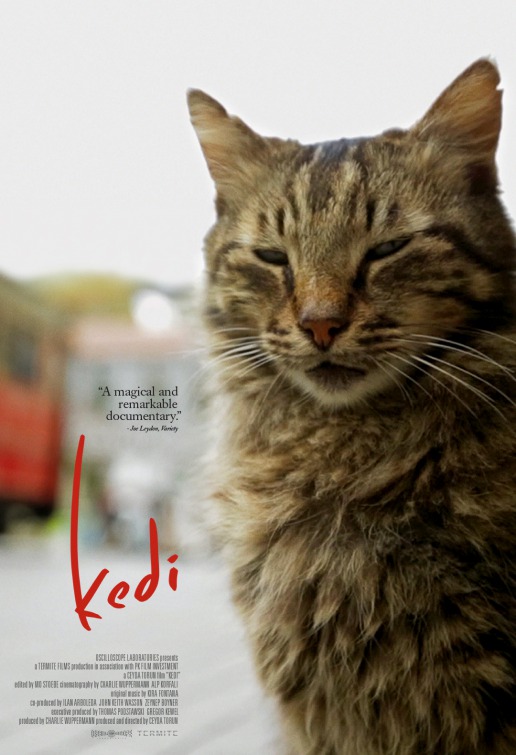
Yesterday,  as part of our week-long celebration of our fortieth wedding anniversary, Clif and I went to Railroad Square Cinema to see Kedi, a Turkish documentary about the street cats of Istanbul. As the title of this post indicates, I absolutely loved the movie.

However, before I get into a brief description of Kedi, I do want to establish I am more of a dog person than a cat person. Not that I don’t like cats. I most certainly do. At present there are two resident felines at the little house in the big woods, and I am very fond of both of them. But for me, dogs rank number one. That’s just the way it is.

Nevertheless, Kedi struck me to the core with its soulfulness and beauty. And unlike many documentaries, it didn’t seem a minute too long. (My husband Clif felt otherwise, and I’m wondering if all the cute kitten videos I watch on YouTube has built up my cat-watching stamina.)

Here is a blurb from the movie’s website:  “Cats, all kinds of cats, roam the city, free, without a human master. Some fend for themselves…others are cared for by communities of people, pampered with the best cat food and given shelter for the cold months. Cats have been a part of the city for thousands of years, and so, everyone who grows up in Istanbul or lives in Istanbul has a story about a cat….Street cats are such a big part of the culture that when US president Barack Obama visited Istanbul, part of his tour included a stop at the Hagia Sophia to visit its famous cat. Cats are as integral to the identity of Istanbul as its monuments, the Bosporus, tea, raki and fish restaurants.”

Kedi, which means cat in Turkish, follows seven cats and the people with whom they have bonded, including an artist, a deli owner, and a depressed man who finds meaning by feeding some of the street cats. From these people, there are lovely ruminations about cats and what they bring to the city.  One woman notes that how we treat animals is a reflection of how we treat people in general. So true! The people, while taking care of the cats, admire their Independence and let them come and go as they please.

Another cat lover says, “Dogs think that people are God but cats don’t. Cats know that people act as middlemen to God’s will. They’re not ungrateful. They just know better.” (This, no doubt, will bring howls of objections from dog lovers.)

Then there are the cats themselves—Sari, Duman, Bengü, Aslan, Gamsiz, Psikopat, and Deniz. The cinematography is nothing short of amazing as the cameras catch what cats do: prowl, climb, jump, leap, stalk mice, lovingly tend their kittens, fight, and show deep affection toward the humans who love them.

Kedi is a more a meditation about the street cats of Istanbul than a traditional documentary with an arc. For me, it worked so well that not only would I like to see this movie again, but I would also like to own the movie on DVD.

And there are not many movies I feel this way about.
 

The Wolf Moon and March in January

On Wednesday, we visited our friends Paul and Judy. We had tea and apple crisp and plenty of conversation about politics. As Clif and I were getting ready to leave, Paul called, “Come look at the rising moon! It’s nearly full.” We followed him to the other side of the house and looked out the window. There was the moon, in its serene beauty as it crested the tops of trees.

“Oh, lovely!” I said. “And January’s full moon is the Wolf Moon.”

Clif took a picture, but our wee camera really didn’t capture the magic of the nearly full moon.

img_5712

On the way home, I admired the dark fringe of bare trees outlined against a deep blue sky. A January dusk.

Unfortunately, the weather turned on Thursday, the night of the Wolf Moon. The day was gray and rainy. Because of the rain and the warm weather—it was nearly 50 degrees—the landscape now looks like March. The snow is gritty and packed down hard. The driveway and pathways are thick with ice.

img_5718

Clif plans to sprinkle wood ash on the pathways. This is a dirty solution, but with our wood furnace, we have plenty of ash, and messy footprints on the kitchen floor are better than falling on ice.

The gardens are buried beneath snow, but a few of the taller plants can be seen, and the bee balm has been transformed into a many legged creature that looks as though it is ready to skittle away.

img_5717

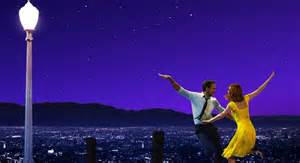
In the afternoon, we went to the movies to see La La Land, and much to my surprise, it turned out to be my favorite movie of the year.  I am not a fan of musicals, but the musical numbers are kept to a minimum, and they really do help the story flow. La La Land is about two artists—an actress and a jazz musician—who desperately yearn to succeed in their careers and who fall in love. The movie is at times whimsical and even fantastical, but it is also grounded in the two main characters, played with quirky charm by Emma Stone and Ryan Gosling. In essence, La La Land is about the artist’s journey, and the movie really spoke to me.

a_004

The ride home was so foggy—all that melting snow—that it was a relief to turn into our driveway.

But today the sun is out, the temperature has fallen, and we are back to January. Yay! Now, all we need is a little fresh snow to cover the gritty mess brought by the rain.

img_5724

Beautiful Diversity

Startrek

One of the things—along with the food and the art—that I love about New York City is the incredible diversity of people.  One time when I was visiting my daughter Dee, we were sitting at a café, and I was positively dazzled by the variety of passersby—short, tall, thin, fat, Asian, white, black, brown, men with women, women with women, men with men. There were no disapproving stares, and everyone looked as though they felt completely comfortable with themselves and with others.

“This is good,” I said to myself. “This is very good.”

I was reminded of this last week when I went to see the latest Star Trek movie. Along with the humorous bantering between Spock and Bones, the heroic deeds of Captain Kirk, and the many, many explosions, there was a scene at a space station that was an interstellar version of what I saw at that café in New York city. But along with the brown and black, there were red, green, blue, and other creatures that walked on two legs but did not resemble humans in any way. There they were, all together, serenely and joyfully going about their business, and it made me smile just to watch that scene.

Naturally, in the course of the story, the space station comes under grave danger. Readers, I am not going to give any spoilers, except to note that Kirk and company go to great lengths trying to save that station.

From its inception, Star Trek celebrated diversity, and the original show with Leonard Nimoy and William Shatner featured a cast that resembled a mini-United Nations. The main crew included a black woman, a Japanese man, a Russian man,  a Vulcan, and the inimitable Scotty. In the early 1960s, this inclusiveness was nothing short of astonishing.

And of course that was the whole point. Gene Roddenberry, the original show’s creator, felt very strongly that as a species, we needed to look beyond the surface to acknowledge the dignity and worth of every person. He was a man ahead of his time, showing us the direction in which we should be headed.

In the natural world, we celebrate diversity and curse those invasive species that can overcome the natural system. Having too much of one plant or animal is usually not a good thing. The same is true for monocropping, with the potato famine in Ireland being a horrible example of what can go wrong when too much reliance is put on one vegetable. Even genetically, diversity is a very good thing, and too much interbreeding, whether with dogs or with humans, leads to all sorts of problems.

So we have plenty of examples of the value of diversity, but we seem to have trouble applying this knowledge to the various types and colors of people who live on this planet.

Nature shows us the way. So does Star Trek and other science fiction stories. New York City does, too.  Slowly, many of us are absorbing these lessons. Unfortunately, others are not. But it is my hope that a time will come, sooner rather than later, when racial and cultural diversity is, well, normal, not at all unusual, simply the way things are.

Catching the Sun: It Shineth on All of Us

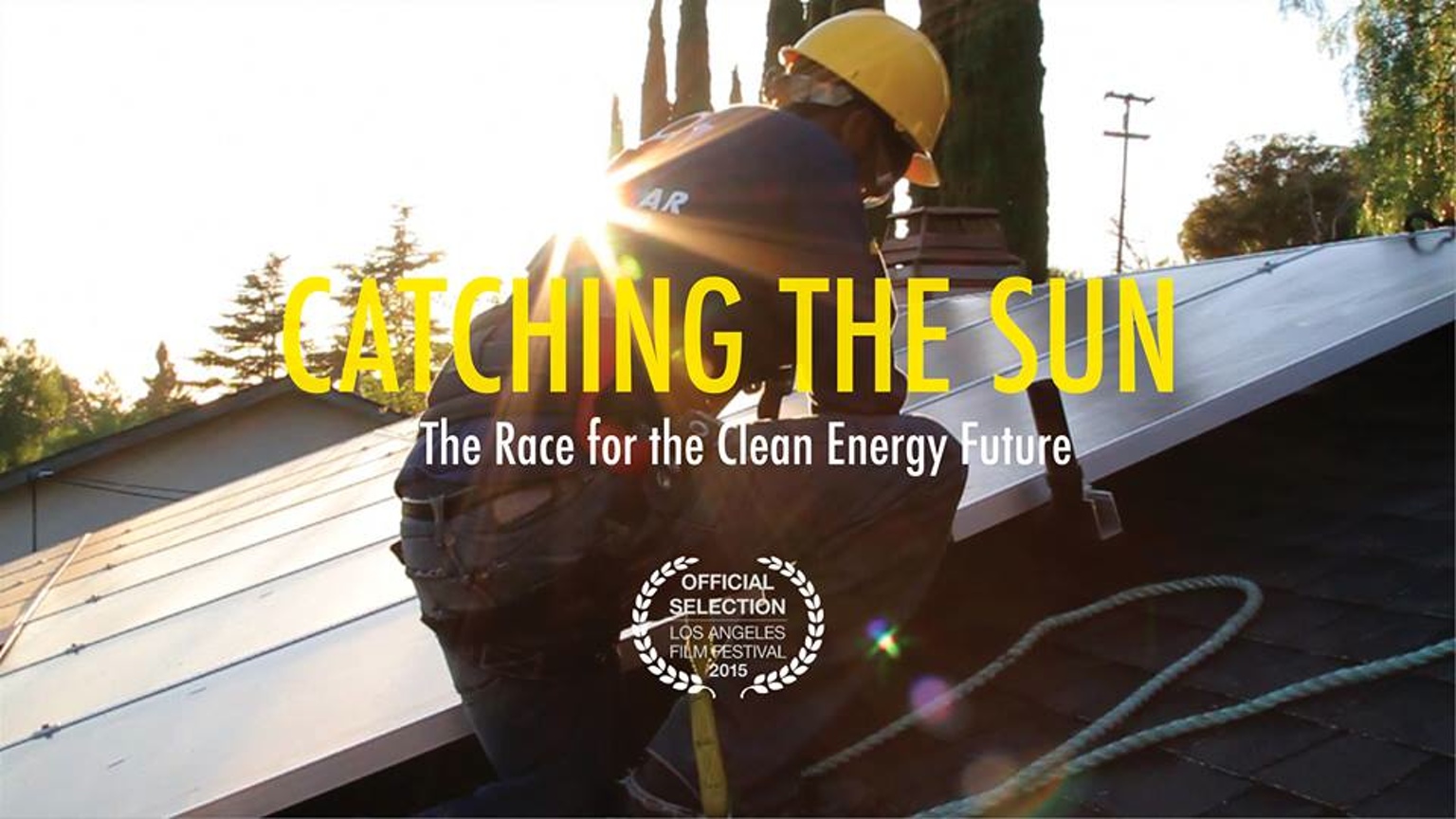
catchingsunLast night, Clif and I went to Railroad Square to see the documentary Catching the Sun. This good movie was sponsored by ReVision Energy and the Natural Resources Council of Maine, and as the title suggests, Catching the Sun is about solar energy. Its primary focus is the baby steps that are being taken in the United States to promote this much-needed alternative energy in contrast to countries such as Germany and China, which are whole-heartedly embracing solar energy.

Our reluctance to embrace solar energy is, of course, politically driven by oil companies who are intent on wringing every bit of profit they can from oil, coal, and gas. In turn, the money these companies contribute to politicians ensures that their voices will win out and that solar energy will be marginalized and vilified, even.

How ironic, then, that the technology for solar energy was developed in the United States during the space race. Nowadays, unfortunately, there is not much solar manufacturing in the U.S. This should not be a surprise to anyone as the United States has pretty much decided that it doesn’t want to manufacture anything.

The movie follows the green activist Van Jones, who for a short time worked with the Obama administration to promote green energy. However, Fox News decided to shred his reputation, calling him a communist and ridiculing his efforts. Sadly, Van Jones resigned under the pressure, and the Obama administration lost an eloquent voice on behalf of the environment.

Catching the Sun also follows some unemployed folks in Richmond, California, as they train to install solar panels.  The movie makes it clear that even though U.S. doesn’t manufacture solar panels, the industry can still provide lots of hands-on jobs that cannot be outsourced foreign countries.

The sun shines and shines and shines. The United States is geographically blessed to take full advantage of this nonpolluting resource. Even Maine, in its northern location, gets a lot of sun, as much as Germany does. The technology has advanced, and the price for solar panels has dropped dramatically. There is no reason to hold back.

But this country is caught in the grip of the oil companies, and at the end of the movie, Van Jones concludes that support for green energy is going to have to come from the bottom up, from states and activists. He might be right, but many states—Maine included—are not exactly committed to alternative energies. It is more than a little depressing to think of where we might be—as a country, as a state— had the political will been stronger. (Right now solar energy accounts for a very small percent of our energy use.)

Still, on we go, and on we hope. At Railroad Square, Catching the Sun was definitely preaching to the choir. But as the Reverend David Billings recently observed on the PBS NewsHour, “The choir has to practice every Wednesday.” (He was referring to the workshops on racial matters that his organization People’s Institute for Survival and Beyond hosts. And how those workshops do indeed preach to “the choir.”)

So sing, choir, sing. Let your voices be heard, and maybe one day the song will be strong enough to drown out the shrill, negative voices that so dominate my state and this country.


Mother’s Day: Of Pancakes, Chocolate Strawberries, and a Movie

This Mother’s Day was a quiet one for Clif and me. For the first time in many years, we had neither daughter to celebrate the day with us. After sighing sadly, I decided we would still celebrate with simple pleasures, which is how we celebrate all special days. And so we did.

In the morning, Clif made pancakes for breakfast, and while I know it’s bragging, I must say that his are the absolute best. Period.

IMG_2201

After pancakes, while we were cleaning the kitchen, the doorbell rang. Puzzled as to who would be at the door on Mother’s Day, I answered it and discovered it was a Federal Express delivery. There was a package for me, from Shari’s Berries.  My heart skipped a beat. Chocolate-covered strawberries! Sent to me by Shannon, who when she called to wish me a happy Mother’s Day, admitted she was a little blue not to be here, and she wanted me to have something sweet. While chocolate-covered strawberries could never take Shannon’s place, I will admit they were a sweet consolation. Shari’s Berries makes wonderful chocolate-covered strawberries, with berries that are so sweet and ripe. A real treat.

IMG_2204

I also want to add that from each daughter, I received a gift certificate to a local greenhouse. Another perfect gift as they know how much I love flowers.

Because the day was rainy, Clif and I decided to go to Railroad Square in Waterville to see a movie—The Congressman with Treat Williams.  This amiable movie is about, well, a Maine congressman, Charlie Winship, who doesn’t stand during the pledge of allegiance—he was busy doing paperwork—and the ensuing brouhaha . The Congressman was actually filmed in Maine, much of it on beautiful Monhegan Island, where WInship goes to help settle a fishing dispute. This might sound like an odd thing to praise, but indeed most movies and television series set in Maine are not filmed here, and boy oh boy it doesn’t take Mainers long to figure this out.

While The Congressman examines serious issues—free speech, the undue influence of lobbyists and the right wing as well as the overfishing of the ocean—this movie skims the surface the way rocks skip over water in a pond. Treat Williams is a very appealing actor, and he had his Jimmy Stewart moment when he expanded on freedom of speech. Heck, he even quoted Margaret Chase Smith, a beloved Maine senator who stood up to the bully Joseph McCarthy. But nothing really seemed at stake in this predictable movie. Nevertheless, both Clif and I enjoyed it, and so, it seems, did many other people—the large cinema was three-quarters full. After all, predictable isn’t always bad.

Railroad Square's new permaculture garden
Railroad Square’s new permaculture garden


When we got home, there was one more treat in store—crab salad sandwiches and hand-cut fries. I was so eager to eat this supper that I forgot to take a picture, but, readers, let me assure you, the sandwich and fries were pretty darned good.

So even though both girls live too far to celebrate Mother’s Day with me, all in all, it was a nice Mother’s Day.

Eye in the Sky: One Death or Eighty Deaths?

eyeOn Saturday, Clif and I went to see the movie Eye in the Sky, starring Helen Mirren and the late, great Alan Rickman. What a movie!

Colonel Katherine Powell (Helen Mirren) has been tracking a British terrorist, a woman, for some time and has pinpointed her location to a house in a crowded Nairobi neighborhood. Assisting Colonel Powell are teams in England,  America, and Nairobi with an array of technology that is both impressive and disturbing. Initially, the order is to capture the terrorist, but then a tiny drone beetle with seeing eyes reveals two other inhabitants who are preparing to become suicide bombers.

The mission abruptly changes from capture to kill, using a larger drone to drop the explosives. A discussion ensues, but there is general agreement on the course of action until a bright and engaging nine-year-old girl starts selling bread not far from the house targeted for destruction. (Various eyes in the sky capture the scene outside the house.) The girl would most certainly be severely injured if not killed if the house were bombed.

So what should the team do? As they grapple with this moral dilemma,  the movie jumps back and forth between the different groups—the Americans, who control the attack drone; various military personnel and high-ranking officials, both American and British, some of whom wish to pass the buck; and the African team in Nairobi. Never have I seen so much dramatic tension wrung from a little girl selling bread and groups of people arguing about her fate.

Colonel Powell and Lieutenant General Frank Benson (Alan Rickman) firmly believe that the drone should strike the target. Unplagued by doubt, they reason that in all likelihood  the suicide bombers could kill up to eighty people, and one little girl’s life is a fair trade. Other people aren’t so sure, including the young man controling the attack drone, and his ambivalence is heart wrenching.

This terrific movie kept Clif and me on the edge of our seats. Would the team decide to strike the house? And if so, would the little girl get away before the strike?

Readers, I am not going to reveal the ending. Go see this movie, if it is at a cinema near you, or get it when it comes out on DVD. Eye in the Sky addresses issues that will continue to be of concern to us as our technology becomes more and more advanced. This movie does so in a way that is fair minded yet unflinching.

What would you do if you had to choose between one little girl and eighty people?

I am very glad it is a decision I will never have to make.


What a Clever Couple Are We: A New Snack, Pizza, and Diva

At the little house in the big woods, the excitement just never ends. Yesterday, Clif and I came up with an idea that was so brilliant we could hardly stop congratulating ourselves. After thirty-nine years of marriage, we discovered…drum roll, please…that we could actually make our very own nutty, crunchy mix at a fraction of the cost of buying it prepackaged.

I know. This sounds like an April Fool’s Day joke, but honest to gory, Clif and I actually did the snack equivalent of reinventing the wheel. Let’s just say that we could never be accused of being fast learners.

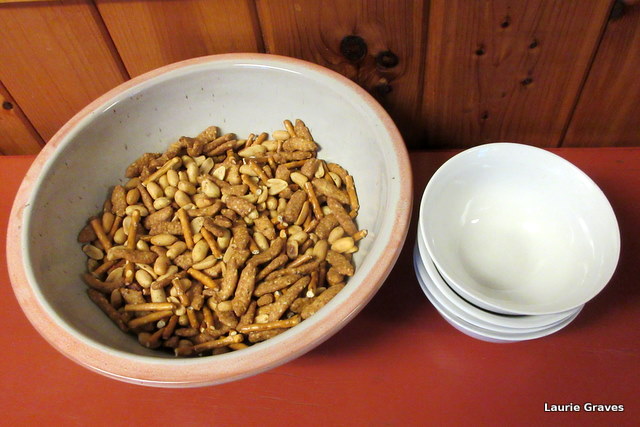
The proof is in the picture, and here it is.

IMG_1436

For the price of one container of this snack at Target, we bought all the ingredients, which made a very large bowl of crunchy goodness. There is enough left of everything for another bowl with the same amount. We used peanuts, pretzels, and little wheat sticks. Obviously, other goodies could be added—Chex cereal, little rice crackers, almonds, cashews. The list goes on and on.

Our friends Alice and Joel came over for movie night, and we served this snack as an appetizer. Alice and Joel gave us the best praise they could by eagerly digging in. By the time the pizza was ready, there was just a wee bit left in the bowl. I promised our friends that this mix would be served at future gatherings, especially on the patio during the summer.

Movie night has come to mean pizza night, and I know this is bragging, but Clif has developed a very good hand with dough. He knows just how to stretch and flour it so that the pizza is chewy and satisfying. Last night’s pizza was topped with turkey pepperoni, chunks of sweet red pepper, and slices of mushroom. Clif also uses a blend of cheese—cheddar, mozzarella, and Parmesan.

IMG_1438

Settling in the living room with our pizza and Alice’s tasty endive-stuffed salad, we watched Diva, a quirky French movie made in the early 1980s. IMDb’s description of this movie is so concise and snappy that I decided I could do no better:  “Two tapes, two Parisian mob killers, one corrupt policeman, an opera fan, a teenage thief, and the coolest philosopher ever filmed. All these characters twist their way through an intricate and stylish French language thriller. ”

The only thing I can add to this is that the movie has aged well and doesn’t seem terribly dated. Oh, and the Diva has a magnificent voice that positively soars. One more thing: Diva gets a 96% rating on Rotten Tomatoes. If you haven’t seen this movie, then put it on your watch list.

After the movie, we had warm apple crisp and vanilla ice cream. We discussed the movie and the problems of the world.

A new snack, pizza and salad, a good movie, and apple crisp.

What a way to end March.


Sordid Realism: Jafar Panahi’s Taxi

taxi2Last Saturday at Railroad Square, we saw the Iranian film Jafar Panahi’s Taxi. (It was part of a film series—Cinema Explorations—that Clif and I help organize.) The filmmaker, Jafar Panahi, a gadfly of the Iranian regime, has for some years been under house arrest and has been forbidden to make films. His response? Make movies that pretend not to be movies but of course really are movies. Hence, Taxi, where he flouted house arrest to drive around Tehran in a taxi and film various passengers and their conversations.

Part documentary, part narrative, part cinéma vérité, this terrific movie explores different aspects of Iranian life and culture. Executions, women’s rights, imprisonment, repression, movies, and superstition are all discussed as passengers come and go.

I was especially taken with the section of the movie where Panahi picks up his teenage niece Hana from school. Hana is a budding filmmaker, and she carries her trustee Canon camera around so that she can shoot street scenes as her uncle drives through Tehran. Panahi and Hana talk about making movies, and she worries about the filming restrictions her teacher has placed on her. The teacher’s list is long, but “sordid realism” is a particular bone of contention for Hana.

Now, when we Americans think of the term “sordid realism” what might come to mind can be very nasty—graphic sex, graphic violence, disturbing behavior, bad language. I must admit that I tend to avoid movies that dwell too much on what I consider sordid realism. However, if a movie is very good, then I will make exceptions.

But to the Iranian censors, sordid realism means something quite different. Instead, it is a term—almost doublespeak—applied to anything that might make Iranian society look bad. In the niece’s case, it applies to a young street boy who steals money dropped from a bridegroom on his way to his car after his wedding. Hana has filmed the theft, and tries to convince the young boy to return the money. However, things don’t go exactly as Hana wants, and the boy ends up with the money.

After her uncle drives away from the boy, Hana frets about this at some length, knowing that her film won’t win any prize money if it contains such sordid realism as a street boy stealing money. And without the prize money, how can she go on to make a better film next time?

How indeed? I expect that Hana’s worries are also shared by her uncle. How can artists create with such unreasonable restrictions and censorship? As Panahi so deftly illustrates with this movie, it can be done. But at what cost?

As I mentioned earlier, I am not a fan of what I consider sordid realism, but unless animals and children are harmed in the process, I firmly believe that filmmakers have the right to make the kind of movies they want. For example, I have never seen the The Wolf of Wall Street. Too many friends have warned against it for the sheer ugliness of the sex scenes. But that is my individual choice, one that I don’t necessarily expect others to make.

And that makes all the difference.


Pizza, Pumpkin Roll, and Monsoon Wedding

Last night was movie night at the little house in the big woods, where we were joined by three friends—Alice and Joel and Diane—to watch and discuss a movie. Last night was Alice’s turn to choose, and she picked Mira Nair’s Monsoon Wedding.

Monsoonwedding

The movie came out in 2001, and this was a second viewing for all of us.  Alice and Joel told of how they saw Monsoon Wedding for the first time at the Toronto Film Festival, right after the terrorist attacks on September 11. A joyous, bright film about an arranged marriage in India, Monsoon Wedding was just what Alice and Joel needed to see after the terrible attacks. (Can fifteen years have really passed since that dreadful day? We had a daughter living in New York City and another one living in Washington, DC. It is a day Clif and I will not forget.)

But back to movie night. Clif made two of his delectable pizzas. We always mean to get a picture of them, but somehow, between the rush to eat and watch the movie, we never do.

We were more on top of things with the beautiful dessert—a pumpkin roll—that Alice made. As soon I saw that roll, I knew it should have its picture taken.

IMG_1054

IMG_1058

IMG_1059

I am happy to report that the pumpkin roll tasted just as good as it looked. After watching Monsoon Wedding, we had coffee, tea, and pumpkin roll as we discussed the various aspects of the movie—in particular, arranged marriages. While acknowledging there were no guarantees with any marriage, I noted how strange it would be to marry someone you had never met or seen.

“Different customs for different cultures,” Diane observed, and how right she is.

We can be grateful to movies and books (and blogs!) that bring us glimpses of other cultures. They remind us that the world is full of diversity, and they enlarge our perspective, which is always a good thing.

Youth and Gelato: A Trip to Brunswick

Yesterday, Clif and I took the afternoon off and headed to Brunswick for a movie and gelato. We had a gift certificate for each event, which meant that except for the gas, the outing was free—our favorite price.

Brunswick has an arty downtown filled with cafés and restaurants and various other shops. While it’s fun to walk on the sidewalks and look at the window displays, crossing the street is another matter. For some inexplicable reason, four lanes go through the downtown, and getting across them can feel like a heroic effort. There is only one spot with a sort of island and a walk signal to help pedestrians cross. Otherwise, it’s just a crosswalk. Hoping that cars will see you and therefore stop, you hold your breath as you scurry across the road.

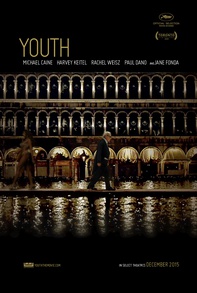
But Clif and I made it safely across the road to Eveningstar Cinema, which shows independent films. We went to see Youth, directed by Paolo Sorrentino, who seems to be Fellini’s artistic, if not actual, heir. Odd characters are liberally sprinkled throughout this film—a grotesquely obese former sports star; a masseuse with jug ears, braces, and a rodent-like face; an expressionless woman who makes giant soap bubbles for the evening’s entertainment.

Youth2

Youth is set in a resort in the Swiss Alps, and the resort is frequented by the weary one percent, who all appear as though they are about to die of ennui. Somehow, though, despite the the odd characters and the stylized and often surreal look of the film, Youth is a moving exploration of old age and the regret and diminishment that come with it.  At the center of the story are Fred Ballinger, a composer, and Mick Boyle, a movie director. They are played respectively, and wonderfully, by Michael Caine and Harvey Keitel, who in real life do not at all seem to be diminished by age.

The esoteric Youth is not what I would call a crowd pleaser—although there were plenty of people who came to see it on a Wednesday afternoon at 1:30—but both Clif and I are admirers of this director, who manages to combine surrealism with deep emotion, not an easy trick.

After the movie, we again courted death by crossing the main street to have gelato at the incomparable Gelato Fiasco, where we both had hazelnut and chocolate. So very good.

Since December, the days have gotten longer, and we were able to make it home before dark. The older I get, the more I like this, especially during the winter.

The afternoon had been sunny and fifty degrees warmer than it was on Sunday. What a wild swing! However, this meant the house was warm, and there were still coals in the wood furnace. Clif had no problem restarting the fire.

For our supper we had chili on baked potatoes—I keep cans of chili in the pantry for just such an occasion, when we are out and about and want an easy meal to fix when we come home. A cozy, hearty supper after a good afternoon in Brunswick.