All posts by Laurie Graves

I write about nature, food, the environment, home, family, community, and people.

For Derrick and Jackie: A Drink on the Patio

On April 1, while snow fell on central Maine, I was in England, at least in spirit, visiting Derrick and Jackie’s glorious gardens.  (Oh, the wonders of the blog world and the Internet. )

I practically inhaled picture after beautiful picture of daffodils and tulips. It might have been cold and snowy outside my home, but I could feel warmth and sunlight pouring out of my computer as I toured Derrick and Jackie’s garden.

Then, at the end of Derrick’s post, I came to this: “For the first time this year we took drinks in the rose garden before dinner. I hope it is not too long before Laurie and Clif can do the same on their patio.”

Well, I thought. Well, well, well. Our patio is still buried under snow, but where there is a will, there is a way.

Derrick and Jackie, this post is dedicated to you as Clif, on our patio, raises his glass to daffodils and tulips and spring and the glory of an English garden.

April Fools? Au Contraire!

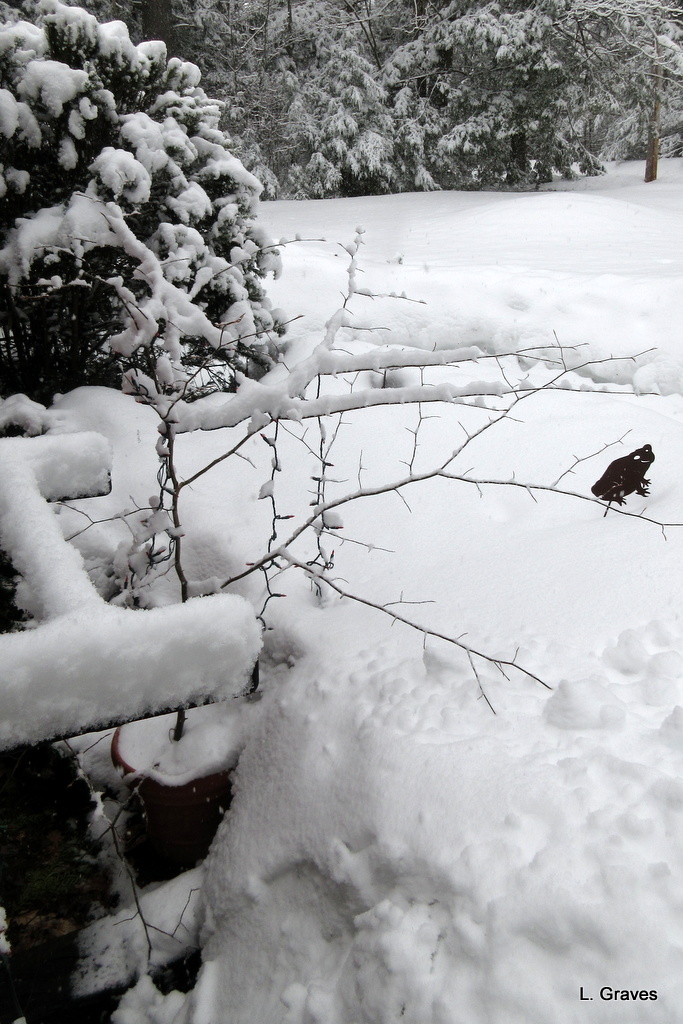
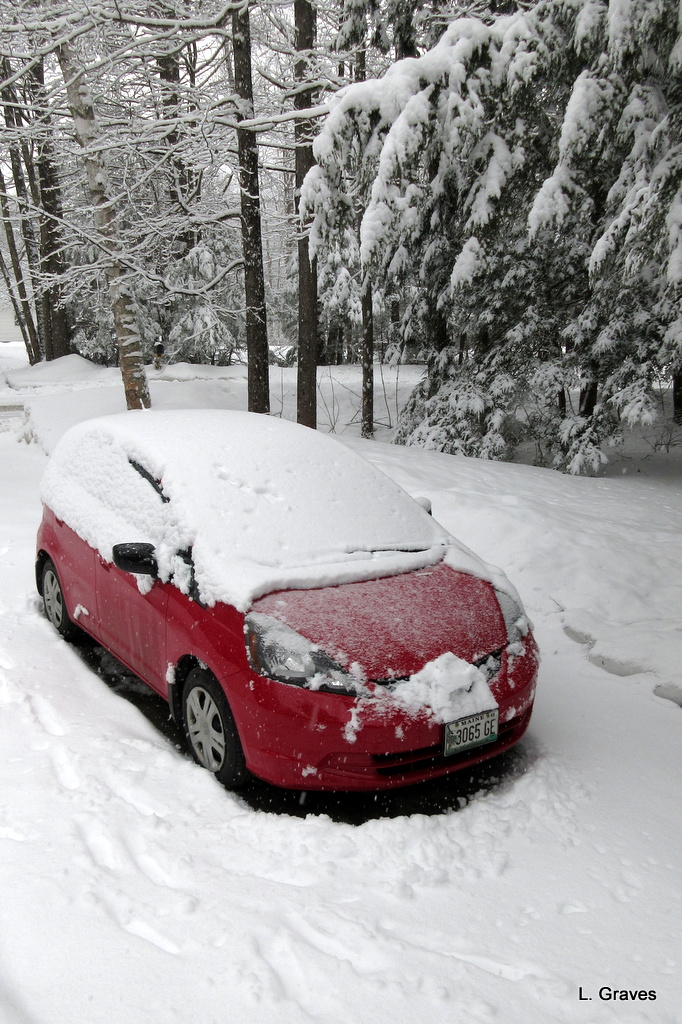
Here was the view from our front porch this morning.

Mother Nature’s quite the trickster, isn’t she? Now, if this had come in, say, February or even mid-March, no problem. But in April? Sigh.

All right. In the spirit of my blog friends who celebrate Three Things Thursday, where they share three things they are grateful for, I’m going to celebrate Six for Saturday.

  1.  We only got four or so inches of snow rather than the twelve predicted. This is something to be wildly grateful for because this April 1 snow is wet and very heavy. There’s a good chance that twelve inches would have knocked the power out in many central Maine homes, including ours.
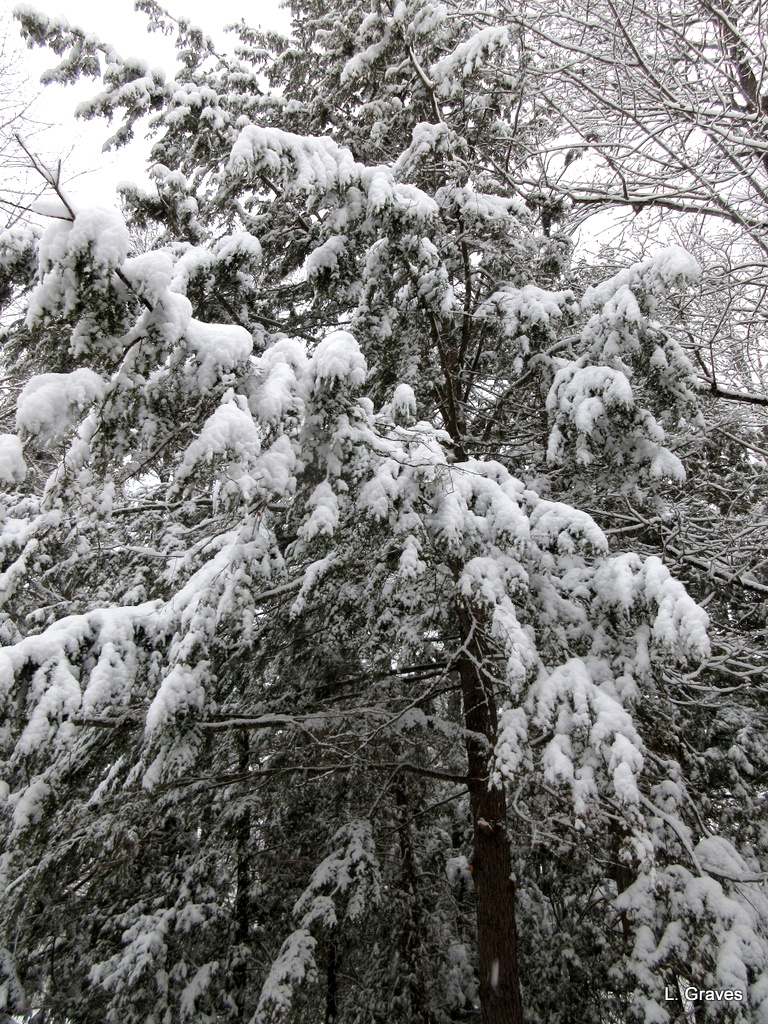
  2. It’s pretty. The snow clinging to the trees makes our yard and road look like a winter wonderland. Even if it is technically spring and April 1 to boot. But wait. Here I am, sliding into ungratefulness. How easy is the slide.
  3. We are warm and snug in our home, and Clif and I will be making bean soup this afternoon in preparation for friends who are coming over tomorrow.
  4. The mud and grit outside are temporarily covered, which means we don’t track in much when we go in and out of the house.
  5. We have four more seasons to go of the television series The Walking Dead, my newest obsession.
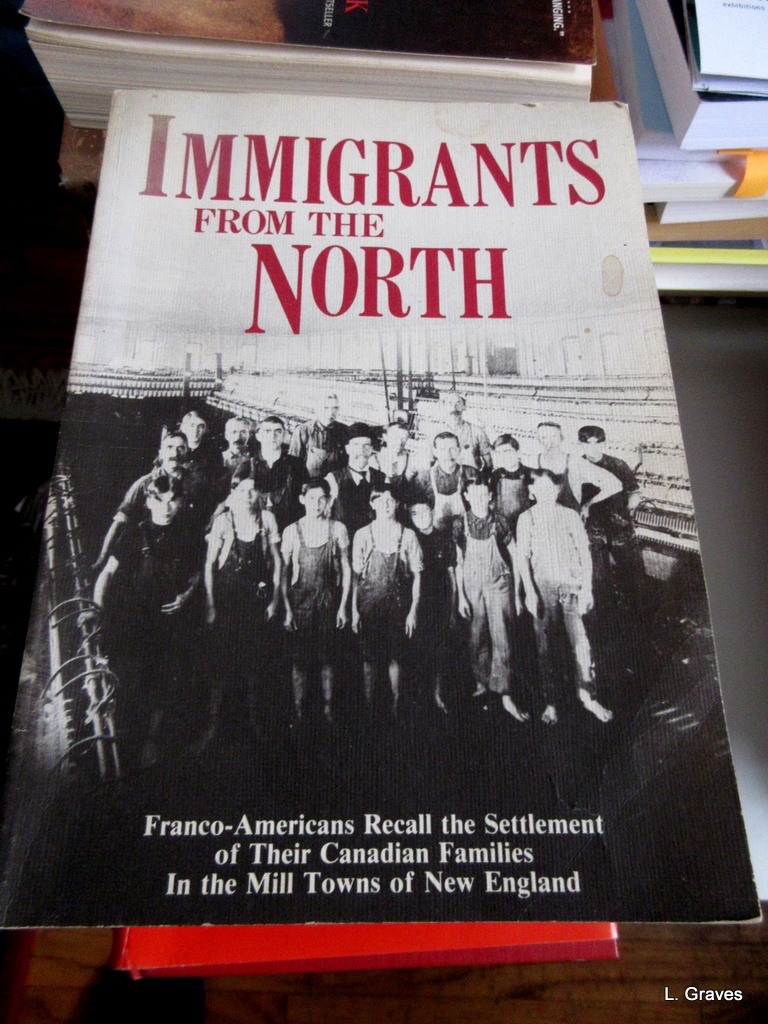
  6. My blog friends from Fernwood Nursery sent me a book—many thanks!—and this will be the perfect afternoon to read it.

Despite the snow, there is much to be grateful for.

By a Strange Coincidence…from N.D. Wilson to Jeanne Birdsall

I could write about how this has been the Marchiest March we Mainers have had to endure in quite a while. Lots of snow,  plenty of mud—and we’re just starting with the melting—and joy of joys, another storm on the way with wet, heavy snow forecasted.  I could share this quotation I found on Facebook: “Maine. They call it ‘Vacationland’ because it sounds better than ‘Six Months of Suffering-Land.'”

But no, I’m not going to brood about the weather. Instead, I’m going to turn my attention to a much happier topic—books—and how I coincidentally came upon two authors who write children’s books and how those authors turned out to be connected, even though they write very different stories.

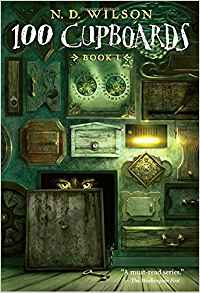
About a month ago, my husband Clif introduced me to the middle-reader fantasy 100 Cupboards by N. D. Wilson. It’s set in Kansas, just like another famous children’s fantasy, and the protagonist, Henry York, discovers magical cupboards (portals) in the attic room he’s staying in while visiting his aunt, uncle, and cousins. Overprotected and somewhat neglected, Henry finds warmth, solace, and generosity with his aunt and uncle. Much of the book focuses on the everyday domestic life in a small town, with large dollops of barbecues and baseball. But through a magical cupboard Henry eventually goes, where he encounters strange mystical lands, an evil witch, and a mystery that takes him right back to Kansas.

I liked 100 Cupboards so much that I immediately read the sequel, Dandelion Fire, which dispenses with the domesticity and hurtles Henry headlong into the fight between good and evil, the concern of most good fantasy novels. There’s a third book in the series—Chestnut King—which I definitely plan to read.

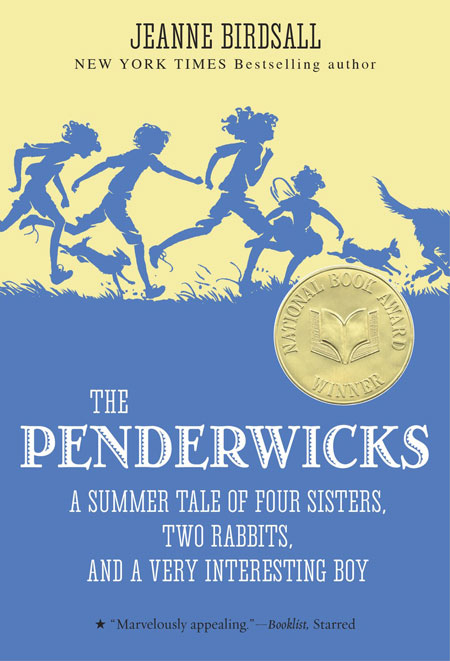
A week or so ago, on a blog I follow—Letters from a Hill Farm—I came across a book recommendation, The Penderwicks by Jeanne Birdsall. A day or two later, I found The Penderwicks at a bookstore, The Book Review, which I recently visited for the first time. (I’ve written about the book and the bookstore a couple of posts ago.) I loved The Penderwicks so much that I borrowed the next three in the series from our library, and I’m whipping through those books the way I would a box of chocolates.

Now as far as writers go, N. D. Wilson and Jeanne Birdsall couldn’t be more different, even though they write for the same age group.  As I indicated earlier, Wilson’s books are classic fantasies. Family is important—as it turns out, very important—but so is the larger story of the battle between good and evil. With her Penderwicks series, Birdsall focuses exclusively on the family, with its gentle ups and downs and the relationships of the various characters. Death brings a thread of sadness into these stories of four sisters and their father, but these are quiet books compared with Wilson’s fantasies. You might even call the Penderwicks series the Miss Read books of children’s literature. (However, Little Women was Birdsall’s inspiration.)

Here’s where the weird coincidence part kicks in. I like to read author websites, where I can find out a little bit more about writers and their books. I was reading Jeanne Birdsall’s author website, and I came across an event that featured both Birdsall and her friend (her wording) N.D. Wilson, where they would discuss Narnia. Unfortunately, the event took place last year in Chicago, and as I have no portals (or a Book of Everything) to take me back in time and across the country, this qualifies as a missed event.

Still, what a strange coincidence to come upon that nugget of information. Two months ago, I had never heard of either N.D. Wilson or Jeanne Birdsall. Now, not only am I fan of both writers, but I discover they are friends.

Thinking about books, authors, and neat coincidences sure beats brooding about snow.

Threads of Realism in Fantasy: The Great Library

As regular readers of this blog know, I have put together a slide show—Threads of Realism in Fantasy—to go with my YA novel, Maya and the Book of Everything. (I recently gave my first presentation at the University of Maine at Orono.)The gist of the presentation is this: Even though my book is a fantasy that takes its heroine, Maya, across the universe, there are elements of realism to ground the novel. The story is partially set in central Maine, and I weave my Franco-American heritage into the book.

Central to Maya and the Book of Everything is a place called the Great Library. It is home to the sentient Book of Everything, which can travel through time and space. Both the Book of Everything and the Great Library definitely fall into one of my favorite categories—fantasy, fairy tales, and folderol.  But even here I used realism when I imagined what the Great Library would look like.

Because I love fairy tales so much, I immediately thought of a castle in envisioning the Great Library, and I ended up picking out two castles—one for the locale and one for the actual look. Both castles are from France. I didn’t set out to choose castles from France, but somehow I did. It must have been my Franco-American roots urging me forward.

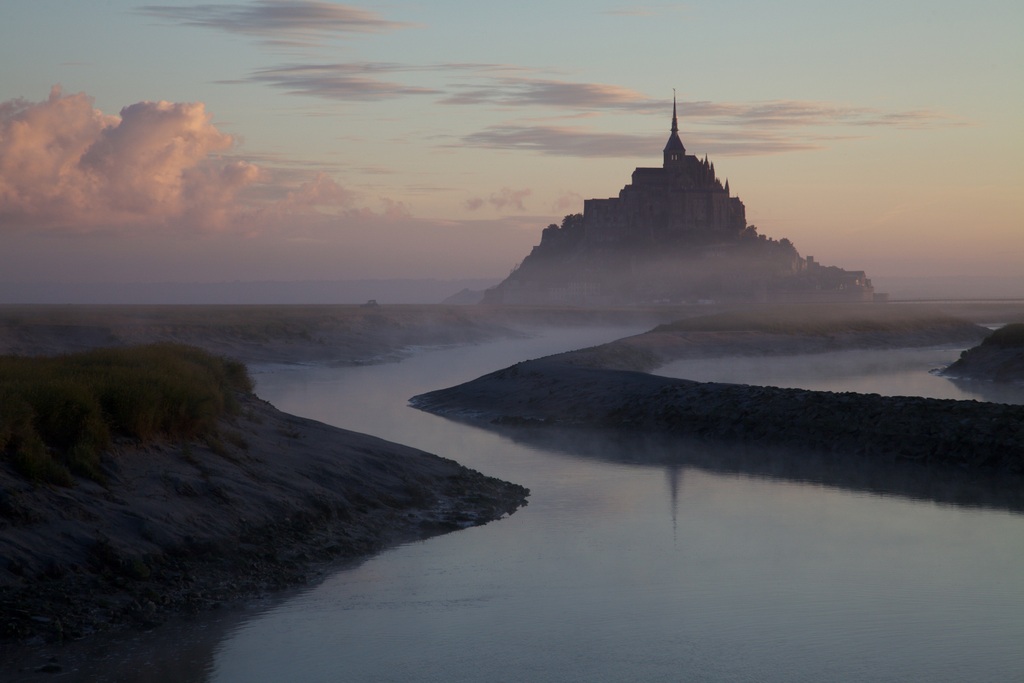
The first castle I thought of was Mont St. Michel, which certainly looks like it comes straight from a fairy tale. I love how remote it looks and how the castle is surrounded by water when the tide is in. Mont St. Michel also happens to be in Normandy, where some of my ancestors are from.

Here is another view of Mont St. Michel.

So that was the locale I wanted.

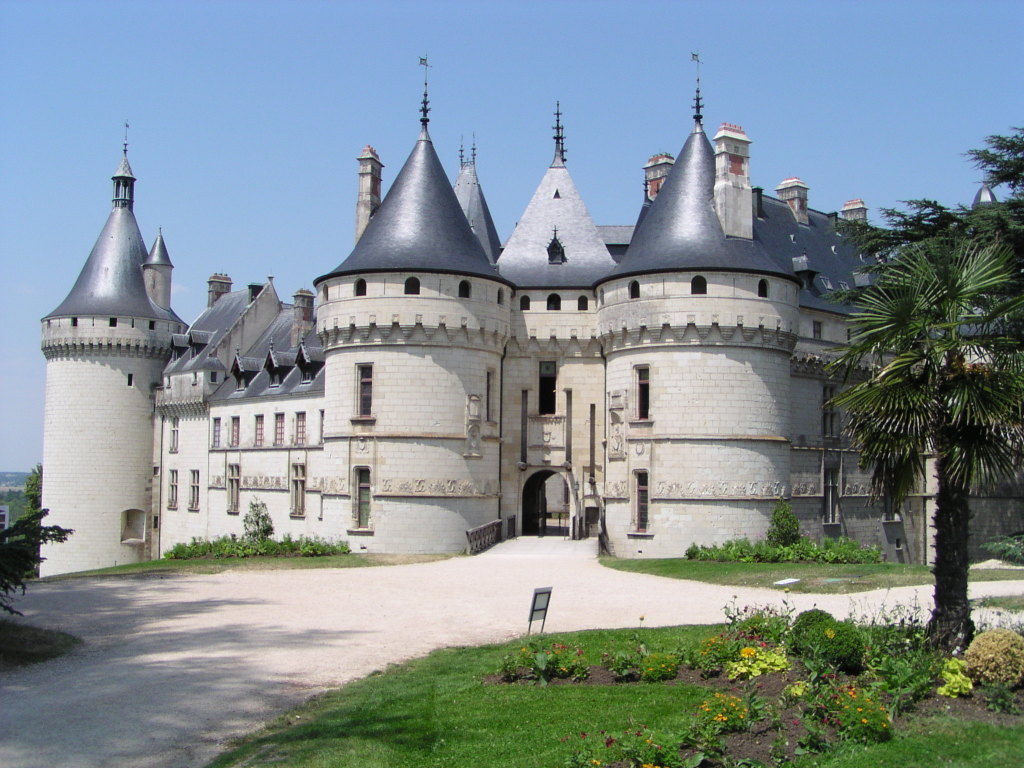
But for the actual look of the Great Library, I wanted something more compact, something that looked a little less Gothic, a little less like a cathedral.

For this I chose the Chateau de Chaumont, which is in France’s Loire Valley.

One of the things I especially like about fantasy is that you can mix and match various aspects of realism if you want and still have a magical story. Maine, my Franco-American heritage, and two castles from France all come together in Maya and the Book of Everything.

Lucky Sunday

Yesterday was a beautiful sunny Sunday, just perfect for an outing to celebrate the fact that I, along with millions of other people, still have affordable health insurance that provides good coverage.

And where did Clif and I go? Why to Lucky Garden in Hallowell, of course. I was feeling extraordinarily lucky. And grateful.
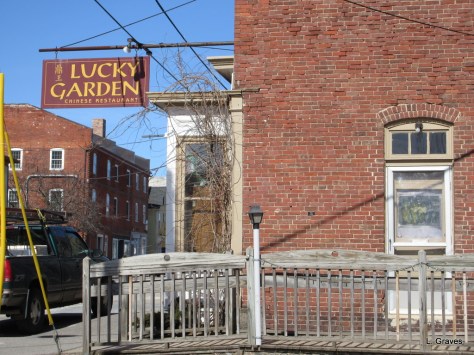
Lucky’s was full of people, and the atmosphere was lively, even festive. Perhaps I wasn’t the only one who was relieved by the turn of events on Friday? At any rate, the food on the buffet was hot and fresh, and Clif and I had very tasty meals.

When we came out, we stood on the deck and took pictures of the Kennebec River. The ice chunks are gone. Surely spring can’t be far away?

After that, it was on to Falmouth, just outside Freeport (home of L.L. Bean) to check out the Goodwill. We had heard that it was an extra special Goodwill because it is an affluent part of Maine. Well, maybe we just hit it on an off day, but the Falmouth Goodwill is no better than Augusta’s Goodwill.

However, all was not lost. Next to Goodwill is The Book Review, one of those special bookstores that makes you want to come back again and again. As soon as we entered, I was smitten. First of all, there is that lovely smell of books. Second, there are dark wooden shelves. Third, the many comfortable chairs tucked here and there. And, finally, and most important, the books themselves, a wonderful selection that would appeal to a wide variety of readers.

I headed right toward the children’s section. While I do read novels written for adults, it seems to me that I really do prefer middle reader and young adult books. Clif and I discussed this on the way home.

“The storylines are cleaner, more direct,” he said. “Middle reader and YA books often have a clarity that’s lacking in adult books.”

Clif is right. As a reader, I place great value on clarity of writing and clean storylines. Or maybe it’s just a case of arrested development. Whatever the reason, I know I’m  not alone. Many adults, especially women, like middle reader and young adult novels, and my own Maya and the Book of Everything is developing quite a following among adults.

Naturally, I bought some books at The Book Review.

Last night, I read The Penderwicks, a middle reader book in one greedy gulp. It’s a gentle, almost old-fashioned story of four sisters and the misadventures they have on their summer vacation in the Berkshires. There are dark threads woven in—the mother has died of cancer, and Rosalind, the eldest, reflects on how she doesn’t have time or energy to nurture plants when she is so busy nurturing her sisters. (I’m paraphrasing. Jeanne Birdsall phrases it much more eloquently.) The ending is satisfying—happy, even—but realistic, too. The children don’t get everything they want.

There are several more books in the series, and I intend to read every one of them.

And when I’m back in the Falmouth area, I will definitely go to The Book Review.

 

A Good Night’s Sleep

Last night, I went to bed at about 11:30 p.m., and I slept straight through until nearly 8:00 a.m. without waking up once. Now for younger folks, this might not sound like much of an achievement. It might even sound a little boring.

But as I have, ahem,  reached a certain age, a full night’s sleep often eludes me.

And why did I sleep so well last night? It wasn’t because of medication—I didn’t even take a Benadryl.

Could it be because the Affordable Care Act (ACA) was not repealed, and I still have affordable health insurance, at least for the moment? (With the Republican plan, it was estimated that we’d have to pay over 50 percent of our income for my health insurance. There was no way we could afford this, even if we cut out all our simple pleasures.)

Ever since Trump was elected president, I have been worrying about my health care. Simply put, I did not have a Plan B if health insurance jumped to over 50 percent of our income. And this past few weeks, when the drumbeat for repealing the ACA grew ever louder, I have been worrying even more.

But it seems the Republicans are a house divided—the proposed replacement bill was too drastic for the moderates and not draconian enough for the radicals. Hence, not enough votes to repeal the current ACA. President Trump and House Speaker Paul Ryan pulled the bill, and as Ryan noted, the ACA is the law of the land for the foreseeable future.

No wonder I slept so well!

Now, if only the Republicans would work with the Democrats to fix what is wrong with the ACA. I know some people whose insurance premiums, while not technically unaffordable, are too expensive and will not cover certain tests. The ACA was a start, not the finish, and with proper amending, these problems could be fixed.

But at least the Affordable Care Act wasn’t ditched, and maybe, just maybe, it will someday be put to rights so that the ACA benefits all who need it.

I can hope.


Abby Paige at the Franco-American Centre: Tous mes Cousins / All My Cousins

Last night Clif and I went to the Franco-American Center at the University of Maine at Orono to see Abby Paige, a terrific performer and writer.  She presented her work-in-progress Tous mes cousins / All My Cousins, an  “intimate new bilingual play about what it means to be French, to be family, to be Franco-American in French Canada, and to be fed up with Jack Kerouac.”

The talented Abby Paige

A very brief history of Franco-Americans in the United States: From the post Civil War era to the 1930s, one-third of French Canada immigrated to the United States, mostly in New England.  Impoverished and hungry, they came to work in the factories the region was so famous for. In forty years, towns went from having no French speakers to having anywhere from 25 percent to 60 percent of the population speaking French. Having so many French-speaking Catholics settle in Yankee Protestant towns brought, shall we say, a certain amount of tension. And discrimination. For those of us who are of French Canadian descent—and I am both on my mother’s and father’s side—there is a distinct feeling of not belonging, of not being French Canadian and of not being fully American.

This is an ideal, albeit uncomfortable, place for an artist to be, the rough grain of sand that produces the pearl, as the saying goes. Abby Paige, who was born and raised in Vermont, is of French Canadian descent on her mother’s side. She now lives in New Brunswick, and Tous mes cousins / All My Cousins explores the notion of not being French enough in Canada and perhaps being too French in the United States.

Abby Paige does this brilliantly, with multiple characters and their monologues—herself, a breathless teenager, an uncle, and Jack Kerouac, who both irritates and fascinates her.  Abby Paige’s transition from one character to another was seamless, and when she went from being the teenage girl to being the uncle, she was almost unrecognizable. I especially loved the uncle’s monologue, where he told of how he occasionally went to an Italian friend’s home, where spaghetti was served—a real treat as the uncle didn’t get this at home—and where there was a picture of Mussolini in the basement.

We learned from the discussion after the presentation that to many French Canadians, Franco-Americans are failures who deserted their homeland. To my way of thinking, this is a mighty strange way of looking at the situation. After all one third of the population left French Canada because conditions were too miserable for families to thrive. Abby Paige explores this dichotomy in Tous mes cousins / All My Cousins in a scene where she speaks halting French at her son’s bilingual school in Canada and endures the patient but condescending attitude of the teacher.

Tous mes cousins / All My Cousins is an impressive beginning of an exploration of not only identity but also of the history of New England and French Canada. I’m really looking forward to seeing the finished show.