All posts by Laurie Graves

I write about nature, food, the environment, home, family, community, and people.

Not-So-Wordless Wednesday: Back to Reality After the Final Retirement Fête

Clif, Mike, Shannon, and Dee's hand
Clif, Mike, Shannon, and Dee’s hand

Last weekend we had the final retirement fête for Clif. Dee came home from New York, and Clif was treated to a meal at the Great Impasta in Brunswick. As the accompanying picture indicates, Clf was toasted as well. May he have a long, healthy, happy, and creative retirement.

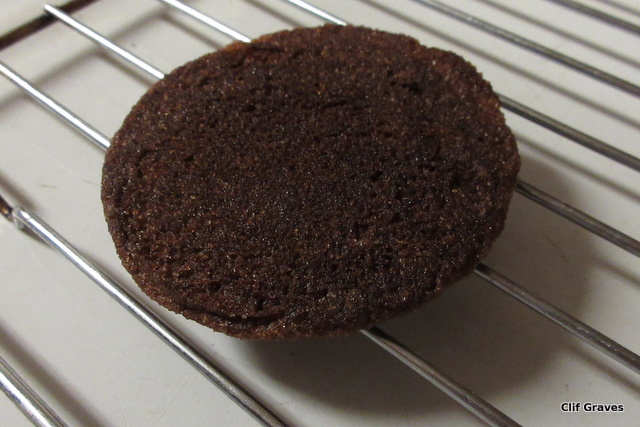
Dee left yesterday, and her extended stay gave all of us a mini-vacation. It also gave us a chance to celebrate Dee’s birthday, which is at the end of the month. At her request, I made cheddar cheese soup from a recipe I have adapted from a Moosewood cookbook. The whole family loves it, and this soup is rich and satisfying, just perfect for special occasions. I also made a double batch of biscuits—another request from Dee—and a salad with romaine lettuce, roasted walnuts, feta, and sliced apples rounded out the meal. Naturally there was cake. Chocolate.

While Dee was here, we saw a couple of movies. One—Martian—was very good, and the other—Maze Runner—was all right.

Now, it’s back to reality. This afternoon, I have a dental appointment so that I can have a permanent crown installed. (Having six crowns should certainly make me a queen, don’t you think?) While I am feeling much, much better, I have an annoying dry cough that will not go with keeping my mouth open for nearly an hour while my dentist drills and installs the permanent crown.

I have doused myself with Benadryl, and my mouth is sweet from too many cough drops. I’ll take another Benadryl just before I leave, and Clif will be driving in case I get drowsy.

Normally, I would have canceled the appointment, but our dental insurance runs out at the end of the month, and the crown is expensive.  I don’t want to pay out-of-pocket for it.

Never a dull moment at the little house in the big woods.


Pasta Frittata: An Easy Recipe for When You’re Not Feeling Very Well and You’re Tired of Chicken Noodle Soup

Let’s just say that with the little flu Clif and I have “shared” for the past week, cooking has not exactly been inspired at the little house in the big woods. For two or three days, I didn’t feel like eating much of anything: toast, tea, and my standby when I’m sick—Campbell’s Chicken Noodle Soup, which I will not touch when I’m well. Just as I started to recover, Clif caught what I had, and his normally robust interest in food dropped sharply.

By mid-week, I was done with Chicken Noodle Soup. I was ready for something filling yet comforting and very easy to make. Although I felt better, I wasn’t up to tackling a major cooking project. Clif, who was two days behind me in terms of wellness, was even less motivated to cook.

And who should come to the rescue, just when I needed it most? None other than the inimitable Mark Bittman, a journalist and food writer for the New York Times. (Bittman has recently left the New York Times to be a Fellow at the Union of Concerned Scientists.) On Facebook, bless its heart, I saw Bittman’s recipe for Pasta Frittata, and it was exactly what I wanted—-simple and not too spicy with only a handful of ingredients, all of which I had. 

Rather than cutting up spaghetti or linguine, I just used macaroni. No cutting necessary. Because Clif and I still felt under the weather, I made the most basic frittata imaginable—pasta, eggs, butter (olive oil could be used instead), Parmesan cheese, and salt and pepper—and I followed Bittman’s instructions for cooking the frittata partly on top of the stove and partly in the oven.

Readers, the frittata came out beautifully. It was just what we wanted. I cut up some of Farmer Kev’s carrots, boiled them, and served them as a side. This was the ultimate comfort food—easy to digest, delicious, and nutritious.

Best of all, like a quiche—surely the frittata’s cousin—it reheated well and was just as good leftover as it was when originally made. Who could ask for anything more?

Well, maybe I could. Next time I make it, I will add this and that to the frittata to make it a more substantial dish. Chicken sausage, sweet red peppers, and mushrooms would all be possibilities. Fresh basil or dried oregano, depending on the season, would also be good additions. I would also try substituting cheddar for the Parmesan in the frittata but still sprinkle Parmesan on top when it came out.

In fact, with the variations, I think this frittata would be good enough for company, either as a light main meal served with a salad and crusty bread or as an appetizer for a party featuring nibbles and nuts.

Either way, this frittata is a definite make again for when we are both feeling better.

On top of the stove to set the bottom


Into the oven to set the bottom


Done!
Done!


Frittata with cooked carrots and sweet gherkins

The Loveliness of Decay

Yesterday, I took a break from coughing to wander around the yard at the little house in the big woods. The air was filled with the delightful nutty smell of fallen leaves. Oh, if we could only bottle it. I know. Fallen leaves mean raking, but that’s all right. I really don’t mind being outside on a crisp day and raking the leaves. Also, it gives the dog plenty of time to run and bark, his two favorite things.

Here are some pictures of the yard and garden. Who knew that decay could be so lovely? In a golden, melancholy way, of course.

IMG_2728

IMG_2732

IMG_2726

IMG_2722

IMG_2718

IMG_2699

IMG_2696

The Poetry of Earth

IMG_2636“The  poetry of earth is never dead….The poetry of earth is ceasing never.” —John Keats

I suppose the poetry of Earth thrums in all places, from the Pacific islands, where it is never cold, to Antarctica, where it is never hot.  But it seems to me this poetry is especially strong in New England, where there are four seasons, each with a definite chapter. I have lived in Maine for so long that I can visualize each chapter and remember the smells, the heat, the cold, the sounds, and the silence.

For a gardener, fall’s chapter is always a little sad. The flowers and the hostas are way past their peak and must be cut back. But as Johanna, from the blog Mrs. Walker’s Art and Illustrations, recently reminded me, “And indeed better look at the glorious colors of fall and give the plants their deserved sleep whilst enjoying the harvest! Nothing melancholy about that!”

Johanna is right—those glorious colors; the golden light that shines even on an overcast day; and the harvest—the squash, the apples, the pears, the potatoes. There is indeed nothing melancholy in all this. In fact, the crops in Maine have been so bountiful this season that we can rejoice to have such plenty while keeping in mind that other parts of the country are suffering from drought. Nationally, canned pumpkin might be in peril, but fresh Maine pumpkins are not.

Duly reminded of the glories of autumn, I decided to see if I could scrape together a bouquet for the dining room table. In the gardens at the little house in the big woods, there isn’t much left to choose from. But here again, another blogging friend came to the rescue—this time Eliza, from her blog Eliza Waters. She puts together the loveliest arrangements and uses material, much of it dried this time of year, that I had never considered for an indoor bouquet.

So out I went with my scissors. I snipped some sedum, which is still a vibrant pink. That was the easy part. To the sedum I added dried, curling ferns, the stalks of astilbe, and the seed heads from black-eyed Susans.

IMG_2687

While the results would never win a prize in a competition, I was pleased nonetheless with how the bouquet turned out. I had used what my gardens had to offer to bring a bit of fall inside.

It would certainly be a stretch to call the arrangement poetry, but with the help of a couple of my blogging friends, I have listened to fall’s poetry.


The Consolation of October

As it turns out, I had a nasty little flu rather than a miserable cold. By Friday night, my temperature was nearly 102, but the next day, Saturday, I felt significantly better. By Sunday, I was more or less back to my normal schedule. I even did some cutting back in the garden.

Unfortunately but not unexpectedly, Clif caught what I had—couples sure do like to share. But he should be fine by next weekend, when Dee is coming home from New York to help celebrate yet another retirement fête for Clif. (This should be the last one. Clif has certainly retired in style.)

Being sick, of course, is no fun, but I much prefer short and brutal over long and miserable. I have had colds stretch out for a week or two, with coughing at night to make sleep next to impossible. At least what I had was over in a few days, and a good thing, too, as there is much to do outside to get the yard ready for winter.

We still haven’t had a hard frost, but for the most part, the gardens and potted plants have had it. The coleuses have taken on a leggy, spiky look, and I hope to have them removed by the end of the week.

IMG_2586

The hostas have become yellow and curled, and yesterday I began cutting them back.

IMG_2618

The leaves of the evening primroses have turned a lovely red, and I’ll cut those last.

IMG_2607

The ferns, too, have had it and are curling back into themselves. I don’t clip the ferns. I let them take care of themselves, and this seems to work just fine. Each spring, they return in a vigorous burst of green.

IMG_2606

For a gardener, fall can be a melancholy time. The clipped plants give the gardens a shaved look.

IMG_2590

Soon all the garden ornaments will be stored down cellar, as we Mainers like to say. The patio furniture will come in, and the grill will be moved onto the lawn. How sad, bare, and lonely it all looks when this happens.

Good thing, then, that October is such a beautiful, golden month. It’s almost as if she were saying, “Yes, I know brown, austere November is coming, and after that the long cold of winter, but before it does, I’ll give you some deep blue skies and some blazing leaves as consolation.”

And indeed, what a consolation!

IMG_2672


Bright Colors for a Gray Day

Yesterday was all golden light in central Maine. Today, just the opposite—gray, chilly, and rainy. Clif has started the first fire of the season in the wood furnace in our basement. (In the winter, we mostly heat our house with wood. In the fall and spring, we use either electric or propane.)

Today would have been a perfect day to make the first apple pie of autumn. Indeed, that is what I had planned to do, and I had invited our friends Judy and Paul to come share pie with us. However, along with the gray weather, we have an uninvited guest—a cold. Right now it is visiting me, and I have no doubt that it won’t be long before it visits Clif. Couples are good at sharing such things.

Therefore, this morning I called Judy to cancel our pie get-together, and I promised to reschedule when the coast was clear, so to speak. A cold is a minor illness, but why spread germs when you don’t have to?

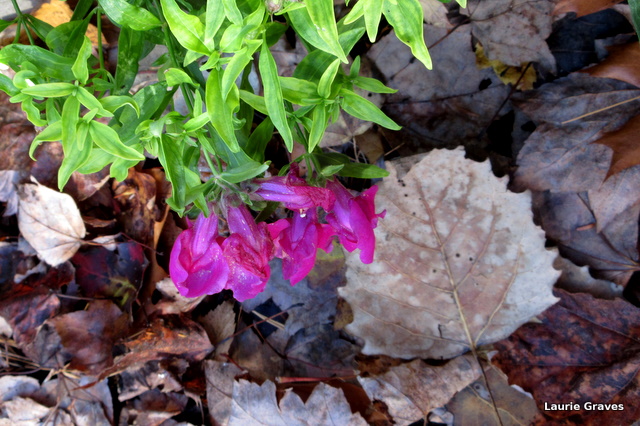
To make up for the gray day and the cold, both inside and out, here is a picture of red dwarf snap dragons—such a plucky flower!—and a red leaf.

IMG_2526

I am reading Gladys Taber’s The Book of Stillmeadow, and I’ll conclude with the opening passage of the October section: “The special gift of frosty gold days comes now; time to lay down the household tasks and shut the door on routine. For every October, when I see the trees over the meadow, I think, ‘I shall not look upon her like again.’ And every October is different, strange with new beauty.”

This was true nearly seventy years ago, when the book was published. And no matter the weather or where the cold is, inside or out, it is true today in New England.

At least in Maine.

An October Day of Donuts, Falling Leaves, and Supper by the Fire Pit

Yesterday, Clif and I had many errands to do in Augusta, the city nearest the little house in the big woods.  To keep up our strength, we decided to fortify ourselves with donuts at Doc Hollandaise. Last week, Clif went there with his co-workers, and when he came home from work, he raved about the donuts.  As a donut lover—make that fanatic—I knew a trip to Doc Hollandaise would soon be in my future.

Doc Hollandaise is a breakfast place, and most days they are only open until noon. Along with the donuts, cooked fresh to order, they serve the usual delicious suspects—omelets, bacon, homefries, toast, and other breakfasty things.

But we were there for the donuts, and donuts were what we ordered. I chose a chocolate coconut donut. Rich and tender with flakes of coconut on top, it was delivered  warm, and the donut was so tender I had to eat it with a fork.

IMG_2581

Clif decided to go whole hog, so to speak, and ordered a maple bacon donut. It seemed to me that this was perhaps a step too far down the donut-topping path, but Clif liked it so much that he didn’t even offer me a bite. That donut was gone in a flash.

IMG_2583

In the interest of reporting for this blog, we ordered a third donut—cinnamon sugar—which Clif did share with me.  It was crisp and warm and had a lovely old-fashioned nutmeg and cinnamon taste.

IMG_2582

We spoke a bit with our server. She told us about the owner, Ann Maglaras, who uses buttermilk and kneads the dough with flour before cutting the donuts to order. Each batch only makes about twenty-three donuts, which means Maglaras frequently has to make more dough to satisfy the customers, who come in droves for those warm and wonderful donuts.

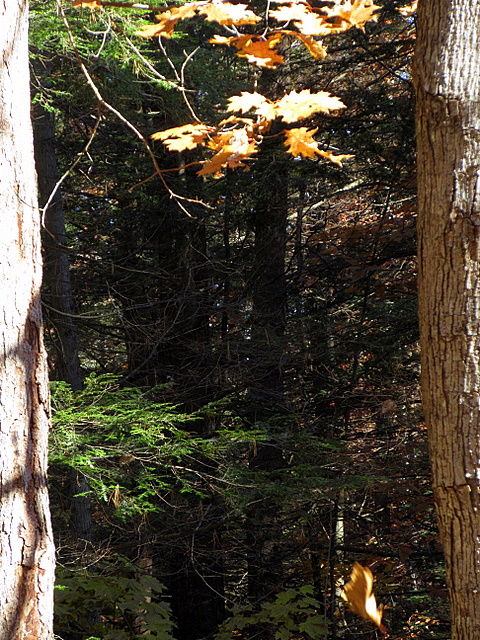
Duly fortified, we spent the rest of the morning doing our errands. Afterwards, we took a back road home, where I was able to see Maine October in all its glory—an old man sitting by a pile of burning leaves; the marsh grass burnished to copper; leaves coming down from trees in a flutter of gold. This was all illuminated by that clear October light, golden and at a slant.

After I got home, I swept the patio and wiped the outdoor tables. The day was so mild that I said to Clif, “Let’s have our supper by the fire pit.” Now that he is retired, we don’t have to save those activities for the weekend.

“Good idea,” he said.

“Let’s order Chinese food,” I suggested, “and end the day with another treat.”

“Sounds good,” Clif agreed.

And this we did, eating our egg rolls, rice, and chicken by the fire. The dog lay beside us, getting a treat now and then. (All right, getting a treat very often.) We listened to music—Talking Heads, Counting Crows, and We Might be Giants. The crickets’ fall song provided the backup.

We know, of course, that donuts can only be an occasional treat, and most of the time we will eat pears, apples, and grapes for our snacks. Ditto for the Chinese food, and tonight I’ll be making a fish casserole for supper.

But treats add spice to life, and in moderation, they are good for the soul, if not the body.

Another Look at Squirrels: From An American Year by Hal Borland

The bird feeder, sans squirrels

If you feed birds, chances are that you consider squirrels to be nothing more than a nuisance.  Indeed squirrels eat so much seed that it is often difficult to keep a feeder filled, especially a small one.  While I have no particular grudge against this furry animal who, after all, is just trying to make a living, I am very mindful about the cost of sunflower seeds. Our budget simply does not allow for replacing the seeds that the squirrels whip through with such astonishing speed. I compromise by spreading seed on the ground—some for the squirrels as well as crows, mourning doves, and, yes, mice.

Recently I came across a writer—Hal Borland—who also had some sympathy, and even empathy, for squirrels. According to Wikipedia, Hal Borland “was a well-known American author and journalist. In addition to writing several novels and books about the outdoors, he wrote ‘outdoor editorials’ for The New York Times for more than 30 years, from 1941 to 1978.”

In An American Year Borland writes about baby squirrels by his home. “Our baby squirrels were down on the ground today, for the first time. After that initial venture from the nest, they came out each morning, gaining confidence by the minute….But even on the fourth day they still descended the tree tail downward, in the manner of a black bear cub.”

Borland then goes on to describe how gradually the babies learned to go down head first and how cautious and frightened they were when they were on the ground. But Borland concludes, “From now on they’ll be coming and going many times a day. The mystery is broken. They have found the ground. The world is theirs—for a time.”

Even though I have lived in the woods for over thirty years, I have never been lucky enough to see baby squirrels venture to the ground for the first time. How I would love to see this!

Borland, with his beautiful, precise prose, reminds me yet again what an observant layperson can bring to nature writing. But better still, he reinforces my belief that when you look closely at the natural world, you can gain not only knowledge but also sympathy for the creatures who are struggling to earn their keep.

To my way of thinking, this sympathy can only be a good thing, especially when you consider how quickly we humans are driving so many animals to extinction.

For now, anyway, the squirrels are thriving. Next spring I’ll be on the lookout for baby squirrels leaving the nest.

And I’ll definitely be reading more of Hal Borland, who was introduced to me by Gladys Taber, in one of her books.