All posts by Laurie Graves

I write about nature, food, the environment, home, family, community, and people.

If I Had a Bucket List…Shakespeare’s First Folio

As the title of this post indicates, I don’t have a bucket list. I have nothing against them, but a bucket list is not for me. Instead, I prefer to focus on each day, on my various projects, on nature, on family and friends.

However, if I did have a bucket list, then seeing Shakespeare’s First Folio—a book published in 1623 that contains thirty-six of Shakespeare’s plays—would be at the top of my list. It might even be number one. (I fell in love with Shakespeare when I was in seventh grade, and it has been an enduring love.)

Well, lucky me, lucky me—the First Folio is now in Portland, Maine. The Folger Shakespeare Library, which has eighty-two copies of the First Folio—has sponsored a First Folio Tour, where in 2016 this great book will be displayed in all fifty states as well as in Washington, DC, and Puerto Rico. In Maine, the Portland Public Library was chosen as the host site, and as Portland is only a little over an hour from where we live, getting to the First Folio is pretty easy. (How glad I am that I don’t live in northern Maine. I guess I still would have made the pilgrimage.)

Our friends Alice and Joel, who are also fans of Shakespeare, were over last weekend, and as we discussed the First Folio, I wondered if I would cry when I saw it.

Rather than look at me as though I were crazy, they just nodded, and Joel compared the First Folio to the Holy Grail. Or something like that. And how right he was. For those of us who love literature and plays, Shakespeare is at the top, reigning supreme.

Readers, I did not cry when I saw the First Folio on Tuesday. I was in too much awe. An attendant led us into a small darkened room, which, when the doors opened, came the blast of Handel’s Messiah. Just kidding about that last bit. The room was as quiet as an empty church.

IMG_1221

The First Folio, of course, was in a case, and the book was opened to Hamlet’s “To be or not to be” speech. I stayed for some time gazing at this beautiful old book with its gold-edged pages. The First Folio is very modern in its layout and very Elizabethan in its spelling. It looked pretty much the way I thought it would except for the large size and thickness. This was not a book for everyday folks. According to the Portland Public Library’s website, the First Folio “originally sold for one British pound (20 shillings)—about $200 today.” And in The First Folio, Peter Blayney writes that “nothing quite like it had ever been published in folio before….The folio format was usually reserved for works of reference…and for the collected writings of important authors…”

In Elizabethan times, plays were not considered “important” but instead trivial, the mass entertainment of the time “unworthy of serious consideration as literature.” But somehow, two of Shakespeare’s fellow actors thought it worthwhile to publish the First Folio, and to them we must be forever grateful. Without that First Folio, many, if not most, of Shakespeare’s plays might very well have been forgotten and lost.

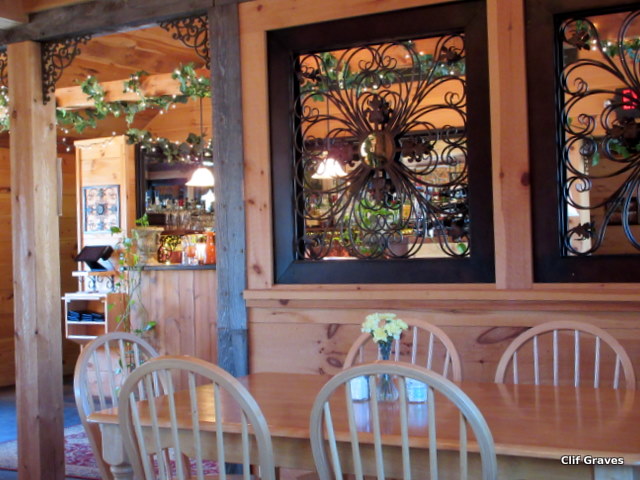
What to do after such an experience? Why, on to Lewiston to Fuel, my favorite restaurant in Maine.

IMG_1227

I had a cocktail.  In fact, I had two cocktails—after all!—and Clif had two beers. (He was the designated driver that night.)

IMG_1228

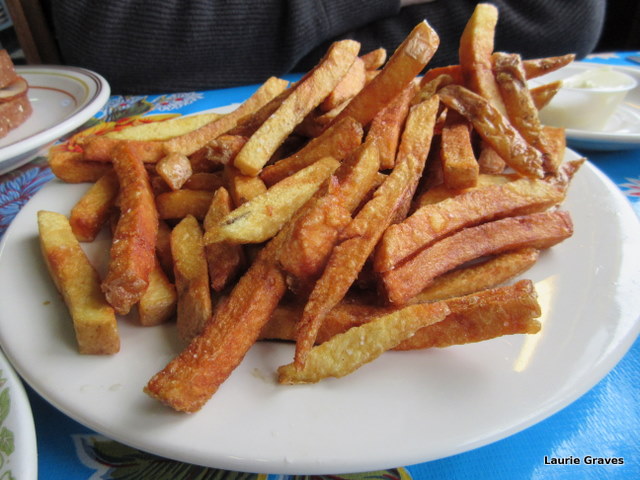
We both had burgers, which come with delectable fries at no extra cost. On Tuesday, everything on the bar menu is $9 or less, which means the food is quite the bargain. Especially if you can limit yourself to one cocktail or a glass of wine or beer.

IMG_1233

Home we went in a happy haze, full of good food and good drinks. What a way to end First Folio day.

Pie Day 2016

Yesterday—3-14—was pie day, and we went to to visit our friends Judy and Paul to celebrate this happy day. Now, I like cake as much as the next person, but given a choice between a good piece of cake and an equally good piece of pie, I would choose pie every time. In short, I am a huge fan of pie.

Judy made a blueberry pie, and oh my, does she have a good hand with the crust.  Judy makes such good pies that if she invites you over for pie, then do not hesitate.  Go.

Judy’s grandmother taught her to label pies with an initial, for example “B” for blueberry. I think this is an excellent idea. That way, if you bring your pie to an event, there is no confusion as to what kind of pie it is.

IMG_1215

For me, when it comes to pie, the crème de la crème is the edge, where there is just a smear of fruit or berry. I save that part for last, just as I save the tail for last when I am eating lobster. The edge of Judy’s pie was everything it should be—flaky, brown, and so satisfying.

On the way home, Clif said, “Her crust is as good as yours.”

This is high praise coming from my Yankee husband, a compliment for both Judy and me.

Of Monasteries and Moral Character


IMG_1192
Such a good meal!


We went back ten thousand years ago when the glacier receded and much of the area was underwater. Then we sprinted forward to the 1800s, when Winthrop was an abolitionist town, and Cheryl and Denny’s house was part of the Underground Railroad. Perhaps the town’s uncommonly good moral character led to Winthrop being an abolitionist town?

We also talked about the stonewalls that run through the woods behind our houses.

“This was once all open fields,” Cheryl said.

Clif and I, of course, knew this, but then Cheryl added, “A monastery owned most of the land.”

A monastery? In Winthrop, which seems like a quintessential Yankee Protestant town? I wonder if the monastery grew wheat.

“It was on the hill next to the bank. A big old building. It’s torn down now.”

I do remember that building. It was still standing when we moved here in 1984. By then the monastery was gone, and at one point the house had a copy center in it.

Cheryl continued, “A woman I know remembers this road when it was all fields. There were no woods and only three houses. Ours and two others, and one was the town farm, where poor people went. This road used to be called Town Farm Road.”

For the past two days, I’ve been thinking about all the changes that have come to this town, to our little road. Once the glaciers were here, and then they retreated. On their way north, escaped slaves stopped in this town, for rest, shelter, and food. Their long journey was nearly over.

And sixty or sixty-five years ago, there was open farmland all along this road. No woods. In fact, no little house in the big woods. (Our house was built in 1969.) How fast the trees take back the land. In his book Second Nature, Michael Pollan observes that nature abhors a garden. How right he is. Leave the land alone, and within sixty years or so it will fill in and become woods.

This is heartening. We need trees and forests, and in parts of the world deforestation is a big problem. But where trees were cut down, they can grow back again, and in a relatively short amount of time.

Nevertheless, a part of me yearns for the open fields, sprinkled with orchards, that were once here. I’ve seen pictures—taken from the top of hill, from the monastery, as it turned out—of what it was like in Winthrop when there was no main highway to cut the town in half, and there was a broad sweep of land that the eye could follow.

Highways, forests, and fields. All necessary parts of life for people and so hard to get in just the right balance.

Gone

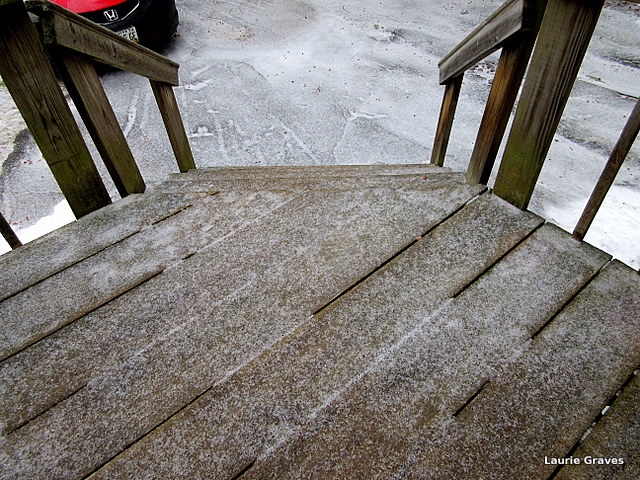
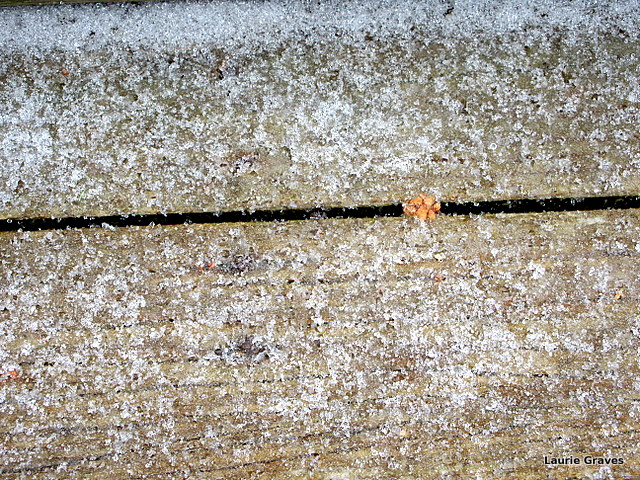
Big news! The ice on the patio went out today.

IMG_1206

Now the question remains: When will the ice go out on the Upper Narrows Pond? My friend Dawna, who lives by the pond, thinks it will be out tomorrow—Monday, March 14. She has promised to let me know.

It’s very odd how ice-out on our patio corresponds so closely to ice-out on the Narrows.

One of life’s wonders, and at the little house in the big woods, it gives us something to ponder.

More things to marvel at: Yesterday, I saw the first chipmunk in our backyard. They’ve come out of hibernation. I also heard tree frogs for the first time this year. No peepers yet.

When we have such things to keep track of, is it any wonder that Clif and I are never board even though we hardly travel?

Stay tuned for more spring tidings.

Almost, Almost Gone

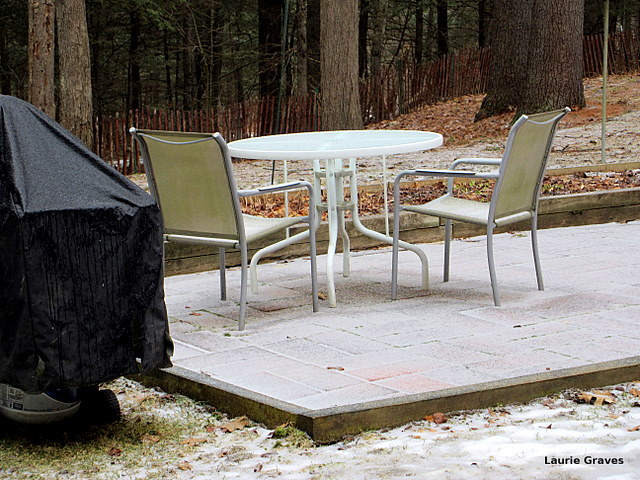
The ice is almost gone from the patio, and I predict it will be ice free by next week. If all goes as expected, we will be a month ahead of where we were last year. It is very tempting to remove that last little bit of pesky ice. But no, I will let it melt on its own so that I can have an accurate record of when the patio is truly ice free.

IMG_1188

Today is a sunny day, and my plan is to sweep the patio and do a bit of cleaning in the backyard garden. I’m going to bring out a couple of chairs and the small glass table. Who knows? If it’s warm enough, Clif and I might just have afternoon tea on the patio. The first of the season.

Spring, spring is coming!

Behind Our House

Behind our house are the woods. If you look carefully, especially in the spring, you can just catch the rush of the stream.

IMG_1180

Behind our house live many woodland animals—foxes, raccoons, deer, fishers, porcupines, coyotes, mink, owls, and even bears. Only once in a while do we see these animals, but never long enough to get a picture of them.

Behind our house, there were once fields where crops were grown. As with so much of New England, we have the remnants of stone walls, an enduring proof of the hard labor of those who once lived on this land.

IMG_1173

Behind our house there are many trees, some of which have fallen, giving nourishment to this beautiful fungi.

IMG_1162-1

Behind our house is our backyard, with a patio and a grill. In the summer and early fall, it is our second living room, where Clif and I relax, where we get together with friends and family. Right now, in March, the backyard doesn’t look like much, but soon, soon, the mud will dry, the trees will bud, and we will be back on our patio, cupped in the green hand of the woods.

IMG_1181


Lunch with Esther at Barnes and Noble: A Complete Person

Last week I had lunch with my friend Esther at the local Barnes and Noble in Augusta. I must admit, the food wasn’t too bad. I had a cup of black bean soup that actually had a bit of a zing as well as a tasty tomato  and mozzarella sandwich, all for under $10. A real bargain for lunch nowadays.


My friend Esther
My friend Esther


As I have mentioned in previous posts, Esther was my mother’s friend—my mother died eight years ago—and she is my friend now. I love hearing her stories about growing up in rural Maine in the 1940s and 50s. On this blog, I share her stories with such frequency that I have decided I am, in effect, Esther’s Boswell. (One of these days, I’ll actually have to read The Life of Samuel Johnson.)

I have found that stories can’t be hurried. Nothing puts a damper on the conversation quicker than “All right. Tell me some stories of times gone by.” No, the stories must come naturally in the flow of our talk. First we might discuss the weather, a most important subject in Maine. Next, we’ll inquire about each other’s families and catch up on the news. Esther, with six children, has such a big family that this can take a while. From there, we often move to politics, and we are usually in complete agreement.

Then, then, come the old stories, the meat of the conversation. Last week, after we had finished with the weather, family, and politics, Esther said, “My father had a saying that not everyone understands.”

“Oh? What was that?”

“I didn’t make a new dollar for an old one,” came the the answer.

I wasn’t sure I entirely understood the meaning.

“My father was a farmer, and he was referring to when his crops failed. There was no return on his investment. Some years were like that, and they were hard.”

I nodded. “I know what you mean. During the Great Depression, my great-grandparents lost their potato farm in Aroostook County. They owned hundreds of acres and had to go live in a small apartment in Skowhegan.” (Skowhegan, in central Maine, was once a prosperous mill town.)

Esther said, “Fortunately, my father never lost his farm.”

From there we moved on to Nancy Bown, a friend of Esther’s who was from Wales.

Esther said, “When the war started in Britain, Nancy left her post as a scullery maid and joined the armed forces. She helped plot the course of incoming aircraft from Germany so that alarms could be raised in cities and towns.”

“That was quite a responsibility,” I said.

“Life and death,” Esther replied. “After the war, she came with her husband to central Maine. She was the first war bride in Waterville.”

As it so happened,  years ago, I had met Nancy, and I remember her friendly, buoyant  personality. I mentioned this to Esther.

“Oh, yes. Nancy was a complete person,” Esther said.

“A complete person?”

“A whole person. Nancy had a strong personality. Nobody could shove her around. But she was not domineering, and she knew how to have fun. At Grange meetings, she used to sing songs in Welsh. We loved listening to her.”

I could picture Nancy, with her ready laugh, singing for the folks in the Grange in East Vassalboro. In my mind’s eye, I could see the Grange members, mostly Yankees but with at least one Franco-American thrown in—my mother—listening to Nancy’s songs, sung in a language they did not understand but was, nonetheless, very beautiful.


Love of England: The Road to Little Dribbling

The roadAbout thirty years ago, my mother and I went to England to visit friends from Maine who had moved to North Yorkshire. Their cottage was just outside Whitby, tucked among rolling hills and a vista so broad that it seemed you could see halfway across the country. For me, it was love at first sight, and as our friends very kindly drove us from beautiful spot to beautiful spot, I knew I had found my heart’s home. This was only emphasized by the flowers—even the smallest yard had pots of spilling color—the wonderful tea, and the large number of dogs who were out and about with their people. Finally, England is the home of Shakespeare, Jane Austen, and J.R.R. Tolkien, three very different but nonetheless brilliant writers. How could I not fall in love?

For a variety of reasons, it is highly unlikely that I will ever return to England. But I can visit via books (and blogs!), and it was with great pleasure that I read Bill Bryson’s The Road to Little Dribbling. Bryson is perhaps best known for A Walk in the Woods, which was recently made into a movie starring Robert Redford and Nick Nolte. In the movie, the terrific Emma Thompson played Bryson’s wife, and in real life, Bryson’s wife is indeed English. Because of this, the lucky fellow is actually allowed to live in England—yes, I am envious—and The Road to Little Dribbling is an account of his traveling from one end of Britain to the other, from Bognor Regis in the south to Cape Wrath in the north. He dubs this route the Bryson Line.

But as to be expected from this lively, discursive writer, Bryson does not exactly follow this straight line. Instead, he zigs and zags his way through Britain, going to Wales, Cornwall, the Lake Distract, North Yorkshire,  Hampshire, and many other places, touching bases with the Bryson Line from time to time. Along the way, he visits museums, walks in the countryside, and drinks a fair amount of beer. Ever curious, Bryson writes about the history of the many places he visits. Then, of course, there is his famous snarkiness—his acerbic observations and crotchets—amusing but fortunately kept in check. For this reader, a little snarkiness goes a long way.

While not without its criticisms—no place, of course, is perfect—The Road to Little Dribbling is in essence a love letter to England, and for Bryson, as for me, the countryside is his greatest love. At the end of the book he writes that he loves England for many reasons, but chiefly because of “the beauty of the countryside. Goodness me, what an achievement….there isn’t a landscape in the world that is more artfully worked, more lovely to behold, more comfortable to be in than the countryside of Great Britain. It is the world’s largest park, its most perfect accidental garden. I think it may be the British nation’s most glorious achievement.”

So well put and so true. I have decided that The Road to Little Dribbling is a book for the home library—I borrowed it from our town’s library—and I will be putting it on my wish list.