
All posts by Laurie Graves
Eligible: A Modern Retelling of Pride and Prejudice
 I am a person who has what might be called “enthusiasms.” In no particular order they include writing, photography, dogs, tea, Shakespeare, flowers, movies, theater, food, and, in particular, Jane Austen. I am such a fool for Jane Austen that I will see or read anything that is remotely connected with her, even though this often dooms me to despair. In particular, I am thinking of the horrible Austenland, a charmless. unfunny movie about a Jane Austen fan who goes to England to re-enact the world of Jane Austen.
Therefore, when on National Public Radio, I heard of Curtis Sittenfeld’s Eligible: A Modern Retelling of Pride and Prejudice, I knew I would have to read it. But would it be a flop on the order of Austenland—how could anything be that bad?—or would it be an engaging retelling of Austen’s most buoyant novel? Readers, I am happy to report that it was the latter rather than the former, and while it doesn’t quite live up to Pride and Prejudice, Eligible is, as the saying goes, a good read.
Eligible is set in Cincinnati, Ohio, where the Bennet family—at least most of them—live in debt in a ramshackle Tudor. Mrs. Bennet is a shopaholic, Mr. Bennet hides in his study, and three of the daughters—Kitty, Mary, and Lydia—sponge off their parents. Liz, a magazine writer, and Jane, a yoga instructor, have flown the nest and live in New York City. However, Mr. Bennet’s bypass surgery brings Liz and Jane back to Cincinnati.
Enter “Chip” Bingley, an emergency room doctor and the recent star of the reality-television show Eligible, where “[o]ver the course of eight weeks…twenty-five single women had lived together in a mansion…and vied for Chip’s heart…” And who should Chip’s best friend be? Why none other than the dark, handsome Fitzwilliam Darcy, a neurosurgeon who went to medical school with Chip.
And so the story begins, and, in general, it follows the contours of Pride and Prejudice. Darcy, in true Darcy fashion, manages to be haughty and insulting at a party, where Liz overhears his disparaging remark about her. This, in turn, gives rise to Liz’s prejudice about Mr. Dacry. Cousin Willie Collins winds up with LIz’s best friend Charlotte, while Mr. Bennet is as funny and detached in Eligible as he was in Pride and Prejudice. And Mrs. Bennet and Lydia? Well, let’s just say that Sittenfeld does an effective job of channelling these two ninnies into the twenty-first century.
There are also some major differences, most of which I’m not going to get into as it would spoil the plot. However, I do want touch on a couple of them. Along with the pairing of Jane and Bingley and Liz and Darcy, one of the book’s major concerns is sex and sexuality, and Sittenfeld explores this in a way that is moving and generous and not in the least gratuitous. Toward the end of the novel, Liz reflects “that if a Cincinnatian could reinvent herself as a New Yorker, if a child who kept a diary and liked to read could ultimately declare she was a professional writer, then why was gender not also mutable and elective?” Why, indeed?
But the biggest difference is that for all of the young women in Eligible, not much is at stake if they don’t wind up with the right partner. Charlotte is a smart professional woman who does not need a husband to live a good life. The same is true for Liz, and it’s mostly true for Jane. In short, women today have more options—better options, in my opinion—than they did in Jane Austen’s time, where making a good match was the best thing that could happen to a woman. The extremely limited options available to women in the eighteenth and nineteenth century bring a dark note into Pride and Prejudice, and it makes it a deeper story than Eligible is.
Nevertheless, Eligible is very much worth reading. In the end, I found myself routing for the characters in their own right, as Sittenfeld conceived them rather than as crossovers from Pride and Prejudice.
That, of course, is the mark of a good book.
The Lesson of the Hawthorn Tree: There Is Always More to Notice
A friend of mine, who has beautiful gardens, has graciously allowed me to take pictures of her flowers whenever I want. As her home is on our bike route, I tuck my wee wonder of a camera in my bike pack and stop quite frequently during spring and summer.
Over the years, I’ve taken many, many pictures of her flowers, so you’d think I’d know every inch of her yard, but you would be wrong. I found this out the other day when she gave me a call.
“I wondered if you had noticed our hawthorn tree,” my friend said. “It’s in bloom right now with the most beautiful red flowers.”
“No,” I replied. “I’ve never really noticed that tree.”
“It’s in the front yard just behind the garden,” she said. “Come on over and take a picture if you want.”
“Will do!” I said. “Thanks so much for calling.”
The next day just happened to be a perfect day for taking pictures of the flowers on the hawthorn tree. It was sunny, but not too sunny on the tree, and there was just enough light to illuminate the flowers but not too much to have them washed out.
“Funny how I never noticed this tree,” I said as I took pictures.
“Well, most of the year it’s just a tree with green leaves. But in the spring, it’s got those red flowers. And this year seems to be a particularly good year for the flowers.”
Indeed it is.
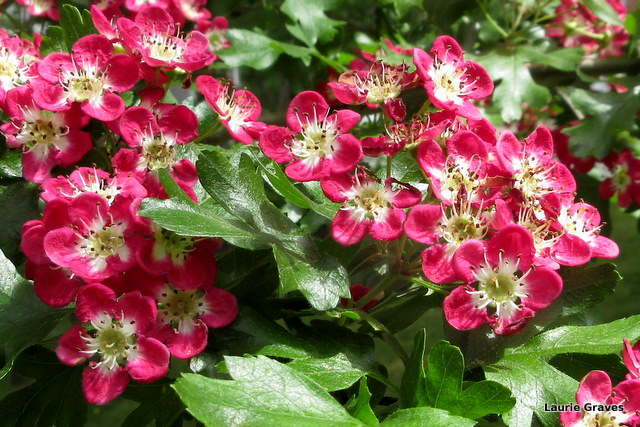
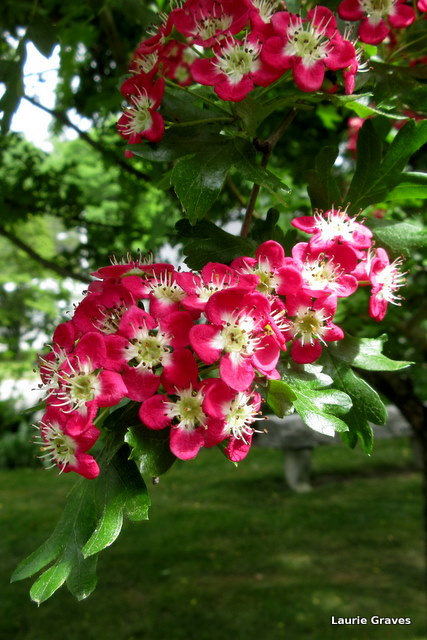
Now, I am a fool for flowers—in my own garden, in other people’s gardens, wild by the side of the road. It doesn’t matter. For environmental reasons, Clif and I stay pretty close to home, and although I never get tired of taking pictures of flowers, each year I can’t help but think that I’m not going to get anything new, that I’ve taken all there is to take in my little world. And each year I’m proven wrong. In a five-mile radius from my home, I always find something new to notice, some new beauty to photograph.
This just goes to show that even an observant person is not going to notice everything that grows around her. Each year will bring some new delight previously unexplored. This is not to slight old friends, such as my purple irises that are nearly in bloom. When those purple beauties open, I’ll be taking picture after picture, just as I do every year.
But it does suggest that we need to keep open eyes and an open mind about things that are near to us, to not take our immediate surrounds for granted. Because you never now what you might find—a flowering hawthorn tree, a bridal wreath in bloom by the lake, or some kind of neglected beauty.
All we have to do is look.
National Donut Day, In which Clif, Alice, and I Make Donuts
Today, this first Friday in June, is National Donut Day. Earlier this week I said to Clif, “Let’s make donuts in honor of National Donut Day. And let’s invite Alice. She’s going to be in town this Friday.”
“All right,” Clif answered blithely, knowing as well I did that it had been a long, long time since we had made donuts and that we might be just a teensy weensy bit rusty. But one of the things I especially love about Clif is that he is always up for a cooking adventure, especially when it involves his deep fryer.
Alice accepted the invitation, and the game was on.
Alice is one of those friends that everyone should have. We are very good buddies, and I have known her long enough so that if there was a disaster with donuts, it would be all right. We would just laugh about it.
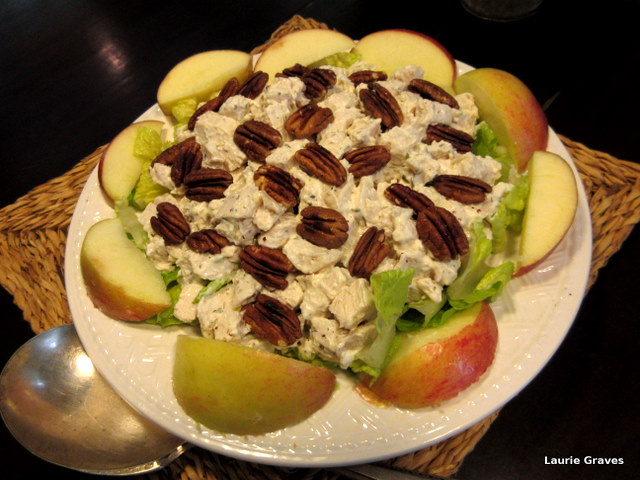
Since Alice planned to come over around 11:30, I decided we should have a little lunch first, so I put together a platter of homemade chicken salad, which we gobbled up.
Then, it was on to donuts, and while it wasn’t exactly a disaster, we did have a few difficulties, the first being that I didn’t read the directions thoroughly. I dumped all the flour in the bowl at once, and this made it difficult for my little hand mixer to mix the dough properly. But the biggest kerfuffle was that the dough was too sticky for the donut cutters, and the dough stuck stubbornly inside the cutters.
Okay, more flour. Still too sticky. A little more flour. The donuts came out with a thump, but they were a weird shape.
Alice said, “My mother used to shake them into her hand.”
I tried doing this, and success!
“What was your mother’s name?” I asked Alice.
“Dorothy, but she liked to be called Dottie.”
“Thank you, Dottie,” I said, smiling and looking upward.
With a firmer dough and Dottie’s method, we were finally in donut-making business, with me cutting the donuts, Clif frying them, and Alice rolling them in sugar and cinnamon.
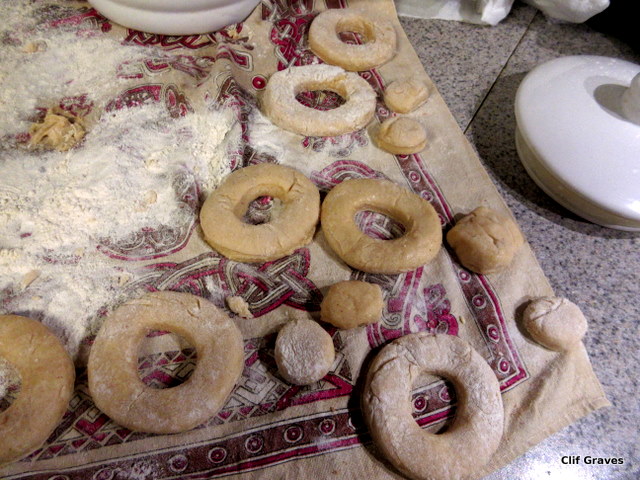

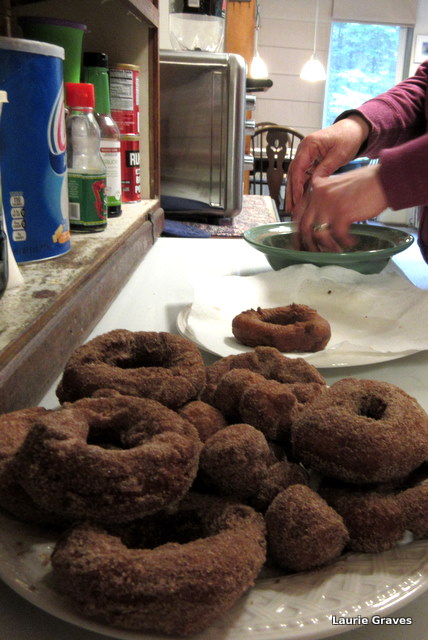
When we were done, we had two fine plates of donuts, and we settled around the dining room table with coffee and tea to go with the donuts.
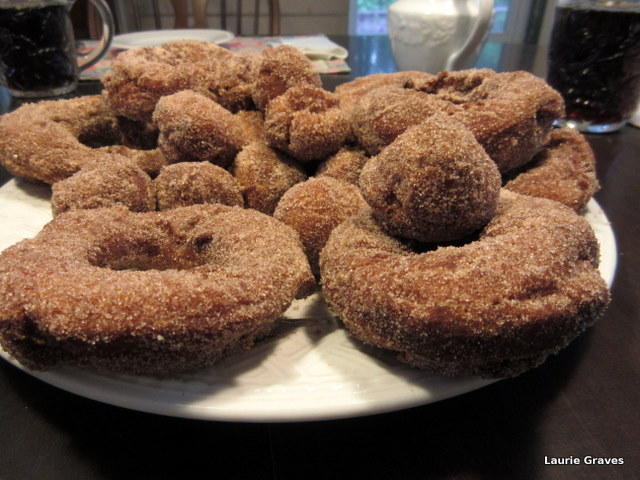
When warm, the donuts were delicious. However, as they cooled, they became a little too crusty for my taste. When I mentioned this to Clif, he said that the next time we made donuts, he would not fry them as long.
This just goes to show that even with something as seemingly simple as donuts, practice is required to get them just right.
Over the next year, we’ll be making half-batches of donuts so that they will come out exactly the way we want. That way, when National Donut Day rolls around in 2017, Clif and I won’t be such a bumbling team.
Of Lupine and the Lake, of Pink and Frothy White
Yesterday, Clif and I went on a bike ride. As we have been, ahem, a little inactive this winter, we only went five miles. (Somehow, riding on the road to nowhere on the exercise bike just doesn’t do it for us.) No matter! It was a glorious five miles, and as June wears on, we will build up our strength. For our birthdays in September, we hope to go on a fifteen-mile trek and then cap it off with fish and chips at a local pub.
For yesterday’s bike ride, we started from Norcross Point, a small but lovely waterfront park in town where residents can launch their boats or come for a picnic or just plain relax and enjoy the view.
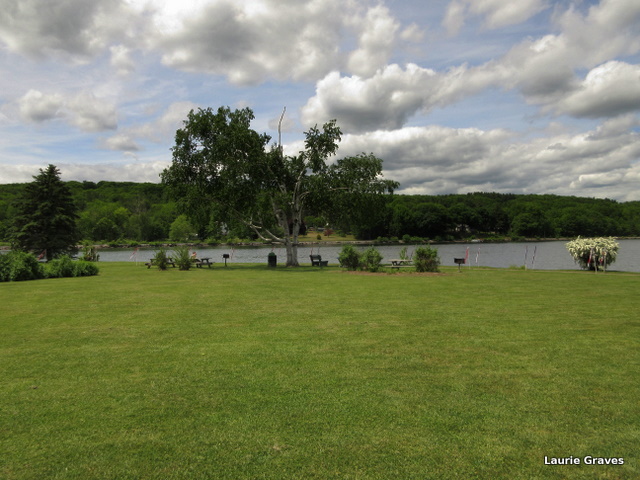
We went past the public beach and down pretty Memorial Drive, a great road for bikers, and I came upon these lupines, which are early this year.

Here is a closer look. Always fascinating to see flowers up close, where they are nearly unrecognizable.

We also stopped to take pictures of a friend’s garden, which right now is vivid with pink. Later in the summer, it will be cool blue and yellow. I love how gardens change color with the seasons.

On we went by the lake, and although we were slow, we were steady. The sun was hot, but there was a gentle breeze to help cool us. When we got back to Norcross Point, I noticed a froth of white by the edge of the lake. Naturally, I had to take a picture.
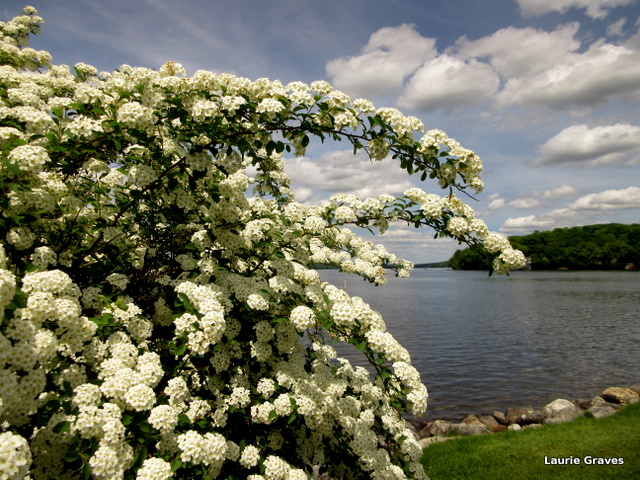
Two women from my book group were sitting nearby. They had brought their lawn chairs and lunches, and were reveling in the fine weather and the beautiful sweep of the lake. “A bit of paradise,” one of them said.
I couldn’t argue.
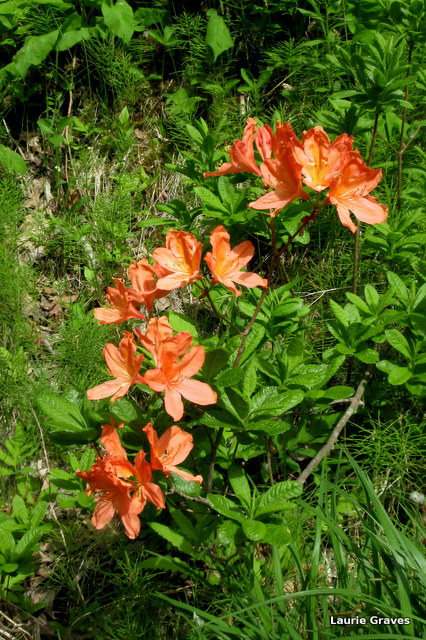
This afternoon, Clif and I will go on another bike ride. This time I hope to get good pictures of a hawthorn tree that is in glorious bloom in my friend’s yard.
Fingers crossed!
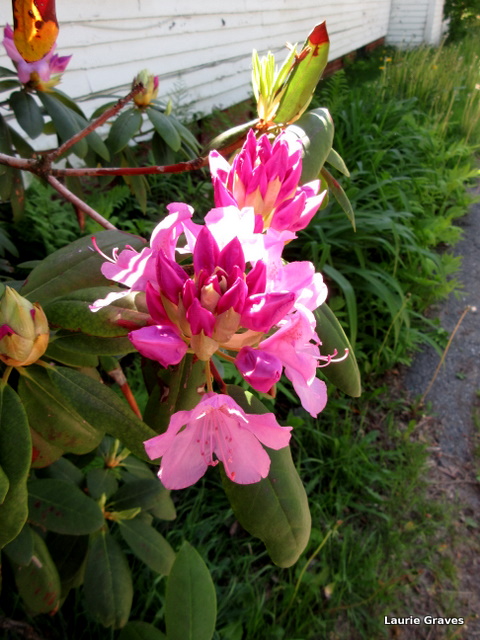
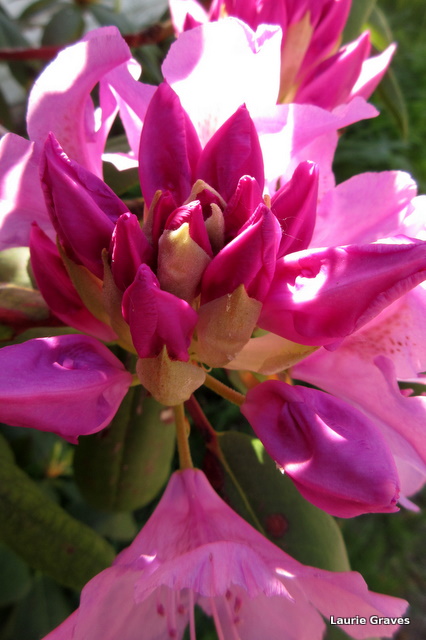
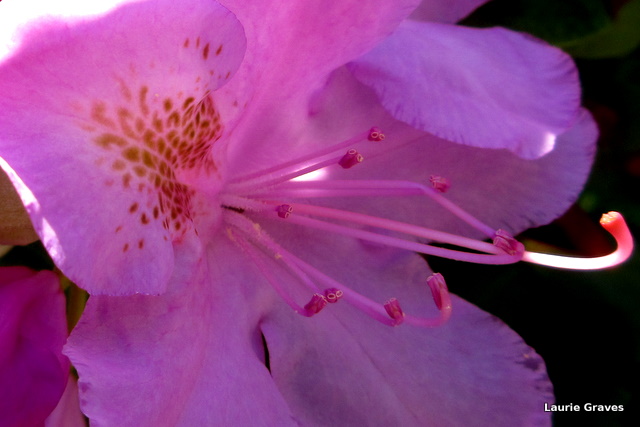
Wordless Wednesday: Neglected Beauty
Farewell, Beautiful May!
It’s the last day of May, a bittersweet time when we say farewell to one of the loveliest months in Maine. (Yes, autumn is beautiful, but May is so green, so full of promise, the beginning rather than the end.)
In the backyard, the ferns are nearly mature, and the woods are filled with shades of green.
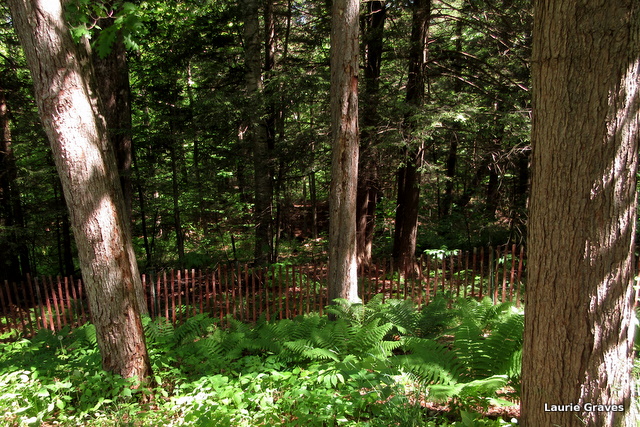
Jack and his brethren are now full grown.

The large irises are in bud.
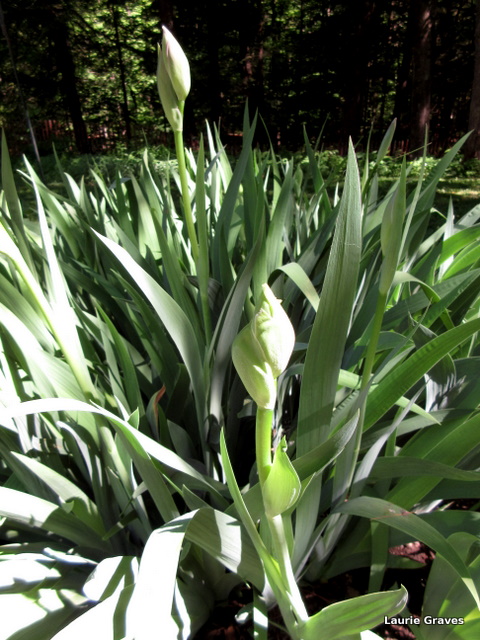
The dwarf snapdragons have been planted.
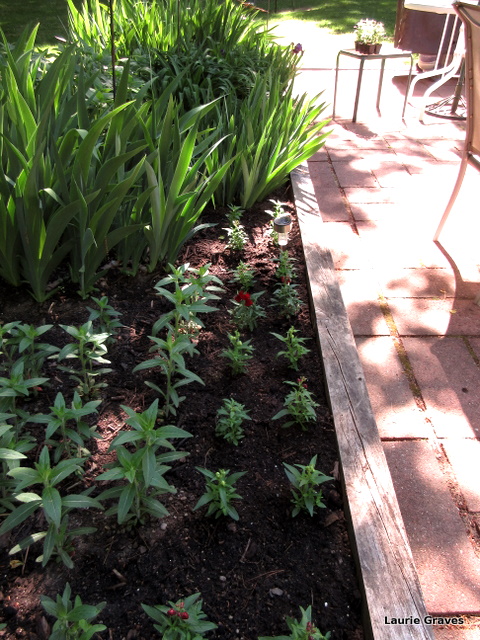
And in the front yard, Lester keeps an eye on things.
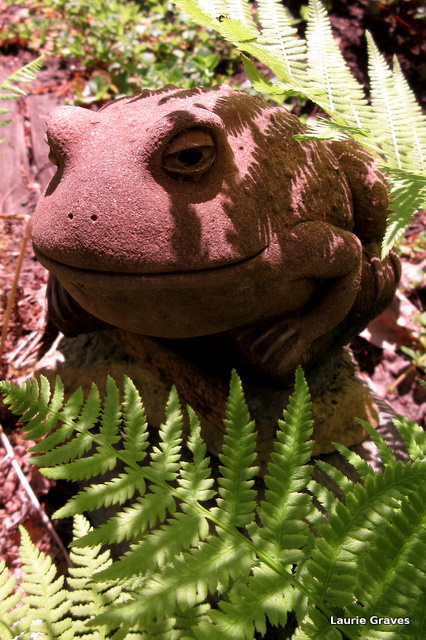
The squadrons of dragonflies have arrived—no pictures yet, but I will be on the lookout when I have my camera, and ditto for the swallowtail butterflies, another recent arrival.
Tonight Clif and I will go for a bike ride along Marancook Lake, where we will be held by the warm air. Ahead of us, we have three more months of beautiful summer, and we intend to squeeze as much joy as we can out of these precious months where we can spend much of our time outside—payback for the many months we must spend inside.
So, adieu, adieu, lovely May, until you return next year.
Memorial Day Weekend, 2016
On Sunday, our friends Joel and Alice and Diane came over for a Memorial Day gathering that featured grilled bread, salads, and homemade strawberry ice cream with homemade shortbread. Accordingly, Saturday was a busy day of getting ready. However, I did find time to work a bit in the garden, and I came upon this tiny fellow—a spring peeper? (Eliza, what do you think?)
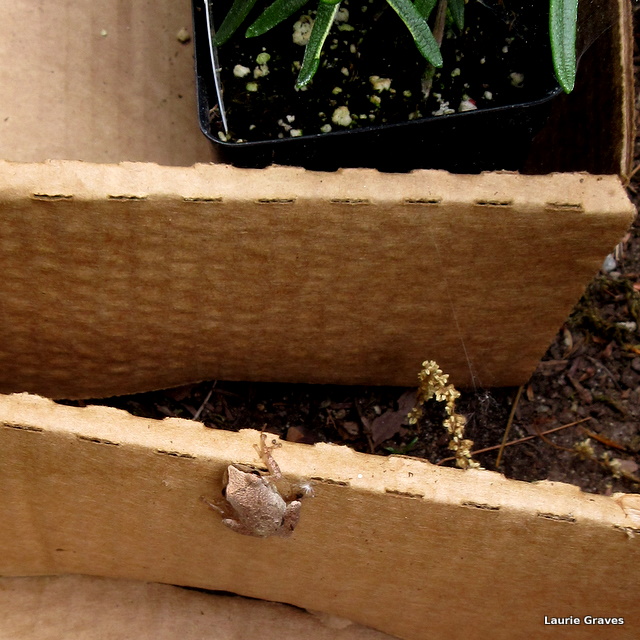
The little creature, about an inch long, bounced around as though it were on a spring, but I did manage to capture a picture.
Sunday was a little cloudy, but it didn’t rain, and it was warm enough to eat on the patio. We toasted loved ones who had passed as well as service men and woman who had sacrificed themselves for this country.
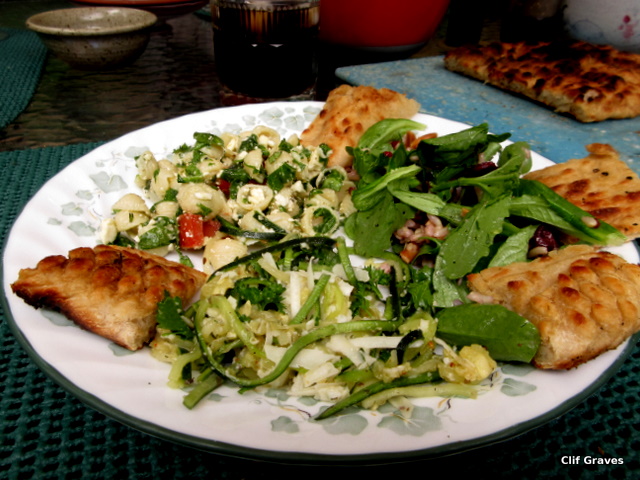
Clif’s legendary grilled bread was the centerpiece of the meal, and we had salads to go with the bread. I’m always afraid there won’t be enough to eat, but with the huge grilled bread, there was more than enough with the salads that Alice, Diane, and I made. (We, of course, had appetizers beforehand—chips and salsa and cheddar popcorn. ) We all decided that the bread and salad meal was a tradition we should continue. (Thanks, Alice, for providing the dough.)
I had enough presence of mind to snap a picture of the bread and salads, but not enough to get a picture of dessert.
Among other things, we talked about politics—lots to discuss!—and, as is our way—we also talked about movies. Diane made an interesting point. She is mentoring a student at Bowdoin College, and this student and her friends hardly ever go to the movies. They do, however, watch movies. One of the students has a TV, and they regularly get together to have pizza and watch a movie.
Diane reflected as to how our generation was the movie generation. We grew up going to the movies, and it was the thing to do with family and friends. But now, with the changes in technology—the quality of the image on flat screens is pretty darned good—combined with the high price of movie tickets and popcorn, going to the movies is not the regular event it once was. Someday, perhaps, when we baby boomers are gone, the cinemas will close because of lack of business. (I recently read in the New Yorker that the average teenager goes to the movies six times a year, and this matches Diane’s experience with her college students.)
As someone who grew up going to the movies, I must admit that it’s a little sad to think of this. But times change, and with services such as Amazon Prime and Netflix, there are plenty of good shows and movies to watch at home.
And who knows? Perhaps somehow cinemas will manage to hold on.
Finally, today—Memorial Day—is the 105 anniversary of my grandmother’s birthday. How old that makes me feel! Josephine Lena Jacques was born in northern Maine, in North Caribou, in a farmhouse that I expect did not have electricity or running water. French was her first language, although by the time I was born, she was fluent in English. Her mother and father were potato farmers, and they went to town in a horse and wagon. The changes my grandmother saw in her lifetime.
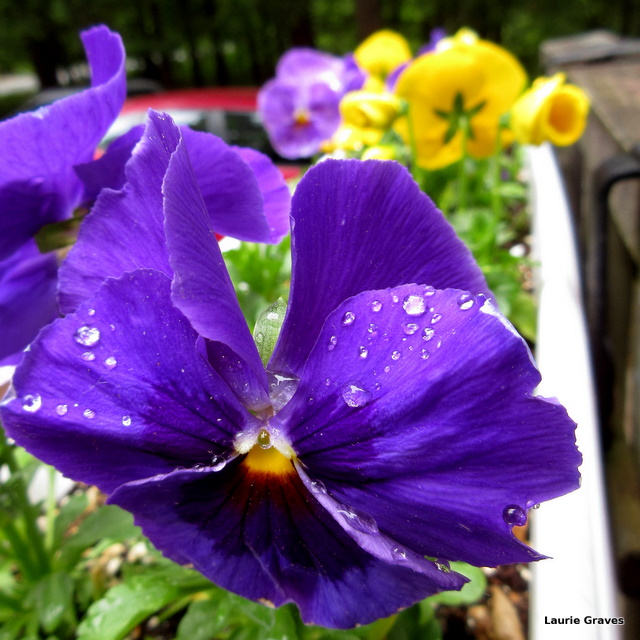
Happy birthday, Mémère. Here is a pansy, one of my favorite flowers, in your honor.
The Cusp of Summer: Memorial Day Weekend, 2016
In Maine, despite what the calendar says, we are on the cusp of summer. In less than a month, we’ve gone from darling buds to nearly full-grown leaves on the trees. May is like that.
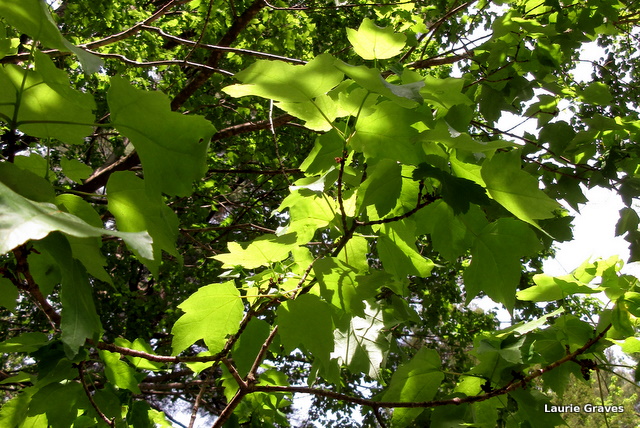
The same is true of the ferns.
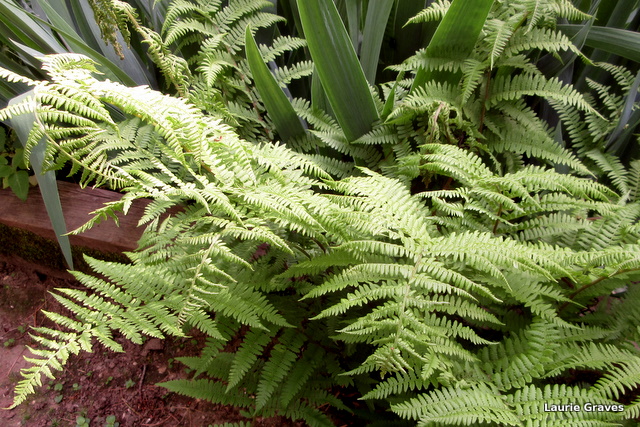
Except for my beloved purple irises, the front garden is mostly foliage. Strangely enough, I love the gardens at this stage, when the slugs and snails have yet to launch an assault, and the Japanese beetles are a month away. The leaves of the plants look so green and fresh and new. While the garden is more beautiful with flowers in July, it is also more tattered.

Spring wild flowers continue to bloom on the lawn and on the edges by the wood.
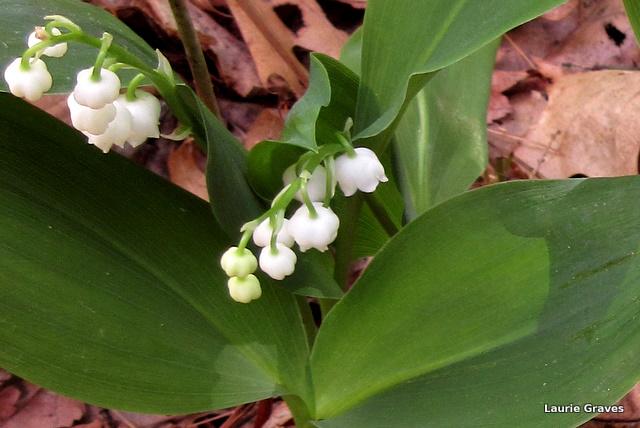
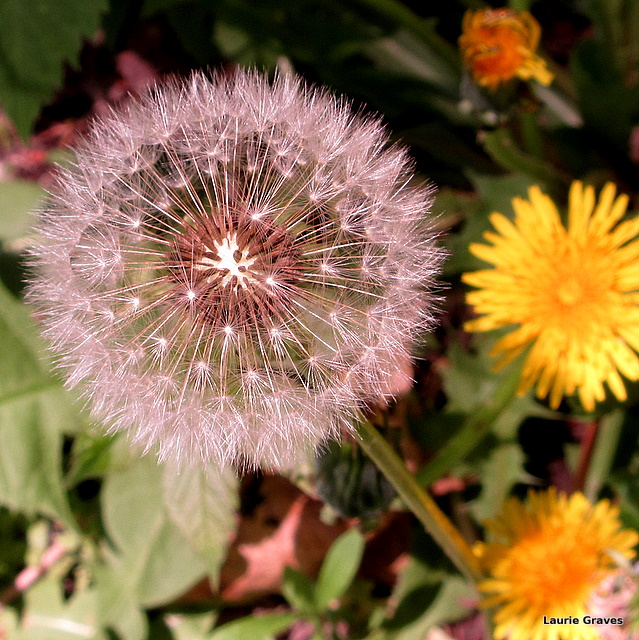
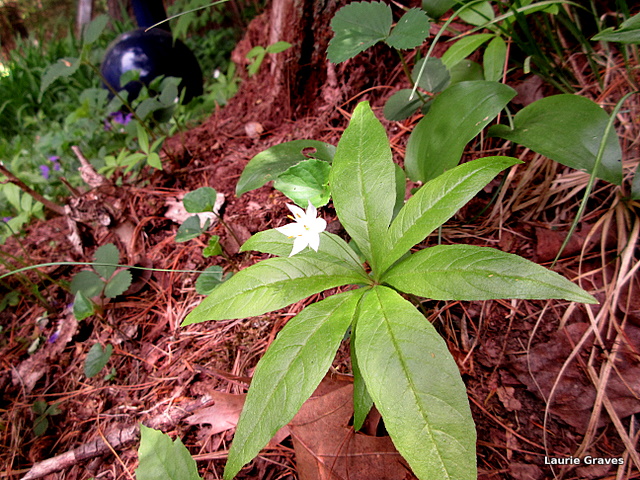
In the United States, this is Memorial Day weekend, a time when we remember those who have passed. Usually, this involves some kind of gathering, often a barbecue. This year, we will have a small get together with friends, and unless it is pouring, Clif will make his legendary grilled bread. Whatever the weather, I will be making homemade strawberry ice cream.
And I’ll certainly be thinking of loved ones who have passed—my mother, my father, and my dear friend Barbara. They all died too soon, but my love for them continues and will do so until I die.
In this most beautiful of months—for Catholics, the month of Mary—it somehow seems very appropriate to remember those who have passed from this green, green world.
A Regency Bonbon: Friday’s Child
 Every once in a while when, say, the political season just drags me down, and I simply hate the thought of having to choose between the lesser of two evils, I find myself turning to Georgette Heyer and her Regency novels for some relief. For the uninitiated, Georgette Heyer wrote Regency novels, lots of them, from 1932 to 1974, but according to Wikipedia, she also wrote thrillers, detective, and historical fiction. In fact, Heyer is credited with creating the Regency romance genre, and she is well known for meticulous research and authentic period details. (Officially, the British Regency began in 1811 and lasted until 1820, and Jane Austen’s books were published during this period.)
All right. Let’s clear the air—Georgette Heyer was no Jane Austen, who while writing about love and the upper class, delved into the condition of women and the cruelties of the British aristocracy. Heyer, while not ignoring the excesses of the upper class, blithely skimmed across them. Simply put, Austen is deeper than Heyer. Also, Heyer’s writing style is not as fine as Jane Austen’s. There, we’ve gotten that out of the way.
But what fun Georgette Heyer’s novels can be, and sometimes, fun is exactly what a person needs. Recently I came across Heyer’s Friday’s Child in my bookcase, and I decided it was exactly the right book to distract me from the political season. And so it was.
Friday’s Child is equal parts romance novel, farce, and screw-ball comedy, and Heyer whips the reader through the first months of the improbable marriage of the very young Hero Wantage and the self-centered Lord Sheringham (aka Sherry). Hero and Sherry have known each other from childhood, and when Sherry comes upon Hero, a poorly-treated orphan who is down in the dumps because her guardian and cousin is insisting that Hero go to Bath to become a governess, well, Sherry does what any high-minded young male of the Regency era might do—he proposes marriage. (An added inducement is that Sherry won’t come into his large inheritance until he marries.) Hero, who has been in love with Sherry since she was very young, immediately accepts the proposal. In today’s parlance, it is a win-win situation.
Off to London the pair go, where Hero gets into one “scrape” after another. Hero, who falls into the category of the adorable but naive heroine, must be schooled by Sherry and his friends, well-meaning but imperfect and hilarious teachers. Most of Hero’s mistakes involve making the wrong sorts of friends and going to the wrong sorts of places, thus opening her up to public shame and snubbing. However, on a more serious note, both Hero and Sherry run up huge debts while gambling.
Unlike most romance novels, the central concern of the story isn’t whether the two protagonists will end up together—indeed they are married early in the story. Instead, the plot revolves around Sherry, who must learn not to be so selfish and to fall in love with his sweet but hapless wife. I must admit that as I chortled my way through Friday’s Child, I wasn’t particularly worried about this. With all such novels, the destination is never in doubt. Instead, it is the delightful journey that matters.
Friday’s Child, like all of Heyer’s Regency novels, is a bonbon of a story. As it is with many rich sweets, one is definitely enough, and it will probably be quite a while before I read another of Heyer’s books. (Richard Russo’s Everybody’s Fool is waiting for me at the library.)
Still what a delight to read a book that made me laugh out loud. And while Friday’s Child certainly falls into the guilty pleasure category, the New Yorker’s blurb on the back of the book gets it exactly right: “Nimbel, light-hearted…Almost too good to be true.”
 Notes From the Hinterland