Creature Comforts in Deep Winter

Yesterday, I wrote about the spiritual comfort that books can bring to us during hard times. Today, my mind is on creature comforts, and no wonder because in Maine, we are in deep winter.  The days might be getting longer—it doesn’t get dark now until 5:30—but they are cold, clear, and crisp. Unless it is snowing, of course.

This morning when Clif took the dog for a walk, it was dead calm and zero degrees. (Fahrenheit). At that temperature, the snow squeaks underfoot, and the warmest of winter clothes is needed—heavy coat, heavy gloves, hat, scarf—or neck warmer—thick boots. In deep winter, all sense of fashion is abandoned. The chief thing is to stay warm.

In the house this morning, the temperature was just below 60 degrees. We heat with a wood furnace, and in February it doesn’t quite make it through the night. This is why we sleep with piles of blankets pulled up to our noses so that we have a little tent for warmth.

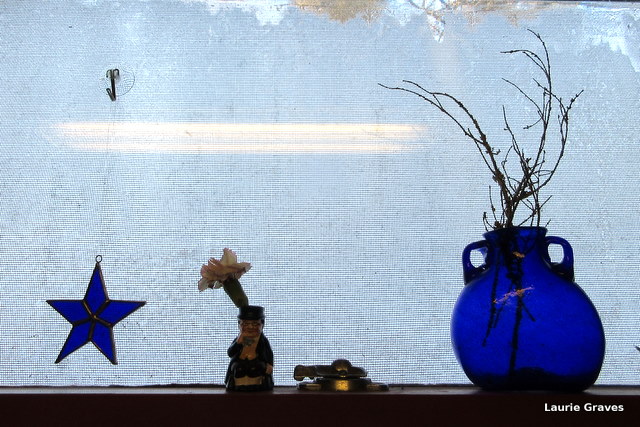
This cold morning, it was very hard to get out of our warm bed. When we did get up and raised the shades, we found that the windows were frosted.
IMG_0964

But soon Clif had the furnace going, and it wasn’t long before the house was a balmy sixty-four degrees. Throughout the day, the wood and the sun will raise the inside temperature to a little under seventy degrees, which is plenty cozy for us.

For this time of year, chicken soup is just the thing. One day, I cook a chicken, and we eat some of the meat. The next day, I make chicken stock using onion, garlic, carrots, whole cloves, peppercorns, a bay leaf, salt, thyme, and sage. Into the stock pot go the bones with the leftover meat. I cover them with water, add the other ingredients, and bring everything to a gentle simmer. I let the stock bubble for hours, until the house is fragrant with the smell, and Clif and I can hardly wait until dinner.

After the stock has simmered for hours, I strain the stock into a big pot, and let the bones cool before picking the meat. More carrots go into the stock, and because we are Mainers, potatoes often go in, too.  The vegetables simmer until they are tender,  and then I add the picked meat. A variation on this is to leave out the potatoes and instead go with pasta or rice. The pasta and rice and are never simmered into the soup because if they are, whatever is leftover will swell into alarming proportions. Instead, we cook pasta and rice separately, put them into the bottom of our bowls, and ladle the hot soup on top.

What to serve with chicken soup? Homemade bread is good, as are biscuits, but Clif and I seem to prefer cornbread, which from beginning to end takes about thirty minutes to make and bake.

When the soup is ready, when the cornbread is done, we settle into the evening with our steaming bowls of comfort. “Pretty darned good,” Clif pronounces, and he always goes back for seconds.

DSC08877

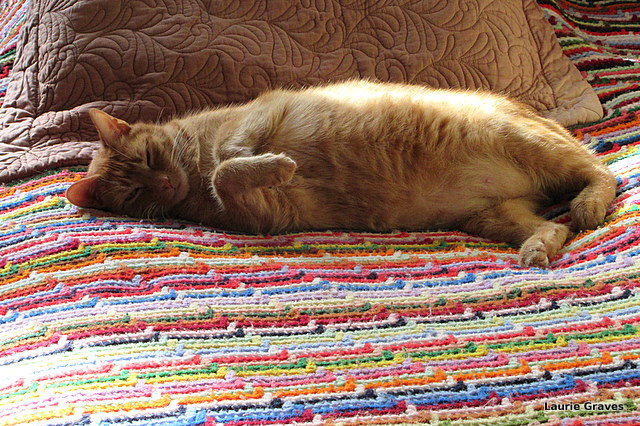
However, the last word of comfort must go to Sherlock because no creature knows comfort the way a cat does. Unless, of course, it’s a hobbit.
IMG_0921

Comfort Me with Reading

In Maine, winter is the perfect time for reading. The days are short, and aside from shoveling, outside chores are few. There are always inside chores, of course, but even so there are plenty of quiet opportunities for reading.

This winter, I have been thinking about the various reasons we read. On a pragmatic level, we read for basic information—manuals, how-to books, tutorials on the Internet. These can be a big help with projects as diverse as cooking to the most cost-effective way to fence in your yard for the dog.

We also read for intellectual ideas, and right now I’m slowly and with great difficulty working my way through Michael Lewis’s The Big Short. At times, I am absolutely stupefied by so much technical information about the workings of Wall Street, but still I read on, figuring that even if I only absorb a fraction of the book, I will know more than I did before I started.

We read for enlightenment and enlargement. For this we usually turn to the great novels—Middlemarch, Pride and Prejudice, Crime and Punishment, Moby Dick. Often these books require effort on our part, but when we are finished, we feel as though we have gained a glimpse of something essential about life and human nature.

Last but certainly not least, we read for pleasure and comfort. The value of this kind of reading cannot (and should not) be underestimated. Life can be joyous, but it can also be hard, and the older a person becomes, the more loss she or he has endured. Loved ones die, illness comes. That is the way of things, and somehow we must cope.

When life becomes hard, I turn to books for comfort, often Miss Read.  Somehow, reading about life in an English village in the 1950s has a calming effect on me.  I am always absorbed by the descriptions of nature, the sympathetic yet shrewd take on human nature, and the humor.

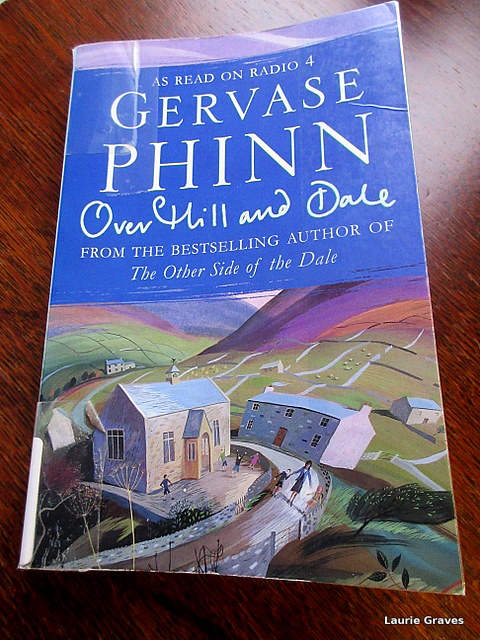
Lately, I have discovered Gervase Phinn, another English writer. (Do you think there is a trend here?) Phinn writes memoirs of his time as a school inspector in North Yorkshire, beginning in the 1980s. He is not a great stylist, but his books have a wonderful narrative flow, with vivid descriptions of teachers, students, parents, and colleagues. And, he makes me laugh out loud, to the point where my husband looks at me with raised eyebrows as I chortle over a passage in Phinn’s books. How often do books make us laugh? In my experience, not very often, and a book that does is a little gem.

I have been thinking that I should start collecting “comfort” books for my home library. (I already have several Miss Read books.) That way, the books will be right there when I need them, and I can also let friends borrow them when they are going through their own hard times.

IMG_0927

The Look of Winter

February is back, and how glad I am to see it. Yesterday, we got four inches of light, fluffy snow that will be easy to clear. Readers will be happy to know that Clif and I came home from doing errands just as the first snowflakes started falling. While leftover soup heated, we put away our groceries and other sundry items. Then, as we ate our soup—spicy squash with chicken sausage—we watched the snow come down, down, down. So lovely to watch when you’re snug at home with a bowl of hot soup to eat.

As I have indicated in previous posts, I really like winter—December, January, and February. I was born in central Maine, in September, which means my earliest memories involve snow and cold. I can remember having my picture taken on the mailbox of our new house, the first for my parents, who came from poor families and were rightly proud of their little home. I must have been two or three, and I am bundled in a winter coat, mittens, and a brown fuzzy hat. I remember squinting because the sun was in my eyes, but I don’t remember feeling cold.

In fact, as a child, I do not ever remember feeling cold. My mother, who was very attentive, made sure I was warmly dressed, and out I went to play.  I skated, I went sliding, I dug snow caves, and I had snowball fights with other children in the neighborhood.  No doubt I came in with red cheeks, but I was never uncomfortable.

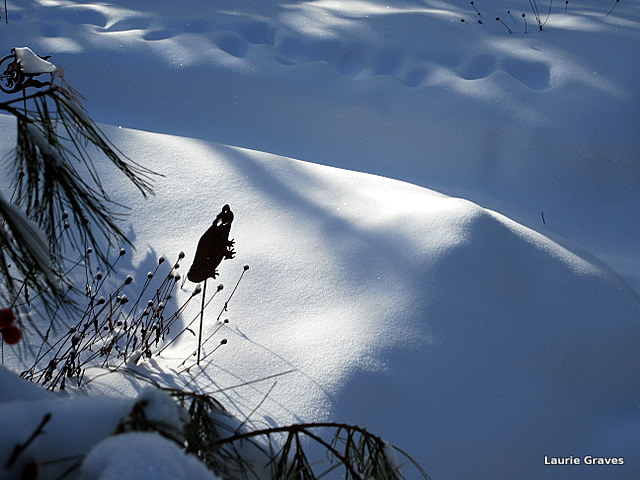
Even now, I do not mind the cold, and because of this, I love and appreciate the look of winter. This morning, after the little storm, our yard was filled with blue shadows and glittering snow.

IMG_0907

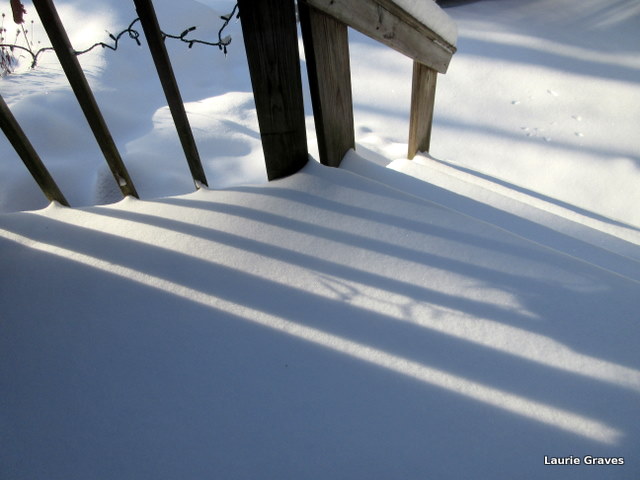
Even our porch had blue-slanted shadows across it.

IMG_0902

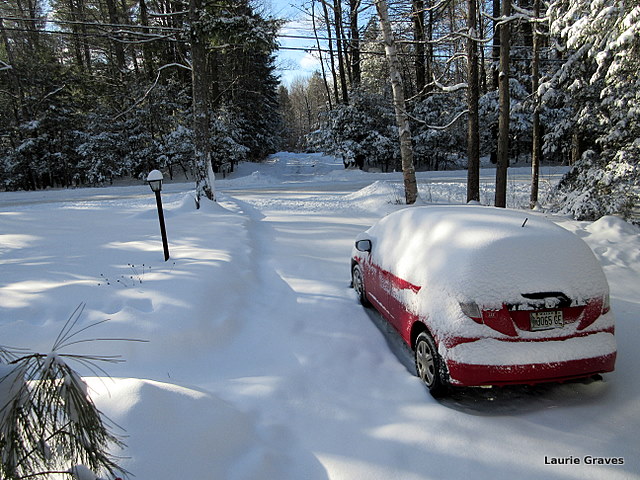
And, as Clif put it, the car looked like a marshmallow puff.

IMG_0905

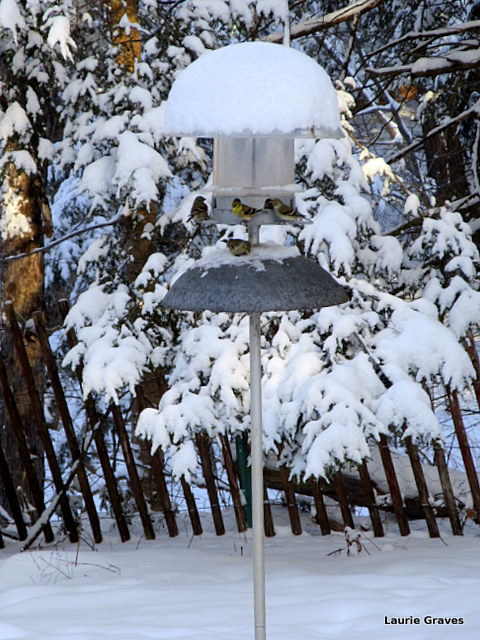
In the backyard, goldfinches crowded the feeder, and they twittered as they ate.

IMG_0901

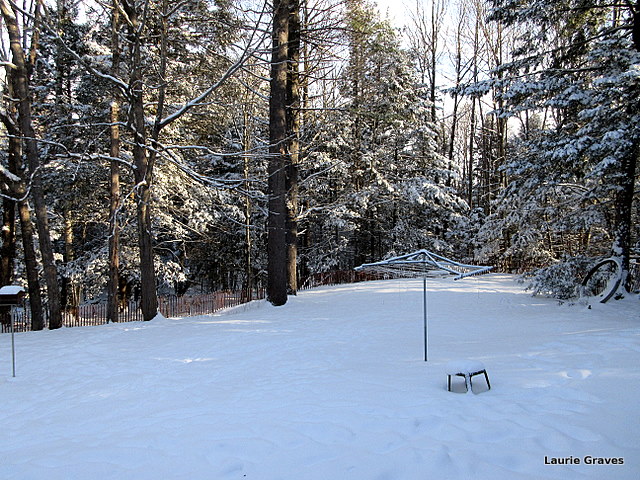
The clothesline will not be used for another few months, not until April, when I will happily begin hanging out quilts and blankets and the rest of our laundry.

IMG_0899

Until then, I will enjoy the beauty of winter, the cold and the quiet and the blue shadows.

One, Two, Three: Liam, Dog of the North

Today is a day of errands. Clif and I will soon be heading to the big city—Augusta, population 19,000. It’s supposed to snow later this afternoon, and the older we get, the less we like driving on snowy roads. So there is not much time to write this morning.

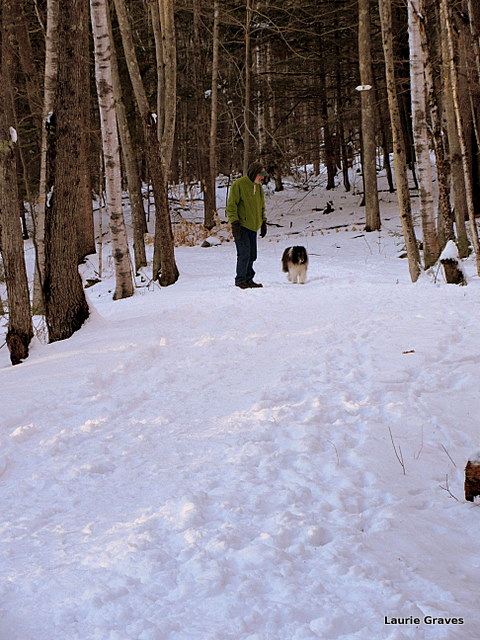
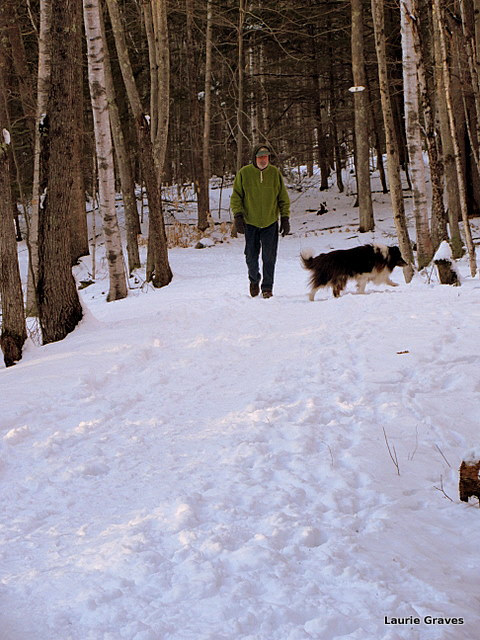
I do, however, want to share these three pictures I took yesterday. Looking at them made me smile. Our Liam loves the snow and the woods. Truly, he a dog of the north.

IMG_0881

IMG_0882

IMG_0883

The Horror of March: The Battle of the Boot and the Mud

Yesterday, the day was so drippy, the road so wet, and the snow so hard packed and dirty that Clif remarked, “Are we going to have two months of March?”

Drippy window box
Drippy window box


Dreary yard
Dreary yard, wet road

This statement made me catch my breath. For a Mainer, there could be no greater horror than having two months of March, the dreariest, longest, most miserable month of the year. It is the month where we become restless and cranky, and even those of us who love Maine desperately wish we were some place else, where spring was showing its pretty face, where flowers and leaves were beginning to bud, where the air was soft and warm.  (Who, oh who, decided that town meeting should be in March? The sour mood makes Mainers quarrelsome, and the meeting stretches for hours and hours.)

Instead, we have our March, a month of endurance. Gone are the brilliant days of January and February, punctuated by soft snow. (All right. I will admit that last year there was a little too much snowy punctuation, an exclamation mark rather than a comma or a period.) In March, the snow melts in fits and starts, and this melting brings something all Mainers have come to dread—mud.

I’m not talking about a bit of mud that clings to the bottom of shoes and can be stamped off when it’s dry. I’m talking about mud so thick that a small boy could get stuck and need some help getting out.

Indeed, such a thing happened one March. I was walking the dog, and I noticed a small boy—Joseph—struggling in the mud in his driveway. One of his boots was stuck solid and would not budge, no matter how hard he pulled his leg.

Naturally, the dog and I went over to help. By then Joseph had yanked his foot out of the boot, and his little stockinged foot gingerly touched the cold ground.

I tugged on the boot with one hand—the other was holding the dog—but the boot remained stuck.

“Could you hold the dog?” I asked. Joseph looked doubtfully at me and the dog. He was, after all, just a little boy.

“I need both hands,” I said, and Joseph nodded, taking the leash. Liam loves children, and he stayed perfectly still as Joseph held him.

With both hands, I gripped the little boot and pulled and pulled. With a loud glucking sound, the mud released the boot, and I triumphantly handed it to Joseph, who in turn gave me the leash and put on his errant boot.

“There!” I said, but I could not resist adding in my best adult voice, “Don’t play in the mud.”

But Joseph didn’t hear the admonishment. He was running toward the house, away from the sucking mud that had taken over his driveway.

And who could blame him? It had been a close call with the battle of the boot and the mud.

So it is no surprise that Clif’s gloomy remark about two Marches filled both of us with dread.

However, overnight, the snow came, and this morning, when I woke up and looked out the window, February was back. How glad I was to see it.

The return of February

And with any luck, the March-like weather will stay away for a month or so. One Maine March is definitely enough.

IMG_0808


Of Chili Eggs and Home Fries

Yesterday, after posting a piece about our Sunday brunch, I had a request for the chili-egg recipe and another request for how to make home fries. Well, ask, and you shall receive.

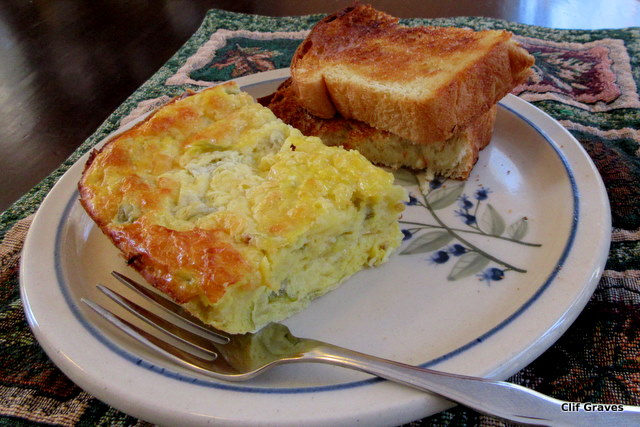
The chili eggs are very rich with cheese and butter, and I only make them for our special brunches. Guests are usually wild about them, and it was Beth, I think, who described them as an omelet in a casserole dish. This recipe is easy to make up ahead of time, and as the chile eggs take forty-five minutes to bake, you can do other things while they  are cooking. Best of all, if there are leftovers, they reheat beautifully.

IMG_0724

Chili Eggs
Adapted from Jill Lectka’s recipe

Ingredients

  • 10 eggs
  • 1/2 cup of flour
  • 1 teaspoon of baking powder
  • 1/2 teaspoon of salt
  • 1 pound (16 ounces) of small curd cottage cheese
  • 8 ounces of Monterey Jack cheese, grated
  • 8 ounces of cheddar cheese, grated
  • 1 stick of butter, very soft
  • 1 (8 ounce) can of chopped chilis

Directions

  1. Preheat over to 350°.
  2. Butter a 9 x 13 inch pan.
  3. Beat eggs until light.
  4. Add cheeses, butter, and chilis and mix well. (The butter will be a little lumpy, and with my hands I often squish it through the mixture to make sure the butter is evenly distributed. This is a messy but effective technique.)
  5. Combine the flour, baking powder, and salt and add to the mixture.
  6. Pour the mixture into the buttered 9 x 13.
  7. Bake for 45 minutes or until the eggs are set and the top is golden brown.


Now onto the home fries. I don’t really have a recipe for them, only some tips.

  1. It is essential to cook the potatoes ahead of time so that they are well chilled when you fry them. Warm potatoes will crumble as they are being fried. For a brunch, this means cooking the potatoes the day before.
  2. I usually use red potatoes. If the skins are tender, I leave the skins on. If not, I peel the potatoes.  I cut them into large bite-sized pieces, put them in a large stock pan, cover them with water, bring to a boil, and let the potatoes simmer until they are tender.
  3. When the potatoes are done, I drain them, let them cool for a bit, and then put them in a glass bowl. I cover the bowl, and put it in the refrigerator. I let the potatoes chill thoroughly before using.
  4. Hint: Always cook twice as many potatoes as you think you’ll need. Somehow, you can never have too many home fries. I used five pounds for a recent brunch with six people.
  5. When frying, I use two, maybe three, skillets so the potatoes aren’t crowed. For a recent brunch, I had two stove-top skillets and one big electric skillet plugged in right by the stove. Hence my title: Captain Home Fries.
  6. Into the skillets, I put a generous pat of butter along with a little vegetable oil so that the butter won’t burn. I let the butter melt until it lightly sizzles in the oil.
  7. Then, into the skillets go the potatoes. (Onion lovers might want to add chopped onions along with the potatoes, but Clif and I prefer ours plain.) Let the potatoes fry undisturbed for five minutes or so, and after that, from time to time, stir them around with a spatula.
  8. Fry until the potatoes are golden brown, about 15 or 20 minutes.
  9. Drain on a plate with paper towels, then put them into a bowl. I usually sprinkle them with a little salt at this point. Serve them immediately, while they are hot.

And there you go—chili eggs and home fries. If you wanted to keep your brunch simple. then muffins (or toast) would be the perfect accompaniment. And maybe some apple sauce or fresh fruit in season.

Bon appétit!


Waffle Sunday and a Sweet Story

IMG_0721Yesterday, our friends Dawna and Jim and Beth and John came over for brunch, one of our favorite meals to host. Neither Clif nor I are morning people, so inviting people over for an early breakfast is not, ahem, our thing. But brunch can be started late morning, even noon, if you feel like it, and we love all the brunchy food—pancakes, waffles, home fries, egg dishes. We just don’t want to prepare them first thing.

Clif and I are not what you would call organized (unfortunately!) but when it comes to brunch, we have things under control. I started a day or two ahead by making a blueberry sauce and a chunky apple sauce. By Sunday, the potatoes for the home fries were cooked and cooled in a bowl in the refrigerator. (I’ve learned that cool potatoes make the best home fries.)

The day of the brunch, I put together the chili eggs, a baked dish with plenty of cheese and, of course, green chilis. I am also Captain Home Fries, and for this brunch I had three frying pans going—five pounds of potatoes—while the chili eggs baked. Truly, I felt like a maestro as I presided over the sizzling home fries.

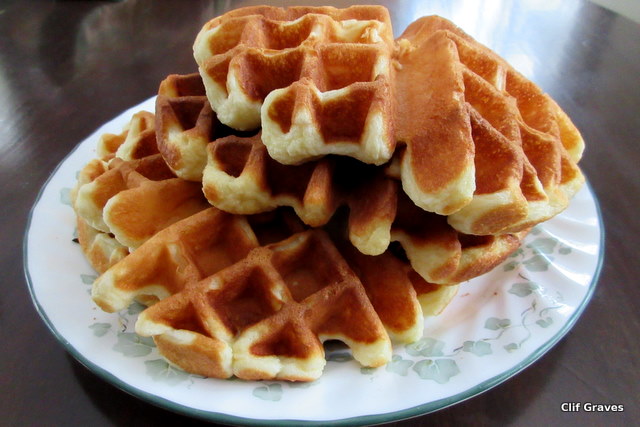
Clif whipped up his delectable waffles, and we gathered around the dining room table as he made fresh hot waffles, one at time. He passed the plate around, and sections were taken. At first the dish came back empty, but as Clif continued making waffles, we could no longer keep up with waffle consumption, and the pile grew.

The cherry on the sundae was Beth’s blueberry cake, so moist, so light, so good. After a meal like that, stretching on for hours, Clif and I didn’t eat much of anything else for the rest of the day.

The talk around the table ranged from politics—the Iowa primaries are coming right up—to books, to movies, and, of course, to food. I mentioned that with Shannon and Mike moving to the South, one of the things I really missed were the simple celebrations—birthdays, anniversaries, Mother’s Day—that we shared. I told of the fish tacos we made for Shannon’s birthday last year and of the chocolate cupcakes with peppermint whipped cream that Shannon always made me for Mother’s Day.

Dawna said, “I know what you mean. We do the same thing in our family, but somehow Jim’s birthday is always the favorite with our granddaughters. They love to come over and help me make cupcakes for him and then frost them.”

Such a sweet story in so many ways—the love the granddaughters feel for their grandfather, the helping with the cupcakes, and the pleasure they take in celebrating Jim’s birthday. The granddaughters are young, and it says a lot that Jim’s birthday, rather than their own birthdays, is the favourite celebration.

I have no doubt that when those girls grow up, they will continue the tradition of food and merriment in celebration of birthdays and other special events.