Honoring Earth Week: Monday, Old and New

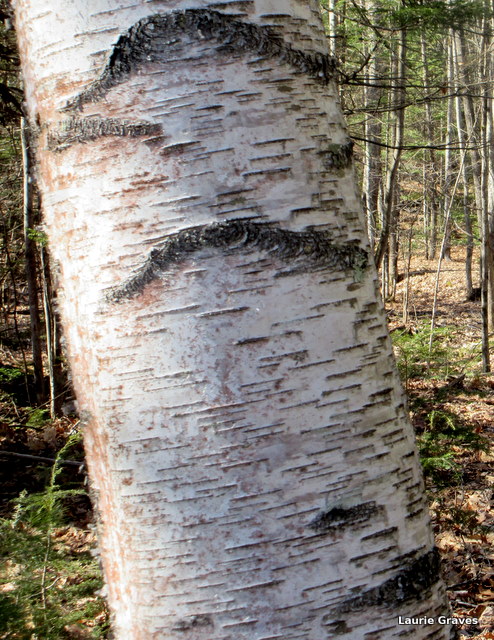
Beech trees are not as magnificent as oaks nor as splendid as maples. But they have one thing going for them that neither oaks nor maples have and that would be leaves that last all through the winter. Beech leaves in winter are, of course, not green. Instead, they are pale, and they rustle and rattle when the wind blows.

IMG_1818

Beech leaves finally fall in the spring, but there are some that are still hanging from the trees in the woods behind our house. If you look closely in the above picture, you can see new buds forming on the branches. Soon the old leaves will fall to the ground to become part of the rich soil that nourishes the trees.

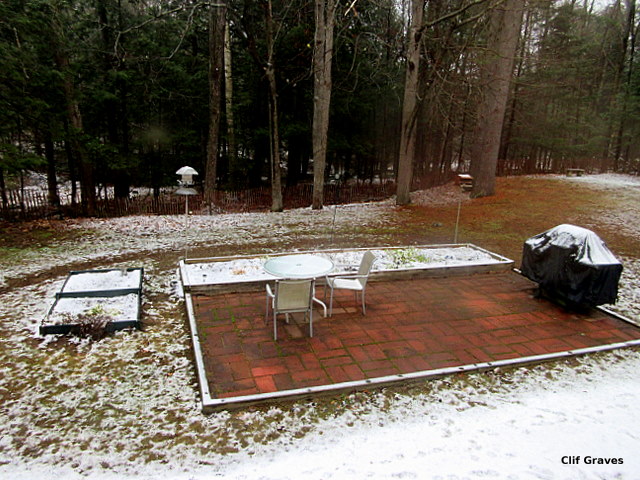
This next picture of our patio is not exactly of the natural world, but I couldn’t resist posting it. (Anyway, the beech leaves fulfilled my self-imposed requirement of each day posting a nature picture during Earth Week.)

IMG_1858

We have never had the patio entirely set up by Earth Week. Heck, some years there is still a line of snow in the backyard in mid-April. We usually aim to have everything out by mid-May, but yesterday the day was so fine—70°—that we couldn’t resist bringing up the big table, the rest of the chairs, and the citronella torches from down cellar.

From now until early fall, the patio will be our second living room, and although it is not of nature, it does put us in nature. As the trees in the picture indicates, the woods are not very far away, and when we sit on the patio, we see and hear many of the creatures who live there.

Yesterday, we were treated to a beautiful bird symphony. How the finches, cardinals, chickadees, tufted titmice, and nuthatches sang, their voices merging together to become a joyous song of spring. Their sweet song was punctuated by the percussion of the woodpeckers—Hairy, downy, pileated, and the most recent arrival to central Maine, the red-breasted woodpecker.
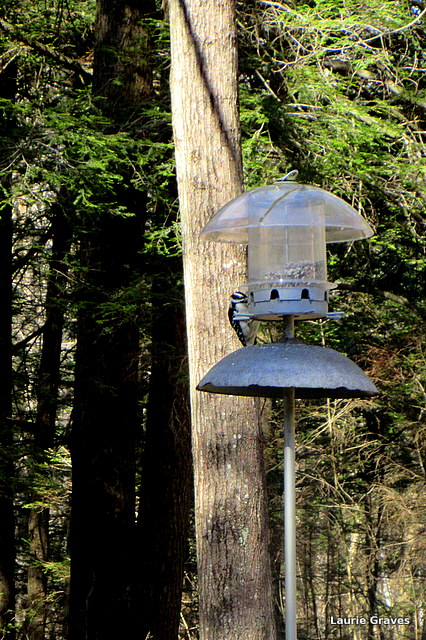
IMG_1854
A hairy woodpecker (I think!) taking time out from percussion to grab a bite to eat.


To borrow from Mozart, what a delight this is you cannot imagine. Or maybe you can. I suspect many readers of this blog love birds just as much as I do and listen eagerly for their song of spring.

Yesterday, after doing yard work, Clif and I celebrated by having drinks and nibbles on the patio. After a long winter of being inside, how good it was to be there, and we are looking forward to many more days and nights on the patio.

Come, spring, come.
 

Honoring Earth Week: Sunday, the Beginning

Today marks the beginning of Earth Week, a very special week for us as it culminates on April 22, Earth Day and also the birthday of our youngest daughter, Shannon. In honor of Earth week, each day I’ll be posting nature pictures taken either at the little house in the  big woods or in Winthrop, a town known for its beautiful lakes.

I will admit that mid-April in Maine is not its most photogenic time. Rather, we are on the cusp of true spring, where May kicks up her heels and blesses us with a landscape so dazzling we can hardly stand it.

Nevertheless, there are lovely albeit quiet moments to enjoy in Maine in April. Here are a few from our backyard.

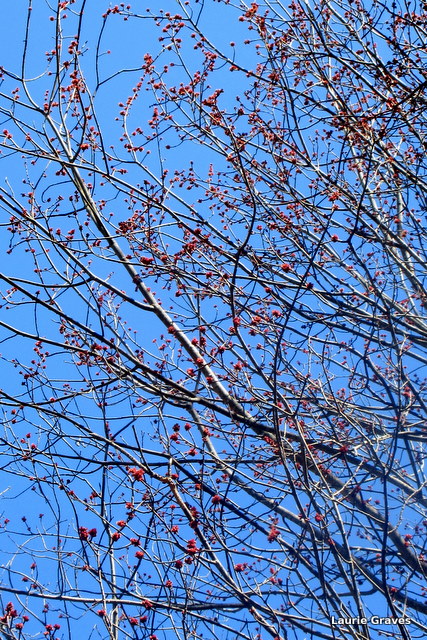
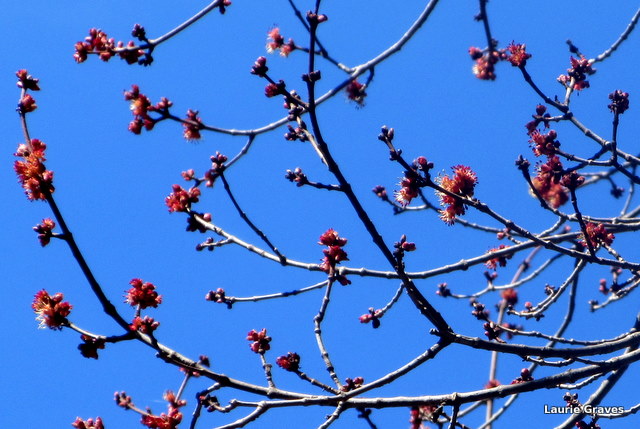
I just cannot resist taking pictures of the red buds on the maples. How I love them.

IMG_1813

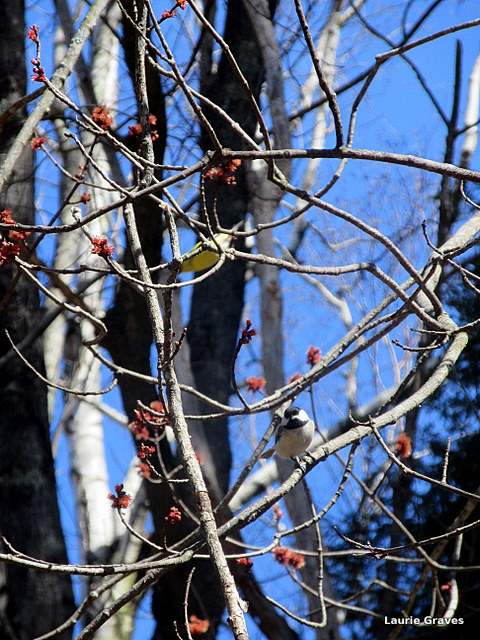
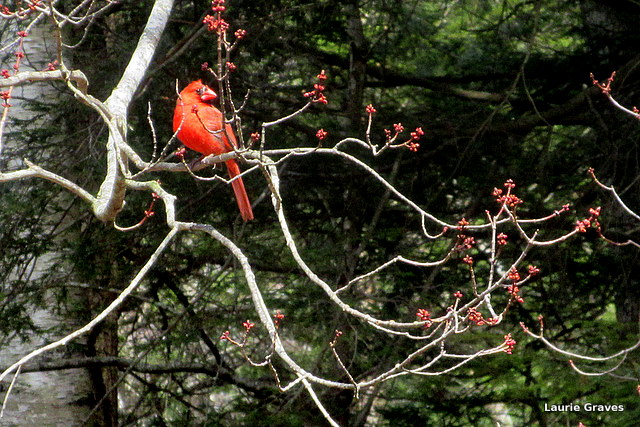
I love the red buds even more when there is a bird or two among the branches.

IMG_1839

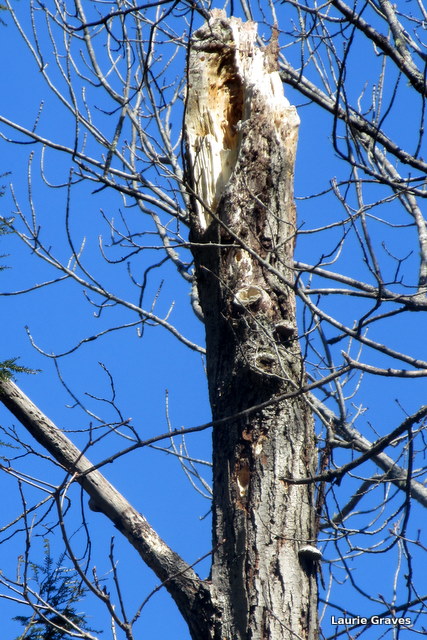
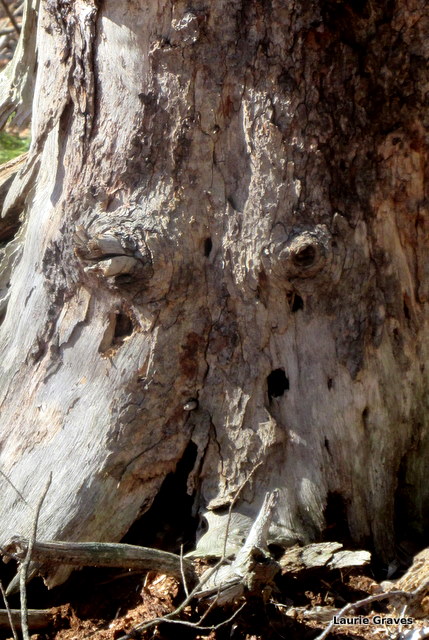
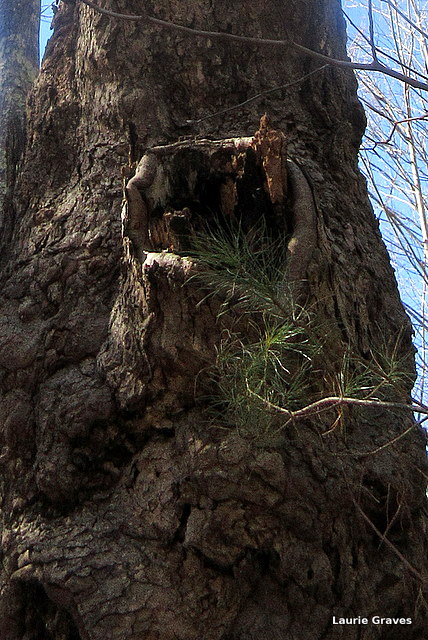
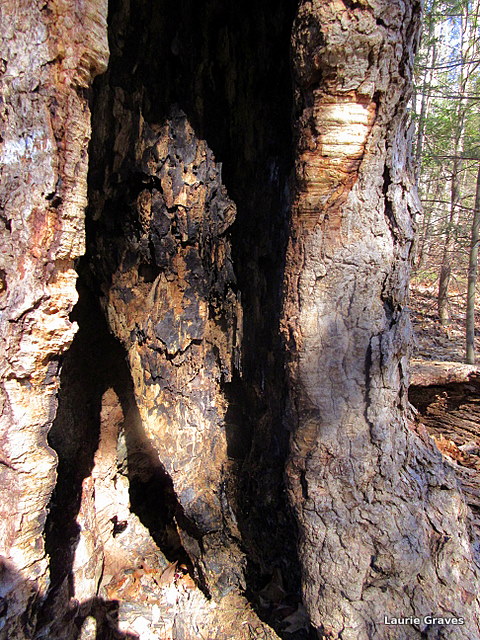
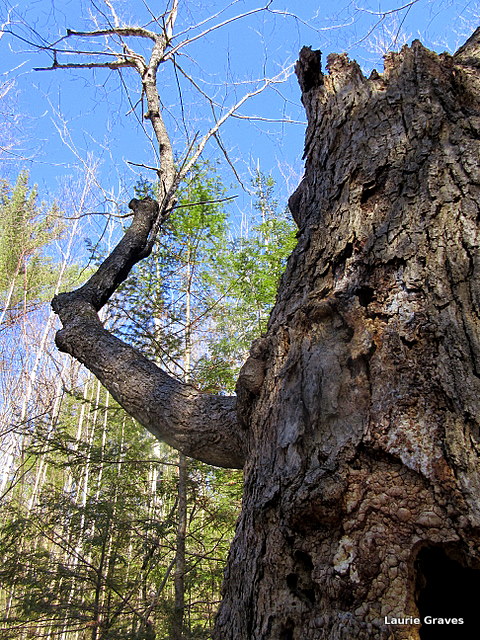
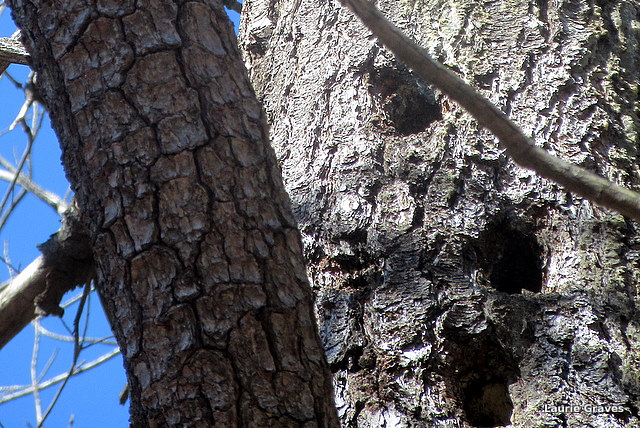
And, I was happy to find a tree spirit in the woods on the edge of our backyard.

IMG_1853

It hardly needs to be said that every day should be Earth Day. Where would we be without Earth to sustain us? However, setting aside special days to honor what we love is a long-standing tradition for humans.

So let us celebrate Earth Day with a happy, grateful heart. And maybe, just maybe, we can think of ways of living more lightly on this lovely, blue planet.

Stories Rippling Through Time

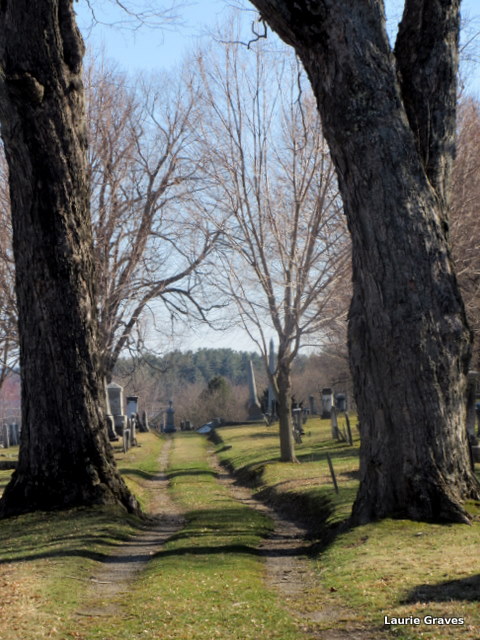
Yesterday was a sunny day with a clear blue sky.  Before going to a meeting at the library, I stopped to take pictures at the lovely old sliver of a cemetery in the middle of Winthrop.

IMG_1797

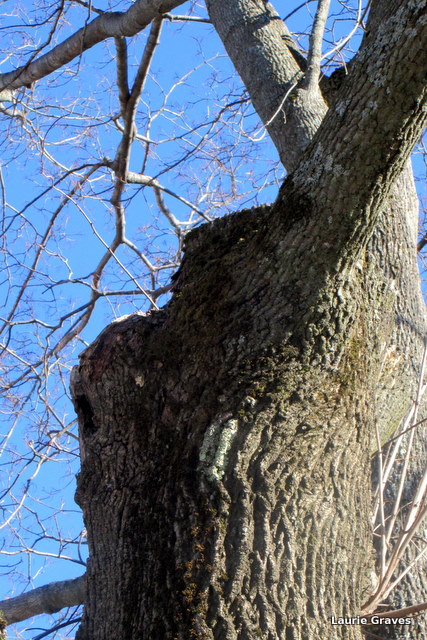
As to be expected, there were tree spirits in the cemetery, and I caught a picture of one.

IMG_1771

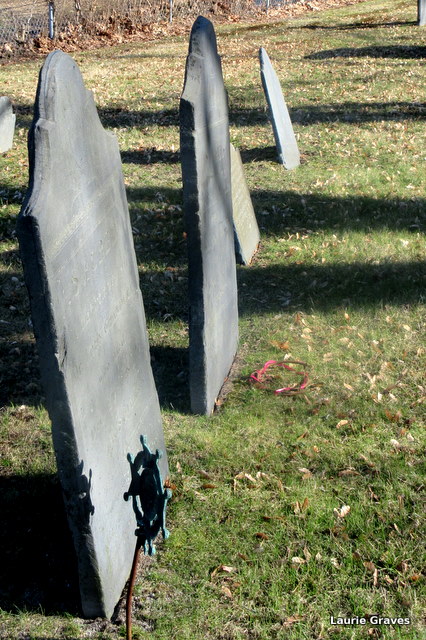
Then I turned my attention to four very old gravestones.

IMG_1793

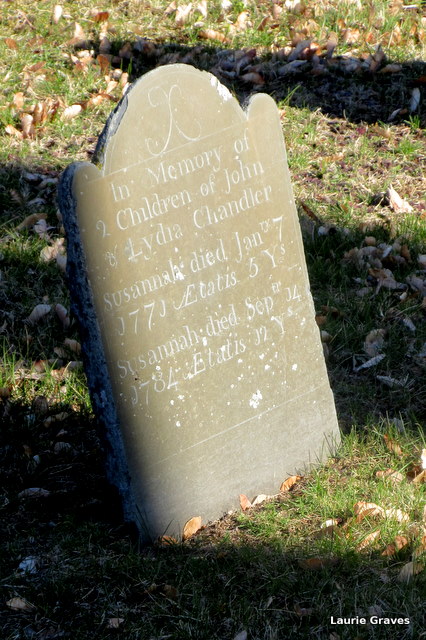
I decided to focus on one of the smaller ones, which I expected would mark a child’s grave. In part, I was right, but the stone, in fact, marked the graves of two children, both with the name Susannah.

IMG_1801

The first Susannah died in 1771—when we were still a part of Britain—and she was five years old. The second Susannah died in 1784—we were then the United States of America—and she was twelve years old. If my math is correct, the second Susannah was born a year after the first Susannah died.

To modern parents, it is a very strange notion to use the name of a dead child for the next sibling of the same sex. Somehow, it seems morbid if not downright creepy. However, it is my understanding that this was fairly common practice in America in the 1700s when the child mortality rate was appallingly high.  Names, often ones that had been in the family, were reused if a child died.

Different sensibilities for different times, and that little gravestone marks the story of one family’s grief in losing not one but two Susannahs.  I understand that parents  in the 1700s were not unaccustomed to losing young children. Nevertheless, it is my belief that these parents grieved, too, even if a child’s death was all too common. To mourn is human, whatever the century.

Indeed, in the mid-1800s, a time when children still died at an alarming rate, Louis Pasteur would write in a letter that another one of his dear children had died of typhus. Three of Pasteur’s five children would die from this illness, which influenced his decision to study infectious diseases.

With all these morbid remembrances of lives ended too soon, you would think the Winthrop cemetery would be a grim place. But somehow, it isn’t. Like so many New England cemeteries, it is peaceful and serene, a place of beauty, even.

I especially love how snippets of stories, the human story, are told through the gravestones and remind us of how things were both different and the same back through the centuries.

The Summer Before the War by Helen Simonson

summerWhen Helen Simonson’s novel The Summer Before the War opens, it’s just another drowsy summer in 1914 in the coastal town of Rye in Sussex, England.  Snout, an unlikely but bright Latin student, is busy poaching rabbits and doing odd jobs to add to his growing pile of coins.  Agatha Kent, one of the pillars of the community, is enjoying the company of her two nephews, practical Hugh Grange, who is studying to be a doctor, and snobbish Daniel Bookham, a poet.  There are parties and teas to attend.

Except it’s not just another quiet summer in Rye. Agatha Kent has done something most unusual. She has persuaded the school board to hire a woman to be the new Latin teacher in the town’s school. Apparently, in England in 1914, men taught Latin, and The Summer Before the War begins with the arrival of Beatrice Nash to assume the position of Latin teacher.

Beatrice Nash is young, attractive, bright, an aspiring writer, progressive, and poor. In short, she is everything a heroine should be, and I was rooting for her right from the start. While Agatha Kent might be Beatrice’s champion, the mayor’s wife, Mrs. Fothergill, is Beatrice’s enemy and, of course, Agatha’s as well. During the course of the summer, Agatha and Mrs. Fothergill will work very hard to outmaneuver each other, with Beatrice often caught between the two women.

Much of the novel deals with Beatrice trying to make her way on her own—her father has recently died—in a town where her status is far from assured. With Agatha as Beatrice’s champion, the way is easier but certainly not easy for this bright, genteel but poor young woman who has never taught before and has much to learn.

For many novels, this would have been enough. As the story progresses, it is clear that Hugh and Beatrice are attracted to each other. Do we want them to get together? Of course we do. But there are complications. Hugh is committed to another woman, not quite engaged but heading in that direction. In the meantime, the repulsive Mr. Poot, the Mayor’s nephew, is angling for Beatrice.

But as the title suggests, this is the summer before the war, the Great War, as it is known, where so many young men lost their lives. Suddenly, the book’s tone takes a turn from pointed yet amusing to very serious. Many of the young men we have come to know in the book go off to war, and Helen Simonson has such a knack for vivid characters that I had a lump in my throat as they left Rye for the killing fields of France.

Readers, I must confess that one night I stayed up until 2 a.m. reading this book. Simonson, a terrific writer, skilfully weaves in many issues in this book that begins as a comedy of manners. Class, gender, poverty, sexuality, ambition, and literature are subjects that are explored in The Summer Before the War. Then, of course, there is war and its terrible toil.

Finally, as is the case with so many British writers, Simonson has a wonderful feel for the natural world, and there are many beautiful descriptions of Rye and the seaside. Indeed, the book opens with “The town of Rye rose from the flat marshes like an island, its tumbled pyramid of red-tiled roofs glowing in the slanting evening light. The high Sussex bluffs were a massive, unbroken line of shadow, from east to west, the fields breathed out the heat of the day, and the sea was a sheet of hammered pewter.”

This fine book will go on my wish list so that I can have it in my home library.

PechaKucha (PK) Night in Waterville

On Saturday, Clif and I went to Waterville for another rousing  PechaKucha Night, or PK Night, as it is more commonly known. (PechaKucha means chitchat in Japanese.) Here is a little background info about PechaKucha gleaned from the official website:

“PechaKucha…is a simple presentation format where you show 20 images, each for 20 seconds. The images advance automatically and you talk along to the images. The presentation format was devised by Astrid Klein and Mark Dytham of Klein Dytham architecture. The first PechaKucha Night was held in Tokyo in their gallery/lounge/bar/club/creative kitchen, SuperDeluxe, in February, 2003.”

Why 20 images, each for 20 seconds?  Because some people have a tendency to, ahem, go on a bit too long when they have a microphone. The 20 x 20 format keeps people in reasonable bounds and often leaves the audience wanting more rather than wishing for less.

The thing I love about PK Nights is that they  “are informal and fun gatherings where creative [and local] people get together and share their ideas, works, thoughts, holiday snaps — just about anything, really — in the PechaKucha 20×20 format.”

Clif and I have been going to PK Waterville for several years. We so enjoy listening to and watching the various presentations given by everyday folks who are living creative lives.

Saturday’s PK Night was held in the Hathaway Creative Center, formerly the Hathaway Shirt Company. My father once worked at Hathaway Shirt Company, and it was one of the cornerstones of Waterville’s economy. However, the great factories in Waterville are gone, either torn down or converted into some other use, the way Hathaway Shirt Company has been. Times change, and Waterville is struggling to find a new way to support itself.

Hathaway Creative Center


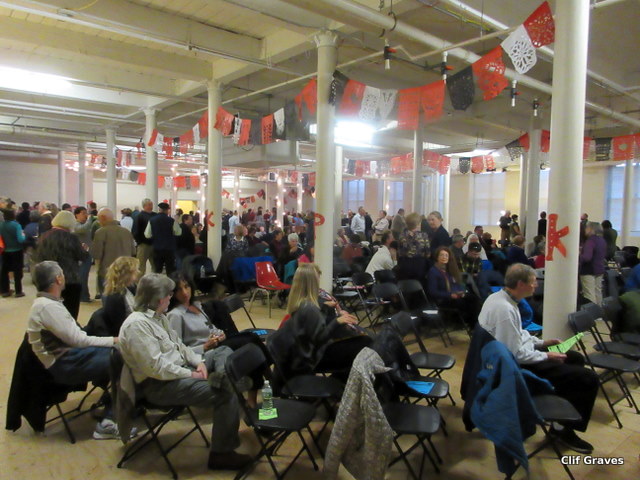
Hundreds of people came to last Saturday’s PK Night, and the huge meeting room was packed. A snappy jazz band, Mes Amis, played before the presentations started, and there were tasty appetizers provided by the Last Unicorn, a restaurant in downtown Waterville.

The crowd at PK Night


Tasty appetizers
Tasty appetizers


The presentations began, and they included a young woman recreating her stylish grandmother’s clothes and wearing them around NYC; another young woman, in Elizabethan garb, who has started a low-budget Shakespeare company; an acquaintance of ours—Pat Clark—who outlined her experience as a lumberjack and Jill coach at Unity College, where she works.

A little about Pat’s presentation: In Maine, there are lumberjack competitions at various fairs and colleges where young women and men compete to see who can saw the fastest and straightest, among other woody activities. They use hand tools, and let’s just say that these young people are in very, very good shape. Clif and I have never gone to one of those competitions but after listening to Pat and looking at the slides, it is on our must-see list. (Colby College in Waterville just had a woodsmen’s and women’s competition. Next year Clif and I will go.)

Then there was Tim Christensen’s “Art in the Holocene Extinction.” Christensen is a potter who lives in Down East Maine, and he makes exquisite etched-porcelain pottery. He regards potters as the record keepers of humanity, and his concern is the natural world—the systems that hold the world up, the weather, waves, and tides.

Christensen went on to speak of some alarming observations. One spring there were no smelts, and the lobsters shedded earlier.  How to save the animals? Finally, he spoke of how he etches about life Down East, how life emerges form the vernal pools, how bees pollinate, how hummingbird moths feed. He etches chickens in the coop, and life as man and animal.

Here is a link to Christensen’s website were you can see his beautiful creations.

When the evening was over, I came away inspired and informed, as I always do. The next PK Night is in July, and if the schedule allows, Clif and I will be there.


First Laundry on the Line and Repairing the Fence

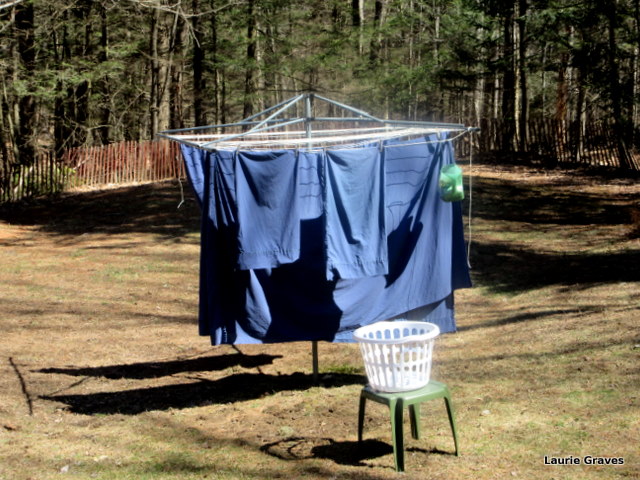
At the little house in the big woods, the excitement just doesn’t end. Yesterday, for the first time this year, I was able to hang laundry on the line. (From December through April, the backyard is in too much shade for the laundry to dry thoroughly.) I must admit that I am a fool for hanging laundry outside, especially in our backyard on a sunny yet windy spring day when the air smells sweet and cold. If I could bottle that smell, I’d be a rich woman.

IMG_1736

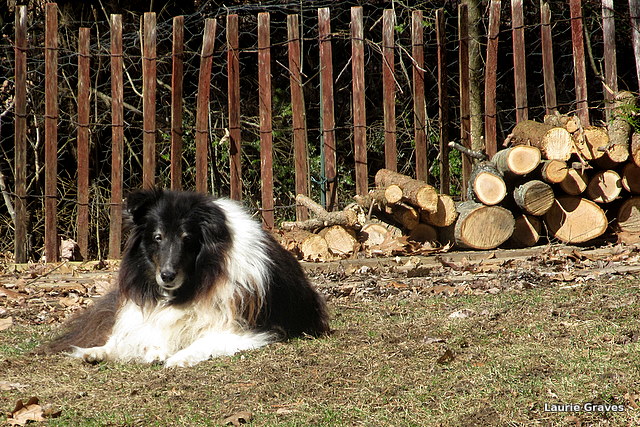
We only own an acre of land, yet there is always something to do or fix. Yesterday, we replaced a portion of the storm fencing that surrounds the whole backyard. The yard is fenced in so that Liam can have a half-acre or so to run and bark and rest without us having to worry about him taking off for parts unknown.

IMG_1498

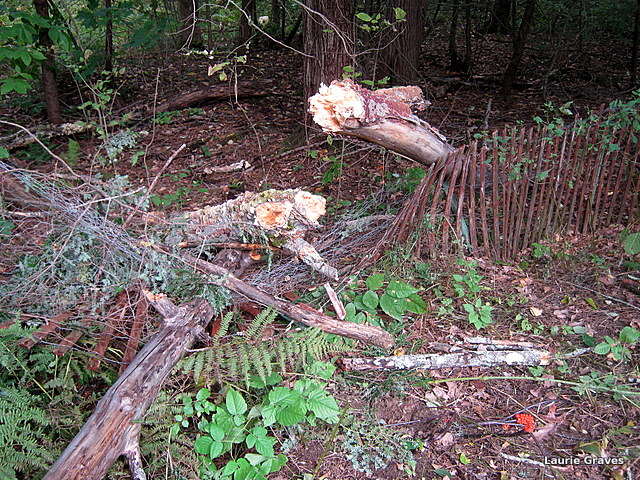
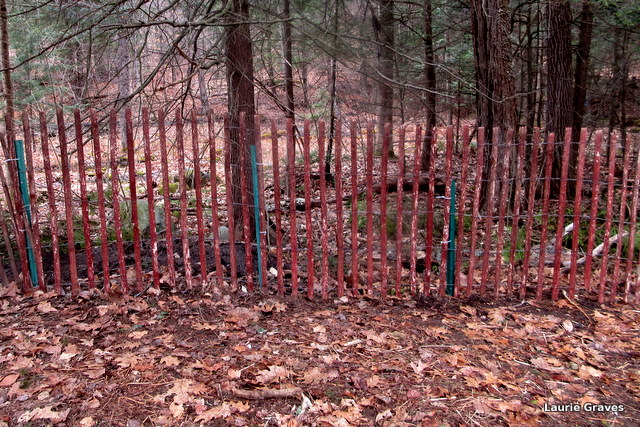
Last October, the fence was damaged by a portion of a tree that fell during a storm.

IMG_2438

Clif had patched and repaired it, but we knew this spring we would need to do more, to actually replace the portion that had been damaged. Luckily, we had a fence section tucked away, and we could use it  for the repair. After a few hours that were actually rather pleasant, the fence was fixed.

IMG_1739

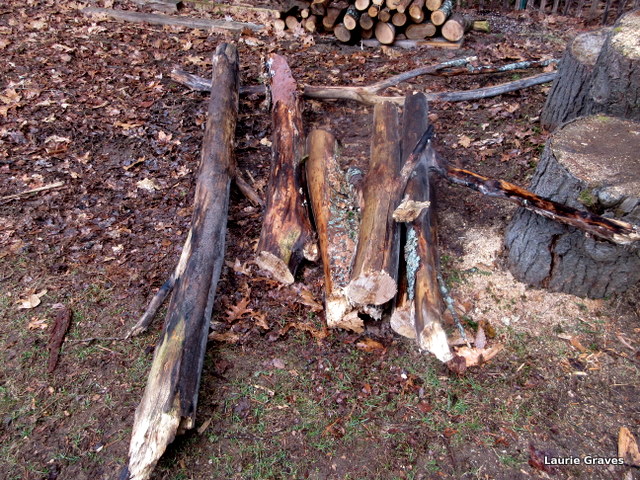
We were even able to haul in the wood that had fallen, which is good enough to be used either in our wood furnace or in our fire pit.

IMG_1742

A nice afternoon’s work, and by the end, the sheets were dry. When Clif and I came inside, we both felt as though we had earned our tea and some time to read in the living room.

Laundry on the line and the fence repaired. Tea and reading in the living room. A finest kind of Sunday.

Beatrix Potter: A Life in Nature by Linda Lear

BeatrixA few weeks ago, my friend Cheryl, knowing how much I love England and books about nature, recommended that I read Beatrix Potter: A Life in Nature by Linda Lear. As luck would have it, the book was available in our library, and I checked it out.

When most people think about Beatrix Potter, Peter Rabbit and all the small animals in her other stories come to mind. And how you feel about Beatrix Potter often depends on how much you like charm and fancy. I must admit that I am a sucker for such things. Seldom is anything too fanciful for me, but I do understand how some people might find Potter’s work a little too twee. Those trousers, that hat, the little dress, and on a rabbit, duck, or pig.

However, as Linda Lear makes it clear in her lengthy but absorbing biography of Beatrix Potter, the creator of Peter Rabbit was a multi-talented, extremely bright woman who made herself useful in a time when women of her class were not expected to do much. Peter Rabbit and the other animal tales were but one aspect of this complex woman.

Born in 1866 to parents who were extremely conservative and overprotective—some might say smothering—Potter was nonetheless encouraged to draw, paint, and explore nature on summer trips her family took to England’s Lake District and to Scotland. As a young woman, Potter become fascinated by fungi, and she spent much of her time painting and observing them. Eventually she came up with her own theory of germination and spores. (This was in her pre-Peter Rabbit days.) She submitted a paper “On the Germination of the Spore of Agaricinea” to the Linnean Society in… 1897.”

Lear writes, “The Linnean Society did not reject Potter’s paper because they never seriously considered it….Beatrix was too insignificant a player for the establishment to be concerned with. To have noticed her would only have called more attention to her unwelcome and unproven theories…That they were antagonistic to her as a woman and as an amateur goes without saying, and their bad manners account for the LInnean Society’s official ‘apology’ for the sins of historic sexism a century later.”

And that was that. Except for Beatrix Potter, it wasn’t. Over the years, she had written picture letters to the children of a former Governess, Annie Moore. “Annie Moore suggested that some of {Potter’s]  pictures letters could be made into interesting books for little children….Beatrix was taken by the idea.”

Hence, Peter Rabbit was born, to be followed by Benjamin Bunny, Jemima Puddle-Duck, Jeremy Fisher, and various other characters that would become beloved by generations of children. I don’t think I’m spoiling anything by revealing that Potter’s books sold very, very well. In addition, Potter, who was a brilliant marketer—is there anything this woman couldn’t do?—came up with what we would now call spin-off products: games, dishes, stuffed animals, and various other related items.

Peter Rabbit and Company made Potter an independently rich woman. To add to Potter’s wealth, an aunt died and left a substantial inheritance to her niece. Did Potter then decide to rest and retire in style, say, taking in the sights of Europe or taking a trip around the world?

She did not. Instead Potter continued to write, bought land in the Lake District, got married at age forty-seven, started raising sheep, and bought more land—well over 3,000 acres, which she would later donate to the National Trust so that the land would be preserved after her death.

This review is just a survey of this remarkable woman who was so enormously talented and creative yet did not believe in women’s suffrage. (I certainly have a hard time wrapping my mind around that contradiction.)

Lear’s biography accomplished what a good biography should. It expanded my appreciation of the subject, whom I had taken for granted as a children’s writer, which, in all fairness, would have been enough. Little did I know of Potter’s other accomplishments, this energetic Victorian who blazed through life, turning her attention not only to rabbits and ducks but also to fungi, sheep breeding, and land preservation.


Snow (Hey Oh) and a Few Thoughts About the Generation Gap

When Clif and I got up this morning and looked out the window onto our backyard, this is what we saw.

IMG_1664

So instead of complaining about the weather, I thought I would honor the snow by including the link to the terrific song “Snow (Hey Oh)” by the Red Hot Chili Peppers. I suppose now is a good time to admit that I’m a big fan of rock and roll, from the Stones in the early 1960s to today’s rock music.

I came of age in the 1970s, when there was such good music—Carole King, Joni Mitchell, James Taylor—and when my children became teenagers in the 1990s, I liked their music just as well.  (All right. Maybe not Nine Inch Nails, but you can’t like everything.) When it came to music, there was no generation gap between me and my daughters.

In fact, there hasn’t been much of a generation gap at all between baby boomers and their children. Certainly not as much as there was between baby boomers and their parents. My parents didn’t think much of the music I listened to, and I absolutely hated theirs. There were so many differences between my generation and my parents’ generation—the clothes we wore, our philosophies, our goals and ambitions.

Now that I am older, I understand where my parents—children of the Great Depression—were coming from, a time of scarcity and terrible uncertainty. It is no wonder that my parents’ generation valued security and stability so much. Their cautiousness was a result of growing up in very hard times, and I now realize that all my parents really wanted was to give their children a better life than they had had. And they did.

As a teenager, of course, I didn’t have this perspective, and I constantly chafed against what I considered my parents’ stodgy, old fashioned ways. (Could they have looked any dorkier in their square dancing outfits? It made me cringe just to look at them.)

But I digress. Back to Red Hot Chili Peppers  and “Snow (Hey Oh).”

“In between the cover of another perfect wonder where it’s so white
as snow.”

That’s how it was in Maine when it snowed last night.

A blog about nature, home, books, movies, television, food, and rural life.