Don’t it always seem to go that you don’t know what you’ve got ’til it’s gone.
—Joni Mitchell
The past two weeks have been hard ones. First we lost our beloved cat, dear little Ms. Watson. Then, our septic system decided to stop working—toilets wouldn’t flush, and showers wouldn’t drain. As I’m sure readers can imagine, this was no fun at all.
Being Mainers, we tried to fix the problem ourselves. Clif used his trusty plumbing snake to see if he could find a clog. He couldn’t, and we set up a camping toilet in the big bathroom. We used a dishpan for washing up, dumping the water into a bucket and then emptying the soapy water outside. (In the summer, when we haven’t had rain for a while, I sometimes use the gray water on my perennials.) So we had a system, albeit a primitive one.
Eventually, Clif gave up and decided to call the plumbers. I am happy to report that they came came swiftly as did the folks who pumped our septic tank. Finally, after the second time the plumbers came, they found the problem, and with their much larger plumbing snake, they were able to dislodge a big clog that Clif had mistakenly thought was the edge of our septic system.
I thanked the plumbers profusely as they packed up their truck to go off to help someone else with a problem. Smiling, they indicated it was all in a day’s work. For them, I suppose it was. For us, it was something akin to salvation.
Now, the toilets flush, the shower drains, and life is back to normal. The quotation at the beginning of this piece sums up how Clif and I felt about the situation.
Joni got it exactly right.
*************************************************************
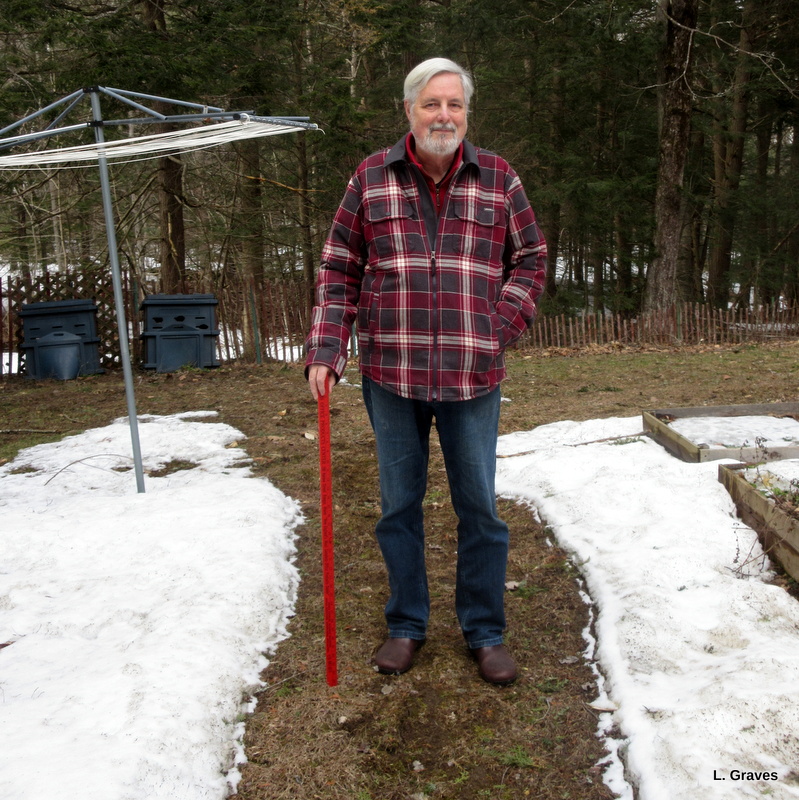
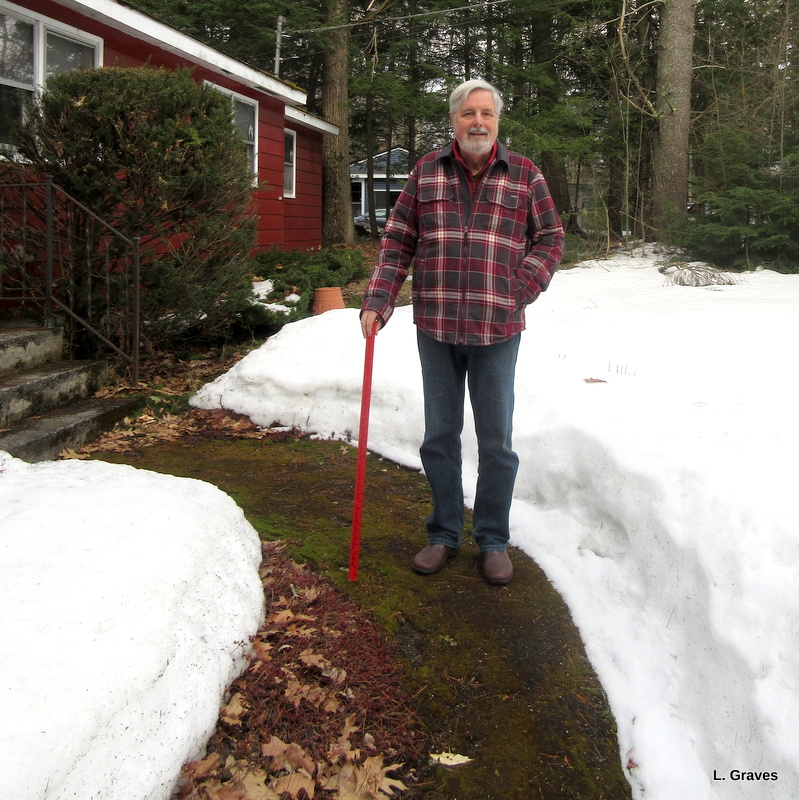
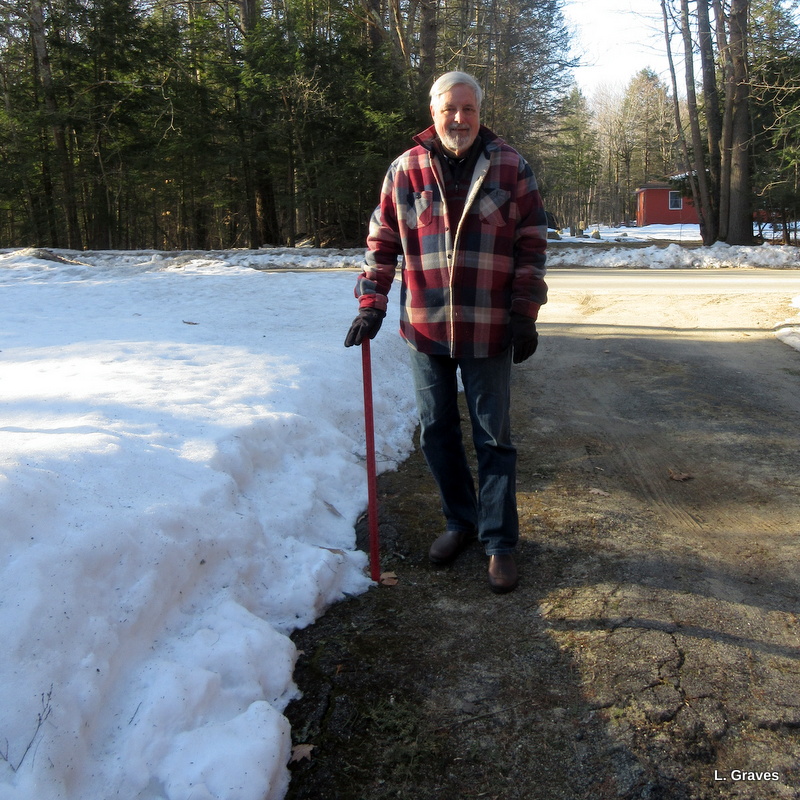
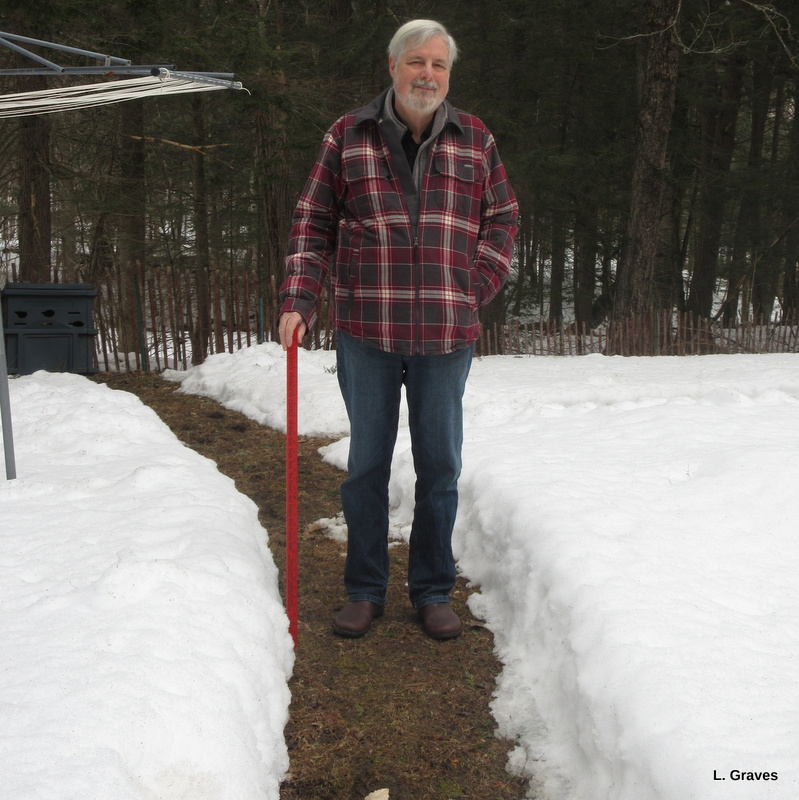
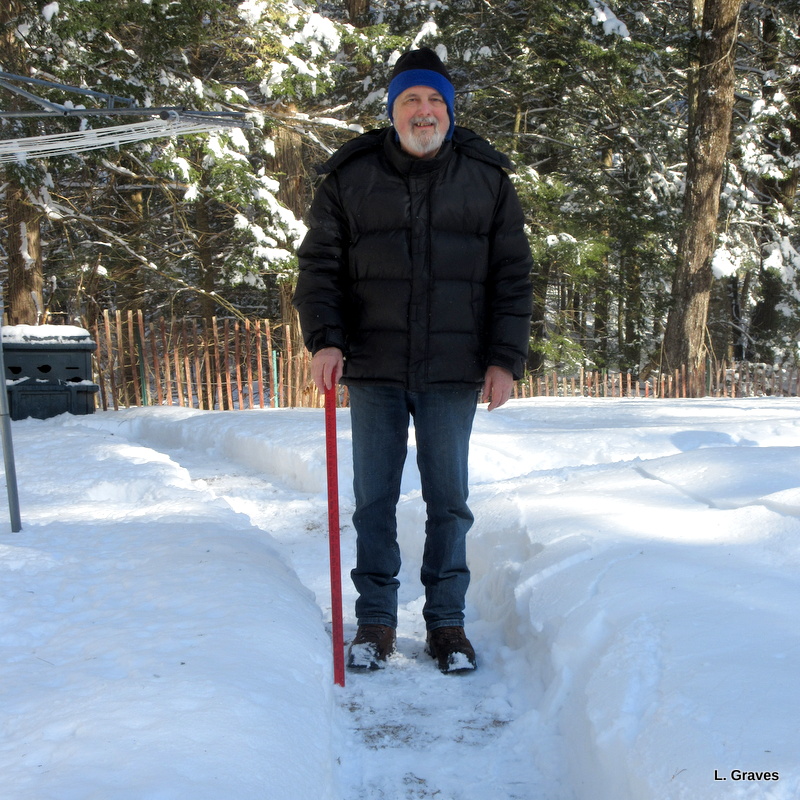
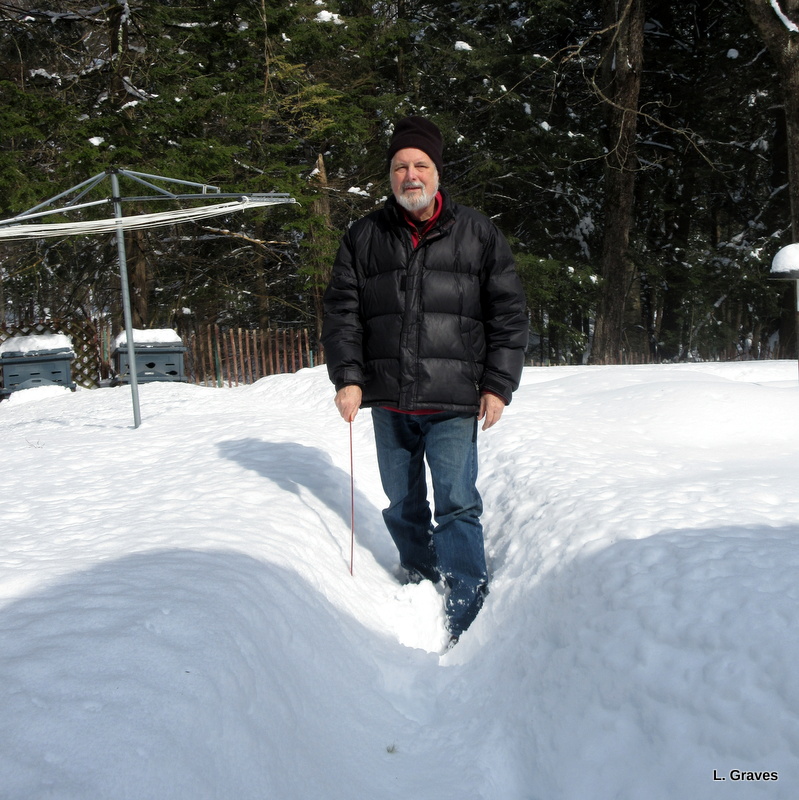
Plumbing problems or not, Clif was out with his trusty snow gauge to measure the snow.
Here he is in the front yard by the driveway and then on the walkway leading to the front door.

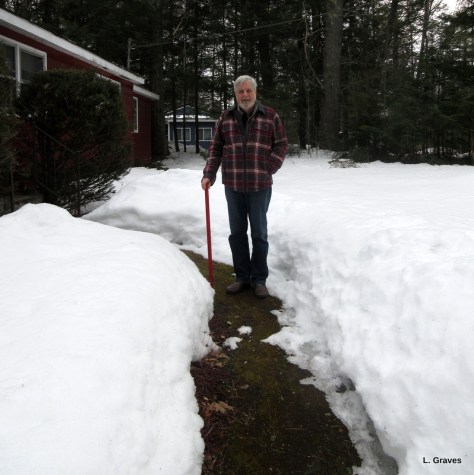
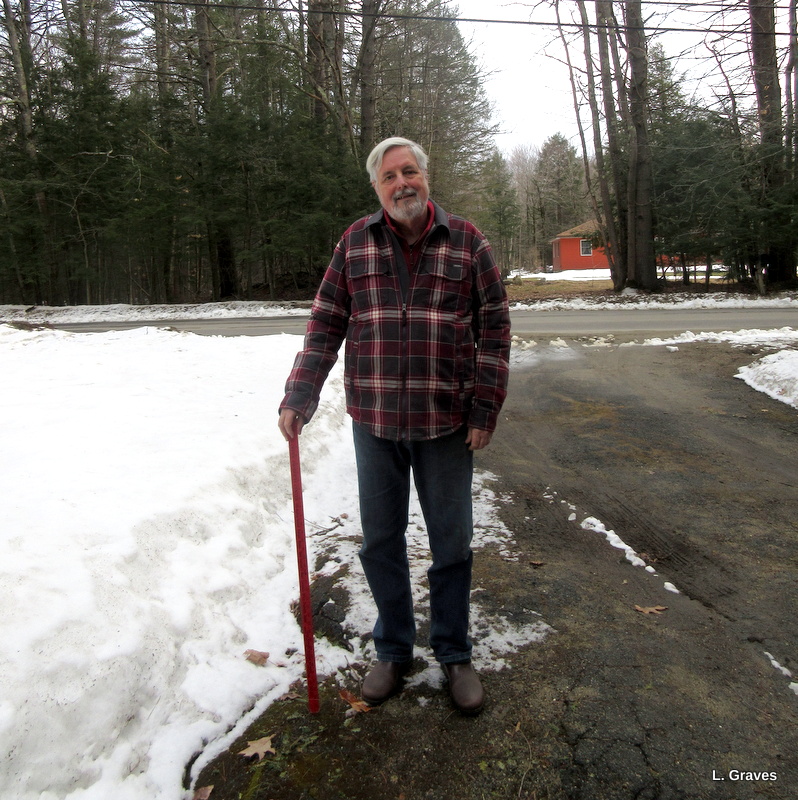
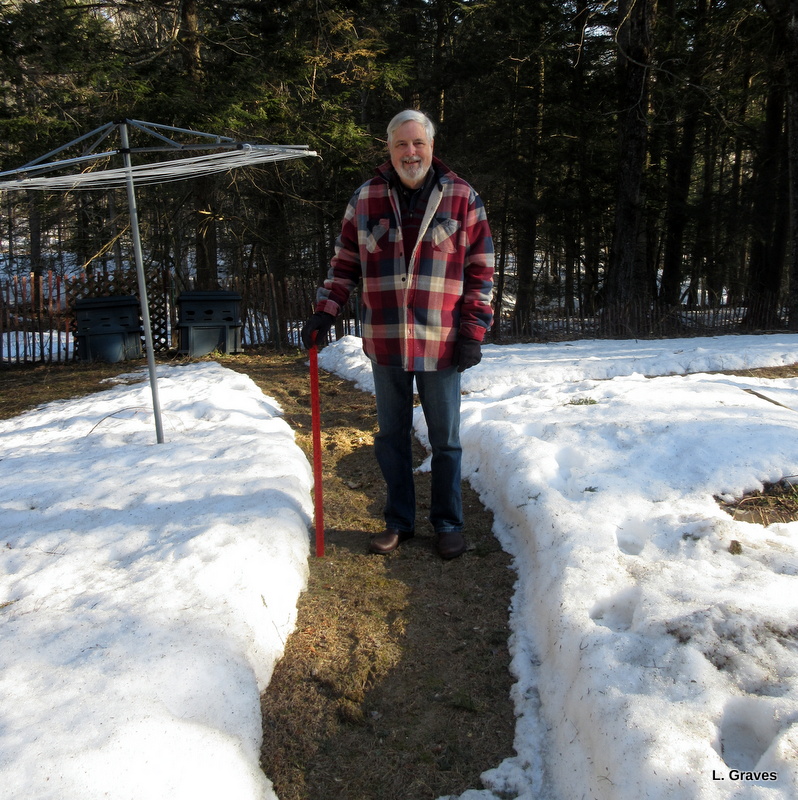
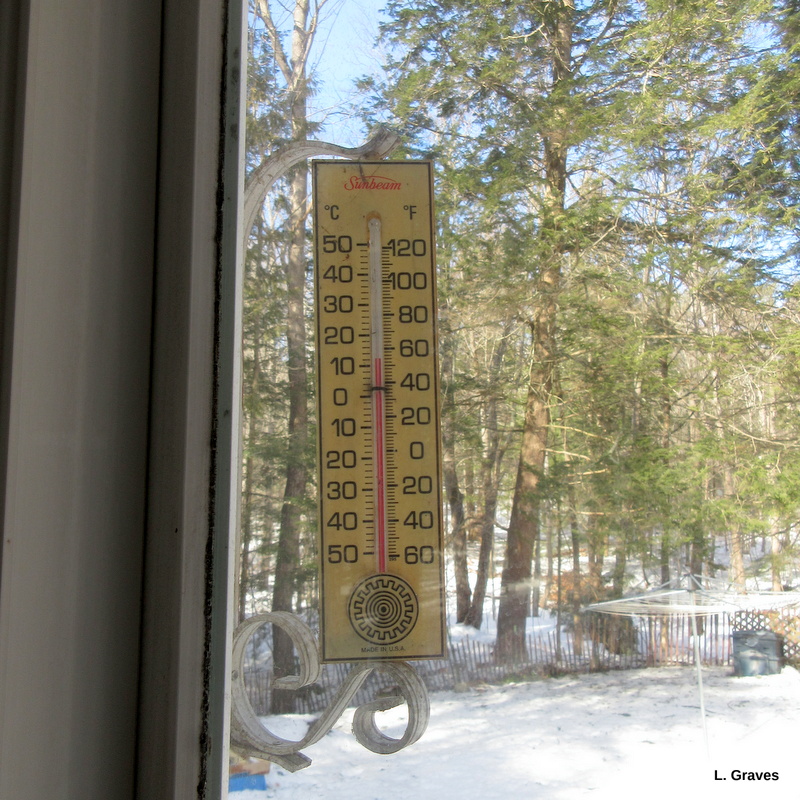
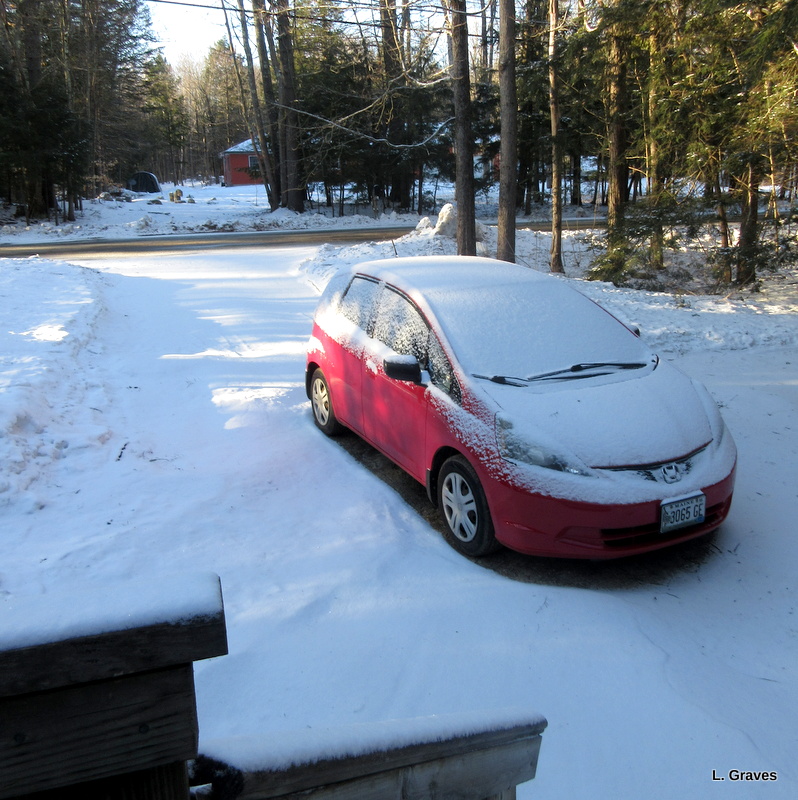
Over the past week, the weather has been warm and sunny, and the snow has actually gone down a bit. Here are last week’s pictures for comparison.

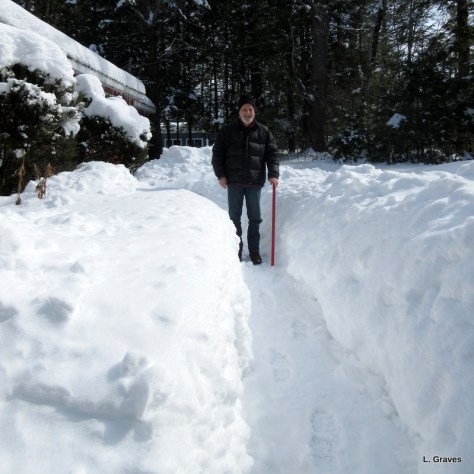
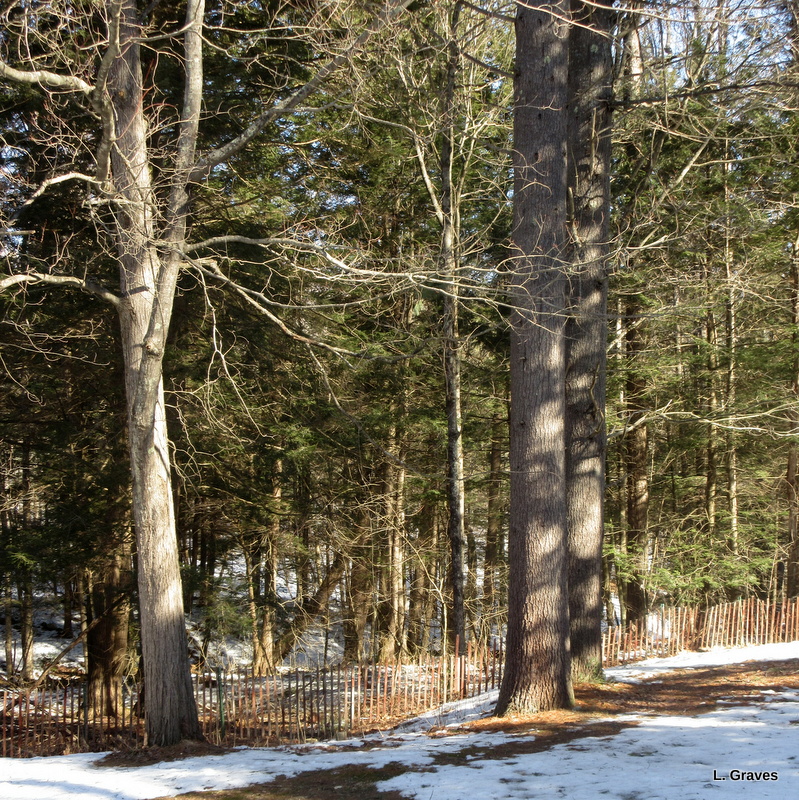
And here is Clif in the backyard.

Again, last week.
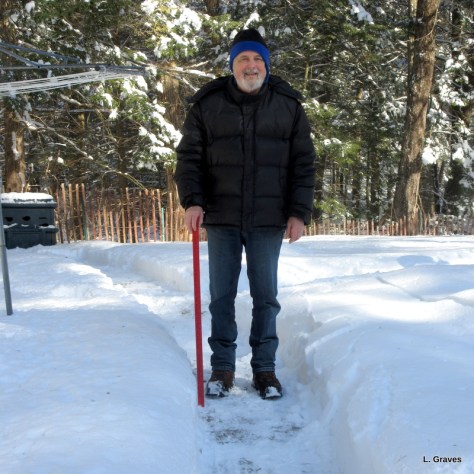
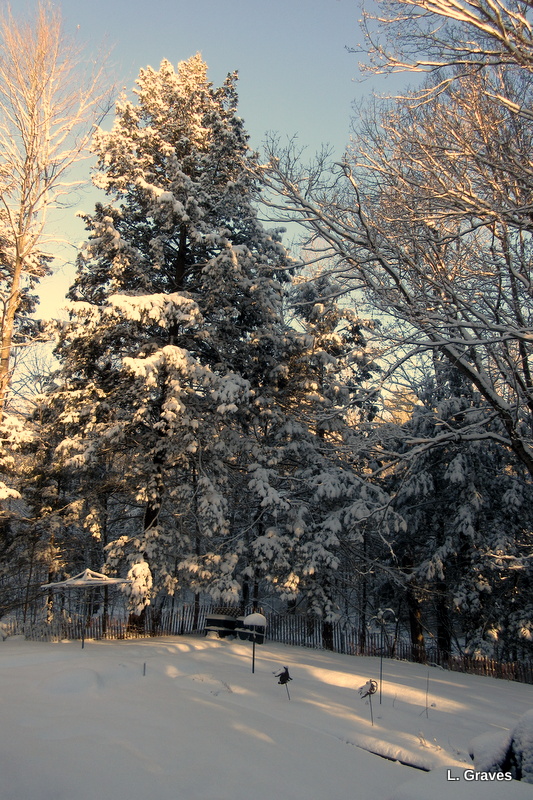
The path to the compost bin was actually muddy this week, and I had to step carefully so as not to lose my Sloggers. In Maine, this counts as progress, but up the East Coast, a nor’easter is blowing, and tomorrow’s forecast is for another foot of snow.
Dang! Snow-gauge Clif and I are ready for the snow to melt, not to accumulate.
*****************************************************
READING
Small Things Like These by Claire Keegan
Note: There are moderate spoilers in this review.
With its spare, beautiful writing, this gem of a short novel—set in the 1980s—is nearly perfect. In the Irish town of New Ross, Christmas is coming. Bill Furlong, a coal and timber merchant, works long hours to ensure his customers have enough fuel to stay warm over the holidays. At home, his wife Eileen and their five daughters bustle to get ready for Christmas. In her own way, Eileen is as busy as Bill is. I’m guessing many women will identify with Eileen and the hard work of getting ready for Christmas. I know I did.
While making deliveries, Bill reflects on his life as an illegitimate child raised by a single mother who worked as a domestic servant for “Mrs. Wilson the Protestant widow who lived in the big house a few miles outside town.” Mrs. Wilson, frugal but kindhearted, provided Bill and his mother with a warm, stable home and even helped Bill as an adult. Fortunately, in New Ross, there is little antagonism between Catholics and Protestants.
There is, however, a convent in New Ross where on one side is a school and the other side a home for unwed mothers. The convent, in many ways, is important to the economy of the town and especially to Bill, whose daughters go to school there.
In a tense, heartbreaking way, Bill’s reflections of his childhood converge with bringing coal to the convent and what he discovers. Then Bill must must make a decision that will reverberate with his family for years to come.
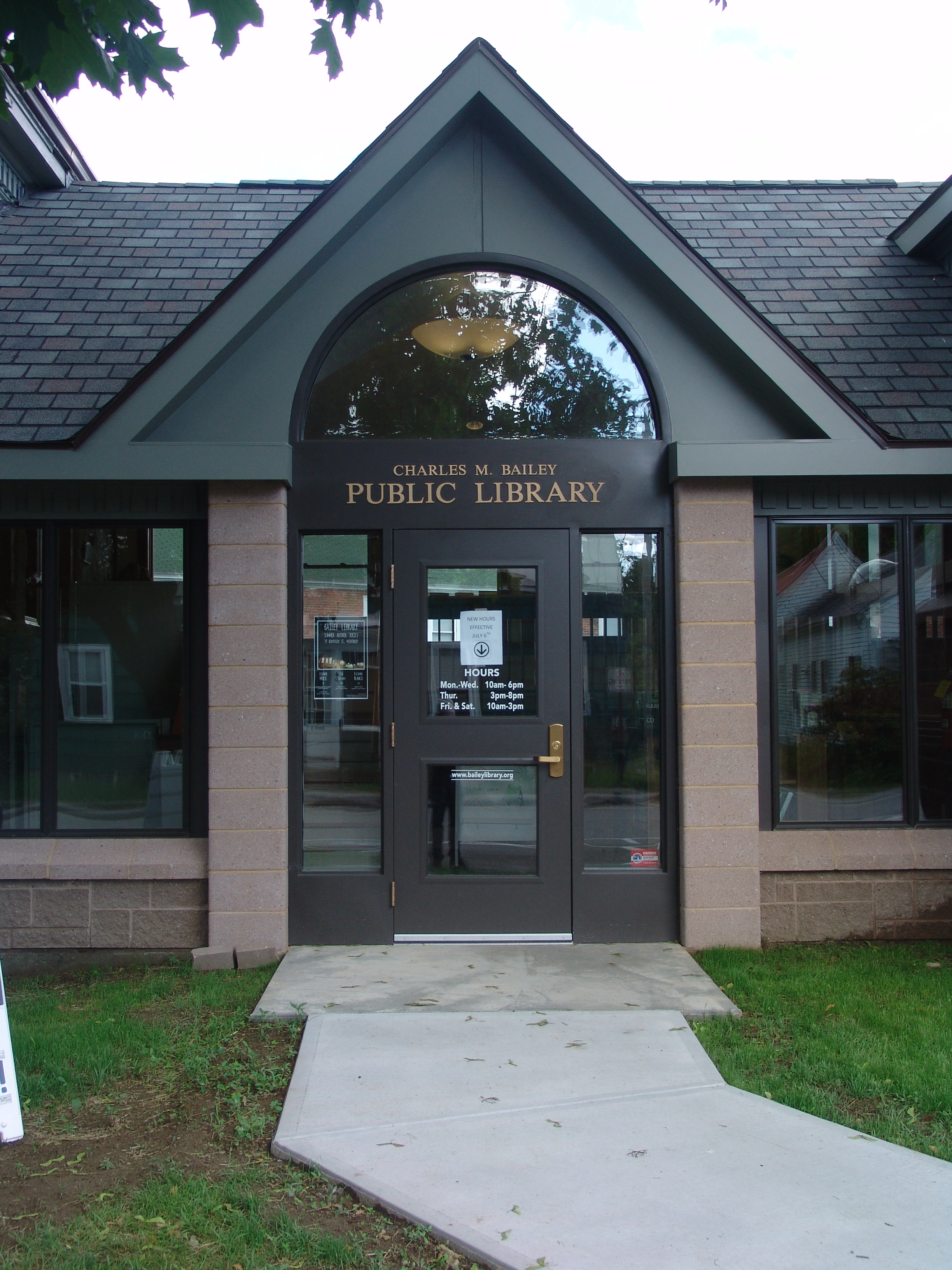
I’ll certainly be reading more of Claire Keegan and have ordered Foster through interlibrary loan.


















 Notes From the Hinterland