Category Archives: Environment

Bolting into Our Electric Journey

Last week we received some bad news about our 2010 Honda Fit—it would cost about $3,000 dollars to get it to a point where it could be inspected. After a short discussion, both Clif and I agreed that the time had come to give up our trusty little Fit. We did this with sadness as the Fit has served us reliably over the years. But $3,000 seemed like too much to put into a fifteen-year-old car.
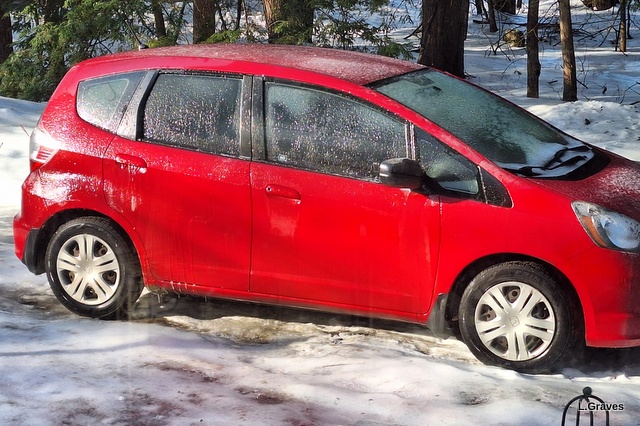
Our trusty Honda Fit, glimmering after an ice storm

The time had come to buy another car.

Longtime readers will know that we take climate change very seriously. (This dry blazing hot summer is certainly a reminder that the change is upon us. Now.) It has long been our dream to get an electric car, but in the past, they cost more than we could afford.

I am happy to report that this has changed. While electric cars are still in the minority, there are now enough on the market for good, used cars to be available.

We thought we might have to go to Massachusetts to get one, to a dealer in Tewksbury, but as it turned out, a local dealer had a used EV, a Chevy Bolt, available at a price we could afford. With 44,000 miles on it, the car has had one owner and is in beautiful condition.

And guess what color it is?
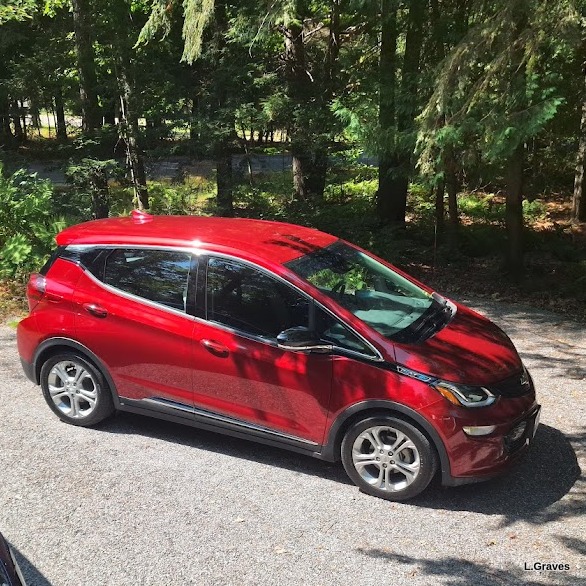
It seems as though we attract red cars, doesn’t it?

The Bolt’s battery range is about 245 miles, which suits us just fine. Both Clif and I are homebodies, and with our home charger, that range will get us where we want to go in central Maine. Dee’s EV has a range of over 300 miles, and for longer trips we can use her car. And, at least in the part of Maine we live in, public chargers are plentiful. If we needed to, we could stop at one for a recharge.

But I don’t think we’ll need to. A friend of ours has an EV with a similar range, and it gets her to southern Maine and back with no problems. (This means that I can still meet my blogging friend Judy of New England Garden and Thread for our yearly lunch at Stonewall Kitchen in York, Maine.)

We are almost a completely electric household now. We have a propane hot water heater, and the plan is to replace that next summer with a heat-pump water heater, which will complete our electric journey.

The cherry on our sundae is that most of our power comes from solar farms.

Onward, ho!


Summer of the Sharks

With age comes nostalgia, and at sixty-seven, I find I am succumbing more and more to a longing for the good old days of Maine summers, when the weather was seldom hot and humid, when smoke from forest fires in Canada did not spread their haze over our state, and finally, when beachgoers could swim in the ocean without worrying about an encounter with a Great White shark

Time was when we swam at the ocean, all we had to worry about was the cold water. And cold it was. My family developed a technique of going in gradually, until the cold stopped stinging our legs, which in turn became, well, yes, numb. Then we could play in the waves until our teeth started chattering, and we had to take a break. After all, we are Mainers. We eat ice cream in the winter, don’t turn on the heat until October when the temps dip below 30°, and don’t let a little thing like bracing water stop us from swimming in the ocean.

But Great Whites are another matter. Previously, they came only as far north as Massachusetts, on the warm side of Cape Cod. Far, far away from us. Or so we thought. In the halcyon days of the 1990s, we swam without concern about large ocean predators.

But in the past five or so years, the Great Whites have moved north. So far, only one Maine woman has been killed swimming, and that was in 2020. Still, the Great Whites are out there, and the sightings have been increasingly common, especially this year, when shark flags have been flying at popular beaches to warn swimmers of potential danger.

And why are the Great Whites coming as far north as Maine? According to Maine Coast Islands, there are two prime reasons: One, due to preservation efforts, seals have made a comeback along the Maine coast, and Great Whites like to eat seals. Two, our waters are warming, thus drawing the Great Whites northward.

Here is a video of an encounter with sharks that a lobsterman recently had:

For the record, I do not think predators are evil. I know that they have to make their living, which involves eating other creatures. When either coyotes or fishers got two of our cats, I didn’t take it personally. Still, I mourned the loss of those cats, Finnegan and Margot.

Likewise, I don’t want to become a meal for a Great White. Ditto for family and friends or anyone else for that matter. Because of arthritis, my swimming days in the Maine ocean were pretty much over. The Great Whites have sealed the deal as the saying goes.

Still, my love of the ocean remains strong, and it is a great pleasure to be on the shore, looking out at the vast sea. The salt air, the call of gulls, the lapping of waves will never lose their appeal.

When I do go, as I scan the water, I will be keeping an eye out for a fin cutting the water. As much as Great Whites give me the shivers, it would be a thrill to see one.

As long as nobody is in the water.

To complete my nostalgic yearnings, I’ll end with an oldie but goodie from Toad the Wet Sprocket.


This. Is. Not. Normal.

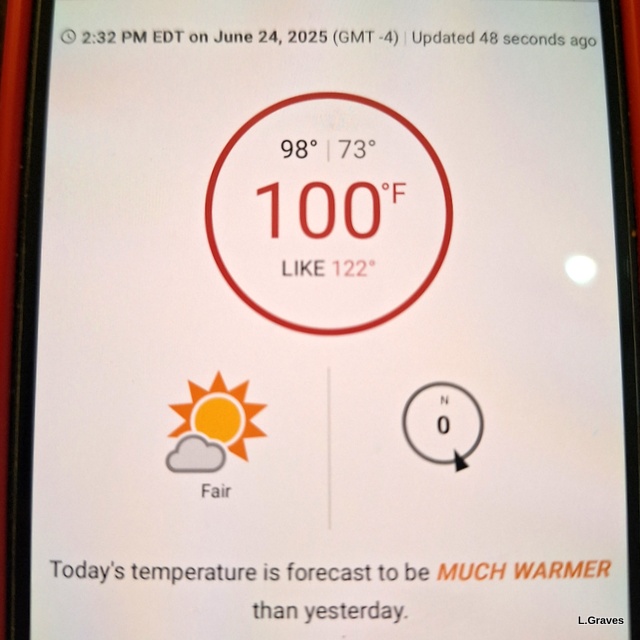
Last week on Tuesday, this is what the thermometer outside our dining room window read.

To add insult to injury, the Winthrop Weather Station gave us this additional information.

This is Maine. In June. Back in the day, June was so cool and rainy that sometimes my father had to replant the green beans because they rotted in the soil. Not every year, but enough so that I remember him complaining about it.

Fortunately, during the extreme heat, we had our new heat pumps, and they worked like champs. They were installed at exactly the right time, and we are so very grateful to have them. They kept us cool and comfortable for the two days the extreme heat came to Maine.

Aside from the alarmingly high heat, the sad thing is the denial that I saw on Facebook. When the local meteorologists posted the heat warnings and noted that these were record-breaking temps, all too many people protested. There was “I remember it getting this hot when I was young.” Oh, really, I thought, did you live in Maine? Or, “It’s summer, deal with it.” As though the extreme heat were a trifling matter, and only wimps complained about it when in fact , according to NOAA, extreme heat kills more people than any other weather event.

Who are the people writing such things? Bots? Shills for the fossil fuel companies? Folks who just don’t want to face the truth?

How bad does it have to get before there is a general consensus about climate change and the will to do something about it?

***********************************************************************

On a happier note…it is peak garden time at our home by the woods.

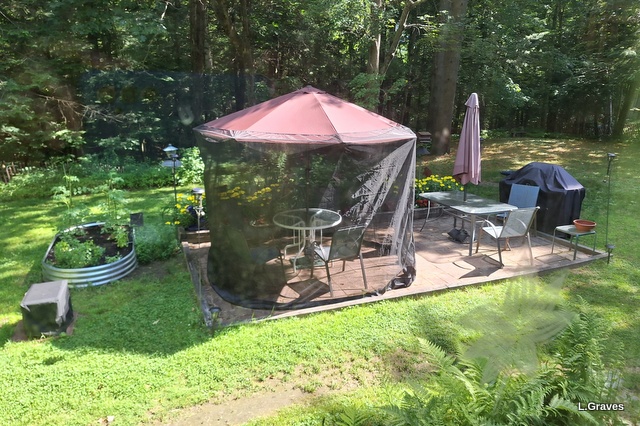
Here is a view of our backyard from above, taken from the dining room.

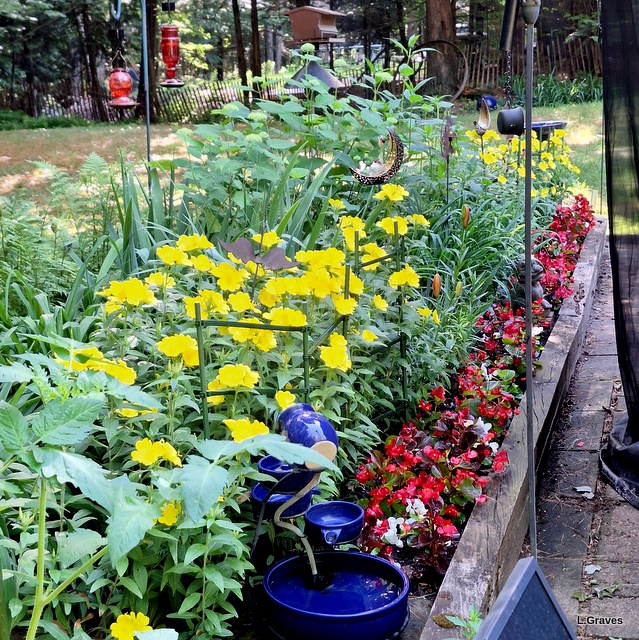
A closer look.

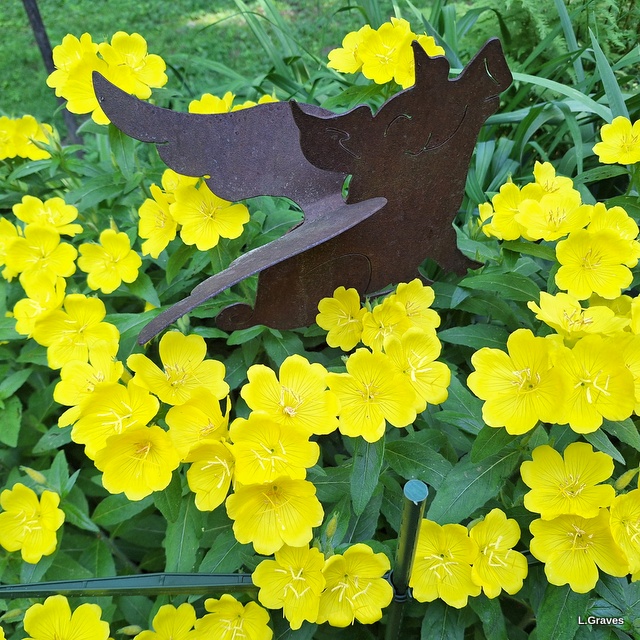
And even closer.

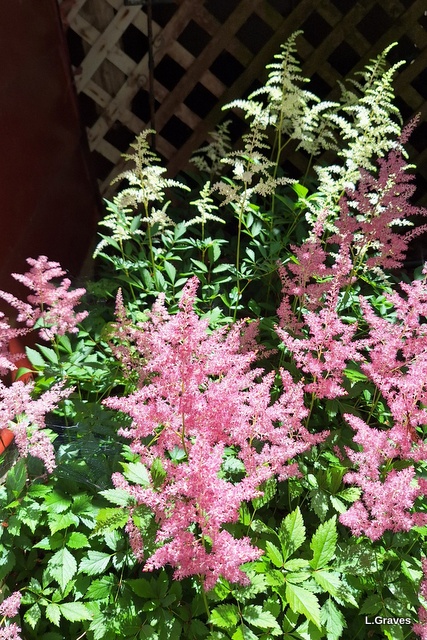
Now to the front, for a froth of astilbes.

With such visual delights, the extreme heat can be forgiven. But not forgotten.

***********************************************************************

Reading

Not everything that is faced can be changed, but nothing can be changed until it is faced.
–James Baldwin, 1962

During the heatwave I ordered Mike Berners-Lee’s A Climate of Truth, a much-needed look at how denying the truth about climate change has not only held us back but has endangered us as well.

Even though I haven’t finished the book, I can highly recommend it. It is clear, well written, and moves right along. The book has also made me think about what I can do in my own life to reduce my carbon footprint. There is plenty of room for improvement even for this family of green beans.

Our Electric Journey

Longtime readers will know that Dee, Clif, and I take climate change very seriously. While we know that a system-wide change is absolutely essential, we believe that individuals have a responsibility, too.  As such, we are doing what we can—actually, what we can afford—to stop burning fossil fuels for energy. In short, we are going electric. This is the first time in human history that folks have this option, and kudos to all the engineers and designers who have made this possible.

To date: We have one electric car and a charger, which is right in our yard. The car’s range is over 200 miles, even in the winter, and the car has worked beautifully. (We have had it about a year now.) In our electric car, we have driven to southern Maine, a round trip of about 170 miles, without a single hitch. Our second car is a traditional gasoline engine car, and we hope to get another electric one when it’s time to trade it in. (As our gasoline car is 15 years old, that time will soon be coming.)

For heat, as is typical of many Mainers, we have a variety of systems. We have electric baseboard heat, which works well but is expensive. This came with the house. We have a wood furnace in the basement, which puts out the coziest heat ever, but hauling wood is a lot of work, and Clif is no longer a spring chicken. Then, about twenty-five years ago, we had propane heaters installed. They work well, but they still use fossil fuel and recently, they have become expensive to run.

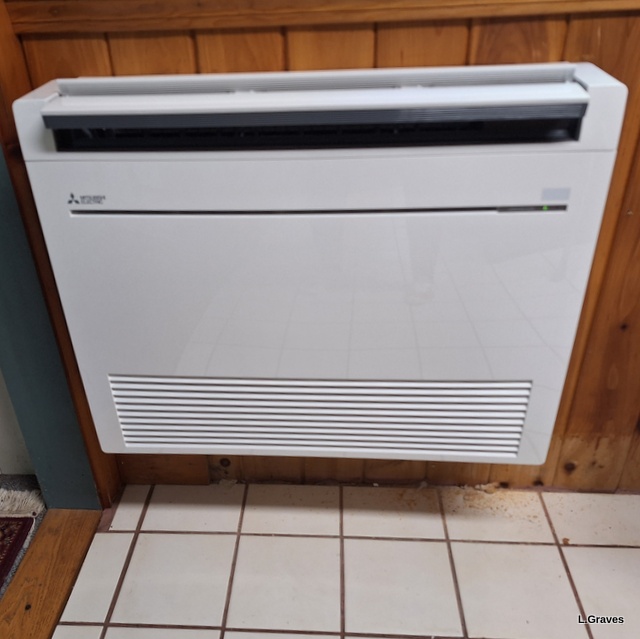
A few weeks ago, we had the propane heaters removed, and in their place, two heat pumps were installed. Here is the one that will heat (and cool!) our kitchen, dining room, and living room.

This morning was a cool June morning, not unusual for Maine. Inside, the temp was about 64°F. We turned on the heat pump, and it didn’t take long for the dining room, kitchen, and living room to reach a comfortable 70°. At which point, the heater shut off.

Best of all, the heat pumps will cool the air and remove the excess humidity. For the past few years in Maine, July has been a horrible hot month, with effective temperatures in the 100s. I can only imagine what my parents and grandparents would think of these temperatures. Back in the 70s, when it reached 85°, we thought the heat was unbearable. But it only reached 85° a few days at the end of July, and hardly anyone in our town had an air conditioner.

That has all changed, and we are ready with our heat pumps. Good friends have heat pumps, and they love them. Best of all, the heat pumps are much cheaper to run than electric baseboard or propane or oil.

A post about our electric journey would not be complete without mentioning a blogging friend, Tom from Tootlepedal’s Blog. He and his wife, Alison, have gone the extra mile with their electric journey. Not only do they have an electric car but they also have installed solar panels in what they call their garden. (Here, we call it a yard.)  Bravo, Tom and Alison! You two are an inspiration to me.

Finally, I do want to add that going solar and electric can be expensive, and I totally understand why it is out of the reach of some people. With our combined incomes, Dee, Clif, and I have more leeway than many folks do.  But what’s important is to make what effort you can.

In the end, small things add up.

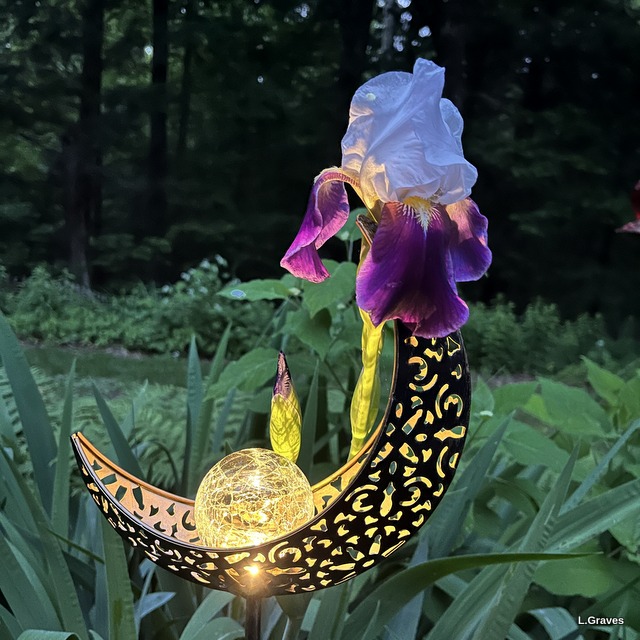
Our little solar lights definitely come under the “small things” category, but we do love the glow.


And here’s a song by MJ Lenderman reminding us that we all got work to do.


Thankful Thursday: Electric, At Last!

This post is part of a series called Thankful Thursday, where I list some things to feel thankful for. To some extent, focusing on what is wrong appears to come naturally to most people, who tend to complain, complain, complain when they get together with family and friends. (I’m no exception, that’s for sure.) So focusing on things to feel thankful for seems like good spiritual practice, a way to counterbalance the tendency toward negative thinking.

On last week’s Thankful Thursday’s post, my first one, I started with a humdinger—a new driveway and steps. As someone whose life is mostly filled with small, simple pleasures, I didn’t think it would be possible to top this. But, holy cats, was I ever wrong!

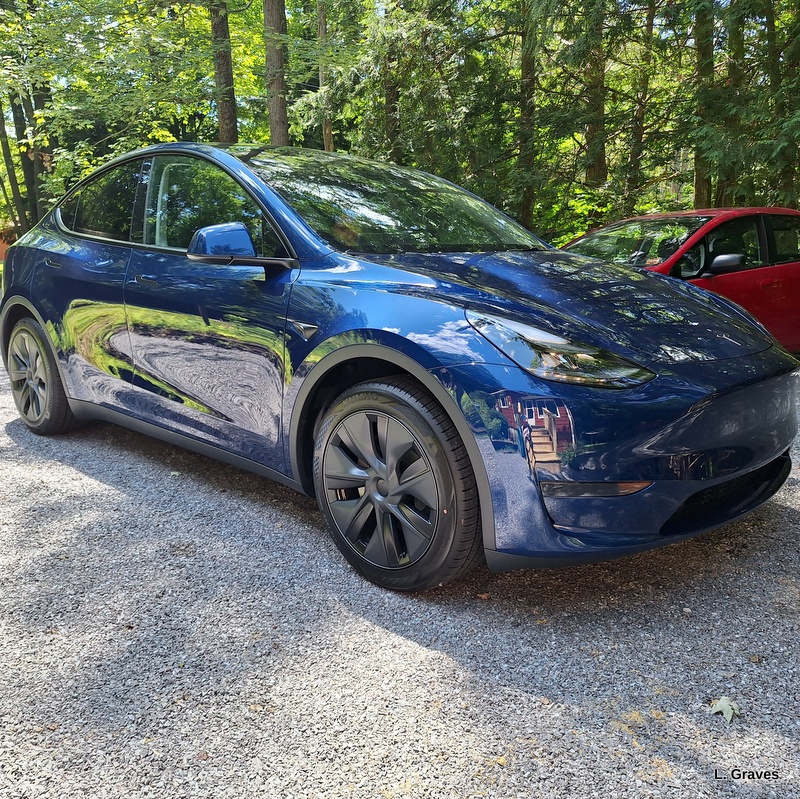
Last Friday, after over a month of waiting, our daughter Dee’s new electric car, a Tesla Y, was delivered to our home by the woods. (Tesla sells directly, and because there are no service centers in Maine, this one was shipped from New Jersey.)

Isn’t it a beauty? And isn’t it great that our new driveway was ready to welcome the new car?

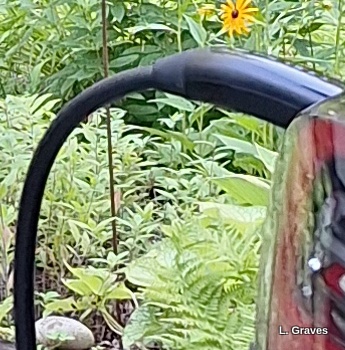
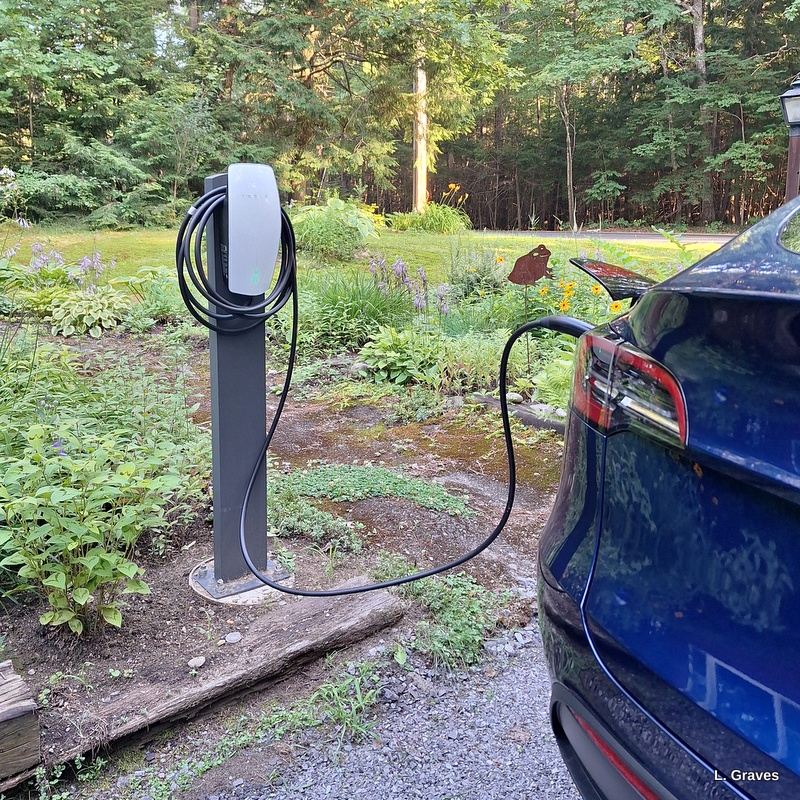
Obviously, an electric car needs a charger, and we had one ready and waiting.

Now, this is Dee’s car, not ours, but she will be staying with us for a few more years while she saves money to buy a house. This means we will get the benefit of her electric car when we drive here, there, and everywhere. (Actually, we don’t go too far, and the car’s 320 miles per charge will be just fine for us.)

For dirty trips to, say, the transfer station (formerly the dump), we will use our Honda Fit, which is 14 years old and has seen its share of wear and tear. When the Fit no longer runs, we hope to buy an electric car, a used one.

So hot diggity dog! Here we are, an electric-car family, at least for now.

I can’t imagine anything will top this for the next Thankful Thursday.

But you never know.

Addendum: My blogging friend Eliza asked where the Tesla will be serviced. Fortunately, we won’t have to take it to New Jersey. There’s a dealership in a nearby town that services Teslas.

The Smoke Blows and the Garden Grows

Last week, the East Coast had quite a time. Smoke from Canadian forest fires blew down, making New York City look like something out of a post-apocalyptic movie—the air was so thick with smoke that the Statue of Liberty was barely visible in the harbor, and the street lights were turned on at 2:00 p.m.

Incredible as it might seem, Maine—right next to Canada—escaped the smoke. A low-pressure system stalled off the Gulf of Maine kept our air clear. Thank you, low-pressure system.

Fortunately, our eldest daughter Dee, who lives in Brooklyn, decided to come to Maine last Sunday, right before the smoke filled the city. She will be working remotely on a permanent basis and has decided to make her home in Maine. Such a delight to have her here.

Over the weekend, the weather patterns changed,  clearing the smoke away from the East Coast. But the Canada wildfires rage on. We can only hope that the smoke doesn’t travel south again.

*************************************************************

On a happier note, at our home on the edge of the woods, my gardens, with their various shades of green, are flourishing. After a very dry May, we had a week of rain, too much for some people, but I was delighted with the wet weather.

Here are some scenes from the garden.

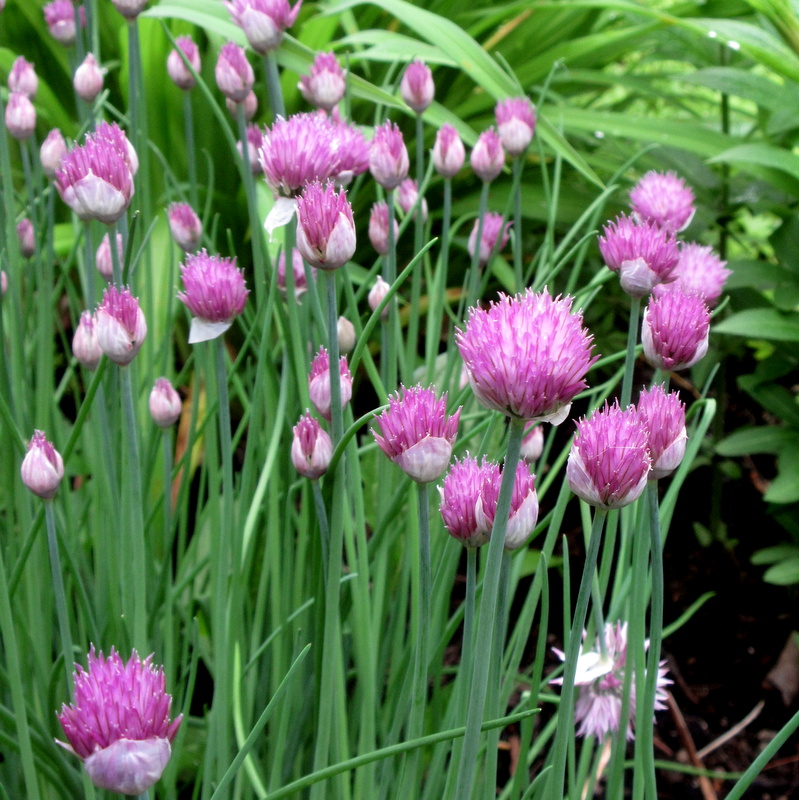
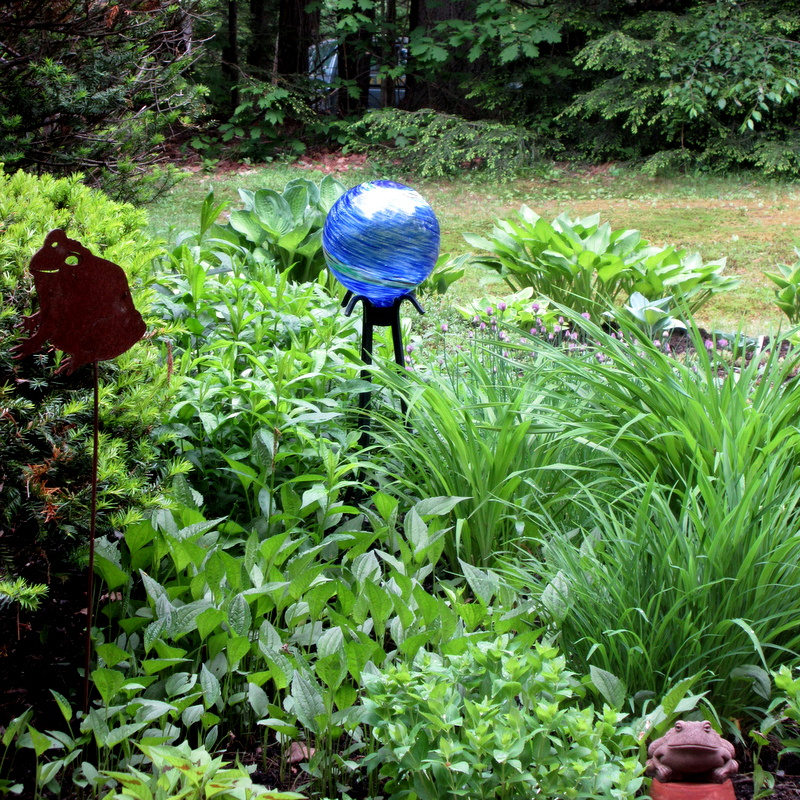
In the front yard, the chives are in pink blossom,

the blue gazing ball rests between two toads,

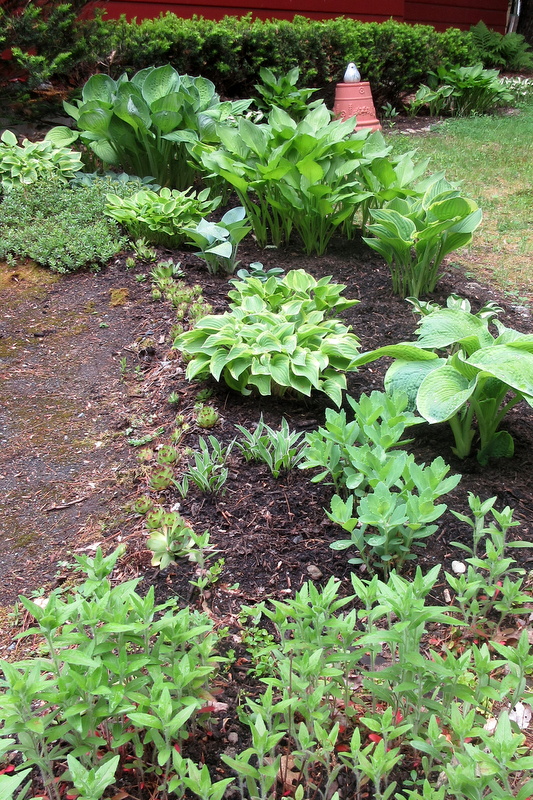
and the hostas make a pleasing sweep of green.

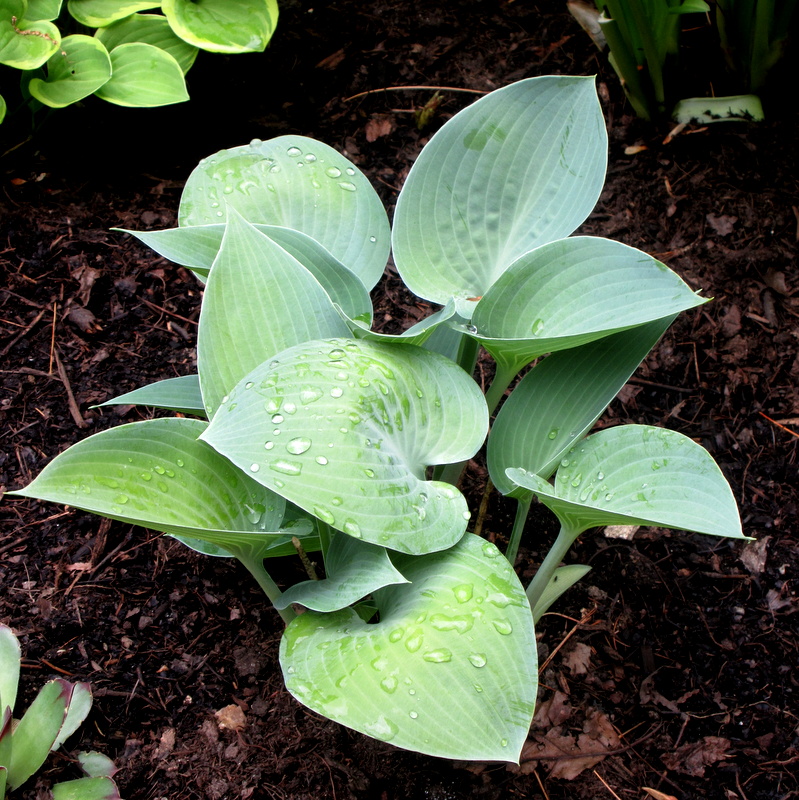
The hosta that Judy—from New England Garden and Thread—sent me is thriving.

Now around to the backyard.

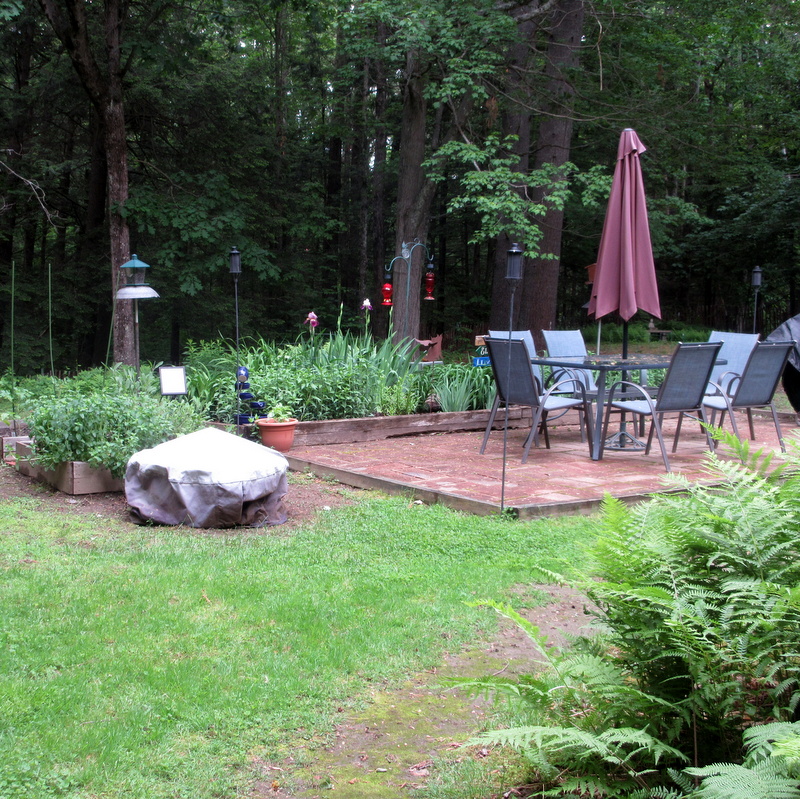
The patio is once again an inviting place to sit and listen to the birds sing their spring songs. Last night we heard the ethereal song of the hermit thrush. Such a delight.

And irises, my favorite of favorites, are in bloom.

*************************************************************

This summer is shaping up to be a really busy one filled with events, family, and friends. Therefore, I’ve decided to take the weekends off from reading and commenting on blog posts. But never fear, from Monday through Friday, I’ll be reading and commenting, and come fall I plan to go back to my regular reading.


Green, Green with EV Envy

Just before Christmas, my friend Dawna called and asked, “Could I stop by for a little while? I have something to show  you.”

“Sure,” came my answer. “I’ll put the kettle on for tea when you get here.”

Dawna is a talented photographer and graphic artist who sells cards at various local shops and online through Etsy.  (Do check out her beautiful work if you get a chance.) I thought she was going to show Clif and me a new line of cards, which I always enjoy seeing.

Therefore, as soon as Dawna came into our dining room, I said, “Let me put the kettle on, and you can show me what you brought.”

“Well…” she said in a hesitating way as I trotted into the kitchen to put on the kettle.

When I went back into the dining room, Dawna was grinning. “I got a new car.”

I’m sure there was a click, click, click as I processed this information, looked out at the new snazzy blue car in my driveway, and understood exactly what she meant.

“Oh, my God!” I exclaimed. “You bought an electric car!”

“Yes, I did,” Dawna said, and if my knees weren’t so creaky, I would have jumped with joy.

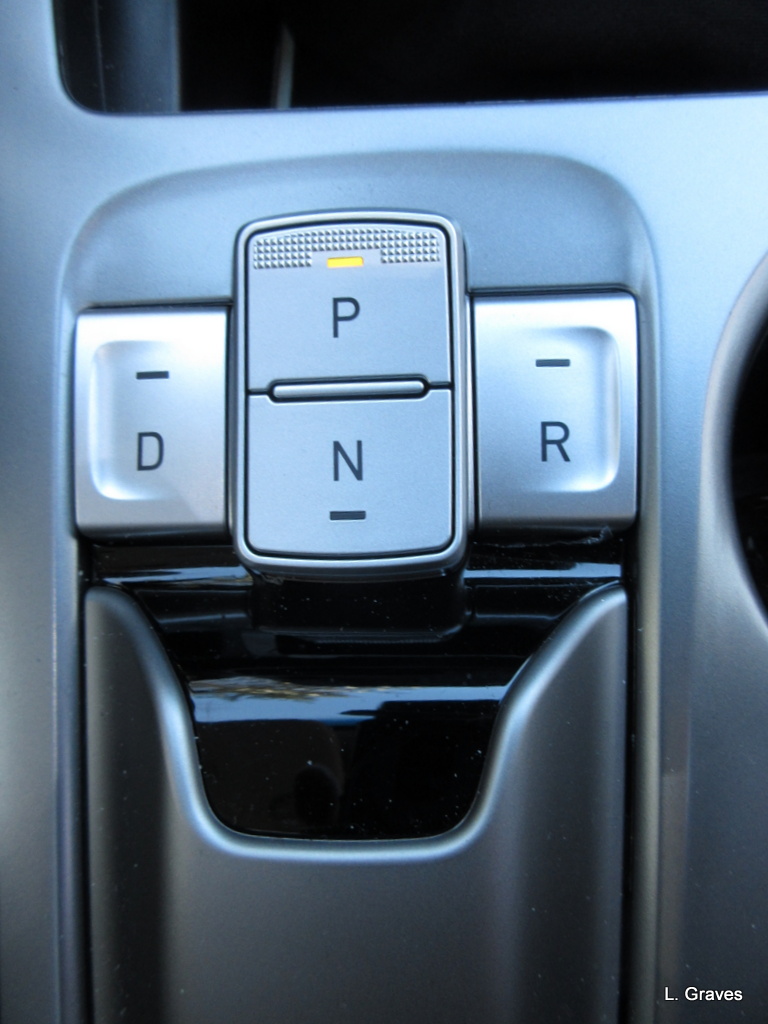
Here is a picture of her new EV beauty, a Hyundai Kona:

All thoughts of tea were forgotten as Clif and I went to admire the new car

“After Christmas, ” Dawna said, “I’ll take you for a ride.”

Dawna kept her promise, and last Friday she took us into Augusta, where we had brunch at Downtown Diner, which serves breakfast all day long.

As we ate, Dawna’s spoke about her decision to buy an electric car. Her previous car had become unreliable, and the time had come to replace it. She asked herself, why buy a polluting ICE (internal combustion engine) car? Dawna knew that the range of EVs had  improved, and when she did some research, she discovered that the Hyundai Kona got a peak mileage of 258 per charge. (Less, of course, when the weather is really cold.)

And that was that. Because there were so many rebates available, Dawna bought the car in December, not wanting to take the chance that the rebates wouldn’t be there in 2020. (Let’s face it: The current administration in DC is not exactly concerned about the environment.)

Here is what she got:

$2,500 from Efficiency Maine.

$500 from a Hyundai rebate.

$7,500 from a federal government rebate.

Her Hyundai EV Kona sold for $38,000, and the rebates brought the cost down to $28,000.

And how does Dawna like her new EV? Very well, indeed. As Clif and I noticed, the Kona is smooth and quiet and has great pick-up. Even on a cold Maine January day, Dawna can take the Kona to Portland, about a 120-mile-round trip, and still have 50 miles left on her battery. The Kona’s seats are heated, and Dawna and her husband, Jim, take advantage of this, which means they don’t have to use the car’s heater as much.

While most EVs come with a charging cord that can be plugged into a standard receptacle, charging this way is slow, and Jim has installed a charger that does the job much more quickly.

Southern Maine has a number of places to charge an EV,  but as you head north, their numbers dwindle. Dawna has decided to become an advocate for EVs, and she is writing a letter to encourage Governor Mills to support the installation of more charging stations.

Go, Dawna, go! And kudos to you for taking the leap into our electric future. I hope that someday soon Clif and I can follow your example, and I also hope many others will, too.


Some Thoughts about Plastic from the Snail of Happiness

Nowadays, plastic is everywhere—in our homes, in our businesses, in our landscapes, in our oceans. It is a fact of everyday life. Because of its inability to breakdown, plastic has been called the devil’s resin. I am trying, with limited success, to reduce the amount of plastic that I use, and I am sure this is true for a lot of readers.

Recently, Jan, from the blog The Snail of Happiness, wrote a post about plastic and how it might be used appropriately. She has agreed to let me link to this thought-provoking post.

Here are the first two paragraphs from Jan’s piece:

Today I want to discuss plastic… it’s in the news a lot at the moment and it is always portrayed as being evil. Well, I want to say that I disagree. Please stick with me on this and I’ll explain why I’m worried about the huge number of “plastic-free [insert town name here]” initiatives that are springing up and the way that plastic is presented currently in the media.

Language is very important, what we call things affects the way we perceive them. Call it “global warming” and the immediate image (in the UK at least) is nicer summers; call it “climate change” and that just means things are going to be different, and, after all, we all know that “a change is as good as a rest”; but call it “catastrophic climate breakdown” and there are no comfortable images to hide behind. See what I mean?

Click here to read the full piece and Jan’s take on the use of plastic in the modern world.

In some ways, Jan has made me reconsider my position on plastic. But her piece has also emphasized what I think is the need for a circular economy, where materials are seldom discarded and instead reused for other things. This should be done as locally as possible as shipping trash to China is rubbish. And could local centers, where material is recycled and remade into useful items, actually be a boon to towns and cities? A sort of mini resurgence in manufacturing? Maybe so.

Anyway, thank you, Jan, for this terrific piece.


Happy Earth Day, Happy Birthday!

Today is a special day for us. Not only is it Earth Day, but it is also our daughter Shannon’s birthday. Happy birthday to a very special person!

My blogging friend Judy noted that Earth Day is forty-nine years old, almost old enough to be a member of AARP.  Too funny! Judy also wrote that even though she gets stung more than she would like, she still leaves all manner of flowering weeds in her lawn to attract bees and other pollinators. Yay, Judy!

My blogging friend Eliza wrote that “every day should be Earth Day where we do our best to take care of our planet.” Hear, hear! And she posted an oh-so-lovely blue bouquet in “a small, cobalt-blue tincture bottle.” What a fitting way to honor our beautiful blue planet.

From the often curmudgeonly but nonetheless excellent website Tree Hugger, here are ten tips to make every day Earth Day.

Today is a gray but mild day in our neighborhood. To honor Earth Day, we are not going anywhere at all. It will be a no-car day—we do our best to have several of these each week. If the weather allows, we will sweep the patio and haul out the small patio table from our cellar. Heck, if the rain hold off we will even have our first patio drink of the season, where we will toast Earth Day and our birthday daughter.

Finally, here is a picture of a small fallen tree on the edge of our yard by the woods. A wonderful example of how nothing is wasted in nature.

Happy Earth Day to all!

A Shining, Hopeful Example: Wind Power and Orkney Islands

When you are someone who cares about the environment the way I do—Clif and I refer to ourselves as green beans—it is easy to get discouraged. A focus on climate change, resource depletion, and overpopulation can lead to gloomy thoughts. And let’s face it—most of the news we read about the environment is not good, thus adding to the gloom.

Then in The Guardian comes Robin McKie’s piece: How Orkney Leads the Way for Sustainable Energy. (Thanks to Susanne’s Mom’s Blog for featuring this piece as well as providing the link to it.) According to Mckie, Orkney Islands—an archipelago to the northeast of Scotland—produces so much sustainable energy that they can’t use it all.

Holy cats!That news is enough to make this green bean snap with joy.

So how did Orkney Islands do it? First, because they are islands, all of their power came from the mainland, and their energy costs were expensive. Mckie writes, “Orkney was once utterly dependent on power that was produced by burning coal and gas on the Scottish mainland and then transmitted through an undersea cable.”

Second, Orkney Islands have wind and lots of it. “Low-lying and exposed to both the Atlantic Ocean and the North Sea, Orkney is battered by winds and gales throughout the year.”

Rather than gripe about how wind turbines spoil their view, the way we do here in Maine, the Orcadians decided to embrace the wind and use it to produce energy. How much energy? “Orkney…generates, on average over the year, electricity that fulfils 120% of its own needs.”

That’s right. Orkney Islands now have surplus energy that is clean and affordable. They are actually thinking of exporting that energy back to the mainland.

Anyway, McKie’s piece is well worth reading. On this sunny day where the snow from the last storm still hasn’t melted, Orkney’s  success with wind power gave me a much-needed lift.

Correction: I originally wrote that Orkney was between England and France. A couple of my blogging friends corrected that error, letting me know Orkney Islands were to the northeast of Scotland. Many thanks for letting me know.