All posts by Laurie Graves

I write about nature, food, the environment, home, family, community, and people.

And a Cooling Wind Came

IMG_1692“If there is fulfillment and perfection, surely it is among the trees, the oldest living things we know.” —Hal Borland


Last night, a cooling wind came, thrumming through the trees and rippling with a great sigh around the little house in the big woods.

“Can you feel it?” I asked, pressing my face to a screen in the dining room and breathing in the sweet, cool air.

“I sure can,” Clif said.

Such relief after the horrible humid weather we’ve been having. In the dining room, the drawer that holds the good green napkins has swelled to the point where it won’t open. Ditto for the top drawer in the fold-up desk. This drawer started giving me problems mid-week, and in an uncharacteristic act of thinking ahead, I removed my address book and put in the section where the desk flips down. This part still works as it should, and as I am someone who will send a card just because I feel like it—no occasion necessary—I needed that address book. (I have used it twice in the past two days.)

When fall really does arrive—in a few weeks, I hope—and the humidity takes its leave, then the drawers will return to their normal size. Every summer, this swelling is a problem, but as Clif observed, we’ve always been able to open the drawers. We just had to work hard at it. But not this summer. The high heat and humidity have sealed them shut.

Yesterday, I received a call from Shannon. Mike’s appendix was giving him trouble to the point where it had to be removed that very day. Fortunately it had not ruptured, but as Dee is coming today to stay in Maine for the week, and Shannon was supposed to pick her up at the bus station, this changed the schedule, shall we say.  The cookies I planned on making on Sunday will be made today. I went grocery shopping last night rather than on Saturday. Never mind! Mike went through surgery with “flying colors,” and he is doing very well. After a night in the hospital, he’ll be going home this afternoon.

How different this is from when I was young. Then, if you had your appendix removed, you were in the hospital for quite a while, at least two weeks. The same was true for gall bladder removal. This really is progress.

The gardens are winding down. A lovely white phlox—David—along with the black-eyed Susans and the sedums, bring some color to the front yard. But mostly all the plants look tired. It’s as though they know have they done their part, and now it is time to rest.

IMG_1732
David

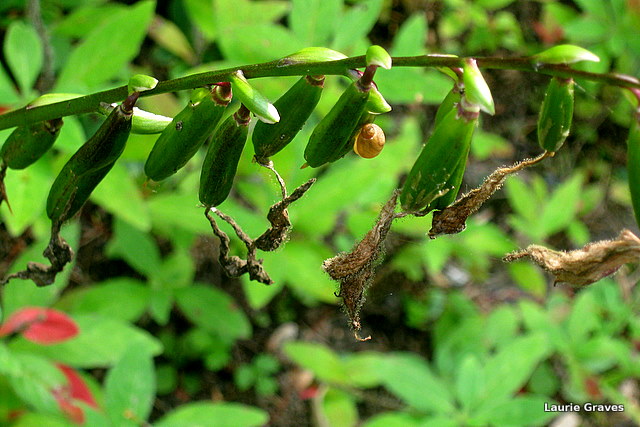
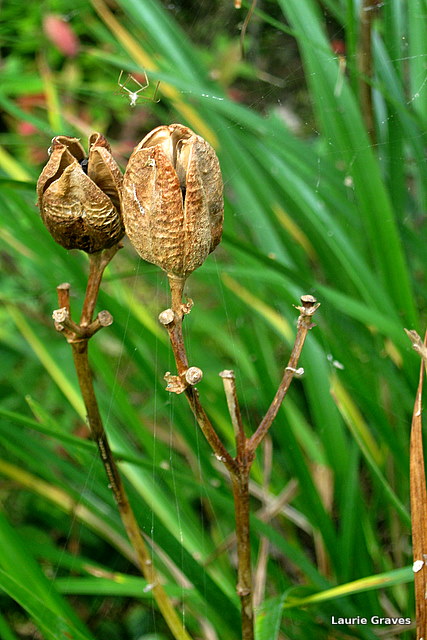
Usually, I clip back old stalks and dead-head the lilies and the balloon flowers. But this year I was so taken with the emerging pods, that I let many of them be, and the pods are so fascinating that next year I just might leave them all until the final fall cut-back.
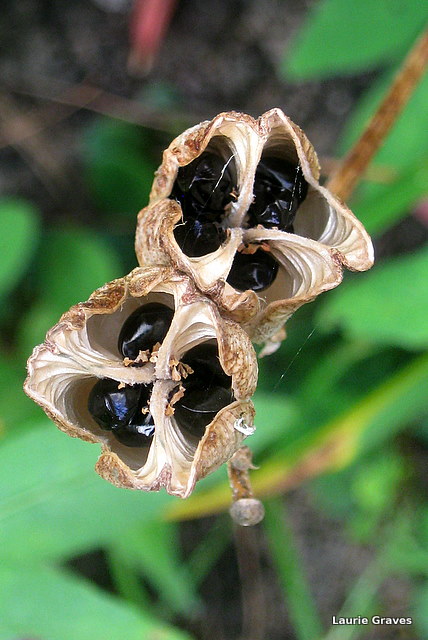
Daylily pod
Daylily pods


IMG_1743
A closer look


Tonight, we pick up Dee at the bus station in Portland. We have a busy week planned of movies and art museums. Believe it or not, for a rural area, central Maine has a wealth of art museums—at the colleges—and a few galleries, too.

We will also spend time on the patio as we grill food, and if the weather stays crisp, we will even make a fire in the fire pit for s’mores.

Accordingly, I won’t be writing much until Dee leaves, but I might be able to slide in a picture or two and a recipe for grilled veggies with herbs and pasta.

A busy week, but Mike is recovering nicely, and it will be oh-so-good to have Dee home.
 

A Quick Pasta Sauce for When You Are Just Sick and Tired of the Hot, Humid Weather

IMG_1714All right. Here it is September 3, and yesterday the weather was so sweltering and humid that by mid-afternoon all I could hold in my mind was the next chore on my list—I just couldn’t think ahead—and it was so freaking hot that from time to time I had to wipe my sweating face with a cool wash cloth.

Oh fall, where art thou? The leaves are starting to change, the apples are turning red, the goldenrod and asters are in bloom.  It is dark by 8 p.m. But somehow, the weather doesn’t have enough sense to turn the page and follow the season. Temperature wise, despite all the signs of fall, we are in mid-summer.

To a lifelong Mainer, is this very, very weird? You’d better believe it.

But the larger problem, of course, is what to make for supper on a day when by late afternoon all you want to do is grab some ice water with lime, The New Yorker, and an apple and head to the patio. Supper is the last thing you want to think about.

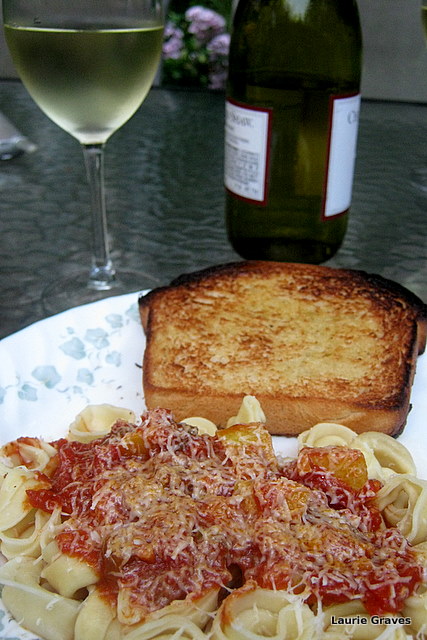
Fortunately, I have a few tricks to fall back on, and one of them is an easy pasta sauce using a 28-ounce can of Muir Glen’s crushed tomatoes with basil, some garlic, some green peppers, and some summer squash. Add, say, tortellini and broiled olive-oil toast, and you have a pretty good meal that comes together in a flash. (Especially when you have made said sauce a week or two before and have frozen some of it for future use.  Oh, happy freezer!)

But even if you haven’t, this sauce is so easy to make—and like most of the food I cook—so versatile that even on a hot day it isn’t too much trouble. I used garlic, peppers, and summer squash. You could use onion, sausage, or ground beef. Or zucchini. Or eggplant. Or whatever combination you like.

Get all the vegetables ready. For my sauce, I minced three cloves of garlic and cut one green pepper and one small summer squash in large chunks. In a skillet, I heated one tablespoon of olive oil and added the squash and peppers, sautéing them until they were just barely soft. I added the garlic and sautéed it for 30 seconds or so. Last came the tomatoes with basil. I turned the heat to low, covered the skillet, and let everything simmer for at least forty-five minutes.

Add cooked pasta, and Voilà. Supper on a hot night.

Clif and I took our plates out to the patio. A bottle of white wine came with us. As the dark settled over the backyard, we heard the crickets sing. In the dim woods, a pair of barred owls called to each other as they hunted, and Clif and I smiled as we listened to them.

After that nice supper and a couple of glasses of wine, well, the hot day didn’t seem so bad.

Nevertheless, fall can come anytime now. We are certainly ready.


Helping the Community in Ways Big and Small

IMG_1610Yesterday was what might be called A Very Good Day. When I went to the town office to pay the registration for the car, I discovered I only had to pay $96, almost half of what I expected to pay. After that, it was on to the library, where I received a little money from card sales. (Clif and I have developed a line of library cards, where half the money goes to the library and half to us. It’s not a huge fundraiser, but it helps promote the library, near and far. )

Finally, the cherry on the sundae, so to speak, was when a missing library book I had borrowed was found, right on Shane’s desk. The book’s barcode is old and faulty, and the book wouldn’t scan into the system. I had put the book in the library’s book bin, which meant Shane had no idea who had returned the book. But now he knows, and my record is clear, Such a relief!

In the afternoon, my friend Barbara came over for coffee, and she brought chocolate peanut butter cupcakes. Among other things, we talked about the women’s suffrage movement and Elizabeth Cady Stanton and Susan B. Anthony, two leaders of the movement. They both died before women got the right to vote in 1920 with the passage of the Nineteenth Amendment. Stanton died in 1902, and Anthony died in 1906.

It made me a little a teary-eyed to think of how they didn’t live long enough to see the results of their hard work. It’s also a lesson to the rest of us. The improvements to society that we work on, big or small, might not happen in our lifetime, but that doesn’t mean we should give up on them.

Sometimes, I think, we are too impatient. We want results, and we want them now. When there are great injustices, this point of view is completely understandable, but the “arc of the moral universe” can be very long indeed. Martin Luther King Jr., who wrote those words, would not live to see the first African-American president. Yet he worked timelessly for civil rights that would allow for the possibility of the first African-American president.

We can’t all be great leaders like Elizabeth Cady Stanton, Susan B. Anthony, or Martin Luther King Jr. But we can work in our own communities and do what we can to improve them. I feel that my work on behalf of the library makes Winthrop a better town. Last month, the library’s circulation was 5,764. Not bad for a town of 6,000. (The population does increase in the summer because of our beautiful lakes.)

For other people, it might be some other work that benefits the community. I think of Jason, of the blog Garden in the City, and his lovely gardens, a gift of beauty to those who live in his neighborhood. There’s Bill, of Practicing Resurrection, who grows and sells organic vegetables. For that matter, there is our own Farmer Kev, who does the very same thing in Winthrop, and his partner Kate, who will be teaching art in middle school this year. This list could go on and on.

I’m gong to end with a Gladys Taber quotation: “I cannot influence the world. I can only live every day as well as I can, keeping my home, cherishing my neighbors, helping the community in a small way.”

And in Gladys Taber’s case, her wise words, written in the 1950s, do, in fact, make the world a better place.


The Last Cocktail Party of Summer

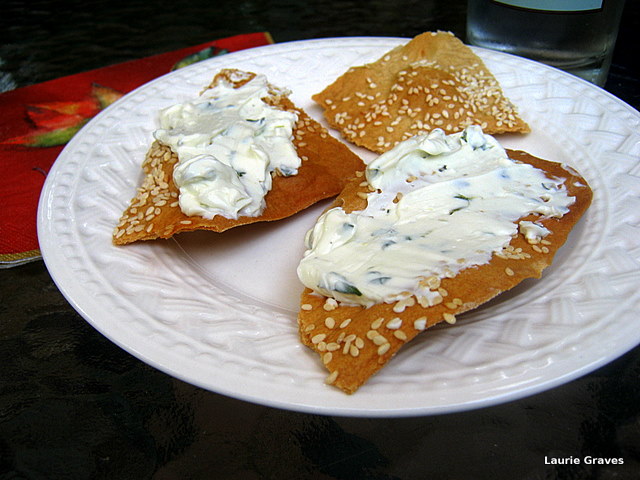
Homemade crackers with homemade cream-cheese spread

In Maine, the end of August usually heralds the end of summer, despite what the calendar might say, and indeed here and there, the leaves have started to turn. Accordingly, Clif and I decided to invite friends over for the last cocktail party of summer. (What a sad ring that has!)

Since learning to make them for our Fourth of July party, Clif and I have become proficient at making Moscow mules and our very own Maine mules. The nice thing about both drinks, which take vodka and ginger beer or ginger ale—the Moscow mules—or vodka and seltzer water—the Maine mules—is that when you’ve had enough, say, after a couple of drinks, you can then turn to plain ginger ale or seltzer water for a refreshing drink.

The weather was splendid, and we were able to host the party on the patio, one of my favorite places. We filled the cooler with soft drinks and tucked it under the round glass table. On top, we had glasses for everyone as well as a bucket of ice, sliced limes, maple syrup, and, of course, vodka. Those drinks don’t contain the word mule for nothing.

Then we gathered around the rectangular glass table. There were six of us—Margy and Steve, Cheryl and Denny, Clif and me. The day before, I had made crackers, and I served them with a homemade cream-cheese spread made with roasted garlic and basil. There were chips and salsa. Grapes. Those luscious peaches. And, of course, Clif’s legendary grilled bread.

“I was hoping you’d make grilled bread,” Steve said as he grabbed a hot piece of bread.

I am not kidding when I call Clif’s grilled bread legendary. It truly is, at least in the Winthrop area.

As we ate, the crickets sang. Birds came to the feeders, and Liam barked at noises we sometimes heard but most often didn’t. We talked about many things—the conversation never flags when we get together—but we spent a fair amount of time rhapsodizing about the poet Richard Blanco.

We also discussed how it was time for the state to stop trying to lure big businesses to Maine. This seldom ends well. If businesses can be lured into the state, then they can be lured out of the state. Instead, we all agreed that it was much more sensible to support small businesses run by local people and to help local businesses grow into larger businesses. There is never any guarantee that these businesses will succeed, but at least they will not be heading for parts of the country, or the world, where the labor is cheaper.

Gardiner is an example of how a city can support its own through various grants and tax breaks and reverse a decline that started when the great factories closed.  (Note: The link may include some irritating pop-ups, but the information is worthwhile.) Not so long ago, Gardiner’s main street was dotted with far too many vacant buildings. Now, with more businesses opening their doors, the main street looks decidedly more lively.

And, let’s face it, any city that is able to attract Frosty’s Donuts is on the right track.


Peaches, Peaches, Peaches!

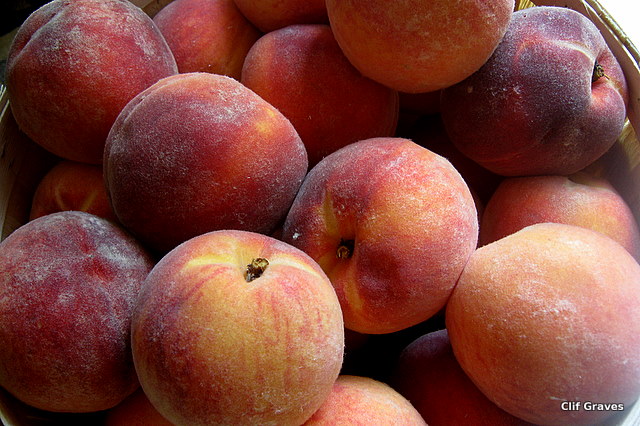
IMG_1591Today our friends Judy and Paul came over for coffee, tea, and homemade brownies. Judy’s brother and sister-in-law, visiting from Connecticut, came, too. Clif and I always enjoy meeting new people, and we had a great time getting to know Judy’s brother and sister-in-law. But especially exciting for this foodie was what Judy’s family brought from Connecticut—a basket of  ripe peaches from a local orchard.  (As opposed to the not-so-ripe peaches on sale at the local grocery store.)

Now, I have a sweet tooth, and I can’t think of a single fruit I don’t like. However, peaches are way, way at the top of my list, and this Maine girl doesn’t get tree-ripened peaches very often. It is a very happy day when I do get them.

Amazingly enough, in recent years, a few peach orchards have been established in Maine. Climate change combined with varieties developed to withstand the cold have brought peach orchards to this northern state. While there have always been individual trees that have managed to thrive in select micro-climates in Maine, there were never actual orchards. Unfortunately, the local peach orchards are quite a distance from where I live, and I don’t get them very often.

How good it is, then, to have friends who have family who are willing to bring peaches to me.

Peaches, peaches, peaches. As soon as everyone left, I grabbed a peach and ate it. From the first bite, it was sheer bliss—soft but not too soft, sweet and juicy. I gobbled it down without offering Liam even one bite, and it was only when I was done that I noticed him staring reproachfully at me. He likes peaches nearly as much as I do.

“Don’t you worry,” I told him. “There are plenty more. I promise I’ll share some of the next one with you.”

And I did.

The Last Days of August: The Least-Favored Feeder

IMG_0354
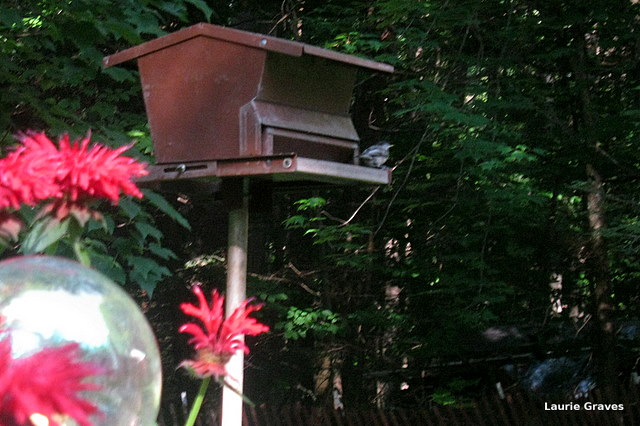
Until recently, least-favored feeder

Now that August is ready to leave, the August weather has arrived—hot, dry sunny days and cool evenings. I’ll take it. Better late than never.

Every night that it is nice, Clif and I bring our plates to the patio so that we can eat outside. We know these days are numbered, and we try to squeeze in as many outside meals as possible.  Last night, with its deep blue sky and setting sun, was especially beautiful for this. I had made chicken in a slow-cooker, using Farmer Kev’s garlic, potatoes, and carrots. (A recipe will follow next Thursday.)

As we ate, we talked about the day’s events, and we watched the birds come to the two feeders on either edge of the patio. At one point, there was a downy woodpecker, a goldfinch, and a nuthatch all in a row at the brown feeder with its single perch in the front. A male cardinal chirped and came to the feeder. The other birds flew away.

I said to Clif, “Before the cardinals came this year, that brown feeder was what you might call the least-favored feeder. Birds fed from it, but not very often. I hardly ever had to fill that feeder.”

“True enough,” Clif replied. “The tube feeder with all the little perches was the favorite one.”

“The cardinals are new to the neighborhood, and the brown feeder is good for them. Do you suppose their presence encourages the other birds to go to that feeder?”

Clif said, “Maybe the cardinals are trend setters, and the other birds want to eat where they eat.”

Could this be even remotely true?

“Who knows?” Clif said. “It’s just a thought.”

One thing is certain. Before the cardinals nested in the woods by our backyard, few birds came to the brown feeder. Now that the cardinals are eating at this feeder, the other song birds flock to it.

Such are the things we puzzle about as we eat our supper in the late August dusk. Our very own backyard continues to be one of the most interesting places we can be.

But, then, it doesn’t take much to amuse us.

End of August pictures:

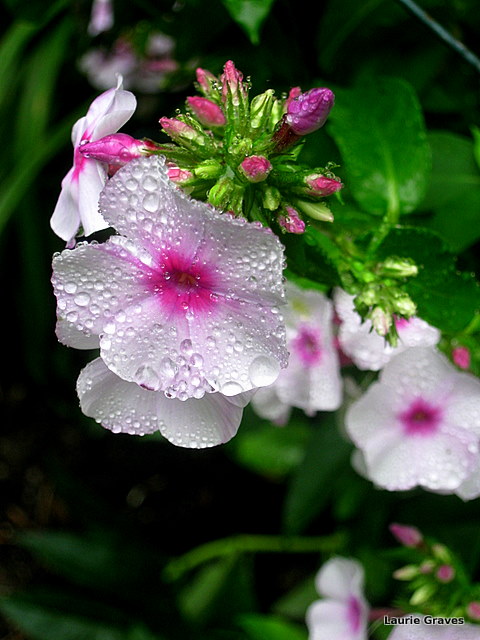
Phlopping phlox pretty after the rain


Balloon flower pods
Balloon flower pods


Dew on Juliet
Dew on Juliet


Little creature guarding the coleus


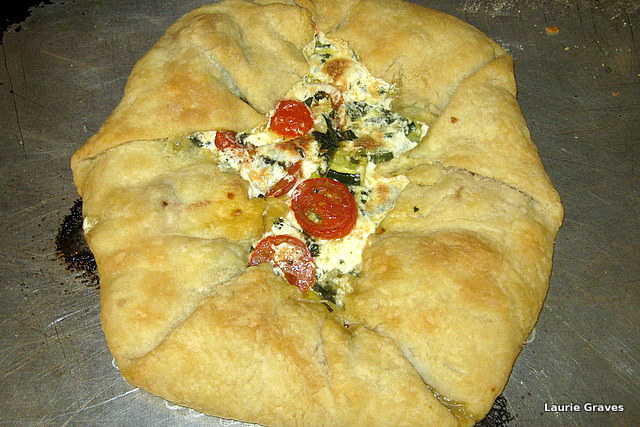
End of August: Tomato and Zucchini Galette

IMG_1520Finally, finally the heavy humidity has cleared. There was a downpour last night—yet again—but this time the rain took away the humidity. Today is bright, sunny, dry, a little cool even, which is the way August is supposed to be. Especially the end of August.

No more of my complaining to Clif: “If I had wanted tropical weather, then I would have moved to the tropics.”

I can only hope that the hot, humid weather is behind us as we move to September, which in the past few years has become one of the nicest months in Maine. (August once held that honor, but those days seem to be gone.)

Despite the heat and humidity, or maybe because of it, the tomatoes are flourishing and so is the basil. In truth, I have never grown such lush, healthy basil, and I am thrilled to have it. Basil is my favorite herb.

The zucchini, of course, seems to be growing like a house afire, and I have noticed that in my CSA bin, the zucchinis are considerably bigger than they were a few weeks ago. They are not too big to resent. Not yet. But I expect that day is coming.

Fresh garlic has made its appearance in the CSA bin, and I never, ever resent garlic. It keeps beautifully, and it enhances so many dishes.

Tomatoes. Garlic, Zucchini. Basil. What to do, what to do?

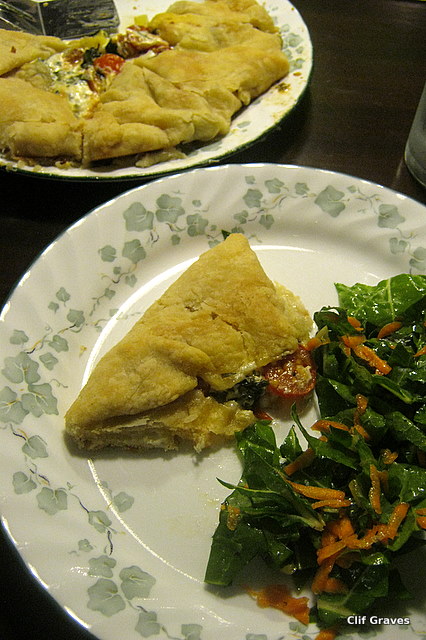
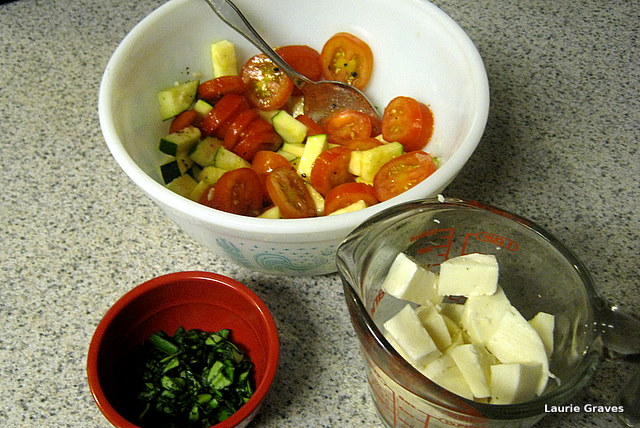
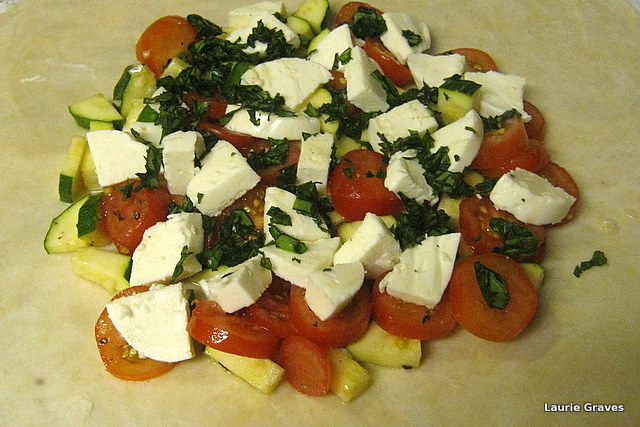
How about adding some fresh mozzarella and making a tomato and zucchini galette? That’s just what I did, and along with a Swiss chard and shredded carrot salad, it made a mighty fine late summer meal.

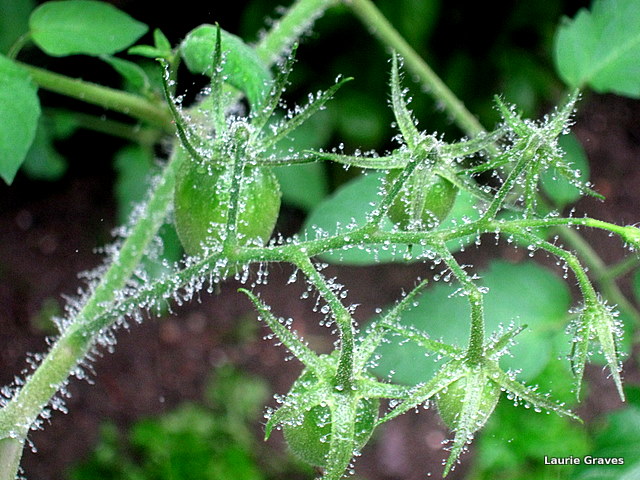
A note about the tomatoes for the galette: Tomatoes, of course, are watery, and this is not necessarily a good fit with pie dough. I used a variety called Juliet, which grows in my own little garden. It is a small roma-like tomato and does well with only six hours of sun. It is not as watery as other tomatoes, and I would recommend using either roma or cherry tomatoes for a galette.  One suggestion I have read is to slice the tomatoes, put them on paper towels, salt them, and let them drain for about twenty minutes. I didn’t do this for the galette I made last night, but I will probably do it next time.

A note about the zucchini: I didn’t sauté it before using it in the galette. I just chopped the zucchini into small pieces, mixed it with olive oil, garlic, basil, cheese, and tomatoes, and it was just fine.

Anything else to mention? Ah, yes. The pie crust. I enjoy making pie crust, and I am not too bad at it, if I do say so myself. But for those who hate to make pie crust or just don’t have the time, by all means go out and by the pre-made crusts. There are some pretty good ones out there, and there is no need to deprive yourself of galette if all that is holding you back is making pie dough.

IMG_1500

IMG_1508

IMG_1509

IMG_1511

IMG_1512

Tomato and Zucchini Galette
Makes one galette, which will feed three or four people,  depending on appetite and on what else is being served.

Ingredients

For the pie dough

  • 1 cup of flour
  • 6 tablespoons of shortening
  • 1/2 teaspoon of salt
  • 1/4 cup of cold water (I let the water run for a while before using it.)

For the filling

  • 1 cup of sliced tomatoes
  • 1 cup of zucchini, cut in large chunks
  • 1 cup of sliced, fresh mozzarella cheese
  • 2 tablespoons of chopped basil
  • 1 tablespoon of olive oil
  • 1 clove of garlic, minced
  • Salt and pepper to taste

Directions

Preheat the oven to 425°

For the pie dough

  1. In a large bowl, combine the flour and salt. Mix well. Add the six tablespoons of shortening. With a fork or pastry blender, cut the shortening into the flour until it is in pea-sized pieces (Someday I will do a pie dough tutorial. I promise.)
  2. Add the water all at once, and with a large spoon mix until the dough forms a ball. Do not overmix. Too much handling makes tough pie dough.
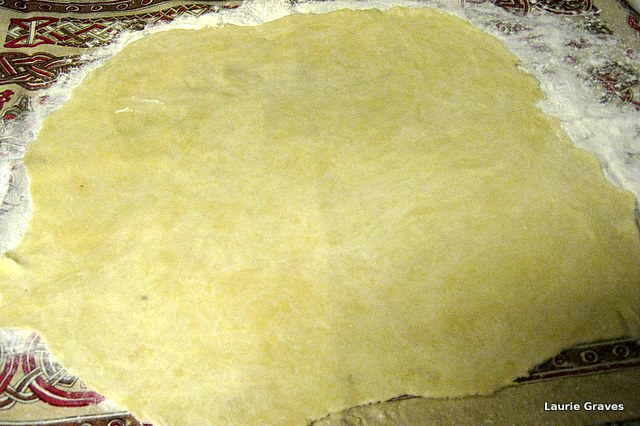
  3. On a floured cloth or surface, roll out the pie dough into a large circle.
  4. By either folding it in half or in quarters, transfer the dough to a baking sheet. Unfold so that is a full circle.

For the filling

  1. In a medium-sized mixing bowl combine the tomatoes, zucchini, mozzarella, olive oil, garlic, basil, and salt and pepper. Mix well.
  2. Place the filling in the center of the pie dough on the baking sheet. Make sure there is about a two-inch border.
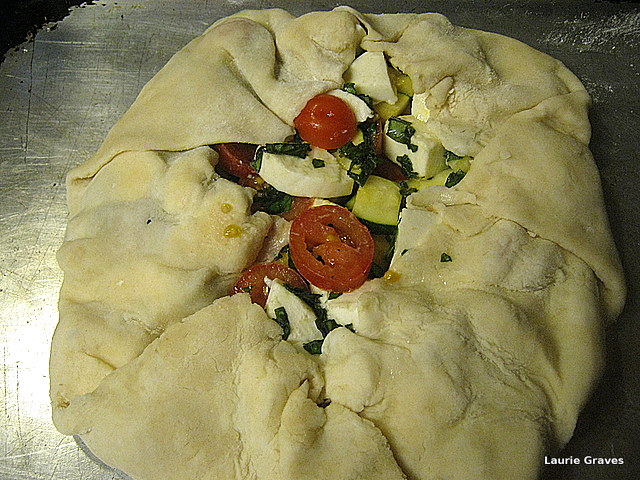
  3. In small sections, fold and crimp the dough over the filling. It is fine for the edges to look rough. This is a galette, a rustic dish.
  4. Bake for 25 or 30 minutes until the galette is golden brown.
  5. Let cool for at least 5 minutes before slicing.

An Evening with Richard Blanco: Best. Poetry. Reading. Ever.

Richard Blanco signing books

Yesterday was quite the day for little Winthrop. Our own Bailey Library hosted a poetry reading by Richard Blanco, who describes himself as “[m]ade in Cuba, assembled in Spain, imported to the U.S.A.” And now Blanco lives in Bethel, Maine, which is not that far from Winthrop. Lucky us!

Blanco, you will recall,  read at President Obama’s second inauguration, and his poem “One Today” emphasizes the bonds that connect us, a message this divided country needs to hear over and over again: “One sun rose on us today, kindled over our shores,” (Donald Trump, are you listening?)

As Richard Blanco is only one of five poets to have read at a presidential inauguration, I think it’s fair to call him the Mick Jagger of the poetry world. Not surprising, then, that the auditorium at the high school was packed. The estimate was between three and four hundred people. I’d put it closer to four hundred. By the time Blanco started his presentation—part personal history, part slide show, part poetry reading—there were no good seats left.

Blanco’s theme—or obsession, as he calls it—is home. He maintains that his obsession began in the womb, when his family left Cuba, “that land that is near yet so foreign.” He was born in Spain, and while he was still a baby, his family came to Miami—so close to the United States, he joked—and as far as Blanco was concerned, everyone in Miami was Cuban.  (He also joked that he and his partner moved to Maine for the diversity.)

Television brought the non-Cuban world to Blanco, and from an early age, he realized that he and his family were outside the cultural norm. Blanco yearned to be in America, and for him, the grocery store Winn-Dixie symbolized everything that America represented. And ate. All the food Blanco and his family ate came from small Cuban grocery stores. Nowadays, of course, we think it is cooler to go to small shops rather than chains, but in the 1970s, when Blanco was a child, that was not the case.

Blanco’s grandmother, who sounds like quite the force of nature, refused to shop at Winn-Dixie. It was too expensive, she said, and they didn’t belong there. But when she saw a flyer advertising chicken at a great price, she relented.  Blanco went to Winn-Dixie with his grandmother, and “I was finally in America.” I suppose, in a way, he was. Or at least one version of it.

As Blanco grew older, he learned the value of his own culture, but like anyone who is born outside the cultural norm, it takes a while. Indeed, his experience sounds so much like the experience my generation of Franco-Americans had. Many of us, at some point, rejected our heritage, only to come back to it as adults, to realize that there was an incredible richness in being Franco-American.

But I understood the embarrassment he felt when going on vacation with his parents, who, lets face it, didn’t really fit in outside their small Miami circle.  Their budget was tiny, their suitcases were battered, and they brought their own food, which definitely did not come from Winn-Dixie. My inner child cringed along with Blanco as he described the experience.

Blanco also had to come to terms with being gay and with a grandmother who was not exactly accepting, shall we say. This, combined with being Cuban American, is very rich material for a poet. As the writer Geoffrey Wolff has put it, a good story is a hell of a gift.

For over an hour, the audience sat in rapt, silent attention as he read poetry and charted his journey to find home. “America is still a work in progress. It is our duty to contribute to that narrative.” Then, “The question of home is a global one.” Also, ” Nature is the universal home.” (This is one of the reasons he was drawn to Maine. Along with the diversity.) And finally, “We are always home.”

When he finished, Blanco received a standing ovation, which he certainly deserved. As a poet, as a speaker, he is warm, funny, sad, and wise. His use of language is both beautiful and down-to-earth. Blanco is a true artist, and after listening to him, I felt enlarged.

I have only touched on the territory Blanco covered last night, and I highly recommend reading his books, both the poetry and the memoirs. Here is a link to his website, where his books can be ordered.

“What a story teller!” Clif said when we got home.

Yes, yes.

The crowd waits
The crowd waits

Putting Your Money Where Your Mouth Is

Yesterday, I went to the dentist’s office to have my teeth cleaned, and while I was there, I had X-rays. Clif will be retiring from his job the end of September, which means no more dental insurance. I figured that if any work needed to be done, then September was the month to do it. Well, good thing I had those X-rays. As it turns out, I need to have a tooth extracted, and I need a new crown. All will be done around my birthday. Happy birthday to me!

My teeth are naturally straight, and even though they are a little yellow from all the tea I drink, they look pretty good. However, sometimes looks can be deceiving. Every two years, I have X-rays, and they inevitably show that something must be done to Laurie’s teeth. In the past, it was fillings. Now, it is crowns, and with this new one, I will have had five crowns. As for the extracted tooth…it is going from the bottom and cannot be fixed.

Our out-of-pocket cost for the five crowns has been about $2,500. What a nice Canon camera I could get for $2,500. I know. Teeth are important, but I can’t help feeling a little wistful about the money spent.

When I came home, I told Clif about my teeth, and while he agreed with my assessment about the money, he was philosophical about the matter. “You need your teeth,” he said.

Indeed, I do.

After discussing teeth, Clif mowed the front lawn, and I tidied the patio and back garden. I cut back the phlox so that it wasn’t leaning over the dwarf snapdragons and touching the patio. Afterwards, I propped them up with green wire fencing. I swept the patio and cut some of the spent stalks from the daylilies. The garden still looked ragged, but it was a decided improvement.  At least things were tidy. More or less.

The sky was clear, the sun was setting, and Clif and I decided it would be an ideal time to have drinks on the patio. We both know we only have a month, at best, where we will be able to do this. We talked about my teeth, his retirement, and our sidelines—selling photo cards, computer consulting, and the strong possibility of a book being published in 2016. Our card business has begun to pick up, and we are excited about all our ventures.

As Katherine White would put it, onward and upward. Even the prospect of dental work couldn’t dim our enjoyment of the evening.

The tidy garden. More or less.