All posts by Laurie Graves

I write about nature, food, the environment, home, family, community, and people.

Mother’s Day: Of Pancakes, Chocolate Strawberries, and a Movie

This Mother’s Day was a quiet one for Clif and me. For the first time in many years, we had neither daughter to celebrate the day with us. After sighing sadly, I decided we would still celebrate with simple pleasures, which is how we celebrate all special days. And so we did.

In the morning, Clif made pancakes for breakfast, and while I know it’s bragging, I must say that his are the absolute best. Period.
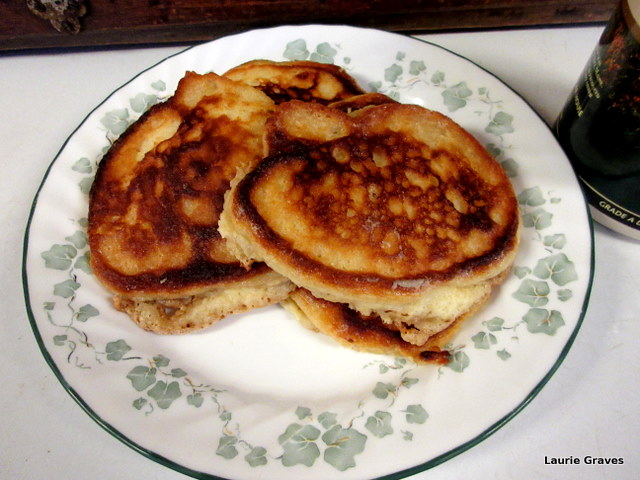
IMG_2201

After pancakes, while we were cleaning the kitchen, the doorbell rang. Puzzled as to who would be at the door on Mother’s Day, I answered it and discovered it was a Federal Express delivery. There was a package for me, from Shari’s Berries.  My heart skipped a beat. Chocolate-covered strawberries! Sent to me by Shannon, who when she called to wish me a happy Mother’s Day, admitted she was a little blue not to be here, and she wanted me to have something sweet. While chocolate-covered strawberries could never take Shannon’s place, I will admit they were a sweet consolation. Shari’s Berries makes wonderful chocolate-covered strawberries, with berries that are so sweet and ripe. A real treat.
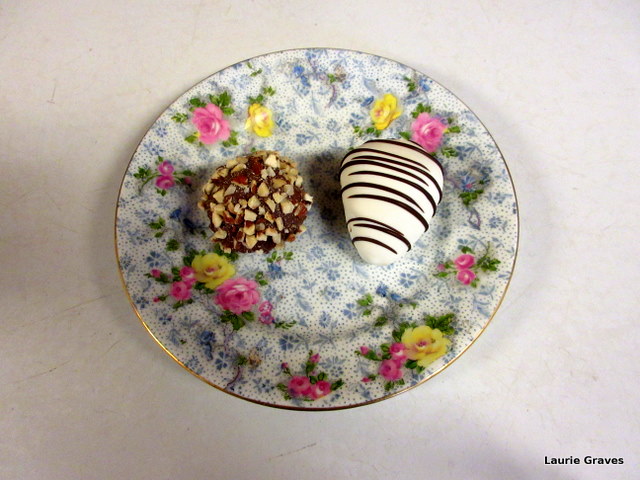
IMG_2204

I also want to add that from each daughter, I received a gift certificate to a local greenhouse. Another perfect gift as they know how much I love flowers.

Because the day was rainy, Clif and I decided to go to Railroad Square in Waterville to see a movie—The Congressman with Treat Williams.  This amiable movie is about, well, a Maine congressman, Charlie Winship, who doesn’t stand during the pledge of allegiance—he was busy doing paperwork—and the ensuing brouhaha . The Congressman was actually filmed in Maine, much of it on beautiful Monhegan Island, where WInship goes to help settle a fishing dispute. This might sound like an odd thing to praise, but indeed most movies and television series set in Maine are not filmed here, and boy oh boy it doesn’t take Mainers long to figure this out.

While The Congressman examines serious issues—free speech, the undue influence of lobbyists and the right wing as well as the overfishing of the ocean—this movie skims the surface the way rocks skip over water in a pond. Treat Williams is a very appealing actor, and he had his Jimmy Stewart moment when he expanded on freedom of speech. Heck, he even quoted Margaret Chase Smith, a beloved Maine senator who stood up to the bully Joseph McCarthy. But nothing really seemed at stake in this predictable movie. Nevertheless, both Clif and I enjoyed it, and so, it seems, did many other people—the large cinema was three-quarters full. After all, predictable isn’t always bad.
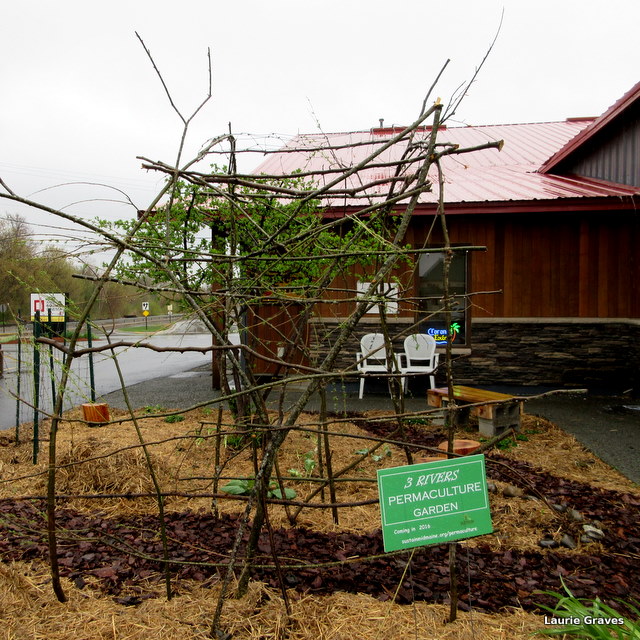
Railroad Square's new permaculture garden
Railroad Square’s new permaculture garden


When we got home, there was one more treat in store—crab salad sandwiches and hand-cut fries. I was so eager to eat this supper that I forgot to take a picture, but, readers, let me assure you, the sandwich and fries were pretty darned good.

So even though both girls live too far to celebrate Mother’s Day with me, all in all, it was a nice Mother’s Day.

Banana Bread and the Unfairness of Life

Spring is a fitful affair in Maine. After a nice spell of sunny weather, the past week has been gray and chilly with intermittent rain. Between rain showers, I did manage to clear the leaves from my flower beds. Now, weather permitting, it’s on to rearranging, fertilizing, and adding compost.  And planting flowers, which I love best of all.

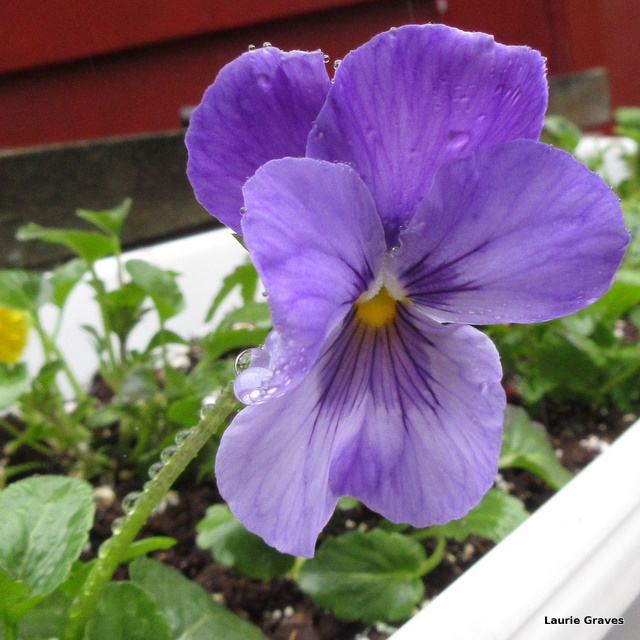
Today—another gray day—our friends Judy and Paul are coming over for banana bread, tea, and talk. I’ll put out my flowered placemats, but not too soon as I know the cats will decide clean mats are the perfect place to nap. (I hate, hate, hate having the cats on our dining room table, but they sneak onto it every chance they get.) Not many flowers are up in the garden, but I’m hoping to make a small bouquet of pansies and hyacinths.

It’s a funny thing about banana bread. I usually only make it when the bananas are so far gone that I don’t even want them sliced in my cereal never mind eaten as is. In that sense, banana bread almost seems like a consolation prize, something you never make just because you want the bread but rather because you don’t want the bananas thrown out.

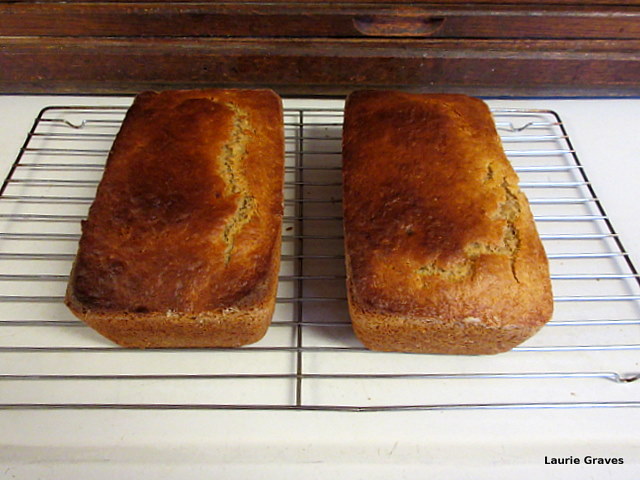
But after the bread is baked, there it is—lovely, sweet, brown, and, of course, banana-ie. Smear a thick slice with butter or cream cheese, and you have a bread worthy of tea. With peanut butter, it makes a perfect breakfast. Give a loaf to your library director for his birthday, and his wife will ask you for the recipe. (Kristen, I’m getting to that part.)

It hardly seems fair, then, to relegate banana bread to something you only make when the bananas have gone mushy. A bread that tasty deserves respect. But life is like that, and good things don’t always get the respect they deserve.

The banana bread I make is a basic recipe that I’ve adapted from good old Betty Crocker. However, I add an ingredient—cinnamon—that is not usually found in banana bread, and I believe it is this addition that makes my bread a teensy-weensy bit better than average.

My husband Clif believes that unless banana bread is very fresh, it is best toasted, and I must admit he has a point. Toasting adds a nice crunch as well as providing a warm surface for the butter to melt.

Toasted or untoasted, banana bread is a treat for a gray day. Or a sunny day. As I’m typing this, the clouds are thinning, and I see patches of blue sky. Let’s face it—any day is a good day for banana bread

IMG_1971

Banana Bread
Adapted from a Betty Crocker Recipe

Ingredients

  • 2(1/2) cups of flour
  • 3(1/2) teaspoons of baking powder
  • 1 teaspoon of salt
  • 1 teaspoon of cinnamon
  • 1 egg
  • 3/4 cup of milk
  • 3 tablespoons of vegetable oil
  • 1 cup of mashed bananas
  • 1 cup of sugar

Directions

  1. Heat oven to 350°.  Grease and flour a loaf pan.
  2. In a medium mixing bowl, combine four, baking powder, salt, and cinnamon and stir well.
  3. In a large mixing bowl, add the egg and whisk well. Add the milk, vegetable oil, mashed bananas, and sugar. Stir until it is well mixed.
  4. Add the dry ingredients to the egg mixture and stir—about a minute—until the batter is well mixed.
  5. Pour batter into greased and floured loaf pan.
  6. Bake 55 or 65 minutes or until a wooden pick comes out clean when inserted in the center.
  7. Let the bread set in the pan for at least 5 minutes before removing it.
  8. Serve with butter or cream cheese and be sure to appreciate this unassuming bread that can be tucked in the freezer when the loaf has cooled and be there whenever you need it.

Riding on the First Tarred Road: A Persistency Worthy of a Better Cause

Here is another Esther story, this time about roads in Maine in the 1940s.

While we were talking about school, Esther mentioned, “In the spring our road was so muddy that the bus would get stuck, and we had to walk to the corner where the road was better and wait for the bus.”

Esther still lives on that once and muddy road, but now it is tarred. Then she said something that really surprised me.

“I remember the first time we drove on a tarred road. I was three and it was a defining experience for me. The road was so black and smooth.”

The first time driving on a tarred road! When the heck were roads tarred in Maine, anyway? Hoping to find out, I poked around the Internet. While I didn’t find any definitive answers, I did glean some bits of information. The following is from the Maine Department of Transportation History: “In the earliest days of the SHC [State Highway Commission] there were about 25,000 miles of public roads and streets in Maine – all but a few thousand miles plain dirt. ” (The State Highway Commission was founded in 1913.) But “the period following World War II marked almost a new era in Highway Commission activities.” Roads were repaired and upgraded and no doubt tarred.

Esther was born in 1937, and some roads in Maine must have been tarred, but not where she lived. Her first experience of a tarred road would have been in 1940, well before the boom in road repair and construction.

But in my research, what especially tickled me was coming across A History of Maine Roads 1600-1970, again by the Maine Department of Transportation.  The following is from “A guide to cycling in Maine published in 1891 under the auspices of the Maine Division of the League of American Wheelman.”

“The bicyclist will find Maine roads made of sand, rock, and clay (that becomes glue when it rains) and roads that seem to select all the hills, and climb over them with a persistency worthy of a better cause. Once in awhile in his journey through the state the wheelman will find a bit of good riding, a smooth surface, an easy grade beneath overhanging trees with perhaps a rushing river to keep him cheerful company. Then he will wonder why it cannot always be thus, and what the reason is for our poor highways.”

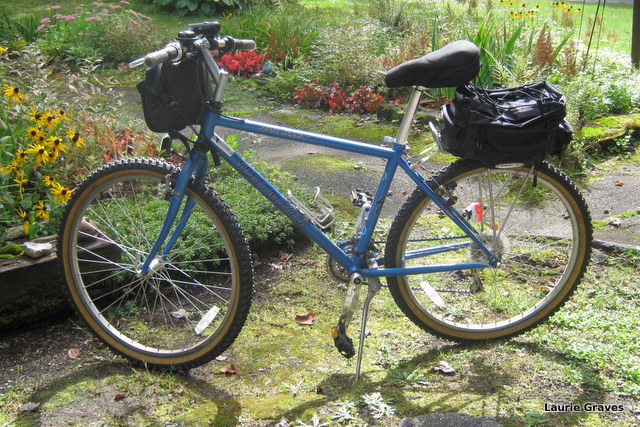
Blue Beauty, from a past summer


What, indeed? Not enough money, not enough organization, not enough planning.

Clif and I have ridden our bikes over many bumpy roads, but never any that have become “glue when it rains” and we have never—all right, seldom—thought that our persistence was worthy of a better cause.

How soon the past slips away from us, and the present becomes a sort of fixed reality, one that we take for granted.  I am so grateful to have Esther to tell me how different her girlhood was in the 1940s than mine was in the 1970s. While we don’t want to become nostalgic about the past, I firmly believe it is good to know about it.

The past provides the underpinnings of our present, which in turn affects our future, and in that sense, the past lives on.

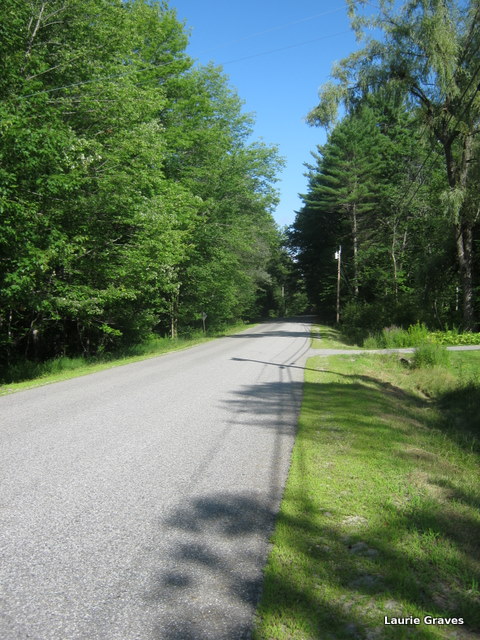
Our own tarred, country road


School Talk with Esther: Of School Buses and Blackboards

bus 2B


Yesterday when I met Esther for lunch, I started out with good intentions.  My notebook was in my pocketbook, and my aim was to just chat with Esther about this and that. But when Esther started talking about her school days in rural Maine in the 1940s, I grabbed my bag and fumbled for my notebook and pen. Esther is a treasure trove of stories, and how silly of me to forget that I am her Boswell.

We had been talking about the delightful documentary On the Way to School, available through Netflix. The movie follows children in various countries—including  India and Kenya—as they make their long trek to school, which takes the children hours. Jackson, from Kenya, was particularly proud he had been chosen to raise the school’s flag, and he and his sister hurried to school so that he would be there in time for the opening ceremony.

on-the-way-to-school_80031302
Jackson and his sister

Esther said, “It was the same way for us with washing the chalk boards at the end of the day. It was quite an honor to be chosen, and we all wanted to do it.” I could picture children wriggling in their seats, waiting to be picked for this special task.

Esther continued, “But then one year, the teachers decided to make washing the chalkboard a punishment, and suddenly, nobody wanted to do it anymore.”

“Interesting psychology,” I said, thinking about how this might be applied to other aspects of our society. “When washing the chalkboard was an honor, the children wanted to do it. As soon as it became a punishment, they didn’t.”

Esther shrugged philosophically. “Well, the teachers had to come up with something, I suppose, when they weren’t allowed to hit the children anymore.”

“And children are impudent,” I put in, knowing I wouldn’t last one hour in a classroom. “How big were the classrooms?”

“There were about twenty-five pupils per class, but there were only three teachers, and one was also the principal, so the classes were mixed grades. The teacher would spend time with one group, give them their lessons and move on the next group. It worked out very well.”

“It must have been hard on the teachers.”

“It didn’t seem to be,” Esther replied. “The classes always ran smoothly.”

“How many buses ran for so few children?”

“Three, but only one real school bus. The other two were panelled trucks with benches along each side. You didn’t get to choose who you were going to sit by, and some of the children didn’t smell that good.” I made a face. “Oh, they couldn’t help it,” she added quickly. “Most of them didn’t have running water, and they had outhouses.”

“What about you?”

“We didn’t have running water or a bathroom either. But we had a pump, and that made things easier. ”

We then moved on to the topic of unpaved roads, but that will be a post for another day. Oh, the things I learn when I get together with Esther.

Note: Neither of the buses shown are exactly as Esther described, but they are so funky and charming that I had to include them in this post.

bus1B


First Grilled Bread of the Season

Last Saturday, our friends Beth and John and their cute little dog Bernie came over for lunch. The day was splendid, but unfortunately, the blackflies were out in force, and I had to wear a cap sprayed with insect repellent. There is something in my body chemistry that calls to those biting  blighters. Clif wore a cap, too, but fortunately, the blackflies left Beth and John alone.

Never mind! We spent most of the afternoon outside on the patio. Beth and John brought cheese and crackers, salad, and for dessert, cream-cheese toffee bars. As if that weren’t enough, they also brought a bouquet of flowers. Wow! Such generous guests.

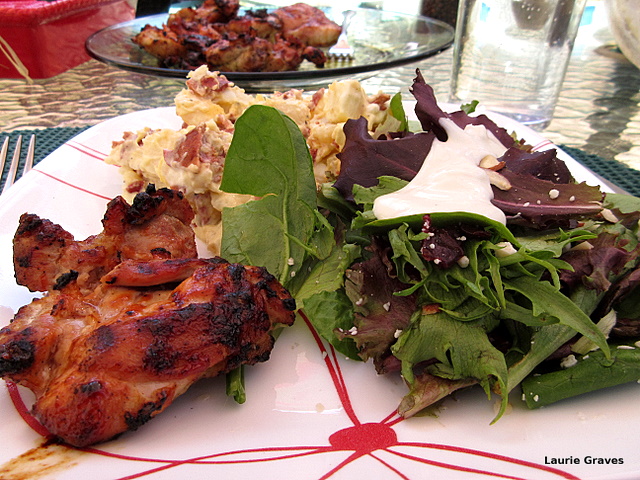
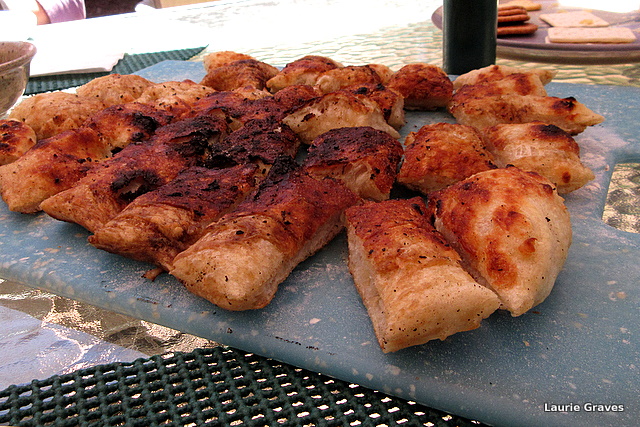
Clif made his legendary grilled bread, the first of the season, and we ate every bit of it. I also made a potato salad, again, the first of the season, and Clif grilled some chicken. By the end, we were completely stuffed.

IMG_2175

IMG_2167

But not too stuffed to talk about books, politics, and poverty. Clif and I are watching, for the first time, the excellent HBO series The Wire, and while at first glance, rural Maine seems very different from the ghettos of Baltimore, there are indeed similarities. This is especially true for Beth and John, who live in a small town that is afflicted by extreme poverty, lack of hope, and drug addiction, just as parts of Baltimore are.

“The worst is the lack of hope,” John said. “Young people in my town have nothing to look forward to. Most everything has closed, from the factories to the businesses around town.”

“Do old timers remember a better time, when the factories were booming?” I asked.

“Oh, yeah,” John said. “The town was very different then.”

I could write a whole post about the two Maines, the prosperous coastal communities and the impoverished inland towns where factories once thrived. I could write about how Maine, like too many other states, let communities sink, and as a result, caused an exodus of young people. (Maine has one of the oldest populations in the nation.) And maybe someday I will write about these things because Maine’s tale is the tale of this country, which, in turn, is driving the tone and the rhetoric of this political season.

As we talked and ate, the birds came to the feeders, and Beth took some pictures. Both Liam and Bernie begged for bits of chicken, and I slid them a few pieces. Moving away from the issues of poverty, we talked about cameras and funny Maine sayings. John, who grew up not far from the coast, had a wealth of mermaid sayings, none of which I had ever heard. Then there is my fishy favorite: “Numb as a hake.”

“Why are hakes considered numb?” John asked.

None of us knew, and the two dogs didn’t care. They just wanted more chicken to come their way, although no doubt, they would have nibbled on hake, however numb it was.


May Day, May Day: Jack in the Green

IMG_2181Today is May 2, and while  May 1 is traditionally May Day, I figured the second day of May was close enough to honor the upcoming season of fecundity and the bounty of summer  But I must thank Sophie from Agents of Field for not only bringing May Day to my attention but also for providing additional information of the celebration, information I did not know.

May Day, of course, started as a holiday in many pre-Christian European pagan cultures, and it marked the first day of summer.  May Day was a time for frolicking and folderol, a time to cut loose after winter’s confines and, I expect, its food scarcity. (Let’s just say that in Maine, May 1 is barely the beginning of spring, and between the cool weather and the blackflies, there’s not much inducement for frolicking. Nevertheless, I admire the spirit!)

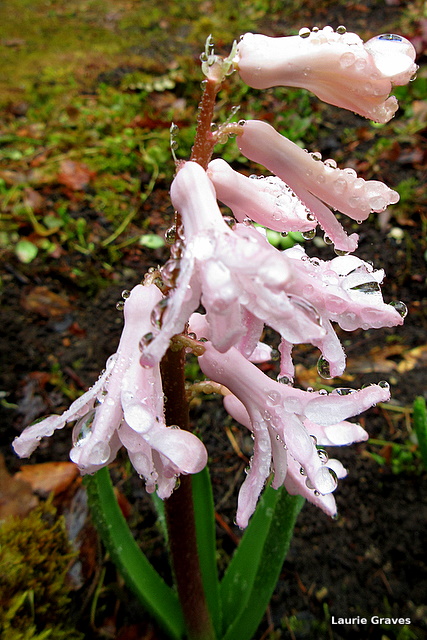
In her post May Day Festivities, Sophie writes about “sprinting onto the lawn in my pjs and smearing May Day dew on my face which, according to ancient folklore, will guarantee lifelong beauty…”  That was a new one for me, and although it’s probably too late, I sprinkled dew—all right, rain drops—from the cedars onto my face after I took a May Day picture of a hyacinth in bloom.

IMG_2185

Then Sophie went on to write about Jack in the Green, a pagan character dressed in a cone of greenery. She tried to get her partner Ade to be Jack in the Green so that she could chase him up a hill and beat him with twigs. Apparently, Ade turned down the role, and after reading more about Jack’s leafy character, whom I knew nothing about, I understood why Ade was reluctant to play this fellow of the foliage.

Ah, the wonders of the Internet. From Agents of Field I skipped to Jack in the Green May Day Festival in Hastings, UK, where I learned about Jack’s dark fate. In Hastings, the Jack in the Green Festival is an annual event and ends with “the slaying of Jack, to release the spirit of summer for this year.”  (Readers, if you have a chance, watch the short video of the parade on the Hastings’s website.  Looks like quite the parade and one worth seeing.)

Oh, the merry month of May! In Maine, even though the weather is not quite as warm as we would like, it is a month of green beauty trimmed with a veil of flowering trees. It is a month in which to rejoice.

My friend Burni sends May greeting cards. What a lovely thing to do! If I can get my  gardening under control, maybe I’ll do the same thing.

And I’ll watch out for Jack in the Green. Perhaps, out of the corner of my eye, I will catch a glimpse of him, streaking through the countryside as he is pursued by a fair woman ready to beat him with twigs.


Arbor Day: Celebrating Trees on a Street

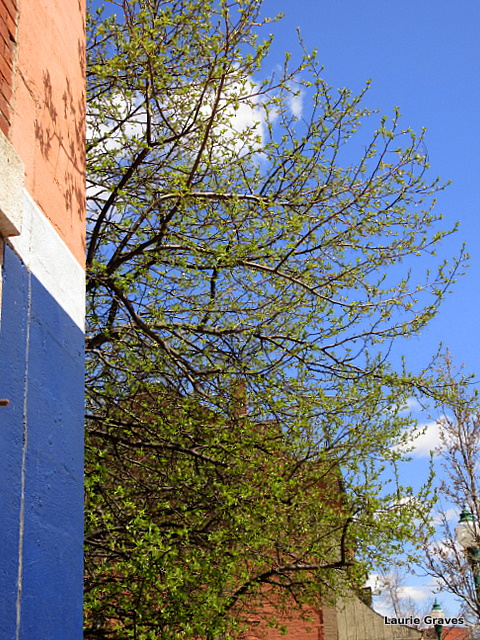
Happy Arbor Day! How fitting that a day should be set aside to honor trees.

According to the website Treehugger, “Arbor Day is generally observed on the last Friday of April.” It comes just one week after Earth Week, and so very appropriate as trees, along with the ocean, are vital for life on this planet.  “Arbor Day in the United States was officially designated in Nebraska in 1872 – pioneers moving to the treeless plains realized they needed trees for things like fruit, windbreaks, fuel, building materials and shade.” Treehugger lists twenty “random” reasons to love trees, from providing food and shelter to giving “us something to look up to, literally.”

With this in mind, Clif and I headed to Gardiner, to A1 Diner for lunch, and then to take pictures of city trees. We, of course, have trees galore at the little house in the big woods, but I wanted a different aspect of trees.

At A1 Diner, how good the food was, especially those fries. (Readers, I did not eat the chips. To tell the truth, with that platter of golden fries before us, I wasn’t even tempted.)

IMG_2139

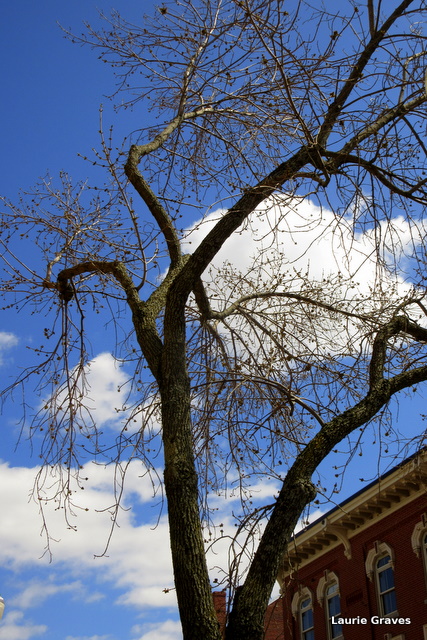
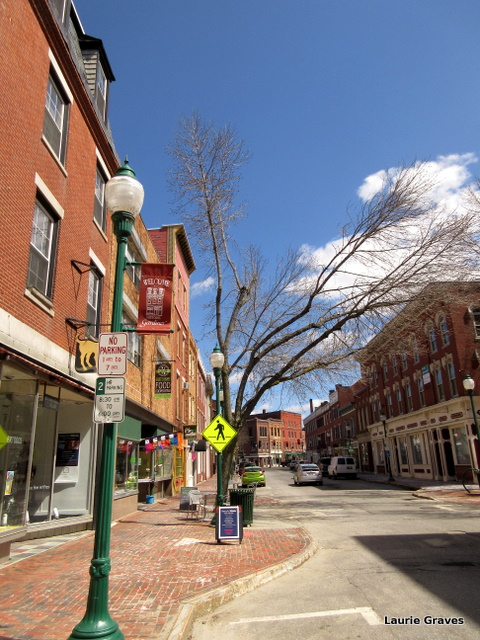
Let’s just say that even without the chips, we were quite full. Nevertheless, Clif perused the beer at Craft Beer Cellar, and while he did that, I photographed some of the trees on Gardiner’s main street. Trees do not exactly dominate the street, but they are present, in their own lovely way.

IMG_2165

IMG_2158

IMG_2145-1

IMG_2149

Trees, trees, trees, with their wood and needles and flowers and leaves. What would we do without them?

Franco-American Gathering: If We Don’t Speak Our Piece, Then Who Will Speak It for Us?

Last Saturday, I went to a Franco-American gathering of artists, performers, writers, thinkers, and friends. It is a yearly event held at the Darling Marine Center in beautiful Walpole, Maine. The center, a branch of the University of Maine, is tucked in the woods, and the ocean glimmers through the trees. In the conference center where we met, there is a great room with a stone fireplace, long tables for eating, and a kitchen off to the side where the staff cooked delicious meals for us.

A glimmer of ocean
A glimmer of ocean

I always look forward to this event, where I get to chat with some of my favorite Franco friends, but this year was especially fruitful for me. Thoughts and ideas were clarified, which in turn has made the way clearer in my personal life. I’ll be exploring one of those ideas in this post, but before I do, I thought it might be good to give a brief history of Franco-Americans in Maine, which, to a large extent, applies to New England as well. Our story is not well known, but more of that later.

In Maine, Franco-Americans are primarily those of French descent who came from Canada. In the mid-1800s, there was a mass migration of families from Québec and eastern Canada’s Maritime Provinces. They left their farms, where they could barely feed themselves, to work in the burgeoning factories that the industrial revolution brought to New England. They were mostly Catholic, and French was their first and often only language.

Another way French Canadians came to Maine was even earlier, in the mid-1700s. During the French and Indian War, there was a mass deportation of French Colonists—Acadians—from Canada’s maritime region. Rather than being deported, some of these hearty Acadians took to the woods and settled in northern Maine.

In my family, I have both Québécois and Acadian ancestors, all coming to Maine from different routes but settling here for many, many years. Indeed, I am a fifth-generation Mainer of Franco-American descent. My great-grandmother never learned to speak English, and my mother didn’t speak English when she started Kindergarten.  Unfortunately, in a sad flip, many of my generation did not learn to speak French at all, but that is a topic for another post.

In Maine, Franco-Americans are the largest single ethnic group, about 25 percent of the population, but for the most part, you’d never know this.  When people think of Maine, if they think of it at all, they think about the coast and lobsters and the taciturn Yankees—the ethnic group, not the baseball team.  The Yankees are here all right—I even married one—and their story deserves to be told.

But so does ours, and all too often it isn’t. Several years ago, when my mother and I visited Waterville’s Historical Society, there was nothing about the city’s Franco-Americans, even though they made up 40 percent of the population. Franco Americans worked in the factories, and they drove the city’s economic engine, but there was no trace of them in Waterville’s historic records. (I hope this has changed, and I plan on checking someday soon.)

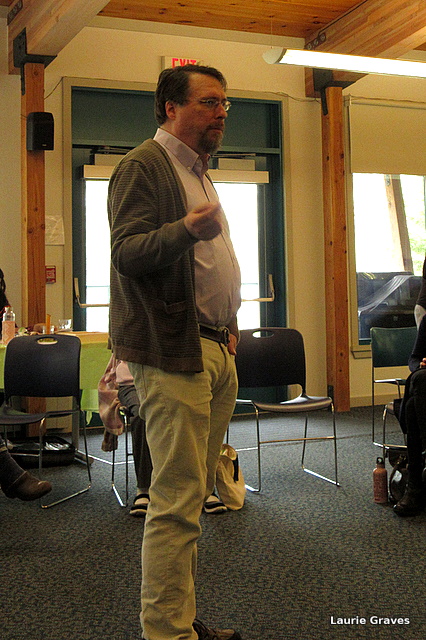
This brings me to a presentation given by David Vermette, whose blog French North America is featured on the sidebar of blogs I recommend. He read from his post Why are Franco-Americans so Invisible?

David Vermette
David Vermette


Well, why are we? David lists various reasons, from “We are associated today with Canada and therefore beneath the notice of most Americans” to “Our Canadien/Acadien ancestors were in North America long before the United States and today’s Canada existed” to “We do not fit into the existing narratives of U.S. settlement history” and finally “Our national character.

I think David, a wonderful speaker and writer, is correct on all counts, but I’ll touch briefly on the last—our national character. Ethnic groups do indeed have a character, and David makes a distinction between generalizations and stereotypes and notes “there are fair generalizations that can be made about coherent cultural groups.”

Among other traits, David spoke of how Franco-Americans value humility: “A Maine Acadian wrote to me, We were taught that you don’t speak well of yourself. You let others speak well of you.In the USA of Donald Trump and Kanye West, this trait is radically counter-cultural.”

David then went on to ask, “If we don’t speak our piece then who will speak it for us?”

Who indeed? It’s long past time for Franco-Americans to speak up, to make a “ruckus,” as David puts it. Our history, our story counts, too, and it should be woven into the narrative of Maine and New England.

I plan to do my little bit, and from time to time I’ll be writing about the Franco-American story on this blog.  I sure wish my mother and grandmother were around to help me.