Our Library’s Beautiful New Addition

The new adult section with its beautiful shelves and lights
The new adult section with its lovely shelves and lights

As long-time readers of this blog know, for the past few years, I have been part of a campaign team that has been working oh so diligently to raise money for a new addition for the Charles M. Bailey Public Library, our town’s library.  (Full disclosure: I am also a library trustee.) The budget is one million dollars, which sounds modest enough, but in fact it has been quite a challenge for a town with a population of 6,000.

Late last summer construction began, and all through the winter workers have been busy pounding, hammering, and sawing.  (Or sawring, as we Mainers would say.) Now the workers are coming down the homestretch. The new addition is nearly complete, and good progress is being made getting the original library spiffed up so that it won’t be totally overshadowed by its new sibling.

Yesterday, after doing our civic duty and paying our property taxes, Clif and I went over to Bailey Library to check on the progress. Oh, how beautiful Bailey is, even partially finished, and how wonderful it will be for the town to have this expanded library. The original library, built when the town was half the size it is now, was bursting at the seams, and there was no room for new books, not enough space for events, and hardly any place for the staff to work.

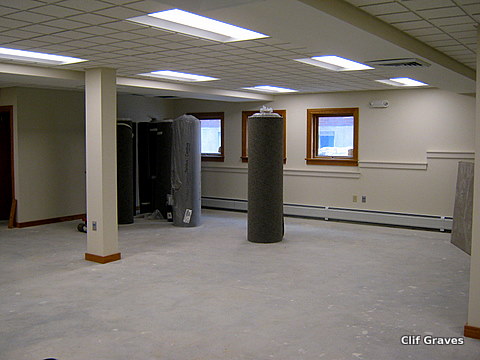
Now, we have a spacious new events room that will hold 130 people, greatly expanded children and adult sections, a meeting room, and an honest-to-God little staff room. The expanded library, in the center of town, will truly become even more central than it is now.

I want readers to know that while Bailey Library hosts events, has computers, and offers a wide range of DVDs, real books, made of paper, are still the thing, with thousands being checked out each month. And I’m happy to report that this book trend doesn’t seem to be changing anytime soon.

Right now, volunteers are busy shelving books that had to be stored during construction. (The library is in temporary quarters in the Commerce Building in town.) In late spring or early summer, Bailey Library will reopen, and there will be a grand celebration.

I’ve written this before, and I’ll write it again. It’s not every day that ordinary people get to work on a project that will be around long after they are gone. One hundred years from now, Bailey Library will be there for the people of Winthrop. It’s been a true pleasure to be a part of this project.


The beautiful lobby, with original stone work
The view from the lobby of the adult section
The view from the lobby of the new adult section
Wainscotting from the Masonic Building that had to be torn down to make way for the new addition.
Wainscotting from the Masonic Building, which had to be torn down to make way for the new addition
A view of "old" Bailey, still under renovation
A view of “old” Bailey, still under renovation
The spacious new events room

The Things We Say in Maine

Last Saturday, our friends Dawna and Jim invited us over for dinner, where we deliciously jump-started spring and summer by drinking Dawna’s  homemade margaritas. (Hers are the best!) We also had chicken tacos and a tasty rice dish. What a way to celebrate the end of March and the beginning of what we hope will finally be spring.

IMG_8055

After dinner, we settled in the living room and talked about this and that. During the course of our conversation, Jim described someone as being “tough as a bag of hammers.”

That was a new one to me, but when we got home and I asked Clif about it, he said he had heard this before. (Both Jim and Clif are from the Bangor area. Maybe it was a common saying up there.) As Clif and I discussed “tough as a bag of hammers,” one saying led to another, and we came up with a short list of things we say in Maine:

  • Happy as a clam at high tide. This seems like a rather ubiquitous expression that might be said by anyone who lives in a coastal state.  Nevertheless, Clif and I grew up hearing it quite a lot.
  • A few logs short of a cord. Around this time of year, that’s pretty much the way most Mainers feel, but usually it refers to people who aren’t clever.
  • Numb as a hake. This tells you how Mainers feel about hake.
  • The whole of it, rather than all of it. Why we say it this way, I don’t know, but I catch myself using this expression all the time.

Then, of course, there is the way we say or don’t say our Rs, and Clif and I are guilty as charged. We drop them, we add them, and most of the time we don’t even realize we’re doing this.

When my daughters went to college, they both were ribbed about the way they pronounced drawing. I know. It only has one R, but we Mainers pronounce it with two RsDrawring. Somehow, teasing be damned, that word just doesn’t sound right to us without the second R.

We add Rs. I often refer to my friend Dawna as Dawner. We drop Rs in Mainer so that it sounds like Mainah. Or, it works like a chahm rather than a charm.

I realize most people don’t speak this way, and on Public Radio, people mostly say their Rs the way they should. But every once in a while someone from New England is interviewed, and he or she drops and adds those Rs just the way it is done in Maine.

And when I hear this, it always warms—or rather wahms— my heart.


Those From Away

IMG_8026In Maine there are two classes of people—natives and those from away. As is the case with many rural states, in Maine there is a tension between these two groups. The natives sometimes resent those from away, who are often more affluent and bring new and outlandish ideas to the state. The latter was especially true in the 1970s, when hordes of young people came here to go “back to the land.” It has also happened more recently with the foodie movement, where so many chefs and cooks have flocked to Maine that many places—especially Portland—have developed quite the foodie reputation.

Those from away often feel as though they will never truly belong, no matter how long they live here, no matter how hard they might work for their communities. A friend of mine once asked in frustration, “How long do I have to live here before I’m accepted as a native?” I wisely refrained from answering. To qualify as a Maine native, you have to go back at least two generations. As Mainers like to say, just because the cat had kittens in the oven don’t make them biscuits.

My husband and I are natives, and we both go back at least five generations. Maine is in our blood and in our bones. We have a history with the state, and this is reflected in the way we speak, think, and even dress. (Oh, yeah! We dress like a couple of Mainers, that’s for sure.)

As natives, Clif and I believe that those from away bring a much-needed vitality to Maine. Any state, any country that is closed becomes inbred, both literally and figuratively. Nevertheless, we understand why there is resentment. To someone who has sold a house in, say, Massachusetts or New York or even New Hampshire, houses in Maine are quite the bargain. For Mainers, not so much, and in some coastal communities, people can barely afford to pay taxes on property that has been in their family for several generations.

Several years ago, I was at a gathering where those from away commented gleefully about how unsophisticated the Maine food scene was when they first moved here.  One woman observed, “Mainers didn’t even know there was such a thing as square plates.”

This might be true, but I winced a little when I heard her say that. Did she really have to speak so condescendingly and unkindly? Of course not.

Fortunately, at least with the people I know, this attitude is rare. Most people from away come here because they love Maine and its unpretentious ways. They rejoice in not having to keep up with the Joneses or anybody else. Often those from away become very involved with their communities, donating time, energy, and money  to various organizations.

Recently, I read a book called The Hollow Land by Jane Gardam. It’s set in Yorkshire, England, and the interconnected short stories revolve around natives and those from away. Over a span of twenty years, a Yorkshire family forms a tight bond with a family from London. The London family rents a house called Light Trees from the Yorkshire family, and while there are tensions at first, they are soon smoothed over by the children, Bell and Harry. Bell grows up to have a child of his own, and at the end of the book there is a conversation between, Anne, Bell’s daughter, and Harry, who is considerably younger than Bell. They are discussing the possible sale of Light Trees and whether people should stay put.

Harry states, “We always knew we didn’t own it [Light Trees]…. Maybe people should stay where they were first put.”

Anne replies, “You great daft thing…What sort of a world would this be if people had stayed where they was born? What sort of a country this? There’d have been no Vikings bringing bees and honey…and no Celts with bronze and jewels and no Romans fixing up roads and laws and no Saxons with books and paintings…”

What sort of country, indeed? And what sort of state would Maine be if people had stayed put? As a native Mainer whose long-ago ancestors didn’t stay put, I can emphatically agree with Anne’s sentiment. Maine would be a much poorer state without the influx of those from away.


From Farmer Kev’s Carrots to Ginger Carrot Soup

From Farmer Kev's carrots...
From Farmer Kev’s carrots…

The other day, I looked in the crisper of my refrigerator and saw that I had carrots—lots of them—from Farmer Kev’s winter CSA. The carrots were all still perfectly good, but I knew the time had come to make a serious dent in them.

Ginger carrot soup came immediately to mind. Clif really likes it, and especially with Farmer Kev’s lovely carrots, which only need to be scrubbed and not peeled, it is an easy soup to make.  A food processor for chopping the carrots makes the soup even easier to put together, and this device, along with an immersion blender, should have pride of place in all frugal kitchens where most of the meals are home cooked.

The following recipe is adapted from a recipe I picked up somewhere—unfortunately all I have is the card with no identifying name. However, I’ve fiddled with the recipe so much that I can safely call it my own. There is as much of my own writing and instructions on the card as there is of the original recipe.

Ginger carrot soup is good anytime, but it is especially good in the spring. Its bright color is matched by an equally bright and spicy taste. Just the tonic for coming out of the long, cold winter. Serve it with a salad, and you have an utterly healthy meal. Add biscuits or bran muffins, and you still won’t be too far over the edge. But any way you serve it, enjoy!

To ginger carrot soup
to ginger carrot soup

Ginger Carrot Soup

2lbs of carrots, peeled (if necessary) and chopped
6 cups of water or stock
1 1/2 teaspoons of salt
Pepper to taste
1 large potato, chopped
3 tablespoons of vegetable oil
1 medium onion, chopped
2 cloves of garlic, large chop or crushed
1 teaspoon of grated ginger or 2 teaspoons of ground ginger

In a very large stock pan, heat the oil and add the carrots, potatoes, and onion. Sauté them for several minutes. Add the garlic and sauté for a minute more. Add the water, the salt, and the pepper, and let simmer for at least  45 minutes, until the vegetables are very soft. Purée the soup and add the ginger. If using ground ginger, add 1 teaspoon, then taste. Add the next teaspoon according to taste. (Clif likes it spicy, so I always add more ginger.)

Joy Joy Happy Happy

Finally, finally, spring seems to be coming to Maine. Yesterday, when the dog and I went for a walk, I needed neither hat nor gloves. The sun was warm upon my face, and I know it was probably just my imagination, but it seemed as though I could feel my body absorbing vitamin D.

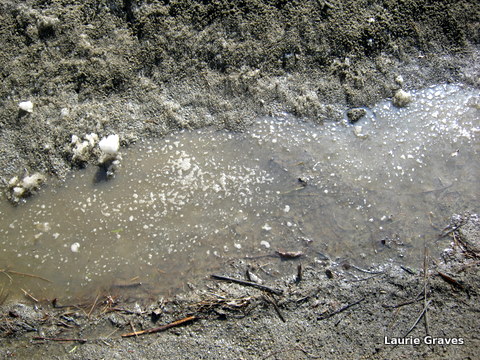
As we went up the Narrows Pond Road, I saw a sight that few would consider beautiful but was oh so heartening to me—water running in the ditch.

IMG_8010

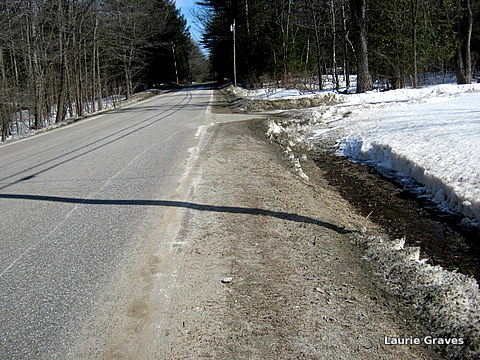
When I looked down the road, I could see how much the snow has melted and pulled back.

IMG_8013

A little while later, we met Megan the dog and her person, both back from winter in a warmer place.  Liam has known Megan since he was a puppy, and I remember how she used to nuzzle his little back.

IMG_8023

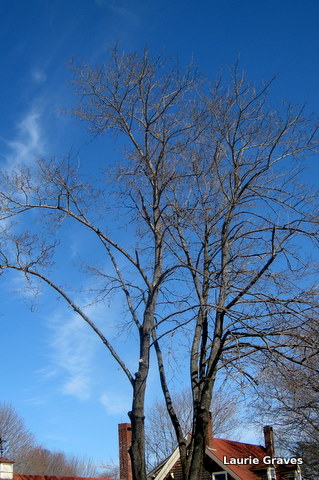
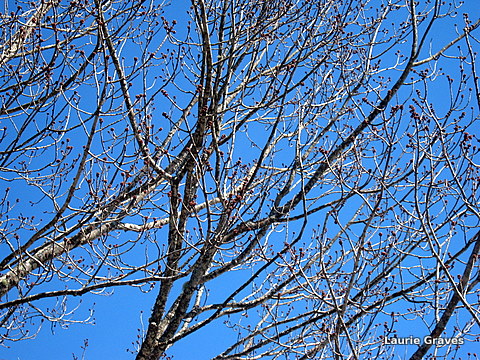
We continued on our walk, and on the way home, I saw budding trees against a deep blue sky.

IMG_8027

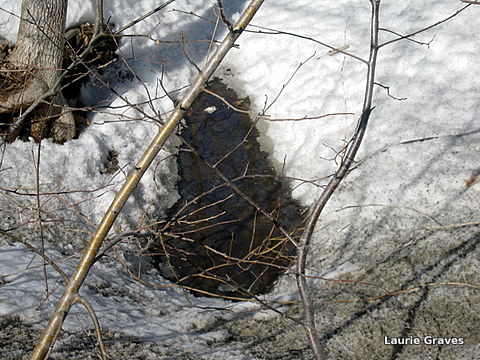
More running water where the stream has finally broken through the snow.

IMG_8030

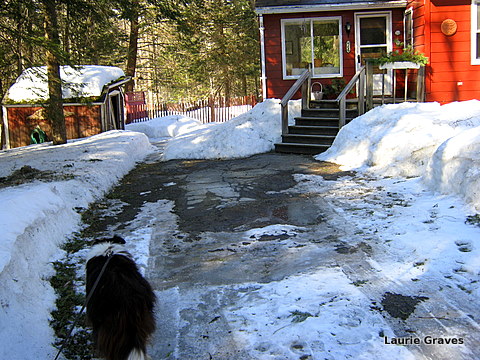
And back to our very own little house in the big woods where we can actually see bare driveway.

IMG_8035

Yes, there is still a lot of snow in our yard, but joy joy happy happy. Spring is coming!


A Stand-off in Winthrop and the Blessings of an Ordinary Life

IMG_8009Yesterday, when I went to the Credit Union, I met a friend who asked, “Did you hear there is a police stand-off in Winthrop today? The schools are in lockout.”

“No kidding!” I said. To put it mildly, I was surprised. Winthrop, population 6,000, is normally a safe, placid town, and it’s one of the things I love about living here.

The tellers at the Credit Union joined the discussion.

“It’s on Spruce Street,” said one of them said.

“There was a gunshot,” another said.

Spruce Street is only about a couple of miles from the Credit Union. “Is Main Street closed?” I asked. I had planned to go to the library after I was done at the Credit Union.

“No,” my friend answered. “Just High Street and Spruce Street.”

At the library, I discussed the stand-off with Richard and Nancy, and we all agreed it was a shocking incident for little Winthrop.

But shocking incidents can happen anywhere, even in a town of 6,000. No matter where they live, people can snap and do terrible things. As it turned out, this was a case of extreme domestic violence, but fortunately the wife and child escaped without harm. Unfortunately, the husband killed himself, and this was the gunshot that was heard.

After going to the library, I headed to Augusta, to a place I have been going for nearly five years—the Harold Alfond Center for Cancer Care. In 2010, just before my fifty-third birthday, I was diagnosed with breast cancer. At first, I went to the Cancer Center every four months. Now it’s every six months. In September, on the fifth anniversary, I will start going once a year.

I was lucky. My cancer was “lazy,” slow-growing and not aggressive. My prognosis has always been good. Nevertheless, when I go to the Cancer Center, I am nervous. Will the blood work reveal something terrible? Will the oncologist find a lump?

Yesterday, the answer was no and no. Everything was good, and I could carry on with my ordinary life, which, since breast cancer, has become very dear to me. I could continue my volunteer work with the library, which means so much to me. I could check on an acquaintance who is going through hard times and offer to make soup for her. I could plan an Easter Brunch. A summer of bike riding. Nights on the patio. My ordinary list goes on and on, and how grateful I am to be able to enjoy that list.

Today I have been thinking about the people involved in that stand-off—a man who is dead; a woman without a husband; a child without a father. For the man, of course, his ordinary life is over, and I can only assume there was too much pain for him to bear. For the wife and child, I expect it will be quite a while before they can enjoy an ordinary life, and there might be scars that never quite heal.

An ordinary life, like being useful, sounds flat and boring. But for those of us who have had our ordinary lives tipped upside down, it is anything but dull. For me, at least, my ordinary life is rich and fulfilling, and I hope I have many more years of this life.


Virunga

Virunga (2014) Poster

Yesterday, our friend Alice came over to watch the movie Virunga with Clif and me. (Alice’s husband, Joel, has been gripped by March madness—college basketball—and Alice was eager for a diversion.) Virunga is a compelling  documentary about Virunga National Park, located in eastern Congo and home not only to endangered mountain gorillas but also to many other animals such as elephants and lions. Virunga National Park is a lush and beautiful place guarded—and I mean this literally—by a group of dedicated rangers who must carry automatic weapons and grenade launchers and who  are sometimes killed protecting the park.

Virunga National Park, also a UNESCO World Heritage Site, is under constant threat from poachers as well as an oil and gas company called Soco International, whose headquarters are in London. It seems that along with an astonishing biodiversity, Virunga also has oil, and Soco, to put it mildly,  is extremely interested in the oil. With its vast resources, Soco bribes its way into the poor community around the park, making the job of protecting Virunga even more difficult.

As if poachers and a greedy oil company aren’t enough, there is a third force to bring misery to Virunga and the people in the surrounding area. That is, the rebel force M23, who is fighting against the Congolese government. As Emmanuel de Merode, the park’s director, calmly observed, Virunga was between a hammer and an anvil, caught in the middle of the battle between the government and the rebels.

The film focuses on four people: André Bauma, who cares for orphaned gorillas; Rodrigue Mugaruka Katembo, head park ranger; Emmanuel de Merode, whom I mentioned above; and  Mélanie Gouby, a very brave and plucky French investigative journalist. The film takes you undercover with Melanie Gouby and Rodrigue Katembo and then throws you in the middle of the war as the rebels and government do battle, right in the park itself.

I can’t put it any better than Ronnie Scheib of Variety  when he writes that Virunga is an “extraordinary documentary” with “enough action, pathos, suspense, venal villains, stalwart heroes and endangered gorillas for a dozen fiction films.”

After we watched the film, Clif said, “Virunga sure puts snow and cold weather in perspective.”

Both Alice and I wholeheartedly agreed with him.

Do see this movie if you get a chance.

The First Day of Spring: Let It Be Known…

Today—March 20, 2015—is officially the first day of spring. Let it be known that I am officially tired of the following:

  • A yard buried in snow. Is there grass somewhere lurking beneath? A patio?  Maybe, but all I see is white.
  • An icy driveway that I have to creep across when I’m taking the dog for a walk.
  • Wearing a hat, gloves, and a heavy coat. Oh, the freedom to step outside without bundling up—a hatless head and gloveless hands seem like a dream from the past.
  • The restless feeling that comes from staying inside too much while at the same time not wanting to go out because it’s too darned cold.
  • The biting wind that makes the cold even worse. It blows down the Narrows Pond Road, and walks are downright painful.
  • The high heating bills that come with all this cold weather. In our house, we keep the temperature low, but it doesn’t matter. The bills are still high.

Evidence, taken on the Narrows Pond Road, to support my complaints:

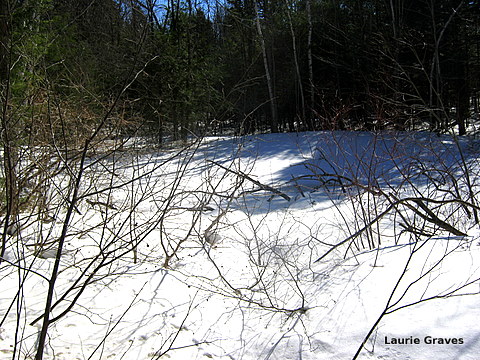
The swamp, covered with snow, where the frogs still slumber
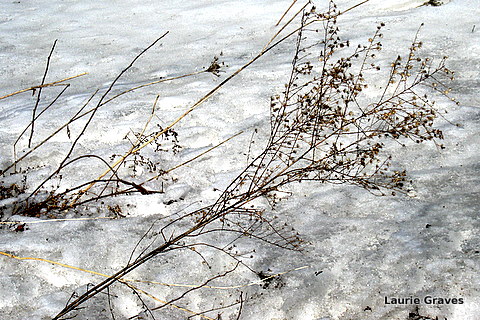
Dried flowers from last year
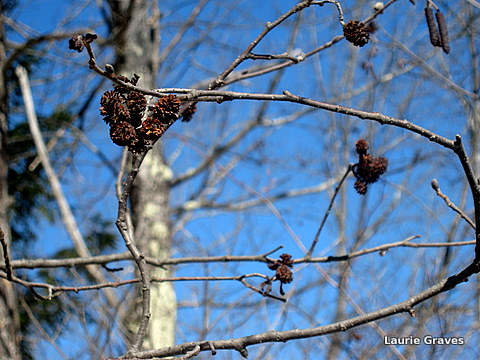
More dried stalks with pods
More dried stalks
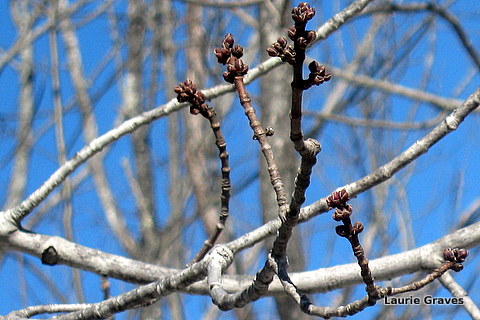
Bare branches against blue sky. (All right. I admit it. This one is pretty.)

These complaints are now duly noted, and we can only hope that the weather comes to its senses, that we will soon feel the soft touch of true spring.

And maybe, just maybe, see a bit of bare ground.


After Thirty-Eight Years: Thoughts on Marriage

IMG_7969
Two goof-balls, after thirty-eight years

On this day, thirty-eight years ago, Clif and I were married. Who plans a wedding in March, Maine’s most unlovely month? We did. We were both students, and we decided to get married during spring break.

To be honest, I don’t remember much about the wedding except that it was unconventional—I wore a red velvet dress made by a friend, and Clif wore a gold velvet tunic that he sewed himself. My father and brother also wore gold tunics, and my mom dubbed them the “Star Trek” crew. (She had a point. Those tunics did have a Captain Kirk look.) I was also very nervous, as most brides are, and I was glad when the whole thing was over.

Every year on this date, I muse about marriage and divorce. How in the world have Clif and I managed to stay married for so long? I don’t think it can simply be chalked up to love because I believe most couples really do love each other when they get married. But for some people, over time, love fades. The reasons can be varied, but I suspect a prime reason is that when the heat dims, as it must, many couples realize that they really don’t have much in common, that they are no longer a team.

I know. This sounds about as romantic as a pair of walking shoes. Nevertheless, I believe common interests, common goals, and the sense of being a team can form the basis for an enduring relationship that leads to friendship, another unromantic concept. To all of this, a very liberal dose of devotion should be added.

My recipe for a long marriage is not the only recipe—there is no one way to do anything, especially marriage—but I do believe it is a good one. It has worked for Clif and me, and it has worked for a lot of our friends, who have also been married for many years.

Do we get on each other’s nerves, from time to time? Of course we do. We have even been known to bicker. But we get over it and usually fairly quickly. Then, we move on to the things we like to do—bike, read, watch movies, get together with family and friends, and cook. (Clif makes the best pancakes and waffles. Ever. And his grilled bread is legendary.)

Tonight, I’m going to cook a homely but special meal of baked chicken, potatoes, and some kind of vegetable. (Because we infrequently eat chicken, it falls under the heading of a treat for us.) For dessert, Haaggen-Dazs ice cream and cookies with Belgian chocolate. I’ll light candles on the table, and we might even have a glass or two of wine.

It will be a cozy and very happy anniversary meal.

Louise Dickinson Rich: The Virtue of Being Useful

IMG_7289Lately, thanks to my friend Mary Jane, I have been on a binge of reading Louise Dickinson Rich, whose We Took to the Woods was a back-to- the-land anthem well before the 1970s, when the movement became a trend in Maine. (And what a welcome trend it was. Thanks to all the young people who moved here in the 1970s, we have a flourishing organic gardening community that nurtures young farmers.)

In We Took to the Woods, Louise Dickinson Rich wrote a meandering but lively account of living in the backwoods of Maine with her husband Ralph Rich. Conditions were basic—no running water, no electricity—and money was often tight as Rich and her husband scrambled to earn a living through writing and various jobs associated with the backwoods. What comes through in We Took to the Woods is not only a zest for life but also a great desire to be useful.  Living as she did, with her husband and children, Rich felt that she was essential to the well being of her family, that her work and effort, along with that of husband’s, kept the little family afloat.

After reading We Took to the Woods, I wanted to learn more about Louise Dickinson Rich. Therefore, I turned to Alice Arlen’s biography of Rich—She Took to the Woods—where Arlen not only writes about Rich’s life but also includes some of the author’s essays and letters.

Louise Dickinson Rich lived a long life—she died when she was eighty-seven—and in a letter to her friend Hortense, she writes movingly about one of the greatest losses that comes with old age. That is, of not being useful anymore. “Growing old is not easy, I have found. I, too, have twinges of regret when Dinah [Rich’s daughter] and her family take off on an expedition leaving me home alone….Alice [Rich’s sister] and I were talking the other day and both agreed that one of the hardest things about being old is that one feels so useless, with nothing to offer. But I guess that nothing can be done about that except to try to learn to adjust and accept gracefully. Which—for me at least—is damned difficult.”

Being useful, much like the freedom to be weird, sounds like faint praise. There are so many other things we could be: beautiful, kind, rich, athletic, artistic, good with our hands, a good cook. If someone said, “Laurie, you are so useful,” I might first wonder if the speaker was being ironic and then wonder if that was the nicest thing that could be said about me.

But if we think about it a little more, it doesn’t take long to realize that while being useful might be a modest, homely virtue, it is indeed a  virtue. When a person is useful it means she is contributing something essential to home, work, or community. She is needed. Her usefulness means the work gets done and because of this there is less chaos, less stress. Being useful often means you can work as part of a team, where even more can be accomplished, especially if others on the team are also useful. (Unfortunately, I have had the misfortune of working on committees with people who, to put it mildly, were not useful. It was a real misery.)

Being useful also brings meaning to a life. I am convinced that one of the reasons why teenagers in this country have such a hard time is that they are not useful, and they know it. They are stuck in a sort of limbo—no longer a child, not yet an adult—with no sense of purpose to order their days. The very rich can have this problem, too, with day after boring day stretching ahead of them.  Is it any wonder that drugs and alcohol are often used to relieve the tedium?

So lets hear it for being useful, and may we be useful for as long as we can.

IMG_7389