
Fall is slow to come this year. The weather has been very warm, and although the nights have been cool, there hasn’t been even a hint of frost. The basil is as full and vigorous now as it was in August.
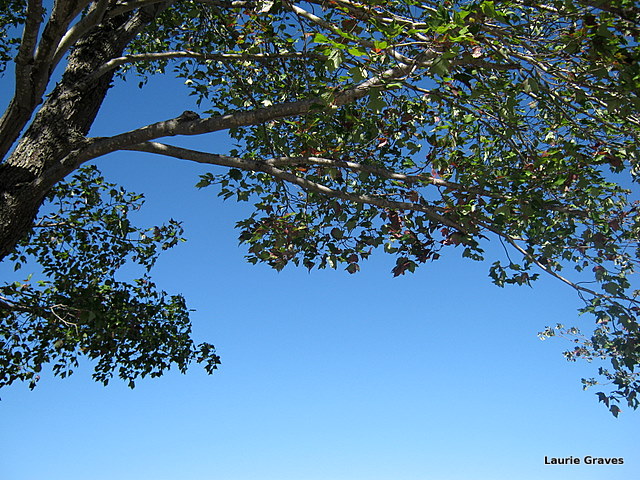
Then there are the leaves on the trees. Judy, on her blog New England Garden and Thread, observed that “the turning of the leaves is going very slowly.” We live quite a bit north of Judy, but the same is true for central Maine. In some trees there is just the slightest tinge of color, but with most trees, the leaves are still green, as the picture below illustrates.
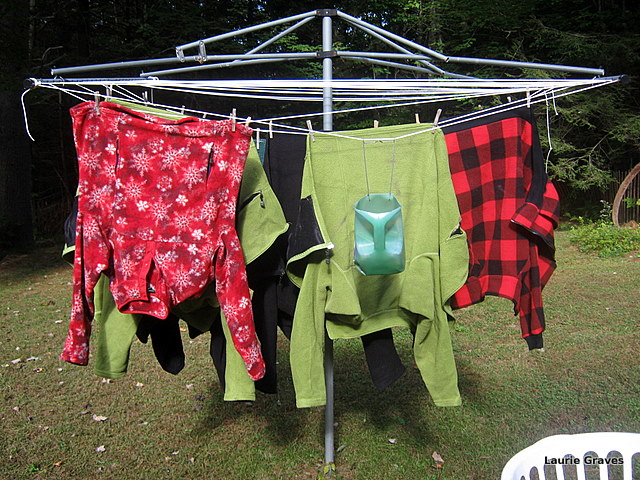
Nevertheless, despite the warm weather and the green leaves, I decided it was time to wash our fall fleeces so that we would be ready when colder weather comes. I love how colorful those fleeces look on the line, and I am always dumbfounded when I hear that certain places have banned clotheslines. I hope I never have to live in such a neighborhood.
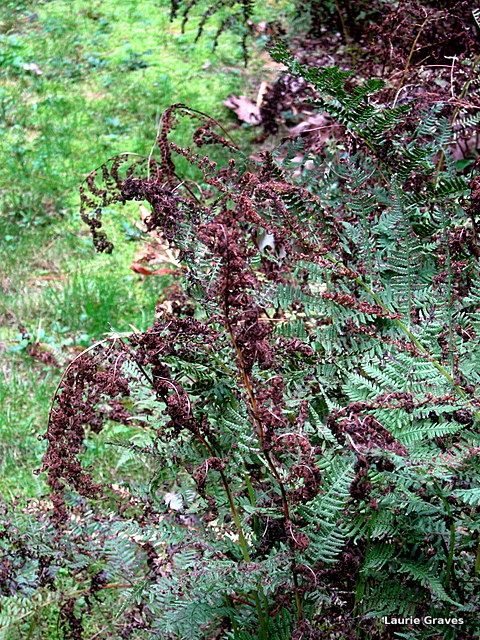
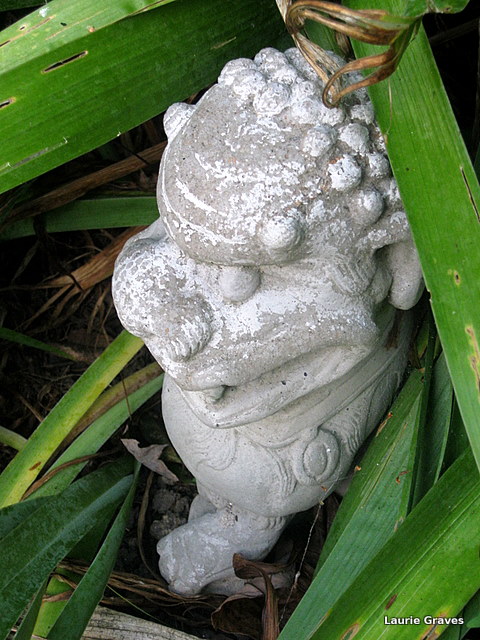
Temple dog is still guarding the ragged flowers, but soon I will be going out to cut back the garden, and it won’t be long until there isn’t anything left to shade that little head.
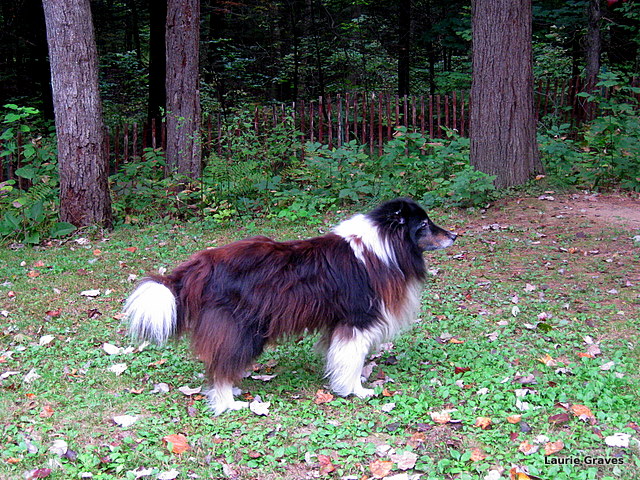
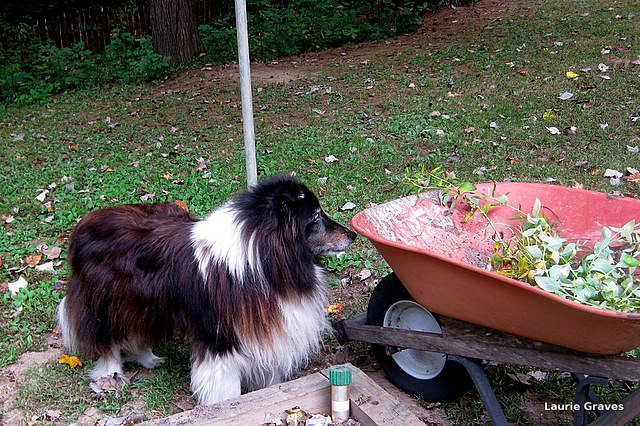
Liam, the yard dog, will supervise, and this is one of his favorite activities. Being a herding dog, he loves to bark and circle the wheelbarrow as I remove the clippings from the garden. Well, we all have our jobs to do, and Liam takes his job very seriously.
Yesterday, in the comments’ section of the post I wrote about Clif’s birthday, our friend Claire Hersom shared a poem in honor of Clif’s special day at the ocean. Claire is such a fine poet, as well as a friend, that I thought the poem needed to come “out front,” so to speak, where more people would read it.
The Edge
Undertow tugs the valley of the next wave
curling it into a crunch that crashes
as loud as gulls low-flying the sand,
screeching for tidbits on our beach blanket.
We walk the shore as if one person,
my pink bonnet to shade my eyes
and you, a seven year old of burnished gold.
You wade in deep tidal pools
fearless of the ocean that runs up the bank,
swoons, then cascades back, never quite
catching sandpipers stuttering along beside
a vastness we barely comprehend.
Our eyes scan the sky at the sea’s blue-white line,
the timbre of our voices swallowed. The wind,
as it did before memory, sings it back,
our red, painted toe nails teetering
on the thin line of discovery.
Many thanks, Claire!
 Sunday was Clif’s birthday, and a week ago, I asked him what he wanted to do on his special day. “If the day is good, go to the ocean,” he promptly replied.
Yesterday was very good indeed, one of those bright September days with nary a cloud in the sky. We packed crab salad sandwiches, grapes, and cookies, and off we headed for our favorite beach—Popham Beach State Park. We love this beach for its broad expanse of sand, especially when the tide is out, but we especially love how the beach is not overdeveloped. On the state park end of things, there is nothing but sand, rocks, sea, and sky, but even when you leave the state park, there are no condos, no honky tonk, no gift shops. Instead, there are a few cottages, one small restaurant, not visible from the state park, and an old ruin of a fort, built in 1807.
After our picnic—a brisk one because of the ocean breeze—we walked the beach. Luck was with us—the tide was going out—and in the clear September light, this beach was even more beautiful and sparkling than it usually is. It was almost as if the beach were saying, “Yes, I show my beauty in the summer to all the tourists, but I am most radiant in the fall, after most of the tourists have left. It is my gift to all those who are hardy enough to stay here year round.”
We brought our wee cameras, of course, and we happily snapped pictures to record our walk.

Because the tide was out, we headed to an island that can be reached only at low tide.

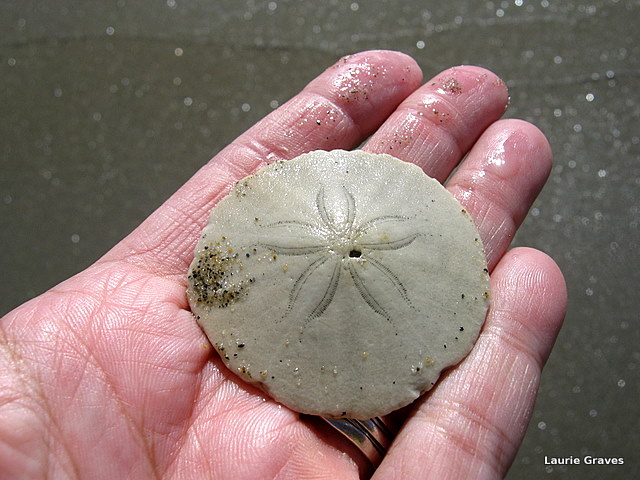
On the way, I found an intact sand dollar, which I tucked in my pocket for safe transport.
At the island, Clif climbed to the top.
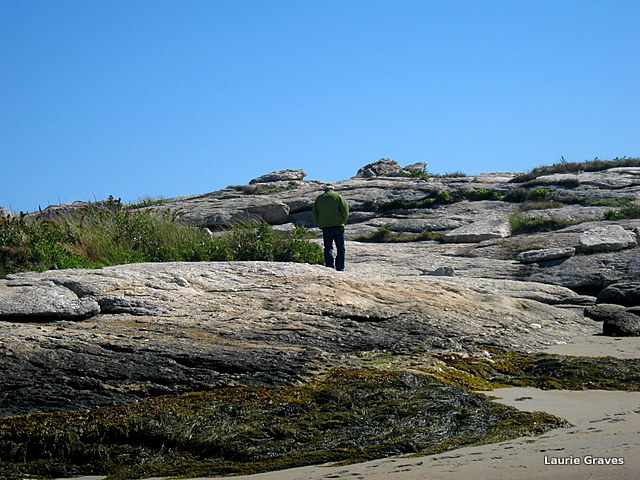
While Clif explored the island, I found a rock seat and had my moment of Zen as I watched the water and the sky. Truly, I could have sat there for hours.

My moment of Zen must have given me a pleasant expression because two women—about my age—stopped to speak to me. They were complete strangers, but I was happy to chat with them. (This happens surprisingly often to me when I am at the beach. For some reason, strangers like to chat with me.)
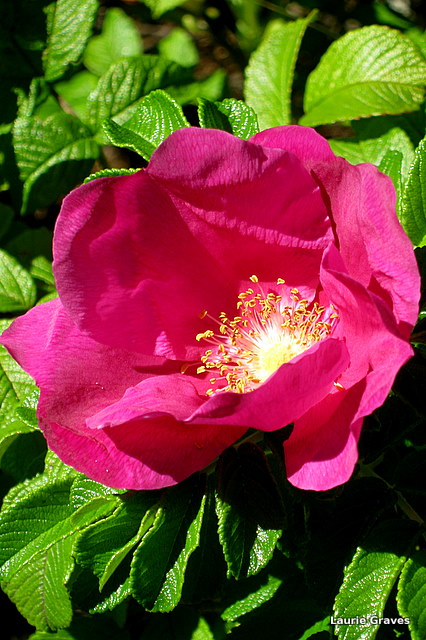
All too soon, it was time to head back. At the edge of the beach, fragrant roses were still in bloom.
All the way home, we thought about the sea, the sand, the sparkling water, and the deep blue sky. A perfect day that needed a special ending.
“Let’s have a fire,” I said to Clif, “and eat supper beside it.”
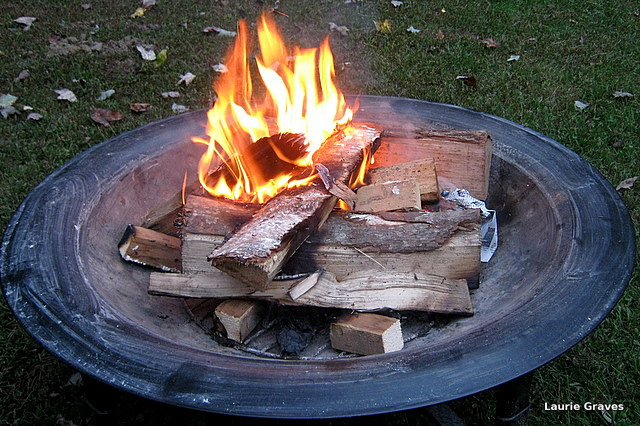
This we did, enjoying a meal of baked potatoes topped with chili and cheese.
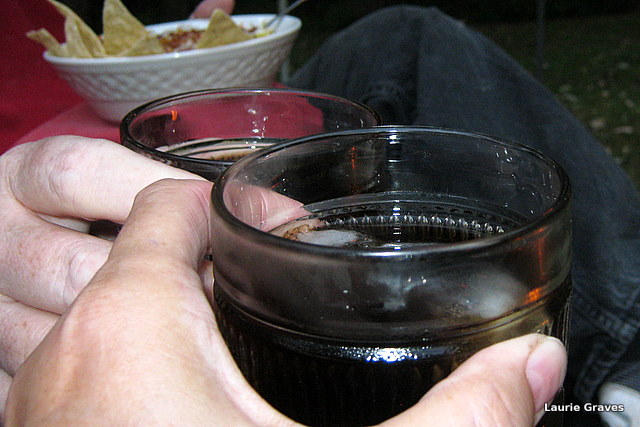
But before we ate, I toasted Clif, wishing him many more birthdays and a happy, creative retirement.
Wednesday is Clif’s last day at work. But that is another story.
 Thanks to the warm weather we’ve had this September, the tomatoes are coming in full force. For the past few weeks in my CSA share from Farmer Kev, there has been a generous allotment of tomatoes. I hate to play favorites, but I can’t help it. I love tomatoes, and I never come to resent them the way I do, say, greens or zucchini, both of which can seem like a curse rather than a blessing when they are coming in with such vigor that you wonder what in the world you are going to do with them.
Not so with tomatoes. They can be eaten raw, which this time of year, is my favorite way of eating tomatoes. In fact for my lunch today, I had two poached eggs on top of two large slices of tomatoes. What a lovely, juicy mess.
Tomatoes, of course, can be cooked down into a sauce. Or added to soups. Or a casserole, which I plan on doing next week when I make a chicken, carrot, potato, and tomato casserole, held together with a sauce made from the chicken drippings and topped with buttered bread crumbs.
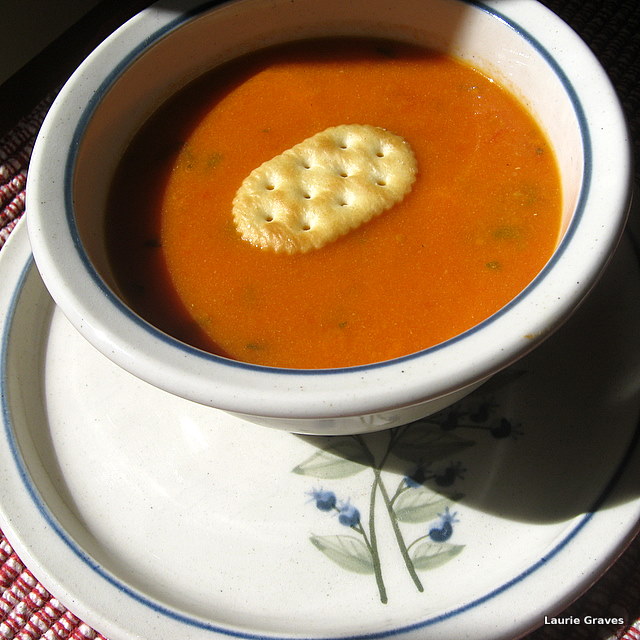
Then there is tomato soup, one of my favorite soups. (No surprise there, given how much I love tomatoes.) Finally, the weather has become cool enough for soup, and the other day, when I opened the refrigerator and surveyed the big bowl bowl of tomatoes, I thought, “tomato soup.”
But first I roasted the tomatoes, which give the soup a sweet, rich flavor. It only takes forty-five minutes or so to roast them, and then into the stockpot they go. Add a cup of water. Some onion and garlic. A bouquet garni of oregano, thyme, and parsley. (Alas, my sage succumbed to tiny marauding caterpillars.)
Bouquet garni—herbs tied in a bundle—is one of my favorite ways to use herbs with tiny leaves, such as thyme. All you do is clump the herbs together, wrap them with thread, and tie the bundle. Drop it into the soup stock, and let the herbs simmer with the onion and garlic. Then, when the simmering is done, use a slotted spoon to remove the garni. Voilà! You have the lovely infusion of the herbs without the tedious chore of plucking and chopping.
However, I didn’t totally escape the chore of chopping herbs because after the soup was blended and a cup of milk was added, I finished the soup with fresh basil, which added another dimension to this already flavorful soup.
Clif always likes soup to have “something” in it, and he duly added leftover macaroni to his bowl. Not me. I wanted to eat the soup just as it was—smooth, creamy, with the overtones of basil, and the undertones of the bouquet garni.
Roasted Tomato Soup with Herbs
Ingredients
For roasting the tomatoes
For the soup
Directions
For roasting the tomatoes
For the soup
“But we should not mourn the summer garden. It was not more or less beautiful because it was temporary. If we were smart we took advantage of summer to experience as many moments of garden joy as we possibly could.” —Jason, from the blog Garden in a City
Yesterday was the fall equinox, that time when there is a balance between day and night. In Maine, fall is perhaps its most beautiful season, a dazzling time of bright blue skies, blazing leaves, warm days, and cool evenings.
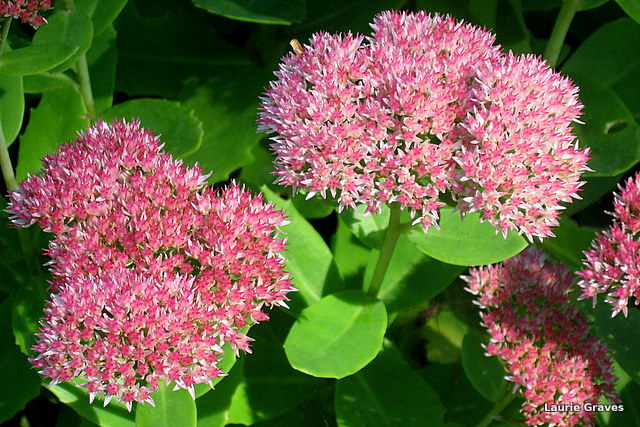
However, Jason’s lovely description perfectly captures the bitter-sweet mood that northern gardeners feel when autumn comes. We should “not mourn the summer garden,” but in our heart of hearts, many of us do. Gone are the lilies, the bee balm, and the phlox. The stalwart black-eyed Susans are fading fast. The modest sedums, with their blush of pink, provide some consolation, but the joyous burst of color in the gardens is over for another year.
Yet Jason is also right about taking as many moments of garden joy as we can in the summer. Clif and I certainly did. Almost every evening this summer and indeed this September, we took our supper plates out to the patio, where we smelled the spicy bee balm and listened to the crickets, the loons, and the barred owls. In August, as dusk fell, we admired the hummingbird moths. We were still in blissful ignorance about the Dr. Jekyll and Mr. Hyde nature of these little creatures, of how the beautiful, ethereal moths lay eggs that hatch to become marauding, voracious hornworms. (I do want to note that not all hornworms attack tomatoes, but the offspring of the hummingbird moths that visited our garden certainly did.)
The gardens are in tatters, and next week I’ll begin cutting them back.
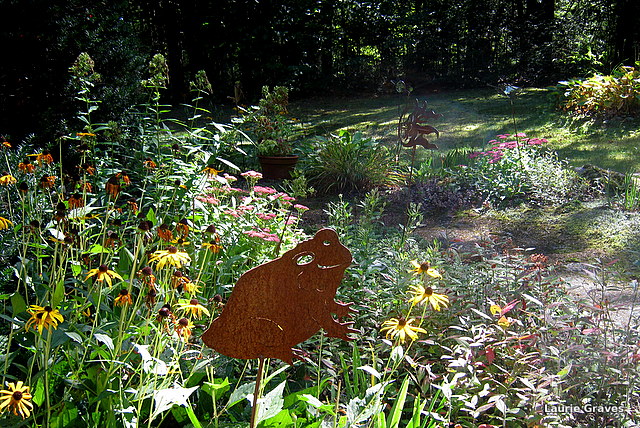

Cutting back the garden always makes me feel a little blue, but there are certain consolations. That bright sky, the warm sun, and the changing leaves. Now that summer’s heat has gone, time spent around the firepit.
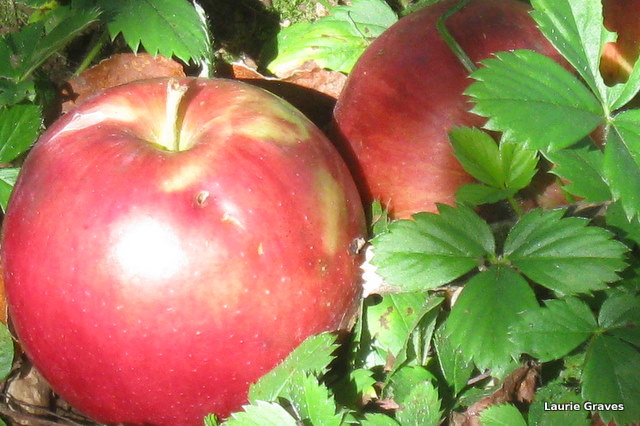
And, of course, apple pie, my favorite kind of pie to make. This year is surely a banner year for apples. The wild trees by the side of the road are laden with fruit, and yesterday, on a walk, I snitched a couple of dropped apples from beneath a neighbor’s tree. How good and crisp and white they were, with nary a sign of one single worm. I am thinking of asking if I can snitch some more drops. (Cheryl, I promise to invite you over for apple pie or crisp. Your choice.)
So onward to fall. Every season—even the long dark of winter—has its beauty and pleasures. And like our friend Burni, we intend to squeeze as much pleasure as we can out of each season.

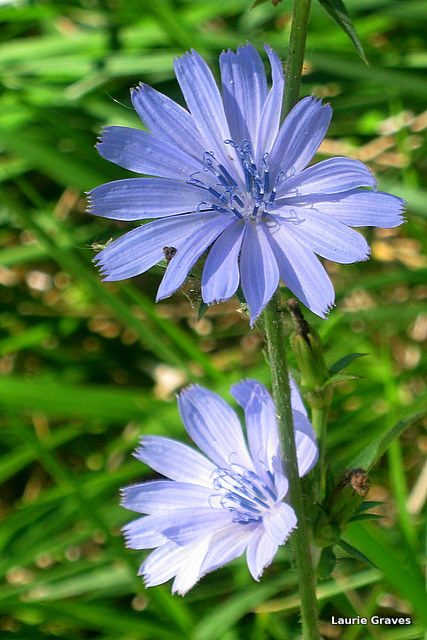
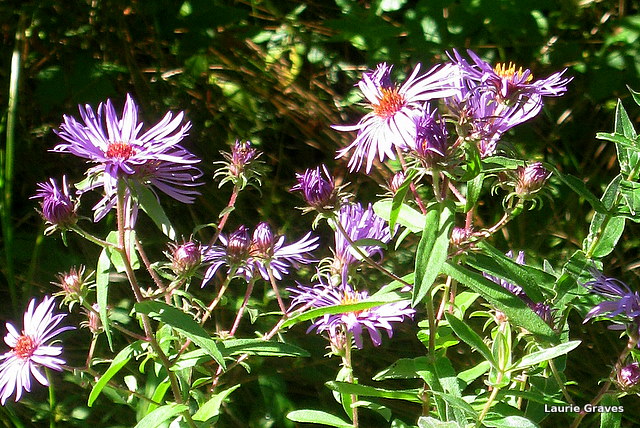
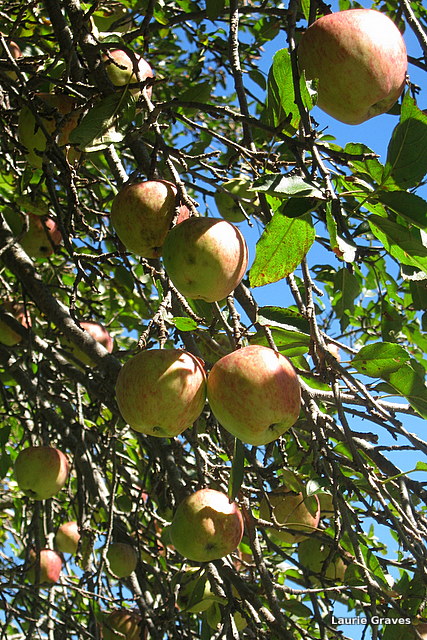
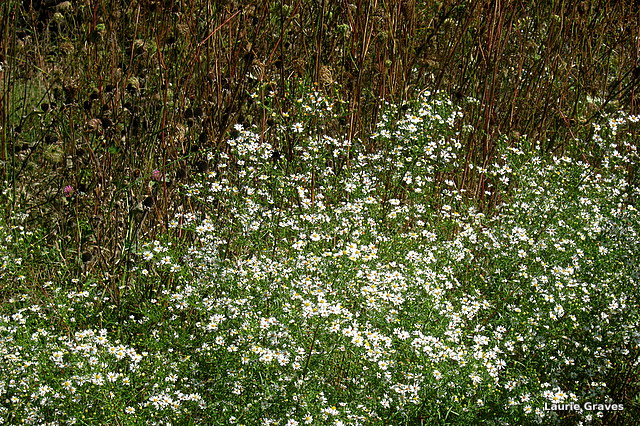
Today, I am going to toot my own horn. Clif and I are launching a photography website called—ta-da!—Hinterland Photography, where we are selling cards and prints.
Here is a blurb from the website that describes who we are and what we like to photograph:
“We—Clif and Laurie Graves—are a husband and wife team. Clif has been taking pictures since he was a young man, and he has many, many years of experience in graphic arts. He has designed posters for local businesses, and his photographs have appeared in Maine magazines and on websites. Laurie is newer to photography, but she has had the benefit of living with an accomplished photographer and learning from him.
We live on the edge of things, and we like it that way. Our photographs reflect this sensibility, and indeed most of our pictures were taken in central Maine, which is not exactly on the beaten track. We love the woods, flowers, trees, lakes, and nature in general. On rare occasions, we venture to the Maine coast, but most of our photographs were taken in Winthrop, the town where we live. Indeed many of them were taken in our very own yard. Our pictures capture the quiet beauty of central Maine, of a rural town and the surrounding woods and lakes, and the progression of the seasons.”
Here are some examples of cards and prints we are selling:

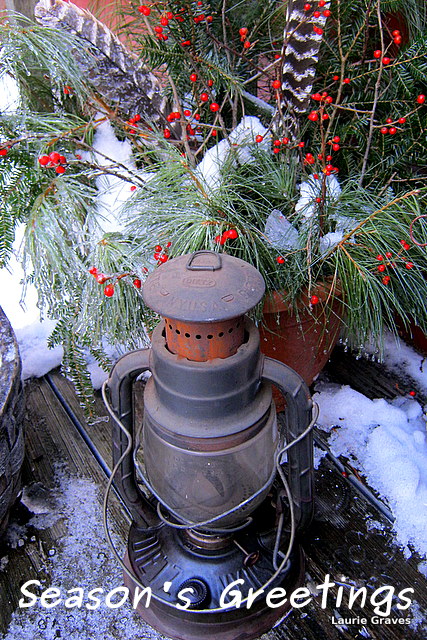
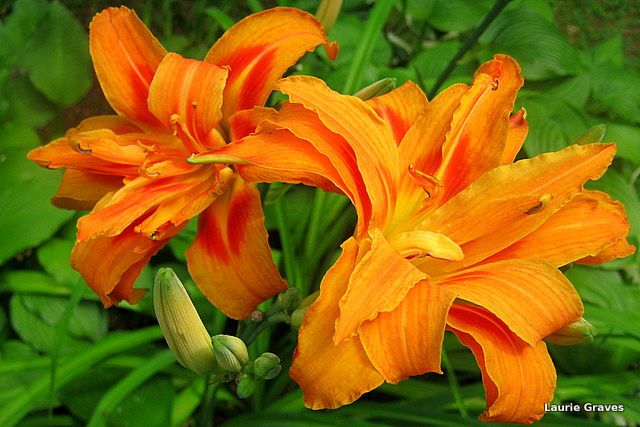

As the photos show, we go from winter to summer. (However, it seems to me that flower cards can be sent any time of year.) We also feature Maine images and library cards. We will soon be offering fall cards as well as a special section with photos that are an homage to Georgia O’Keeffe.
So if you like what you see, then please spread the word. And perhaps buy a card or a print?
Today I am going to have a tooth pulled, so there is not much time to write. However, I did want to share a quotation from Hal Borland’s An American Year. (Borland was a nature writer who wrote for the New York Times. In upcoming posts, I hope to write a little more about this terrific writer.)
This quotation is a perfect example of what might be called a strange coincidence. A few weeks ago, I had never heard of tobacco hornworms and did not know that they turned into the enchanting hummingbird moths. Then I discovered the hornworm in my garden, did some research, and uncovered the Horrid Truth.
A week or so later, I came upon this passage in An American Year. “Those dark, swift wings hovering over the garden these August evenings are moths, not hummingbirds as they appear at first glance in the dusk. Hawk moths, some call them, or sphinx or hummingbird moths. They are easily mistaken for hummingbirds…But they are true moths, and at one stage of their development they have been voracious hornworms feeding on tobacco or eating the heart out of ripening tomatoes.”
Oh, isn’t that the truth! The fair Juliet is no more. All the plants have been pulled from my little garden. I threw them, hornworms and all, into the woods, where no doubt the hornworms will thrive and reproduce and return to torment my plants next fall.
But after examining hornworms so closely, I just couldn’t bring myself to kill them.

 Yesterday, I groused about the extreme heat we’ve been having this September, but I must grudgingly admit that it is very pleasant to still be able to eat supper on the patio and to not wear either sweater or sweatshirt when doing so. This is especially true if you are eating roasted tomato sauce made with tomatoes you picked that very afternoon. Add sausage and peppers to the sauce. Spoon over the pasta of your choice. Serve with a salad made with lettuce and carrots from Farmer Kev’s garden.
What more could you ask for? A glass of red wine? Why, yes, indeed. A meal like that, eaten outside on a warm night, certainly fits my idea of la dolce vita.
This tomato sauce, which can really only be made once a year when the tomatoes are at their ripest, is so good that last night Clif said, “You would have to pay a lot to get a meal like this in a restaurant.”
That is high, high praise coming from my Yankee husband, whose usual comment is “pretty darned good.” Let’s just say that last night at the little house in the big woods, the cook was pretty darned happy.
I made the sauce using Juliet tomatoes, which Johnny’s Selected Seeds describes as a “mini-roma” that has a “[d]elicious, rich tomato flavor for salads, great salsa, and fresh pasta sauce. ” This description is no exaggeration. I’ve made roasted tomato sauce with romas, and the sauce is perfectly good. But with the fair Juliet, well, it makes even a Yankee husband go beyond his usual understated words of praise. However, I have looked at several recipes online, and non-roma tomatoes are also used. So any fresh tomato will do. (I have a huge bowl filled with Farmer Kev tomatoes that are just begging to be made into a roasted sauce.)
Now comes the big question: What to do with the skins and seeds? Neither Clif nor I mind the skin and seeds of Juliet, and I blend the roasted tomatoes just as they are. With larger tomatoes, I might remove the skins, but I would leave the seeds. For those who don’t like or can’t eat seeds, the sauce could be strained.
I have loads of fresh oregano in my garden, and I sprinkle a generous amount of the herb, along with kosher salt, on the tomatoes before roasting. Dried oregano could be substituted, but in lesser amounts.
After roasting, I blend the tomatoes in a food processor. The sauce is then sautéed with garlic and olive oil, and you could stop right there. However, last night, I added peppers and chicken sausage, but you could add zucchini or summer squash. Or onions. Or meat balls. Spoon the sauce over pasta or roasted eggplant. Or a thick, chewy bread.
If it’s warm enough, eat outside. If not, eat inside. Either way, it’s la dolce vita when you have a sauce this good.
Roasted Tomato Sauce
Adapted from a recipe from Epicurious
Ingredients
Directions
There. With the heatwave that started the first of September and shows no sign of abating, it is official. In Maine, September is the new August, with nights warm enough to eat on the patio, and no jacket required. The days are ridiculously hot for mid-September—in the 90s—and while I long to make soup, I will wait for cooler weather.
One warm evening a few nights back, as Clif and I were sitting on the patio, I glanced at my little garden and admired the bright red fruit of the fair Juliet. (What a wonderful variety of tomato!) Then I noticed something else not quite as admirable. The top of one of the plants looked as though it had been stripped of leaves.
“Now that looks suspicious,” I said to Clif.
“Maybe it’s just where you picked tomatoes.”
“Maybe,” I replied, but I was not convinced and decided to keep an eye on things.
A couple of nights later, my suspicions were confirmed—more stripped leaves. However, as it was my birthday, and Clif and I were enjoying cocktails on the patio, I was in no mood to go poking around the tomato plants and look for the culprit.
The day after that, I had dental work—at the crack of dawn by my standards—and I wasn’t in a mood to do much of anything, not even have a cocktail.
Today, I decided to take the bull by the horns, so to speak, and look for the munching miscreant. It took me a while to find him (or her) but find him I did, in all his green and striped glory. (Fortunately, he seemed to be solo.)
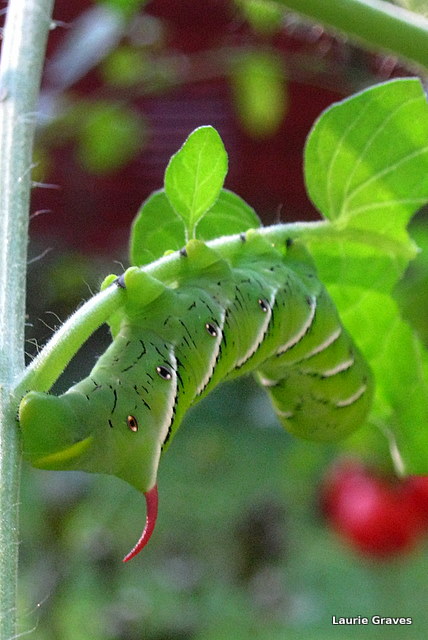
At first, I thought he was a tomato hornworm, but upon doing research, I discovered he is, in fact, a tobacco hornworm. They look similar, but the tomato hornworm has a black “horn” and the tobacco hornworm has a red “horn.” Also, the stripes are a little different, with the tomato hornworn having more of a V pattern. The adult of both species is a large brown moth, again very similar in appearance. I also learned that, as a rule, tobacco hornworms are happy to eat tomatoes but don’t usually come this far north. (I’m convinced it’s that darned hot weather we’ve been having. Lord only knows what else is going to make its way north.)
Naturally, I had to take a picture, and I have to admit that a closer look led to a certain fascination—the red horn, the white and black stripes, and the small “eyes” dotting the side. And with that fascination came some sympathy. After all, the little creature is just trying to make a living, albeit on my tomato plants.
Sentiment, of course, has no place in the garden, and when I went out later to pick tomatoes, I had resigned myself to dispatching him. But, as I picked, I couldn’t find him anywhere, and eventually I gave up looking. I had a nice basket of tomatoes for a roasted sauce. (There will be a recipe tomorrow.)
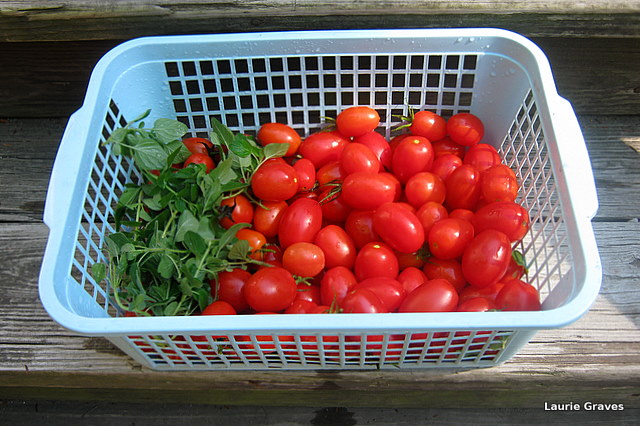
And not to put too fine a point on it, but the tomato plants are not exactly looking their best. Every year, a late blight hits my tomatoes, and that’s exactly what has happened. Fortunately, the blight always comes after most of the tomatoes have ripened, so it’s not a serious problem. I’ve picked most of the tomatoes, and I’m thinking of pulling the plants.
I know. I shouldn’t let that tobacco hornworm live to create more tobacco hornworms, and I’ll probably go out again with a jar of soapy water.
But for today, anyway, the tobacco hornworm has had a stay of execution.
Addendum: Son of a biscuit! In doing further fact-checking about tobacco hornworms, I found out that the adult moth is no other than the hummingbird moth, which I adore. There’s been one fluttering among the flowers all summer, and I’ve been trying to take a picture of her. Guess I know where the little creature in the tomatoes came from.
 Notes From the Hinterland