To the Farmers’ Market for Potatoes, Carrots, and Mocha Chaga

Last weekend, Maine escaped the wild storm that hit much of the Eastern Seaboard. The storm dropped freezing rain on North Carolina, where Shannon and Mike now live, and headed north to dump over a foot of snow in places such as New York City, where Dee lives. Then it went out to sea, leaving us unscathed.

Therefore, on Saturday, we went to Longfellow’s Greenhouses for the winter farmers’ market they host from January 9 to February 27, from 9:00 a.m. to 1 p.m. It is held in their “mall”, a long strip, covered like a green house, that connects the retail store to the actual greenhouses.
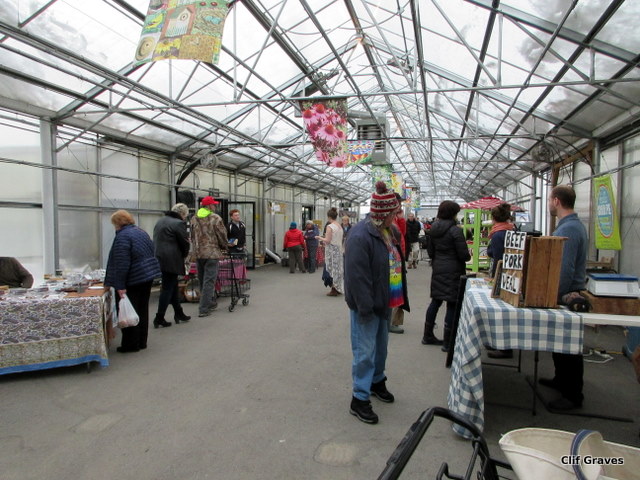
IMG_0565
The mall

Our own Farmer Kev was there, and we stocked up on potatoes and carrots, two essential winter vegetables. (In the fall, I had already stocked up on his winter squash.)
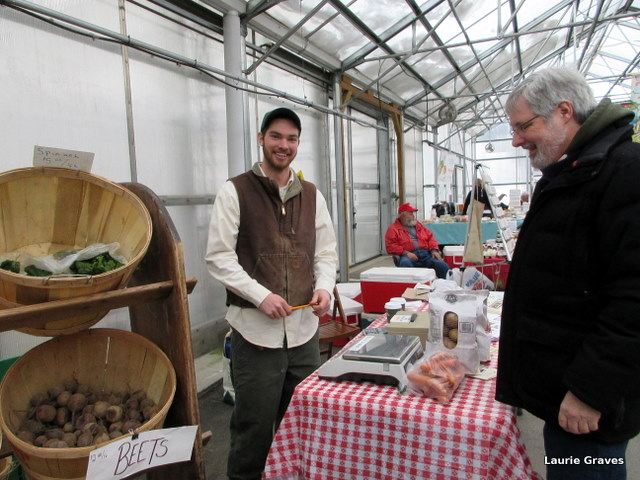
Farmer Kev and Clif
Farmer Kev and Clif

We chatted with Farmer Kev for a bit, and we learned he has his very own farm now in West Gardiner. Quite an accomplishment for a young man who isn’t even thirty and who doesn’t come from a farming family, from whom he will inherit land.

When we were done talking to Farmer Kev, we wandered up and down the mall, looking at the various products. So many good things  to sample and see, but we were especially taken with Zen Bear, which sells honey and honey tea. We talked with Frank Ferrel, formerly of Maine Public Broadcasting fame and currently one of the owners of Zen Bear. (He and his wife Lisa run the business.) He told us that the honey comes from Amish farmers in Aroostook County in Maine.
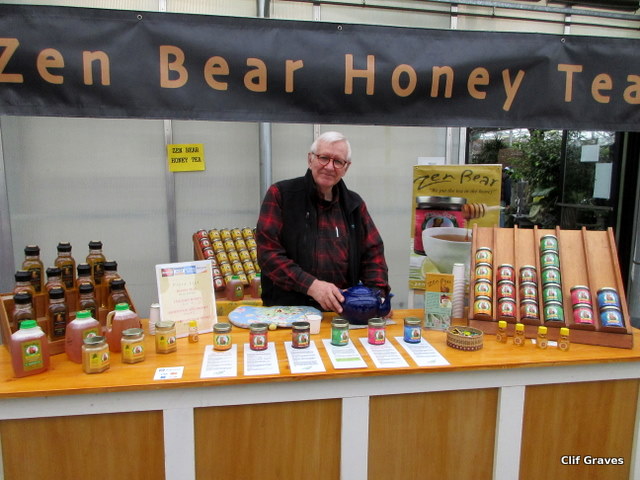
IMG_0570-1
Frank Ferrel ready to make some honey tea

We sampled some of the teas—“a gently infused herb, spice, honey and tea mixture…” All were delicious, but the one I liked the best was the Mocha Chaga, made from cacao, honey, Maine sea salt, chaga, and lucuma.  According to Zen Bear’s website, chaga “is a medicinal mushroom that grows on decaying birch trees.” According to Wikipedia, lucuma “is a subtropical fruit native to the Andean valleys of Chile, Ecuador, and Peru.”

Quite the exotic drink for central Maine in January, but the cherry on the sundae, so to speak, was when Ferrel told us about how chaga was extremely high in antioxidants. (He had some tested at the University of Maine.)
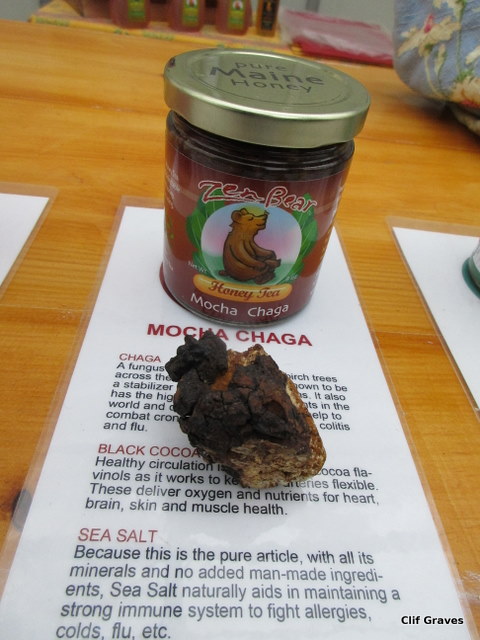
Chaga
Chaga

All right, so Mocha Chaga is exotic—for a Mainer—and high in antioxidants.  But how does it taste? I am happy to report that it has the delicious taste of hot cocoa, albeit one that has unusual ingredients and is high in antioxidants. I bought a jar of Mocha Chaga and had a cup this morning for elevenses. It was very good indeed.

Potatoes and carrots, honey tea made from chaga and lucuma. You never know what you’ll find at a farmers’ market.
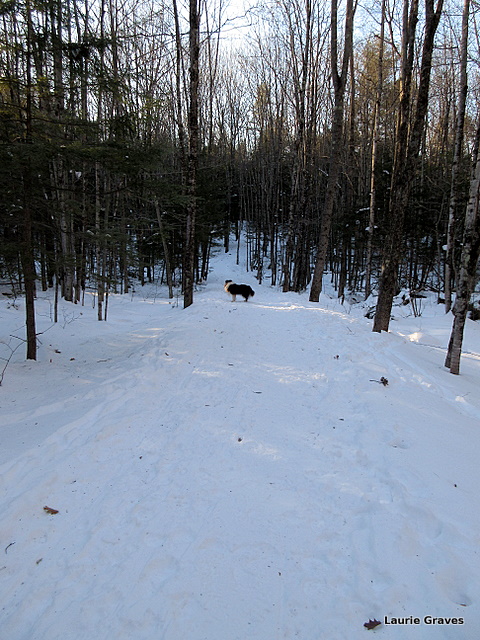
Almost the Wolf Moon

Yesterday, Clif, Liam, and I went for a walk in the woods behind the high school. It was late afternoon, almost dusk. The setting sun sent slanting rays through the woods, but the shadows were deep enough to give everything a blue cast.

IMG_0526

The little stream runs so fast that it only has a skim of ice. I like the heart-shaped cap of snow on the rock, and I might use this photo for a Valentine’s card.

IMG_0533

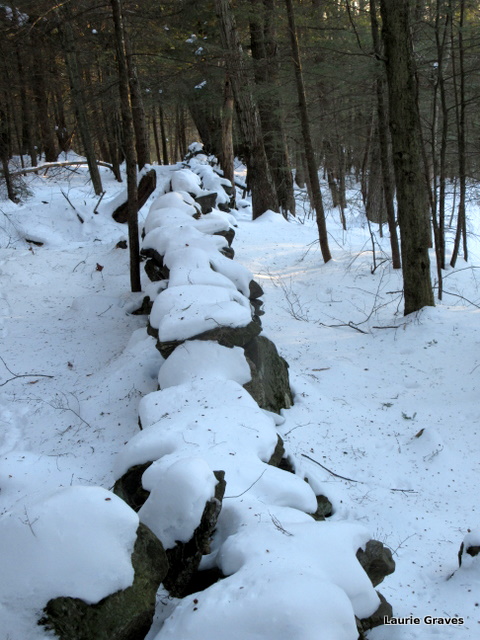
The stones in the wall also have caps of snow, albeit none that look like hearts.

IMG_0538

The brook is slower moving than the stream, and while it isn’t completely frozen, it has enough ice on it to muffle the sound of the moving water. Will it get cold enough this winter so that the brook freezes entirely?

IMG_0544

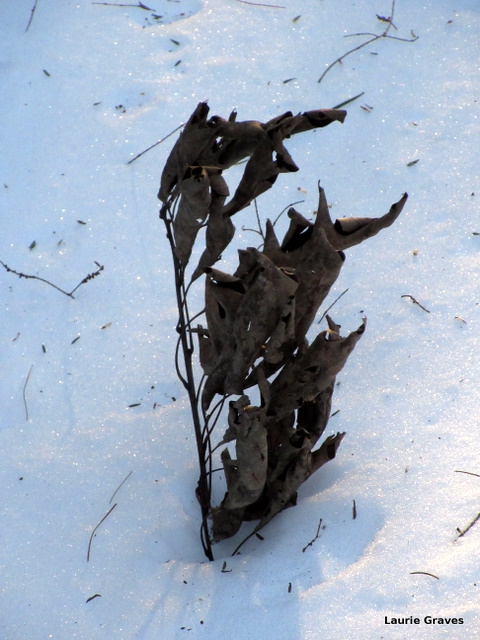
When the wind blows through the woods, leaves and branches fall, making natural arrangements.

IMG_0535

The trail twists through the woods until we come to another section of the stone wall. I was taken by this striated rock with snow.

IMG_0551

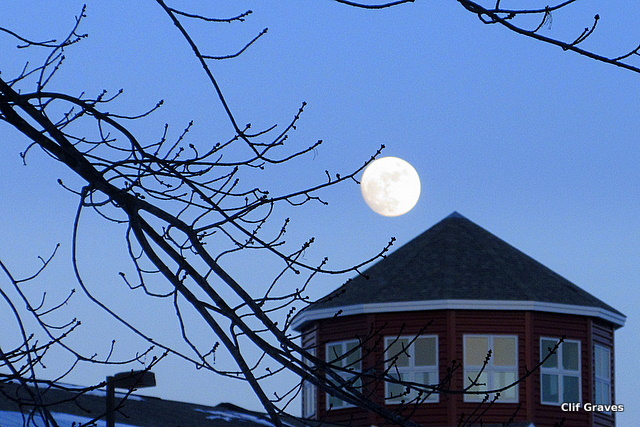
When we came out of the woods, there was the almost-full moon—the Wolf Moon—rising by the school.

IMG_0558

On Sunday, the moon will be full. If the night is clear and the night isn’t too cold, Clif, Liam, and I might take a walk in the woods and honor the moon.

Movie Night: Black Narcissus (Based on the Novel by Rumer Godden)

About a year ago, Clif and I decided we would host a movie night at the little house in the big woods. We have three friends—Diane, Joel, and Alice—who love movies as much as we do, and Clif and I thought it would be fun to get together to watch a movie and then discuss it afterwards.

Over the course of the year we have fine-tuned the event. We start at about 5:30, we provide pizza and soft drinks, and our guests bring salad and dessert. Clif has a very good hand with pizza dough—he knows just how to stretch it—and we are able to buy a good frozen dough from a Maine company, Portland Pie Co. (The dough is available in our local supermarket.) I make a quick sauce using Muir Glen’s crushed tomatoes with basil, garlic, and a little dried oregano. Clif likes to use a mixture of cheeses—mozzarella, cheddar, and Monetary Jack.

We have two large pizza pans, one of which is cast iron, a present from my brother and his wife. And miracle of miracles, our blast-furnace oven does a great job with pizza. We bake the two pizzas for twenty minutes or so and voilà! Pizza for five or six, at a fraction of the cost of take-out.

IMG_0524

We take turns choosing the movie, and last night was Joel’s turn. From his own film collection, Joel brought several to pick from, and we quickly settled on Black Narcissus, a 1947 film, staring Deborah Kerr and Jean Simmons and based on the book by the late great English writer, Rumer Godden.

Black Nar

Black Narcissus is the story of a small group of Anglican nuns, led by Sister Clodagh (Deborah Kerr), who travel to a remote former palace in the Himalayas to open a convent. At the new convent, the nuns plan to teach the local girls, open a health clinic, and grow much of their own food. But high on the mountain, the air is thin and the wind always blows. The local British agent, the charismatic Mr. Dean, warns them not to stay, feeling that the mountain will be too much for them.

Naturally the nuns stay, and naturally Mr. Dean is right. It isn’t long before the mountain and the people who live there exert an unhinging force on the various nuns, in particular Sister Ruth, played with an over-the-top relish by Kathleen Byron. A chaste love triangle forms between Sister Clodagh, Mr. Dean, and Sister Ruth, resulting in tragedy.

First, the good. Black Narcissus is extremely strong on the visuals—on the cinematography and on the sets where most of the movie was filmed. The colors, the framing, the vividness of place—even though it was mostly a set—is nothing short of astonishing. The cinematographer, Jack Cardiff, won an Academy Award for Best Cinematography, and he certainly deserved it. Visually, the movie is a work of art.

Unfortunately, the move was weak with character development, relying too much on bug-eyed melodrama and crashing music. Apparently, this sort of melodrama was big in England in 1947, but it marred the story written by an author who excelled at character development.

Nevertheless, Black Narcissus is a movie worth seeing, if only for the beauty of the filming. Diane was right in suggesting this was really a group film, best seen with others so that we could all react to the various over-the-top scenes.

Next month is Alice’s turn to pick, and we will be heading back to India with Monsoon Wedding. I’m looking forward to it.

Book Group: The Storied Life of A. J. Fikry

The storied lifeLast night, I went to book group, which is hosted by our town’s library and run by the inimitable Shane Billings, the Adult Services Librarian. He started the book group over five years ago, and I’ve been with it since the beginning, with a few breaks here and there.

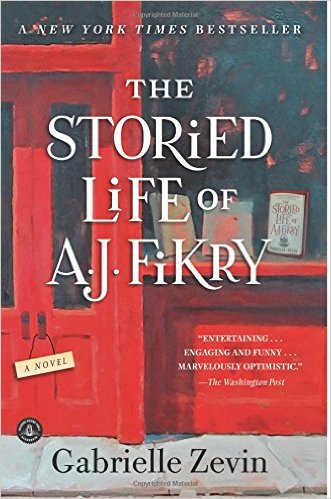
This month’s book was The Storied Life of A. J. Fikry by Gabrielle Zevin. Here are the basics of the story: A young but cranky man, A. J. Fikry, runs a bookstore on Alice, a fictitious island off the coast of Massachusetts.  When the story opens, A. J.’s wife has recently died in a car accident, and the grieving A. J. plans to drink himself to death. His suicidal plans are interrupted by Maya, an abandoned two year old who is left in his bookstore.  A.J.’s love for Maya—and hers for him—gives his life meaning. (And, yes, there is more than a little similarity between this story and Silas Marner.) From there the story sweeps out to include Lambiase, a kindly police officer;  A.j.’s dodgy sister-in-law, Ismay—how can she help being dodgy with a name like that?; and Amy, a dedicated bookseller from the mainland. There isn’t much of a plot—more a sweep of years, handled beautifully—spiced with the theft of a rare manuscript and another car crash that might or might not be murder. Finally, and perhaps best of all, there is the love of books that thrums through the story and connects the characters.

As was noted at book group, this is a sentimental story, but it is redeemed, to a large extent, by Zevin’s fine writing. In short, it is a sentimental tale told well.

There was a lively discussion about Ismay, the dodgy sister-in-law. Most of the members of the book group—composed mainly of older women—felt sympathy for Ismay, but the one young man who comes loathed her character. He didn’t see that Ismay had any redeeming qualities. Certainly, this point of view, while a little harsh, could be defended, and indeed in the book, young Maya doesn’t much like Ismay either.

One of the great things about our book group—Title Waves, it’s called—is that by and large, for over an hour, we discuss the book and nothing else. There is little chit-chat about personal matters, and we take the books and the discussions very seriously. After all, we are people who love books. At the same time, we are able to laugh and joke about our disagreements. There are some, like me, who have been there since the beginning, and there are many newcomers, too. All are welcome.

As Mona, one of the members, put it, “We all feel safe to express our opinions. It’s all right to disagree, and we do it respectfully.”

Yes, we do, and it is this attitude, along with the books, that has kept me coming to book group for over five years.

Apple Crisp and Stories

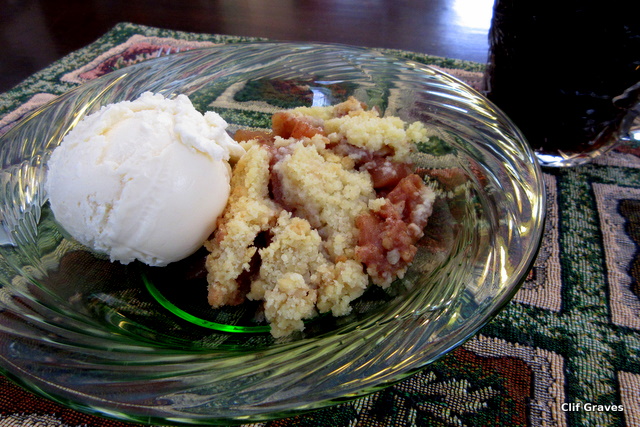
IMG_0513

On Sunday, our friends Cheryl and Denny and Judy and Paul came over for homemade apple crisp and talk. As I’ve noted in a previous post, I really love hosting afternoon get-togethers with friends. We have a good-size dining room with an old Victorian table—the original chairs, long gone, were filled with straw—that can easily be expanded to accommodate eight to ten people. However, for me, six is the perfect number for good conversation.

Apple crisp must surely be one of the best desserts to serve at a gathering. It can be made ahead of time, tucked in the refrigerator, and baked forty-five minutes or so before guests arrive. Old apples, a little wrinkled, taste perfectly good, and my blast-furnace oven does a fine bubbling job of baking the crisp. The recipe I use comes from a Craig Claiborne New York Times Cookbook, and I just follow his instructions. If I had made enough  modifications to call the recipe mine, then I would happily share it. But I haven’t.

Then there is the smell of apples, cinnamon, and cloves as they blend and bake. It wafts from the kitchen and drifts to the dining room, and I expect this smell stimulates the appetite. (Let’s just say that it’s a good thing I made plenty for seconds.) So you have warm spiced apples and a crunchy, buttery topping. Perfect, right? Almost. It needs a scoop of vanilla ice cream to slowly melt into the warm mixture. Whipped cream is all right, but to my way of thinking, ice cream is the jewel in the crown, so to speak.

As we sat around the dining room table, we talked about many things, but one topic in particular stuck with me because I’ve been thinking about it lately—the importance of stories and how we all have them.

Judy told of how one day, when her mother was young—this would have been in the 1930s—she came home to find her mother (Judy’s grandmother) sobbing as she did the ironing.

“What’s wrong, what’s wrong?” Judy’s mother asked.

As Judy’s grandmother ironed, she listened to the radio, to an afternoon soap opera, and something sad had happened to one of the characters. Hence the tears.

After hearing this story, I replied, “I think the story gene runs strong in humans. Whatever the medium, we will always have stories. I’m sure of it.”

Everyone nodded, and Cheryl recounted how one Christmas her book group listened to a recording of A Child’s Christmas in Wales read by the great man himself, Dylan Thomas. All the lights were turned off except for the ones on the Christmas tree, and by the sparkling lights they listened to this fine writer read his own words.

“Sounds wonderful,” I said, thinking that I might like to do this next year, but with just Clif and me. (My book group meets at the library, and somehow, it just wouldn’t be the same to do it there.)

“It was,” Cheryl said, smiling as she remembered.

Warm apple crisp, friends around the table, shared stories. Another finest kind of way to spend a winter’s afternoon.


Lunch and Art: A Trip to Riverside Farm Restaurant and Wine Market and the Colby College Museum of Art

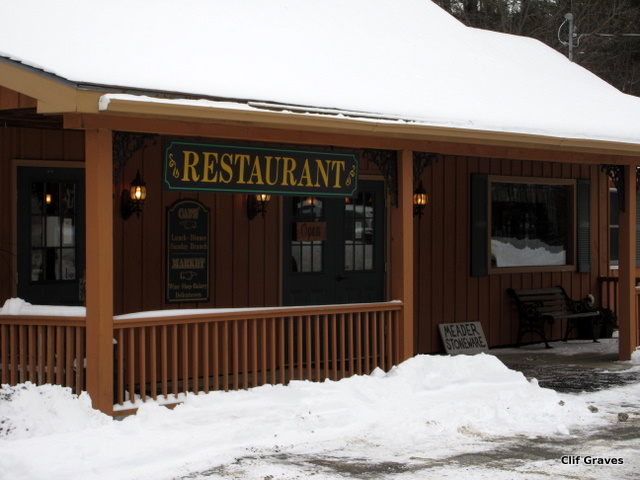
On Friday, Clif and I went to Oakland and Waterville for lunch and art. (Oh, the joys of being retired. We can go any day we choose.) For Christmas we had received a gift certificate to Riverside Farm Restaurant and Wine Market, which serves fresh, tasty meals. The day was gray, but the following photo gives some idea of the beauty of the place.

IMG_0500

And the welcoming but snowy entrance. (It is January in Maine, after all.)

IMG_0498

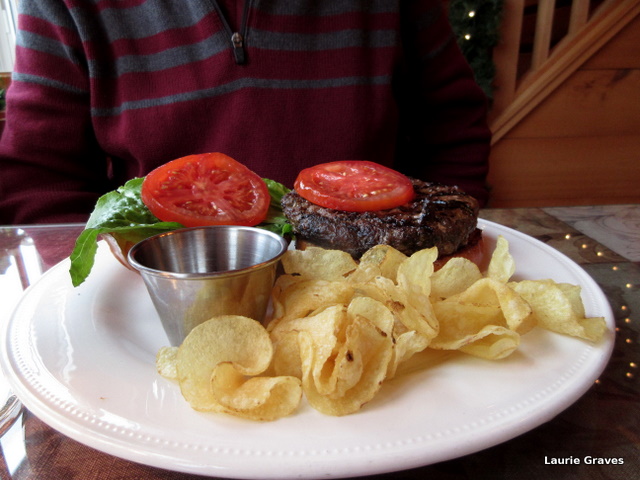
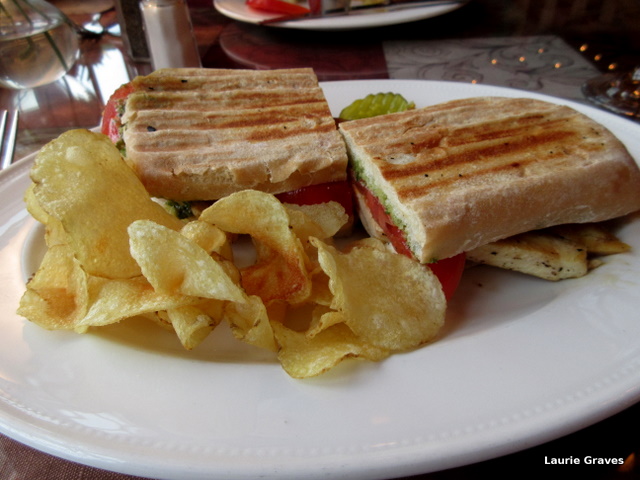
Inside, it was warm and cozy.  Clif ordered a burger, and I ordered a chicken pesto sandwich. Both were delicious. When we were done, not a bit of food remained on our plates.

IMG_0495
Clif’s burger


IMG_0497
My chicken sandwich


Not far from where we sat, two elderly women and a much younger woman were discussing hummus. (A granddaughter out with her grandmother and a friend? We didn’t ask, of course.)

One of the elderly women observed, “I wouldn’t have eaten hummus when I was younger.”

The younger woman replied. “I used to be afraid of it, but now I love it.”

A good example of how taste changes. Once upon a time, I wouldn’t eat pie. It just looked too messy to me. Now, I love pie with a passion that is almost beyond comprehension. And there are so many other foods I have not only learned to like but have come to enjoy—turnip, carrots, cilantro. I’m still working on peas.

After lunch, it was on to the Colby College Museum of Art.  A quick aside and a note of gratitude: Central Maine, where Clif and I live, is small and rural. Our town’s population is 6,000, and many surrounding towns have even fewer people. However, we are within easy drive of three fine private colleges—Colby, Bates, and Bowdoin—and they all offer many cultural events. Nearby, we also have Railroad Square Cinema, which shows independent films and the Theater at Monmouth, which features classic plays every summer, two of which are usually Shakespeare’s. Clif and I often reflect on how lucky we are to live in a rural community yet still have many cultural events to choose from.

But back to art: The Colby College Museum of Art is the largest art museum in Maine, and admission is free. The museum’s focus is “on American art, and commitment to collecting and exhibiting contemporary art.”  They have a large permanent collection, and they also feature various exhibitions with art from away, as we Mainers might put it.

William Zorach’s Mother and Child greets museum visitors, and as I find snow and sculpture to be an irresistible combination, I had to take a picture.

IMG_0504

Unfortunately, on Friday, the museum was in the process of taking down its Whistler exhibit and installing a new one:”Turning Back, an exhibition of 164 photographs by acclaimed photographer Robert Adams…”  This exhibit will be on display at the art museum beginning February 2.  (We did get a sneak preview as we were allowed to go through the galleries where this exhibit was being hung.)

Never mind. We still enjoyed looking at work from the permanent collection. And February 2 isn’t that far away. We will be back to see the photography exhibit, and we even have enough left on our gift certificate for another lunch at Riverside Farm Market.

A finest kind of thing to do on a winter’s day.


Liam Is Eleven

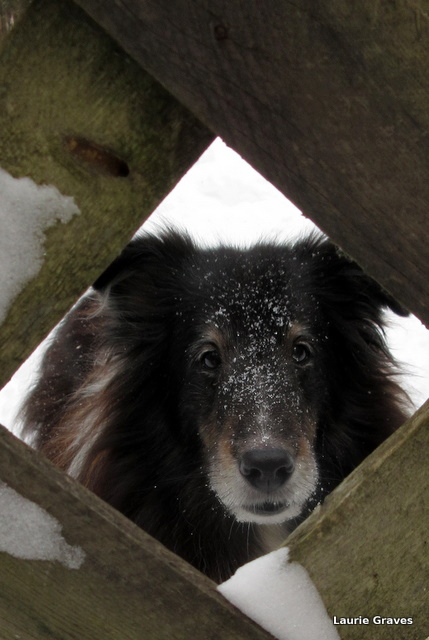
Normally, I don’t post two pieces in the same day, but today is Liam’s birthday, and I thought I would make an exception. As the title suggests, Liam is eleven years old. He is no longer a young dog, but he is still spry, still energetic, still ready to bark at a moment’s notice.  Liam is sweet but aloof, as many herding dogs are, and we love him exactly the way he is.

Looking through the gate

So happy birthday, Liam. Maybe, just maybe, there will be an extra treat tonight, a little vanilla ice cream to celebrate your big day.

Liam, ready to bark
Ready to bark

Lunch at Diane’s

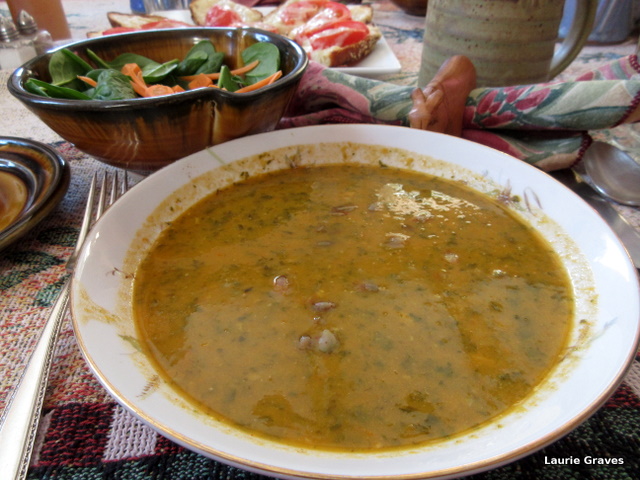
Yesterday, we went to our friend Diane’s house for lunch. Clif had agreed to help set up Netflix on her computer and television. In return, she made lunch for us—spicy vegetable soup, cheese and tomato melts, salad, and chocolate gelato for dessert. I think we got the better end of the deal.

IMG_0439

While we were eating, Diane told us the story of her German grandmother, who came to the U.S. when she was eleven, all by herself on a boat across the Atlantic. She landed at Ellis Island and made her way through the immigration process, with no adult to help. Once this task was finished, it was on to Chicago, again by herself, to stay with relatives. She was widowed twice, supported herself and her children by being a seamstress, and lived into her nineties. A  hardy woman with a very, very strong personality.

Also, it’s interesting to think of this story in terms of immigration. Diane’s grandmother left Germany because she (or her family) felt there were better opportunities for her in the United States. (I can’t help but wonder how much a child of eleven would really want to leave home. She was the eldest in a big family.) Nowadays, Germany is seen as the land of opportunity for so many.  It’s funny how things change.

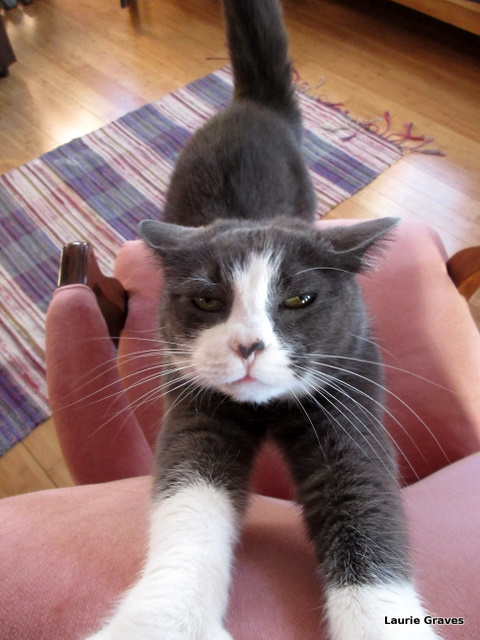
After lunch, Clif helped Diane install Netflix streaming, while I took pictures. First, of Casey, Diane’s cat.

Enough with pictures, already!
Enough with the pictures, already!


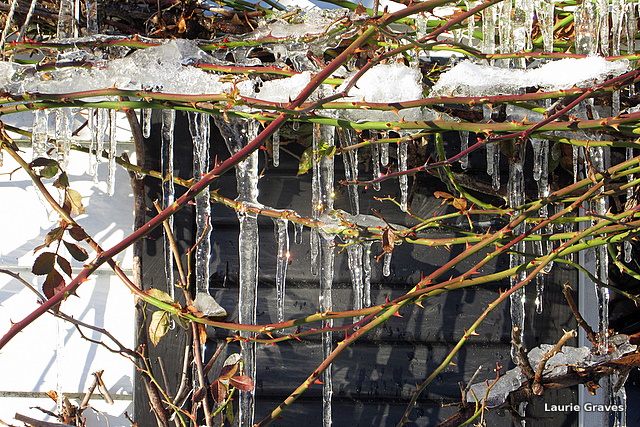
And then outside for some winter pictures.

Icicles on roses
Icicles on roses


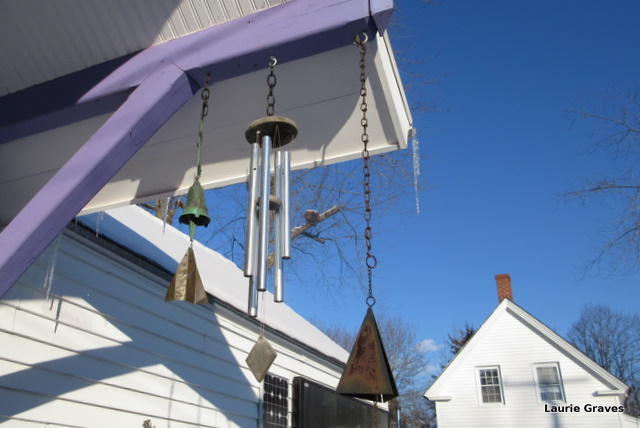
Wind chimes against blue


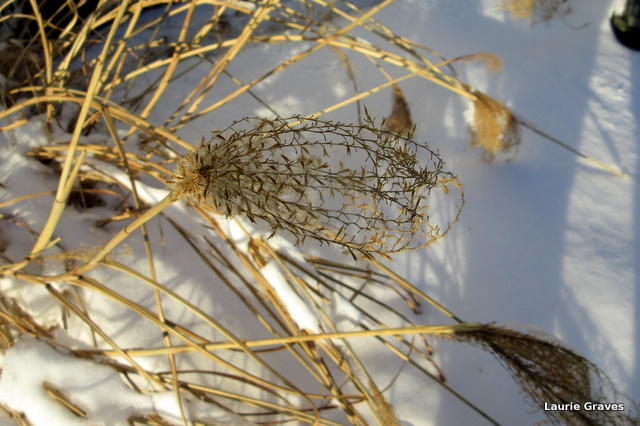
Pampa grass against the snow


After Netflix was installed and pictures were taken, there was more tea. And more talk, of course. We stayed until dusk, when the sky was dark but not black, and a waxing crescent moon shone in the night sky.

A blog about nature, home, books, movies, television, food, and rural life.