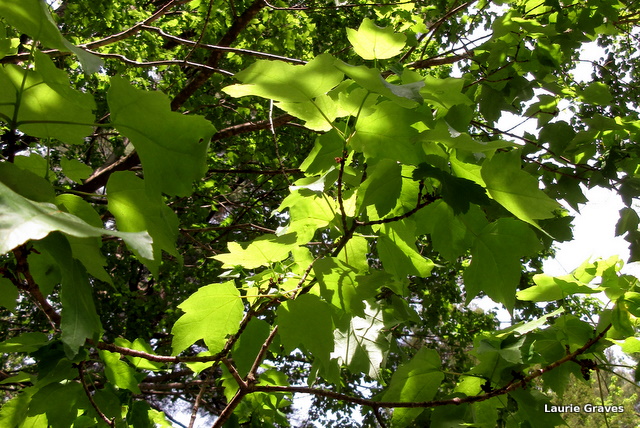
In Maine, despite what the calendar says, we are on the cusp of summer. In less than a month, we’ve gone from darling buds to nearly full-grown leaves on the trees. May is like that.
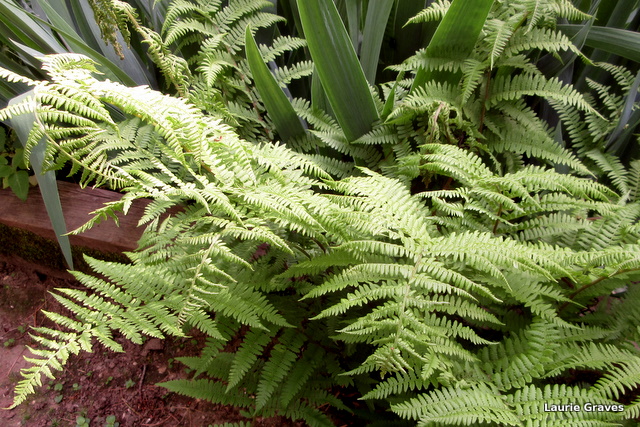
The same is true of the ferns.
Except for my beloved purple irises, the front garden is mostly foliage. Strangely enough, I love the gardens at this stage, when the slugs and snails have yet to launch an assault, and the Japanese beetles are a month away. The leaves of the plants look so green and fresh and new. While the garden is more beautiful with flowers in July, it is also more tattered.
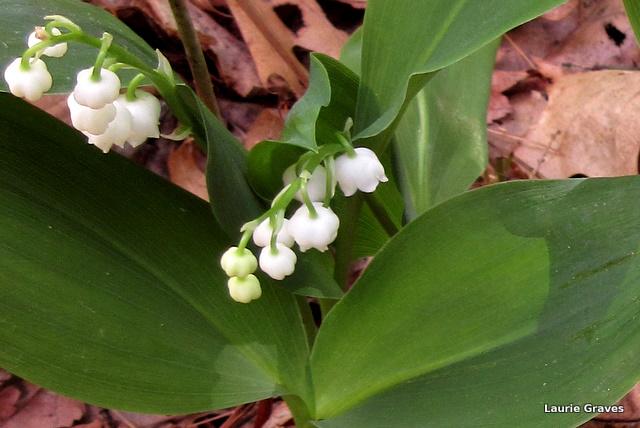
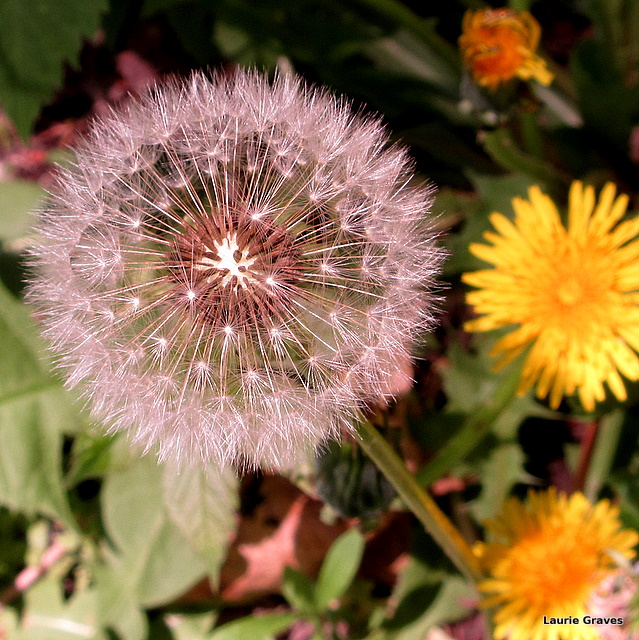
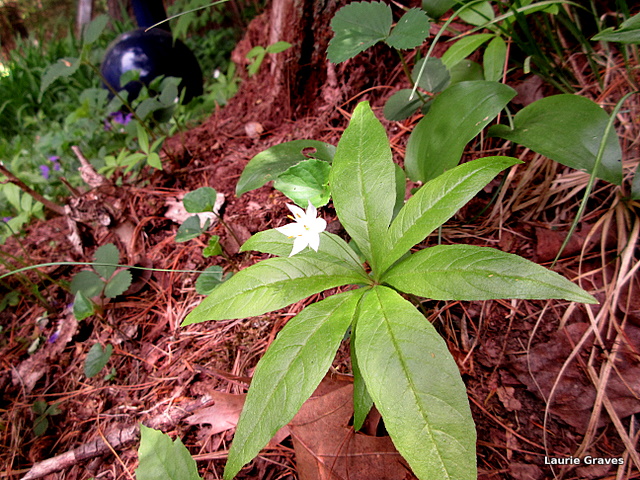
Spring wild flowers continue to bloom on the lawn and on the edges by the wood.
In the United States, this is Memorial Day weekend, a time when we remember those who have passed. Usually, this involves some kind of gathering, often a barbecue. This year, we will have a small get together with friends, and unless it is pouring, Clif will make his legendary grilled bread. Whatever the weather, I will be making homemade strawberry ice cream.
And I’ll certainly be thinking of loved ones who have passed—my mother, my father, and my dear friend Barbara. They all died too soon, but my love for them continues and will do so until I die.
In this most beautiful of months—for Catholics, the month of Mary—it somehow seems very appropriate to remember those who have passed from this green, green world.
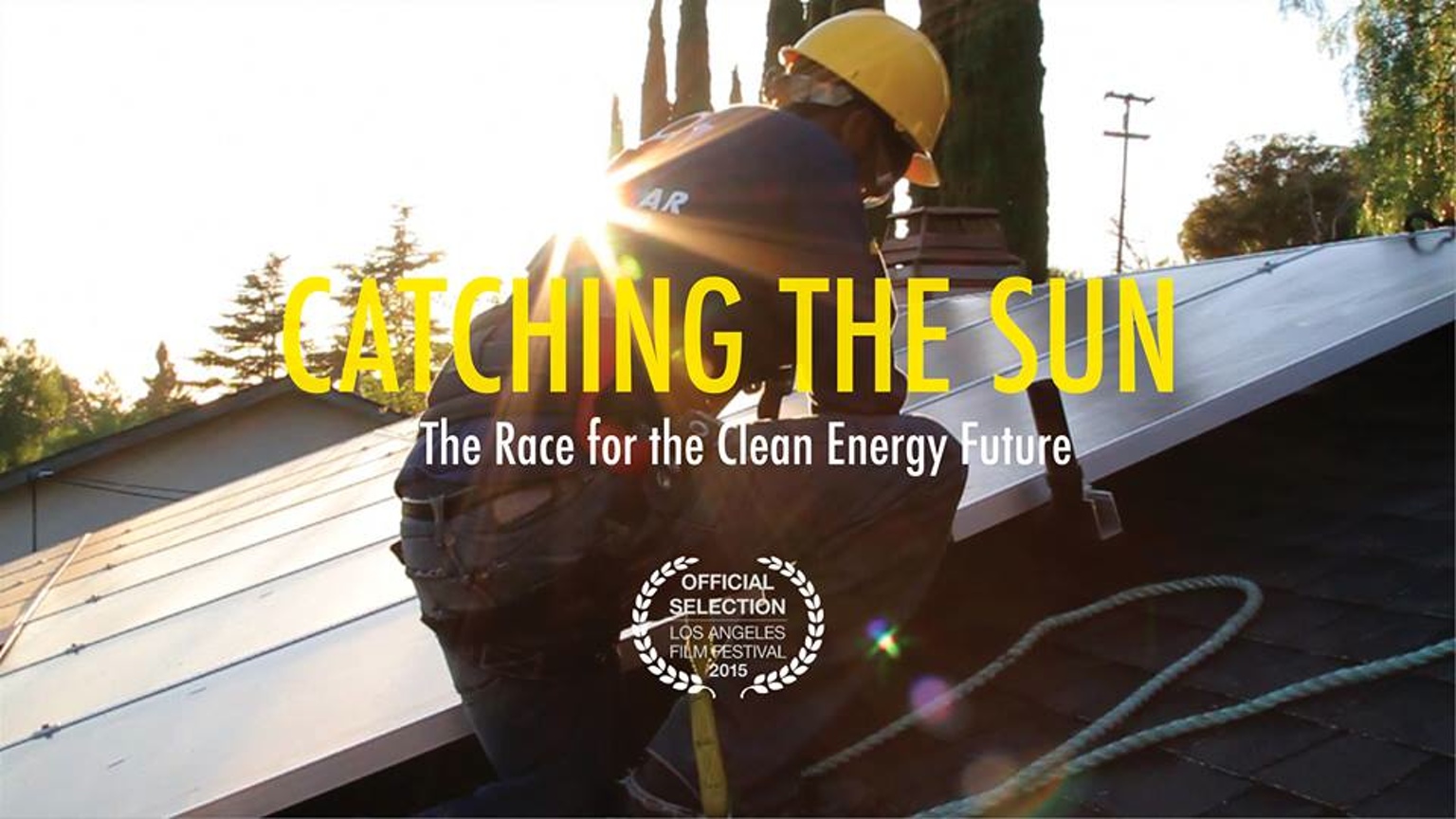
Last night, Clif and I went to Railroad Square to see the documentary Catching the Sun. This good movie was sponsored by ReVision Energy and the Natural Resources Council of Maine, and as the title suggests, Catching the Sun is about solar energy. Its primary focus is the baby steps that are being taken in the United States to promote this much-needed alternative energy in contrast to countries such as Germany and China, which are whole-heartedly embracing solar energy.
Our reluctance to embrace solar energy is, of course, politically driven by oil companies who are intent on wringing every bit of profit they can from oil, coal, and gas. In turn, the money these companies contribute to politicians ensures that their voices will win out and that solar energy will be marginalized and vilified, even.
How ironic, then, that the technology for solar energy was developed in the United States during the space race. Nowadays, unfortunately, there is not much solar manufacturing in the U.S. This should not be a surprise to anyone as the United States has pretty much decided that it doesn’t want to manufacture anything.
The movie follows the green activist Van Jones, who for a short time worked with the Obama administration to promote green energy. However, Fox News decided to shred his reputation, calling him a communist and ridiculing his efforts. Sadly, Van Jones resigned under the pressure, and the Obama administration lost an eloquent voice on behalf of the environment.
Catching the Sun also follows some unemployed folks in Richmond, California, as they train to install solar panels. The movie makes it clear that even though U.S. doesn’t manufacture solar panels, the industry can still provide lots of hands-on jobs that cannot be outsourced foreign countries.
The sun shines and shines and shines. The United States is geographically blessed to take full advantage of this nonpolluting resource. Even Maine, in its northern location, gets a lot of sun, as much as Germany does. The technology has advanced, and the price for solar panels has dropped dramatically. There is no reason to hold back.
But this country is caught in the grip of the oil companies, and at the end of the movie, Van Jones concludes that support for green energy is going to have to come from the bottom up, from states and activists. He might be right, but many states—Maine included—are not exactly committed to alternative energies. It is more than a little depressing to think of where we might be—as a country, as a state— had the political will been stronger. (Right now solar energy accounts for a very small percent of our energy use.)
Still, on we go, and on we hope. At Railroad Square, Catching the Sun was definitely preaching to the choir. But as the Reverend David Billings recently observed on the PBS NewsHour, “The choir has to practice every Wednesday.” (He was referring to the workshops on racial matters that his organization People’s Institute for Survival and Beyond hosts. And how those workshops do indeed preach to “the choir.”)
So sing, choir, sing. Let your voices be heard, and maybe one day the song will be strong enough to drown out the shrill, negative voices that so dominate my state and this country.
Here is another Esther story, this time about roads in Maine in the 1940s.
While we were talking about school, Esther mentioned, “In the spring our road was so muddy that the bus would get stuck, and we had to walk to the corner where the road was better and wait for the bus.”
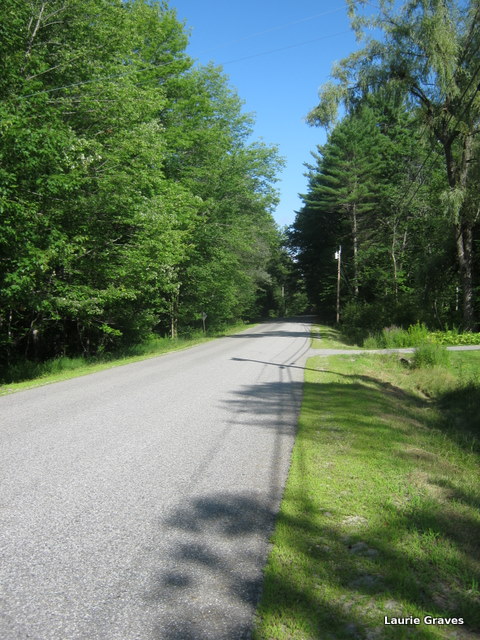
Esther still lives on that once and muddy road, but now it is tarred. Then she said something that really surprised me.
“I remember the first time we drove on a tarred road. I was three and it was a defining experience for me. The road was so black and smooth.”
The first time driving on a tarred road! When the heck were roads tarred in Maine, anyway? Hoping to find out, I poked around the Internet. While I didn’t find any definitive answers, I did glean some bits of information. The following is from the Maine Department of Transportation History: “In the earliest days of the SHC [State Highway Commission] there were about 25,000 miles of public roads and streets in Maine – all but a few thousand miles plain dirt. ” (The State Highway Commission was founded in 1913.) But “the period following World War II marked almost a new era in Highway Commission activities.” Roads were repaired and upgraded and no doubt tarred.
Esther was born in 1937, and some roads in Maine must have been tarred, but not where she lived. Her first experience of a tarred road would have been in 1940, well before the boom in road repair and construction.
But in my research, what especially tickled me was coming across A History of Maine Roads 1600-1970, again by the Maine Department of Transportation. The following is from “A guide to cycling in Maine published in 1891 under the auspices of the Maine Division of the League of American Wheelman.”
“The bicyclist will find Maine roads made of sand, rock, and clay (that becomes glue when it rains) and roads that seem to select all the hills, and climb over them with a persistency worthy of a better cause. Once in awhile in his journey through the state the wheelman will find a bit of good riding, a smooth surface, an easy grade beneath overhanging trees with perhaps a rushing river to keep him cheerful company. Then he will wonder why it cannot always be thus, and what the reason is for our poor highways.”
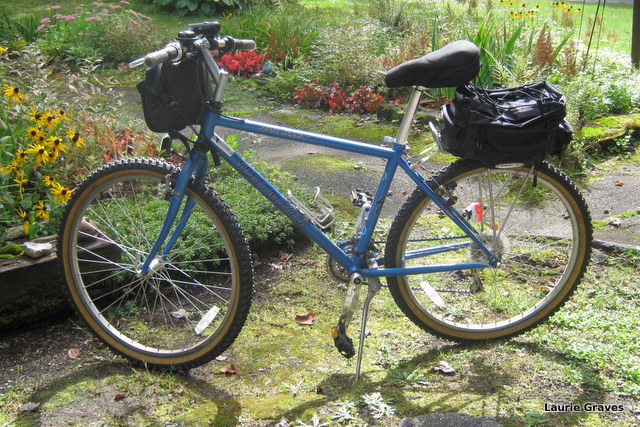
Blue Beauty, from a past summer
What, indeed? Not enough money, not enough organization, not enough planning.
Clif and I have ridden our bikes over many bumpy roads, but never any that have become “glue when it rains” and we have never—all right, seldom—thought that our persistence was worthy of a better cause.
How soon the past slips away from us, and the present becomes a sort of fixed reality, one that we take for granted. I am so grateful to have Esther to tell me how different her girlhood was in the 1940s than mine was in the 1970s. While we don’t want to become nostalgic about the past, I firmly believe it is good to know about it.
The past provides the underpinnings of our present, which in turn affects our future, and in that sense, the past lives on.
Last Saturday, our friends Beth and John and their cute little dog Bernie came over for lunch. The day was splendid, but unfortunately, the blackflies were out in force, and I had to wear a cap sprayed with insect repellent. There is something in my body chemistry that calls to those biting blighters. Clif wore a cap, too, but fortunately, the blackflies left Beth and John alone.
Never mind! We spent most of the afternoon outside on the patio. Beth and John brought cheese and crackers, salad, and for dessert, cream-cheese toffee bars. As if that weren’t enough, they also brought a bouquet of flowers. Wow! Such generous guests.
Clif made his legendary grilled bread, the first of the season, and we ate every bit of it. I also made a potato salad, again, the first of the season, and Clif grilled some chicken. By the end, we were completely stuffed.
But not too stuffed to talk about books, politics, and poverty. Clif and I are watching, for the first time, the excellent HBO series The Wire, and while at first glance, rural Maine seems very different from the ghettos of Baltimore, there are indeed similarities. This is especially true for Beth and John, who live in a small town that is afflicted by extreme poverty, lack of hope, and drug addiction, just as parts of Baltimore are.
“The worst is the lack of hope,” John said. “Young people in my town have nothing to look forward to. Most everything has closed, from the factories to the businesses around town.”
“Do old timers remember a better time, when the factories were booming?” I asked.
“Oh, yeah,” John said. “The town was very different then.”
I could write a whole post about the two Maines, the prosperous coastal communities and the impoverished inland towns where factories once thrived. I could write about how Maine, like too many other states, let communities sink, and as a result, caused an exodus of young people. (Maine has one of the oldest populations in the nation.) And maybe someday I will write about these things because Maine’s tale is the tale of this country, which, in turn, is driving the tone and the rhetoric of this political season.
As we talked and ate, the birds came to the feeders, and Beth took some pictures. Both Liam and Bernie begged for bits of chicken, and I slid them a few pieces. Moving away from the issues of poverty, we talked about cameras and funny Maine sayings. John, who grew up not far from the coast, had a wealth of mermaid sayings, none of which I had ever heard. Then there is my fishy favorite: “Numb as a hake.”
“Why are hakes considered numb?” John asked.
None of us knew, and the two dogs didn’t care. They just wanted more chicken to come their way, although no doubt, they would have nibbled on hake, however numb it was.
Today is Earth Day, a special day not only for Earth but also for our family. April 22 is the birthday of our youngest daughter, Shannon. Happy birthday, Earth Day girl!
April 22 is also the anniversary of our friends Mary Jane and Vilis. It is my understanding—correct me if I’m wrong, Mary Jane—that they were married on the very first Earth Day in 1970. Happy anniversary to you, Mary Jane and Vilis!
A birthday and anniversary flower
Here’s a brief history of Earth Day, taken from the history. com website: “Earth Day was the brainchild of Senator Gaylord Nelson of Wisconsin, a staunch environmentalist who hoped to provide unity to the grassroots environmental movement and increase ecological awareness. ‘The objective was to get a nationwide demonstration of concern for the environment so large that it would shake the political establishment out of its lethargy,’ Senator Nelson said, ‘and, finally, force this issue permanently onto the national political agenda.’ Earth Day indeed increased environmental awareness in America, and in July of that year the Environmental Protection Agency was established by special executive order to regulate and enforce national pollution legislation.”
Since Senator Nelson started Earth Day, there have been big improvements with cleaning up the environment, and I have seen them in central Maine, where I have lived most of my fifty-eight years. I grew up in Waterville, by the Kennebec River, and it was so dank and dirty that no one wanted to even dip his or her big toe in it. I suppose there must have been some hardy wildlife living in and by the river, but to my young eyes the Kennebec River in Waterville seemed to be an empty, foaming mass.
And now oh now there are eagles and ospery and ducks and other birds that live by the river. In Augusta, just down from Waterville, there are sturgeons, ancient-looking fish that appear to have time traveled from the Triassic. People go kayaking on the river, and they even dare to go fishing. In Hallowell, there’s a broad pier by the river and plenty of brightly colored chairs where people can relax and enjoy the water on a fine day.
Last summer in Hallowell by the Kennebec River
But the dark shadow on the horizon, of course, is climate change, which has turned out to be a huge challenge for humans. Recently, on the radio, I heard an environmentalist say that when it comes to climate change, it is five minutes to midnight. And so it is. Every year Earth gets warmer, bringing us, among other things, droughts, floods, intense storms, dying coral reefs, and rising sea levels.
We are all in this together, and I hope we can all learn to work together to end our dependency on fossil fuels, to lower our carbon output, to stop the world from becoming even warmer.
That is the Earth Day message for now and probably for a very long time to come. And it is one we must carry with us throughout the year.
Last night we had April showers, and today is a drippy day.
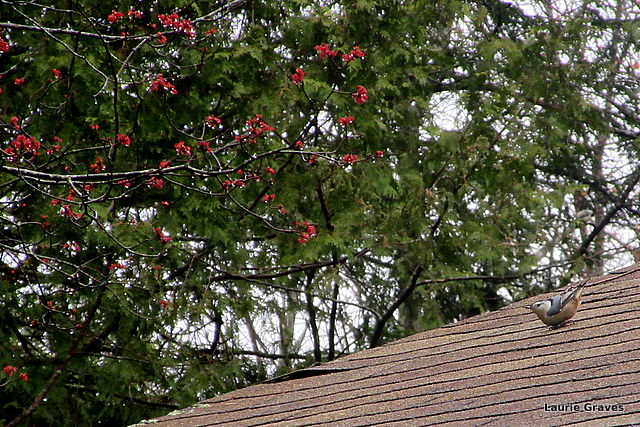
While I was out taking pictures, I heard a nuthatch’s call, and I spotted the little creature on the roof.
As I was walking around the yard, I thought of silly little snippet my daughters liked when they where young.
What do April showers bring?
Mayflowers!
And what do Mayflowers bring?
Pilgrims!
Ah, Pilgrims, those stern settlers of New England. To be fair, they had their good points. With their emphasis on individual choice merged with community, Pilgrims (aka Puritans) were the motivators for yearly town meetings, which to this day is the democratic and sometime contentious governing force in many small towns in Maine. With their desire to create a “Godly society through educated citizens,” Puritans established the school laws of 1642, which encouraged literacy and universal education. In 1636, Harvard was founded, and in 1711, one of the first public libraries opened in Boston.
It cannot be denied that the Puritans were a bloody bunch in their early days, but no bloodier than any other group. Those were bloody times, both here and in England and Europe.
But now I must be blunt, and I apologize to readers who come from Puritan stock. The worst thing about the Puritans was that they were party poopers extraordinaire. In fact, they waged a war against Christmas, and found the holiday to be a pagan “abomination” totally unsupported by Scripture. The Puritans referred to Christmas as “Foolstide,” and for a time it was illegal to celebrate Christmas in New England.
Did the Puritans stop with Christmas? They did not. According to Wikipedia, “In his award-winning book Creating the Commonwealth(1995) historian Stephen Innes writes that the Puritan calendar was one of the most leisure-less ever adopted by mankind with approximately 300 working days compared to the 240 typical of cultures from Ancient Rome to modern America. Days of rest in the New England calendar were few, Innes writes, and restricted to Sabbath, election day, Harvard commencement day, and periodic days of thanksgiving and humiliation. Non-Puritans in New England deplored the loss of the holidays enjoyed by the laboring classes in England.”
And May Day, that wild and wonderful celebration of fertility and spring and flowers? No, no, and no. (Nathaniel Hawthorne wrote about this in his short story “The May-Pole of Merry Mount.”)
After wandering around the wet yard and taking pictures and thinking about Pilgrims, I decided it was time to come in for breakfast and for my morning’s work on the computer.
But one last silly thought. In my mind’s eye, when the Pilgrims left England, I see the country collectively waving “Buh-Bye. And don’t let the door hit you on the way out.”
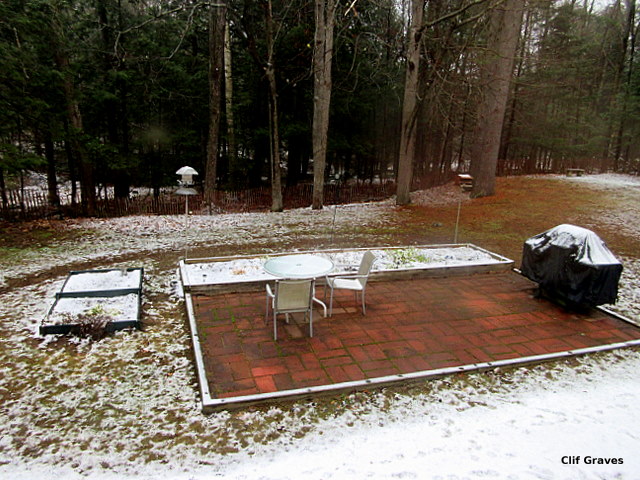
When Clif and I got up this morning and looked out the window onto our backyard, this is what we saw.
So instead of complaining about the weather, I thought I would honor the snow by including the link to the terrific song “Snow (Hey Oh)” by the Red Hot Chili Peppers. I suppose now is a good time to admit that I’m a big fan of rock and roll, from the Stones in the early 1960s to today’s rock music.
I came of age in the 1970s, when there was such good music—Carole King, Joni Mitchell, James Taylor—and when my children became teenagers in the 1990s, I liked their music just as well. (All right. Maybe not Nine Inch Nails, but you can’t like everything.) When it came to music, there was no generation gap between me and my daughters.
In fact, there hasn’t been much of a generation gap at all between baby boomers and their children. Certainly not as much as there was between baby boomers and their parents. My parents didn’t think much of the music I listened to, and I absolutely hated theirs. There were so many differences between my generation and my parents’ generation—the clothes we wore, our philosophies, our goals and ambitions.
Now that I am older, I understand where my parents—children of the Great Depression—were coming from, a time of scarcity and terrible uncertainty. It is no wonder that my parents’ generation valued security and stability so much. Their cautiousness was a result of growing up in very hard times, and I now realize that all my parents really wanted was to give their children a better life than they had had. And they did.
As a teenager, of course, I didn’t have this perspective, and I constantly chafed against what I considered my parents’ stodgy, old fashioned ways. (Could they have looked any dorkier in their square dancing outfits? It made me cringe just to look at them.)
But I digress. Back to Red Hot Chili Peppers and “Snow (Hey Oh).”
“In between the cover of another perfect wonder where it’s so white
as snow.”
That’s how it was in Maine when it snowed last night.
On Tuesday, our friends Judy and Paul came over for muffins, tea, and talk. We discussed many things but one topic was the movie The Big Short, which is about the 2008 financial crisis and the bursting of the U.S. housing bubble. This utterly engaging and creative movie is now available on DVD, and I think it should be required viewing for everyone over sixteen. Make that fifteen.
Only a few people saw the financial crisis coming, and some of these people are profiled in the movie. However, a few years before the fall, some of us could see that housing prices had become so high that average folks simply could not afford them. And despite the drop in prices that came about after the Great Recession, houses are still too expensive for many people.
A couple of years ago, I remember walking with my daughter in her South Portland neighborhood, and we passed a cute little Cape that was for sale.
“I checked on the price,” Shannon said, “and it’s going for $250, 000.”
“Son of a biscuit!” I said, or something to that effect. The house was sweet and well cared for. It was also what I would call a “bread and butter” house, an average little home perfect for a family just starting out. Nice but modest and nothing special. Certainly not special enough to warrant such a high price.
“How can average people afford such prices?” I asked.
“They can’t,” Shannon replied. “That’s why so many people rent. Or, they buy homes farther away and commute to their jobs.”
But even in Gorham, a town outside Portland, a modest but well-kept home with three bedrooms starts at $200,000. (In central Maine, where I live, it’s about $150,000.) Now, I realize that for other parts of the country, these prices might sound like chump change, but consider who Maine’s largest employer is: Hannaford Supermarket. Certainly, some people at the top make a good salary, but most of the people working for Hannaford don’t make a living wage. Most of them aren’t even technically working full time and therefore don’t receive benefits.
And rents aren’t exactly cheap, either. This means that in Maine, as well as in much of the rest of the country, housing prices or rent prices are a real burden for a significant part of the population. I’m not clever enough to come up with a solution, but do we really want a society where average wages cannot buy an average house? Or rent a decent apartment? (Throw in the cost of education and transportation, and no wonder you have a restive populace.)
This is a weighty topic. A good thing, then, on Tuesday, that we had apple muffins on Tuesday to sweeten the conversation. These muffins have a nut-crumb topping that would be good on almost any muffin, say, blueberry or pumpkin or banana.
Apple Muffins with a Nut-Crumb Topping
Adapted from a Betty Crocker recipe
Ingredients
For the muffins:
2 cups of flour
3 teaspoons of baking powder
1 teaspoon of salt
1/2 teaspoon of cinnamon
1/2 cup of sugar
1/4 cup of vegetable oil or melted butter, cooled slightly
1 cup of milk
1 egg
1 apple, peeled and grated
For the topping:
1/3 cup of brown sugar, packed
1/3 cup of chopped pecans or walnuts
1/2 teaspoon of cinnamon
Directions
Preheat oven to 400 degrees and grease the muffin tin. This recipe will make either 12 regular sized muffins or 6 large muffins.
In a small bowl, mix the topping—the brown sugar, pecans, and cinnamon.
In another small bowl, combine the flour, baking powder, cinnamon, and salt.
In a large bowl, beat the egg. Add the milk and the oil or butter. Mix well. Add the grated apple and sugar. Mix again.
Add the flour mixture, stirring only until the batter is mixed.
Divide the dough among the muffin cups. Sprinkle each muffin with some of the crumb-nut topping.
Bake for 20 or 25 minutes or until the tops are brown.
Let the muffins rest in the tin on a rack for five minutes before popping them out.
Enjoy with a bit of butter, which, for this Franco-American, improves many, many things.
“Winthrop is an excellent farming town, and the moral character of its inhabitants is said to be uncommonly good. It was incorporated in 1771. Population, 1837, 2,003. Wheat crop, same year, 5,194 bushels.” —From Hayward’s New England Gazetteer of 1839
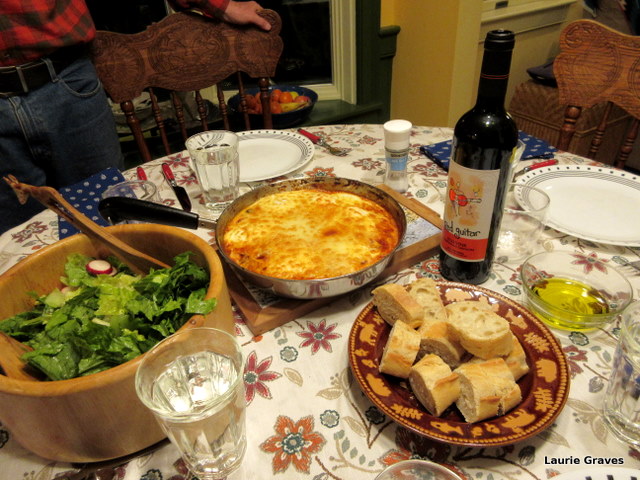
On Saturday, our friends Cheryl and Denny invited us to dinner. They live in a very old—for Maine—farmhouse, and it has been on this road for many, many years. As we ate the excellent meal—eggs cooked in a spicy tomato mixture that was both sweet and tangy—Cheryl and Denny spoke about the history of Winthrop and the Narrows Pond Road.
Such a good meal!
We went back ten thousand years ago when the glacier receded and much of the area was underwater. Then we sprinted forward to the 1800s, when Winthrop was an abolitionist town, and Cheryl and Denny’s house was part of the Underground Railroad. Perhaps the town’s uncommonly good moral character led to Winthrop being an abolitionist town?
We also talked about the stonewalls that run through the woods behind our houses.
“This was once all open fields,” Cheryl said.
Clif and I, of course, knew this, but then Cheryl added, “A monastery owned most of the land.”
A monastery? In Winthrop, which seems like a quintessential Yankee Protestant town? I wonder if the monastery grew wheat.
“It was on the hill next to the bank. A big old building. It’s torn down now.”
I do remember that building. It was still standing when we moved here in 1984. By then the monastery was gone, and at one point the house had a copy center in it.
Cheryl continued, “A woman I know remembers this road when it was all fields. There were no woods and only three houses. Ours and two others, and one was the town farm, where poor people went. This road used to be called Town Farm Road.”
For the past two days, I’ve been thinking about all the changes that have come to this town, to our little road. Once the glaciers were here, and then they retreated. On their way north, escaped slaves stopped in this town, for rest, shelter, and food. Their long journey was nearly over.
And sixty or sixty-five years ago, there was open farmland all along this road. No woods. In fact, no little house in the big woods. (Our house was built in 1969.) How fast the trees take back the land. In his book Second Nature, Michael Pollan observes that nature abhors a garden. How right he is. Leave the land alone, and within sixty years or so it will fill in and become woods.
This is heartening. We need trees and forests, and in parts of the world deforestation is a big problem. But where trees were cut down, they can grow back again, and in a relatively short amount of time.
Nevertheless, a part of me yearns for the open fields, sprinkled with orchards, that were once here. I’ve seen pictures—taken from the top of hill, from the monastery, as it turned out—of what it was like in Winthrop when there was no main highway to cut the town in half, and there was a broad sweep of land that the eye could follow.
Highways, forests, and fields. All necessary parts of life for people and so hard to get in just the right balance.
Clif and I are huge fans of the small things in life. While we appreciate big showy events as much as the next person, we both feel it’s the little things that jazz up our lives. There’s not a day that goes by that I’m not grateful for this attitude because let’s face it—most people’s lives are made up of small events, and if you don’t enjoy them, then this means that most days you’re just marking time.
For example, yesterday I wrote about my eager anticipation for being able to hang laundry outside for the first time this season. Readers, you can bet that when this joyous event occurs, it will be duly noted in this blog. I also wrote about mucking about in the yard, getting damp and cold, then coming in, settling in the living room, and having popcorn while reading. A simple but oh-so-good pleasure.
Another one of our many small pleasures is waiting for “ice-out” on the patio in our backyard. For this, a bit of a backstory is in order. We live in a part of central Maine that has many lakes and ponds, so ice-out—when the water is free and clear of ice—is a big event for the whole town. When the ice goes out on the lakes and ponds all depends on what kind of winter we’ve had. Last year, according to Maine’s Department of Agriculture, the ice didn’t go out on the Lower Narrows Pond until April 22. (Happy birthday, Shannon!) This year, if things continue the way they have, the ice could be out by the end of March. The DOA notes, “If the current weather pattern continues through March as it has all winter, Maine lakes may set new records for ‘early’ ice out on our lakes and ponds. Recently, we have had ‘early’ ice out during the spring of 2006, 2010, and 2012. It will be interesting to see if we break any century old records this year.”
As the lakes and ponds in central Maine go, so goes the patio at the little house in the big woods. Last year was a cold and very snow winter, and the date for ice-out on the patio was April 16, not all that different than it was for the Lower Narrows Pond, just down the road. This year, if the season progresses the way it has with record warmth and little snow, I expect the patio to be free and clear of ice by the end of March.
Then will come another event, another small thing, that Clif and I look forward to in early spring—bringing up the round patio table from down cellar. At first, we’ll just have tea on the patio, but as the season progresses, we’ll have supper on the patio as well. We’ll bring up the big rectangular table, and we’ll have friends over for wine, appetizers, grilled bread, grilled pizza, and homemade ice cream.
Stay tuned!
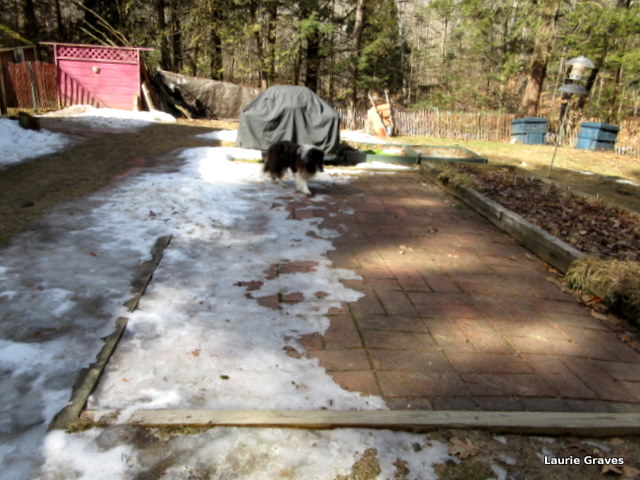
Patio, March 1, 2016
A blog about nature, home, books, movies, television, food, and rural life.








 Notes From the Hinterland