All posts by Laurie Graves

I write about nature, food, the environment, home, family, community, and people.

Looking Up

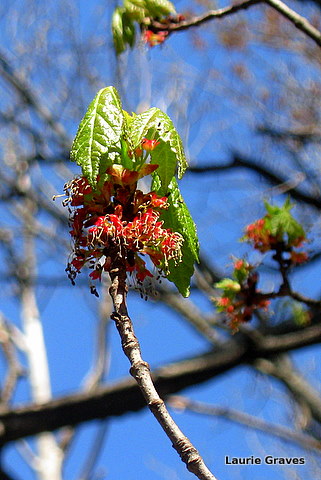
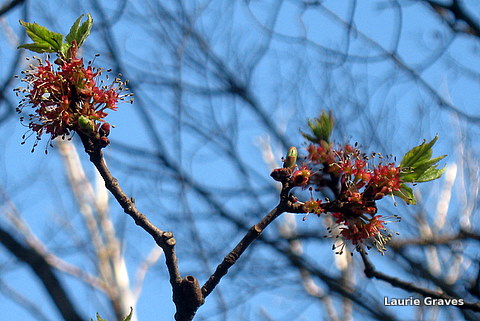
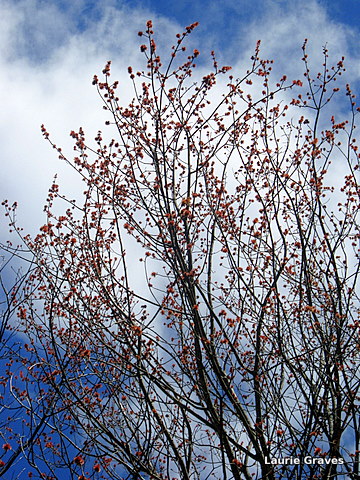
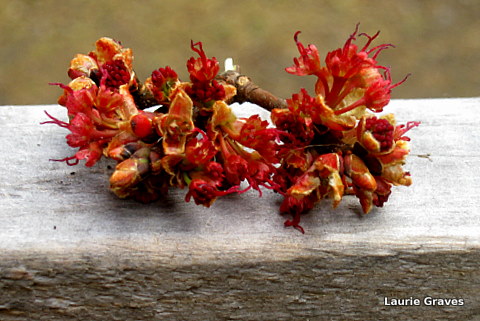
Between the little flowers on the trees, the new green leaves, the blue sky, and the birds, I seem to always be looking up. Except of course, when I’m working the gardens.

IMG_8588-1

The weather in Maine is supposed to be fine this weekend. Shannon and the dogs are coming over on Sunday—Mike, alas, has to work. Shannon and Clif will cook me a Mother’s Day brunch, something I look forward to every year. (If only Dee lived closer!) Pictures will follow next week.

In the meantime, a very happy Mother’s Day to all mothers.

May Gallops

In Maine, May is a month when everything gallops. Each day brings some kind of change—the grass is a little greener, the plants in the flower gardens are a little taller, the red buds on the trees are now tinged with green. Every year I think, “Slow down, slow down you lovely month.” And I wonder why oh why March couldn’t speed ahead the way May does. While May rushes headlong, March drags its mucky yet icy heels. It’s funny how two months with the same number of days can feel so different.

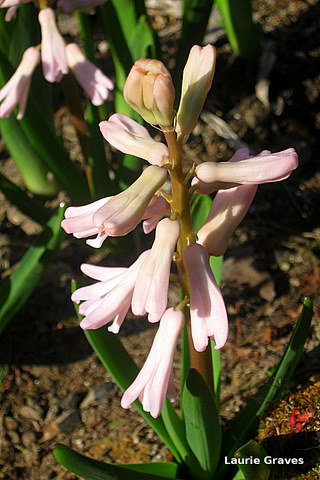
In two days, the hyacinths have bloomed. The blossoms are not fully opened, but in another day or two, they will be.

IMG_8575

In two days, new green leaves have begun to emerge on the trees, displacing the delicate flowers that preceded them.

IMG_8581

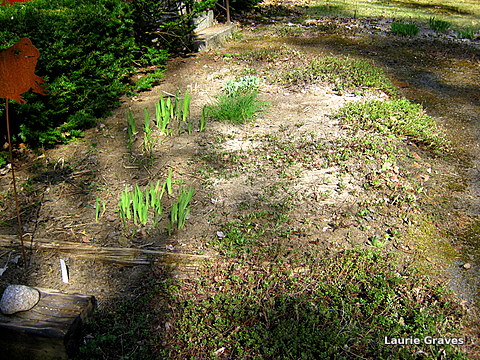
In two days, I have cleared half the gardens out front, and if all goes well, they will be three-quarters cleared today.

IMG_8583

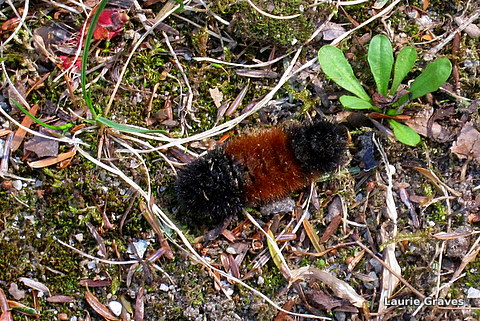
And in two days time, the black flies have emerged. There is something in my body chemistry that draws them, and they swarm in a black cloud around my head. Any bit of exposed skin is fair game for those little bighters, and at times I resort to wearing a cap sprayed with insect repellent.

The black flies will be gone by June, and good riddance to them. Unlike the flowers on the trees, I don’t wish the black flies to stick around one day longer than they do.

It is good to have some things gallop by.

An Old Story that Never Gets Old

IMG_8531Last night, Clif and I went to Waterville for a Cinema Explorations meeting. (Cinema Explorations is a community-curated film series that runs from January through March at Railroad Square Cinema. Clif and I are on the planning committee.) As we sat at the long table in Buen Apetito and drank margaritas and ate chips with salsa, we talked about the 2015 film series. Overall, it was a success, and there will be a 2016 Cinema Exploration film series.

Once business matters were settled, we moved on to other topics. I sat across from Sam and Alan, who manage Railroad Square, and we talked about the glorious spring we are having. Perhaps it’s no nicer than any other spring, but after the hard, cold winter we had, this spring seems especially sweet.

Sam said, “Alan and I love to go to a swamp not far from where we live and listen to the peepers this time of year. We went the other night, and the peepers’ song was so loud. I am always moved by it.”

I knew what she meant. “It is the oldest story in the world,” I replied, “but somehow it never gets old.”

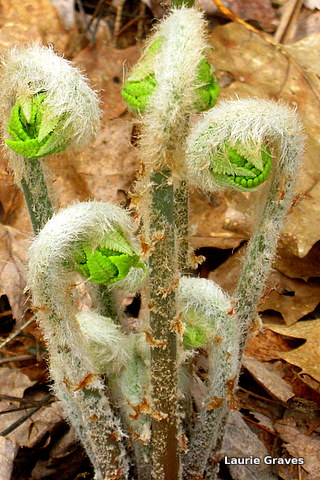
Each spring, after the quiet of winter, life bursts out in every direction: leaves and blossoms on the trees, flowers in the garden, unfurling ferns, and the green flush that spreads across the lawns and fields. Insects emerge—some welcome, others not so much—and the small frogs sing their loud, ardent songs.

At the little house in the big woods, I wait for the return of certain birds that have come to seem like old friends. The loons, with their wild, lonesome call, have returned to the Narrows, and we live close enough so that we hear them almost every day. Yesterday, when I was hanging laundry, I heard a hermit thrush, a modest brown bird with the most piping, ethereal voice. Soon the humming birds, with whir of wings and flash of color, will return, and I will hang out their feeder filled with sugar and water.

For thirty years, I have been rejoicing when the loons, hermit thrush, and hummingbirds return. This familiar cycle never gets old or stale. It never loses its charm. I suppose you might even call this rejoicing  beginner’s mind, a Zen Buddhist concept “where everything is fresh and new,” even when it isn’t.

My friend Barbara Johnson, who has been dead for ten years, was the perfect example of someone who had beginner’s mind. Barbara was a keen observer of the natural world, and she studied it with the zeal of a true naturalist. One time, when we were driving somewhere—I can’t remember where—Barbara suddenly cried out, “Oh, stop, stop!”

She startled me so that it’s a wonder I didn’t drive into the ditch. Somehow, I managed to safely park the car on the side of the road. On the other side of the road was a snapping turtle laying eggs. The car had barely stopped when Barbara jumped out, racing across the road to observe the turtle.

How many times had Barbara observed a snapping turtle laying eggs? Many, many times, but with Barbara this event was as fresh as the first time she saw it. Truly, Barbara had a beginner’s mind that a Zen master would envy.

When it comes to spring, it seems to me that most people have a beginner’s mind. With sheer delight they greet the return of leaf, flower, and bird, even though they may have seen this return many, many times.

As William Wordsworth wrote, “Nature never did betray the heart that loved her.”



Sunday with the Birds

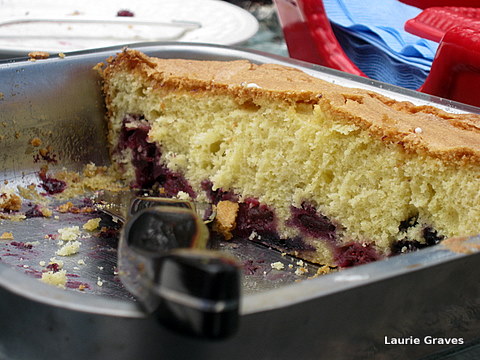
Beth's delectable blueberry cake
Beth’s delectable blueberry cake

Yesterday, Clif and I had the most delightful Sunday we’ve had in a very long time. Our friends Beth and John came over for brunch, and they brought their little dog Bernie with them. Clif made waffles, cooked fresh at the dining room table and then passed around on a plate. I had made a blueberry sauce and an apple sauce to go with the waffles, and there was, of course, real maple syrup. We also had homefries and scrambled eggs with smoked cheddar—from Pineland Farms.

Good as the brunch was—Clif’s waffles are pretty darned tasty—the best part came afterwards, when we had coffee, tea, and Beth’s delectable blueberry cake on the patio. The day was sunny and warm but not too hot. There were a few bugs but not enough to be a problem.

For several hours, we sat with the sun warm on our faces. We drank coffee and tea and ate cake. We talked about retirement—Beth is retired and John and Clif will be retiring soon—politics, and how hopeful we are that the millennial generation will continue with the course they have started. Although there are always exceptions, by and large this generation is tolerant, liberal, and concerned about the environment.  Many of them have eschewed the excessive consumerism that has characterized this country and are living a modest but comfortable and creative lifestyle. They are gardening in the cities and the suburbs. They are riding their bikes. They are building tiny houses. Kudos, kudos to them.

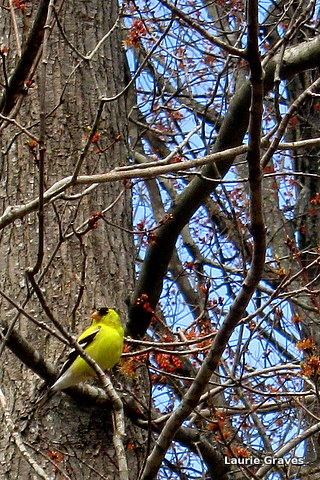
We are surrounded by trees—I don’t call our home the little house in the big woods for nothing—and this is perfect for the birds, who have secure places to perch as they fly back and forth to the bird feeders. The birds must have been particularly hungry yesterday afternoon because as we sat at the patio, we were treated to the visual delight of fluttering birds as they came to the feeders. We had the usual suspects: chickadees, nuthatches, tufted titmice, woodpeckers, and gold finches.

A goldfinch casing the yard


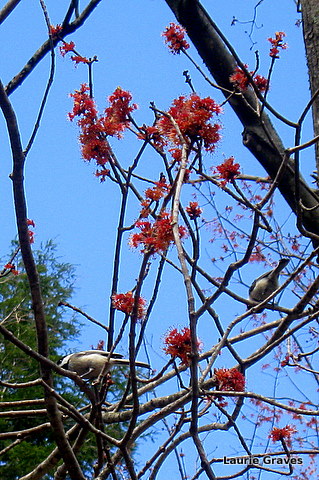
Little chicadees
Little chickadees

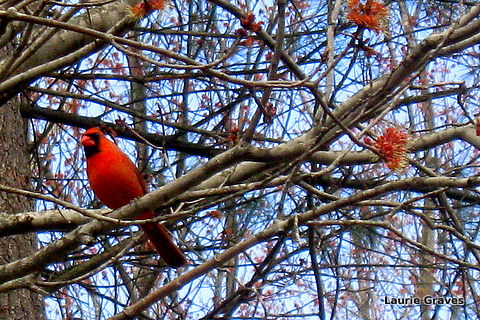
We also had a pair of cardinals—the first ever who have decided to take up residence in the woods by our house. It’s such a thrill to have them nearby.

Mr. Cardinal, in all his red glory

“I wish I had brought my camera,” Beth said.

“Next time,” I said, taking picture after picture with my little Cannon, which is a wonder with food and flowers but not so much with birds. Still, I got a few decent shots.

At around 4:00, Beth said, “We need to leave.”

“Yes, we do,” John replied.

But we sat at the table for another half hour. They didn’t want to go, and we didn’t want them to leave. Finally, of course, they left, and we will see them again the end of May, at John’s retirement party.

What a Sunday! As we Mainers put it, it was the finest kind of afternoon filled with food, friends, birds, and dogs. Who could ask for anything more?

Cute-as-a button Bernie
Cute-as-a-button Bernie


The Lovely Month of May: C’est le Mois de Marie

IMG_8444This morning, I flipped my various calendars, and now it is the lovely month of May. Today, a French-Canadian friend wrote on Facebook, “C’est le mois de Marie…C’est le mois le plus beau.” The lyrics are from a French song: “It is the month of Mary…It is the most beautiful month.” Indeed it is, even with blackflies to plague us. (Luckily, they haven’t arrived in central Maine yet.)

For native Mainers, it goes like this: March is the cruelest month, April is a month of hope, and May is a month of such dazzling beauty that it almost makes you drunk just looking at all the flowers and budding trees and rich green grass. C’est le mois le plus beau.

It is also a month of much work for this home gardener. I am happy to report that at the little house in the big woods, the lawns are nearly raked, and that chore will be finished today. Then it will be on to the flower beds—removing the leaves, adding compost, organic fertilizer, and wood ash. With so many coniferous trees surrounding the house, the beds always need something to reduce the acidity in the soil.

Although my creaky knees complain at the end of the day, I so enjoy working in my yard. As I’ve noted before, it is amazing to me how yard work always trumps such inside chores as dusting and vacuuming. I even find it pleasurable to hang laundry on the line. In short, I love being outside, especially after a long, hard winter of being mostly inside. By March—and here we return to that charmless month in Maine—being inside so much comes to feel a little confining, to say the least.

The dog is now in his glory. I let him out mid-morning, and he spends most of his day by the gate that leads to and from the backyard. From this spot, he can survey the comings and goings on Narrows Pond Road. Nothing escapes Liam’s notice: walkers, bikers, other dogs, and they all get what they deserve—much barking and racing back and forth.

Liam by the gate
Liam by the gate

Liam is a Sheltie, a herding dog, and I expect he is guarding the yard. It is a job he takes seriously, and like most herding dogs, he is very intense about it. I hesitate to ascribe feelings to another creature—human or not—but if I had to guess, then I would say that Liam gets a lot of satisfaction from his job of guarding the yard. When Liam is inside, it is clear that he wants to be outside, ready to race and bark at a moment’s notice.

So at the little house in the big woods, both the dog and the human are happy. We each have our work to do, and while we take our jobs seriously, they give us great pleasure, too. (Alas, this is not true for all people with their jobs, but this will be a topic for another time.)

C’est le mois de Marie. For those who live in the northern New England, rejoice!

Sherlock doing his job

The Best Laid Plains: Unexpected Chicken Goulash

IMG_8421On Sunday, at our local Hannaford, I came across a deal that I couldn’t resist: Nature’s Place whole chicken for 99 cents per pound. I bought two, thinking I would get more later during the week. However, when I went back, they were sold out. Moral of story: When there is a good sale, stock up then and there. Don’t wait.

Ah, well. At least I got two, and this week, I was able to get three meals out of a five pound chicken that cost, of course, $5. The first day, I cooked the chicken our favorite way in the slow cooker, with the chicken on top of potatoes and carrots and spiced with sage, thyme, salt, pepper, and garlic. I always add 1/2 cup of water to the vegetables so that I have more drippings for later use, often in a soup for added flavor, and that was my plan for this chicken.

However, you know what Robert Burns had to say about the best laid plans of mice and men. Mine certainly went awry. I put the chicken, vegetables, water, and spices in the slow cooker, set it on high, and left for the afternoon to visit friends and do errands. Clif was working at home that day, but I forgot to tell him to turn the slow cooker to low by midafternoon.

When I came home late afternoon, the chicken was what you might call well cooked. Very well cooked. In fact, the carcass more or less collapsed when I removed the chicken from the slow cooker, and there would be no using those bones for a soup. Fortunately, whole chicken cooked in a slow cooker is forgiving, and the meat was still moist.

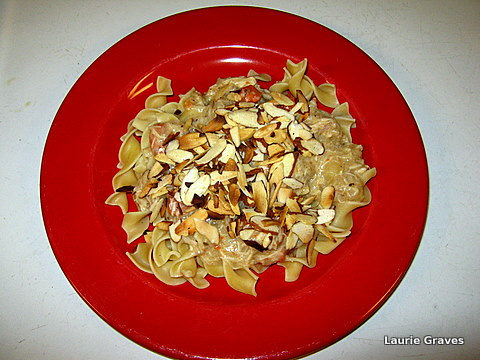
But what to do with the leftover chicken, vegetables, and drippings? A goulash, I decided the next day, served over noodles and topped with roasted almonds.

I measured the drippings—I had a cup and a half—and added enough milk to make two cups. (The night before, I had put the drippings in a bowl in the refrigerator. The next day, I scraped off the fat, heated the drippings, and measured how much I had.) I made a roux using four tablespoons of butter, four tablespoons of flour, and some salt and pepper. Into the roux I whisked the milk and drippings mixture. I stirred until the mixtures thickened, and it made a line on the back of my wooden spoon. I added the vegetables and potatoes, stirring frequently until the mixture was hot.

While the goulash was heating, I cooked some egg noodles. Then in a frying pan I dry roasted some sliced almonds to go on top of the goulash. Clif was on salad detail. Somehow, a green salad was the perfect accompaniment to this hearty meal.

The results? Pretty good, my Yankee husband pronounced, and he went back for seconds.

Now, this meal is not what you would call elegant, and I probably wouldn’t serve it to guests, but it was tasty and filling and economical. With that $5 chicken, I got three meals for two people, and Clif always has seconds. It’s one of his weaknesses. The goulash also went together pretty quickly, an added bonus during the spring when so much of my time is spent outside.

Even though my best laid plans went awry, the resulting second plans were not too bad. Good enough so that sometime in May, when I’m in full gardening frenzy, I will do exactly the same thing with the second chicken I bought for 99 cents a pound—a chicken dinner one night and goulash the next two nights.

Let’s hear it for mice and men. And women, too.


Cooking and Eating Together As a Family

On his blog Practicing Resurrection, Bill recently wrote “Too Busy to Cook,” a good piece that included suggestions for harried households where people feel too exhausted to cook after a long day at work. This is no small matter, and I know this from personal experience. Once upon time, both Clif and I worked outside the house, and we had two active teenagers who were involved with music, band, and other school activities.

Our lives were busy, busy, busy. Somehow, though, we always found time to cook and eat dinner together. The meals were not fancy—there was a lot of roasted chicken and baked potatoes and pasta and salads—but they were hearty and nutritious. For me—and I know each family is different—the key was to involve everyone in the prep work, the setting of the table, and the clean-up.

My daughters learned to chop and peel and dice at an early age. My mother-in-law, who lived with us, also helped. Not only did she peel and chop, but she washed lots and lots of dishes, and usually one of my daughters would help by drying them.

As I wrote in the comment section of Bill’s blog post, many hands make the task light. It was true in the good old days, and it is still true now. When cooking is a team effort, everybody wins. The chief cook—in this case me, but sometimes it is the husband—doesn’t feel resentful and overwhelmed. Let’s just say mealtimes are ever so much more pleasant if the cook doesn’t feel put upon. In addition, the meal comes together quicker when everyone is helping.

Home cooking is usually more nutritious than meals eaten out. Long before Michael Pollan came on the scene, we were eating real food and cooking with basic ingredients. My girls were not overweight and neither was my husband. (Alas, I’ve always struggled with my weight. My body is just so efficient at storing calories, and I am what might called a good eater. On the other hand, my husband loses weight when I diet. Do I feel bitter about this? You bet I do. But I digress.)

Then there is  gathering together around the table each night for dinner. To me, this is priceless.  When the girls lived at home, over dinner we talked about our day and what we did. We discussed politics and current events. Sometimes we argued, but I am convinced that time at the dinner table not only bonded us as a family but also set a tone  that has rippled forward many years latter. Even today, we still like to cook together and gather around the table and talk and sometimes argue. Now that our daughters have moved out and my mother-in-law has passed away, my husband helps with cooking for family gatherings. Truly, with my creaky knees, I couldn’t do it without him.

But perhaps the best thing of all was that my daughters learned to cook without knowing they were being taught. As my daughter Shannon has pointed out, helping me in the kitchen taught her the basics, and this put her at a real advantage when she and Mike got together. While Shannon had never planned meals, she knew how to chop, peel, and dice, how to get food ready.  A little advice from me along with a few good cookbooks, and she was ready to go.

The moral of this story? Teach those children to chop as soon as they can safely wield a knife.  Get the husband to help, too.  There is no reason why one person should do it all and thus feel even more harried at the end of a busy day.


What a Difference a Week Makes

Last weekend, when we celebrated Shannon’s birthday, the backyard was muddy, and the outside faucet  was blocked by a small bank of snow. The driveway and yard were a mess of twigs, branches, and the last of the leaves that had come down after the fall raking had been done. I blush to admit that the front porch still had Christmas greenery in pots. To top it all off, the edge of the front yard had enough sand for a small beach. It was a hard winter, and the road crew frequently sanded the slippery roads.

Last Sunday, Clif and I tucked to. We cleaned out our little shed. I swept the driveway and chucked the Christmas greenery into the woods. It was a good start, and even though the front lawn was still a sight to behold, the yard already looked better.

Over the course of the week, I raked the front yard, and Clif worked on the sand at the edge of the lawn.

The newly-raked front yard

The last of the snow melted, and Clif turned on the outside faucet, which made my life ever so much easier. I have noted many times that our dog Liam, even at ten, is a very energetic dog. One of the things he especially loves to do is run around the backyard. You might even say he was born to run. He is, after all, a Sheltie. When the yard is dry, his running causes no problems. However, when the yard is muddy, his paws and legs become a mucky mess, and without the use of a hose, we have to resort what we call “bucketing the dog.”

We lug a bucket of warm water down cellar, and first dip his front paws and then his back paws into the bucket. Liam, to put it mildly, does not enjoy this process, and by the time we are done there is water everywhere, but his paws are significantly cleaner.

When the outside faucet is on, we can dispense with the bucketing. Liam doesn’t enjoy being hosed down any more than he enjoys being bucketed, but the process is easier and quicker—no heavy bucket to lug, no water on the cellar floor.

No more bucketing
No more bucketing

To add to our pleasure and the dog’s cleanliness, the mud, like the snow is nearly gone. A quick rinse of the the dog’s paws is all it takes to make him clean enough to come inside.

Yesterday, I raked nearly a third of the backyard, and unless there is a heavy rain, I will be out this afternoon to do some more raking. In a few days, all the raking will be done, and it will be time to remove leaves from the beds in the front yard.

A busy time of year, but a rewarding time, too, as we get the yard ready for summer and grilling and nights on the patio. I’m pleased as punch over the progress that has been made at the little house in the big woods.

And I am constantly amazed by what a difference a week makes.

Little Miss surveying the progress that has been made in the backyard